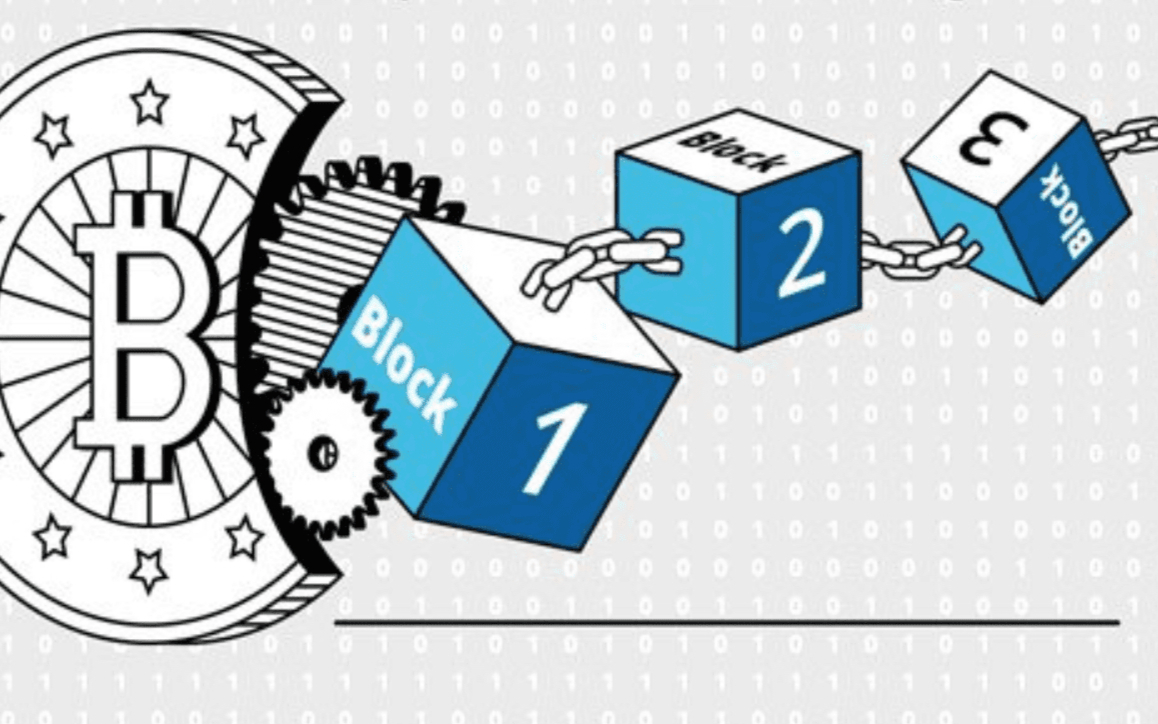
The progressive decentralization of crypto narratives

The Gradual decentralization of Crypto Narratives
Not boring
This article is from wechat official account:Old yuppie
Start-ups are growing rapidly, not just in valuation but in real revenues. What is the main reason? With better off-the-shelf infrastructure, modern companies can write a few lines of code to do what used to take years and millions of dollars.
For example, selling to businesses. WorkOS helps you start selling to enterprise customers with just a few lines of code. WorkOS supports three features that an enterprise requires of any vendor. Single sign-on (SAML), directory synchronization (SCIM), and audit trail (SIEM).
Development teams at fast-growing B2B SaaS companies like Hopin ($5.65 billion), Webflow ($2.1 billion), and Vercel (over $100 million) use WorkOS to achieve enterprise readiness in just a few hours. Just like they use Stripe to make payments or Twilio to communicate.
Writing and telling stories are part of what makes us human. Stories allow us to harmonize across time and space. There is no denying that narrative is important.
But as things become more abstract, as we move more and more into a world of abundance, where we do and buy more and more things for things other than survival -- like social capital, entertainment and utility -- a good narrative is more valuable than ever. How best to do this has changed and become more complex.
Imagine, as a quick and extreme thinking exercise, that you lived in a hunter-gatherer tribe 12,000 years ago. There are about 100 people in your tribe. Many are family members. Food is always the number one priority. If you needed to convince your tribe to hunt, what kind of story would you need to tell and how would you get that message across?
Something as simple as "We need to go hunting now or we'll have no meat and we'll die", speak directly to your fellow countrymen.
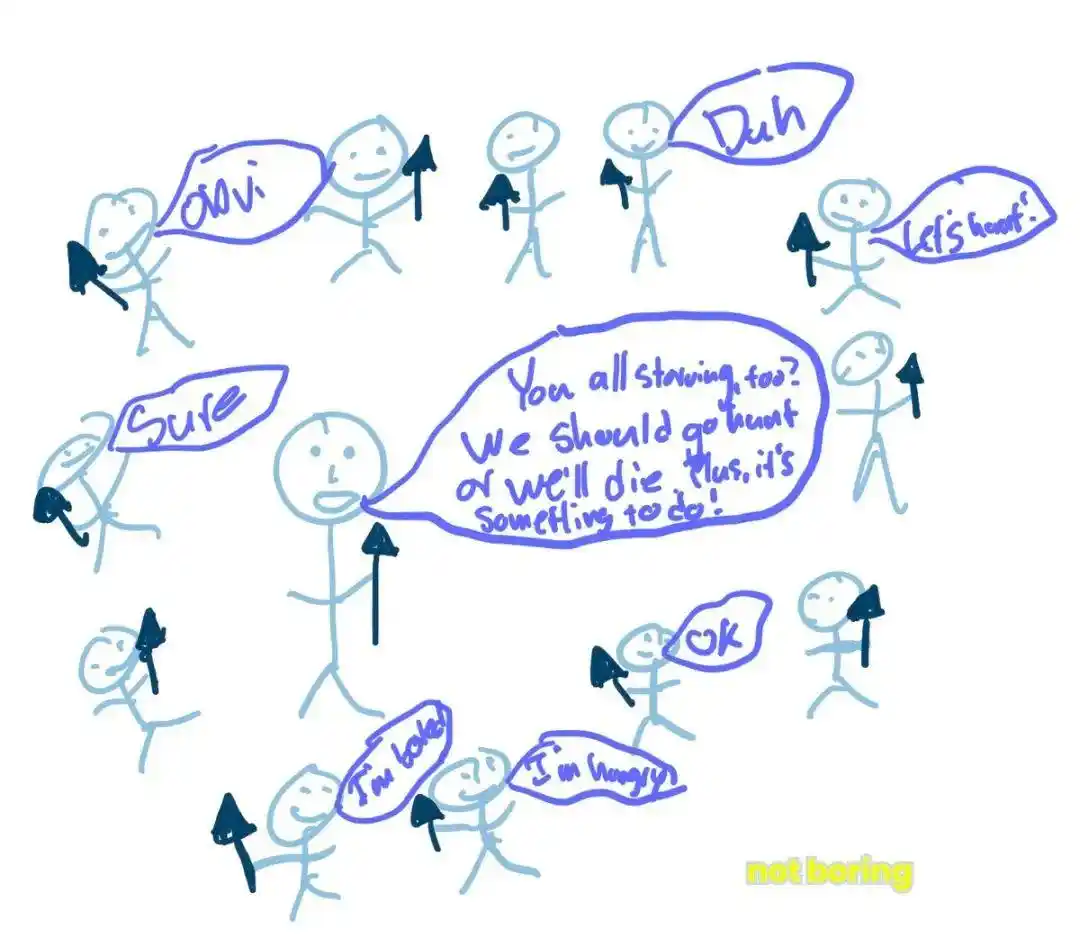
Everyone heard the news, and everyone understood the importance of what was at hand, so they went hunting.
Things are clearly not that simple anymore. First of all, we don't need to hunt for food. We open DoorDash or UberEats or Instacart or GoPuff or Farmstead, and the food gets to our door fast.
Imagine coordinating 100 people to decide what to eat for dinner tonight.
The conversation I had at a wedding last weekend made me feel that it was hard to get a message out. Several friends were talking about why the Ratings for the Olympics were so bad. Sure, it's strange not to have fans, and America's best athletes didn't perform as well as expected, but the real challenge is that we don't know the stories of the other athletes. In the past, there would be months of preparation, with profiles of American athletes on ESPN and the Today Show, as well as in local newspapers. We all watch the same shows, and those shows tell stories that convince us to pay attention, and they craft a narrative.
On the other hand, in my little corner of the Internet, NFTs have completely dominated the conversation.
NFTs have a voice in a growing niche market, not by telling a consistent story -- there is no NFT company -- but by giving people the tools, ownership and incentives to tell countless little stories about NFTs to form a resounding narrative.
As Fred Wilson of Union Square Ventures wrote last week in "Opening,"
I'm not saying NFTs are the next big thing. I mean, the consumer experience built on top of the cryptocurrency stack is the next big thing, and the NFT experience is pointing the way.
In a world of abundance, attention is the scarcest resource, and people's attention is hard to earn, requiring new strategies.
Technology, venture capital, markets and cryptocurrencies -- the same shift has taken place, from top-down storytelling to bottom-up narrative building, where having a narrative can be self-fulfilling and help companies:
- Lower cost of customer acquisition
- Hire stronger staff
- Build better partnerships
- Attract follow-on investors with lower cost of capital
Similar dynamics apply to venture capital firms, cryptocurrency projects, and even stocks. Stories become narratives, and narratives have real, measurable effects.
So how do you build a modern narrative?
Today, we will introduce:
1. From telling a story to building a narrative
2. Narrative in venture capital and startups
3. Lessons from cryptocurrencies
From telling a story to constructing a narrative
Every day (millions) of companies and venture capital firms launch in-house articles. They want to have a "conversation" around "X ", so they write about "X ", but...... But no one paid attention.
They were told content was important, so they did content! Why didn't it work?
Corporate papers are a bit like sales, and according to Alex Danko, we've passed the sales phase and moved on to something better: world building.
(Note: this is separate from the "world builder" concept, although successful "world builders" certainly use stories to great effect).
At World Building, Danco says, it's all about sales, but sales alone aren't enough. You need to build the world. In a "world of rich narratives and complex choices...... You need to build a world so rich and engaging that others want to spend time in it, even if you're not there to spread it."
This means telling multiple related stories and telling them repeatedly to make your overall story clear enough for others to repeat it themselves.
In a follow-up conversation with Jim O'Shaughnessy about "Infinite Loop," Danco offered more information on why world-building is important today.
In a world of abundance, what is limited when you can read, watch or listen to anything for $0? Attention.
Or, as Danco puts it, "what's starting to become scarce is people's actual interest in you."
In an age of abundance, even of stories, the ability to tell a great story is a key building block. But stories alone are not enough. You need to engage your community in the narrative.
Story and narrative sound like the same thing?
According to Merriam-Webster, story and narrative are synonyms, and we will distinguish between the two.
The story is discontinuous. One article, one event, one customer experience. Someone might say, "Have you heard the story about Company X doing what Y did?"
Narratives are made up of all the stories about a company that crystallize into what people think and say about the company as a whole. The narrative surrounding a company is similar to its reputation or brand.
If a company writes a blog post about its origins, it's a story. If an investor talks about the company in a podcast, that's a story. If a founder writes a hashtag on Twitter, it's a story. If a customer tells their friends about their good interaction with customer service, that's a story. If a developer tells other developers that the company's API is clean, that's a story. If TechCrunch reported their latest round of funding, it would be a story.
These individual stories add up to a narrative that changes and evolves, but has a direction, scale and tone.
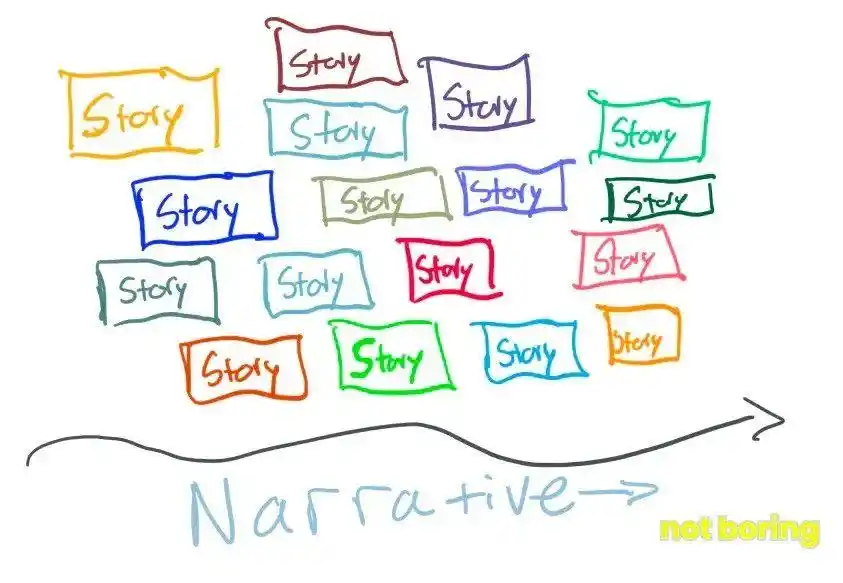
But a narrative is also compound, positive stories add up, stories reinforce stories, and narratives reinforce stories. Narrative formation has no formula, but the ingredients are:
- The number of stories told
- Ratio of positive to negative stories
- Consistency of positive or negative attributes
- The number of different storytellers
- The credibility of the storyteller to the target audience
- Confirmatory updates
- Durability of the story over time
The best approach to a company or project narrative is to have many people with credibility with the target audience tell stories with broadly similar positive themes over a long period of time, with new examples of the same positive themes added. The more real and incongruous it all seems, the better.
This is hard to do, especially because it needs to be organic and properly sown under the direction of the company or team and its core supporters. However, when it works, it's a powerful thing, and its benefits increase over time.
The longer people believe in a company, the more likely they are to believe something about that company.
A good example right now is Apple's relationship with Facebook
The narrative surrounding Apple is that it is a world-class design and privacy-first company whose products are a good thing for the people who own them. It started with Steve Jobs and continues to this day. It's armor. Anything that doesn't fit that statement will bounce away; Anything that satisfies that statement will be added.
The claim that 30% of App Store revenue is anti-competitive hardly bothered the company. Apple's recent decision to build back doors into iCloud and iMessage has raised the ire of privacy enthusiasts, but not damaged the company's good name.
The Facebook narrative is shaped in founder Mark Zuckerberg's writings, in the movie "The Social Network," in the company's old "move fast and break things" motto, in Zuckerberg's sweaty, stuttering speeches, and in the Cambridge Analytica scandal. Facebook's positive impact on small businesses and the free WhatsApp messaging service, which connects more than a billion of the world's poorest Internet users, are rarely discussed.
If you take a fresh look at both companies' activities over the past few years, you might think Facebook is good and Apple is evil, but we look at nothing new. We see everything through preexisting narratives. This will take time to change.
Once the narrative is set, it takes time to shift. The respective narratives may be one reason why Apple (mainly a hardware company) trades at 29 times PE and Facebook (a software company) trades at 26 times PE.

These are extreme examples involving two of the world's most valuable companies, but smaller examples of the same phenomenon play out all the time. Stripe is a great modern example of a company that builds a powerful narrative around one that achieves the holy duet: 1) people love to talk about Stripe, and 2) when they do, they give it the benefit of the doubt.
Apple, Facebook, and even Stripe built their narratives when the competition was less intense. But their recipe for success may not work for you.
The old way to build a positive narrative is to tell a consistent story about yourself over time. The new approach is to have someone else tell your story for you, either directly or by association.
Narrative in venture capital and startups
The idea that companies and funds need to tell their stories is not new; that's what marketing and PR departments have always done.
In 2009, Tom Foremski wrote an article for ZDNet entitled "Every Company Is Becoming a Media company......" It's cisco. That same year, Andreessen Horowitz launched the first venture fund to harness the power of storytelling.
When A16Z launched and Foremski wrote that article, the big idea was that companies and investors should be able to tell their own stories directly.
Today, power lies in sharing the microphone.
In June, A16Z launched its own media brand, "Future, "in a two-pronged approach to its own media strategy that is clearly working. Some of the articles on Future are written by A16Z partners, but many are written by entrepreneurs in or around the A16Z ecosystem. When the site launched, quite a few journalists complained that A16Z was trying to bypass the press and get their message out directly, but that wasn't its aim. I don't think their posts will get as many views as the TechCrunch article. What it's really about is building a place where like-minded entrepreneurs and investors can come together to tell compelling stories about the future.
In a similar vein, private capitalist Josh Buckley launched Hyper in July. According to its website, Hyper is a VC accelerator that "looks at the company through the lens of our unique distribution and community capabilities."

Everything about Hyper is driven by this new way of distribution, along with AngelList, Sequoia, Harry Stebbings' 20:VC and, of course, a16Z. The people involved have a huge audience, Naval has a huge Twitter following. Harry Stebbings had a podcast that was a huge hit with his audience. Sriram Krishnan runs a top Clubhouse program.
Individually, any one of these brands or characters can tell a compelling story. Together, they can shape a narrative over time.
That's why many startups welcome more individual investors into the capital markets, especially those who can help tell their stories. This creates more surface areas for more people to tell the company's story, which gives the company control over its own narrative.
In retrospect, the formation of a story also includes the number of stories told, the number and credibility of the storytellers, the consistency of the positive aspects of the story, and the persistence of the story over time. A cooperative venture capital fund made up of a group of reputable people with the right credibility and incentives can build a company story over time.
That's why A16Z is building a cooperative media brand, and that's why Hyper has the potential to be a valuable investor in its portfolio companies. That's what I'm trying to achieve in "Not Boring ": find companies with compelling products and stories and help them accelerate those stories into cohesive narratives that cut through the noise.
Everyone tweeting the same thing is better than nothing, and may help early momentum, but it's more important to figure out how everyone at the capital table can really lend credibility to the company's narrative over time.
Better yet, these investors should be part of a large group of stakeholders who have the drive and ability not only to parrot but to add to the story and contribute to the emerging real story.
And the best guide to how to do that is cryptocurrency
Lessons from cryptocurrencies
In a world of plenty, we spend more money and time on Maslow's hierarchy of needs.
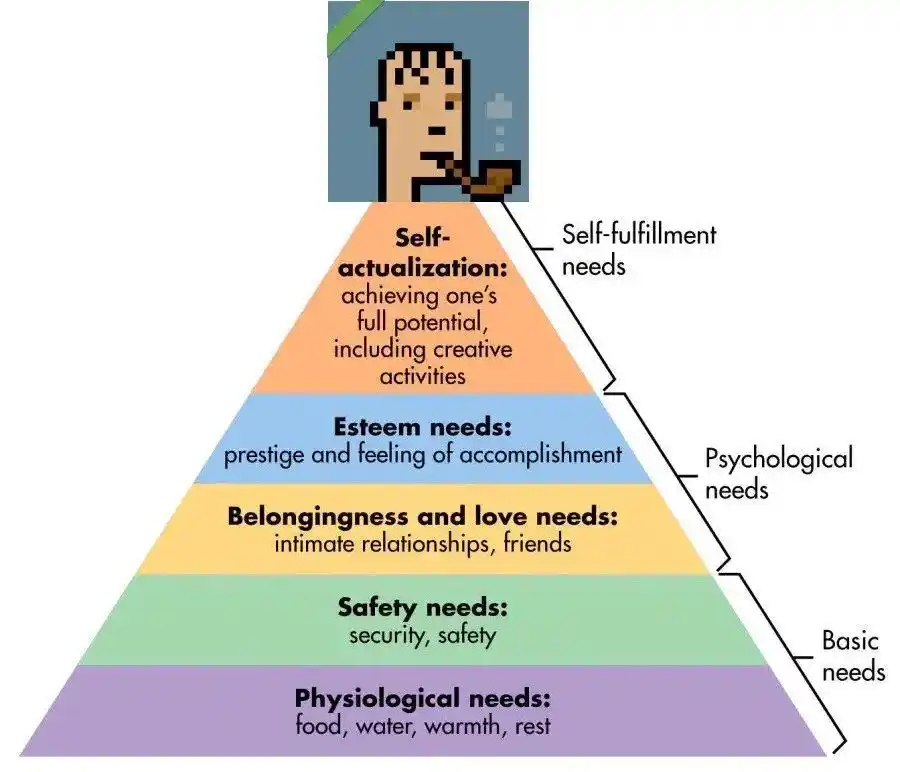
We don't need most of the things we buy today, nor do we need to spend time on them. Even the best and most useful B2B SaaS, no matter how important it may seem, is an add-on. The beauty of NFTs, and why they are such an interesting case study, is that they are the purest, most honest distillation of this trend.
The things people laugh at - these are just stupid Jpegs! That's what makes them so rich in narrative. They are largely empty containers into which communities of owners and supporters can pour stories, turning them into a narrative. Studying what makes certain NFTs valuable is instructive for those trying to build a narrative today.
Let's start with CryptoPunks, CryptoPunks are considered valuable because they are OG NFTs, but there are other old NFT projects that haven't caught on like Punks. My guess is that what makes Punks valuable is that the stories around them have accumulated and compounded into a positive narrative.
When a punk sells for over $7 million, it's a positive story.
When Jay Z buys a punk, same thing.
When punk comics turn certain punks into characters in a story, it's both a literal story and a story about the potential of this IP to generate value.
The fact that CryptoPunks are old is not what makes them valuable; This is just a story that satisfies an overall narrative: "These are the most legitimate NFT".
It's also useful to look at a relatively new project and see how these narratives are beginning to take shape.
NFT starts here, and most of the narratives that add up to a million short stories will be written by the community, stories along the way.
I think that's why some NFT projects, even new ones, do well while others fail. Pudgy Penguins, Art Blocks and Bored Ape Yacht Club all captured people's attention and imagination, and they in turn told the stories of the projects, which formed narratives around the projects and gave them enduring power. They build worlds that other people want to spend their time on and give them clear story building blocks.
Telling a common narrative makes it more fun and immersive for everyone involved -- NFTs are a combination of investment, social networking, community and entertainment -- and makes NFTs even more valuable. That's why I think fragmented NFTs don't hurt value by reducing scarcity, but may make some MORE valuable. If a key element of narrative is the number of stories told by credible people, then having more people owning an asset together and telling stories about it should speed up the creation of narratives.
I want to test this argument. I found the PartyBid of Punk #8721, Hooka Punk, put 1 ETH into it and invited people to join the party.

Join the Hooka Punk PartyBid
All of this happens from the bottom up in a little narrative petri dish. As Fred Wilson points out, what's happening in NFTs is showing the direction. The narrative goes beyond cryptocurrencies and extends to anyone trying to form a narrative around their company, product or project, including:
State your purpose clearly so that others can use it in their own stories.
Get people really involved in what you're doing and inspire them to tell their stories.
Work with trusted partners to tell your story to the right people in new ways.
Embrace authenticity instead of trying to over-embellish it (unless you're Apple).
Provide a place for stakeholders to coordinate, such as the Discord server.
Amplify their stories as they are incorporated into the main narrative.
Be open to a million ways the narrative can evolve.
This is basically a gradual decentralization of narrative. Build the building blocks, tell the original story, and get out of the way. It may feel uncomfortable, and it's not for everyone, but in the competition for attention, the winners are the communities that are willing to relinquish control and let the narrative take on a life of its own.
Of course, what we're seeing is just the beginning. As DAO and his team become an increasing part of the investment and company building world, an important source of its power will be getting more people to tell stories and shape the narrative around projects and companies. A decade from now, trying to keep a tight grip on the narrative will seem anachronistic.
Where ten years ago every company was a media company, and companies and funds invited more voices to co-create their narratives, the next decade will be community-driven storytelling and communication.
"Who lives and who dies, who tells your story?"
The original link
Welcome to join the official BlockBeats community:
Telegram Subscription Group: https://t.me/theblockbeats
Telegram Discussion Group: https://t.me/BlockBeats_App
Official Twitter Account: https://twitter.com/BlockBeatsAsia

 Related Articles