Find the blank area of Web3 and see how the founder of Jambo brought Web3 to Africa
Original title: "Jambo: The Web3 Super App Empowering the Next Generation of Africans"
Original author: Piers Kicks
Original compilation: Kxp , Rhythm BlockBeats
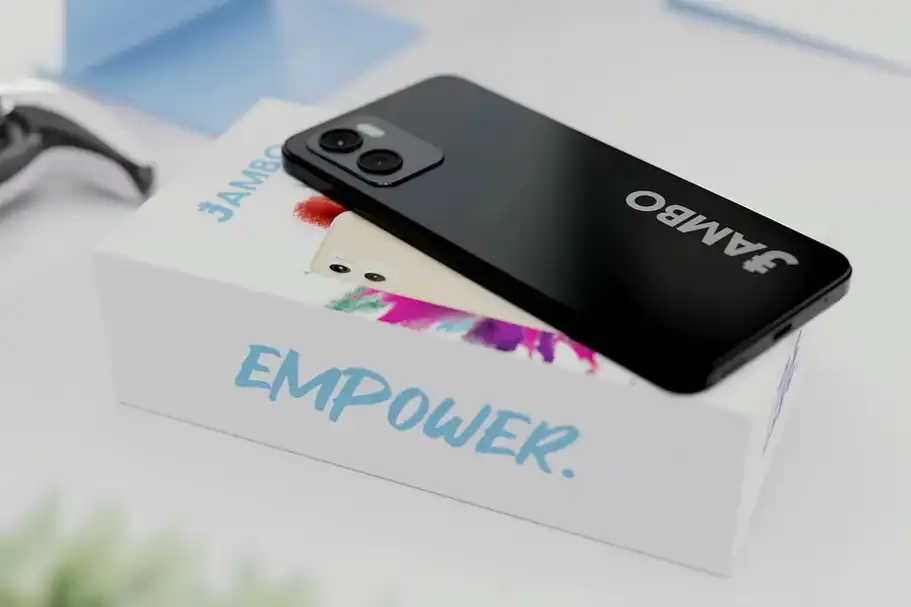
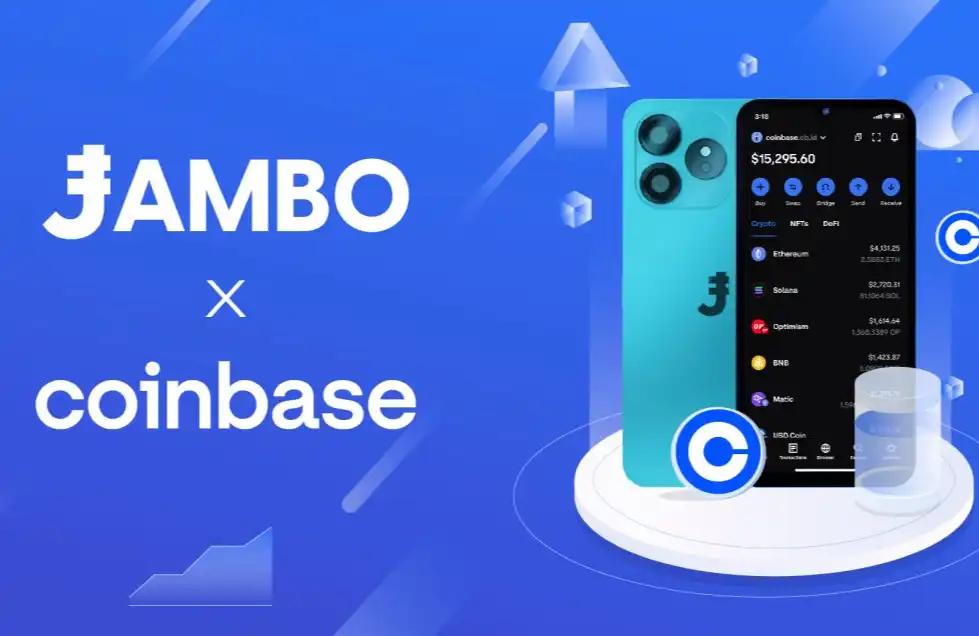
On February 21, Jambo, an African Web 3 super application company, completed a $7.5 million seed round of financing. This round of financing was funded by Delphi Ventures , Coinbase Ventures, Three Arrows Capital and others participated in the investment. It is reported that Jambo aims to introduce young people in Africa into the Web 3 financial ecosystem through P2E games and DeFi services, including currency exchange and remittance.
Web3 is slowly spreading from developed countries to third world countries, such as the booming P2E business in Southeast Asia, making local Residents become an important part of the Web3 world. Likewise, there are teams looking at regions that don't yet have a Web3 voice, such as Africa.
In this podcast of Metaverse Musings, the founder of Jambo, who has just completed financing, talked about the importance of bringing Web3 to Africa Ideas and advantages, there are many phenomena that do not exist in other regions. For example, each person in Africa has 5-6 mobile phones. This is to facilitate the communication of local people. In fact, it can also become the infrastructure for the development of Web3.
Rhythm BlockBeats translated the dialogue content of this podcast, hoping to help readers.
Piers:Welcome back to Metaverse Musings, today we are very honored to invite James, co-founder of the Jambo project. James, welcome to our podcast.
James:Thank you very much for your invitation.
Piers: Can you give our listeners a brief self-introduction first, we would like to hear about your growth experience in Africa and Your career development journey so far.
James:I was born in Kinshasa, Congo, a city of about 120 million people, It is also the most populous French-speaking country in the world. I spent my first 16 years in my hometown, living with my grandparents. My sister also grew up in Africa and we are the co-founders of Jambo. Our family business is still in Africa so we go back often too. My siblings and I later went to the United States for further study. I was studying computer science at New York University and she was studying at Columbia University. I bought my first ETH in my sophomore year in 2015. After I graduated in 2017, I created a fund myself, a Crypto fund. At the same time, I was also lucky enough to get in touch with many Crypto companies in the United States and Europe. I've been working in the Crypto space for the past four years, and I'm proud to be called the African of Emerging Markets.
I have many trading partners in Africa and I have helped companies build and develop strategies in different regions. Over the past year, I've also explored GameFi in depth. Everyone in the Crypto space is excited about GameFi, so I'm also excited to meet the founders of many companies who are changing the way people live in Crypto in many regions. The current situation in Southeast Asia is: low GDP, but high mobile phone and 4G penetration, and the situation in Africa is actually very similar, so we founded Jambo.
Piers: Can you tell us about Jambo? What kind of goals do you want it to achieve in Africa?
James: In one sentence: we are building Africa's Web3 super app with Jambo. Essentially, we want to leverage P2E gaming to bring millions of users across Africa to Web3. I believe Africa is ready to join Web3 and it really can't afford to miss this opportunity. We can look at the reality of the Philippines and the rest of Southeast Asia: low levels of GDP combined with high levels of mobile and 4G penetration, and Africa has the lowest GDP in the world. The average salary in the Philippines is about $200-$300 compared to $30-$80 in Africa, and with 40% unemployment and more than 75% of the population under the age of 35, the situation is dire. Growing up in Africa, we always see a lot of pain points.
Over the years, the situation has not improved much. If you want to bring Web3 to Africa, you have to have both Crypto natives and African native teams. Honestly, this has been one of the hardest pain points I've had as an investor to spot over the past four years. Therefore, it took us five years to complete this difficult transformation. For Jambo, we want to introduce Web3 through P2E games, and let the next wave of African users join Web3. After joining our super app, every African can make money on it.
Ideally, I'd be able to start acquiring users this way and help people make money. Therefore, we do not operate any products related to OTC, remittance, and DeFi yield in Africa, and simply use games to help people make money on Jambo. Our team has opened fourteen offices in sub-Saharan Africa, with our only office in North Africa located in Morocco. Among them, we have about 30 business development people locally in Africa, 10 operations people, and 16 engineers in the United States, Africa and China.
Piers: Can you talk about what made you decide to start doing this, and is there any special opportunity recently? At the same time, I would also like to know who you have cooperated with in it, after all, it is indeed a difficult task to do business in multiple regions.
James:First of all, whenever you want to do something in Africa, you must Get authoritative support. For us, it's a matter of course. If I don't have my African family background, even if we bring $2-3 billion to Africa today, I don't think it will affect the local people much. To grow in Africa, you have to have local connections. Honestly, it's like Southeast Asia 30-40 years ago. In our family's situation, we have invested in African infrastructure and many local companies in Africa over the past few decades, so it is only today that we can gain the trust of local authorities. Alice and I have been investing in the African economy and its emerging markets and helping to build infrastructure, but this is our first time running a business.
Over the past two quarters, this has been one of the biggest decisions we've made - to run Jambo full-time for the next 5 to 10 years. Because to be honest, Jambo is not a company for us, it's more like a mission. The mission is to serve the next wave of Web3 users in Africa. As I just said, we cannot afford to miss this opportunity. Now there are many technology unicorns in Southeast Asia, such as Tokopedia, Grab, Go-Jek, Traveloka, Lazada, Rappi, New Bank, etc., and there are also many in India and China. There are indeed some unicorn companies in Africa, but there is a lack of talents in related fields. After all, the average age in Africa is too low, with more than 75% of people between 19 and 35 years old.
Among an African family of fifteen people, there may be only three working and bearing all the expenses of the family. Although the unemployment rate in Africa is as high as 40%, their jobs are actually very technical. In Africa, smartphone penetration has reached 50%, so there should be no problem developing a P2E economy here. If we can find any company to do this, we are willing to mobilize all resources and contacts to help it build infrastructure and develop and operate locally. But the problem is that we really couldn't find such a team last year, so we had to do this project ourselves. Our seed investors and many big names in the Web3 field have discovered Africa, but they have never made any moves.
I think the main reason is that none of them have data points. No one is collecting enough data points in Africa yet because it's really hard for people to do that right now. Affected by the epidemic, you can't even go to Africa now, and the founders can't go to Africa to investigate in person. Africa's internal growth momentum is insufficient, and the authority will give some help, but the premise is that someone in your family is doing business in Africa, or you are willing to live in Africa for the rest of your life. We are addressing these issues now, and reality is motivating us to do so.
Piers: So, in addition to the above issues, what obstacles have you encountered in terms of distribution technology and infrastructure?
James:It is generally believed that all technologies in Africa are quite backward, but in fact, Africa's 4G penetration is even higher than some second-tier cities in China. But the problem is that due to monopoly pressure, the price of 4G has been high, because these telecom companies have built a complete infrastructure in Africa. I think in this top-down architecture, we can partner with these few companies and distribute data traffic at the grassroots level. However, the biggest challenge for us is convincing investors, because if you tell a Chinese or an American that you are going to develop Web3 in Africa and introduce a P2E economy, they will think you are talking nonsense.
So, you have to do the work of testing and collecting data points yourself, and to do this you have to build the corresponding infrastructure, that is, set up locally in Africa offices and offices. We've had a lot of people ask us, "Why did you go to Nigeria? Where can you get a strong foothold and then expand to other parts of Africa like other companies? Why did you set up in the first few months? 14 offices and want to expand across Africa?" For me, the reason is simple. Africa is a continent with many countries, which together make up the land of Africa. I grew up in Kinshasa, Congo, which is a Belgian colony, so my mother tongue is French.
The official languages of Kenya are Swahili and English, and Jambo means hello in Swahili, which is also our name origin. In West Africa, the official language has become French. So in Africa, it's very difficult for you to find a strategy that fits all situations, because the cultures, languages are different everywhere. To me, we can only do a lot of testing by constantly collecting data points, building a business on the ground. After that, you can decide where to allocate more of your budget.
Piers: How did you develop these new technologies in Congo? After all, even for the tech-savvy, Web3 technologies are still difficult to understand. How did you develop the P2E economy locally? You have offices in 14 countries, so how do you attract people to Web3 and what challenges do you face in communicating your game plan?
What you guys are doing in mobile is a lot like leveraging the banking infrastructure for people to build their own wallets, I'm curious if you guys are How was this message conveyed to the participants?
James: I would say growing up in Africa was not a good thing. In the Crypto field, you may not make money in the first bull market in the first year, and everyone loses money; after that, you can make money in the second bull market-this is the case in the Crypto world. the rule of. Similarly, when we invest in Africa, we always ask founders such a question, "How many civil wars have you experienced?" If you have experienced at most one civil war, then you may not know enough about this region. As far as I can remember, I had to evacuate from my home overnight, and we were evacuated again because of the outbreak of the second civil war.
This relates to a question I ask many of my friends, "If you had to leave home overnight, what would you take with you? Because of the Civil War, you had to be in Move out within 24 hours." Nobody knows the right answer, they tend to say things like food, passports, etc. It wasn't until I learned about Ethereum and Crypto in 2015 that I realized that the answer to this question is actually very simple: you just need to remember the mnemonic and bring the ledger. With Crypto, you can take it all with you. For those of us who lived through the Civil War, the war changed our worldview. When we were in the fifth grade, in order to obtain the rich mineral and natural resources of Congo, the rebels attacked again.
Many countries have wanted to develop the resources of the Congo, and only one American school has obtained the qualification when we go to school. I grew up speaking Chinese at home, French to others in the community, and English at school. Our school was on top of a mountain, and when war broke out, the headmaster made a broadcast to all the students. I stayed with my friend for a whole week, her father was one of the heads of the United Nations, so we made it down the mountain, and this kind of escape is already a routine for us. Unlike Nigeria and Tanzania, Congo is one of the most dangerous places in Africa.
We stayed at my friend's house for a whole week. My sister was home because she sprained her ankle the day before. I can still clearly remember the sound of bullets being fired into the air, but that was nothing to us. My parents would force us to do many things, one of which was golf, and there was a golf course in the middle of the city. Sometimes, when I come back from a week of playing with my friends, the streets are littered with bullet casings.
The streets are full of grenade casings and bullet casings. We drove to the golf course and were about to play a round of golf. People from the United Nations were searching for landmines around us, and then I hit the ball into a bunker, and there was a sudden explosion. It was later discovered that a landmine was buried in that bunker. That's how Alice and I grew up, so there's nothing to scare us after that because we know enough about the land. As for your question, how did we increase the penetration rate of mobile phones and popularize science to the public, and why have we not supported any African companies? I think that's because the infrastructure in Africa hasn't been built in the last five to ten years.
In the past, mobile phones were not so popular in Africa, but the situation is different now. Tecno accounts for 60% to 70% of the mobile phone market, and they sell about $100 million in phones a year in Africa, and $50 to $300 in smartphones. Five years ago, there were no such companies in Africa, but in the past 5-10 years, many companies have begun to discover the African market, which has also laid the foundation for the development of Web3. Later, a group of Web3 founders came to Africa, thinking that just one or two smart contracts could attract millions of users. While it's admirable what they've done, it's a way of thinking that I don't appreciate because in Africa it's the people themselves that matter, not the data points.
Unless you can build a good infrastructure and have a certain ability to judge, it will be difficult for you to gain a foothold in Africa. In order to get approval from an authority, you have to agree with them. In Africa, partnerships are crucial to win-win outcomes.
For us, as long as someone can help us acquire users and build infrastructure, we can achieve a win-win situation. These people could be lottery suppliers, local community cafes, or guild leaders, and what all these people have in common is that they are businessmen. As long as you are a businessman, you must be well aware of the variability of this world. Therefore, they tend to have a huge sense of fear about Web3, they are always afraid that they will miss the opportunity, but in my opinion, they just don't know how to enter this field. It took us a long time to educate the local people, and it took quite a bit of effort to educate them about new things like Web3 companies, Axie Infinity, YGG, and so on.
As I said before, although the GDP in this region of Africa is very low, it has a high penetration rate of mobile phones and 4G. Many companies have discovered this, but only want to develop short-term business here. They did introduce Web3 and the P2E economy to Africa, but left after five to ten years of development. Even so, they developed a user base, laid a certain foundation, and gave us the opportunity to open 14 offices in Africa, open corporate and bank accounts, and do local settlements, which was almost impossible before.
This is also one of our strengths, but let's be honest, getting local influencers involved in Web3, not just educating them, is very important to us That's pretty good.
Piers: Sounds good. Before we get to the product, can you talk about some of the misconceptions people have about building and growing in Africa?
James: One of the biggest misunderstandings people have about Africans is that they think that all Africans are rural people , some original aborigines who have not been exposed to the Internet, let alone Web2. In fact, the situation is quite the opposite, and there is no shortage of technical masters among Africans. Now the fastest growing app in Africa is TikTok. The content creators in it are no worse than those in China and the United States. All of them are technical experts who not only understand their own positioning, but also are proficient in marketing and Internet knowledge. Unlike what people imagine, we are not introducing villagers into the Web3 and P2E economy. What we are facing are college students, 25-year-old young people. Although they have no jobs now, they are all super technical experts with rich practical skills.
They're just useless. These young people in first- and second-tier cities in Africa cannot get in touch with the outside world because they are in Africa; and we don’t know them because we have never set foot on the land of Africa. Jambo wants to build a bridge for them to communicate with the world .
Piers: Can we talk about your app? What features will be available on Jambo?
James: First of all, traffic, Africa still has a big problem in this regard. Telcos have a monopoly on 4G, and because of the massive infrastructure costs they have invested, its price hasn't dropped over the past few decades. From telecommunication companies to wholesale distributors to retail businesses, there are about five or six layers of middlemen in between – and this is one of the biggest problems in Africa right now. So, what we're going to do now is become a wholesale distributor, work with all the telcos, get the data at a discount greater than 50%, and then give it to the local African community. As a result, people spend more time online and save a lot of money at the same time. People may not realize that in Africa, data itself is a currency.
For example, in Kinshasa, the capital of Congo, sometimes my car would be stopped by, say, two policemen at a red light. They may take 1-2 hours of your time to look at the license plate. They don't do it out of malice, though, because they might not even have enough money to support their own families if they didn't. What people don't understand is that they also didn't give the police money directly, maybe just a 1 top up prepaid card. But in times of turmoil, the card is the currency, and if we want to change this situation, we must first solve the data problem.
Original link
Welcome to join the official BlockBeats community:
Telegram Subscription Group: https://t.me/theblockbeats
Telegram Discussion Group: https://t.me/BlockBeats_App
Official Twitter Account: https://twitter.com/BlockBeatsAsia
 Related Articles