Why is it said that ZK will be a watershed in the field of blockchain technology?
Original title: "Manta Network: Why are we unswervingly optimistic about ZK technology?" "
Original source: Manta Network
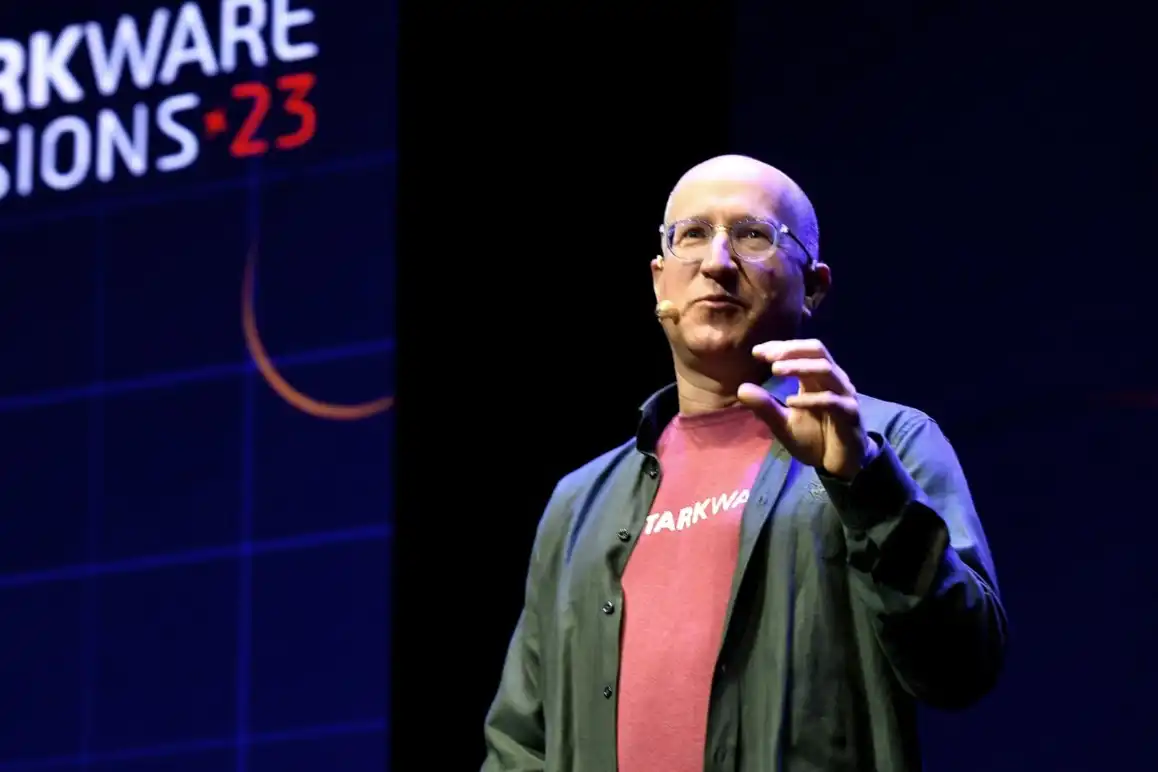
Since this year, ZK (Zero-Knowledge Proofs, zero-knowledge proof) is undoubtedly our One of the most frequently seen industry words. Whether it is Vitalik's remarks that ZK will become a major technological revolution in the future, or the latest progress of projects such as StarkWare and zkSync, the ZK narrative is highly anticipated in 2022.

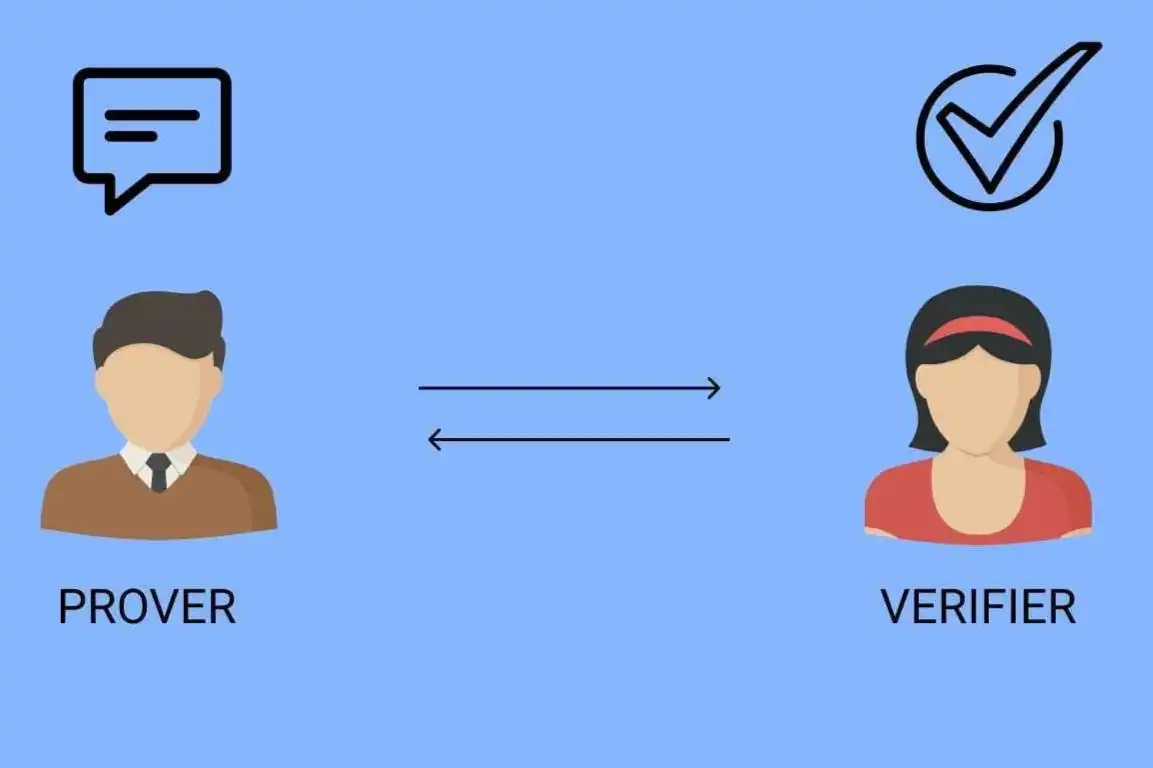
The earliest research on zero-knowledge proof was done by M IT professor Shafi Goldwasser, Silvio Micali, and cryptography guru Charles Rackoff proposed in an academic paper in the 1980s - "Knowledge Complexity of Interactive Proof Systems". Through zero-knowledge proof, the prover can prove the authenticity of the information to the verifier without revealing the information itself. Twenty or thirty years ago, the brain hole of this computer theorist was considered "unreliable" by the outside world. In the past ten years, ZK technology has developed rapidly, and the ideas in the original paper are becoming a reality.
From a technical point of view, ZK is an agreement between the prover and the verifier, and the prover can not disclose any information other than the proof itself Under the premise, let the verifier confirm that a certain proof is valid. This is the "zero-knowledge" part of the proof - there is no knowledge or information to support this proof, other than the proof itself. That's why this technology is all the more important.
From the perspective of application, ZK has two very important directions:
Privacy Sexuality - ZK achieves the privacy of information. In a transaction, if you need to prove that you have some unspent asset, but you don’t want to expose the entire source and whereabouts of the asset, ZK can solve the information leakage caused by transaction transparency in blockchain platforms such as Bitcoin, such as transfer address and Amount;
Scalability——If a block directly verifies for a long time, it can be changed to one person to verify and generate a certificate, while the network Others quickly verify the proof, instead of everyone taking a long time to verify directly;
There are two main types of ZK: zkSNARK (succinct non- Interactive zero-knowledge proof) and zkSTARK (concise and transparent zero-knowledge proof). The concept of zkSNARK was first proposed by scholars in 2013, and it is now relatively mature. Zcash is the first blockchain project to apply zkSANRK technology.
ZK technology has been used in major Rollup solutions to solve the scalability and high handling fee problems of Ethereum. StarkWare, zkSync (from Matters Lab), Aztec, Loopring are the current main players in the zk-rollup space.
How to better understand the significance of this cryptography technology? We need to start with consensus. The economics behind high transaction costs on Ethereum is consensus: consensus must be expensive, because cheap consensus is not trustworthy.
Assume that there are 10,000 nodes, and each node does the same calculation, so that the results are very reliable and will not be corrected due to the dishonesty of a small number of nodes Consensus results have an impact. This is why the blockchain can be decentralized - to build trust through algorithmic means.
However, the cost of consensus is that 10,000 computers recalculate, and the cost is 10,000 times more expensive than on 1 computer. This is the biggest problem with all consensus protocols, whether PoW or PoS.
ZK is a way to essentially reduce costs - we can run calculations on one computer, and other computers use cryptographic methods to verify Computational reliability does not require double counting. On more expensive chains such as Ethereum, it is cheaper and more gas-saving to verify the correctness of calculations than to repeat calculations.
This is why everyone is optimistic about zk-Rollup. zk-Rollup is built on the L1 main chain. It packages multiple transactions into one and submits them to the Ethereum main chain, and is quickly verified by the main chain through zero-knowledge proof (SNARK or STARK), instead of letting the main chain process each transaction separately. In this way, the size of each transaction will be compressed, and the cost of zero-knowledge proof verification will be allocated to each transaction, thus saving Gas fees and improving TPS.
Privacy is another important application area of ZK. From the perspective of information theory, privacy is a problem of information leakage. To ensure privacy on the chain, the data on the chain must be encrypted through cryptography solutions, so that there is no correlation between each transaction record on the chain. Through ZK, calculations can be verified without revealing any information about the input and the calculation itself, which is currently the only tool that guarantees privacy on the chain from cryptographic means.
A very important point in the concept of Web3.0 is that users truly own their own identity and data ownership. At present, all information on the blockchain (addresses, transfer records, etc.) is public, and user information can be easily obtained through machine learning and big data mining. And nothing less. Although blockchain users do not currently have a broad and strong sense of privacy, if they want to realize the vision of Web3.0, people must have the power to have their own privacy on the chain. It may not be required, but it must be optional.
In order to improve the privacy leakage problem in the blockchain network, in 2014, several cryptography experts used zkSNARK to create Zcash, the first blockchain project that can achieve complete anonymity. zkSNARK can verify the legitimacy of transactions without revealing any sensitive data (amount, address, etc.), providing users with a higher level of privacy when using encrypted assets for transactions.
Zero-knowledge proof is first of all a cryptographic protocol, one party (prover) can convince the other party (verifier) that he knows the solution without disclosing the solution A solution to a mathematical puzzle.
In private transfers, proofs need to be created to verify that "an asset that has not been spent before is sent from one user's address to another user's address, they The hidden account addresses are updated with corresponding balance changes, and this asset will not be spent by the first user.” Zcash can anonymize user and transaction information as much as possible, while this transaction can still be used by the network Consensus is effectively verified.
If anonymous transactions are to proceed smoothly, certain conditions must be met. For example, Zcash requires users to post a "commitment" and a "nullifier".
Commitment refers to the unspent balance on the Zcash chain. Just like the Bitcoin network, nodes on the Zcash network maintain individual account balances to prove that funds are available to spend. If a user wants to send ZEC, a commitment needs to be issued to prove "Look, I have this money" (but the exact amount will not be announced). The nullifier is used to indicate that the same amount of funds has been reserved.
If Alice wants to send Bob a sum of ZEC, she needs to use a commitment to prove that she has the right to use the funds, and she needs a nullifier to prove the amount The money has been reserved for Bob (of course, under the premise of not revealing Bob's identity). The transaction sender encrypts the private information and puts it directly into the transaction chain, and the receiver decrypts it in a certain way to obtain the private information.
Anonymous transfers rely on hash encryption like Bitcoin, but zkSNARK adds a privacy layer on top of it.
zkSNARK can not only be used for anonymous transactions between encrypted assets, but also can be used to help more and more applications achieve privacy. In the Web3 era, we have seen the explosion of DeFi, NFT, GameFi, SocialFi and other application layers, and the behaviors on the chain are becoming more and more abundant. Simple anonymous transfers can no longer meet people's needs for privacy.
Imagine, based on ZK technology, many bold ideas can become possible. For example, the completely decentralized privacy message board allows users to prove their credibility without revealing their specific identities: "I am a US official", "I am a Twitter KOL with 100,000 fans"; We can also hide the player's location in the MMO game on the chain, and achieve a truly decentralized "cryptographic fog of war". Similar things are already being done by Dark Forest. There are many other examples like this, and you can use your imagination to your heart's content. But as some have predicted, the next generation of Ethereum dapps may not be an improvement on the original application, but rather something new that has never been seen before.
Of course, ZK technology is still in its early stages, and there are still many areas worth exploring and improving, but it is foreseeable that there will be more and more zones in the future. Blockchains run ZK validators on-chain.
Due to the high difficulty of ZK technology, there are not many projects that use ZK technology to solve blockchain privacy issues. We are familiar with ZCash, TornadoCash, Aleo, etc., and Manta is a Polkadot ecosystem. The first zkSNARK-based Web3 privacy protection project, Manta's main products include private payment MantaPay and private AMM DEX MantaSwap.
With the help of interoperability between Polkadot parachains, MantaPay can exchange Polkadot and parachain assets into privacy assets, so that users can use various packages Stablecoins, BTC and other assets while enjoying the anonymity brought by privacy assets.
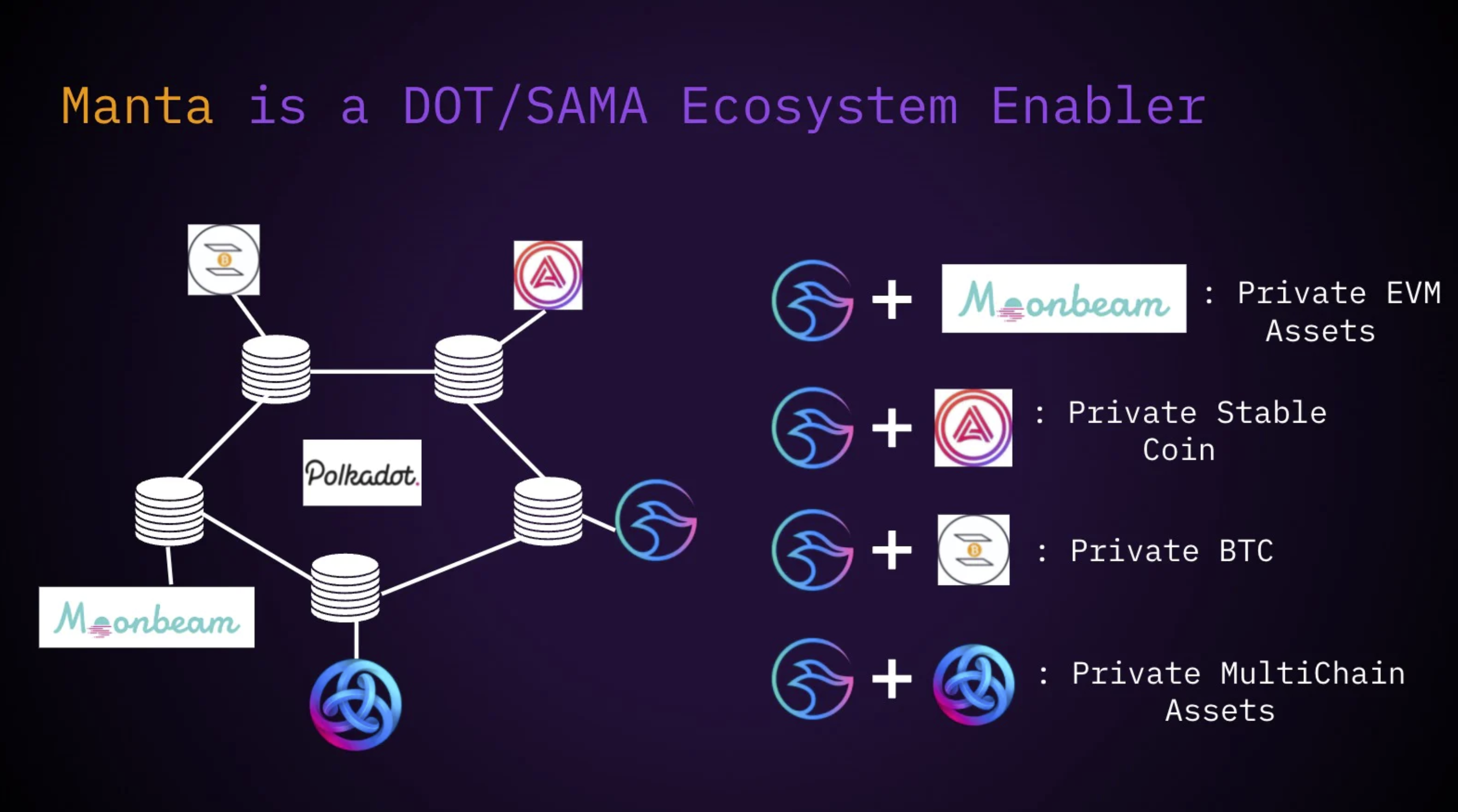
MantaPay's privacy payment product and now based on smart Decentralization of contracts The application is very different, Manta Network itself is the network layer, which provides more flexibility in terms of speed, cost and function. Manta has its own UTXO-based wallet address system, and users can store, transfer and exchange private assets, which can achieve comprehensive privacy in the true sense. For example, a user can send 10 and 2 private DOTs to different people respectively. On Tornado Cash, a private transaction can only be withdrawn as a public transfer and cannot be decentralized.
In addition, Manta's fee structure is not limited by the ETH POW consensus, but as a network layer specially established for private transactions, which can provide users with fees Lower transfer experience.
MantaSwap, a privacy exchange protocol based on AMM and zkSNARK, can complete decentralized transactions between private assets similar to Uniswap and Curve while satisfying the privacy of transaction addresses sex. (For more information about MantaSwap, please refer to "Why do we need a private version of Uniswap?"< /a>)
After launching MantaPay of Manta1.0 and MantaSwap of Manta2.0, Manta 3.0 will launch a zkSNARK smart contract platform based on Manta's infrastructure, Allow community users and development teams to build their own privacy protection products on the platform, such as privacy DAO tools, privacy NFT marketplace, etc. Manta's long-term vision is to become a privacy protection platform for blockchain applications and provide more convenient privacy protection services for the entire blockchain world.
References:
【1】The Knowledge Complexity of Interactive Proof Systems
By Shaff Goldwessar, Silvio Micali, Charles Rackoff
【2】Privacy Coins and zk-SNARKs: How Do They Work?
Welcome to join the official BlockBeats community:
Telegram Subscription Group: https://t.me/theblockbeats
Telegram Discussion Group: https://t.me/BlockBeats_App
Official Twitter Account: https://twitter.com/BlockBeatsAsia
 Related Articles