Inventory of 12 popular ZK tracks that have not yet issued coins Alpha.
Original Title: "ZK is the endgame? Check out 12 popular ZK tracks that have not yet been released"
Original Source: veDAO
Recently, Arbitrum has once again ignited the Layer 2 narrative due to its airdrop issuance. With the deployment of OP Rollup, the two major tracks of optimism and Arbitrum have landed, bringing about huge wealth effects. Another major L2 narrative, the ZK track, has become one of the most closely watched objects in the industry. In fact, from the perspective of landing prospects, although ZK Rollup is much more difficult than OP Rollup, its development prospects will be broader than OP Rollup.
After all, the development of OP Rollup is limited to the ERC category, which may be like practicing in a screw shell. However, ZK Rollup can provide assistance to fields beyond the ERC category, and even the implementation of zero-knowledge proofs can help with trust verification in the entire real society, which is more meaningful in reality.
On March 24th, Matter Labs CEO Gluchowski stated in an interview with The Block that zkSync will achieve sequencer decentralization (release Token) in about a year.
Due to the experience of the two major infrastructure airdrops, OP and ARB, many people believe that zkSync has reserved a one-year "airdrop" window for the industry. Therefore, the veDAO Research Institute has compiled 12 projects in the current ZK track that have not yet issued tokens, which may provide some foresight for the wealth expectations of the 2024 halving cycle and the explosion of the zk ecosystem.
ZK is the endgame?
First of all, we need to have a basic understanding of zk:
Zero-knowledge proof or zero-knowledge protocol is a method for one party (the prover) to prove a proposition to another party (the verifier) without revealing any information except for the fact that the proposition is true. Therefore, it can be understood as "zero-leakage proof". For example, if someone wants to prove that they have certain intelligence to others, they can simply disclose the intelligence, but this will also reveal the details of the intelligence. The essence of zero-knowledge proof is how to prove that one has the intelligence without revealing the content of the intelligence. This is also the difficulty of zero-knowledge proof.
For example:
A room with password locks on both the door and windows. At the entrance, Alice wants to enter the room but doesn't know the password.
Bob informed Alice that he knows the passwords for the door and windows, and he can sell them to her for $100 if she needs them.
Alice suspects the authenticity of Bob's password. Unless Bob informs Alice of the password in advance and it is verified by Alice successfully, Alice will pay Bob 100 dollars.
Bob is worried that if his password is shared, his information will no longer be unique and will lose its value. Therefore, he made a suggestion;
Alice stands 20 meters outside the door, while Bob opens the door, enters the room, and opens the window.
Alice knows that the password controlled by Bob is valid as long as she sees the window open.
And Bob doesn't have to worry about the password losing its value due to early sharing.
Throughout the process, Bob's verification behavior and Alice's confirmation behavior did not result in any password leakage.
This logic is the foundation of zero-knowledge proof. The reason why zero-knowledge proof is highly sought after in the blockchain and cryptocurrency industry is because people's demand for privacy and security in digital transactions is increasing. With the rise of blockchain technology and cryptocurrency, people need a method that can verify transactions without revealing sensitive information, and ZKP can meet this demand.
The importance of this technology in enhancing the privacy and security of blockchain, cryptocurrency, and decentralized finance (DeFi) is increasingly recognized. Many DeFi projects have already applied ZKP to services such as lending and trading, providing users with better privacy and security. Many Layer 1 blockchains are adding ZKP-based aggregation or zero-knowledge Ethereum virtual machine (zkEVM). As the adoption of zero-knowledge proof applications continues to increase, it is expected to play an increasingly important role in the blockchain and Web3 fields. At the 2022 Developer Conference (DevCon), over 20% of the discussions revolved around zero-knowledge proof technology, indicating its popularity.
ZK Outlook
In fact, with the popularization of the concept of zero-knowledge proofs, more and more DeFi products are now accepting and using this new technology. Especially with zk Rollup, it has become one of the preferred Layer 2 network solutions for Ethereum scalability, along with OP Rollup. By using Rollup, users can reduce gas fees by up to 100 times compared to the first layer network.
Compared to OP Rollup, its advantages are: higher security, stronger transaction confirmation timeliness, significantly better TPS and transaction costs; but its disadvantage is that it is not easily compatible with EVM.
Currently, zero-knowledge proofs are widely used in the following fields:
Identity authentication: Zero-knowledge proof can be used to verify a user's identity without revealing any sensitive personal information.
Credit Record: Users can selectively present their credit records to another party, which can not only show the record score that meets the other party's requirements, but also prove the authenticity of the credit record.
Decentralized Storage: Servers can prove to users that their data is securely stored and that no specific content of the data is leaked.
Anonymous Governance: Allows voters to vote, can be verified, but the identity of the voter will not be exposed.
Transaction Confidentiality: By using encrypted cryptocurrencies with ZK technology, the sender and receiver addresses as well as the transaction amount can be shielded from the public blockchain, enhancing the privacy of user transactions.
Compliance: Some countries have strict regulations in place for collecting and sharing financial information, which decentralized platforms may find difficult to comply with. Zero-knowledge proofs can be used to share necessary information with regulatory bodies while keeping it confidential from other parties.
Throughout the years, the ZK track has been given high expectations for wealth return rates by the market. This is not only because the implementation of Ethereum's layer 2 network will greatly benefit the industry, but also because of the increasing regulatory scrutiny worldwide and the growing distrust of centralized finance due to financial crises, bank failures, and other black swan events. A sound and reliable concept of identity and information verification based on decentralized networks is becoming increasingly important. As a result, ZK's important products, such as zkSync, StarkNet, LayerZero, Arbitrum, and SuiNetwork, are collectively referred to as the hottest airdrop targets for 2023/24.
Below are the zk Alpha products selected by veDAO Research Institute with potential wealth effects and still in the early stage of "getting on board".
Project
zkSync
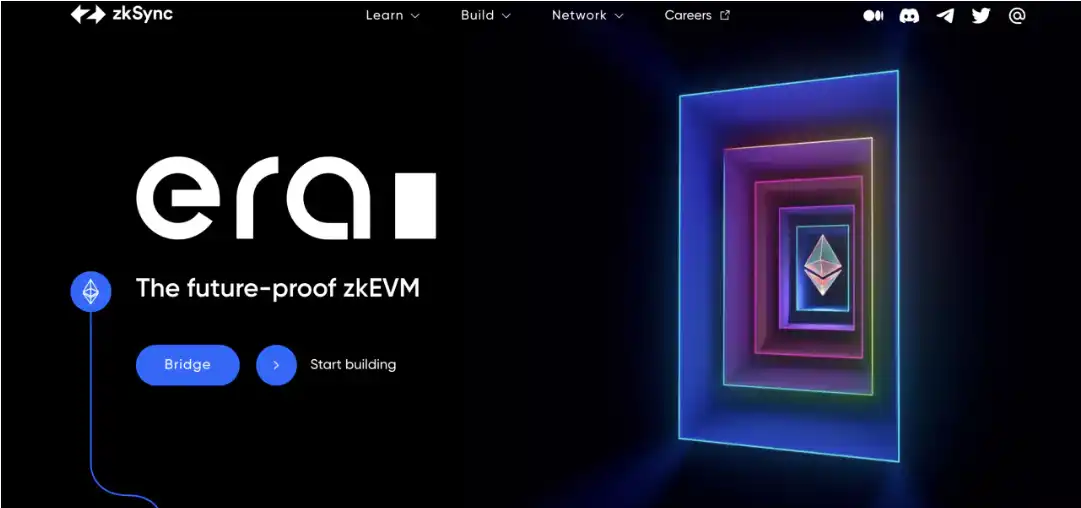
zkSync is a 2-chain that uses ZK rollup technology to solve Ethereum's current scalability issues. The chain has been developed by Matter Labs since 2019 and is currently in the Baby alpha stage, undergoing internal mainnet testing.
zkSync stands out with its low transaction costs (a few cents per transaction) using ZK SNARK technology, security benefits from Ethereum, and decentralization. zkSync also offers interoperability, thanks to its V2 release in February 2022, making it the first EVM-compatible ZK-Rollup, an achievement that should have taken years.
- zkSync focuses on 5 main Ethereum-related properties:
- As a universal protocol;
- EVM compatibility;
- Gas fees paid with ETH;
- Open source and decentralized.
Aleo
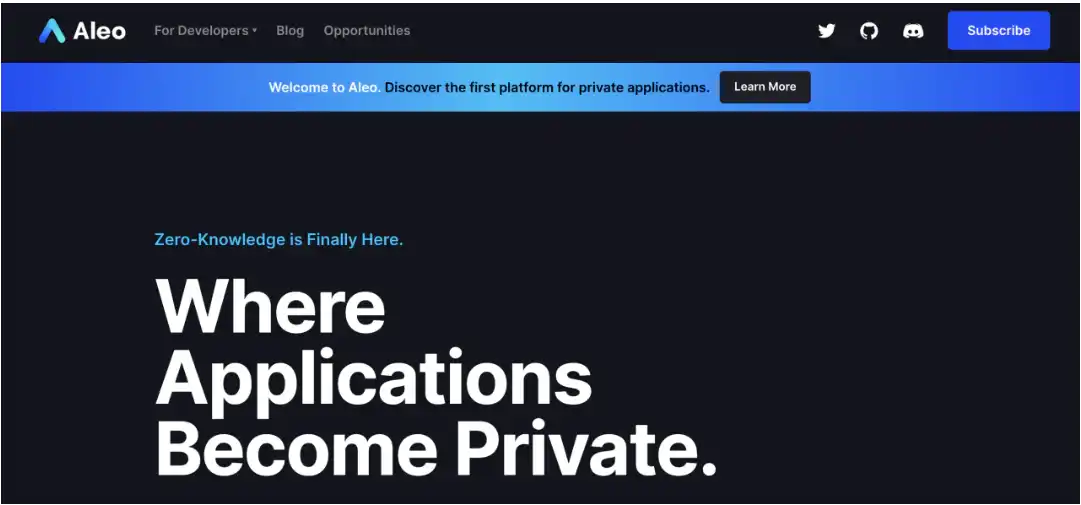
Aleo is the first decentralized open-source platform that supports private and programmable applications. By defaulting to opt-out privacy, Aleo achieves a sustainable and equitable Web3 world that meets the needs of developers, consumers, and enterprises.
Aleo uses zero-knowledge cryptography to achieve privacy and programmability. Zero-knowledge cryptography and zero-knowledge proofs allow third parties to verify the authenticity of a piece of information without us directly revealing it. Aleo uses this as the basis for a system called ZEXE (Zero-knowledge EXEcution). In ZEXE, users execute state transitions offline. This process produces a proof, which is bundled into a chain transaction. The transaction updates the system's state by consuming/creating on-chain records. Like Zcash, the system provides strong privacy guarantees because transactions only contain proofs, not the inputs that generated them. Like Ethereum, ZEXE can support smart contracts, allowing users to interact or transfer value in a predefined way.
StarkWare
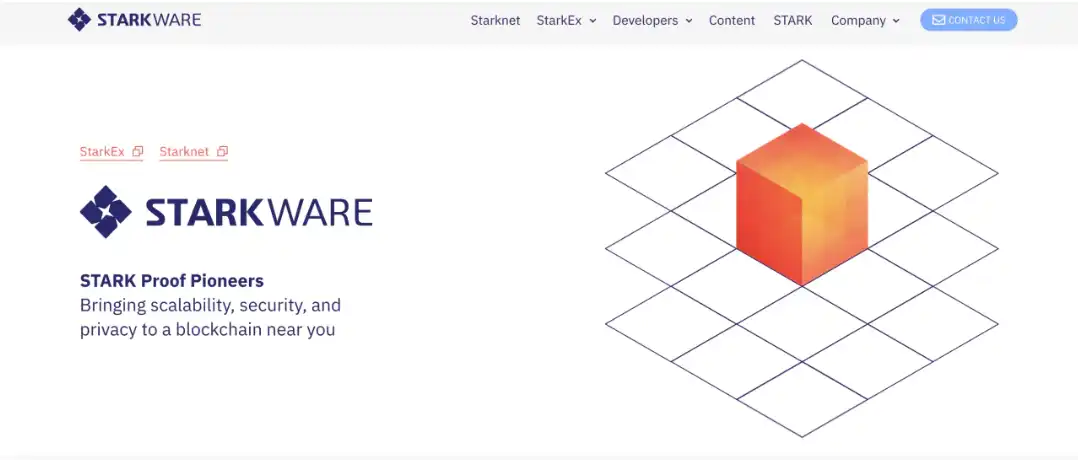
StarkWare uses concise zero-knowledge proof technology to protect the privacy of blockchain data, which can be used for various purposes such as verifiable computation and privacy-protecting cryptocurrencies. StarkWare aims to bring transparent privacy and scalability to the blockchain. StarkWare is committed to improving two critical factors in the blockchain world, scalability and privacy, using STARK technology. Its role is not only to promote the use of STARK technology, but also to provide "zero-knowledge, concise, transparent, obvious, and secure" cryptographic proofs.
StarkWare will develop a complete verification stack: software and hardware, to support fast and reliable generation and verification of computational integrity proofs for general computation. Its report first implements a transparent ZK system (ZK-STARK), where the scale of verification is much faster than the scale of the database.
StarkWare is vigorously promoting the "zk-STARKs" blockchain privacy solution developed by the Israel Institute of Technology. This solution uses zero-knowledge proof protocols to protect blockchain privacy data, verifying privacy information without requiring a lot of computing power or specialized software installation. Additionally, it can compress data even further, improving efficiency, transparency, and security. By utilizing StarkWare technology, blockchain scalability and privacy can be enhanced.
Aztec Network
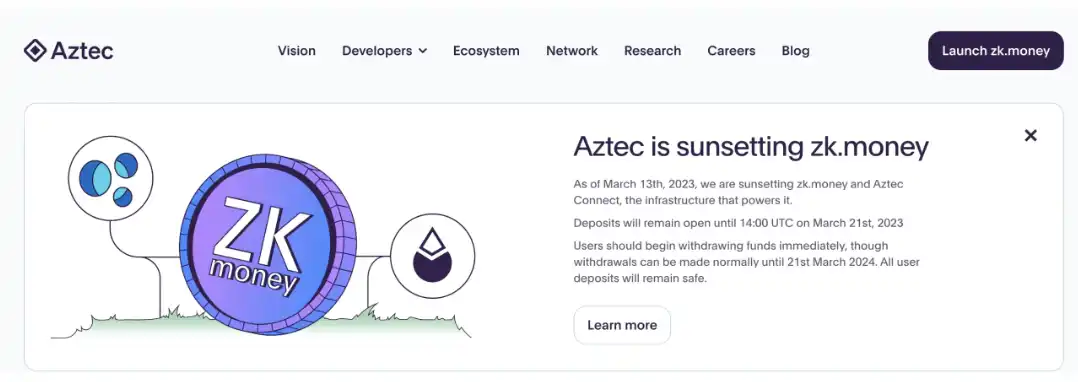
Aztec Network is positioned as a privacy-focused ZK Rollup on Ethereum, aiming to help users access Ethereum Dapps in a private and efficient manner. The project has currently launched two main products: zk.money, a privacy transfer protocol based on Aztec Rollup, and Aztec Connect, a privacy bridge linking Ethereum Dapps and Aztec Rollup.
With zk.money and Aztec Connect, users can freely transfer funds without exposing their personal information such as address and funds. They can also securely access multiple mainstream DeFi protocols such as Lido, Element, Aave, Compound, and Uniswap.
It is worth noting that on March 13th of this year, Aztec Network announced that it will gradually shut down its DeFi privacy bridge project, Aztec Connect, and will disable the deposit of funds into the Aztec Connect contract from zk.money and other front-ends (such as zkpay.finance) one week later.
The team will focus its attention on two new main products in the future:
- A general-purpose development language Noir that supports zero-knowledge proofs.
- A brand new privacy-focused blockchain.
Scroll
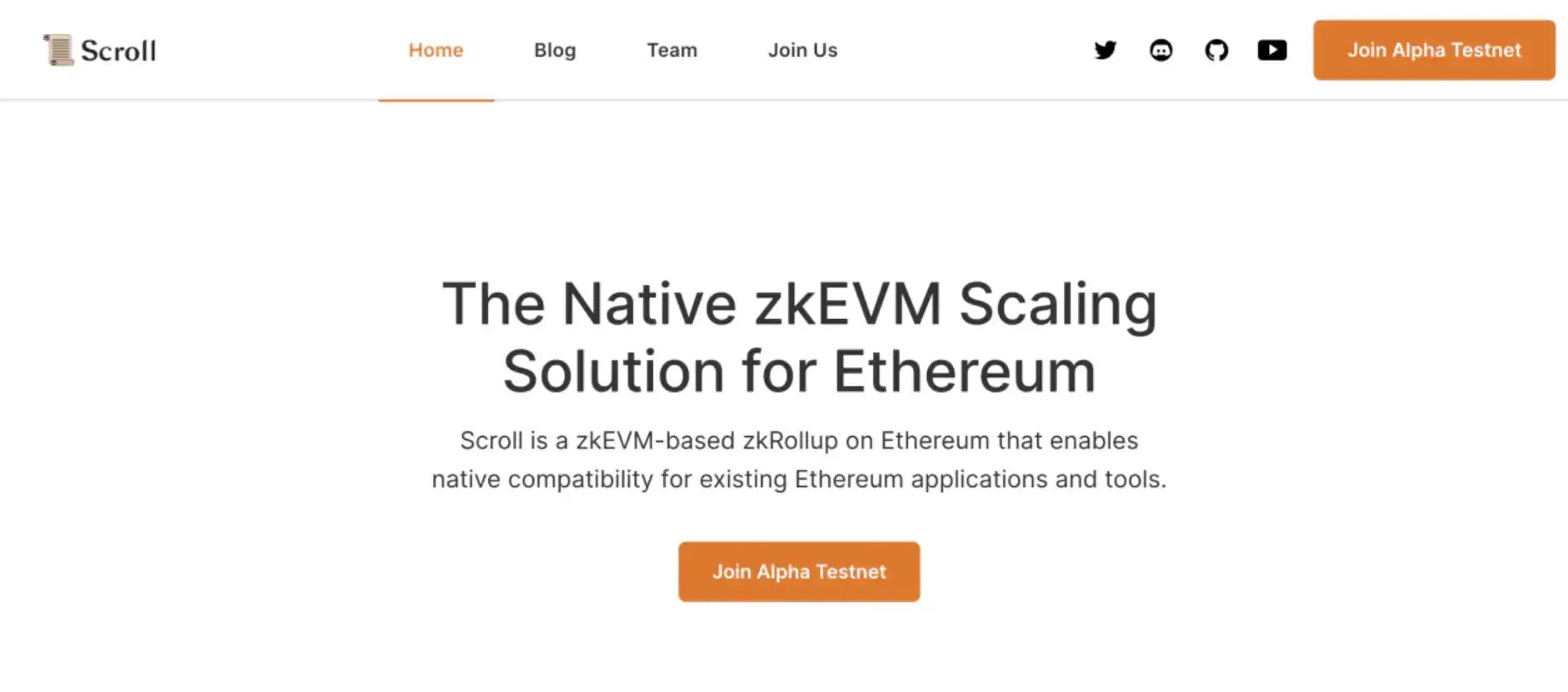
Scroll is committed to creating a more universal zero-knowledge proof expansion solution, and boldly announced the decentralization of power to the community, allowing nodes, validators, developers, and users to build the Scroll community together. By openly building with the community and creating a reliable path for on-chain proof and sorting, Scroll is committed to ensuring decentralization at all levels.
zkLend

zkLend is a currency market protocol that combines zk-rollup scalability, excellent transaction speed, and cost savings with Ethereum's security. zkLend is an L2 currency market protocol built on StarkNet, which combines the scalability of zk-rollup with Ethereum security, allowing participants to effectively earn interest on deposits and seamlessly borrow assets. The zend token issued by Zklend will have three major functions: 1. discounted borrowing rates; 2. increased borrowing capacity; and 3. governance participation.
Currently, zkLend has completed a $5 million seed round of financing, led by Delphi Digital, with other major investors including StarkWare, Three Arrows Capital, Genesis Block Ventures, Alameda Research, CMS, MetaCartel DAO, DCVC, Amber Group, TPS Capital, Ascensive, D3 Web Capital, 4 RC, SkyVision Capital, and other angel investors.
Mint Square
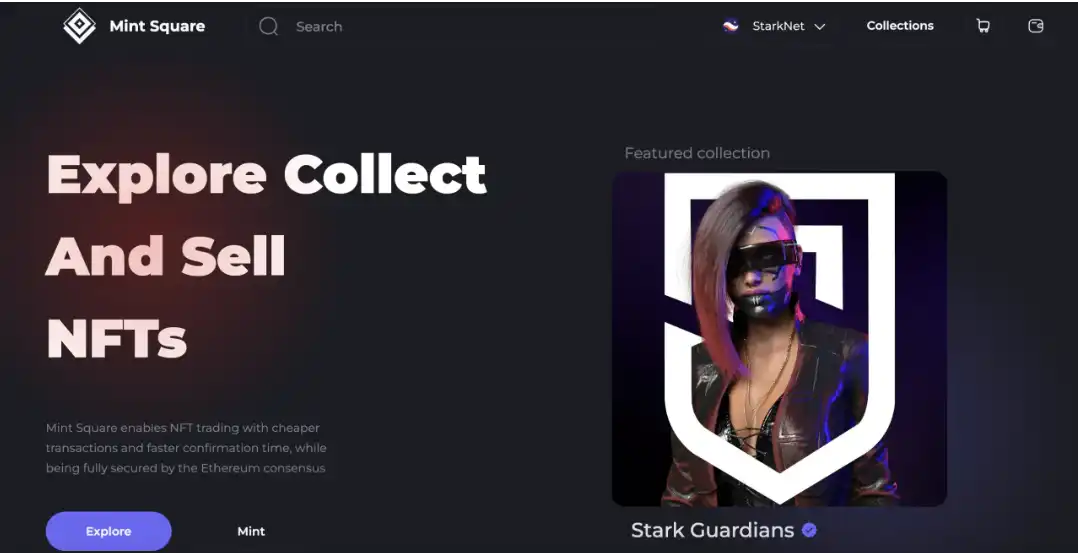
Mint Square is an NFT platform on ETH Layer 2 ZK Rollup. Mint Square is an NFT platform on ETH Layer 2 ZK Rollup, with the aim of building the best multi-chain ZK Rollup NFT market, integrating the two major platforms of StarkNet and zkSync Era.
ZKEX
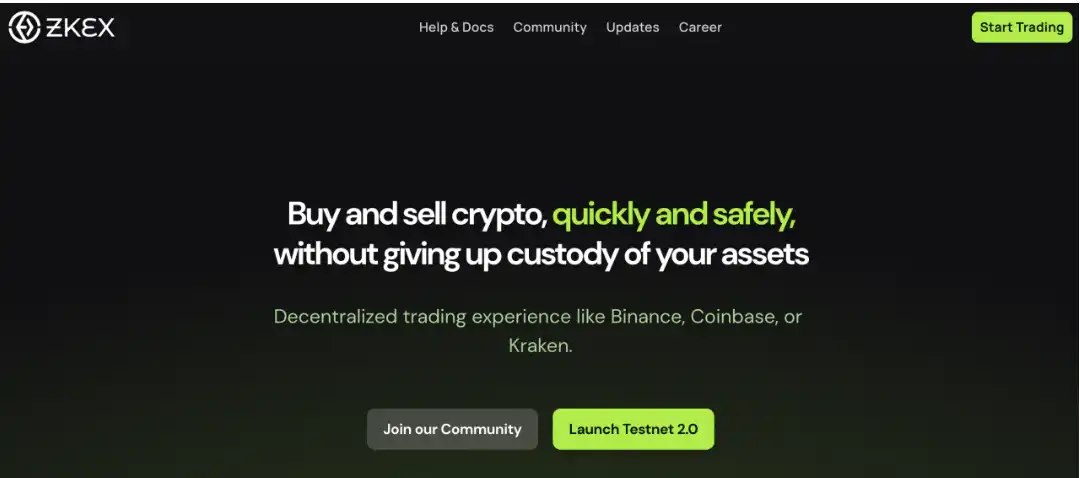
ZKEX is a decentralized L2 multi-chain order book exchange (DEX) built on three ZK-rollups: zkLink, Starkware, and zkSync. Users will be able to trade assets from multiple different chains with a Binance or Coinbase-like experience, but ZKEX will be decentralized, trust-minimized, and non-custodial, with transactions protected by zero-knowledge proofs.
Iron Fish
Iron Fish is a new cryptocurrency that uses zk-SNARKs and Sapling protocols to protect every transaction. Anyone can run a node and contribute to its codebase.
Iron Fish enables fully private transactions that hide the sender, receiver, and amount using zero-knowledge proofs, while providing proof of transaction validity. Every transaction on Iron Fish is private - no one can see the account details unless the owner grants read-only access by viewing the key.
Nulink
Nulink is a privacy protection technology platform for distributed applications (Daaps). It allows users to remain anonymous. The project will bring enterprise-level security solutions to developers, startups, small businesses, and enterprises to achieve this goal. As its technical foundation, the Nulink technology platform includes blockchain, access control (proxy re-encryption, attribute-based encryption), and secure computation (zero-knowledge proof, secure multi-party computation, fully homomorphic encryption) technologies. It provides data exchange and processing capabilities within the enterprise.
Nulink is building a solid technical foundation by combining top-notch technology. The integration of the application layer, cipher layer, storage layer, blockchain layer, and Watcher Network is achieved through this matrix. For Nulink users, it is very easy to integrate into a single API and access various storage and blockchain solutions. The network integrates NuCypher for key management. Bitcoin miners can earn $NLK by providing decentralized storage facilities, and they can earn $NLK by passing information from ETH to the observer layer.
Starkswap
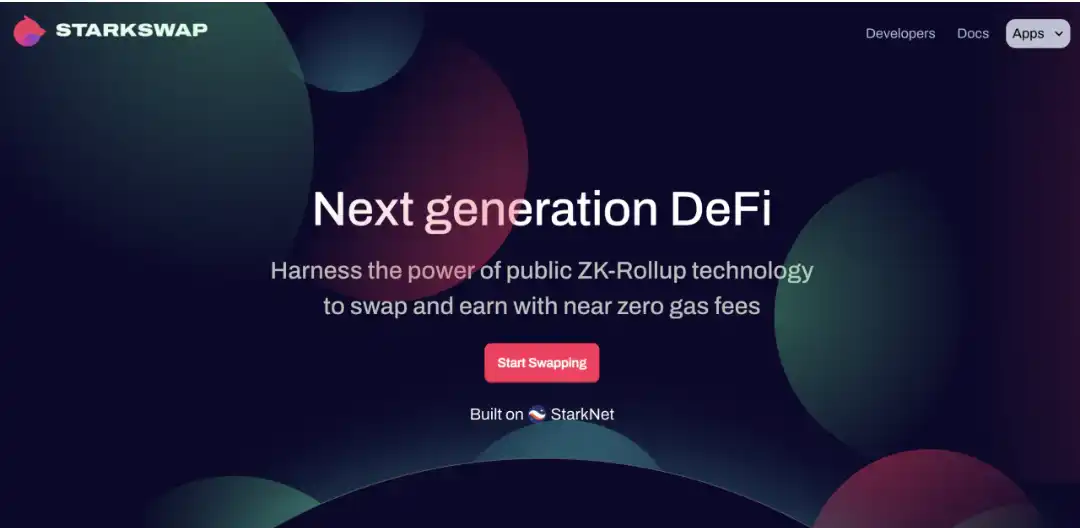
Starkswap is the first AMM DeFi product built on public ZK-Rollup and StarkNet. Built on top of underlying infrastructure, users will enjoy lightning-fast transactions at a lower cost (initially gas-free), while still benefiting from the security of layer 1 Ethereum.
Starkswap is a strong competitor for the main AMM on Starknet. The team launched a testnet in March and announced a rebuild of V1 from scratch, supporting custom curves.
They recently launched Iron Fleet with Yearn, a new protocol on Starknet that allows users to pool their assets when interacting with first-layer DeFi protocols. This allows for gas to be shared among users, reducing the cost of operations for everyone.
Summary
From the perspective of simply airdropping, whether it's the previous OP or the current ARB, or the upcoming Aptos, Sui, and next year's zkSync, infrastructure has always been the "big hair" and an important manifestation of wealth effect.
The communication of the wealth effect often starts with the infrastructure such as public chains and middleware, and then reaches the basic applications of the ecosystem, such as stablecoins, lending, and exchanges, before finally reaching non-basic applications such as social media and gaming.
Currently, on the eve of the zk track explosion, it is necessary for us to pay full attention to the infrastructure and basic applications of the zk track.
Original source
Welcome to join the official BlockBeats community:
Telegram Subscription Group: https://t.me/theblockbeats
Telegram Discussion Group: https://t.me/BlockBeats_App
Official Twitter Account: https://twitter.com/BlockBeatsAsia

 Related Articles