Just completed a $200 million financing round, why is Helium so hot right now?

Original Title: Maybe There’s a Use for Crypto After All
Original Author: Kevin Roose, The New York Times
Translation: Bipan, Odaily BlockBeats
On February 19, the decentralized wireless network Helium completed a $200 million Series D funding round at a $1.2 billion valuation, with participation from Tiger Global and FTX Ventures.
According to Odaily BlockBeats, Helium had previously raised approximately $110 million in venture capital on PitchBook and conducted a $111 million token sale led by a16z last summer. Now, Helium's existing supporters also include Khosla Ventures, GV, Multicoin Capital, Munich Re Ventures, and FirstMark Capital, among others, enjoying wide acclaim from A-list institutions.
As a decentralized network consisting of over 500,000 hotspots, Helium aims to provide bandwidth for and collect data from IoT devices near users. In addition, what other features and applications does Helium have? Recently, The New York Times conducted a feature story on Helium, which Odaily BlockBeats has translated and summarized as follows:
One of the most common questions from crypto skeptics is: Besides financial speculation and crime, what else can you do with crypto?
It's a difficult question to answer, in part because most of crypto's successful (and legitimate) applications so far have been in the financial or fintech fields. There are many cryptocurrency exchanges, NFT trading platforms, and video games involving the buying and selling of cryptocurrency, but so far, not many crypto projects have achieved what I would call "Normie Utility" – that is, solving problems people have outside the crypto world (which are mainly not about buying and selling digital assets) while also not using conventional non-crypto technologies.
However, recently I came across such a project.
It is Helium. While not the most high-profile crypto project, devoid of boring apes or constitutional replicas, it has been incredibly helpful in aiding my understanding of using crypto to solve certain types of problems.
At its most basic level, Helium is a decentralized wireless network for "Internet of Things" devices, powered by cryptocurrency.
The network consists of devices called Helium Hotspots, which are equipped with antennas capable of transmitting small amounts of data over long-range radio frequencies. Each Hotspot costs around $500, nearly 200 times the cost of a traditional Wi-Fi hotspot, and can share its owner's bandwidth with nearby internet-connected devices (such as parking meters, air quality sensors, or smart kitchen appliances).
Anyone can use the Helium network, although to date, most of its users have been companies like Lime (using Helium to track its connected scooters) and Victor (employing it for a new internet-connected mousetrap venture). However, there are already over 500,000 Helium Hotspots in operation globally, with thousands more being added to the network each day.

Lime Scooters in Hoboken, New Jersey
This is where the crypto part comes in: In addition to transmitting data, Helium Hotspots reward their owners for participating in the network by creating a cryptocurrency called HNT. These tokens can be bought and sold on the open market like any other cryptocurrency, and the more Hotspots in use, the more HNT tokens are generated.
The Helium project was born in 2013, initially not as a crypto company. Its founders originally sought to establish a remote, peer-to-peer wireless network in a conventional manner by persuading individuals and businesses to set up Hotspots and link them together. However, they struggled to garner enough participants, and the network remained stagnant.
Frank Mong, Helium's Chief Operating Officer, told The New York Times that in 2017, as the company was running out of funds, an engineer suggested during an all-hands whiskey-drinking meeting that if they could earn more cryptocurrency, people might be more willing to set up Hotspots.
“In this case, this incentive model driven by encryption technology actually makes sense,” Frank Mong added.
Therefore, the company has broken the old business model and started to transform. Helium will not build the network itself, but will make it fully decentralized, allowing users to self-build the network by purchasing and connecting their own hotspots, with participants also receiving cryptocurrency rewards and voting on proposed changes to the network. If the price of these tokens rises, they will earn more money and set up more hotspots.
After starting the transformation, crypto enthusiasts rushed to set up hotspots on Helium, while also earning cryptocurrency. They also shared some tips in communities such as Reddit and YouTube, such as expanding hotspot coverage by connecting hotspots to high-rise buildings or placing antennas on rooftops. Some hotspot owners claim that despite a decrease in everyone's income as more hotspots are added to the network, they can still earn thousands of dollars per month in this way.
I realized that this is a very important ability of a cryptocurrency project, to kickstart the project by providing incentives to dive into the grassroots. While a project's development does not necessarily have to rely on how to acquire more cryptocurrency, in the case of Helium, using cryptocurrency as a way to encourage user participation and make hotspot owners feel satisfied with building something they own makes sense.
Furthermore, a Philadelphia computer programmer, Arman Dezfuli-Arjomandi, hosting a podcast about Helium, told me that the decentralization of the Helium network is its greatest advantage. “If this network were built on a centralized platform, the possibility of that platform going public or being acquired always exists, whereas a physical infrastructure built by a large number of users is determined by those who own it.”
Unlike many other cryptocurrency projects, Helium is a product used daily by a large number of real people and companies. Those involved are hardly speculators but rather individuals interested in creating a decentralized wireless network. Within Helium's Discord with 140,000 members, discussing coin prices is prohibited. Meanwhile, as a new type of 5G hotspot becomes more common, Helium's speed will increase in the coming months.
Additionally, Helium's blockchain is protected by an algorithm called “Proof of Coverage,” which, compared to the PoW proof-of-work used by Bitcoin and other cryptocurrencies, requires much less energy and has a smaller environmental impact. According to Helium's official estimate, the energy used by its hotspots is equivalent to that of a 5-watt light bulb.
To ensure the accuracy of my argument, I will now test Helium against my "Normie Utility."
Does it solve a non-crypto problem? Yes. With millions of connected devices in the world, connecting these devices to the Helium network is much cheaper than purchasing cellular data plans for each device. Additionally, due to the long-range of hotspots, Helium's network can reach places where Wi-Fi and cellular networks cannot.
Is it useful for more than just speculation? The answer is also yes. The Helium network itself has value, and while hotspot owners do benefit when the HNT price rises, their primary way of earning money is by adding new hotspots, not by trading HNT on cryptocurrency exchanges.
Could Helium work without crypto tech? The conclusion is that the company did try some non-crypto methods, but they mostly failed. However, integrating HNT into the overall project incentivized what tech experts call the "cold start problem," as attracting the initial users to a new network is often challenging.
Helium is not perfect and, like many other crypto projects, operates in a regulatory gray area. If Washington decides to crack down, users could be affected. Federal regulators have suggested that many cryptocurrencies could be deemed securities, subjecting Helium hotspot owners to various securities laws. Additionally, most hotspots are currently located in high-density cities, making it inaccessible to people in more remote areas.
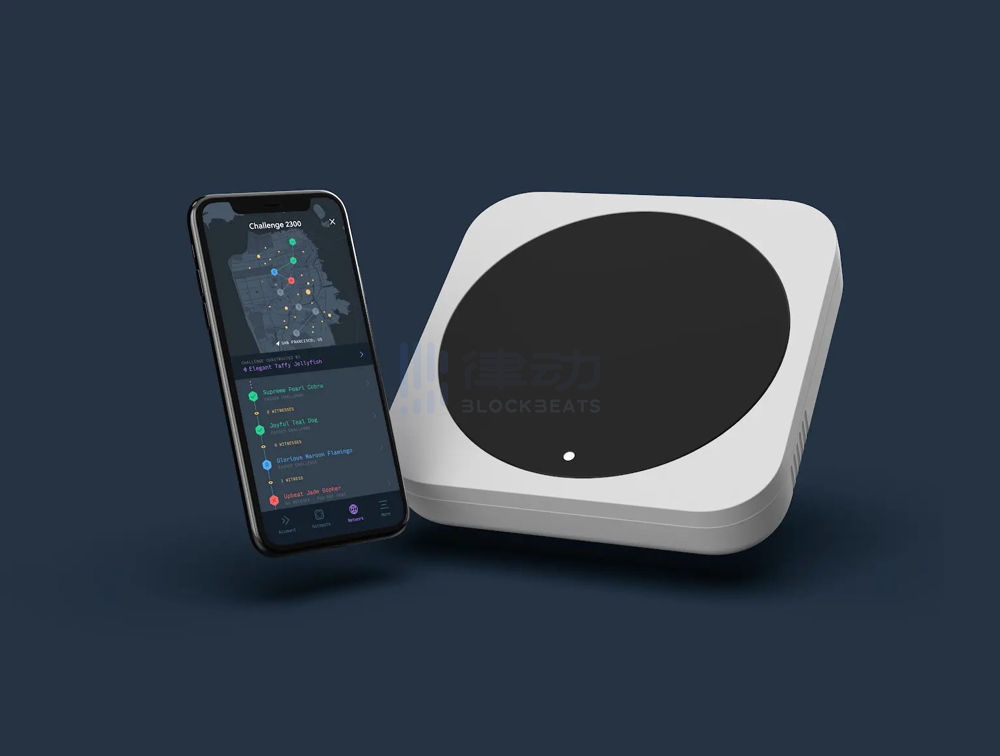
Helium Hotspots and Applications
On the other hand, users setting up a Helium hotspot at home may technically violate their Internet Service Provider's terms of service, as it involves partially reselling bandwidth. For example, Comcast Xfinity subscribers' terms of service prohibit the use of their connection for anything other than personal or non-commercial residential purposes. However, ISPs have not yet aggressively targeted Helium users, but this could change. "We hope ISPs will take an open approach to Helium hotspots," Frank Mong told The New York Times.
Despite these limitations, what I like about Helium is that it largely avoids the exaggerated hype and hyperbole seen in many crypto projects. It aims to fundamentally change business and culture, liberate us from government scrutiny, and reshape the structure of our daily lives. Helium is a practical real-world infrastructure with a cryptocurrency incentive scheme that operates in a decentralized manner.
Currently, I have been testing a Helium miner in my home office for about a week. It is a golden box, about the size of a thick deck of cards, with a long antenna on top. After plugging it into my Wi-Fi router, it generated about $7 worth of HNT in a few days. While not a large amount, if I let it run for a few months, I could recoup the cost.
Being part of the Helium network, even in such a trivial way, has been a good experience for me. I earned some rewards while helping devices around me connect to the internet more affordably. Later on, I also understood its appeal in being crypto-driven, which rewards users for venturing into unconfirmed new things.
I will not get rich from Helium's token, and not everyone needs to rely on a crypto project to make a substantial income; perhaps usefulness is enough for some people.
Welcome to join the official BlockBeats community:
Telegram Subscription Group: https://t.me/theblockbeats
Telegram Discussion Group: https://t.me/BlockBeats_App
Official Twitter Account: https://twitter.com/BlockBeatsAsia