Boring ape NFT co-creation identity was exposed, Web3 and Web2 concept conflict again
Original title: "The Identity of the NFT co-founder of the Boring Ape has been exposed, and anonymity has again become the focus of Web3."
Original source: Heimi, Bai Ze Research Institute
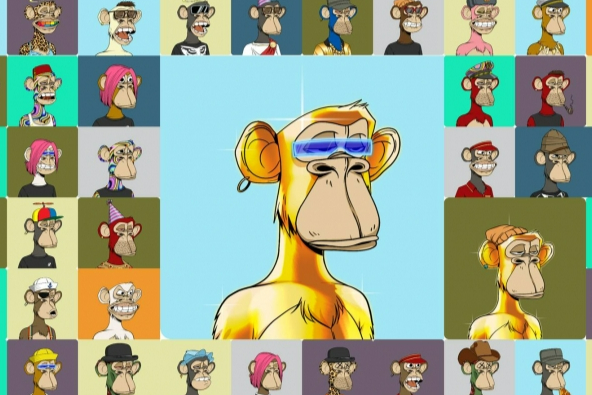
Launched in April 2021, Bored Ape Yacht Club (BAYC) NFT has seen unprecedented growth in less than a year. BAYC is sought after by many celebrities and has also worked with companies such as Adidas, making it one of the most successful NFT collections to date. Holders of this series of NFT can double as club membership, get member-exclusive benefits, and unlock new events in the future.
Jimmy Fallon, DJ Khaled, Steph Curry, and Post Malone all own BAYC NFT. But in recent months, other celebrities have joined in. Eminem, a rapper, has spent a lot of money on the show. 123.45 ETH ($462,000) for BAYC #9055. Dave Chappelle, comedian and actor; 99 ETH ($371,000) purchased BAYC #8343.

Photo: Jimmy Fallon shows off Hilton's boring ape on The Tonight Show
According to NFT-Stats, the Bored Ape Yacht Club NFT has been sold in the last 7 days. 162 times with total sales of $57.12 million and an average price of $325,400.
In December, Animoca Brands, a well-known blockchain game developer and developer behind the Meta-universe platform Sandbox, announced a partnership with BAYC to make blockchain games based on the series of NFT. It will be play-to-earn and is expected to launch in the second quarter of 2022, the company said.
While BAYC has become one of the crypto industry's most prestigious and expensive NFT collections, do you really know the people behind BAYC behind the scenes?
The anonymous founder was stripped of his real name
On Friday, BuzzFeed News, a topical News outlet, published an article titled "We Found The Real Names Of Bored Ape Yacht Club's Pseudonymous Founders," Revealing the identities of two of the four co-founders of Yuga Lubs, the company behind BAYC, The founders, who go by the pseudonyms "Gargamel" and "Gordon Goner," are actually 32-year-old writer and editor Greg Solano and 35-year-old Wylie Aronow from Florida. Nicole Muniz, CEO of Yuga Labs, later confirmed the identities of the two.
The two founders spoke anonymously to publications including Rolling Stone and The New Yorker to discuss BAYC's origin story. In interviews, they talked about how they were both in their 30s, had met while growing up in Florida and shared literary ambitions. They were both interested in the crypto industry and wanted to create some kind of NFT series. Later, they came up with the concept of rich apes living in swamp clubhouses, hired a freelance illustrator to draw boring apes, and teamed up with two engineers as co-founders to run the NFT series, The identities of the two engineer co-founders, Emperor Tomato Ketchup and No Sass, remain unknown.
As it turns out, their interview quotes roughly matched who they really were:
Greg Solano, "Gargamel," works as an editor and book reviewer for several literary websites and is a graduate of the University of Virginia. He co-authored a book on World of Warcraft with a game designer.
Wylie Aronow, "Gordon Goner," spent time in Chicago, where he was interviewed for the Chicago Tribune's "Reader of the Week" story.
In May 2021, crypto exchange Bitmex filed an arbitration suit against Aronow over a disputed domain name. Aronow bought the domain name Bitmex. Guru in 2018, which Bitmex believed was an attempt to trick users looking for the real Bitmex site. Although Aronow did not appear in court, arbitrators in the proceedings ordered him to transfer the domain name to Bitmex.
The article was hotly debated on the social media platform Twitter.
Some members of the crypto community slammed BuzzFeed, accusing it of violating the privacy of the two founders through "Doxxing" -- a term often used to refer to the use of the Internet to collect and publish personal or private information, colloquially known as "human flesh search."
Cobie, a popular crypto podcast, called the article "low-level" and pointed out that BuzzFeed "Human flesh search on people for clicks and AD revenue"; Mike Solana, vice president of Founders Fund, a venture-capital firm, agrees that revealing identities as "some sort of massive scoop" is unpalatable.
Encryption Research Corporation & NBSP; Ryan Selkis, founder of Messari & NBSP; Bluntly: "It feels like an ugly piece of language aimed at ordinary citizens just for fun, clicks and profit."
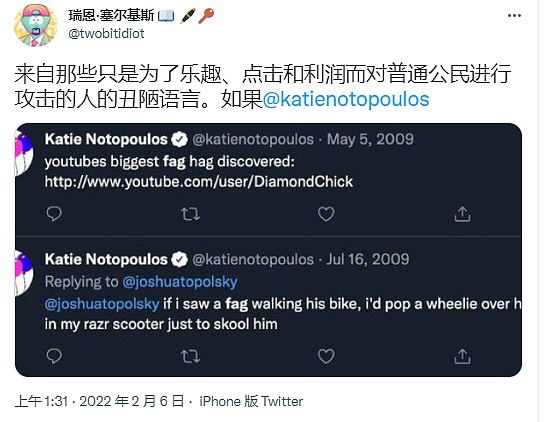
The view in the crypto community seems to be that BuzzFeed and its reporters did something wrong. Outside the crypto world, however, an entirely different argument is being made.
Gabe Rivera, founder of Techmeme, a popular Silicon Valley tech news site, described the article as standard business news and questioned why only a handful of insiders knew who was behind a multibillion-dollar company.
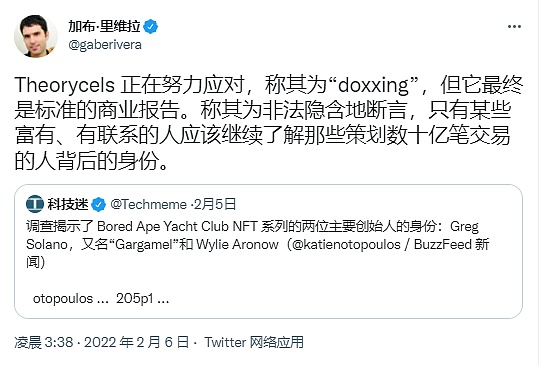
Others pointed out that the reporter who provided the story obtained the identities of the people simply by searching Yuga Labs' corporate records, including company registration documents that are accessible to anyone on the Internet, and that browsing such records is a common practice among lawyers, journalists and law enforcement and does not meet the traditional definition of "human flesh search."
Others point out that BAYC is a billion-dollar brand, and the question of whether it is right to reveal the identities of the two co-founders depends on whether they are truly "ordinary" people.
Perhaps this is a debate about Web3
Anonymization is a feature of Web3 with cryptographic payment and NFT as its core, which helps to cure some disadvantages of Internet companies in Web2 era. As NFT and Web3 go mainstream, companies operating under pseudonyms dealing with large amounts of money are a new economic and legal problem.
In the traditional business world, the CEO or founder of a company uses their real name, not an alias. For public companies, executives must be mentioned in SEC disclosures and reports. For private companies, banking regulations and KYC laws require that banking services only serve companies that hold accounts with real information. These laws are designed in part to prevent terrorists and criminals from doing business in the United States.
According to a recent report by Chainalysis, which tracked at least $44.2 billion worth of cryptocurrencies sent to ERC-721 and ERC-1155 contracts, the NFT market may also have [laundering transactions] and [money laundering] similar to the crypto market. That is to say, washing transactions artificially increase the value of NFT and launder money through the purchase of NFT.
While BAYC's two co-founders, Solano and Aronow, do not have any particularly dangerous histories, if in other NFT series, the founders have criminal histories or extreme political leanings, is it possible that investors will regret the decision in Spend a lot of money on NFT?
"It shouldn't be hard to know who you're dealing with," says Gary Kalman, U.S. office director of advocacy group Transparency. "It's a very basic thing. While venture capital firms can learn more about who is really behind a company, ordinary NFT holders can't. If you don't have transparency and openness, then it's going to be a problem for ordinary people who can't do the due diligence that big companies do."
To some extent, however, blockchain technology also represents a new and improved form of corporate transparency.
"We can hold criminals accountable because all transactions are based on smart contracts and written to the blockchain," says entrepreneur Mark Cuban, owner of two BAYC NFT. It's the antithesis of a traditional corporate business, but what collectibles business today discloses all their sales and business processes?"
Soona Amhaz, a partner at Volt Capital, a crypto-focused venture Capital firm, thinks anonymity could bring some benefits. Unlike traditional startups, it lets founders get rid of investors' judgments about what they look like, what school they graduated from, their social class, gender or race.
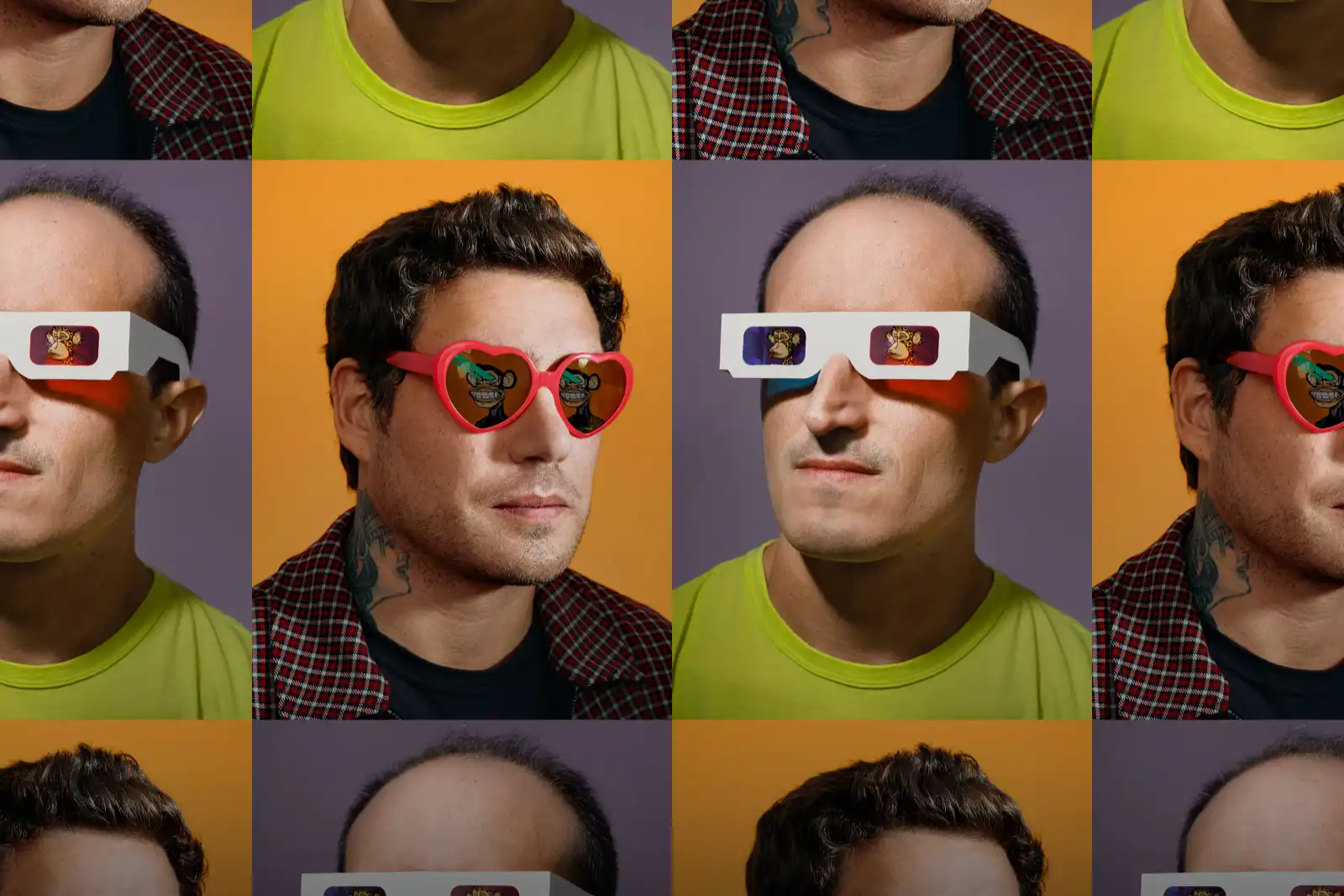
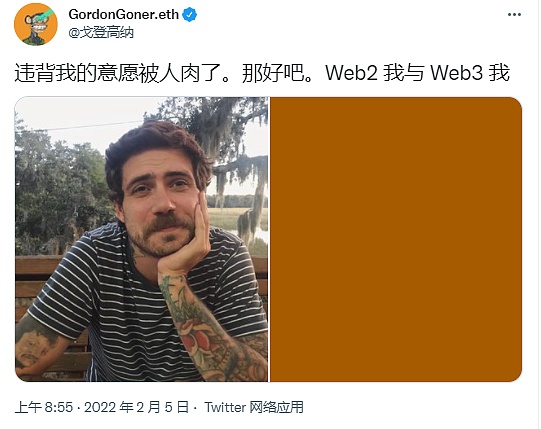
The two founders involved, however, seem to be taking it easy. Shortly after the article appeared, they posted a dynamic on personal social media in a "Web2 me vs Web3 me" format, seemingly expressing their view that the advent of Web3 and its decentralized technology promises to make anonymity easier and avoid the exposure of the Web2 era.

In the future, their views will be tested as BAYC grows into a representative Web3 brand rooted in multiple industries such as film and television, music and meta-universe.
The original link
Welcome to join the official BlockBeats community:
Telegram Subscription Group: https://t.me/theblockbeats
Telegram Discussion Group: https://t.me/BlockBeats_App
Official Twitter Account: https://twitter.com/BlockBeatsAsia
 Related Articles