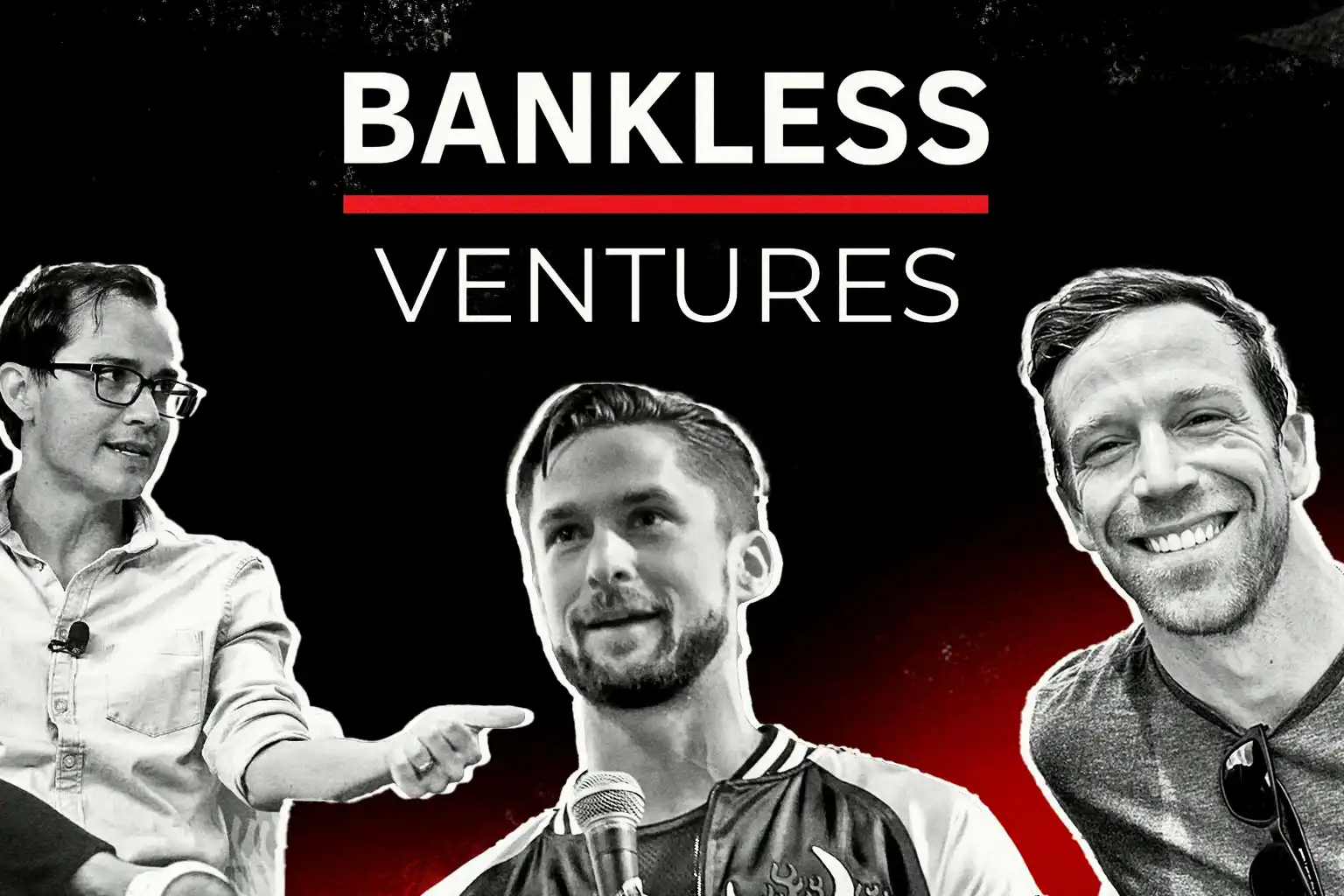
Bankless year-end Review: The world is changing, and we're in charge of telling the story

Bankless is Layer Zero Technology
Source: Bankless co-founder David Hoffman
The Tao of the meta-universe
As we wrap up this year, I want to take this opportunity to zoom in and refocus.
2021 was an incredible year for cryptocurrencies. The crypto community was right about a lot of things this year:
Inflation pushes people into other forms of scarcity.
Silicon Valley's business model allows people to adopt new platforms.
Banks push people to debank more.
This year is a big W for all cryptography, and a big L for all existing stuff.
What happened?
The world is currently undergoing a period of change. As old institutions grow old, new ones are experiencing the growing pains of maturity. The old world, in which young people feel excluded, is being replaced by new alternatives built by the previously disenfranchised.
On the other side of this transition is a brighter future with a fairer social system that treats all users equally.
This last part is not guaranteed, but hopefully so.
The beneficiaries of these newly created encrypted networks could easily be the movers and shakers of the next era. Just as baby boomers were gifted after World War II, millennials were gifted with the digital age.
Will our children reject our social structures as we did previous generations?
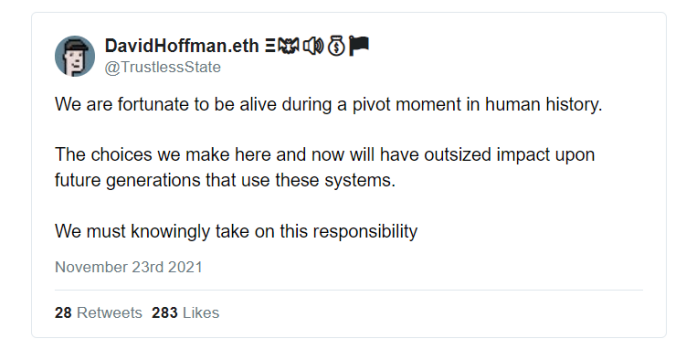
The answer to this crucial question is up to us.
Protocol sinking theory
The Protocol Sink Thesis is a key idea Ryan and I have relied on since The early days of Bankless. It states that companies, institutions, individuals and nation-states will be built on credible and neutral decentralised agreements, rather than centralised alternatives that favour third parties.
The most decentralized agreements will sink to the base layer of social trust like a dense liquid sinks to the bottom of a cup.

ETH is Honey
Let's take a startup as an example.
It's safer for a startup to build on an agreement with just rules than to trust another company not to screw them up. The agreement provides stronger guarantees for alternative business models and centralization. Because protocols are public goods, it's easier for startups to adopt the protocols on offer rather than compete with them.
You can build AOL on the Internet, but you can't build the Internet on AOL.
In February 2020, Ryan wrote, "Instead of using their own loan pools, banks will use Compound." Just last week, Coinbase announced that it would integrate with Compound to offer DAI yields. Coinbase is using two trusted neutral DeFi apps, Compound and Maker, to create its yield product.
Right now, the yield offered by the Compound agreement is a product offered by Coinbase. Nor is it unique to Coinbase; The same product could be created by Binance, Kraken, Gemini, or any other organization that wants to take revenue from Compound and pass it on to customers.
Fortunately, individuals are free to directly reap the benefits themselves.
This pattern suggests that protocols are much more scalable than companies. You can build a lot of companies on top of agreements, and those companies can scale up the products of agreements to far more individuals than a single entity.
Agreements can reach far more people than individual companies.
That is why the design of these protocols is crucial.
Not only will many companies harness the power of DeFi apps, but other DeFi apps will also interact to create their products.
Currency Lego -- another Bankless meme.
The deeper an application is in the protocol pool, the more applications and services are built on top of that protocol. Uniswap's liquidity is accessed by DeFi applications, DEX aggregators and companies, among others. Design decisions made when Uniswap was created affect everyone who uses it; The rate algorithm set by Compound affects all companies and individuals downstream from its rate of return; MakerDAO's risk tolerance also affects every $9 billion of DAI outstanding that has been issued.
Because these protocols are socially scalable, the choice in their design becomes extremely important. The potential downstream consequences of good or bad choices can change the course of humanity.
Don't start a civil war
When I signed up for Facebook in high school, I had no idea that Facebook would cause civil war and destabilize the world's most powerful democracy. We have no way of knowing the long-term consequences of Facebook's business model...... Or all Web2 consequences.
Yet here we are. We have silicon valley giants that compete with nation-state power: people, which Web2 companies and nation-states consume as commodity fuel.
The way we design social systems matters. Today's seemingly trivial design decisions can have disastrous long-term consequences. Even the smallest incentive imbalance can create critical social rifts for generations to come.
If we want these structures to work for us, for our children, and for our children's children, we have to do a lot of critical thinking about the design of these systems. When social institutions favor one group over another, the differences eventually grow enough to motivate the failed group to sweep the barriers and start again.

jubilee
Wiping the SLATE clean is a way of life that is so ingrained in human culture. We, as a species, seem unable to shake off the need to cancel our debts and start over.
We have a word for it: Jubilee.
Debt jubilee is when insurmountable social debts are forgiven and the indebted class is released from their shackles and allowed to live a new life. Religious jubilees take many forms, but generally deal with the issue of mass absolution of sin (if you believe David Graebe, debt and sin are similar social structures).
At some point, social structures became too entrenched and undemocratic. Society feels as if it has reached a dead end and the only way out is to take a few steps back.
Books were erased; Capital was destroyed.
The playing field is leveled and the human race starts over.
This is what the Protestant Reformation, the French Revolution, the Communist Revolution, the Cuban Revolution, and many other wars fought over. The masses have become increasingly intolerant of elites, wiping the books clean.
When society becomes too unequal, the disadvantaged refuse to move along with the elites. They rebelled. They force elites to distribute their wealth until things are fair enough to move forward again as a collective society.
The speed at which human beings reach this state is determined by the social structure upon which society operates. A severely unbalanced social structure quickly tilts towards social unrest, while a balanced social structure makes things stable for longer.
You never hear of TCP/IP or SMTP causing civil war. Facebook has almost had two civil wars.
The goal is not to regress
Society takes a small step forward every day. We all wake up in the morning, have coffee, and go to work. This work adds a little progress and innovation to the global collective every day.
Social progress is expensive. Moving the weight of society requires the social machine to move at a snail's pace; There is a lot of collective effort behind even the smallest innovation.
And all of that can be overturned in a revolution. Society is under constant threat of disintegration. If enough people in society believe that we have made progress in the wrong direction, it will be difficult to correct the course to maintain the progress that has been made. If enough people in society feel that we are heading down a dead end, we will start to split into different groups...... And that is often violent.
Human progress is a story of two steps forward and one step back. Sometimes, if we're lucky, we can take three steps forward. But if we're unlucky, we take three steps back. If we really screw up, we can also accidentally trigger a full reset (big filter theory).
An agreement is a foothold for progress
Steve Jobs once said, "The computer is the bicycle of the mind." The tools we've created allow us to do more with less. This metaphor can be extended to society as a whole; Where humans need to use tools, societies can use protocols.
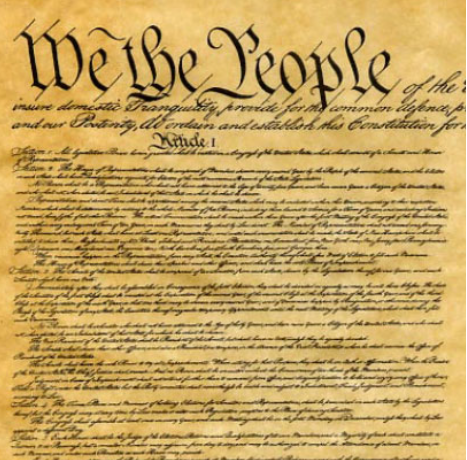
The constitution is an agreement to form a united national republic
Agreement is a tool of social organization. With good agreements that society can agree on, we have the means to lock in progress. We can rely on agreements to last forever, even if what we build on them comes and goes.
The Internet is a good example. All societies agree that the Internet is good. Now that we have it, we have new ways to coordinate global resources that we never had before. The important thing is that we can never lose the Internet. It can't be paralyzed. It can't be shut down.
Agreements help expand the scale of human progress because we are all on the same playing field. The protocols adopted globally allow humans to "stand on the same starting line". We can all make progress more effectively when we play by the same rules.
If you want to go fast, go alone; If you want to go far, go together.
Those who shout 'WAGMI' know this; At least that's what they know.
Expand trust through agreements
A macro view of the progress of the human story, expanding the scale of trust, coordination and commerce among larger groups of people, can be seen as humanity's primary goal to date.
If someone asks us: What are you doing here? Or conversely, humans first need to be "attuned" so that they can begin to formulate "what is our collective purpose?" The answer to that question.
Either way, our overarching goal as a species is to create social coordination protocols to help coordinate humans on a large enough scale so that we can start working collectively toward a common goal.
We exist to kill Moloch.
Religion, monarchies, nation-states, and now encrypted networks are all advances in the technology of social coordination. As the latest and most advanced social coordination technology, encrypted networks have the ability to create social coordination on a massive scale and surpass anything we've seen before.
That's why we're all here. That's what it's all about.
Humans are good, but our systems are flawed
Human beings are extremely sensitive to fairness. Morality is built into our DNA. We have a highly specialized radar that can sense when someone is "out of step" with the rest of the group. Editor's note: This is not unique to humans! This trait is found in all social creatures, including bats, monkeys, and babies.
For thousands of years before the abundance of resources, it was extremely important for us to be able to identify those among us who did not support us. Being able to do this well is a matter of life and death.
We have survived as a species because we are constantly checking to see if anyone might "free ride" or consume more than their fair share.
But it is laborious work. Person-to-person checks are not well extended. Instead, we must produce systems of governance and coordination to expand equity and equity. Religion promotes altruism and kindness; The monarchy provides services to its people; The government taxes the consumption of public resources.
While each system generally produces more positive results than its predecessors, each brings its own failures and shortcomings. No system is perfect, but humans still struggle to find systems with fewer flaws. Humans are born good, but we then have to adapt and harmonize our social structures. The flaws we see in collective societies are not because humans are flawed, but because our social structures project their flaws onto our behavior.
Humans can only be as good as our structure allows them to be. We are always looking for a more balanced system, because the more balanced the system, the more comprehensive global equity can be achieved.
Greater global equity creates a long-term sustainable balance on which societies can develop. It allows us to take many collective steps before microscopic changes in individuals' starting positions have meaningfully different outcomes for society as a whole.

Incentive dislocation: When people are given unequal starting positions, chaos eventually emerges
Crypto Renaissance
One of our favorite Bankless episodes is Crypto Renaissance .
Why is that?
Because it's not about code, it's not about money. It's about people.
The crypto Renaissance tells a story as old as time. The entrenched and hierarchical social structure is oppressive to the individual. Corruption and capture have rendered these systems obsolete. The new system was built out of the need to get rid of the control of the old system. These new systems are decentralized and de-licensing in nature; Like viruses, they have escaped the clutches of the former elite.
A new world was created, a brighter future was created for all to share.
Then the wheel turned. This new future is growing in size and hierarchy. It has been slow to innovate because its ways have become entrenched. It becomes huge and hard to surpass. It moved from utilitarianism to plutocracy, disenfranchising those who arrived too late.
The younger generation had to put up with this oppression for a long time, and eventually they found a way out, using the tools of decentralization and de-licensing.
A small window of opportunity
We were born too late to explore earth, too early to explore space. Fortunately, we live in the best age to explore the digital realm.
Encrypted networks will upend old systems of power. For better or worse. It will replace the old power structures with newer, livelier ones, though there is no guarantee they will be "better".
But it's all up to us.
Whether encrypted networks burn out their candles quickly or burn more sustainably over more generations will be determined by the choices of the first generation that built these structures.
As we build these new power structures, are we designing them in such a way as to protect our interests? Well, why don't we? We built them...... Isn't that what the baby boomers did to their institutions?
Do we model these systems only to benefit us?
Or... When we design these structures, do we leave room for future generations? What about future generations of the unborn who will eventually need to be incorporated into our fancy new social fabric? If we don't make room for them now, they will revolt just as we are rebelling against the current incumbents.
From an investment point of view, this should be profit maximization. If we can find ways to include future generations in the upward space, we can fight longer and harder.
The longer we can go without triggering a jubilee as a society, the more total wealth can be created. Our goal is not to have a Jubilee, and we now need to consider this before the cryptographic network we are building takes its final form.
The window of opportunity is small, and it's up to us to adapt and adapt these systems to achieve long-term balance for as many generations as possible.
Bankless is a zero-tier technology
Bankless is here to tell that story.
Religions, nation-states, encrypted networks.
What all these have in common is people. People form religions, elect their representatives, and also download specific node software and operate specific chains.
It is the people of the world who maintain the social structures we create.
L1 Blockchain supports L2 Rollup in the same way that people support L1 blockchain. Where L1 blockchain is synced over the Internet, people are synced over stories.
Humans operate in stories. That's how we operate. Stories are the tools we use to create common understanding among large groups of people, and it is through stories that the world adopts disruptive new technologies. Give me a scientific explanation or technical argument and maybe you can convince me. But tell me a story I can relate to, and I'm more likely to be convinced.
Bankless is all about telling stories.
Bankless has 150,000 subscribers, 1.5 million downloads per month, and thousands of people dedicated to spreading Bankless's message not because we provide good technical details and valuation metrics. That's because we're doing all this while showing how encryption can make the world a better place.
Meaning; Importance; Purpose.
Like everything that exists in our social universe, Bankless is a narrative. It embodies a particular set of beliefs about the future and imagines a story about how we got there.
Bankless is the story we tell to spread knowledge and awareness about these magnificent new social structures we've discovered, and the means we need to protect them.
Inflation; The ruling; Polarization;
Digital scarcity; Rent-seeking;
Banks; DeFi.
The Web3; Transparency; Facebook and Meta.
Metaverse; NFTs;
Self-sovereignty;
Think long term.
These are all part of a larger story that we think Bankless can tell.
The more people who download this story into their brains, and then willingly accept responsibility for managing kindness in the protocols we use, the more successful and richer we will be.
Bankless is to make you rich, but not at the expense of you later. We want you to be rich now, in the future and in the future for your children. Bankless is about promoting fair and balanced social structures and helping to improve those social structures that still need some work.
Bankless is here to expand the rabbit hole of the encrypted network. As the industry's developers dig deeper into the rabbit hole, Bankless is digging it wider so that more people can understand the significance of why they went down in the first place. The sooner we get more people to adopt encryption protocols, the sooner we can find fair and balanced protocols that will achieve long-term balance for future generations.
When you adopt an encryption protocol, you adopt the value of encryption. We have a responsibility to ensure that the value of encrypted networks is consistent over the long term with those who adopt them.
Don't trust the short-termist and nihilist.
Decentralization is important, and we plan to fight for it.
We're heading west. It's a forward position. It's not for everyone.
But thank you for joining us on this Bankless tour.
The original link
Welcome to join the official BlockBeats community:
Telegram Subscription Group: https://t.me/theblockbeats
Telegram Discussion Group: https://t.me/BlockBeats_App
Official Twitter Account: https://twitter.com/BlockBeatsAsia

 Related Articles