Bankless founder: Jack Dorsey is biased against Web3

Original title: "Bankless founder: Jack Dorsey doesn't understand Web3"
Original author: David Hoffman, Bankless founder
Original compilation: Babbitt
If you pay attention during the holiday Encrypted Twitter, then you may have noticed how 2021 ended in perfect encryption, i.e. heated debate.
This time it’s not about Alt L1 vs Ethereum L2, it’s about Web3 legality. And, instead of two factions in the crypto industry, it’s Jack Dorsey versus venture capital firms (VCs).
Cause
< /p>
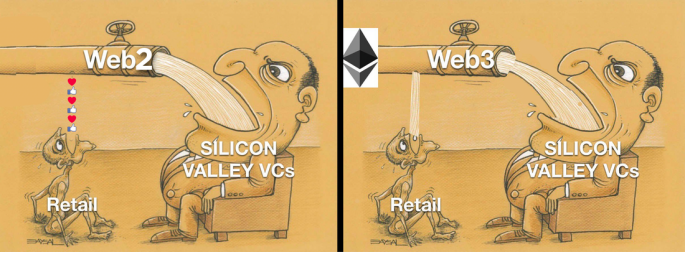
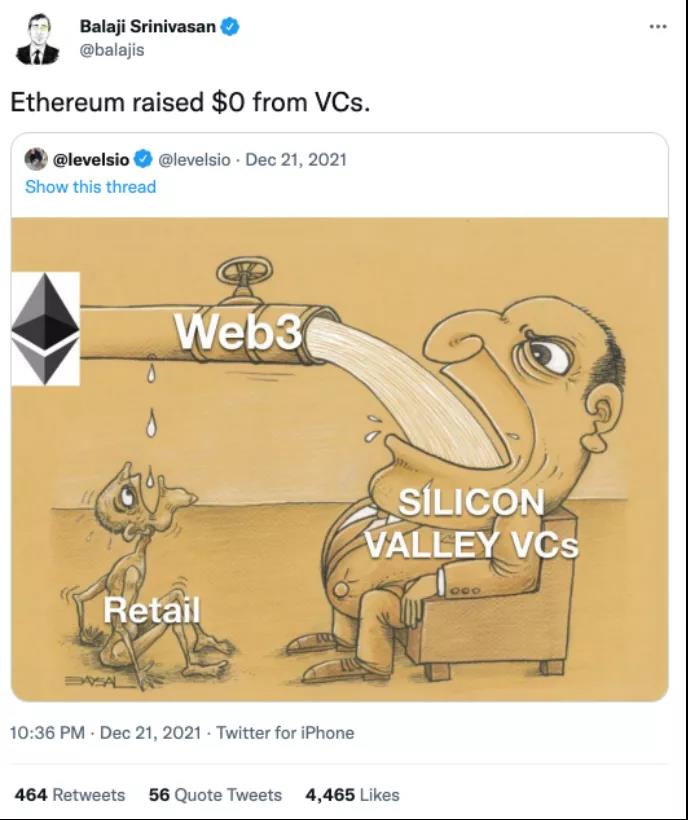
It all started when Jack Dorsey retweeted a post about how Web3 is pumping all of its value into the mouths of Silicon Valley VCs, leaving only a few drops for retail investors The meme.

I've seen this sentiment elsewhere, so it's not just Jack's problem. To some, "Web3" is a marketing term that VCs are using to make short-term bets. They invest in hype - not substance - and then take advantage of that hype and turn around and sell it to retail investors who don't have access to Web3 investments.
This makes sense. (Because) the hype around Web3 matters.
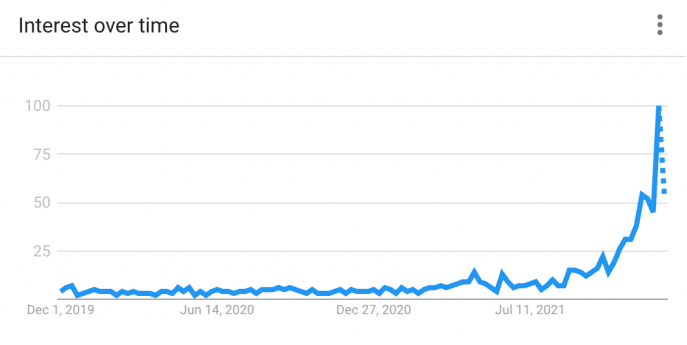
A16z even sponsored a public opinion survey to gauge people's views on the term "Web3".
And it turns out: people love it.
So, are venture capital firms taking advantage of this to bring retail investors into seed rounds early? Will the future of Web3 be forever denied because of this?
Or something completely different will happen?
Then, let us analyze.
Relocation of "Overton Window"
Uniswap
On September 16, 2020, Uniswap minted UNI tokens and airdropped 60% of the supply to the community (via a combination of retroactive airdrops and community treasury). For reference, the retroactive airdrop involved over 250,000 unique addresses on Ethereum.
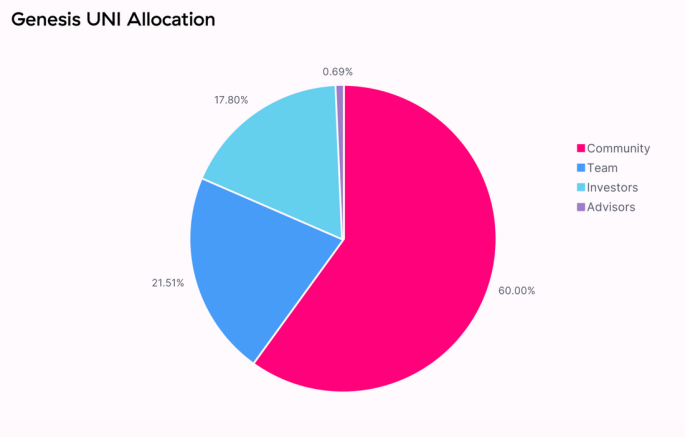
Uniswap kicked off the retroactive airdrop movement, and since then there have been hundreds of retroactive airdrops distributing billions of dollars to Hundreds of thousands of unique individuals who have interacted in some capacity with certain encrypted applications.
Uniswap A round of seed round financing of 11 million US dollars, led by a16z, other venture capital companies also participated in this round of financing.
Ask yourself: Uniswap airdrop increased or decreased these VCs seeding Uniswap The value of the investment? In my opinion, adding distribution and significant retail ownership on Uniswap adds orders of magnitude value to VCs' investments.
Value comes from consistent incentives, and the case of Uniswap illustrates how VCs can economically Reasonably participate and allocate capital to retail investors. The Uniswap airdrop gave free capital to 250,000 unique Ethereum addresses, and also provided a liquidity event for early-stage venture capital firms.
However, not all Web3 investments have the same good results as Uniswap. But there are also better ones.
ENS
< /p>
Ethereum Naming Service airdropped 50% of the total ENS supply to its users, with the other 50% allocated to the project's ~500 early contributors and ecosystem participants .
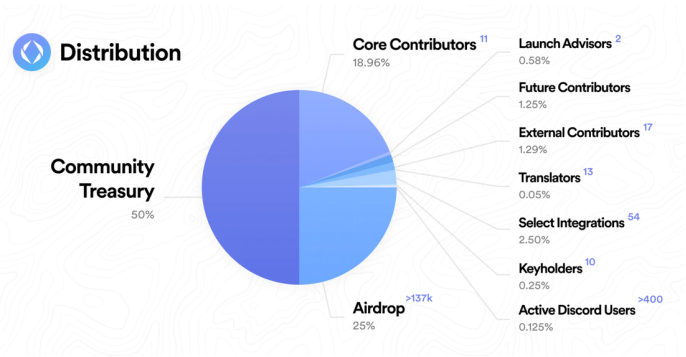
(Just know) ENS has never raised a dime from VCs. If any fund wants to acquire ENS, they will have to buy it from ENS users.
Coinbase
< /p>
Web3 shifts the Overton Window of capital allocation so well that it affects traditional stock markets.
Note: The Overton Window is about most people over a period of time A theory of the range of politically acceptable policies. The Overton Window is named after its discoverer, Joseph Overton. Overton's earliest thought was that the political viability of a policy depends primarily on whether it falls within that range, not on the personal preferences of politicians. Overton argues that this window constitutes the approximate range of policies that politicians can pursue without going overboard and taking public opinion into account.
When Coinbase listed its COIN directly to the public market, it offered its 1700 employees People airdropped 100 shares. With COIN opening at $250 per share, that's a $25,000 "gift" to every Coinbase employee.
And when was the last time a traditional company gave its employees equity? This is the culture that cryptocurrencies are exporting to the rest of the world.
Web3: A Work in Progress
< /p>
The above examples are perhaps some of the best that Web3 has to offer. There are plenty of other examples that are not as good, and even more that are not good for retail investors. Of course, many others don't even consider retail investors at all.
However, we have to remember what the pattern was before Web3.
There is no opportunity for retail investors at all, not anywhere. And Crypto has always been about giving everyone an equal footing in everything. One of the driving forces behind the 2017 frenzy was that retail investors could "get in" before any institution. It was true for Bitcoin in 2010, it was true for Ethereum in 2015, and it is still very true for many of the Web3 platforms being built today.
Before Crypto, retail investors must wait for companies like Twitter to trade on Nasdaq Or go public on the NYSE. Retail investors can then, through their brokerage firms, buy stock in these companies from the venture capital funds that lead the Series A, B, C, D, E... of the companies that are now public.
Crypto is orders of magnitude better than what came before, and Jack complains that retail investors are not being The fact of being fully incorporated into the Web3 platform is completely ignoring where we came from, and where we are going.
Follow Incentives
Jack's follow-up tweet talks about how VC incentives will corrupt Web3.
"You don't own 'web3'. VCs and their LPs do. It will never escape their incentive".
All of the largest airdrops that have occurred have rewarded users disproportionately in the cap table. I believe Jack doesn't understand the alignment between VC and retail investors that Web3 brings.
Web3 platforms will only succeed if they place ownership in the hands of the community. The Web3 platform relies on community ownership. Without community ownership and participation, it's not Web3 at all.
If you believe what I said above, retail investors, via airdrops or whatever Incorporation is something that venture capital firms need to consider economically. Web3 platforms that give ownership will be more successful than platforms that don't. Therefore, venture capital firms need to consider including retail investors when making investments.
The problem is not the motivation of the VC, Jack is just stuck in the Web2 paradigm.
Fundraising and liquidity through the community is a new paradigm that Crypto hasn't figured out yet best practice. Uniswap started it, but it remains to be seen "how" it continues.
Also, I couldn't resist ps his meme into two versions, I think This more accurately reflects reality.
Follow Incentives Part 2
What is Jack's motivation? Why is he mourning Web3 so loudly?
It's no secret Jack cares about cryptocurrencies The only thing inside is Bitcoin. He often denigrates any cryptocurrency that isn't Bitcoin, and now it's Web3's turn, I think.
I think Jack has a problem with Web3 because he, like many Bitcoin enthusiasts, thinks The only truly decentralized thing is Bitcoin, everything else is decentralized theater. He tries to present this false, distorted version by exaggerating the flaws of Web3 and ignoring its strengths.
He's trying to bring this rotten version of Web3 to life so that he can be in its grave dance.
I see Jack both denying the reality of Web3 and projecting his Web2 thinking onto the entire industry. Sadly, anytime there is a fundamental anti-crypto sentiment in the world, a leader like Jack can whip up enough invective to legitimize criticism.
Impact of US Accredited Investor Regulation
Jack Dorsey doesn't mention the dreaded accredited investor regulations when criticizing Web3, and that says a lot.
It’s not that Web3 startups want to take money from VCs. They are forced because the SEC does not allow non-accredited investors to invest in private securities. This is why it is difficult to find a way to include retail investors, even though Web3 platforms would very much like to do so.
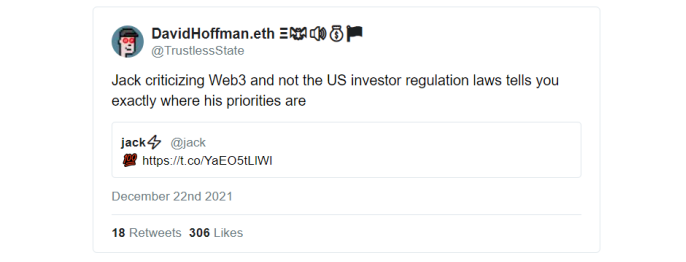
Web3 should be owned and operated by its users. It is the SEC that prevents this reality from manifesting, not the VCs. Jack doesn't mention this anywhere.
I think this is evidence that Jack is biased against Web3. Jack is spreading misinformation and false information to create a narrative that answers his cognitive bias of being a Bitcoin maximalist.
¯\_(ツ)_/¯
- David< /p>
P. S. Don't forget the starting point of the Web3 movement:
Original link
Welcome to join the official BlockBeats community:
Telegram Subscription Group: https://t.me/theblockbeats
Telegram Discussion Group: https://t.me/BlockBeats_App
Official Twitter Account: https://twitter.com/BlockBeatsAsia
 Related Articles