The founder of twitter was blocked by his own investors because of "Web3.0"

Every native of the crypto world is familiar with the concept of Web3.0. Proponents of Web3.0, which generally refers to the next generation of the web where all data and content are kept on the chain and owned by users, say it will help us create a more decentralized, user-friendly environment and effectively counter the centralized Internet monopolies.
The concept of Web3.0 has been discussed a lot recently, and we won't go into it here. Is Web3.0 the future of the Internet, or is it just a lie invented by VCS to make money? A huge and dramatic debate is raging on Twitter about this new and hot concept.
From Jack Dorsey, founder of Twitter, to Elon Musk, to a16Z, trading platform Coinbase, crypto KOL, Internet columnist... The debate has drawn people from all walks of life on the Internet to join in, and the debate is raging on social platforms.
The controversy, started by Twitter founder Dorsey, is centered on well-known venture capital firm A16Z. Interestingly, the venture capital firm, known as "one of America's most successful VCS," has invested in some of the world's most recognizable companies, including Coinbase, Facebook, Roblox, Lyft, Airbnb, Skype, and -- once led by Dorsey -- Twitter.
A16z is Andreessen Horowitz, the shorter name because there are 16 letters between the letter a and z. Its name comes from its founders, Marc Andreessen and Ben Horowitz. You probably don't know Marc Andreessen, but the company he founded recently pioneered the netscape browser.
Marc Andreessen has been active in the investment world for a long time after Netscape was acquired by AOL following a failed competition with Microsoft's Internet Explorer. As a witness to the first Internet wave and the first bubble, Andreessen's A16Z has made shrewd bets on the future over the years, and they have paid off spectacularly. In Coinbase alone, A16Z has earned more than $7 billion in net profits from its investments, according to public filings.
As VCS, who have bet on the cutting edge of the era, once again try to usher in a new era, they are encountering unprecedented criticism from Dorsey, the crypto champion who once led the monopoly on tech giant Twitter.
On Tuesday, Dorsey posted a tweet criticizing Web3.0 as a tool for venture capital firms. Musk later joined the chorus of Web3.0 critics, denouncing the popularity of the concept as a marketing ploy. And a16Z founder and other Web3.0 supporters have also responded and refuted.
As one of bitcoin's best-known supporters, Dorsey isn't against the advent of the Web3.0 era. The man who led the creation of Bluesky, a decentralized social media protocol, while at the helm of twitter, is not opposed to decentralized Web3.0. The focus of this debate is not on Web3.0 per se, but on the present - is Web3.0 being promoted by VCS just a marketing tool for VCS to grab excess profits? Can today's Web3.0 really deliver the products of the Web3.0 era to users and achieve its lofty goal of decentralization?
In the end, the debate ended unilaterally, dramatically, with A16Z founder Marc Andreessen "blocking" Dorsey. Dorsey also blocked the founder of A16z, the CEO of Coinbase and other industry heavyweights. Others are stuck in the middle of a long, heated debate.
"You don't own Web3.0"?
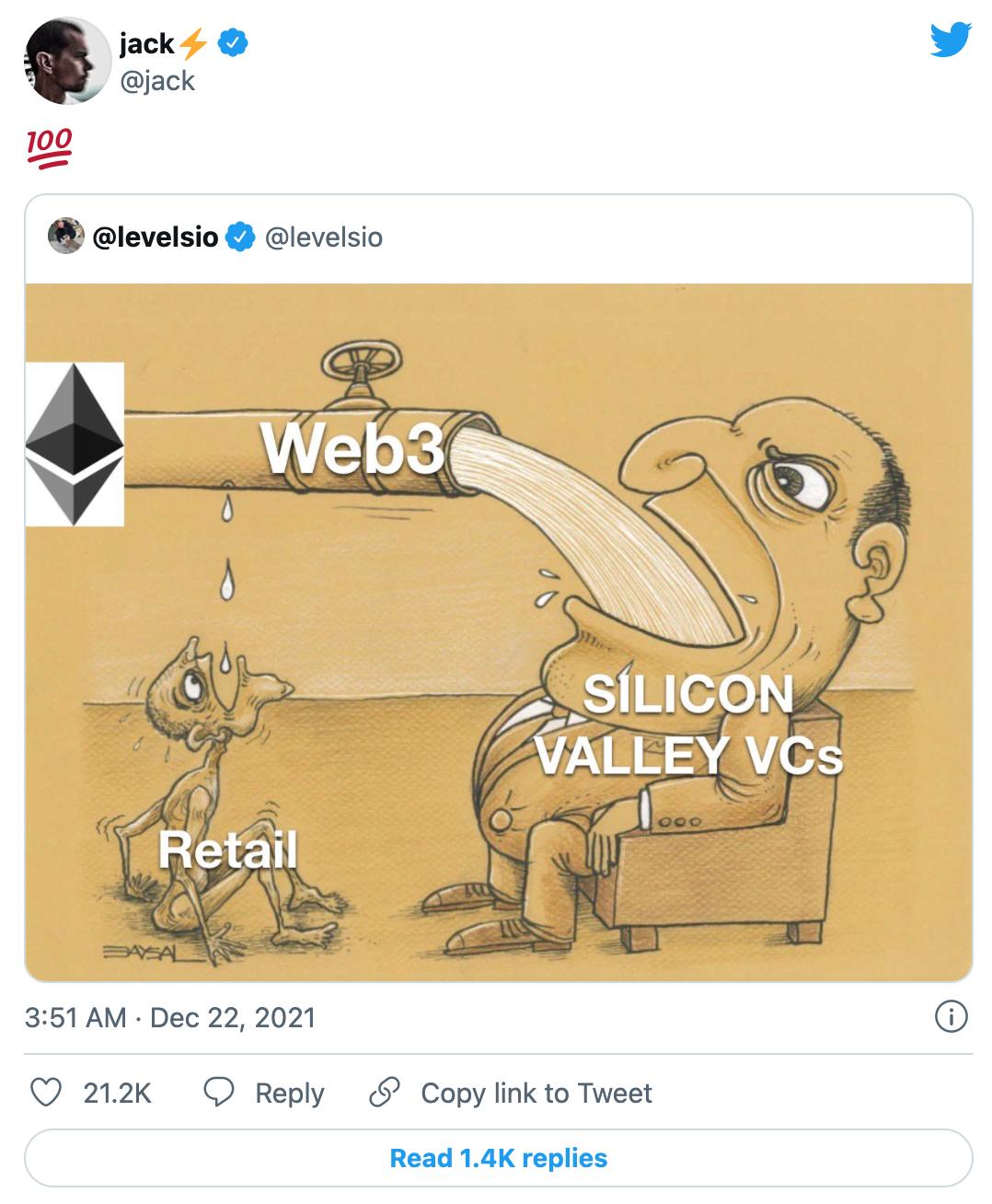
The big debate over Web3.0 stems from a series of criticisms from Dorsey. Dorsey's core point is that Web3.0 won't make anything more populist. He argues that Web3.0 simply transfers power from existing incumbents, such as tech giants such as Facebook, to new venture-capital funds, such as a16z.
In a tweet on Tuesday, he described the decentralization of the Web3.0 space, which is where the debate began:
"You don't own Web3.
VC's and their LP's do this. It can't escape the incentives they set up and will end up as a centralized entity with a different label.
Know what you're doing..."
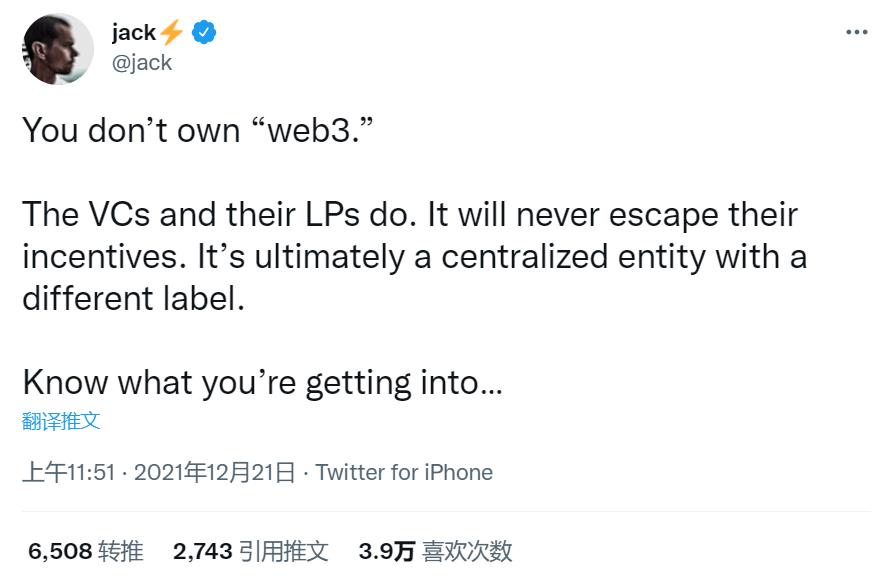
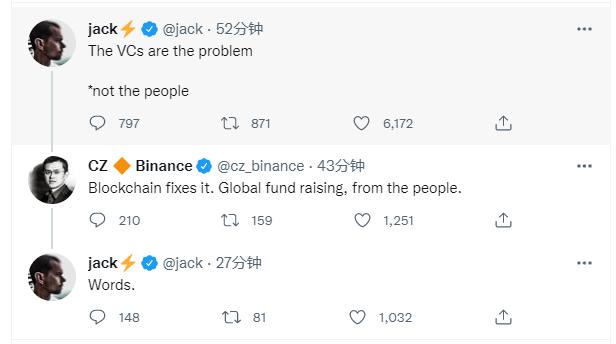
Jack Dorsey then went on to attack, "in the Web3.0 world, VC is the problem", implying that VCS like a16z invested in a lot of so-called Web3.0 companies, and users did not enjoy the real Web3.0 products.
Shortly after his launch, Musk also questioned Web3.0, on which Musk and Dorsey agree. Interestingly, Musk, who is known as the "marketing guru," also called Web3.0 a "marketing tool."
"Has anyone seen Web3.0? I can't find it," Musk tweeted. Dorsey responded humorously, "It's between a and Z."
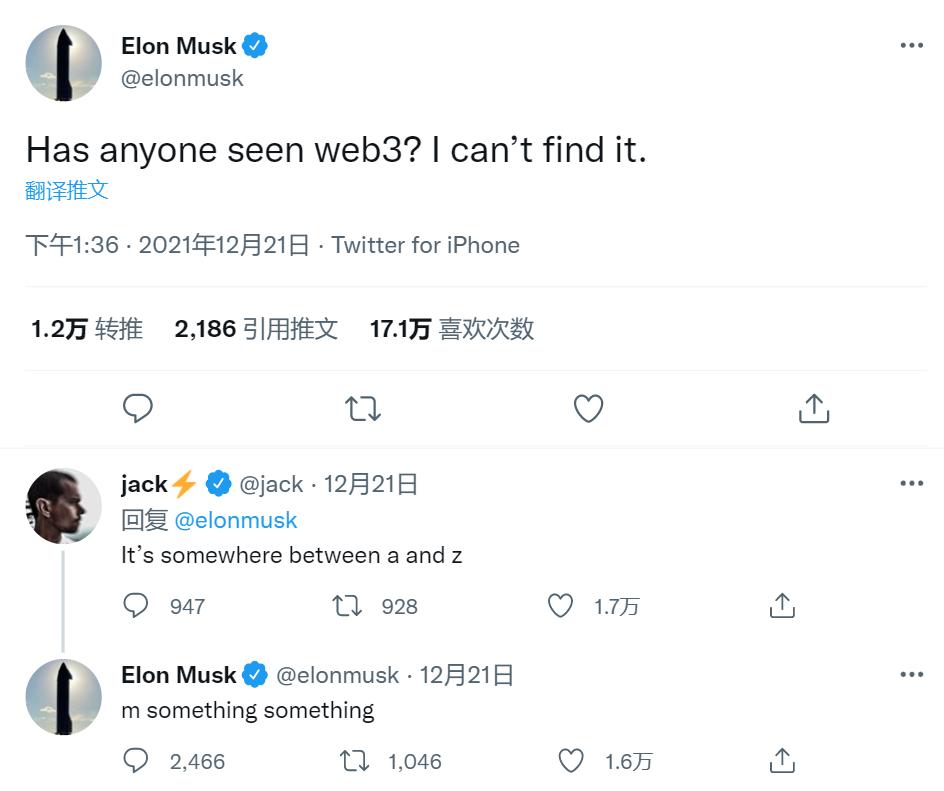
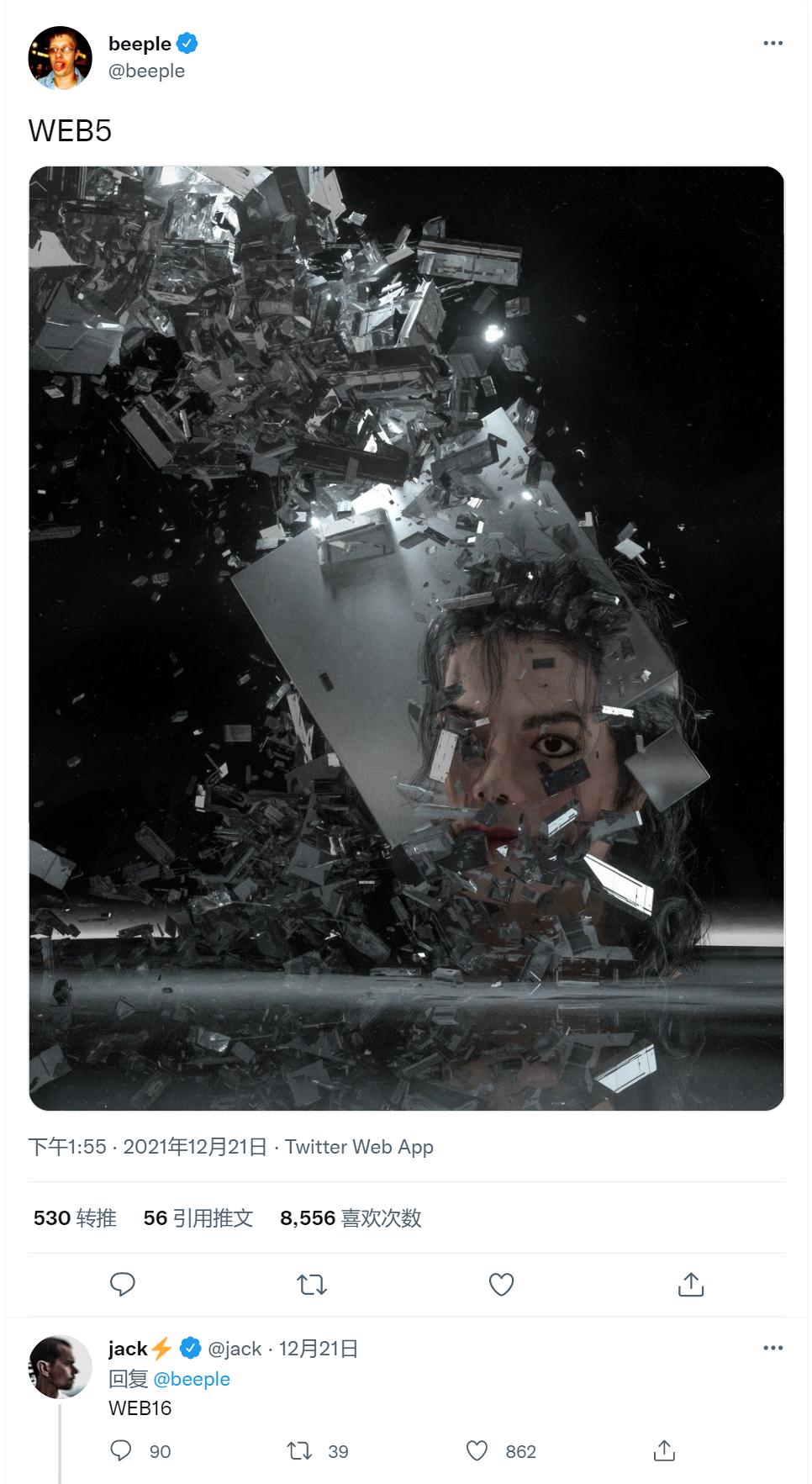
No doubt "between A and Z" is a dig at a16Z. And crypto artist Beeple is also following the new hot spots of the network, not forget to release a new work of his own, in order to participate in the Web3.0 discussion. Under this slightly ironic picture of "WEB5", Dorsey also made a more direct satire on A16Z and directly proposed the concept of WEB16.
A16z has been one of the staunchest advocates of Web3.0 and has invested heavily in Web3.0 projects. Dorsey is also influential in the crypto world, perhaps the world's best-known "Bitcoin maximalist". Although they are both well-known supporters of encryption, their different encryption routes make it difficult for them to get along.
When crypto supporters met crypto supporters, a religious war began between different crypto factions.
A16z: Pioneer or con artist?
The A16Z has borne the brunt of the criticism in this controversy, and they deserve it -- they make so much money.
The investment strategy of A16Z was explained in detail in the article black Cat White Cat. In the past years, a16Z official website disclosed 38 investments in the field of Crypto. BlockBeats summarized these arrangements based on publicly available data and found that these projects raised a total of $2.512 billion in rounds involving A16Z (excluding projects with undisclosed amounts).
The investment map of a16z covers almost every major track of Web3.0. Or perhaps because of this, Dorsey's critique implies that the average user doesn't make enough money on Web3.0, while most of the money goes to VCS.
When you open the official website of A16Z, you will find that this is a different VC. Unlike most VC's simple and clear official website full of sense of science and technology, A16Z updates a lot of information frequently on the official website. And quite a few of them came from investors in A16Z. The most prominent banner in the official website is neither a16Z's successful historical investment case nor a16Z's latest investment trend, but A16Z's own media brand Future.
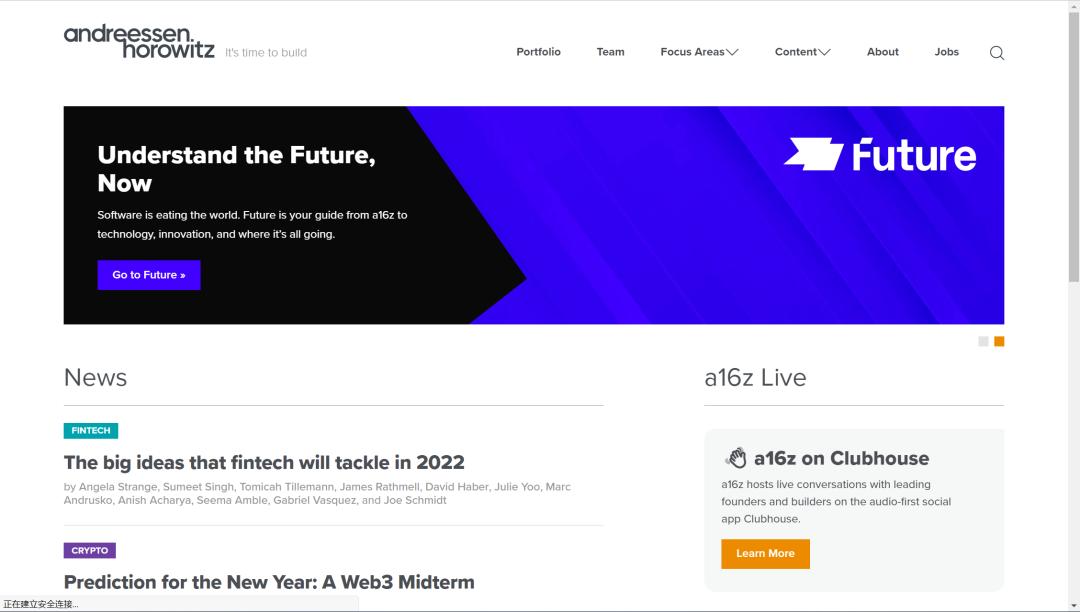
Thick media color brings for A16Z, is out of the ordinary investment method. Benedict Evans, a former partner of A16Z, joked in 2015 that "A16Z is a media company that makes money from venture capital." This means that almost every investor in a16z will be producing a lot of content, and Future will be producing a steady stream of commentary and analysis on the latest hot topics and trends, even if they can lead and create hot topics -- such as Web3.0.
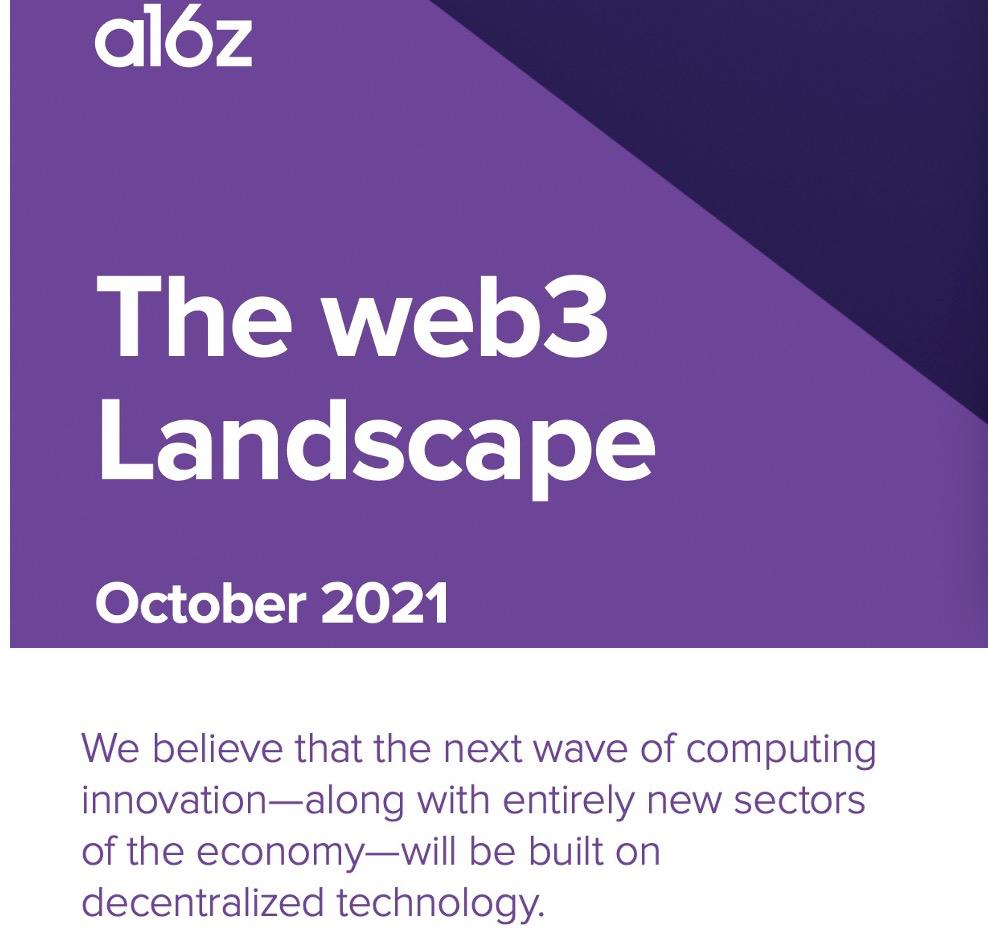
In October of this year, a16z released a white paper on Web3.0, detailing what a16z sees as the Web3.0 era. Previously, a16z had also compiled a Web3.0 reading list, which was translated by rhythm as soon as possible. Looking through the list, it's not hard to see that quite a few of the contents were written by a16Z.
Whether Web3.0 will lead to a more decentralized next generation of the Internet, or just another scam and bubble, remains to be seen. But at least for now, the a16z is good enough to carry the Web3.0 banner.
Web3.0 evangelists fight back
In recent months, VCS have been pouring billions and billions of dollars into the new Web3.0 concept. Sequoia Capital recently changed the word "company" to the more Web3.0 "DAO" in its Twitter profile.
After Dorsey's criticism, the preachers responded to his questions one by one. For example, in response to the question that VCS capture most of the profits from Web3.0, Binance CEO CZ said, "blockchain can solve this problem. Web3.0 projects involve investors through global funding."
A16z partner Balaji Srinivasan offered his own rebuttal to the barrage of criticism and ridicule from Dorsey and other detractors. He says he respects Dorsey and what Dorsey has built, but Dorsey is wrong about Web3.0. "Web3.0 offers the possibility of something better, not a guarantee."
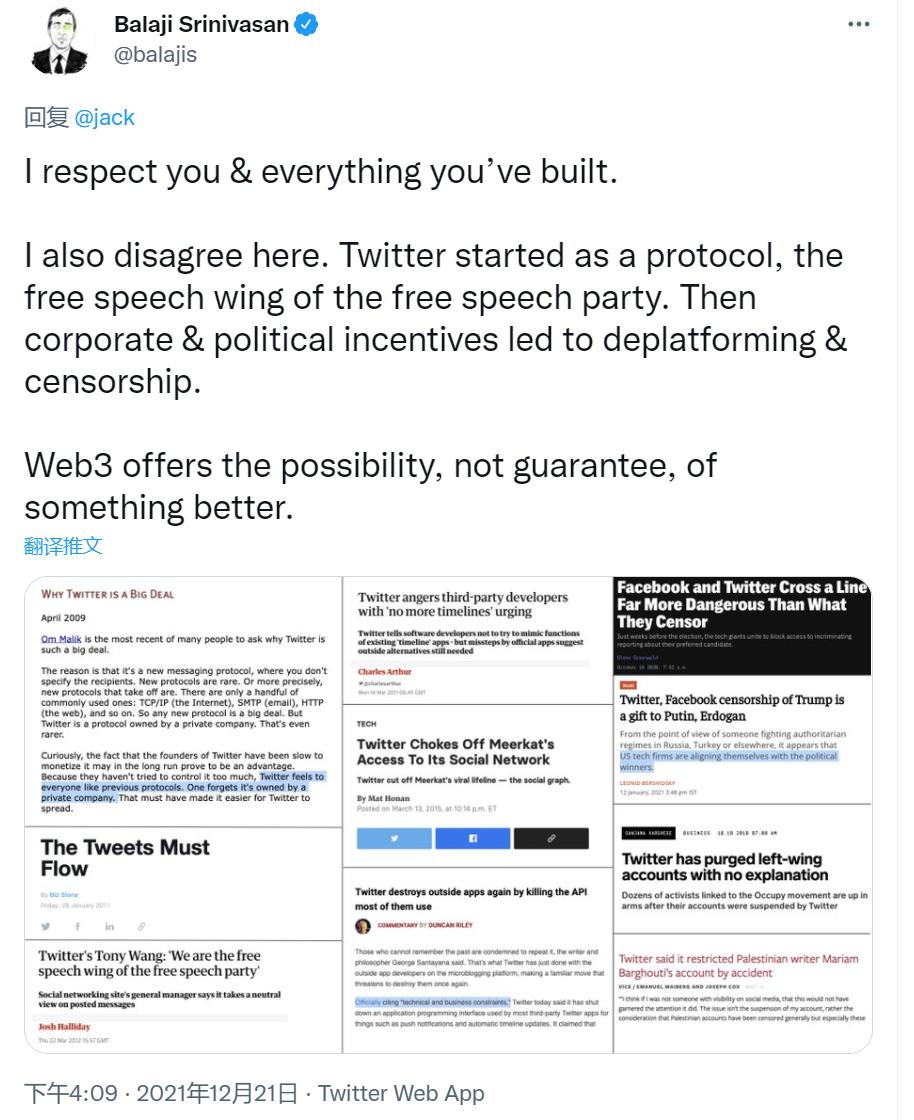
The war of words has also spread from Web3.0 to the business they founded, with Srinivasan still pointing fingers at twitter as he retorts. He argues that Twitter has abandoned its high ideals in favour of "corporate and political incentives". And that has undermined twitter's liberal foundation.
Dorsey offered his rebuttal: "Twitter was a company from the beginning, from the very beginning." "Web3.0 has the same kind of corporate incentives," Dorsey said, "but it's hidden under decentralization."
As the most prominent bitcoin proponent, Dorsey's pursuit of decentralization is well known. These "Bitcoin maximalists" believe in Bitcoin and decentralization more than anyone, including other crypto users. Cardano founder Charles Hoskinson once explained the dangers of decentralization by saying, "In an ostensibly centralized ecosystem, excessive involvement of venture capital firms is problematic because it may give them too much control over the project."
A16z co-owner Chris Dixon replied to Dorsey saying he was a "big fan" of Dorsey and believed he would eventually see value in Ether and Web3.0. "Bitcoin is as great as digital gold, but we have other important applications that require other chains."
In the middle of the debate, Dorsey cast herself in the role of progressive critic. "If one tweet kills hopes and dreams, we're going to have a bigger problem," Dorsey said. "So far, that's not wrong.
How close are we to Web3.0?
"In Web3.0, all the code, data, and ownership is open source," says Chris Dixon, partner at a16z. But this type of open source doesn't sit well with Dorsey, who argues that ownership is more important than open-source technology. "I believe in you and your ability to understand systems. It's important to focus on technologies that are truly safe and resilient and that belong to the public -- not individuals or institutions."
Dorsey's comments were echoed by some kols in the crypto community. Cory Klippsten, founder of Swan Bitcoin, for example, directly rebuked the A16Z founders for calling a "scam" "attractive".
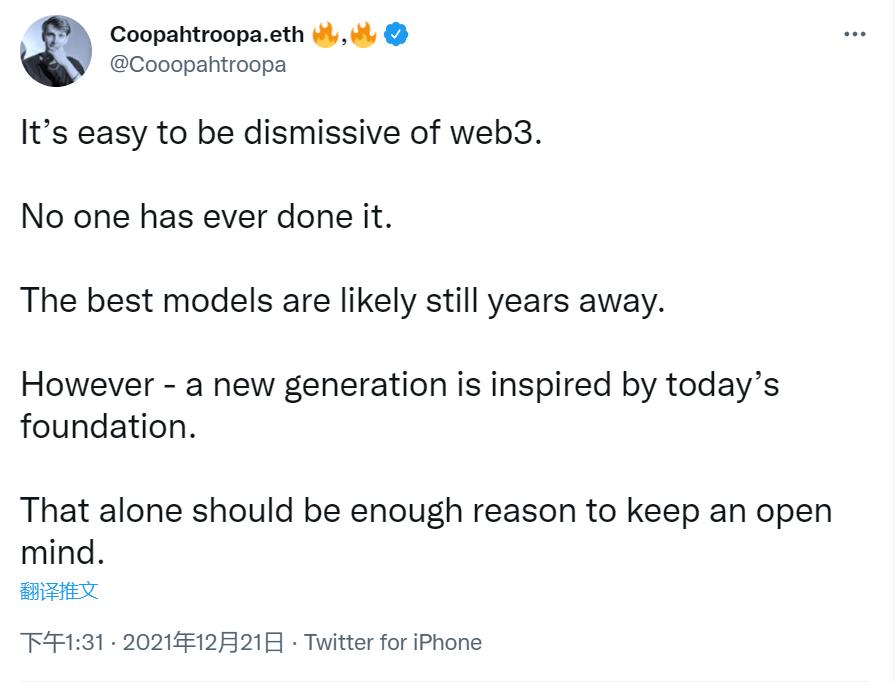
KOL coopahtroopa.eth, who is deeply involved in the DAO field, is more forgiving, pointing out that while "it's easy to dismiss Web3.0... the best models may be years away, but new inspiration comes from today's foundations. That alone should keep us open."
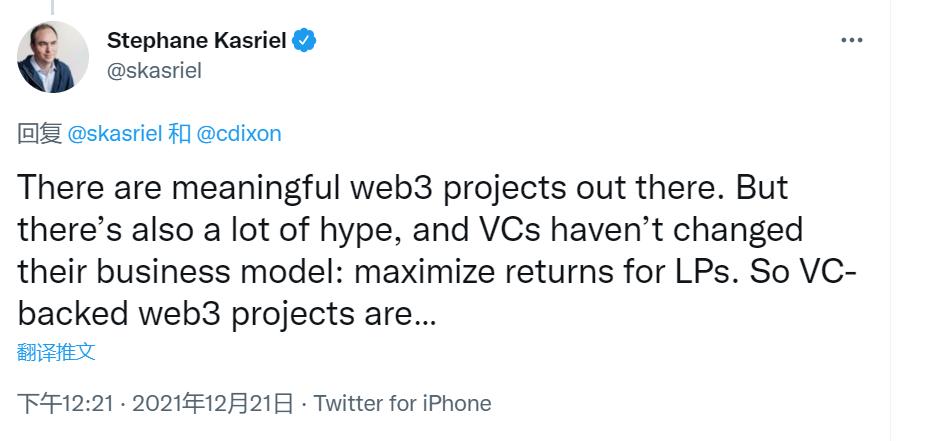
Others take a more neutral stance, such as Stephane Kasriel, head of Novi's digital wallet business, who writes that "there are a lot of meaningful Web3.0 projects," despite "a lot of hype." VCS are simply seeking to "maximise returns" for LP.
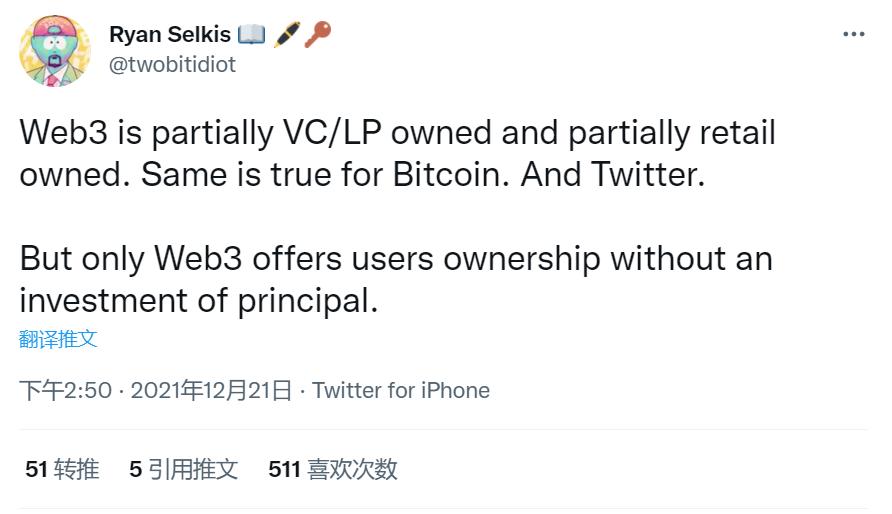
Ryan Selkis, CEO of Messari, took a similar view, writing that "Web3.0 is partly owned by VC/LP and partly owned by others."
On the night of December 22, the debate escalated. Jack Dorsey took down Coinbase co-founder and CEO Brian Armstrong and A16Z founder Marc Andreessen on Twitter.
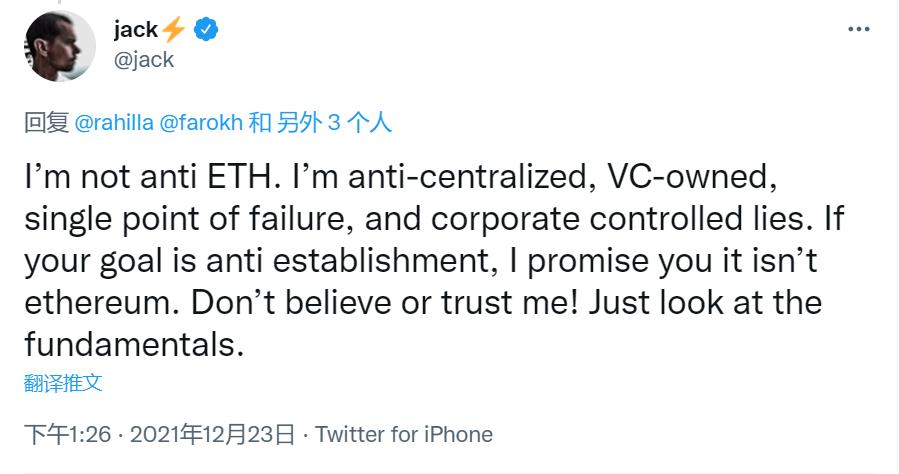
Few people may be more staunch in their belief in decentralization than Dorsey. "I am against centralization, VC-owned and corporate-manipulated lies. If your goal is anti-establishment, I guarantee you ethereum will not do it. Don't believe me!
On The 23rd, the debate came to a temporary halt in a very dramatic fashion:
"I am officially blocked by Web3.0."
Dorsey wrote on her Twitter account. At this point, A16Z founder Marc Andreessen has blocked Dorsey's Twitter account. Marc Andreessen also blocked him, tweeted Nick Caldwell, head of core technology at Twitter.

This week, Jack Dorsey uncovers six of the biggest names in the crypto and traditional VC industries that support Web3.0: The Intercept's Sam Biddle, founder of crypto media and analytics company The Block Mike Dudas, Coinbase founder and CEO Brain Armstrong, and A16z founder Marc Andreessen, Gemini co-founder Tyler Winklevoss, and Salesforce senior architect and head of technical staff Tyler Roach.
Meanwhile, Jack Dorsey's new focus on the crypto community that supports Bitcoin, "Bitcoin maximalist" Mark Moss, Wired columnist Siva Vaidhyanathan, Hexa Wallet, Bitcoin blog Fountain, Bitcoin Lightning Network interface service Breez, and more.
"A16z's goal is to connect everyone in the tech ecosystem through open source and decentralized blocking, blocking Twitter accounts," Dorsey said, paraphrating the a16Z website.
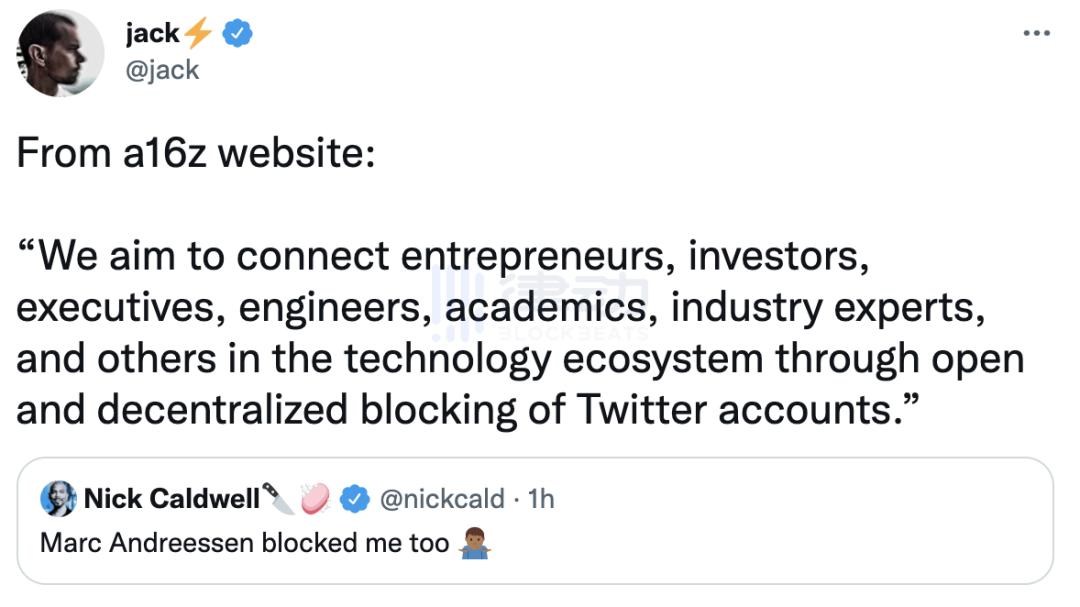
Debate continues in other kols over whether Web3.0 is a hoax or the future, only time will tell. As any Web3.0 supporter will recall, one of the big points of Web3.0 is to reduce the power of Facebook, Google, Twitter and other tech giants to monopolize the Internet, thereby giving users more freedom.
But it's interesting to note that Dorsey, who opposed Web3.0, was ultimately blocked by Web3.0's strongest supporters.
Welcome to join the official BlockBeats community:
Telegram Subscription Group: https://t.me/theblockbeats
Telegram Discussion Group: https://t.me/BlockBeats_App
Official Twitter Account: https://twitter.com/BlockBeatsAsia