Robin Hood Investment Conference 2021: What do Dario, Cathie Wood, FTX SBF all think about the future of cryptocurrencies?
The | Robin Hood Investment Conference 2021: What do Dario, Venerable, FTX SBF, and others think about the future of cryptocurrencies?
原文来源: James Chiu, BlockTempo

The Robin Hood Fundation, founded by hedge fund expert Paul Jones, and JPMorgan Chase, the largest Investment bank, held the "Robin Hood Investment Conference 2021" on Monday. The investment conference invited many industry leaders, including the founder of the world's largest hedge fund Bridgewater Dario, Ark Investment diva, FTX founder SBF, former member of the United States Federal Reserve, such as a number of big names.
The following is a summary of the conference:
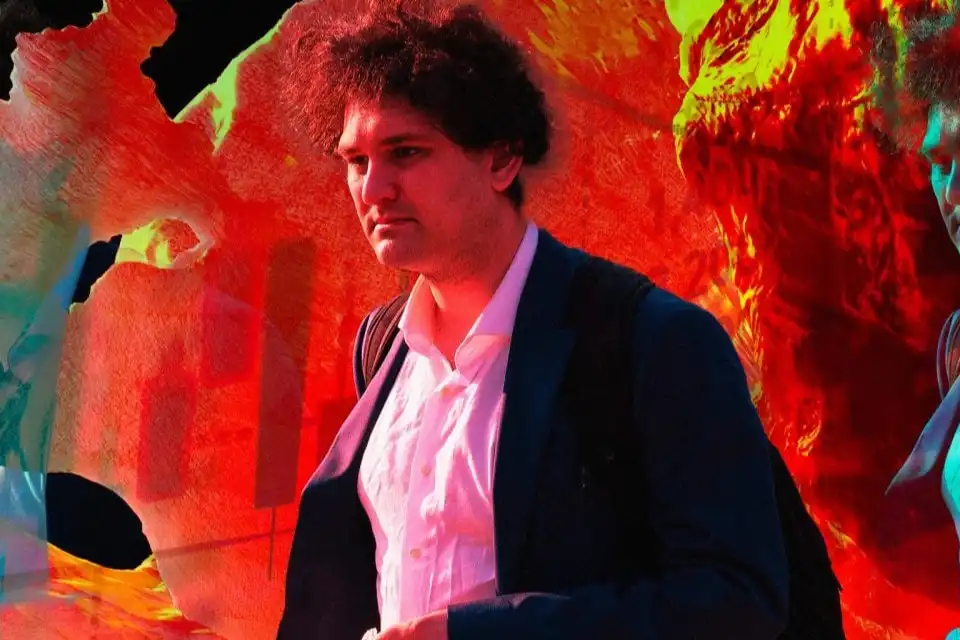
The investment conference will analyze the future financial situation from top to bottom, including central bank monetary policy, general economy, commodities, investment bank thinking, future industry trends, and the scope of crypto finance and blockchain industry. Industry leaders including Ray Dalio, founder of Bridgewater Fund, Cathie Wood, founder of Ark Investment, and Sam Bankman-Fried, founder of FTX were among the speakers.
The author has compiled three panels that are more relevant to the general economy and crypto market messages, namely Dario's "Is the U.S. Stock Bubble?" ", "Investment Philosophy and Crypto Forecast" by the diva Wood and "The Digital Future" by SBF, founder of FTX.
Are U.S. stocks a bubble?
The Federal Reserve's FOMC meeting ended yesterday (17), according to the statement after the meeting, the current monetary policy remains unchanged, the benchmark interest rate and the bond purchase scale are unchanged, it seems that the Federal Reserve still believes that inflation is only a short-term phenomenon, really?
According to the interest rate dot chart, 13 out of 18 policy makers expect to raise rates in 2023, and seven of them think they will raise rates twice, which represents the Fed has gradually shifted from a dove to a hawk. The economic data suggest the Fed will have to do the same. Producer-price inflation and consumer-price inflation both topped economists' expectations in May, and overheating has become a problem the Fed has had to deal with.
For ordinary investors, either the stagnant inflation caused by rising inflation or the withdrawal of hot money caused by shrinking the balance sheet are likely to lead to asset bubbles, among which the U.S. stock market is the leading indicator.
So, is it a bubble now?
Bridgewater founder Dario said at the investment conference that he has seen many asset bubbles over the past 50 years of his investment career, and from that experience he has come up with "six indicators of bubbles", including:
1. On traditional measures, asset prices are too high
2. Asset prices are volatile and falling
3. New buyers have moved in
4. Bullish sentiment evident
5. Buyers buy assets with highly leveraged financing
6. Buyers/transactions are often late paying
Dario noted that asset prices are overvalued when they are significantly higher than they are by traditional valuation measures, but he said overvaluation is only a necessary condition for a bubble and does not mean it will burst any time soon.
If history is any guide, asset prices (the mismatch between annual dividend payments and stock prices) can remain overpriced for some time until it is time to burst a bubble. The next step is to judge by other indicators. These include high volatility in asset prices (chips change hands wildly), the shoe-shine theory (whether even strangers at bars start talking about stocks), and whether investors are starting to maximise their profits with high leverage.
As things stand, Dario doesn't think U.S. stocks are in a bubble phase, but some tech stocks (growth stocks) do fit category 3, 4 and 5.
Dario also points out that while the current bubble in some tech stocks isn't as bubbling as it was in 1929 or 2000, it's far bigger than the subprime crisis of 2008.

-- Image Credit: Bridgewater Foundation --
Ventura's investment philosophy and "crypto vision"
Ark's investment philosophy is known to be to find "disruptive innovation" companies, and Wood elaborated on the concept in more detail at the conference.
Wood identified five innovation platforms and 14 new technologies.
The five platforms include DNA sequencing, robotics, energy storage, artificial intelligence, and blockchain.
The 14 technologies include deep learning, virtual technology, electric vehicles, self-driving technology, cancer screening, cell therapy, genetic science, 3D printing, cloud computing, big data, Bitcoin, digital wallet, unmanned aerial vehicles, and aerospace technology.
She believes these platforms and technologies will begin to integrate in the future to create cross-boundary advantages.
In the case of Tesla, electric cars bring about the energy revolution, and self-driving cars derived from electric cars use artificial intelligence, combined with big data collection and cloud computing to assist autonomous driving technology, which in turn will change the structure of the transportation industry.
In discussing the blockchain industry, Wood defines bitcoin as a "Reserved currency" in the cryptocurrency market because it is the most secure of all cryptocurrency networks, even though recent energy disruptions have caused many companies to pause purchases. But that's not necessarily a bad thing for Bitcoin.
Wood said the high value of Bitcoin would encourage more investors to invest in green energy such as solar, and that mining and renewable energy would grow as a result.
In fact, the company that invested in ArkThe test modelIn (below), they argue that Bitcoin's mining model can convert intermittent power sources into power stations with a certain capacity, so utilities might be able to turn bitcoin mining into a service project that would use renewable energy more efficiently.
In addition, many investors have been worried lately about whether the government will try to shut down the Bitcoin network, which Wood said is unlikely. She believes that the blockchain industry is the future, and more and more institutions have adopted bitcoin, so the government's attitude should be "positive development after regulation", rather than banning bitcoin.

-- Image Credit: ARK Investment --
SBF's forecast for the blockchain industry
After talking about Bitcoin, it's time to talk about asset digitization and the future of the blockchain industry.
Paul Jones, the host of the investment conference, has 5% of his asset allocation in cryptocurrencies, so he has a strong focus on the industry.
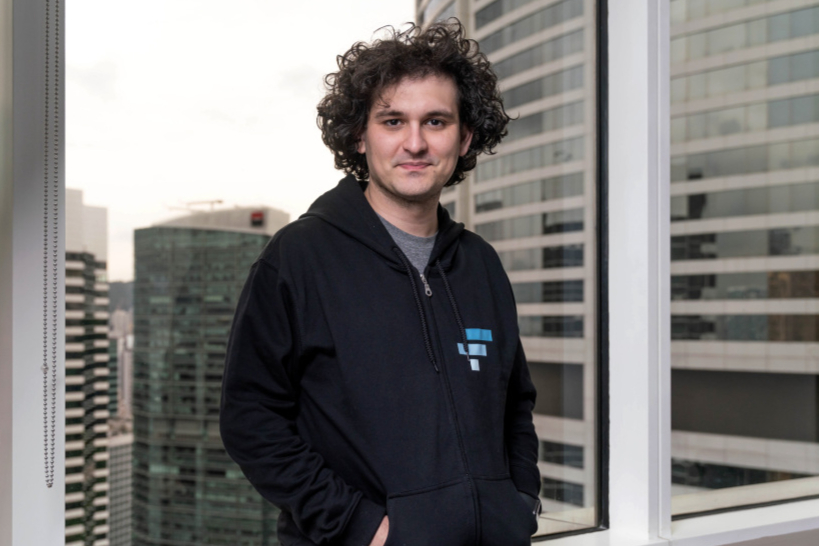
Sam Bankman-Fried, founder of FTX, admits he cannot predict what DEFI will do. But he does know that many commodities and assets are going digital, and that the world is trying to create new digital applications, including stores of value or payments.
"If you told me that all the world's goods would be digitized and traded on a blockchain, I would be surprised, but I do think that there is a lot of potential for digital applications in the industry if blockchain technology continues to improve."
For example, if the community platform is moved to the blockchain, because the applications on the blockchain can be linked to each other, then all the commonly used platforms of individuals can be integrated together. In this way, there is no need to check all kinds of social platforms all the time, and there is no need to worry about the abuse of personal information and dialogue.
In addition, he mentions the biggest advantage of DEFI: composability. Because Defi and other applications are open and transparent and open source, it allows engineers to string together applications that can be grown. Just like Lego, blockchain applications are extremely composable, and Defi is even more so. It's very easy to string together new features, new ecosystems, and Defi has proved extremely flexible over the past year.
"This composability is almost impossible outside of Defi. Every time there is an integration [in traditional finance], it's a long, cumbersome process and it's not a good user experience."
But SBF believes there is still some time to go before that happens. The problem to overcome is the "scalability" of the blockchain.
According to SBF, any large enterprise, such as Twitter, Facebook, Visa, Master Card, New York Stock Exchange, CME, etc., requires huge transaction throughput, perhaps millions of transaction throughput per second, which is obviously not possible with the current blockchain efficiency. A closer approximation might be Solana.
"If you were to move about one percent of the world's industry, or more than one percent, onto a blockchain, you would probably need millions of transactions per second, and the current blockchain just can't do that.And Solana is probably the closest blockchain that comes to that. "Solana currently has a peak TPS of 50,000 (50,000 transactions per second), and that peak will continue to grow."
Welcome to join the official BlockBeats community:
Telegram Subscription Group: https://t.me/theblockbeats
Telegram Discussion Group: https://t.me/BlockBeats_App
Official Twitter Account: https://twitter.com/BlockBeatsAsia

 Related Articles