First week of SBF trial: FTX co-founder testifies, revealing insider trading between Alameda and FTX.
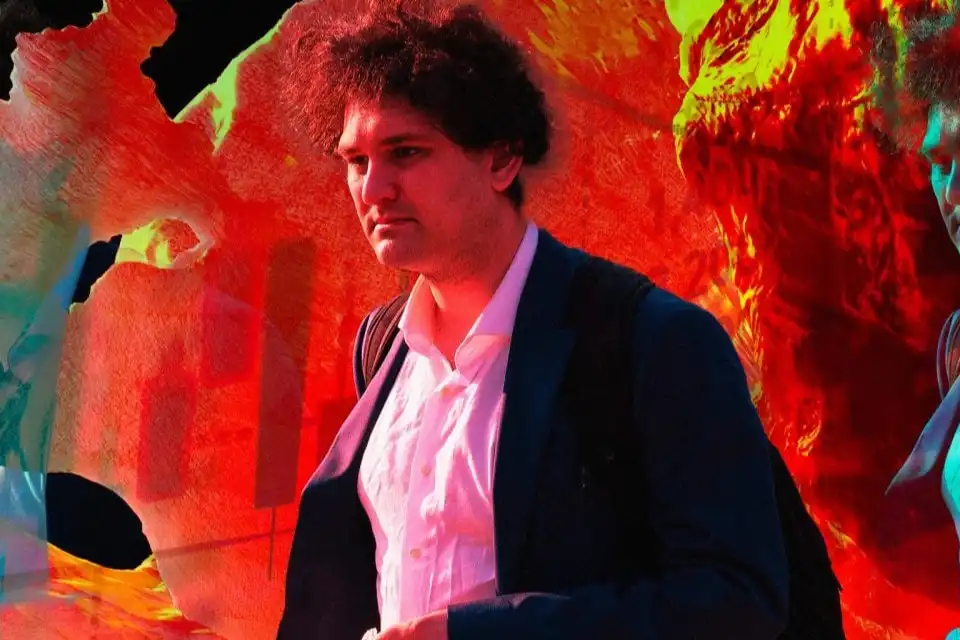
On October 3rd, the highly anticipated FTX case went to trial and FTX founder SBF appeared in court. It has been 9 months and 20 days since SBF was arrested at his home in the Bahamas. SBF may regain his freedom during the trial, otherwise he could face a "long" prison sentence according to federal judges. What progress has been made during the trial and what new information has been revealed? BlockBeats has compiled the following information for readers (this article will be updated in real time), and we recommend bookmarking it for future reference.
Case-related progress and information
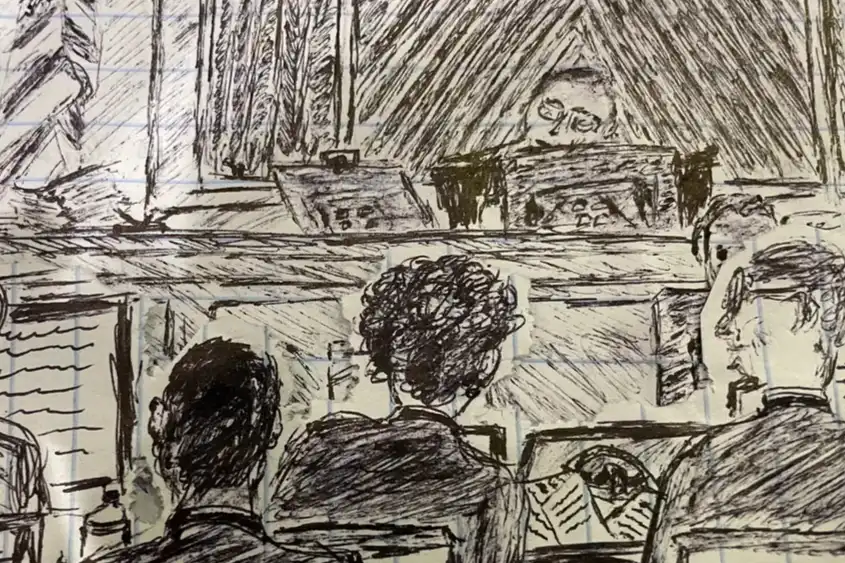
On October 3rd, the first day of the trial of FTX founder Sam Bankman-Fried began in the Southern District Federal Court of New York. SBF's lawyer attempted to prevent a Ukrainian client from testifying against SBF, arguing that such testimony "would only elicit sympathy and anger from the jury."
On October 5th, 12 jurors in the SBF trial have been determined, in addition to 6 alternate jurors. Over the next six weeks, they will decide whether SBF is guilty of seven charges related to fraud and money laundering. Of the 12 jurors, 9 are female and 3 are male, ranging in age from 33 to 69. Background and juror information can be found here.
Opening Statement
The criminal trial of SBF's fraud and conspiracy allegations began at 12:30 pm New York time on Wednesday, October 4th. Assistant US Attorney Nathan Rehn told the jury of 12 members that the government will provide evidence and expert witnesses to prove that the former crypto tycoon "defrauded his clients" and used their funds to purchase "money, power, and influence".
On October 4th, American prosecutors reiterated that the existing legal framework is sufficient to charge SBF with fraud-related illegal activities. The Department of Justice rejected SBF's previous argument that there was "obviously a lack of relevant laws or guidance, directly related to whether the alleged use of customer deposits constitutes misappropriation, rather than permitted business practices." The Department of Justice added that although the existence of the law may be related to establishing a legal duty of care, it is irrelevant whether there is regulation or whether the victims entrusted money to the defendant for safekeeping.
On October 5th, the US Department of Justice (DOJ) stated in the opening statement of the trial of FTX founder SBF that SBF's entire cryptocurrency empire is a "house of cards built on lies". SBF's defense lawyer argued in the opening statement that FTX and Alameda Research founder SBF never intended to steal customer funds - he was simply overwhelmed by the rapid growth of the two companies and acted in good faith without deceiving anyone.
Witness Testimony
October 5th
SBF case witness: FTX accounting software failure exaggerated Alameda's $8 billion debt
On October 5th, a witness in the SBF trial stated that FTX's unusual handling of customer deposits resulted in a software error that inflated the amount owed by Alameda to the trading platform's customers by 8 billion USD. One key factor was the banking industry, as former FTX developer Adam Yedidia told the court that in FTX's early days, customers deposited fiat currency by wiring money to Alameda instead of directly to FTX. This unusual relationship made it difficult for the company to track customer debt. Yedidia stated that an accounting software error caused the amount owed by Alameda to be far greater than the actual amount until June 2022.
FTX Co-founder: Personal annual salary of $200,000, holding 17% FTX equity; SBF once allowed Alameda to withdraw funds without limit.
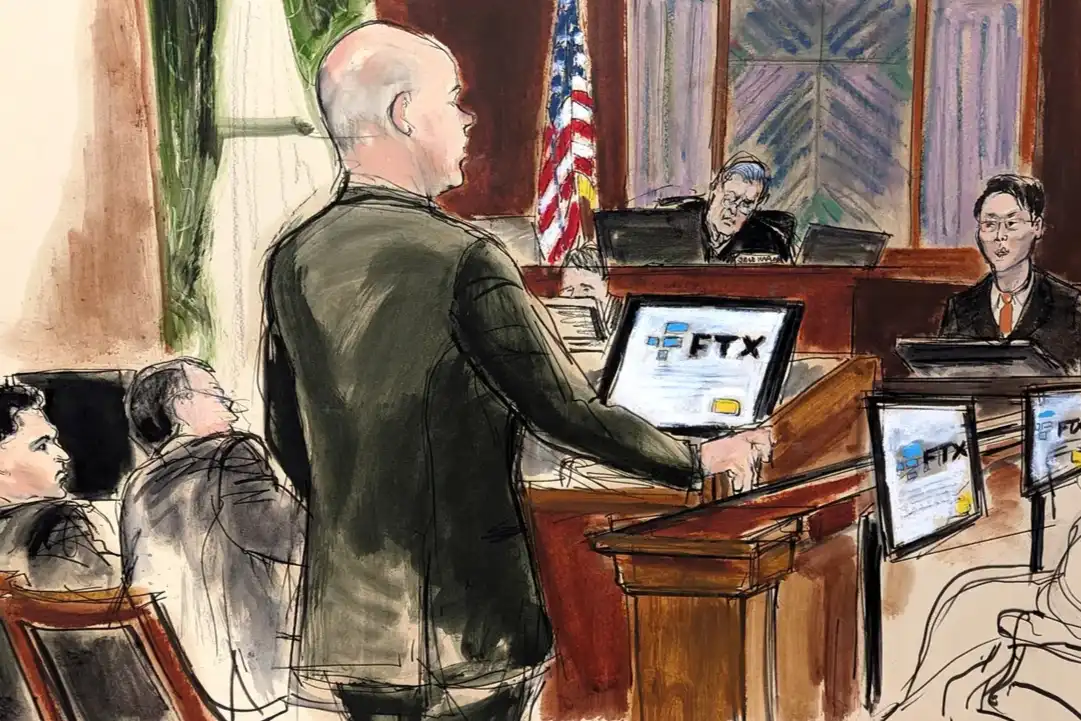
On October 5th, FTX co-founder Gary Wang testified in court that SBF allowed Alameda to withdraw funds without limit. Alameda has a large credit limit to execute orders faster on the FTX platform and can withdraw funds without limit. Wang stated that when FTX crashed, Alameda had already withdrawn $8 billion from the platform and $65 billion from its credit limit. Wang also stated that he has a personal annual salary of $200,000 and owns 17% of FTX's shares. SBF owns "approximately 65%" of the company's shares. Meanwhile, SBF holds 90% of the shares in Alameda Research, while he only holds 10%. Wang also stated that SBF is responsible for public-facing duties such as lobbying and talking to the media, while his responsibilities are limited to coding.
Paradigm Ventures: SBF previously stated that Alameda Research does not receive preferential treatment on FTX
On October 5th, Paradigm co-founder Matt Huang testified in court, describing the process of Paradigm investing a total of approximately $278 million in FTX twice. Huang stated that he was excited about FTX's rapid market share growth, but was concerned about the lack of formal governance structure or even a board of directors at FTX. SBF had previously indicated to him that Alameda Research did not receive preferential treatment at FTX. Huang stated that Paradigm's investment in FTX had been written off to zero.
FTX former senior engineer: SBF realized the problem before the crash and said it would take "six months to three years to solve the problem."
On October 5th, former senior engineer at FTX, Adam Yedidia, testified in court that he had met with SBF in June 2022 (just before FTX's collapse) and inquired about the state of FTX. SBF responded by saying "last year we were bulletproof. But this year we're not. It may take six months to three years to correct this issue." Later, SBF also told Adam Yedidia that they had attempted to raise funds from the United Arab Emirates to strengthen the trading platform's cash reserves, but their efforts were unsuccessful.
October 6th
FTX Co-founder: SBF wants to ensure that Alameda's account will never be liquidated on FTX
On October 6th, Gary Wang, co-founder and former CTO of FTX, testified that Alameda Research has "privileges" on FTX that allow it to spend $8 billion of the trading platform's customer funds. SBF told him to ensure that Alameda's account would never be liquidated on FTX.
SBF Trial Insider: FTX customer balances equal to hot wallet assets, but with an additional $8 billion in debt
Gary Wang stated that in November 2022, FTX's customer balances were equal to the assets held in the hot wallet, with one important exception: a hidden debt of $8 billion called "fiat@". As customers began to withdraw assets from FTX in November 2022, SBF asked Gary Wang to calculate how much Alameda Research needed to deposit on the exchange to cover the outflow of funds. Wang stated that the total of FTX customer balances, excluding Alameda Research's account, matched the assets in FTX's hot wallet. However, he was unaware that his calculation was flawed.
He testified that he only got the full picture when SBF asked him if "our Korean friend" was included in the calculation. Wang was confused, so he asked another former FTX executive, Nishad Singh, for confirmation. Singh told Wang that "Korean friend" actually referred to the $8 billion "fiat@" vulnerability at the core of FTX's collapse. The fiat@ account balance in FTX's internal database had been reallocated to an account named "seoyuncharles88@gmail.com," which was granted special privileges so that Alameda Research did not have to pay interest on its credit limit. Wang also confirmed that SBF knew that FTX's financial situation was more transparent to the public and investors, while Alameda's financial situation was not.
FTX Co-founder: The feature of stealing customer funds by Alameda was already implanted in the FTX system as early as 2019
Gary Wang subsequently revealed more details about the corrupt relationship between Alameda Research and FTX exchange. Wang testified that the functionality required for Alameda to steal customer funds had been implanted in FTX's computer system as early as 2019. In addition, Alameda was granted three privileges at FTX compared to other customers. One of them allowed Alameda to trade with more funds than it actually had in its account. As Wang testified earlier, Alameda could extract unlimited funds from FTX. Secondly, Alameda's credit limit was increased to $65.3 billion. This feature was later used to withdraw fiat and cryptocurrency worth $8 billion, exceeding the amount held by the trading company in its account - roughly the same as the shortfall faced by FTX when it failed to meet customer withdrawal requests in November last year. Wang clarified that the additional funds came from FTX customers who did not explicitly choose to lend their funds.
Related Information
Alameda's former CEO may testify in the SBF trial next Tuesday.
On October 7th, Caroline Ellison, former CEO of Alameda Research, is likely to become the next witness to testify in the SBF trial, replacing former FTX executive Gary Wang. After the trial ended on Friday morning, the US Department of Justice stated that Gary Wang's testimony will end on Tuesday, and the prosecutor expects Ellison to be the next witness. Like Gary Wang, Ellison also admitted to multiple fraud charges in December last year. The court will not be in session on Monday due to Columbus Day, and will resume on Tuesday at 9:30 am Eastern Time.
WSJ: Alameda used "backdoor" to transfer billions of dollars of customer funds before FTX collapsed
According to WSJ, some US employees of FTX discovered a "backdoor" on the platform a few months before its collapse, which Alameda Research allegedly used to extract billions of dollars of customer funds from FTX. The employees who discovered this issue reported it to their department's senior management, and some said that the senior management discussed the issue with an assistant to FTX founder SBF. However, this issue was never resolved. In the summer of 2022, senior team members who expressed concerns about Alameda's special rights over FTX were fired. This "backdoor" played an important role in the case against SBF, who is being tried in a federal court in New York on charges of fraud, with the trial beginning this week. The former head of FTX has pleaded not guilty to all charges. Prosecutors allege that SBF secretly ordered the programming of "special functions" to steal FTX customers' funds, including giving Alameda the ability to handle FTX's huge pool of funds. Court documents show that FTX's code contains a line of code that allows Alameda to have up to $65 billion in debt on FTX.
The US Department of Justice files claims for two luxury planes allegedly owned by SBF
Two luxury planes allegedly owned by SBF but never used by him may face the risk of confiscation as US prosecutors seek to recover assets in an ongoing legal case. According to documents from the US Department of Justice on Wednesday, the two planes are a Bombardier Global 5000 BD-700-1A11 with registration number N410AT and a Brazilian Aerospace (Embraer) Legacy EMB-135BJ with registration number C6-BDE. Both planes are listed as part of SBF's assets. In August of this year, FTX's creditors claimed ownership of the planes, with the Bombardier Global plane having been seized by the government since February. However, Island Air Capital (IAC), a charter flight operator in the Bahamas, has objected to the ownership, claiming that they originally purchased the two planes for $15.9 million and $12.5 million respectively and used financing provided by FTX.
Due to the case lasting for several weeks, there will be continuous updates on new information and testimonies during the trial. BlockBeats will keep updating this article accordingly. It is recommended to bookmark this article to keep track of the case progress.
Welcome to join the official community of BlockBeats by LUDONG
Telegram subscription group: https://t.me/theblockbeats
Telegram communication group: https://t.me/theblockbeatsApp
Twitter official account: https://twitter.com/BlockBeatsAsia
Welcome to join the official BlockBeats community:
Telegram Subscription Group: https://t.me/theblockbeats
Telegram Discussion Group: https://t.me/BlockBeats_App
Official Twitter Account: https://twitter.com/BlockBeatsAsia

 Related Articles