SBF appeared in court again to testify for himself, and the trial is moving towards its final stage.
Original Title: "SBF Trial Transcript, 'Century Trial' Approaching the End"
Original Source: Bloomberg
Original Translation: angelilu, Foresight News
TL;DR:
1. SBF did not give the kind of aimless answer like he did during the initial questioning in front of the jury on Thursday. His response was more concise.
2. SBF often said "I am not sure" as a standard response when answering the prosecutor's questions, and he frequently claimed to not remember what he had said. Sometimes he did not directly answer the questions, which led Judge Lewis Kaplan to tell him to "only answer the questions."
3. The prosecutor attempted to point out the differences between SBF's statements regarding FTX risk management and his involvement with Alameda before and after the exchange's collapse, in an attempt to undermine SBF's credibility.
SBF Returns to Witness Stand
After a few days of interrupted trial, on October 30th, SBF, co-founder of FTX, returned to the witness stand to face the fraud trial against the collapsed cryptocurrency exchange FTX. In last week's testimony, SBF attempted to emphasize that although he served as CEO of FTX, he did not always understand the company's operations. He attributed Alamede's almost unlimited credit limit at FTX to former colleagues Nishad Singh and Gary Wang.
For the remaining time this week, SBF will continue to testify in court until Tuesday local time, and will hold a so-called charge meeting with lawyers on Wednesday and Thursday. The closing argument may be held on Thursday, and the jury may hear the case on Friday.
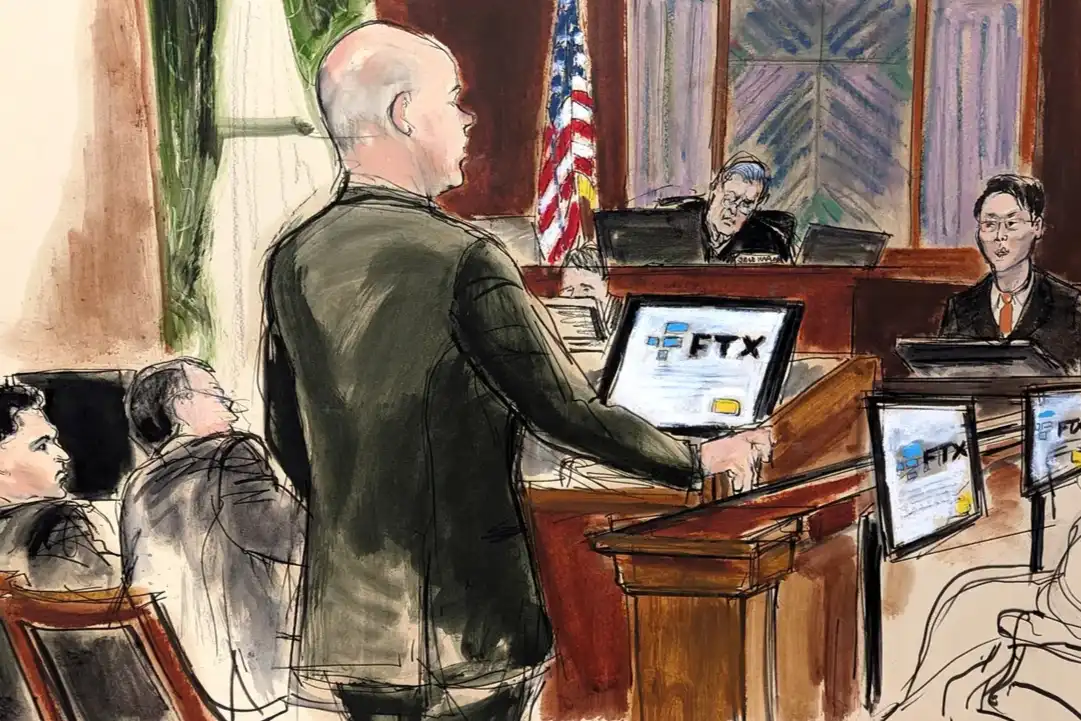
During the trial on October 30th, SBF's defense lawyer Mark Cohen first questioned SBF directly, followed by US Assistant Prosecutor Danielle Sassoon's questioning of SBF, which will continue until Tuesday local time. Bloomberg has provided a detailed record and report of this, and Foresight News has compiled a Chinese version for readers, which provides a first-hand account of the trial from the perspective of a Bloomberg reporter.
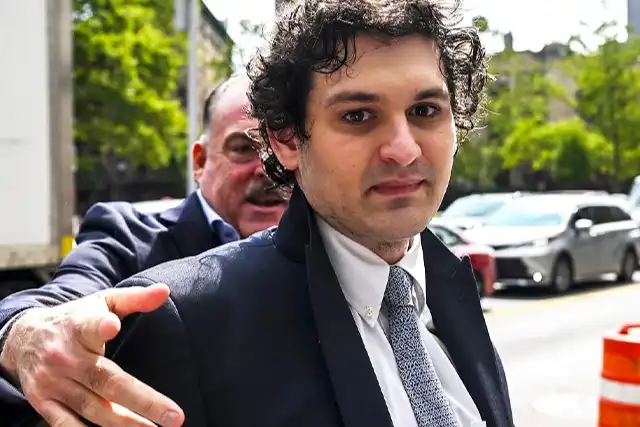
The queue to enter the court security department was very long. SBF's parents stood with the people attending the jury on Monday and the onlookers. SBF began sitting in the usual seat in the middle of the third row of the courtroom, with lawyers on both sides. When the trial began, SBF returned to the witness stand, waiting for the jury's verdict.
SBF Defense Lawyer Mark Cohen Directly Interrogates SBF
The trial began and Cohen asked SBF whether he had prepared a priority list during his tenure as CEO of FTX in September and October 2022.
SBF's response was that he regularly prepares a priority list and presented one of the lists for September/October 2022. One of the priorities is to improve FTX's speed in matching and executing cryptocurrency trades for users.
SBF explained that during busy periods of market volatility, FTX's large systems can become backlogged. Major clients have expressed that they would conduct more trades if they were able to place more orders during these busy periods. Another item on the priority list is called "proper accounting at FTX". SBF explained that this project requires developers, finance, and accounting teams to spend several months to display data on FTX's finances.
SBF also said that he spends about 30 minutes to an hour each day processing each item on the priority list. SBF estimates that if all priority items are completed, FTX's revenue could increase from $1 billion per year to $2 billion per year. However, not all priority items have been completed.
SBF aims to manage risks related to customer borrowing
Cohen asked FTX if they were attempting to manage the risks associated with customer borrowing. SBF explained that if all customer assets were lower than all customer liabilities, it could create a vulnerability on the FTX exchange, which is the risk that FTX manages.
Cohen asked SBF about hedging issues during the period from June to September 2022. SBF said that during this time, he discussed hedging issues with Caroline Ellison, Ben She and Sam Trabucco. SBF recalled telling Ellison, "I said I was very concerned that its net asset value had dropped from $40 billion the previous year to $10 billion, and it still wasn't properly hedged."
He also said that he told her that if the market were to drop another 50%, Alameda might go bankrupt. SBF said that he convened a meeting with Ellison and told her, "I am very concerned about Alameda," especially its current market risks. She agreed that Alameda should hedge. She also said that the company should not make so many risky investments. She said she was also worried about this and offered to resign. In response to her proposal to resign, he said, "I said it was her decision if she wanted to." SBF said that she started crying after that. SBF said, "Caroline eventually agreed that Alameda should hedge more, and Alameda actually did so."
Previously, in Ellison's own testimony, she recalled that in August 2022, SBF yelled at her for not hedging Alameda's investment. Ellison testified that she kept a list of "things that make SBF scared." One of the items on the list was the risk of hedging Alameda's investment portfolio.
Alameda's debt scale exceeds 10 billion US dollars
Then Cohen asked about the debt scale of Alameda around September 2022, when SBF wrote a memo considering the closure of Alameda. SBF said he remembered the debt number was slightly higher than the discussed $10 billion debt at that time. He also found an account with a Korean name, with a debt of about $8 billion. SBF said, "The total debt of Alameda to FTX is about $10 billion. If Alameda goes bankrupt, in my opinion, this will be a very serious problem." SBF said, "This is similar to a few hours before the statutory repair. My view is that its net asset value is about $10 billion."
SBF's lawyer Mark Cohen argued in court that SBF had been concerned about the drastic fluctuations in cryptocurrency prices for several months before the bankruptcy of Alameda, and urged Caroline to hedge against further losses, but she did not do so.
SBF said that he and Ramnik Arora, the former product manager of FTX, went to the Middle East to meet with sovereign wealth fund investors. He said that he participated in this trip because he "believes that Alameda is capable of paying, and FTX is capable of paying and has good liquidity." SBF believes that this investment meeting was very successful. Although the largest cryptocurrency exchange, Binance, is headquartered in the Middle East, investors have shown interest and plan to conduct more due diligence.
SBF held at least four meetings with senior White House officials in 2022 as part of efforts to influence cryptocurrency policy and establish connections in Washington before his FTX empire ultimately collapsed.
On the day when SBF was asked about FTX's bankruptcy application, he stated that after CoinDesk released FTX's leaked balance sheet, he contacted Caroline Ellison to ask if she was willing to comment on it. Caroline Ellison was mentioned in the conversation.

SBF said that, considering the shares held by SBF and Gary Wang in Paper Bird, he believed her statement in the tweet was "true". SBF owns a majority stake in Paper Bird. He said, "In addition, Paper Bird's assets far exceed this amount, mainly holding equity in FTX, which is not reflected on the balance sheet."
CZ Plan to Sell FTT: What Happened?
Afterwards, the CZ plan to sell FTT was mentioned, and at the time, Binance CEO Zhao Changpeng "announced that they would sell the FTT acquired from FTX, worth about $500 million." SBF said that after CZ's tweet, customer withdrawals "increased significantly." "I am worried that this indicates a possible bank run and liquidity crisis," he said. SBF said that daily customer withdrawals reached $1 billion, almost 10 times what he had seen on any other day. SBF expressed concern because FTX is a margin trading platform, which means there is borrowing and leverage involved. "This would be an extreme situation of 100% withdrawal," he said. SBF said that the only way to return all funds is to liquidate all margin positions on the exchange and close the business.
SBF said that on Monday, November 7th, customer withdrawals "not only continued at Sunday's speed, but actually increased further." He said that day, FTX withdrew about $4 billion from the platform, about 100 times more than usual. He is concerned that "there may be a liquidity crisis in a few days." SBF said that Gary Wang told him at the time that there was a backlog of bitcoin withdrawals from FTX. As a result, FTX "began to see slowdowns in the code," and Wang rewrote it to make it faster.
When SBF was asked to explain FTX's official tweet about the delay on November 7th, he provided the reasons for handling the delay. He stated that bank business hours were also one of the reasons for the delay.
In the afternoon, Assistant U.S. Attorney Danielle Sassoon questioned SBF as a prosecutor.
Sassoon attempted to inquire whether this meant that Alameda was a subsidiary of FTX, but the defense objected. Judge Kaplan asked her to ask the question in a different way. Sassoon then asked if SBF was not involved in the 2022 Alameda transaction at all. He replied, "It depends on how you define the transaction." SBF said that he "principally does not participate" in day-to-day transactions, but participates in higher-level discussions. He admitted that Ellison would provide updates and offer opinions on transaction decisions.
Sassoon asked SBF if he had given instructions to Ellison regarding the issue of Japanese government bonds. He said yes, and it was related to hedging. Sassoon asked SBF if he remembered saying in his podcast after bankruptcy that he did not participate in Alameda's trading. SBF said he didn't remember. The prosecution is now playing a recording for the jury. In the audio, SBF can be heard saying, "I didn't really participate in Alameda. I didn't participate in the trade - it's been several years," because he was worried about conflicts of interest. SBF admits that it is him in the audio.
SBF testified in front of the judge on Thursday and often said "I don't remember".
FTX raised about $2 billion, while FTX.US raised about $400 million
"Do you agree that you know how to tell a good story?" Sassoon asked. "I don't know, it depends on what metrics you're using," SBF replied. Sassoon then asked if SBF would be willing to tell a story to potential investors during a pitch meeting. "I will tell what I believe is the truth about the company," SBF answered. SBF then admitted that he had indeed raised billions of dollars from some of the most respected venture capital funds. FTX raised about $2 billion from investors, while FTX.US raised about $400 million.
SBF assures investors that FTX is safe
When asked if he had discussed how to handle customer assets on Twitter, SBF said, "I don't quite remember, but I suspect it was like this." SBF has 1 million followers on X (formerly known as Twitter). "Do you want customers to trust you with their money?" Sassoon continued. "Yes," SBF replied.
When asked if he specifically promoted FTX as "safe" compared to other cryptocurrency exchanges, SBF said, "I don't really remember, I'm not sure." Sassoon asked, "Have you repeatedly described the security of the FTX platform on public forums?" SBF replied, "I'm not sure what you're specifically referring to, but I may have." Sassoon then asked, "Yes or no: Do you remember publicly stating that FTX is a secure platform?" SBF answered, "Yes." SBF was warned for evading Judge Kaplan's questions regarding the security of FTX after answering questions about it.
Sassoon requested that SBF loudly read excerpts from the FTX Key Principles document submitted to Congress. These 10 principles detail a plan that, once enacted, will enable policymakers to effectively regulate digital assets while maximizing their potential for growth and innovation. Sassoon asked SBF if his tweet on October 19, 2022, expressing support for regulation, depended on whether the protection of customer assets was beneficial to public relations. SBF replied, "Yes."
Sassoon pressured SBF to ask whether the collateral from clients must be listed on the exchange. SBF did not directly answer. Sassoon pointed out that when marketing FTX, SBF did not claim that FTX's risk engine was effective because FTX was hosting assets on the platform, right? SBF replied, "Sometimes." Sassoon asked if typical clients were allowed to use external investments as collateral. SBF said, "Sometimes." Sassoon then asked for an example. SBF said, "A company called Crypto Lotus does this, which is associated with Three Arrows Capital."
SBF's defense strategy when answering these questions seems to indicate that he is only involved in the high-level management of FTX and Alameda, and does not know many details, such as the terms of cooperation between Alameda and FTX.
SBF acknowledges that Alameda's credit limit on FTX is $65 billion.
Sassoon: "Do you deny that Alameda can withdraw billions of dollars from FTX exchange using credit lines without complying with the automatic liquidation agreement?" SBF: "That may be correct." Sassoon: "Don't you deny it?" SBF: "I don't deny it, no."
Prosecutor Danielle Sassoon seems to have successfully punctured SBF's credibility by presenting evidence directly contradicting his testimony. SBF did not give the aimless answers he gave during his initial questioning outside the presence of the jury on Thursday. His answers were also shorter and often included him saying he did not remember what he said in certain situations.
SBF was asked whether he thought donating to charities would become a good public relations move for FTX. "I think some donations may have positive public relations value," he said. "These are separate from the testimony I gave."
Sassoon pointed out that SBF testified last week that FTX could do better in terms of risk management. This contradicts his public statement before the collapse. In this congressional testimony in February 2022, SBF talked about FTX's "risk engine" and mentioned "risk management" 20 times. In his opening statement, SBF's lawyer Mark Cohen explained that although FTX has 350 employees, it has not yet established a risk management team, and SBF and other executives have to make hundreds of decisions every day, which means "some things are being overlooked."
"Do you consider yourself a smart person?" Sassoon asked. "In many ways, but not in all ways," SBF replied. "Do you have a high opinion of yourself?" Sassoon asked. "I have achieved it," SBF said.
Sassoon: "During your tenure as CEO, you did indeed know that Alameda and FTX had credit lines, correct?"
Sassoon: "Don't most of FTX's customers not have credit limits?"
SBF: "Yes, that's right."
Sassoon also inquired about the MobileCoin incident, in which a vulnerability was exploited by a customer, resulting in significant losses for FTX. When asked if he remembered Alameda suffering losses in the incident, SBF said, "I won't say I have no memory...if you want me to, I can make a bold guess." "I don't want you to guess randomly," Sassoon said.
SBF Investment Related Questions
Alameda's Seven Balance Sheets
Sassoon asked SBF if he remembered receiving an electronic spreadsheet with seven tags from Caroline Ellison. "I don't remember specifically receiving this file from her," SBF said. "I remember receiving a file that at least looked like one of the tags on it." SBF said, "I don't remember specifically receiving this file from her. I remember the file I received at least looked like one of the tags on it." When asked which tag it was, he said, "When I saw the seventh tag, at least it looked like what I received." The balance sheet "alt 7" was eventually sent to Genesis. In this version, the "exchange borrowing" item (referring to Alameda borrowing $9.9 billion from FTX) was deleted. Sassoon pointed out that the government had received Google metadata indicating that SBF reviewed the spreadsheet on June 19, 2022.
The court adjourned for the day and Sassoon is expected to complete the interrogation before lunch on October 31st local time. This means there may only be two hours left.
Original article link
Welcome to join the official BlockBeats community:
Telegram Subscription Group: https://t.me/theblockbeats
Telegram Discussion Group: https://t.me/BlockBeats_App
Official Twitter Account: https://twitter.com/BlockBeatsAsia

 Related Articles