Structure Financial: When you can use Dogecoin to buy Tesla stock
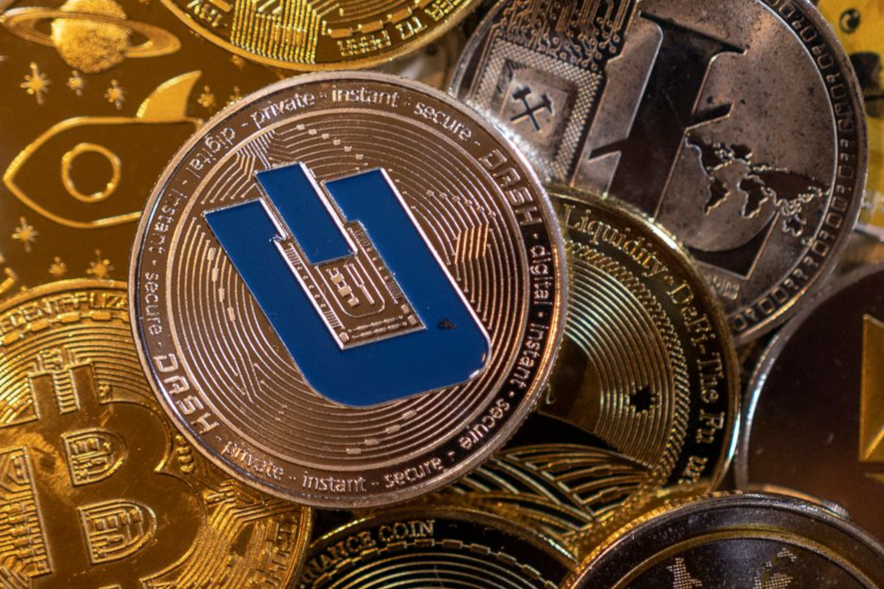
Since October of 2020, Bitcoin has started an uptrend that has amazed investors around the world. The price is only the outward manifestation of Bitcoin. In some ways, Bitcoin is not what it used to be.
In the context of global release of water, the nature of Bitcoin has also changed. The well-known fund institutions on Wall Street have added it to the balance sheet of listed companies, and the top KOL has called for orders, making Bitcoin once again enjoy a new round of demographic dividend. It has evolved from a supporting tool for the minority of geeks to an asset allocation for top institutions on Wall Street.
Even so, the value of Bitcoin has long been the subject of debate.
There are still a lot of people who are opposed to Bitcoin. They believe that Bitcoin is useless, that violent fluctuations will not enable it to fulfill its original goal of "peer-to-peer payment of electronic cash", and that the cryptocurrency industry it leads is not able to attract mainstream funds.
While there are still some problems with Bitcoin, the most compelling aspect of this bull market is that it has reawakened people's thinking about the concept of a fiat standard.
Assets are money
It has always been accepted that people think on a fiat standard, or only on a fiat standard, but examples like Venezuela have forced locals to look for new stores of value, such as dollars and cryptocurrencies, which have become the most urgent needs.
Back in 2020, when the United States decided to unleash unprecedented amounts of water, stocks, commodities and everything else priced in dollars started to go up. The Nasdaq represented by technology stocks is the most obvious. In the Q2 period of 2020, chip leader TSMC rose from NT $300 to NT $430, new energy leader Tesla rose from US $700 to the highest US $1,900, and space travel leader Virgin Galactic rose from US $15 to US $27. Beyond Meat, the faux Meat leader, went from $90 to a maximum of $160. Demand for tech assets is far greater than expected.
And when Bitcoin was recognized as a commodity, it also became a mainstream technology asset. In the secondary market, GBTC's trading volume on Nasdaq is US $400 million in a single day. In contrast, the demand for other technology assets and commodities in the cryptocurrency industry is also very obvious. Binance, the world's largest cryptocurrency trading platform, launched a Tesla equity token on the first day of trading volume of more than ten million dollars. The Defi agreement also appeared to focus on the synthesis of US stocks and commodity assets.
More and more portfolios have emerged among these assets. Structure Financial, for example, provides a platform for investors to swap assets.
Structure Financial
Structure Financial aims to be a commission-free, transparent, 24/7 investment platform that is traded in cryptocurrencies. In other words, Strucure is going to be the Robinhood of crypto assets.
Invest in crypto assets
On the Structure platform, all investments are made in cryptocurrency. The assets in the platform are tokenized assets, including tokenized stocks, options, ETF, etc.
No trading was closed
Following the rules of the cryptocurrency market, all assets are traded at 7x24 hours within the Structure platform. All secondary markets are currently closed except cryptocurrency markets. However, in Structure platform, the trading time of traditional financial assets, including US stocks, is not closed. During the traditional market is closed, investors can still trade.
The asset swaps
In the Structure platform, when any assets are paid or collected, investors' preferred assets can be used to pay or collect.
When an investor wishes to purchase a Tesla equity token, it is not necessary to use USDT alone, but other equity tokens, such as Apple equity tokens, can also be used.
Similarly, when an investor receives a Tesla Equity Token asset in their account, the investor can convert it into a preferred asset, such as Dogecoin.
STXR economic model
In the Structure network,STXR is an on-chain circulation token with governance functionsUnder the rules of the network, "farmers" who contribute to the ecology can be rewarded with STXR.
For example, users who actively trade, actively make markets to provide asset price discovery, users who pledge STXR to maintain network security, and so on, can be rewarded.
At the same time, just as Bitcoin network adjusts the difficulty of mining once every 2016 blocks, Structure network also adjusts the corresponding "coin casting rate", with the main purpose of maintaining the exchange rate between STXR and US dollars.
Investors can also directly purchase "Farm Shares" in Structure Ecology, where the share represents the STXR income that users will contribute in the future, and this income will be transferred to the ecological Treasury. In other words, it is also a form of ecological financing.
In the macro context of global massive release of water, investors in the currency circle need more than crypto assets. Global assets such as stocks and commodities are all high-quality investment targets. From the perspective of the development of the platform, it is an irreversible trend for global assets to be traded on a single platform.
FTX, Binance follow the trend of the launch of equity tokens, DEFI Mirror Protocol is also betting on the equity token field. While the equity token field is booming, the project development of DEFI field is being segmented, such as fixed interest rate fixed term lending, large stablecoin swap and other segmented fields.
In the context of "everything is tokeable", the new financial market created by DEFI could fundamentally alter incentive schemes and change the way we live today.
Perhaps Structure Financial is trying to provide us with such a platform.
Welcome to join the official BlockBeats community:
Telegram Subscription Group: https://t.me/theblockbeats
Telegram Discussion Group: https://t.me/BlockBeats_App
Official Twitter Account: https://twitter.com/BlockBeatsAsia
 Related Articles