Wanxiang chairman xiao feng: "network + block chain" will let the company lose the need to exist
Original title: "xiao feng: cognitive subversion of financial intelligent asset management industry"
Source: financial review journal of Peking University

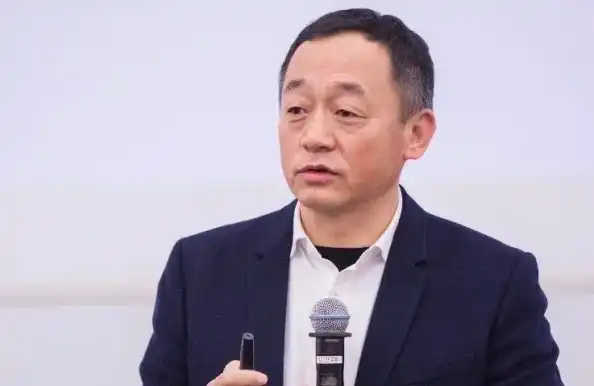
An important application of financial intelligence is the asset management industry. In recent years, artificial intelligence and blockchain have brought a great impact on the investment methods and organizational structure of the information management industry. Guide in this background, the chairman of the board of directors, universal data block chain, chairman and CEO XiaoFeng accepted an interview with the Peking University financial review and he believes that the new technology has brought great changes in social production organization way, pursue the "scale effect" from the past into the pursuit of the "network effect", and in the future, digital technology such as artificial intelligence will bring "ecological effect". In the era of financial intelligence, the asset management industry "either pursue the ultimate beta, or the ultimate alpha, the middle company will gradually have no market. The future is uncertain, "look for the constant in the changing."
The asset management industry will be polarized into two extremes in the future
Pku financial review: is your investment framework and philosophy facing challenges in the era of artificial intelligence? What do you think?
Xiao feng: after entering the information society, science and technology really brought a fundamental revolution. After leaving boshi in 2012, I started a financial technology company called tonglian data. The company wanted to see what new technologies like artificial intelligence would do to investment. By 2015, we had acquired zheshang fund, a fund management company. After that, we really started to explore some AI enabling investment. The brand we established in the whole industry is AI+HI(Human Intelligence). Over the past two years, we've really started to have AI [artificial intelligence algorithms] + people [fund managers] managing fund portfolios and doing well on a more stable volatility basis.
Artificial intelligence technology will have a great impact on us. For example, we now have nearly 500 algorithm models in zheshang fund, which can be regarded as 500 robots to help us analyze 500 problems in various aspects of the investment market. Add the 100 people of zheshang fund, you can also say that zheshang fund is a fund company with 600 employees.
Pku financial review: what are the advantages and disadvantages of these algorithms? Specifically, how can I help you solve practical problems and improve the efficiency of data processing?
Xiao feng: we were inspired by Google's AlphaGo. The reason why artificial intelligence can be used to play go is that it has clear boundaries and clear rules. If the boundary is clear and the problem is sufficiently detailed, the machine algorithm can work. But the problem is that the boundaries between the stock market and the investment market are extremely unclear and the factors are very complicated. For example, a tweet from US President Donald trump can affect the volatility of global stock markets the next day. How to apply the algorithms of artificial intelligence to the investment market and have an effect is indeed a challenge.
Our solution is to take the problem apart, take the problems in the investment market one by one, peel them off one by one, peel them off one by one, peel them off until the boundaries are clear enough and the rules are clear enough, then turn it into an algorithm and let the machine take over, so that ai can play to its strengths. It took us more than three years to do this, and we're still taking apart the problem and training and optimizing the algorithm. Over the next year or two, we will continue to break down the problem to more than 1,000, which is equivalent to the company having more than 1,000 robots to help empower our researchers and fund managers. In short, technology is making a huge difference to our asset managers, fund managers, researchers, and fund managers, and we're seeing that now, and we're getting a taste of it, and we believe that there will be even bigger changes in the future.
Pku financial review: blockchain is also an emerging technology that may bring changes. What changes will it bring to the era of intelligent finance?
Xiao feng: the algorithm of artificial intelligence needs a huge amount of data, the more the better. But access to data also raises questions about who owns the data. Is data privacy properly protected? To continue the development of AI, it is necessary to solve the problems of data right confirmation and data privacy protection. Blockchain can help AI in these two aspects.
In addition, if the data can be changed, the training of the AI algorithm will be problematic. Blockchain is a tamper-proof, irrevocable database. Using blockchain as a database can create a credible AI computing platform.
Pku financial review: as a leading figure in the asset management industry, what do you think will happen to the future pattern of the asset management industry in the era of intelligence?
Xiao feng: I think the future of the capital management industry will go in two directions: either the pursuit of the ultimate beta, or the pursuit of the ultimate alpha, the middle of the company will gradually no market.
Specifically, the industry will be divided into two extremes, one is the use of new technology, robots and artificial to do the whole market. The other is the extreme move towards deep research, the thorough exercise of human initiative, like buffett's careful study of the fundamentals to see the longer-term cycle.
However, those in the intermediate stage have neither profound fundamental research ability nor technological capability, so it is difficult to survive in the market. For example, passive investment can be completely replaced by AI. Although the fees are very low now, they will be lower in the future, so low that basically people can no longer do it. In the United States, a big trend is taking place in which transaction fees are waived and then charged for value-added services such as wealth management, lending, advising, and consulting. Will management rates on passive investments also fall towards zero? There's a possibility.
Technology empowerment from a digital asset perspective
Pku financial review: what are the characteristics of digital assets and digitalization process? What impact will it have on the asset management industry?
Xiao feng: digital asset is a new asset class generated with the digital migration of human society. Digitization has atomized a lot of things. For example, some people say that bitcoin is not a currency, that it fluctuates too much and does not have the four major functions of a currency. But in fact, the functions of money are gradually added. Now the process of digitization is a reverse evolution, which separates the payment function, value function, value benchmark and other functions of money, so that a digital currency (or token) only represents a function, such as value collection without payment. This is an atomization of the molding process, but also a code of the process.
Atomization may not be a combination of the original monetary functions, but may be a combination of new functions. It's like allowing everyone to build their own building blocks, building many digital products with different properties, functions, USES and values. How to value it in this process is a problem faced by the investment management industry. Of course, this is a topic for the future, and we still have time to gradually build a set of methods of evaluation, valuation, investment and portfolio, but the trend is there.
These theoretical frameworks have not been well established, although some pioneers in the field are still discussing them. Given another five years, I believe the investment management industry will come to a deeper understanding of this. Because we are passive in the face of new technologies and new asset classes, someone has to create these asset classes first, and then we look after them, analyze them, invest in them. So it's still a creative period. It's an important and urgent thing for the blockchain industry, but it's an important but not urgent thing for the asset management industry.
Pku financial review: as a new asset, what changes does digital asset bring to asset valuation and organizational structure?
Xiao feng: the development of new technologies, including AI and blockchain, brings new asset classes. There are asset classes like digital currencies that didn't exist more than a decade ago.
As new asset classes are introduced, so are new ways of valuing them. If PE, PB, PS, cash flow methods to valuation, may not invest until the industry's business model is fully mature. But in fact, cash flow is only a tool in the valuation method. After entering the information society, you can't just look at the cash flow, but also the data flow will become an important tool in the valuation. The data flow may not be reflected in the accounting statements, but it will be reflected in the company's valuation, which is not just based on the data in the accounting statements.
In addition to data flow, the strength of digital capability should also become a very important valuation indicator. For example, due to the new outbreak, many industries have gone online. If a company doesn't have strong digital capabilities, it has no future.
In addition to the change in valuation, the new technology has brought about huge changes in the way production is organised. For example, the current Internet company is asset-light, the public block chain project is asset-free, non-profit, how to value? How to value platform companies? The organization of the company has also changed a lot. The original investment in the stock is the ownership of the transaction, bond is the right to trade, now under the block chain can also be carried out separately. For example, Token is more of a transaction of the right to use, and the possession of Token is the right to use the network.
Pku financial review: open bank is using a new open source business model to bring new value to its digital assets. What do you think?
Xiao feng: a British writer said a good thing about open Banks, to the effect that banking services are everywhere but not in Banks. Banks have a lot of capabilities, with their own account capacity, payment capacity, risk control capacity, anti-money laundering capacity. The bank can output these capabilities to different application scenarios in the form of API, and each application scenario can package this capability into its own products and services to provide to customers, instead of directly reaching customers in the form of APP. Open banking is a process in which an APP becomes an API. APP is the client of the bank. Others must download it and log in to use the bank's service. However, the API is different. The bank is behind it, but the front-end is a variety of application scenarios for customers. When customers meet their demand for financial services, they do not know that they are dealing with the bank.
From APP to API is also the inevitable trend brought by digital technology. As a kind of service, the bank gradually sinks into the operator of infrastructure service, removes the shackles of physical outlets, and gains the whole world.
From "scale effect" and "network effect" to "ecological effect"
Pku financial review: from a macro perspective, what are the impacts of the development of AI and other new technologies on the way of social production organization?
Xiao feng: new technology has brought about great changes in the way production is organized. The era of industrial economy emphasizes the effect of scale, large-scale, standardized, and pipelined production, so as to gain a cost advantage and sell a product to 100 million people.
However, in the network era, platform economy seeks to superimpose a "network effect" on scale effect. If scale effect is addition, then network effect is multiplication. Through the Internet, many long-tail products, personalized products, the cost of search and the cost of purchase have been greatly reduced. So instead of selling one product to 100 million people, you can sell 100 million people different products.
Network effects have multiplied the valuation of scale effects several times, and the best companies in the world in the era of the industrial economy were valued at around $500 billion. Several of today's Internet companies are worth trillions of dollars.
Pku financial review: after "scale effect" and "network effect", what new effects can artificial intelligence, block chain and other technologies bring in the future?
Xiao feng: I think the next stage is characterized by the "ecological effect" based on the "scale effect" and "network effect". The new technology enables us to generate more and larger "connections". Unlike network effects, ecological effects are not necessarily corporate relationships. Have such symptom, such as Shared economy times went further, but block chain in the chain of blocks in this world there is no company organization, everyone together to establish ecological, with an open "association", in the role of stakeholders to participate in economic activities, family belongs and rather than the shareholders, directors, employees, company organizational logic.
Block chain is essentially a set of algorithms for trust endorsement, which can enable strangers to do things together and reduce transaction costs. Especially after the "network + block chain", even the cost of trust is reduced to zero, then there is no need for the company to exist. Companies don't exist, and property protection isn't necessary, so all the code on the public blockchain is open source. After the open source brings the ecological effect, establishes the ecosystem. I think five, 10 years of development, we will see a higher level of ecological effect than the platform effect.
Pku financial review: what role do you think blockchain can play in this "ecological effect"?
Xiao feng: there are some functions of blockchain technology that have been very useful for five or six years. For example, the tamper-proof and traceable features of distributed bookkeeping are used to store certificates, such as food traceability.
Further, it is used as a general ledger system to do the governance and management of global public affairs. The management of public affairs requires multi-party participation and large-scale collaboration, but such collaboration has been costly and information sharing inconvenient. The general ledger system allows each party to record their information in an account book, so as to achieve multi-party information penetration, information sharing, information collaboration, so as not to do evil. This time, during the fight against "novel coronavirus", we have begun to explore how to optimize the multi-party large-scale social collaboration system with the block chain technology.
I am optimistic about the development of blockchain as a general ledger system in China, because general secretary xi said that the covid-19 epidemic prevention war is a total war, which means that it is a large-scale cooperation in public affairs, and the blockchain technology can help this very well.
Pku financial review: some people also worry that although the chain on the block chain can not be changed after the chain, but how to ensure the authenticity of the data before the chain?
Xiao feng: first of all, if the data happens on the block chain, then of course the data cannot be changed.
Second, if the data source is from authoritative official channels, such as the sports results from the official websites of the World Cup and the European championship, these data can also be completely credible.
Third, if the data is transferred from the chain to the blockchain chain, there must still be an authority to confirm the authenticity of the data. For example, if the property ownership certificate is put on the block chain, you must have the housing authority to prove that the house is yours. At this point, blockchain still has to connect with the real world.
... ...
... ...
This article is published in the third issue of Peking University financial review
The full text is 6657 words in total
Source link:weixin.qq.com
Welcome to join the official BlockBeats community:
Telegram Subscription Group: https://t.me/theblockbeats
Telegram Discussion Group: https://t.me/BlockBeats_App
Official Twitter Account: https://twitter.com/BlockBeatsAsia

 Related Articles