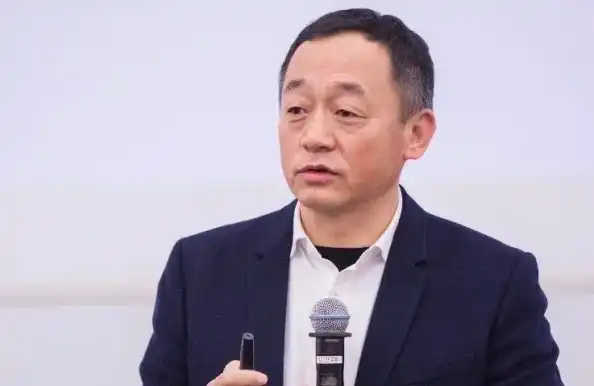
Full text of Xiao Feng's speech at the Wanxiang Blockchain Summit: The next three years are the key moment for the large-scale application of blockchain.
The original title: "Feng Wanxiang Summit Opening Speech: The Next Three Years are the Key Moment for Large-scale Application of Blockchain"
Original source: Xiao Feng, Chairman of Wanxiang Blockchain
Original translation: ForesightNews
Hello everyone, welcome to the 9th Global Blockchain Summit. We have been organizing this event for nine years with the strong support of many peers and friends. Without your support, we would not have the determination to continue organizing this summit. Mr. Ma has been participating in the summit for many years and we would like to express our special thanks to him! Today, we also have many new friends, including Mr. Qiu Dagen and Mr. Ren Jingxin from the Hong Kong Legislative Council. The participation of these new friends gives us the confidence to continue organizing the summit well, as we constantly expand the scope and content, and bring new value to the participants.

Brewing a classic takes time. In terms of this summit, nine years is clearly not enough to make it a classic. We are willing to work with everyone's efforts to continue and continue to do well at such a global blockchain summit. The theme of this summit is "Next Stop Web3.0", which almost covers technology in areas such as the Internet, blockchain, metaverse, AGI, etc. Web3.0 is a general term. Web3.0 not only covers technology, but also involves innovative business models, organizational forms, economic mechanisms, and financial models. We have invited experts, developers, and practitioners from all aspects to share their insights and bring value to the participants.
The blockchain is moving from the construction stage of infrastructure to a new stage of large-scale application. The next three years are a critical moment for the application of blockchain. Because in the next three years, the technical framework of blockchain will tend to be mature, of course, there will be many details, performance or other aspects that need to be optimized and polished. But the performance improvement or detail polishing in the future needs specific application scenarios to bring better changes. After the big framework is set, the product polishing needs to be combined with the demand. Without specific demand, how to optimize it? From which direction to optimize it? There will be problems. So this is a complementary and mutually promoting process. After the big framework is set and there are applications, we will know how to optimize the overall architecture in the application process.
The next three years are a critical moment for blockchain to enter large-scale applications. Conversely, it is also a stage for blockchain to prove that it can truly support the real economy, technological innovation, and financial markets. In the past, it was the period of building blockchain infrastructure. We have seen many technologies that have nothing to do with the real economy or specific application scenarios being developed during this stage. It is easy for people to think that these things are virtual and empty, and the infrastructure does not have a direct relationship with specific application scenarios or specific needs. However, without the construction stage of infrastructure, we cannot carry large-scale applications on the framework of blockchain. Any large-scale application of blockchain ultimately cannot be separated from the core value of blockchain. What is the core value of blockchain? The core value of blockchain lies in its public, transparent public ledger, which is the biggest difference between it and Web2.0 or other previous models. The most core difference is that it is a public ledger.
On such a public and transparent ledger, strangers, even strangers from around the world, can collaborate on complex tasks without the need for various trusted intermediaries, which is the core value of blockchain. This includes a very popular term recently called RWA (tokenization of real assets). We have seen financial institutions, including those in Hong Kong, attempt this, and recently a financial institution in Hong Kong issued $200 million in tokenized green bonds. The only regret is that it was registered and issued on a private ledger. Of course, this is already a great progress, but it is still registered on a private ledger. If these financial institutions can find more compliant ways to issue on a public ledger, the result is that the assets issued on this public ledger become assets with global liquidity. Because assets issued on a public ledger can be seen by Chinese and Brazilian investors, Chinese investors can invest, and Brazilian investors can also complete investment transactions peer-to-peer on a public ledger. This is the future of RWA tokenization of real assets. We have seen regulatory agencies in various countries establish new regulatory rules in this regard, and we have also seen regulatory agencies encourage and support markets such as RWA tokenization of real assets. Through RWA, we see how blockchain technology supports the real economy and how it supports technological innovation. Like Hong Kong, issuing green bonds on the blockchain is a very green approach. We have seen blockchain support financial innovation. Applications built on blockchain have helped us establish a global work network, a global market network, and a global financial network.
We have seen tens of thousands of Chinese engineers developing products and applications directly on the networks of ChatGPT or GPT4 in the past few months. Some work alone, while others work in small teams of two or three. Thousands of developers are targeting the global market, using globalized systems to launch their own products and services, which has been very successful. I believe this is the launch of Globalization 2.0 in the digital age. Globalization is an unstoppable trend, although it is beginning to recede due to geopolitical factors. However, we must see that the beginning of the receding of Globalization 1.0 has already triggered the launch of Globalization 2.0. One fundamental driving force behind the launch of Globalization 2.0 is Web3.0. In a digital world, it is difficult to use geographical space to limit Chinese engineers or limit Web3.0 entrepreneurs, and it is difficult to create physical and spatial barriers in a digital space. We are looking forward to the arrival of the next stop and the arrival of the Web3.0 era.
I believe that Chinese developers and entrepreneurs can achieve greater efficiency and win a more global market, even larger than the global market in the internet era.
I would like to thank all the guests, colleagues, and friends who attended the summit. At the same time, I would like to express my gratitude for your continuous support and assistance to the blockchain summit. Thank you all!
Original article link
Welcome to join the official BlockBeats community:
Telegram Subscription Group: https://t.me/theblockbeats
Telegram Discussion Group: https://t.me/BlockBeats_App
Official Twitter Account: https://twitter.com/BlockBeatsAsia

 Related Articles