Wanxiang Blockchain Xiao Feng: In the new stage of blockchain, application protocols explode
Original Source: Wanxiang Blockchain
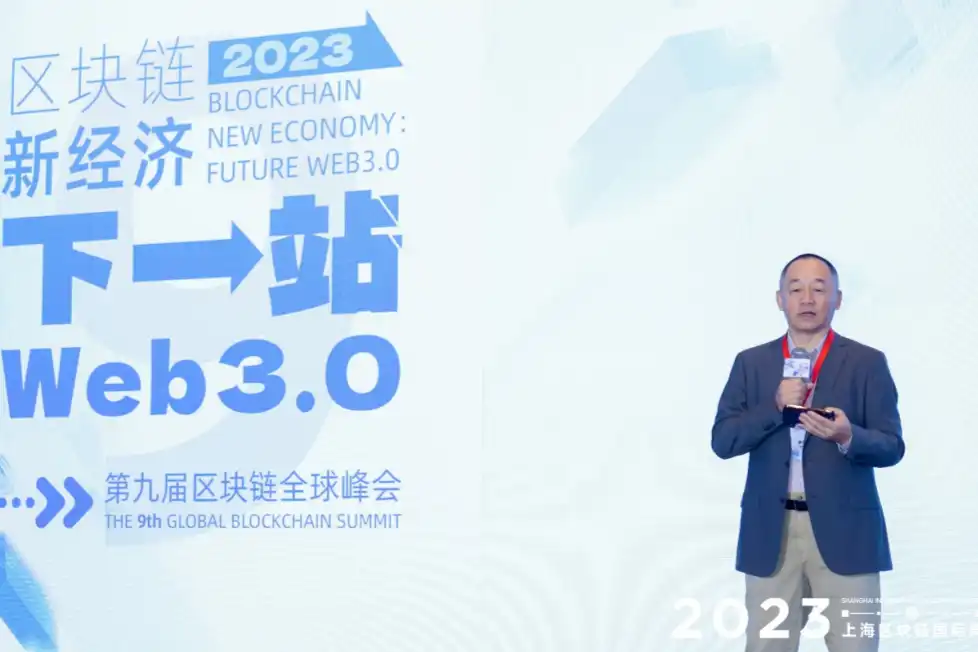
This article is compiled fromWanxiang Block Chain Chairman and General Manager Xiao Fengshared at the Wanxiang Blockchain Global Summit:
< psf pro="" sc";font-size:12.0pt;color:#242841'="">
< p>Dear friends and audience, thank you very much for coming to the Wanxiang Blockchain Global Summit. Today, the topic I want to share is "Blockchain Application Protocol Explosion in the New Stage". A few days ago, the Ethereum Consensus Protocol A big migration is not only of great significance to Ethereum, but also a very important historical moment for global blockchain technology and blockchain applications. It means that the infrastructure construction phase of blockchain is coming to an end, and the application The big explosion is coming.
Before talking about the big explosion of blockchain application protocols, let’s review how the Internet protocol stack is built Yes. In the decades from the 1970s to the 1990s, Internet protocols were chaotic and flourishing.
The most important protocols at that time There are:
1. The well-known DEC company at that time launched the DECNET Internet protocol model.
2.IBM's own SNA Internet protocol model.
3.OSI Internet protocol model launched by European official institutions.
4. In the United States, the TCP/IP Internet protocol model initiated by the people from bottom to top
In these decades of protocol wars, the TCP/IP model has become the ultimate winner. I think the TCP/IP model can defeat the Internet protocol models advocated by officials, large companies, and scholars and experts, mainly in the following five aspects Reasons:
First, the TCP/IP model is guided by requirements, and the code precedes the standard, that is, it can be used first The running code is tested by the market and gradually comes to the standard. OSI, an Internet protocol model organized by the European official organization, it is precisely from the framework to the standard, and finally to the code. Obviously, the demand-oriented TCP/ The IP model is more competitive.
Second, the TCP/IP model is bottom-up by community and ad hoc mobilized. Although it eventually had an official organization, in the first 20 years, that is, until the mid-1980s, it was a community approach, with some developers with the same values to jointly promote the development of the TCP/IP model.
Third, the TCP/IP model adopts the agile development model to iterate quickly, and constantly Iterative TCP/IP model. The OSI model is a waterfall development, that is, after the entire model is designed, it is given to users and users at one time. This is obviously not a typical practice of the Internet.
Fourth, the TCP/IP model is a developer-friendly, user-friendly model. Customer first, customer priority.
Fifth, the TCP/IP model is a completely open source and open model. Of course, several other Internet models are also open source, but they are not license-free. They are proprietary models and require a license to use them. The TCP/IP model is license-free, anyone can use it, and anyone can build on it.
By summarizing the successful experience of the Internet protocol stack TCP/IP model, we can find that, in fact, the blockchain protocol It also followed these characteristics and developed in a similar way. At this point, the Internet protocol stack and the blockchain protocol stack follow the same path.
We generally divide TCP/IP into 5 levels: the physical layer is its first layer, the bottom layer, including the cable , optical fiber, etc. The second layer is the link layer, such as IP. The third layer is the network layer, the fourth layer is the exchange transport layer, and the fifth layer is the application layer of the Internet.
Borrowing the five layers of the TCP/IP Internet protocol stack, we can design a protocol stack for the blockchain value network.
The bottom layer is the basic layer of the value network protocol stack, we call it L0, mainly including decentralized bandwidth, decentralized Centralized storage and decentralized computing. Bandwidth, storage, and computing are very important foundations of the future value network. In the roadmap announced by the Ethereum Foundation to the community, in the next 10 years, the performance of Ethereum will reach 10 million TPS per second. To achieve 10 million TPS per second, the bandwidth must increase by 100 times.
The second layer - L1, we call it the settlement layer. Since it is a value network, there must be a valuable clearing and settlement-related protocol layer.
The third layer is L2, which I call the transaction layer. Make exchanges and trade.
The fourth layer I call it the data layer, this layer protocol is mainly used to generate data assets and digital assets. Data assets and digital assets are two types of things. Data assets here specifically refer to the identities bound to each of our users, individuals or organizations on the Internet and on the blockchain, and the identity data generated based on the behavior of these identities, we call it data assets. Digital assets are new asset classes created by users as creators on the Internet and on the blockchain, including some digital artworks marked by NFT.
The fifth layer is the top layer, I call it the application layer. All the business scenarios we are familiar with, experienced, and used will eventually be refactored at L4, the application layer. Any business is worth doing all over again on the value network, which is the structure of the blockchain protocol stack we assume now.
In this structure, I personally feel that Ethereum plays a central role. Ethereum had an important upgrade on September 15, from the PoW consensus algorithm to the PoS consensus algorithm. This is not only an important historical moment for Ethereum, but also an important historical moment for the global blockchain industry. Vitalik Buterin, the founder of Ethereum, once announced the future development roadmap of Ethereum, which has 5 stages. I think the three stages of merging on September 15th, sharding after merging, and Verkle tree after sharding are the three most important stages in this upgrade process. The fourth and fifth stages are just optimizations and partial iterations of the previous ones.
After the completion of these three stages, as the underlying value clearing and settlement network of the blockchain, Ethereum will have a very high Performance and very flexible scalability, while combining the robustness and security of the Ethereum network that has been proven in practice over the past 7 years. Higher TPS and more flexible scalability on a robust and secure network provide a very good technical foundation for the explosion of applications, which will surely usher in an explosion of applications.
In addition to the five-stage upgrade of the Ethereum mainnet, on or outside the mainnet, there are Other new technologies and new protocols, such as sharding, layering, side chains, and sub-chains, together further develop the security, robustness, higher TPS, and more flexible scalability of Ethereum, so that the entire The blockchain technology system is expected to reach hundreds of thousands of TPS within three years, one million TPS within five years, and ten million TPS planned by the Ethereum Foundation within 10 years.
If these 3-year, 5-year, and 10-year plans can be realized as scheduled, then the value settlement of the blockchain protocol stack The achievement is none other than Ethereum. At the same time, the infrastructure construction of Ethereum should be over within three to five years, and the next step is to build a lot of applications on top of a very good infrastructure, so it will usher in a big explosion of blockchain applications stage.
We can also compare the historical period of the explosion of Internet applications and the explosion of blockchain applications. First, let's review how the explosion of Internet applications happened.
Everyone agrees that the explosion of Internet applications began in 2010, but in the early 1890s, TCP/IP The Internet model has been formally established. In 2000, the basic models of Internet business had actually appeared, but they had not yet been able to achieve large-scale operations, especially they had not yet found the way and means of realization.
With the emergence of the mobile Internet and smart phones in 2010, especially the revolution of APP, the Internet presentation method, we think The explosion of Internet applications has begun. Before APP, we used computers and browsers to log in to webpages to have a relationship with the Internet. Such a complicated and multi-link process prevented most people from connecting with the Internet. However, one-click access to the Internet with an APP on a mobile phone has enabled Internet businesses to obtain hundreds of millions or billions of customers. On the basis of billions of customers, through algorithm recommendations and customer portraits, companies can achieve high conversions. rate to gain commercial value.
The application explosion of blockchain refers to the development process of Internet applications. I think the application explosion should start in 2025. This judgment is first based on the fact that in 2025, the blockchain system may be able to reach millions of TPS per second. At the same time, the technology of all aspects of Web3 may be basically ready. In addition, new forms of business organization began to be perfected and began to work well. At that time, the blockchain began to enter a period of its application explosion, and I predict that this time will be 2025.
The application protocol of the blockchain, first of all, it must be on the blockchain chain and run based on the blockchain . Second, it must use smart contracts to ensure the effective operation of the entire business activity. Third, all blockchain applications must adopt a decentralized governance mechanism. Fourth, NFT is not just a proof of rights for digital products. NFT will become the proof of ability, proof of behavior, proof of workload, proof of contribution, and proof of activity of each blockchain application participant. Based on these proofs, the blockchain application will use Token as an incentive tool to establish a very effective Token-based incentive mechanism so that all participants and related parties can get what they want and get sufficient and effective incentives.
In addition, the application protocol of the blockchain must be open source and open to collaboration. Open collaboration means that the application protocols of all blockchains can enable participants to come and go as they want without obtaining anyone's permission. This is the characteristic of the blockchain application protocol that I have summarized. I believe this feature can also be used to analyze Web3, and it can also be used to analyze DAO (Distributed Self-Organization). DAO will become a very important form of business organization during the explosion of blockchain applications in the future.
Looking at DAO from the perspective of the business organization form of blockchain application, I think it has four characteristics.
First of all, DAO is a trustless network. To avoid trust, it must be based on blockchain, smart contracts and digital wallets.
Second, DAO is a transparent network, and the whole process is on the blockchain. Therefore, the operation data of DAO is completely open and transparent on the whole network. From the perspective of information disclosure, DAO has an order of magnitude improvement compared with traditional business in terms of transparency, timeliness, authenticity and comprehensiveness of information disclosure.
Third, DAO is a right-of-use network, and there is no founder in this right-of-use network, that is to say, DAO has no owner. DAO has promoters, and the promoters may have certain influence on the network and the appeal of the community, but they do not own the network.
Fourth, DAO is a permissionless network. Joining DAO or quitting DAO is decided by individuals, no application is required, and there is no People or institutions can decide who can join the DAO and who can't.
Fifth, there are two value markers in the DAO business model, which I think are both indispensable and equally important. One is NFT. I said earlier that NFT is actually a proof tool. Use NFT to record your behavior, contribution, ability, and property rights. After the information is recorded, DAO can issue tokens based on a set of models to provide economic incentives for these behaviors, so tokens are economic models and incentive models. At the same time, because of the sharing and standardization of Token, it is also the value exchange of all DAOs, so the business model of the entire DAO should be "Play NFT to Earn Token", which is the business model of DAO in my opinion.
Finally, let me summarize, whether it is the Internet protocol stack or the blockchain protocol stack, the lower the protocol, the more global unity. The more unified the underlying protocols, the more the application layer protocols will flourish. For example, there are hundreds of application layer protocols on the Internet. I believe that there will be hundreds of protocols in the application layer of blockchain in the future. The explosion of application protocols is actually the explosion of applications and the explosion of blockchain business, so I am very much looking forward to the arrival of blockchain in 2025.
My share here ,thank you all.
This article is from a contribution and does not represent the opinion of Rhythm BlockBeats
Welcome to join the official BlockBeats community:
Telegram Subscription Group: https://t.me/theblockbeats
Telegram Discussion Group: https://t.me/BlockBeats_App
Official Twitter Account: https://twitter.com/BlockBeatsAsia

 Related Articles