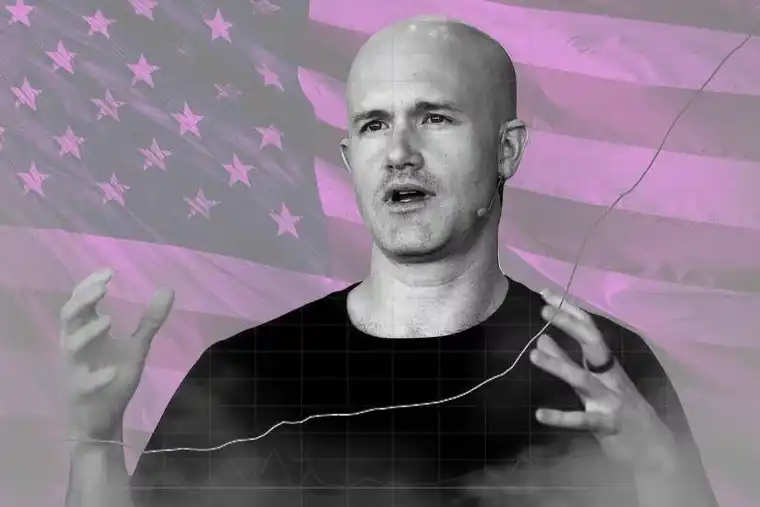
Coinbase CEO: cryptocurrency adoption in emerging markets will expand to hundreds of millions of users
Coinbase CEO looks ahead to cryptocurrency's next decade
Brian Armstrong, CEO of Coinbase
Yu shunsui, Odaily planet
On January 3, I looked back at the past decade of cryptocurrencies. Now let's look to the future and what I think will happen in the 2020s. Of course, no one can predict the future very accurately, but a better way to predict the future is to create it!
In short, I think we'll see a much more scalable and privacy-enabled blockchain in the next decade, with about a billion users by the end of the decade (about 50 million at the start of the decade). Adoption will take place in emerging markets, where the financial system is most vulnerable, and in a wave of new cryptographic start-ups making products people want. By the end of this decade, most tech startups will have encryption components, just as most tech startups today use the Internet and machine learning. Governments and institutions will also make a big push into cryptocurrencies.
1. Scalability
In the 2020s, I believe we will see the emergence of tier 2 solutions or new blockchains that will increase transaction throughput by orders of magnitude. Just as the replacement of the 56k modem with broadband led to many new applications on the Internet (YouTube, Uber, etc.), I believe that scalability is a prerequisite for the encryption industry to really begin its utility phase. Once we see blockchain scalability increase by orders of magnitude, we'll start developing new applications faster (see # 5, "rise of cryptographic startups").
2. Privacy
In addition to extensibility, I think in the 2020s we'll see privacy integrated into a dominant blockchain. Just as the Internet started with hypertext transfer protocol (HTTP) and only later introduced HTTPS as the default setting on many websites, I believe we will eventually see mainstream adoption of a "privacy coin" or blockchain with built-in privacy features in the 2020s. In most cases, it makes no sense to broadcast your every payment on the transparent ledger.
3. The merger
There are many high-quality teams working on next-generation protocols (Dfinity, Cosmos, Polkadot, Ethereum 2, Algorand so on), and many excellent teams working on tier 2 extension solutions to existing blockchain. My prediction is that in the next decade we will see blockchain consolidation (in terms of developers' thought shares, user base and market cap). The blockchain that makes the most progress in scalability, privacy, development tools, and other features will reap the greatest benefits. We can even see mergers and acquisitions within these teams. A), if you wish, this can be A reverse fork in which one of the chains is discarded and each token can be exchanged for the token of the acquiring party at A fixed exchange rate. There are as many tokens as there are companies/open source projects/daos/charities in the world (so there are millions), but only a few blockchains will power the infrastructure of these tokens. Like any other industry, winning blockchains are likely to follow a power-law distribution of results.
4. From trading to utility
The 2010s were largely about speculation and investment in cryptocurrencies, with trading driving much of the activity and best business models. This trend will continue in the 1920s (see article 9 market structure and article 7 institutions), but I believe that the best new companies created in the 1920s in cryptography will focus on the utility phase (people using cryptocurrencies for non-transactional purposes). We are already beginning to see the beginning of this trend, with more and more customers Staking, lending/margin, debit CARDS, earning income, commerce, etc.
5. The rise of cryptography startups
This decade will see a new breed of startup become commonplace: cryptographic startups. Just as the dotcom boom started the idea of Internet start-ups (a decade from now, almost every tech start-up will be using the Internet in some way), I believe that by the end of the 2020s almost every tech start-up will have some sort of cryptocurrency component. So what is the definition of an encryption startup? Three things. First, it will use cryptocurrencies to raise money (separating venture capital industry proposals from a larger pool of global capital). Second, it will match products to the market by handing out tokens to early adopters (turning them into preachers), akin to early employees getting equity in the company. Third, they will bring together global communities and markets at a speed we have never seen in traditional start-ups, which have had to painfully expand country by country, integrating payment methods and regulation one at a time. This raises numerous regulatory issues, but the advantages are so great that I think the market will find a way. These cryptographic startups will face the same challenge all startups face: making things people want. The next 100m people to be exposed to cryptocurrencies are not because they care about them, but because they are trying to play games, use decentralised social networks or make a living, and using cryptocurrencies is the only way to use specific applications.
6. Emerging markets
In addition to cryptographic start-ups, which will be the first world-class phenomenon, another area of adoption will be emerging markets, where the existing financial system is a bigger pain point. Especially countries with high inflation and large remittance markets. In 2019, GiveCrypto.org paid 5,000 people in venezuela for cryptocurrency, more than 90 percent of whom were able to make at least one transaction with a local store that accepted cryptocurrency or a local cash-extraction partner. This suggests that these tools are beginning to cross the usability threshold in emerging markets, where unreliable Internet access, old-fashioned smartphones and a lack of education can be challenges. In the 2020s, I think we will see the adoption of cryptocurrencies in emerging markets expand to hundreds of millions of users, with at least one country "taking the lead" so that most transactions in their economies are in cryptocurrencies.
7. Institutions
We are already beginning to see small institutions move into cryptocurrency. Over the past 18 months, hundreds of agencies have joined Coinbase Custody. I expect this rapid growth to continue in 2020, with ever larger institutions joining in. Eventually, almost every financial institution will have some sort of cryptocurrency business, and most funds will hold some of their assets in cryptocurrency, partly because their returns are not correlated. About 90 percent of the world's money is locked up in institutions, so this could drive a lot of demand for crypto-assets.
8. Central bank digital currency (CBDC)
While Libra has drawn the ire of almost everyone in Washington, dc, China has taken the initiative to digitise its currency and make blockchain one of its core technology investments. The United States is now catching up, and the debate about how to digitize the dollar is active. The CENTRE alliance and its USD Coin (USDC) could be a solution for the us to turn to, or the fed could try to use blockchain to create its own digital dollar. I think we will see a package of digital currencies, either issued by a union such as Libra or CENTRE or by the international monetary fund.
9. A maturing market structure
Over the past decade, many of the companies we think of as cryptocurrency exchanges are actually tied together as brokers, exchanges, custodians and clearinghouses. In the 2020s, I think we're going to see the structure of the cryptocurrency market evolve more like the traditional financial world, with these functions being separated out from a legal and regulatory perspective. This has already happened to some extent. Coinbase Custody, for example, is an independent company with its own board of directors and is regulated as a New York trust. Coinbase Pro will also be split into brokerage firms and exchanges. Just as in traditional financial services, customers of one product will become competitors of another, and there will be many cross-effects. With these separate components, I expect it will be easier for the SEC and others to create a cryptocurrency index fund for retail investors.
10. Decentralization will expand
While fiat/cryptocurrency transactions will largely follow the traditional model of financial services, an independent world will evolve in the purely decentralized realm of currency and coin transactions. In other words, once you turn your fiat currency into cryptocurrency, you have access to a magical place of innovation, which is pure coin trading.
In a world where unmanaged wallets, DEX, DeFi, and DApp will continue to improve in terms of usability and security, we will see many new applications emerge, from games to online communities to virtual worlds with their own economies. Because no customer money is stored, many applications and unmanaged wallets in the world will be regulated like software companies rather than financial services companies. This will greatly accelerate the pace of innovation.
There will also be more privacy in the world, with more adoption of privacy COINS and unmanaged wallets. We will also see the rise of decentralized identity and associated reputation ratings. As the cryptographic economy grows, more and more people will earn their living in cryptocurrencies and find opportunities in this new global online economy to promote global economic freedom.
11. The flippening of billionaires
Finally, asa bonus, my friend Olaf carlson-wee, founder of Polychain Capital, and Balaji Srinivasan, former CTO of Coinbase, estimate that at $200,000 per bitcoin, more than half of the world's billionaires will come from cryptocurrencies. Whether you think this is a good thing or a bad thing, it means that in the 2020s, more technical professionals will have access to a lot of capital. Presumably, this will increase investment in science and technology, and I think we'll see more cryptographers turn to philanthropy (we've already seen that with efforts like the Pineapple foundation, GiveCrypto.org and GivingPledge).
It remains to be seen how many of these predictions will turn out to be true: by shifting cryptocurrencies from a focus on trading and speculation to a focus on real-world utility, the number of people who own and use them will increase dramatically in the 2020s and begin to really drive global economic freedom.
Text link:https://blog.coinbase.com/what-happened-in-crypto-over-the-last-decade-ee6a2552d630
Welcome to join the official BlockBeats community:
Telegram Subscription Group: https://t.me/theblockbeats
Telegram Discussion Group: https://t.me/BlockBeats_App
Official Twitter Account: https://twitter.com/BlockBeatsAsia
 Related Articles