Coinbase's founders look back a decade on the cryptographic market: trading platforms make the most money and the industry is bound to be regulated
Title: "What happened in crypto over the last decade"
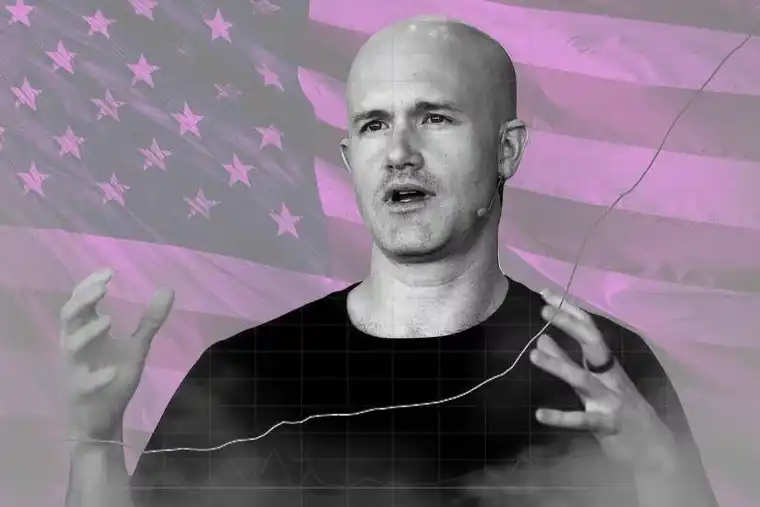
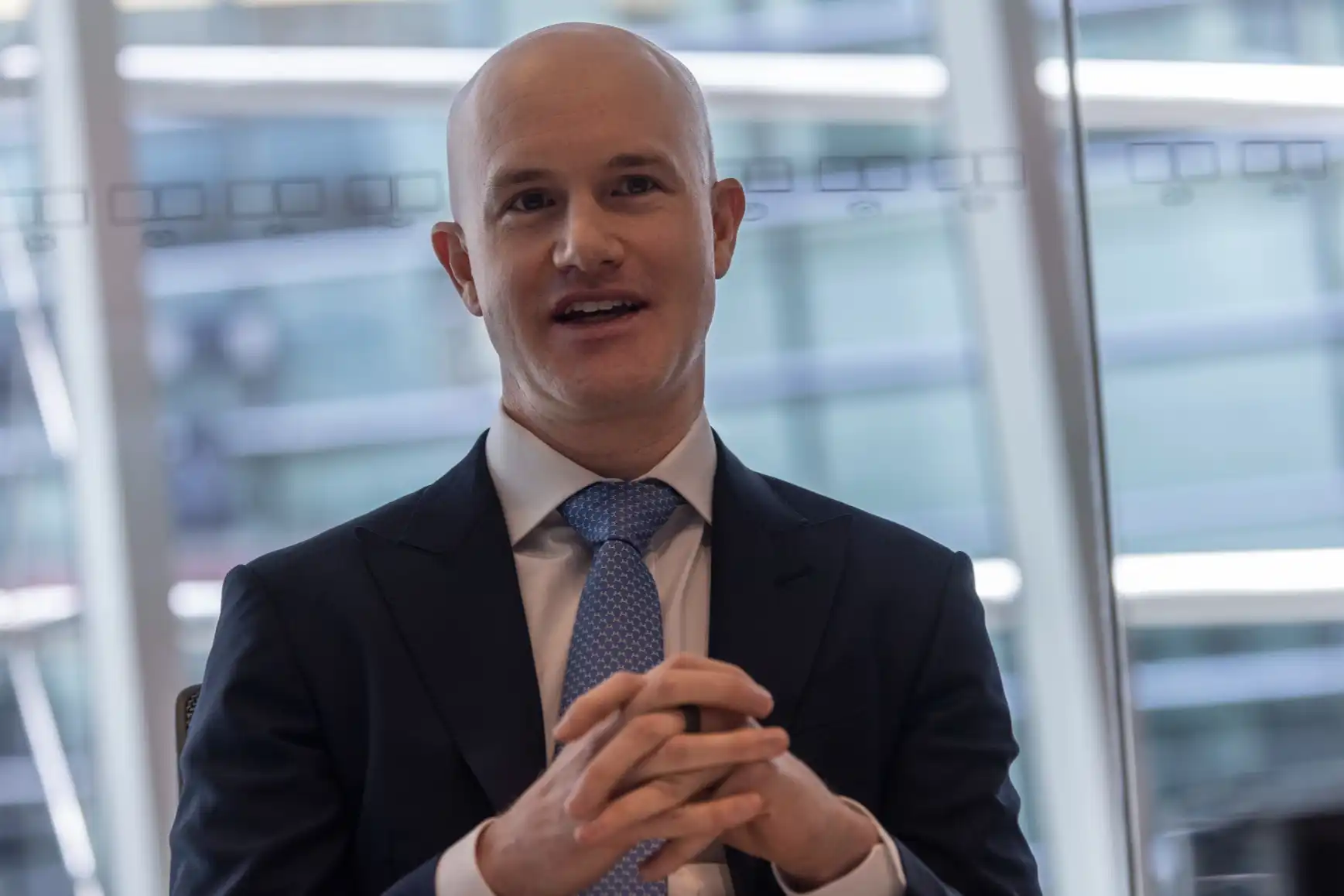
Brian Armstrong, co-founder and CEO of Coinbase
0×33
Coinbase co-founder Brian Armstrong today posted a long post on his personal blog, reviewing the evolution of cryptocurrencies and summarizing ten key points of the past decade.
以下为区块律动BlockBeats对 Brian Armstrong 博客原文翻译,Enjoy~

1. Bitcoin didn't fail (as many predicted)
Perhaps people don't realize that for most of the past decade, there has been a constant debate about whether bitcoin will survive. The fear is that a flaw might be found in the bitcoin protocol, that it might be declared illegal, that it might all go to zero because it has no intrinsic value (and, of course, encryption advocates are quick to point out that the dollar doesn't really have any support either). As we can see, more than 379 articles announced the end of bitcoin early. Yet bitcoin has not only survived but thrived, becoming the best-performing asset of the decade. We have learned an important lesson from human nature:Most major breakthroughs are buck-trend ideas that people tend to ignore and laugh at in the first place.
2. Coinbase didn't fail (as many predicted)
In the early days of Coinbase, some people told me that trying to create a system to manage encrypted wallets and exchanges was a crazy idea. Because some of the world's best hackers are trying to break into encrypted trading platforms, and MtGox and many other companies have. But thanks to a combination of luck and technology, Coinbase has managed to fend off a string of attacks and has created many new keystore methods that are still evolving.
3. Factions and civil wars
For a new industry, there has been a lot of infighting as protocol changes have been discussed and new cryptographic assets have been rolled out, either through hard bifurcations or an entirely new project. Many organisations become radicalised and split into their own "echo Chambers". I think the reason this is more acrimonious than other technology debates I've seen (emacs vs. vim, iOS vs. Android, etc.) is that once people own certain cryptographic assets, they have an inherent conflict of interest and emotional control. We stopped trying to find the truth and started talking about our own theories. On the plus side, having lots of competing groups drives a lot of innovation, compared with monocultures or mono-asset monopolies. As to which blockchain ideas or projects will affect the next 100 million or 1 billion users, the race is still on, but I expectCryptocurrencies will eventually see some consolidation, similar to that in other industries.
4. Bubble (collapse)
The cryptography industry has gone through five bubbles, each of which has been followed by a crash (at a higher level than the last low). In other words,The industry has been moving up, but it's been a very bumpy ride. That means a lot of discussion and media attention is focused on the price of crypto-assets, with day trading attracting short-term thinking and sometimes bordering on gambling. At the same time, investors who take a long-term approach (for example, by averaging dollar costs over many years) are getting incredible returns.Bitcoin has been the best-performing asset of the last decade, beating even unicorns, with its market value rising by more than $100bn.Before the end of the last decade, savvy investors typically invested 1-10% of their net worth in cryptocurrencies as part of a diversified portfolio.
5. DAPP has been around longer than we thought
With the exception of minor applications like CryptoKitties, digital applications have rarely been adopted, and Defi didn't really start to grow until last year. This is due to scalability issues, variability, block chain scripting language limitations, and consumer product availability issues. Defi seems to be a successful use case, even on the limited scale of today's blockchain, because lending has lower transaction throughput requirements than gaming or social networks. In terms of merchant acceptance, Coinbase and BitPay have invested heavily in this, signing up vendors such as Overstock.com, Dell, Expedia, Microsoft, Reddit and Wikipedia. But the actual volume was much smaller at first than many thought (though it was growing steadily every year).This means that during the past decade, trading and speculation were the primary USES of encryption, and the actual use case phase took longer than many expected.
6. IC0
When the IC0 craze started, we saw a potential need for startups to raise money from unaccredited investors.Eight of the top 10 crowdfunded projects are now cryptographically related. The IC0 trend drew the ire and attention of the securities and exchange commission, which slowly but surely began to take enforcement action in this area. In the end, startups raise too much money this way, but it actually hurts the company. Many IC0 projects had huge amounts of cash but failed to sell real-world products (over time, some of them began to look more like investment companies than real product companies).
Trading platforms capture most of the value
Perhaps the best business model in cryptography over the past decade, apart from the agreements themselves, has been trading platforms and brokerage houses, which sell shovels during the gold rush. Some cryptographic miners seem to have made good gains too, but the volatility of cryptographic prices makes it hard for them to survive in a volatile market. Over the past few years, a large number of high-quality teams and startups have entered the field, and a significant amount of venture capital money is still flowing into cryptography startups (for example, Coinbase Ventures, our own small fund, has invested in 60 cryptography startups over the past few years).
8. A stable currency
In addition to scalability and availability, one of the challenges limiting the adoption of cryptographic assets is their instability. While volatility is good for investors and speculators, it is bad for those who want to use it as a medium of exchange. Bitcoin's volatility has fallen relatively far over time, a promising long-term trend, but there also appears to be a desire for the cryptocurrency to stabilize more quickly. Stability COINS have been rolled out in large Numbers over the past few years, in a way that has allowed Banks and governments to vent from the "blockchain is not bitcoin" mentality, with everyone from JPMorgan to China announcing efforts to roll out stable cryptocurrency assets. There's USDT, there's Dai, and Facebook's Libra has raised the hackle of almost everyone in Washington, d.c. but with China increasing its efforts to digitize its currency and investing in blockchain technology, the U.S. has been caught off guard and is busy coming up with its own way to digitize the dollar. Dollar tokens (& NBSP; USD Coin), founded by a centralized consortium and linked to the us dollar one-to-one, has grown into the second largest stable currency (Tether is the first). I believe USD Coin will be adopted by more examples in the us in the future.
System of 9.
At the beginning of this decade, the cryptographic world was a purely small-scale sales activity between technology enthusiasts and early participants, but by the end of this decade, it had emergedOne clear trend: institutions are starting to step in. These institutions are not the big traditional institutions, but they are also exploring this field. Instead, a lot of small encryption institutions are intruding into this market. They have also created hundreds of "cryptographic funds" (Paradigm, Polychain and A16Z, the three big cryptographic funds, were all created by former employees or board members of Coinbase). In the past 18 months, Coinbase has grown from $0 to $7bn, making it the world's largest institutional cryptography custodian.
Regulation of 10.
A decade has passed since cryptocurrencies began as completely unregulated. Coinbase was (to my knowledge) the first encryption company to take regulation seriously. Starting around 2013, we started applying for remittance licenses in the United States. Since then, Coinbase has been licensed in multiple locations.By the end of the century, I believe cryptocurrencies will be a regulated industry (at least in the first world).Whether cryptoassets will be managed as currency, commodities, security, property or something completely different over the past decade is a big open question. As it turns out, there is no unified solution for how to regulate cryptocurrencies, because there are so many kinds of cryptocurrencies! In a way,Everyone recognizes that we are rebuilding almost every part of the financial system, and that will require many different types of regulators.Meanwhile, the more fragmented aspects of cryptocurrencies continue to grow rapidly, with the use of unmanaged wallets, DEXes, Defi and dapps increasing. While transactions with fiat/encrypted trading pairs and managed wallets may be subject to similar regulations to the traditional financial system, some areas where cryptocurrencies are more decentralised may require an entirely new regulatory framework (ideally, much less overall regulation, which will lead to more innovation).
conclusion
In general, working in the encryption industry has been a great pleasure over the past decade. After many ups and downs, this is a very volatile industry.
Original address:https://blog.coinbase.com/what-happened-in-crypto-over-the-last-decade-ee6a2552d630
Welcome to join the official BlockBeats community:
Telegram Subscription Group: https://t.me/theblockbeats
Telegram Discussion Group: https://t.me/BlockBeats_App
Official Twitter Account: https://twitter.com/BlockBeatsAsia
 Related Articles