Former FTX COO on last conversation with SBF: 'I'm sorry, I messed up'
Source: Unchained
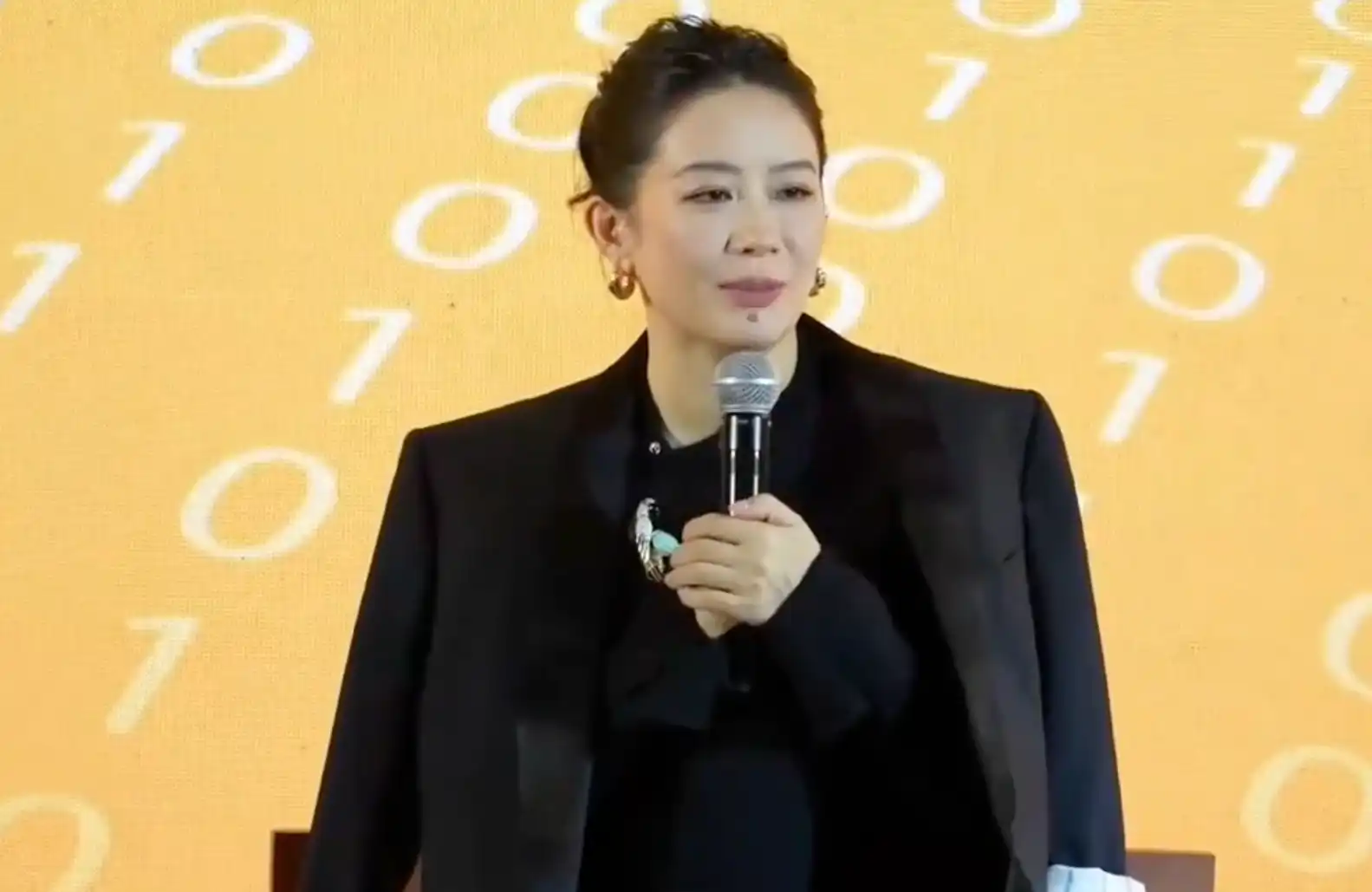
This is an episode of the Unchained podcast, where host Laura Shin spoke with Constance Wang, former COO of FTX, about Netflix's new show "Gold-Plated Ideals," which covers the rise and collapse of FTX and SBF.
Simply put, for those who experienced FTX's peak and the aftermath, this show might share only the names and people they know, but all the details, the sequence of events, and the personalities seem completely different.
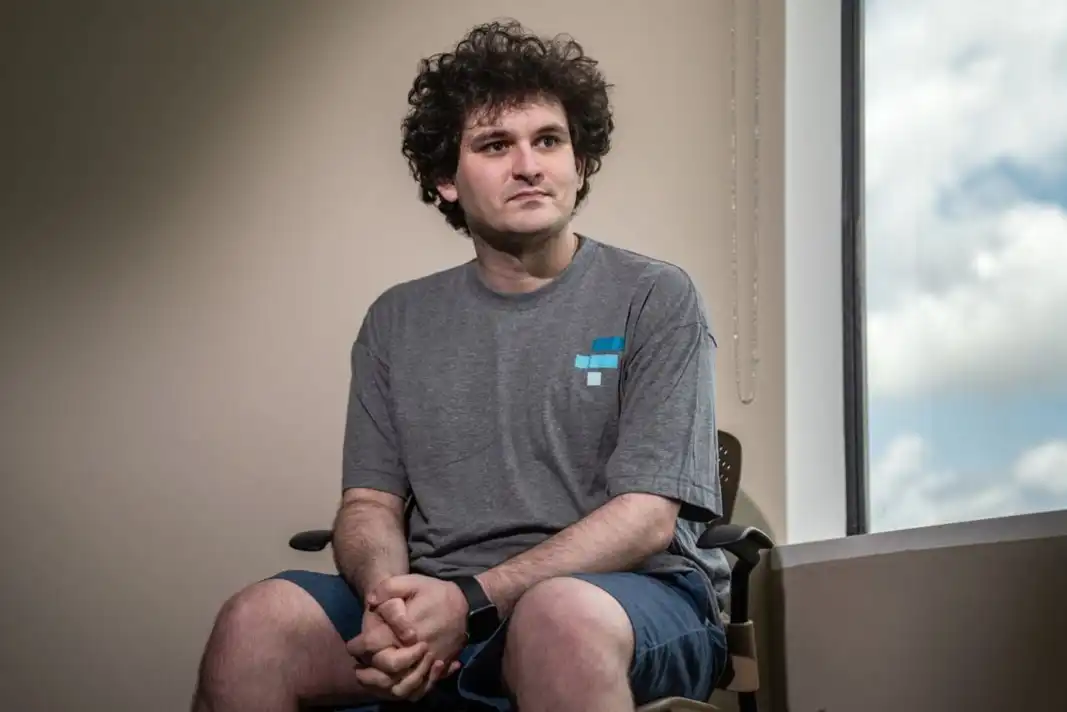
Constance mentioned at the end her last conversation with Sam. She wanted to know why a $32 billion global top-tier financial super unicorn would end up like this? But Sam just repeated: "I'm sorry I fucked up."
That's the Sam we know—no emotions, only numbers. In memory, in the texts he output back then, only when talking about innovations in new DeFi projects and personally participating in mining could you feel his passion. So much so that later when I heard he was in a relationship, I thought it was impossible.
Here is Constance's sharing on the podcast:
Conclusion First
This show has almost nothing to do with what we experienced.
Halfway through, I gave up asking "Did they shoot this wrong?" Not because it wasn't accurate enough, but because it's simply another story. They borrowed our names and made a fictional drama. So I later told friends: don't watch it with the mindset of "let's see what really happened back then," or you'll be misled. If you just want to watch a show with some romance, then go ahead, you can laugh at how absurd it is. Beyond that, it has absolutely nothing to do with the real people and real events.
Many friends also messaged me saying "I really like your character." I think, if this can bring a little joy, then the show has done its part.
How We "Endured" the Show
I initially had no intention of watching it. But too many people asked me about it and sent me messages, and a few friends and former colleagues wanted to watch it together, so I thought, fine, let's see how many episodes I can get through.
Funny enough, we really did watch it as a group. We had to pause frequently to catch our breath because the whole show was just too unbearable. But probably out of curiosity, we "pressured" each other and forced ourselves to watch it to the last episode.
For the first couple of episodes, we'd still be complaining, "This part is so badly made," "That part is terrible too." But after the second episode, we just thought: forget it, this isn't what actually happened anyway, let's just watch it as a completely new fictional story. Let's see how they actually use our names.
Almost every other line of dialogue, every other scene, we'd burst out laughing. Eventually we just stopped pausing—we just wanted to binge through it.
The Sam in the show is not the Sam we know
The biggest change they made was building the entire story on a romance between Sam and Caroline.
That's so far from the truth. Many of us share the same view: building two companies from scratch and actually running them is extremely hardcore work—you can't build it on top of a relationship. Maybe some people's companies are like that, but we think it's way too far from reality.
Besides, Sam is one of the most emotionless people we know. It's hard to imagine him revolving around someone or falling for anyone; in the show he's yelling, breaking down, and getting frustrated the whole way through. That's a Sam we don't recognize at all.
If there's anything they got right, it's that some lines in the show were lifted directly from existing books and blogs—when you hear them you think, "Alright, that one's actually legit." Like the part where Nishad talks about running. He's been a great runner for years, and he's written about it and talked about it before; there's an episode in the show where he's running and talking about running, and that part has a real source.
Caroline is not the mastermind
Let me say this first: the show's portrayal of any single person is not accurate.
Caroline is portrayed in the show as the mastermind behind everything. When everyone's panicking, she steps up and says, "Everyone, here's what we do." That's not the person we know.
The Caroline we know is very shy and doesn't talk much. But if you talk to her about things she's interested in, she gets a bit chatty and keeps giggling. She comes across as very soft—I've never seen her be assertive.
Of course, anyone who's introverted and shy has their own inner voice. Caroline's way of expressing that voice was through blogging. Once the blog went public, it got interpreted by all kinds of people, and some of the views in it were genuinely controversial. So all of us in that room (not just me) felt: the producers probably got their impression from her blog and mistook the voice in the blog for who she actually is.
But the contrast in reality is stark. We often see people online who are very outspoken, but in person, they are quiet, gentle, and soft-spoken. Caroline is exactly this kind of contrast.
Trabby (former co-CEO of Alameda) is not that person in the show either
I wasn't particularly close to Trabby privately, but I know he is extremely smart.
He doesn't like to talk much, doesn't enjoy chatting or commenting on things unrelated to him, and is very focused on his own matters. He only associates with people he likes and stays within his own circle; if he doesn't like someone, he won't even want to talk to you. Many people are actually like this—not associating with those they dislike is perfectly normal. It's just that, in my view, Trabby takes this to a more extreme level. But I think that's completely fine; that's how he chooses his circle of friends.
I don't recognize the Trabby in the show.
How I was portrayed: that accent, that rap
As for myself, it's quite funny.
Before I watched the show, several people messaged me saying "you'd better prepare yourself mentally." I asked "is it that bad?" and they said no spoilers, go see for yourself. Only one person told me in advance where the "funny" part was. She said: "Her accent is really heavy."
When I actually saw her say in the show "you must misread the spreadsheet," my reaction was: I don't talk like that at all. I tried to imitate her way of saying it, and I couldn't even do it.
I find it strange and very stereotypical. Not every Chinese person speaks with a Chinese accent. And before I moved to Hong Kong, I spent 12 years in Singapore; if my English really had any accent, it should be a British one. But that might have been too hard for her to imitate.
Later, when people messaged me about my character, they all talked about the accent. After I finished watching, most of them came back to me saying: "The funniest part is your rap." Some asked if I could do that song. I know the song, but I can't sing it. Asking me to take on an Eminem rap is really too much for me.
The production team never asked any of us
Did any writer, actor, or anyone else contact me? I don't think so.
I specifically went through my email because many people asked me this question. Back in 2023, I ignored all media requests, so at the time I thought it might be buried in there. I went back and searched, and found nothing. So I guess they probably didn't contact me.
We've discussed this privately too, among a few friends who worked at or with FTX. Our feeling is: the real story itself is already gripping and dramatic, but if they only filmed the true version, given Netflix's market positioning, it might not be as appealing to the masses. On the other hand, if they actually asked all the parties involved and got to the bottom of what really happened back then, viewers would expect "then you'd probably film it closer to the truth."
But then again, if they didn't ask, well... they have the right to film any story they want. This is just our own speculation.
They didn't even figure out whether Sam and Caroline were dating
There's a pretty interesting fact: I only found out they were dating after the bankruptcy, when the media reported it publicly. Many of us were like that.
So during that time, after reading the news, everyone would ask each other: "Did you know?" "How did you know?" "When did you find out?"—a bunch of conversations like that, just trying to figure out whether they were really dating or it was just a rumor.
From my perspective, in the office I couldn't tell they were dating at all. I think that also shows how distant they were from each other day to day. I had no idea how they got together, no background information at all. In the office, they basically did their own things; during team activities, when we had on-sites and off-sites, they wouldn't really sit or stand close together.
What about their working relationship? Let me set the context first: at the time I was in charge of operations at FTX, and Caroline was in charge of operations at Alameda. Although these two companies were mainly owned by Sam, they operated quite independently.
So some important discussions involving the leadership of both companies would have me and Caroline in the same room. But in those conversations, Caroline was never the dominant party. As for Alameda's separate meetings, I wasn't present, so I can't comment.
All the ideas were someone else's, Sam was just chiming in
This is also why we laughed at almost every line.
The show portrays everything as "the idea came from someone else": this person proposed an idea, and Sam would chime in from the side, "Oh, that's great," "Oh, you inspired me," "Oh, that's amazing." We'd just sit there thinking: oh, so this was your idea; oh, that was her idea; oh, Constance, this was your idea.
"Obviously including that spreadsheet." [The show portrays the seven versions of the balance sheet as Caroline's idea.]
So in the end, we just stopped taking it seriously. After watching two episodes, our entertainment became: seeing who they credit this time, seeing who they pin this idea on.
The portrayal of CZ and Gary is racism
Let's start with CZ. I think his scenes are very, very racially discriminatory.
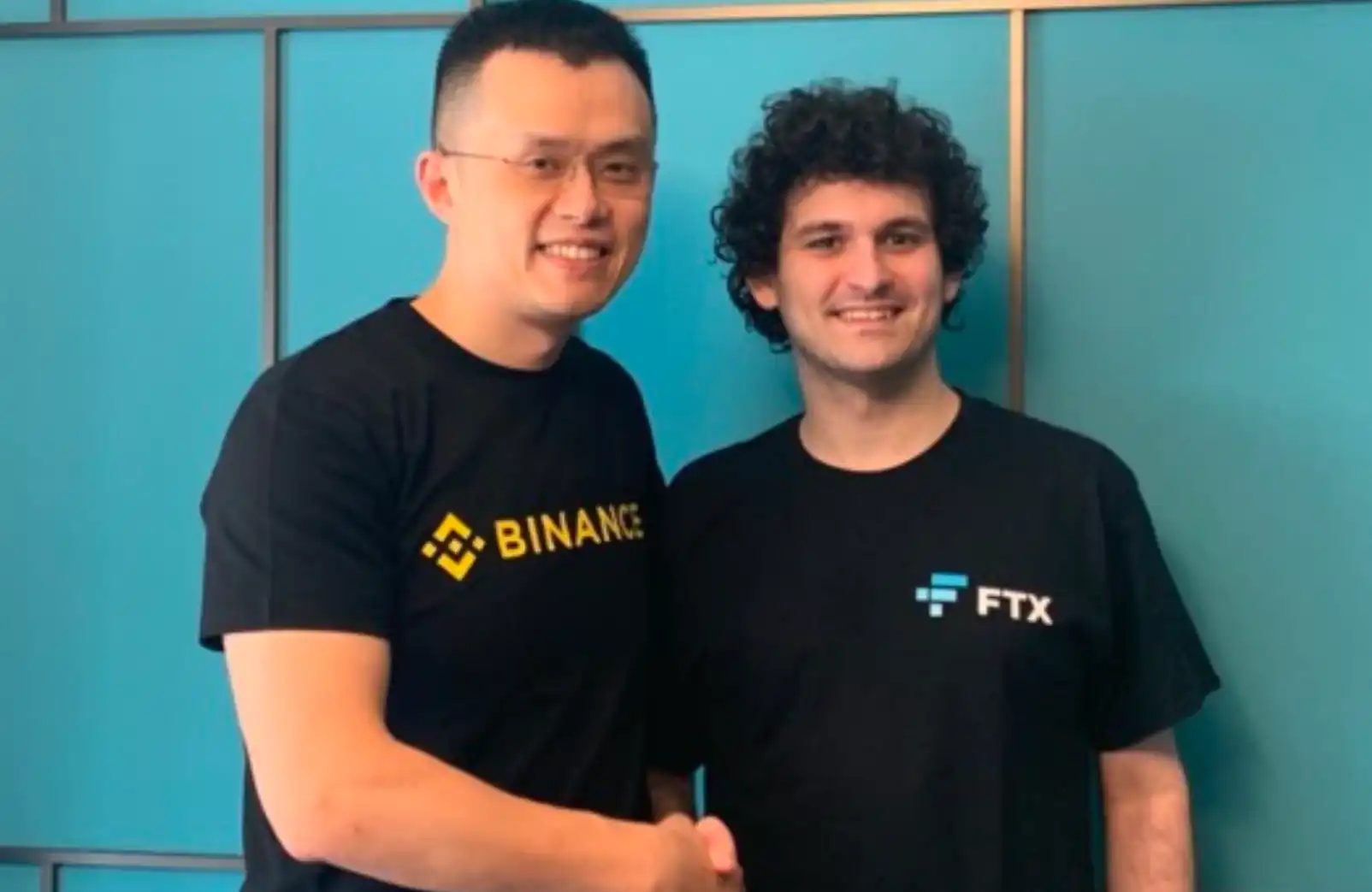
The show repeatedly says: you're doing business with this criminal; you set up the company in Hong Kong to make it convenient to do illegal things. In reality, communication with CZ progressed gradually over a long period; Sam didn't first meet CZ for that funding round—he knew him well before that, and they had talked about FTX many times.
It's not "FTX couldn't find VC investment, and then this Hong Kong gangster suddenly appeared and said, fine, I'll invest $100 million." That makes no sense at all.
Gary too. The show's portrayal of him is equally full of stereotypes. Around the last three episodes, they're discussing how to fill the hole, Gary finds out, and Gary says: "You committed crimes behind my back? How could you exclude me?" We burst out laughing right there. Too obvious. They think "nerdy Asian always wants to be accepted"; and "crime is exciting, I've always wanted to do this."
Watching that, our feeling was: this is racist.
The details that made us laugh out loud
While watching together, a few friends kept complaining: the producers clearly have no idea how tech nerds actually live day to day and throw parties. The "geek parties" in the show are all stereotypes, painfully awkward to watch.
There was also a scene that cracked us up: Caroline says "I thought of a strategy," someone asks what strategy, and she says "we buy in the spot market and short in the futures market." Our reaction was "no duh." That's a strategy?
The scene on the plane too. They're explaining middle school physics, having Caroline draw it out for Sam. You have to know, Sam studied physics as an undergrad at MIT. We looked at each other: how could this possibly be plausible?
Why they filmed it this way: our guesses
We do have some thoughts of our own.
Watching the end of the whole series, one thing has become very obvious: they are shifting all the ideas and responsibility away from Sam.
So a few of them joked, "Could it be that the Obama family owns this production company?" What exactly are they trying to do? Of course, that was just joking among ourselves, purely to make the viewing process less agonizing and help us stick it out to the end.
As for whether Netflix actually approached anyone: from what I know, not a single person I've spoken to has been contacted by Netflix. I heard they may have indeed talked to some people, but those people weren't from FTX; and I heard Netflix refused to disclose who exactly they approached. Let me be clear upfront, this is hearsay, not first-hand information from me.
The Years After the Collapse
Actually, many people already knew I had been at FTX. In FTX's early days, to expand the business, I was often on the road and frequently making public appearances; later, as the team grew and I managed a third of the company, I went out to meetings much less. So some people may not have known I worked there; but most people who got to know me later had heard my name.
So the "Oh my god, you were at FTX" kind of scene—I actually didn't encounter it much. But people newly entering this industry in this cycle do have that reaction.
Around 2023, while the case was still under investigation, all of us were being investigated. Some people who approached me at the time were worried about the legal risks I was carrying. I understand, and that's very reasonable, because at the time I myself didn't know how the case would go, even though I knew my part of the investigation was clean.
There was some impact on work, but more of it was mental: the person you trusted so much, the company you put so much into building, ended up like that.
As for having this experience on a resume—after the case was resolved and people understood I had nothing to do with those illegal activities, it actually brought a lot of positive things. Saying this may be a bit controversial, but people hearing that I used to be at FTX are somewhat respectful. On one hand, FTX really did build an excellent platform and product, and many people are curious about how we did it, what the path was, and what we learned from it; on the other hand, many people told me that what they respect is that I went through all of this and still came out of it—not just clean, but also wanting to start something new again.
So overall, what I see is a positive impact. Of course, we all live in a world full of bias. People who have a very negative impression of me probably won't walk up to my face and say "I hate you, get lost"—maybe they'll only say it online.
The Last Time I Spoke With Him
My last conversation with Caroline was basically right before the bankruptcy.
After the bankruptcy, I had a conversation with Sam. Because at that time, I was the only employee left in the Bahamas. I stayed because I wanted to understand what happened. I wanted answers. I couldn't just leave without answers. I didn't join midway, I wasn't hired midway — I was there from the very beginning. When you've poured so much into building something, I wanted to know how it failed: what exactly happened — just give me an answer, and I'll go.
So before Sam was extradited to the US, I tried to talk to him. For some reason, he wouldn't say anything beyond what he'd already said in public interviews.
I was absolutely devastated. I asked him: Do you have any idea how much harm this has done to our employees? They were the ones who trusted you the most, who put their lives and nearly all their money into FTX — how is this failure going to affect their lives?
I tried desperately to recall the scene. Sam gave no response. The only thing, the only thing I heard from his mouth was: "I'm sorry, I fucked up." Sorry for the profanity — that's what he kept saying over and over during that period.
That was the moment I realized: as a person, Sam may genuinely be incapable of understanding human emotion.
That's why the human cost was never part of his risk calculation. Sam makes decisions based on expected value. And most of us, when we calculate expected value, we factor in the human cost — if this thing fails, even if there's only a 1%, 0.5% chance, how will it hurt the people around me?
But that part was probably never in his calculation. That's why he wouldn't really think about it.
Maybe he did think about it, just didn't want to talk about it. But I genuinely didn't feel that he could understand this.
Welcome to join the official BlockBeats community:
Telegram Subscription Group: https://t.me/theblockbeats
Telegram Discussion Group: https://t.me/BlockBeats_App
Official Twitter Account: https://twitter.com/BlockBeatsAsia
 Related Articles