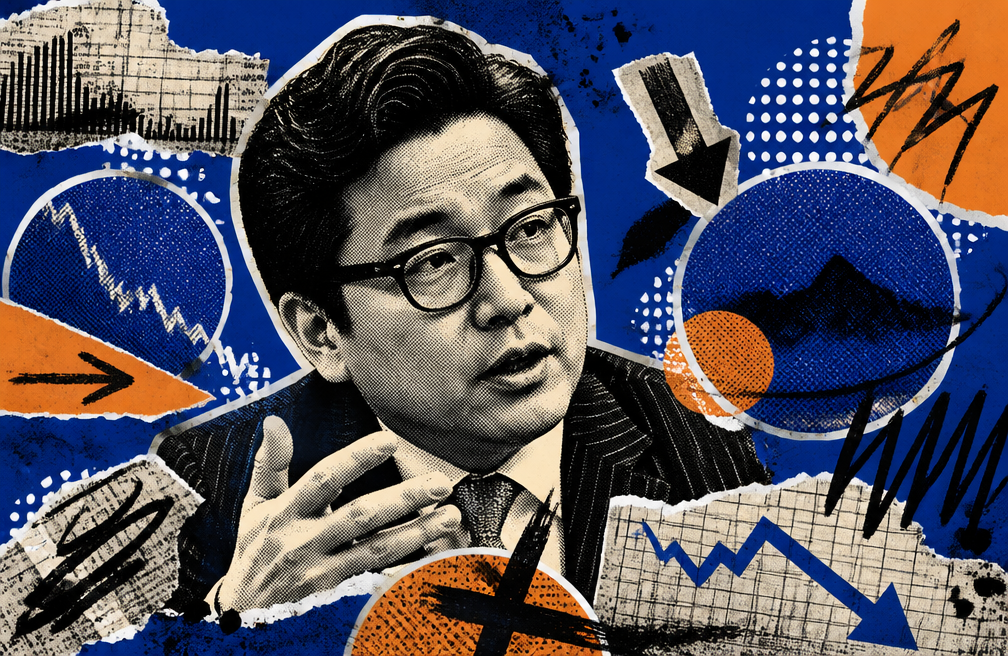
Has the U.S. stock market bottomed out? What signals is Tom Lee watching?
Video title: 'Closing Bell' panel weighs in on Wednesday's volatile trading as market heads into close
TL;DR
· Tom Lee admitted he underestimated the degree of panic during the sell-off. Citing the VIX touching 40 as one basis, he judged that the heaviest phase of selling pressure in this correction may already be over.
· Lee said that overall U.S. equity earnings expectations are still being revised upward during the year. The host then raised the point that semiconductor stocks may have already fallen ahead of earnings forecasts, and if earnings downgrades follow, stock prices could still come under pressure.
· Siegel observed that Nasdaq futures quickly rebounded twice near roughly the same level, showing a potential double-bottom pattern.
· Some AI stocks have fallen 40% to 50%, with individual declines reaching 65% to 70%. The stocks that led the rebound that day were mainly materials, some consumer and transportation names.
· Siegel expects the Fed may raise rates by 25 basis points. Another guest believed that recent market conditions have shown signs of tightening liquidity, and the Fed should avoid further rate hikes at this time.
VIX touches 40, Tom Lee judges 'buyer strike' is nearing its end
After U.S. stocks experienced a sell-off that exceeded expectations, Fundstrat's Tom Lee still believes that selling stocks at this level is a mistake. In a CNBC interview, he admitted that he had previously underestimated the degree of panic and underestimated how panic would reinforce itself. Last week, investors were at one point indifferent to all kinds of news, buying interest receded, and the market fell into what he called a "buyer strike."
Lee focused on last Friday's VIX. This indicator, which reflects expected U.S. equity volatility, touched 40 at one point. He compared it with the end of 2018. According to his review, U.S. stocks bottomed on December 24 of that year, and the VIX rose to 36 that day. On January 4 of the following year, Fed Chair Powell signaled a policy pivot, by which time U.S. stocks had rebounded nearly 8% from the low. Based on this, Lee judged that the heaviest phase of selling pressure in this correction may already be over, and buying interest is expected to gradually return.
The host then brought the discussion back to corporate earnings. Semiconductor stocks have already pulled back, and if stock prices are running ahead of earnings forecasts, analysts cutting estimates next could still bring a new round of pressure to the market. Lee pointed out that overall U.S. equity earnings expectations are still being revised upward during the year, but stock prices have not strengthened in tandem. In his view, the coexistence of falling stock prices and upward earnings revisions shows that investor sentiment explains at least part of this correction.
Lee also included high-yield bonds in his watchlist. According to the data he cited, high-yield bonds have recorded negative returns year-to-date, and historically, the average return in the year following a negative return has exceeded 20%. Taking these signals together, he believes that whether the low point occurred last Friday or on the day of the interview has limited impact on his bottoming assessment.
Nasdaq futures test lows twice, Siegel sees potential double bottom
Jeremy Siegel, finance professor at the Wharton School and chief economist at WisdomTree, observed another bottoming signal from trading patterns. In the morning session that day, Nasdaq futures nearly returned to last Friday's lows before rebounding quickly. Both dips encountered buying near the same level, forming what he called a potential "double bottom."
Siegel noted that AI-related businesses can still maintain relatively fast growth during economic expansion, and margins in some segments remain elevated. Meanwhile, investors are still assessing policy changes after the midterm elections, Jensen Huang's return, computing power prices, and China market prospects. These variables could all alter market expectations for the scale of AI infrastructure buildout and return on investment, making related stocks particularly sensitive to news.
AI infrastructure bonds under pressure, market focuses on expansion costs and debt-servicing capacity
The host noted that U.S. stocks still need to digest two pressures. The Federal Reserve's stance is more hawkish than some investors expected, and the market worries that further policy tightening could drag on the economy. At the same time, bond performance of AI infrastructure companies such as CoreWeave has drawn attention, with investors beginning to reassess the capital these companies need for expansion and whether they can generate sufficient cash flow to service debt in the future.
Siegel expects the Fed may raise rates by 25 basis points, but he is relatively optimistic about the overall economic backdrop. He noted that long-end U.S. Treasury yields have pulled back somewhat, and falling gasoline prices can also ease household spending pressure. He is also bullish on fourth-quarter growth and mentioned signs of improving productivity.
Regarding pressure on AI company bonds, Siegel emphasized the return disparity faced by creditors and shareholders. When corporate profits surge, bondholders mainly receive the agreed interest and principal. Once operating or financing prospects deteriorate, bond prices will reflect higher credit risk. For companies with thinner financial buffers, this disparity is especially pronounced. If the market re-rates earnings expectations for AI businesses higher, Siegel believes stocks will have greater rebound elasticity.
Some AI stocks have fallen over 60%, materials and transportation stocks lead recovery
The host noted that some AI stocks have fallen 40% to 50%, with个别 declines reaching 65% to 70%. Have the stocks most sensitive to the AI trade already absorbed most of the selling pressure?
Another guest leaned toward the view that most of the correction in these stocks may already be over. Shares of companies supplying equipment and infrastructure for AI buildouts remained under clear pressure in early trading before paring losses. The session's rebound was led mainly by materials, select consumer and transportation stocks, while AI-related names have yet to strengthen broadly.
The guest noted that AI had been a key driver of U.S. economic growth, so whether the rebound can broaden into the AI sector is still worth watching. She also mentioned that recent market signs point to tightening liquidity. With share prices already having corrected sharply, she believes the Federal Reserve should avoid further rate hikes at this point.
Welcome to join the official BlockBeats community:
Telegram Subscription Group: https://t.me/theblockbeats
Telegram Discussion Group: https://t.me/BlockBeats_App
Official Twitter Account: https://twitter.com/BlockBeatsAsia

 Related Articles