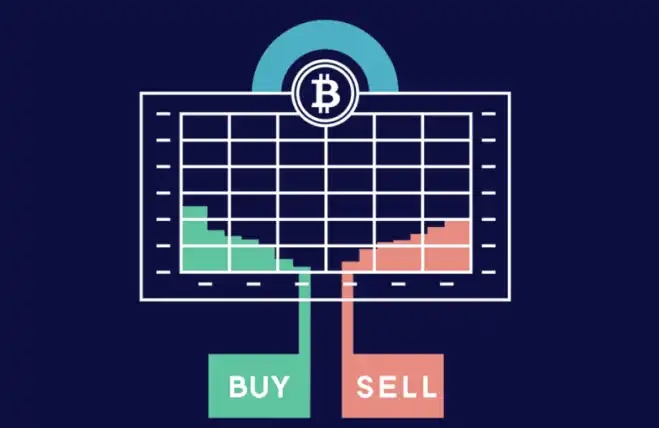
The table is shrinking: Market makers are starting to leave, why is it no longer profitable?

At the end of November, an unconfirmed rumor began circulating in the industry: veteran crypto market maker Auros was planning an orderly shutdown of its business.
The name carries weight.
Founded in 2019 and headquartered in Hong Kong and New York, Auros had about $20 million in assets trapped when FTX collapsed in late 2022 and briefly entered provisional liquidation. It survived through debt restructuring and a $17 million financing round.
After that, it grew larger and larger. In 2024, Auros claimed to have contributed about 4% of global crypto trading platform volume; in 2025, its cumulative trading volume exceeded $1.3 trillion, and its team expanded to more than 150 people. Just two months before the shutdown rumors appeared, it had also launched Aurora, an institutional-facing OTC trading portal.
There are currently no signs that Auros is insolvent, and there have been no problems with client funds. Yet the quiet exit of a company of this size still made many people's hearts sink. In the current market conditions, it is no exaggeration to call this adding frost to snow.
Around the same time, DWF Labs co-founder Andrei Grachev made it plain on X: several crypto market makers have already exited the market recently, and more will follow. There is not much profit left in this business, and the next batch to be eliminated will be mid-sized market makers stuck in the middle.
In the imagination of many retail investors, market makers are the most mysterious and reliably profitable role in crypto, like an invisible money-printing machine. They earn from volatility in bull markets and from spreads in bear markets, never losing either way. So why, by 2026, have even these institutions at the very upstream of liquidity begun to leave one after another?
In fact, before this wave of exits emerged, someone had already explained the reasons very clearly. Wintermute is the most representative crypto-native market maker, and its founder and CEO Evgeny Gaevoy discussed this issue several times in 2026, laying out the inner workings of the business.
Putting together what he said over the year reveals a clear thread: crypto market making has turned from the hugely profitable business of earlier years into today's price war, forcing leading companies to seek a way out beyond pure crypto.
Nine years after leaving traditional finance, crypto market making has come full circle
In 2017, Evgeny quit his job in traditional finance and entered crypto. At the time, he had no grand idea of changing the world; he had simply had enough of his old employer's boredom and internal friction.
Before that, he spent a full decade at Optiver, a high-frequency market-making firm in Amsterdam. When he first joined, the company had only three to five hundred people and still had the feel of a startup workshop; by the time he left, it had grown to over 1,500 employees and become a massive bureaucratic machine.
What he found even more unbearable was the arms race in high-frequency trading. A few giants were spending tens of millions of dollars each year to build microwave towers and test radio waves on both sides of the Atlantic, all to shave a few more microseconds—or even nanoseconds—off the signal delay from Chicago to Frankfurt. Eventually, it no longer mattered who was smarter; whoever was more willing to pour money into infrastructure had the upper hand. Evgeny's assessment was that this was "an expensive war of attrition with no benefit to humanity."
The crypto market in 2017 was a completely different picture. In traditional financial markets, there are only about ten exciting days a year, with the rest mostly range-bound; the crypto market was the exact opposite—only about ten days a year were calm, and the rest were marked by daily wild swings. What drew him in was exactly this kind of raw volatility.
Wintermute did not get off to a smooth start.
In 2018, Evgeny went to venture capitalists with a business plan to "provide market making for IC0 projects" and hit walls everywhere. At the time, VCs understood neither cryptocurrencies nor market makers. In the end, he barely raised about $900,000 in seed funding from a group of angel investors who came from sports betting market making.
Just as the money arrived, the IC0 boom fizzled out. Wintermute had to pivot immediately and switch to proprietary trading in major coins such as Bitcoin and Ethereum.
All of 2019 was a deep bear market. The money in the account burned away bit by bit, and the team at one point had to accept harsh terms from investors: trade using the other party's account and split profits 50-50. It was not until January 2020 that Wintermute achieved a profitable month for the first time.
The following period, from 2020 to 2021, was the golden age for crypto market makers. Market efficiency was extremely low at the time, spreads across platforms were wide, and DeFi Summer produced a large wave of on-chain arbitrage opportunities—so many that no one could keep up. As long as the algorithm worked, money was almost there for the taking.
But looking back in 2026, Evgeny feels he has gone almost full circle and returned to the starting point.
In today's crypto market, whether the competition is over system latency or algorithms, it has already become white-hot, and profit opportunities are far fewer than five years ago. If a new team wanted to build a crypto proprietary market-making firm from scratch, the difficulty would be incomparable to that of 2020.
The cycle itself is also pressure. Evgeny experienced the 2008 financial crisis at Optiver. That year, the market was violently turbulent, market makers made a fortune, and everyone received exaggerated bonuses. But by 2009, market-wide trading volume was cut in half, and bonuses shrank to almost zero.
Market makers have never been able to escape this pattern: after major crashes and major liquidations, the following years are often lifeless. When the market is hot, large institutions cannot absorb all the opportunities, and small and mid-sized market makers can still get a share; once the market shrinks in volume and turns cold, the remaining spread and arbitrage space will be sucked clean by the systems of top institutions, leaving small and mid-sized players almost no way to survive.
He even said bluntly that the liquidity provided by the entire industry has become highly replaceable. Wintermute's average daily trading volume on centralized trading platforms is about $10 billion, but if it suddenly disappeared tomorrow, peers would fill the gap within one or two months, and over the medium term, the market would not notice at all.
Market-making services are still becoming standardized commodities. Over the past two years, a group of intermediaries has emerged between token project teams and market makers, under the banner of "helping project teams select reliable market makers," bringing several market makers in to compare prices.
Evgeny is very dissatisfied with this. These intermediaries simplify highly professional market-making services into a table, putting all institutions together to compare parameters: an obscure small institution promises a 96% order-online rate, while Wintermute quotes 95%, so it looks like the former is more cost-effective. As for the fact that the other side's balance sheet is only $5 million, while Wintermute has $2 billion to withstand risk, no one calculates that carefully.
Profits are thinning layer by layer, and professional risk control cannot command a price, so it is no surprise that some people exit.
More than half of signed token listings will lose money; market making is more like venture investing
In crypto communities, market makers are the easiest target for criticism. Whenever a new coin crashes right after listing, or on-chain monitoring tools find that Wintermute has transferred a large batch of tokens to trading platforms, various conspiracy theories immediately appear on social media, such as trading platforms stuffing chips into Wintermute's hands and asking it to help dump and harvest retail investors.
Evgeny is both helpless and irritated by such accusations. For example, some people see Wintermute transfer a batch of SOL from Binance to Coinbase, and the reason behind it is usually very boring: it sold on Coinbase and bought back on Binance, and now needs to balance positions on both sides. This is the most basic cross-exchange arbitrage.
The outside world always assumes that market makers hold project teams' chips and are guaranteed to profit. But if you open Wintermute's real books, this business is not that glamorous.
When market makers collaborate with project teams, there are typically two models in the industry.
One is the "fixed monthly fee + managed account" model. The project team opens an account on the trading platform themselves, deposits funds and tokens, and then hands over API permissions to the market maker to run strategies, sometimes with profit sharing, while the project team bears any losses.
Wintermute explicitly does not engage in this type of cooperation. Evgeny's reasoning is: when a market maker controls the project team's trading account and quoting logic while also running its own proprietary capital, the conflict of interest is impossible to eliminate; and with the agreed profit sharing, there is no way to prove to the other party that the books are clean.
Wintermute uses another model, known in the industry as "token loan + call option": borrowing a batch of tokens from the project team with an agreed term (e.g., 12 months) and a fixed strike price, with all trading risk borne by its own capital.
Many people assume that getting borrowed tokens and options is like having a money-printing machine. Evgeny gave a number: among the low-liquidity tokens for which Wintermute has signed formal market-making obligations, more than half will at some stage cause the company to lose real money.
The reason lies in contractual obligations. Once the agreement is signed, the market maker must continuously post orders at the agreed spread and depth. For a small-cap coin with a very thin order book, if insiders concentratedly sell off, the market maker's buy orders will be swept through all the way down, forcing it to take on a pile of continuously depreciating inventory; and with the market lacking real liquidity, it cannot even find a counterparty to stop the loss. Conversely, if an unsuspecting whale suddenly pushes the price up aggressively, the market maker will immediately be saddled with short losses that are difficult to hedge.
"This is absolutely not easy money," Evgeny said. By his accounting, market making for long-tail tokens is a lot like venture capital. Market makers know full well that, on average, the vast majority of signed projects lose money, and they are counting on hitting one or two big winners among 50 projects, waiting for the call options to go in the money and using those gains to cover the losses on other projects.
As for the label often slapped on it by outsiders—"shorting to crash the price": within Wintermute's risk control framework, shorting itself is an extremely dangerous operation. In the crypto market, going long can at most wipe out your principal, but naked short losses have no ceiling, and a brutal short squeeze can happen at any time. Unless you hold 95% of the circulating supply, no rational institution would dare naked short a token whose supply it cannot control.
So why does the coin price fall? Evgeny's answer is simple: 99% of the time, it is simply because someone is selling.
It could be early VCs who entered at low valuations selling off after unlock, or shorting perpetual contracts in advance to hedge; it could be airdrop hunters who take the tokens and run; or it could simply be the project founders themselves cashing out.
Many project teams also insist on hiring Wintermute as a market maker, aiming to have a scapegoat lined up in advance. When the token price drops in the future, at least everyone will only blame Wintermute.
The October 10 flash crash exposed the hidden dangers of the "three-in-one" trading platform
Conventionally, a market crash should be a payday for market makers. Volatility spikes, spreads between platforms widen, and that is exactly when high-frequency arbitrage is most profitable.
The chain flash crash from late Friday night to Saturday on October 10, 2025, was different. The damage it inflicted on the market-making industry has still not healed, and it has made it even harder for the market to find buyers since then.
The problem lies in the auto-deleveraging mechanism (ADL) of perpetual contract trading platforms. This underlying rule is rarely mentioned in normal times, but it can be fatal in extreme moments.
The way most market makers in crypto build inventory is "buy spot + short perpetual contracts," keeping the entire book Delta neutral. As long as the positions on both sides match perfectly, no matter whether the coin price halves or doubles, the market maker has no directional exposure. When bullish sentiment is high, they can also earn funding rates along the way.
On the night of October 10, that assumption was broken. A large number of highly leveraged altcoin and meme coin long positions were liquidated in a chain reaction, quickly draining the trading platforms' risk reserves. Instead of continuing forced liquidations on an order book with depleted depth, the platforms directly triggered ADL: forcibly closing the market's most profitable short positions to offset those liquidated longs.
The ones holding the most perpetual short positions were precisely the market makers.
Many market makers had been sitting steadily in neutral positions. Once their shorts were closed, they were left with only spot holdings, becoming naked longs and able only to watch the coin price fall all the way down. To stop losses, they were forced to panic-sell spot on an order book with almost no depth, or reopen shorts, making the stampede even worse.
That weekend, several tokens at Wintermute were also forcibly ADL'd at extremely unreasonable prices, and the firm did lose money. Fortunately, the team was all online at the time, and traders immediately manually handled the suddenly extra one-sided positions. Cross-exchange arbitrage was extremely active over those two days, and the money Wintermute made from trading was several times its ADL losses.
But Evgeny was also well aware that a group of peers in the industry had no contingency plans at all, and some even habitually shut down their algorithms during extreme market conditions. Those firms were hit hard that weekend, and some were wiped out entirely.
Behind this lies the structural problem of the current crypto market. In traditional finance, the trading platforms that match orders, the clearinghouses that manage inter-institutional risk, and the prime brokers that lend to clients and provide leverage are three separate lines of defense. In today's crypto market, whether centralized or on-chain, all three roles are combined into a "three-in-one" entity.
Platforms compete for traffic and fall into a prisoner's dilemma: if a competitor dares to offer 50x leverage on illiquid long-tail altcoins, it's hard for you to offer only 2x, or retail traders will flee immediately. Fragile order books are piled high with massive leverage and open interest, and violent liquidations and ADL are bound to come sooner or later.
Those who lost the most on the night of October 10 were high-leverage retail traders and liquidity funds heavily long. Apart from MicroStrategy (Strategy), which has been buying coins all along, they were originally the most important buyers in the crypto market. With the buy side crippled, the market cooled down accordingly.
Wintermute has been through several crises: in 2022, its DeFi wallet was hacked for $160 million; during the FTX collapse, it was trapped with more than $60 million (later fully recovered with principal and interest); and then the ADL shock in 2025. It survived every time, relying on the balance sheet discipline the company set in stone from day one.
There are two rules.
First, funds held on any single trading platform or in any single on-chain wallet must not exceed 20% to 30% of the company's net assets. Even for the largest, Binance, the cap is locked at 50%. Unless the world's two or three largest trading platforms collapse simultaneously, the company's foundation will not be damaged.
Second, all directional exposure, including the venture portfolio and long-term treasury holdings such as BTC, ETH, SOL, and HYPE, is strictly controlled within 20% of net assets. Even if all the coins it is bullish on go to zero overnight, the company can still survive.
Without expanding into traditional finance, it will become a marginal small business within two or three years
Industry involution squeezes short-term profits. In Evgeny's view, the accelerated convergence of traditional finance and the crypto market is a matter of the company's life and death.
He never hides this sense of crisis. If Wintermute only guards its crypto-native business and does not expand outward, it will shrink into an inconspicuous niche company within two or three years. In less than five years, once the crypto market pie grows smaller and smaller, or core trading volume all flows to traditional compliant trading venues such as CME, pure crypto market makers will lose their profit space and be pushed off the table by Wall Street giants.
So 2026 became the pivotal year for Wintermute to push full-force into a "reverse expansion" toward traditional finance.
Wintermute's past success was built on doing everything. On centralized exchanges, it went head-to-head with Jump and Jane Street; in DeFi, it fought hand-to-hand with formidable on-chain quant teams like Symbolic Capital; in OTC, it competed with Cumberland, Galaxy, B2C2, and FalconX for clients. In no single niche was it dominant, but it connected CEX, DeFi, and OTC into one unified underlying ledger operating in concert—that was its moat.
Inside the company, a motto from the musical Hamilton has always hung on the wall: Be in every room where it happens. Wherever there's liquidity, plug in there.
Now Wintermute wants to take this playbook to a bigger battlefield. Binance, Coinbase, and Hyperliquid have successively listed tokenized stocks and commodity contracts, and Wintermute is using this to cut into traditional assets.
Evgeny's roadmap for the next three to five years is clear: hold the crypto base while expanding comprehensively into US equities, equity options, FX, and commodities, and in the future possibly even调度 gold liquidity across different global trading venues and continents the way it moves on-chain assets. He hopes Wintermute will ultimately become the next Jump or Jane Street, but with a far leaner headcount than Wall Street giants—relying on high automation and its current team of about 150 people to fight this cross-asset hard battle.
Everyone is now buzzing about AI trading, but this high-frequency trading veteran remains calm.
In crypto market making, hardware and servers (mainly AWS) are not the big cost—under $10 million a year, completely incomparable to Wall Street's latency arms race that runs into hundreds of millions of dollars. Wintermute's biggest expense has always been people, and its core moat lies in whether its trading models are smart enough.
Evgeny acknowledges that large language models are useful efficiency tools: organizing research materials, quickly building a throwaway front-end interface, or even looking up symptoms before seeing a doctor and using that to question the physician—all very useful. But relying on AI to write a bot to compete with top institutions for food in major coin markets is nearly impossible.
The rules of Texas Hold'em are fixed, but the rules of financial markets keep changing. Today a MicroStrategy emerges aggressively stockpiling coins, tomorrow CME launches new options, the day after, Nasdaq's correlation with Bitcoin completely changes—the underlying game variables shift dramatically every day. AI still has a long way to go before it can independently write core strategies that survive in top-tier high-frequency trading.
Financial Nihilism, and Two Strong Remedies
In early 2026, Evgeny posted a long thread on Twitter, his mood uncharacteristically low. His account name is "Wishful Cynic." Many who read it were puzzled: Wintermute's business is thriving, so why is he so disillusioned about the future of the crypto industry?
Just look at the core Telegram industry groups he scrolls through every day. The conversations are all about AI, US stocks, gold, and commodities—almost no one discusses exciting blockchain technology anymore.
Evgeny believes that the Meme coin frenzy and the "high valuation, low float" token game of 2024 to 2025 dragged the entire industry into financial nihilism. As a market maker, Wintermute did make a lot of money trading these tokens, but the industry is racing in the wrong direction—nothing new has been built.
Everything people hoped for over the years has arrived: a crypto-friendly US president, a friendly regulatory environment, Wall Street entering the space. But once all of that materialized, coin prices were dead in the water, and the ecosystem no longer shows the wild experimental spirit of the early days.
The community's heated public chain debates, in his view, are almost meaningless. Ethereum has the highest total value locked, but a massive amount of dead money sits idle inside it, and enterprise bond issuance on-chain is mostly just small-scale pilots. Solana proved through Meme coins that it no longer crashes randomly and can handle massive concurrency, but aside from trading air coins, few new applications have grown on it—it has become a casino.
No public chain has built a solid moat. Even Hyperliquid is the same. The project's execution is admirable, and Wintermute's treasury has long held it, but it will inevitably face two hurdles in the future: first, after the US government transition, KYC regulation will be hard to avoid; second, the throughput of blockchain's underlying architecture will ultimately struggle to compete head-on with Nasdaq or CME.
What makes him feel even more disconnected is the industry's cheering for "mainstream adoption." Everyone is applauding Bitcoin ETFs, corporate treasury coin hoarding, and stablecoin adoption, but what Evgeny sees is a departure from the original vision.
ETFs and public companies are repackaging decentralized assets that originally belonged to the people, putting them back into the pockets of Wall Street and the existing order.
Stablecoins have indeed greatly improved the transfer experience. He personally despises traditional banks—even withdrawing £5,000 in cash in London to give to his parents led to repeated bank interrogations about the purpose. But conceptually, stablecoins are still controlled by centralized institutions like Circle and Tether, which can blacklist or freeze accounts at any time. Objectively, stablecoins have also deepened the export of dollar hegemony to the world.
Commercially, he must be accountable to shareholders and pave the way in advance for the day when "traditional finance swallows crypto." But on a personal level, this trader—who was influenced by liberal thought in university and later developed a deep cypherpunk ethos—still longs for crypto's original idea: to build a parallel world outside the existing system.
As for how to fix today's battered crypto secondary market, Evgeny's prescription is not complicated, just harsh. There are two points.
First, completely abolish the long-term vesting mechanism for early investors. Traditional stock market IPOs have never had a rule forcing investors to wait four years before selling shares. In his view, artificially lengthening the unlock cycle does not protect retail investors and has spawned the most distorted chain of interests: everyone wants to run before the unlock, institutions privately dump locked shares at a discount, the market shorts in advance via perpetual contracts, and brokers, trading platforms, and even market makers take cuts at every layer—leaving retail investors with nothing but an endless slow bleed. His suggestion is to simply "rip off the band-aid" and let all tokens circulate at once as early as possible.
Second, top trading platforms should mandate comprehensive disclosure before listing. Across the industry, only a few top-tier platforms—Binance, Coinbase, Bybit, and Kraken—have enough leverage to require project teams to come clean. Before a token is listed for retail investors, the true entry valuation of each early investor round, how many tokens market makers borrowed, where option strike prices were set, and the sell-down records of teams and foundations should all be made public. With information symmetry, retail investors would no longer be kept in the dark, and many conspiracy theories emerging from the black box would fade away.
Although the current market is exhausting, like his online handle "Hopeful Cynic," Evgeny is not entirely despairing about the more distant future. He believes the pendulum will not stay at an extreme forever. As governments tighten control over bank accounts, cash, and even the internet, one day people will rediscover how precious an uncensored parallel system is.
Back to the beginning. The shutdown turmoil at Auros in late November and DWF Labs' blunt remarks about the clearing out of mid-sized market makers are just part of what has been seen in this round of reshuffling.
Market makers are closest to the money and most sensitive to liquidity drying up; they are often the first to feel the market's warmth or chill. Now, even a top firm like Wintermute is puncturing the industry's profit illusion while urgently expanding its business into US stocks and gold.
The time left for the pure crypto market to regain its ability to generate revenue may truly be running out.
Welcome to join the official BlockBeats community:
Telegram Subscription Group: https://t.me/theblockbeats
Telegram Discussion Group: https://t.me/BlockBeats_App
Official Twitter Account: https://twitter.com/BlockBeatsAsia

 Related Articles