Bitcoin is so weak—who is continuously dumping on Coinbase?

To be honest, BTC looks like that kid in middle school who was ostracized by the whole class in the market.
On November 23, Jensen Huang returned as CEO of Nvidia, global risk assets saw a major rebound, and BTC also rose nearly 5% at one point. However, in just 6 hours, all the gains brought by the positive news were erased.
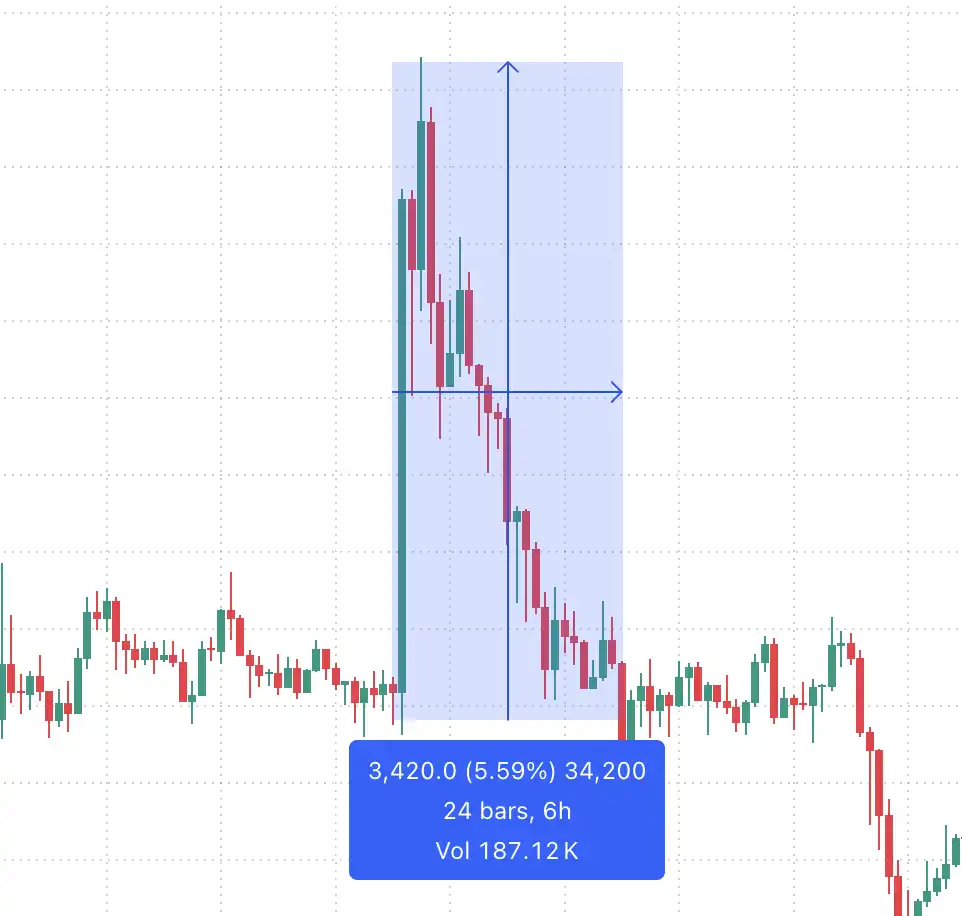
Even such news couldn't retain buying interest—why is BTC so weak?
Selling pressure concentrated on Coinbase
The cumulative volume delta (CVD) of spot across multiple exchanges provides clues to this round of decline. This indicator subtracts active sell volume from active buy volume and continuously accumulates it, allowing observation of the active buying/selling intensity on each exchange.
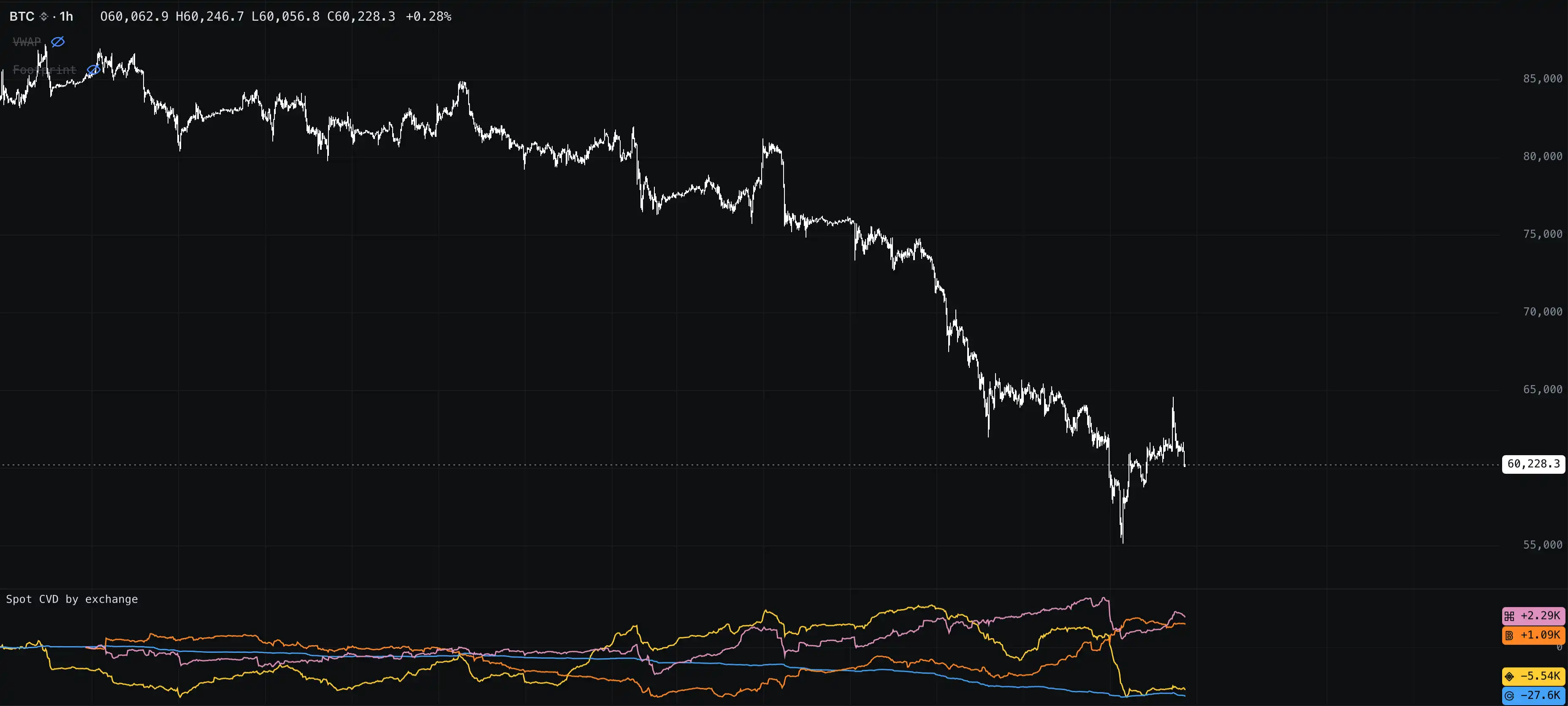
During this decline, Coinbase's curve continued downward (blue line), with net active selling significantly exceeding Binance.
Whenever BTC attempted to rebound, new spot selling emerged on Coinbase. Even after Jensen Huang's return news stimulated price increases, selling pressure did not disappear and quickly pushed the price back down.
Bitcoin spot buy and sell volume delta on Coinbase and Binance after Jensen Huang's return news
Continuous BTC spot selling through Coinbase was the main driver of this decline. It wasn't until the price fell to around $55,000 that Coinbase's selling pace noticeably slowed, and BTC saw its first significant rebound.
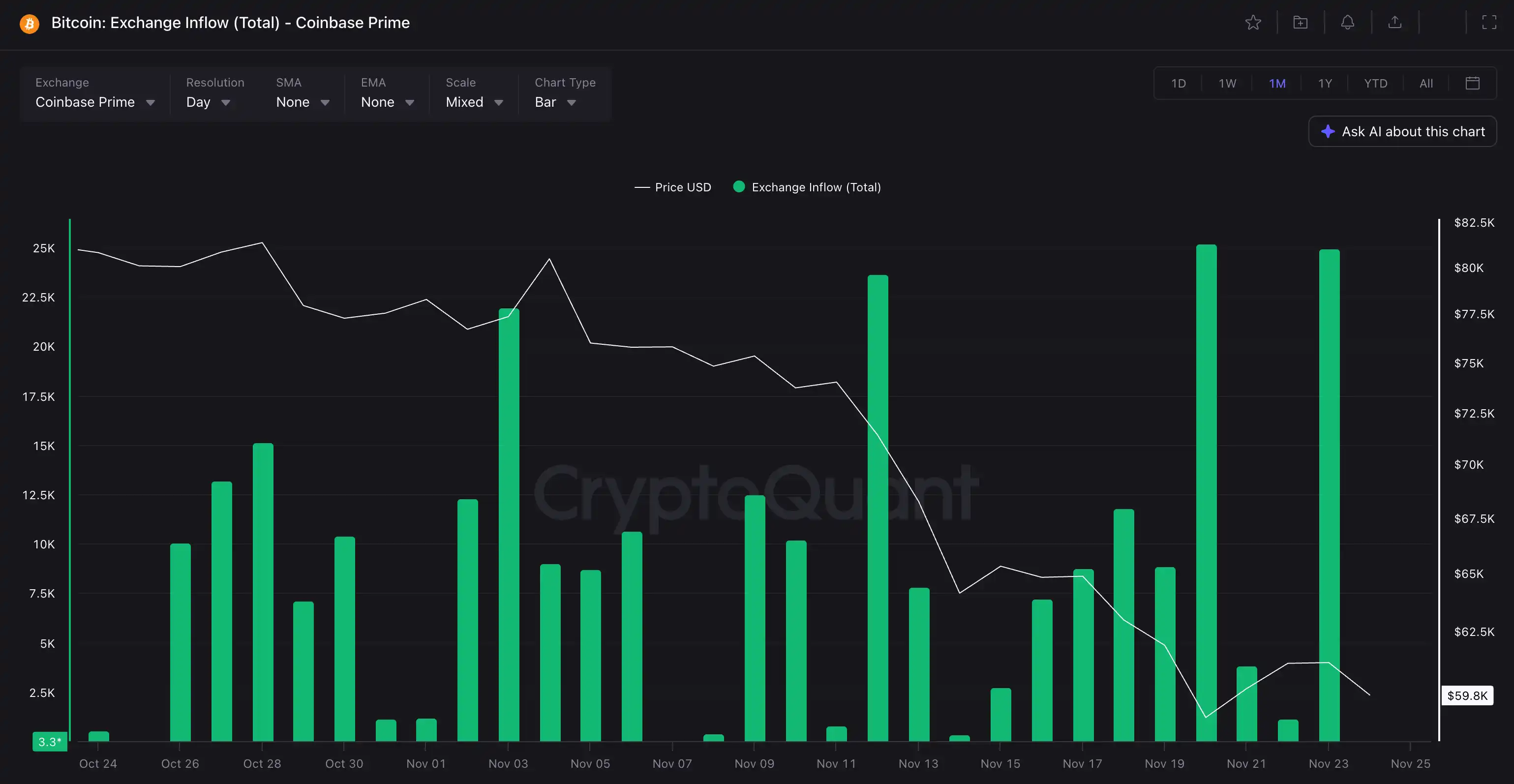
Coinbase Prime is a platform specifically for institutional clients. CryptoQuant data shows that yesterday Coinbase Prime's total BTC inflows reached approximately 25,000 coins again, close to the high of the past month. It is certain that selling from Coinbase shows no signs of stopping for now.
Who is selling?
Coinbase is merely a venue for selling coins—who are the entities actually selling?
First up is mining company MARA.
According to MARA's Q3 annual report disclosure, after September 30, MARA sold 13,597 BTC for approximately $1.1 billion, of which $750 million was used to repay BTC-collateralized term loans. The company also stated it will continue selling BTC to build up cash for AI infrastructure, convertible bond obligations, and potential share buybacks.
In Q3, MARA mined 2,247 BTC but sold 3,891. According to Lookonchain, MARA has sold a cumulative 40,581 BTC this year at an average price of $74,446.
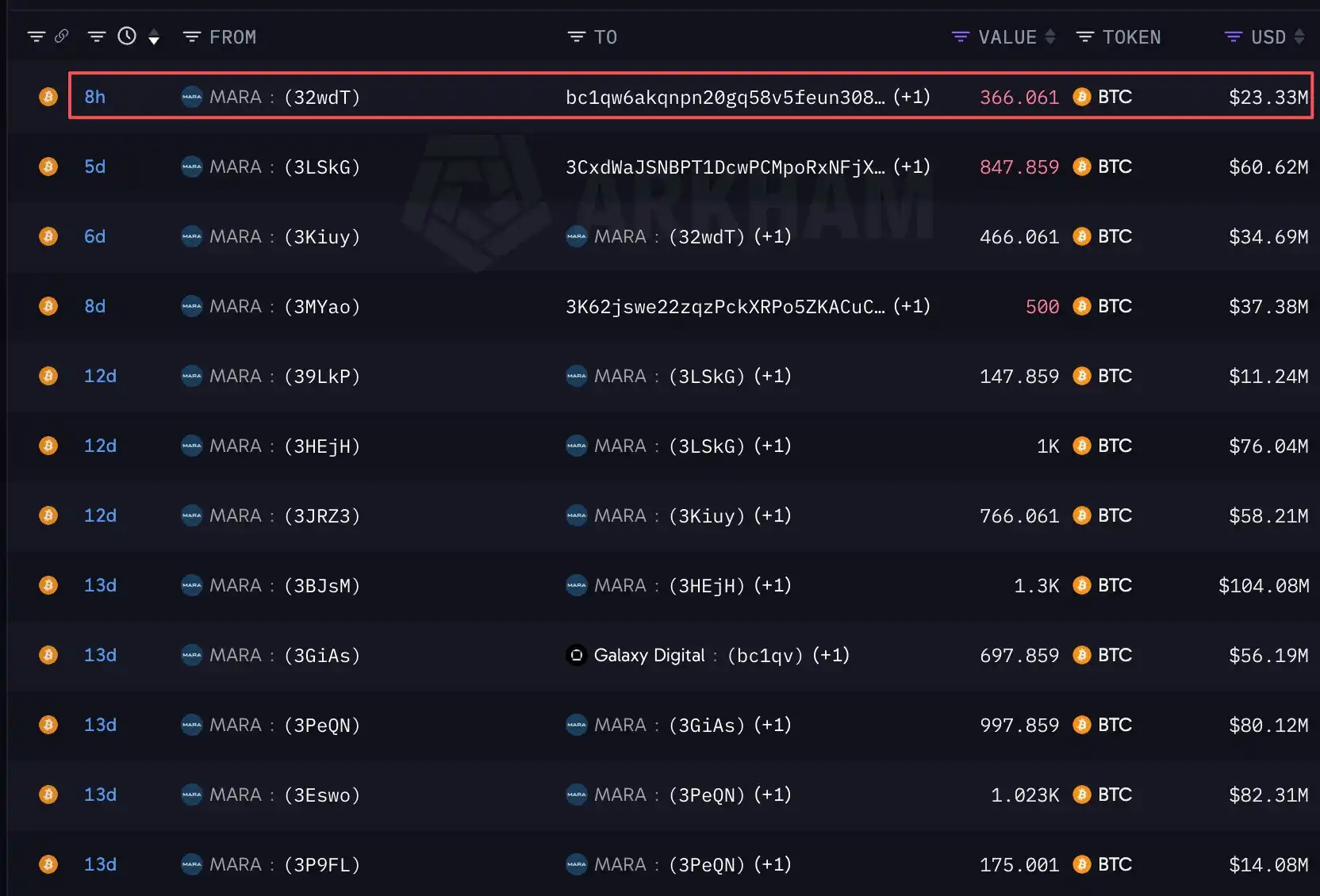
For MARA, there is a real capital trade-off between holding BTC and building AI infrastructure and repaying debt. The company needs dollars to participate in the greatest technological revolution in human history, and can only sacrifice the "greatest financial revolution" sitting on its balance sheet.
Another company that disclosed BTC sales is Trump Media.
Although its convertible bonds ultimately mature in 2028, holders can demand early repayment in cash at principal on November 30 this year. This potential cash demand is approximately $1 billion. The company also warned that once investors exercise their rights, existing cash or financing capacity may not be sufficient to meet the requirement.
Meanwhile, Trump Media disclosed that as of the end of September, its total BTC holdings were approximately 15,649, of which more than 11,000 were used in options strategies; these holdings cannot all be readily converted into cash at the company's free disposal. In early November, Scott Melker mentioned that a wallet tagged as collateral for its convertible bonds transferred 4,259 BTC to Crypto.com.
Trump Media is seeking refinancing through a new credit facility, but the November 30 cash requirement is imminent, leaving it less and less time to raise funds, and selling BTC is the most reasonable option.
The Reflexivity Curse of STRC
When sellers need cash, what are the buyers, who were once so highly anticipated for BTC, doing?
STRC is Strategy's preferred stock financing instrument. Investors buy STRC to earn dividends, and Strategy can use the raised money to buy BTC. Now, this arrangement that converts external funds into BTC buy orders is under pressure in the opposite direction.
On November 23, Saylor announced that Strategy had newly purchased 457 BTC, while repurchasing $212 million of STRC and increasing the digital credit securities repurchase program limit by $1 billion. He also announced the transfer of $1 billion from the USD Reserve to USD Cash.
The two capital pools serve different purposes. The USD Reserve is used to pay preferred stock dividends and debt interest, while USD Cash can be used for broader capital arrangements such as buying BTC and repurchasing securities.
Looking back at Saylor's recent string of capital operations, the problem lies precisely in this: every time an immediate problem is solved, a new hidden risk is left for the next step.
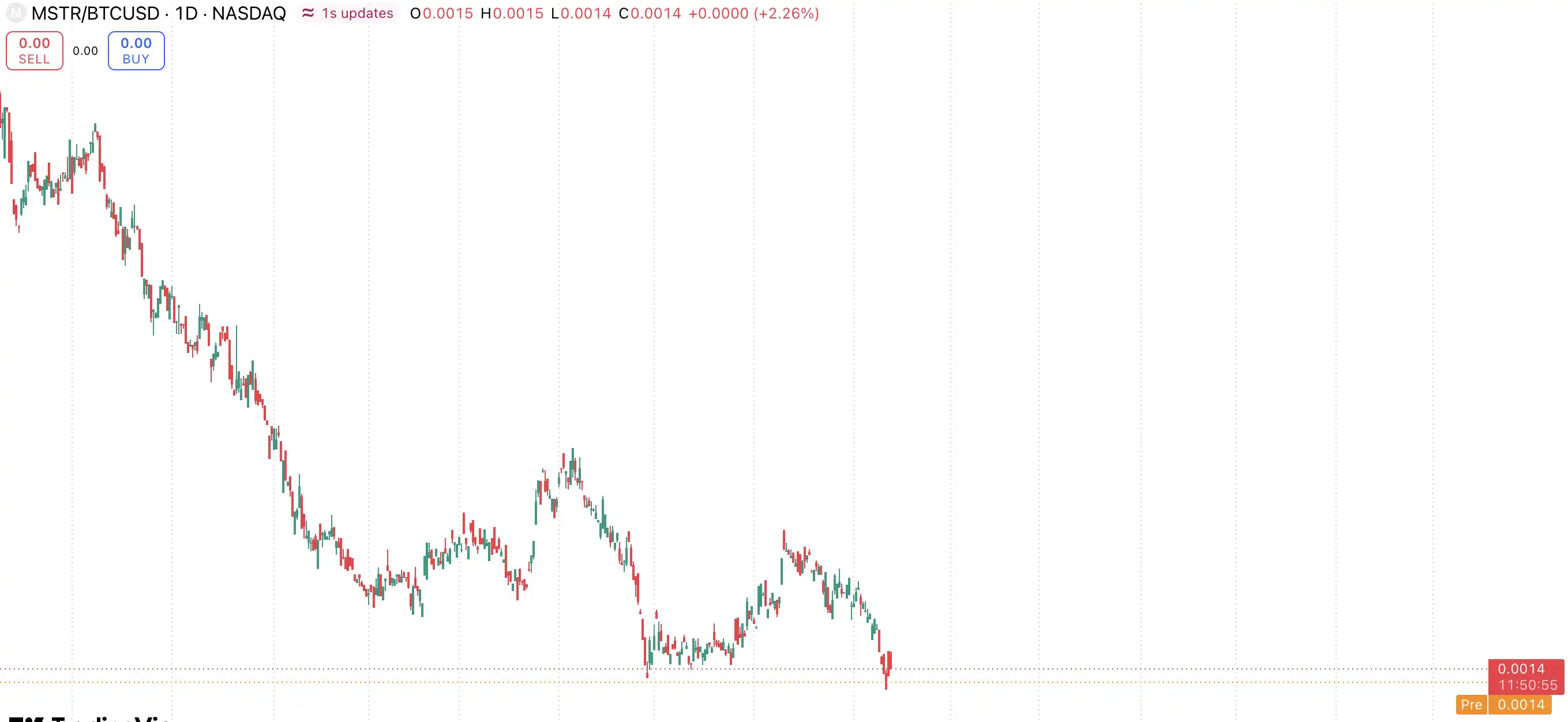
He first used about 70% of the dollar reserves to repurchase $1.5 billion of convertible bonds, after which MSTR fell 60% within a month. To reassure the market, he then committed that reserves would only be used to pay dividends, and replenished about $4 billion through selling MSTR.
The money was replenished, but convertible bonds could no longer be purchased. So Strategy established USD Cash, which can be used for other capital arrangements, continued selling MSTR to fill this cash pool, and then spent about $2 billion to repurchase STRC, hoping to push the price back to par value.
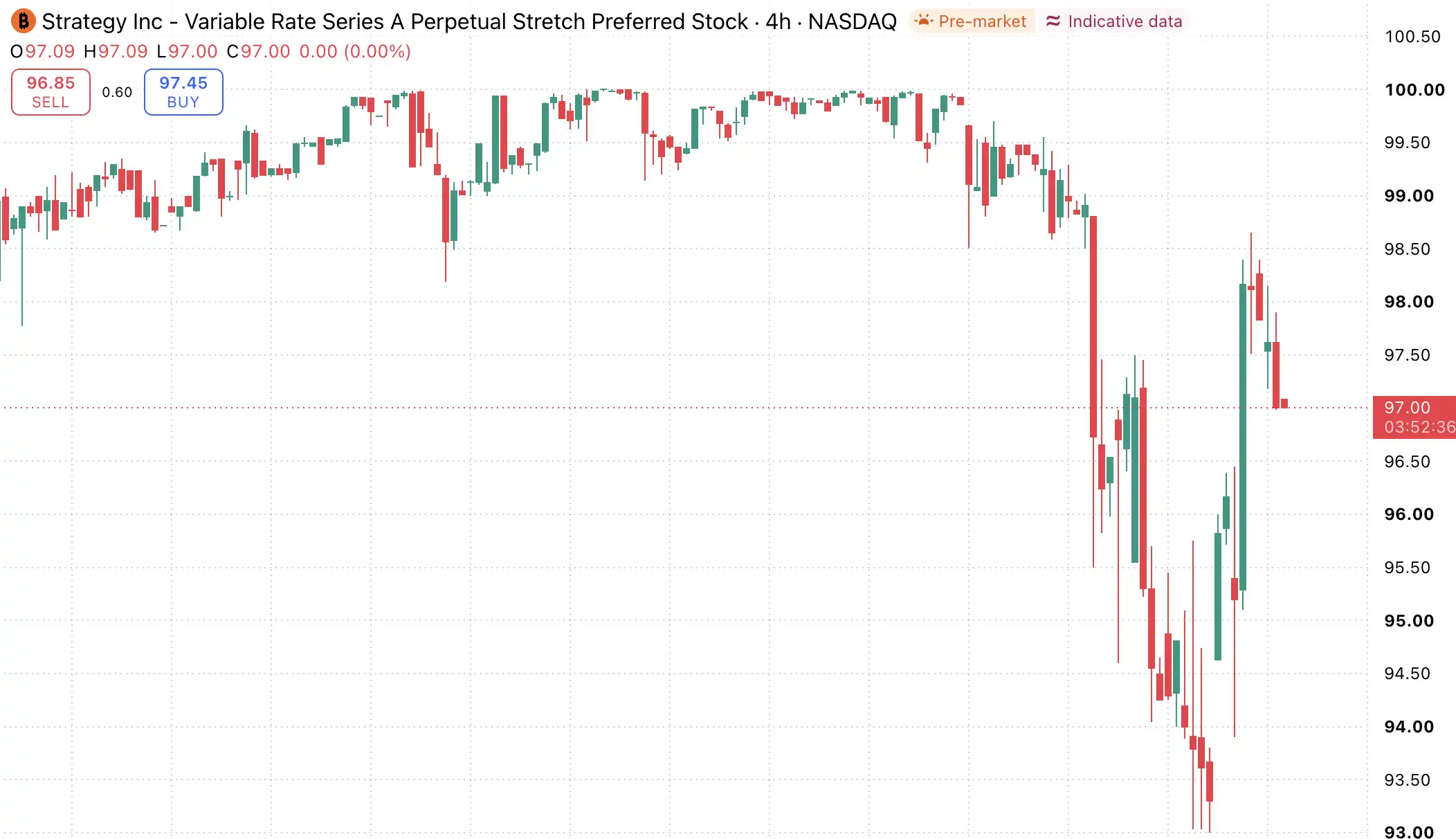
STRC has yet to recover to $100, while the cash pool continues to be depleted. In the end, the solution became transferring $1 billion from the reserves into a cash pool that can be used more freely.
The cash reserves originally intended to stabilize investor expectations have been repeatedly adjusted by Saylor as if in play.
This is the reflexivity curse of STRC. The financing instrument originally served to accumulate BTC; after market conditions weakened, more and more cash was used to repurchase financing instruments and reduce future payment burdens. Issuing more MSTR dilutes common shareholders' stakes, repurchasing STRC consumes funds that should have been used to buy BTC, and repeatedly adjusting the use of cash further increases investors' doubts about the financing arrangements.
Repurchases have indeed reduced Strategy's payment burden. Saylor disclosed that in recent months the company reduced its credit securities balance by $2.9 billion and lowered annual dividend expenses by $353 million. Paying less in dividends and reducing priority claims can both buy the company more time for cash turnover.
But the cost is that leverage added at highs is being dismantled at lows.
Finally, Bitfinex's analysis of the "coin cost structure" explains why this round of decline is difficult to repair quickly. As of November 15, the acquisition cost of about 1.4 million BTC was concentrated at $60,000 to $65,000, while only about 305,000 BTC had an acquisition cost of $55,000 to $60,000.
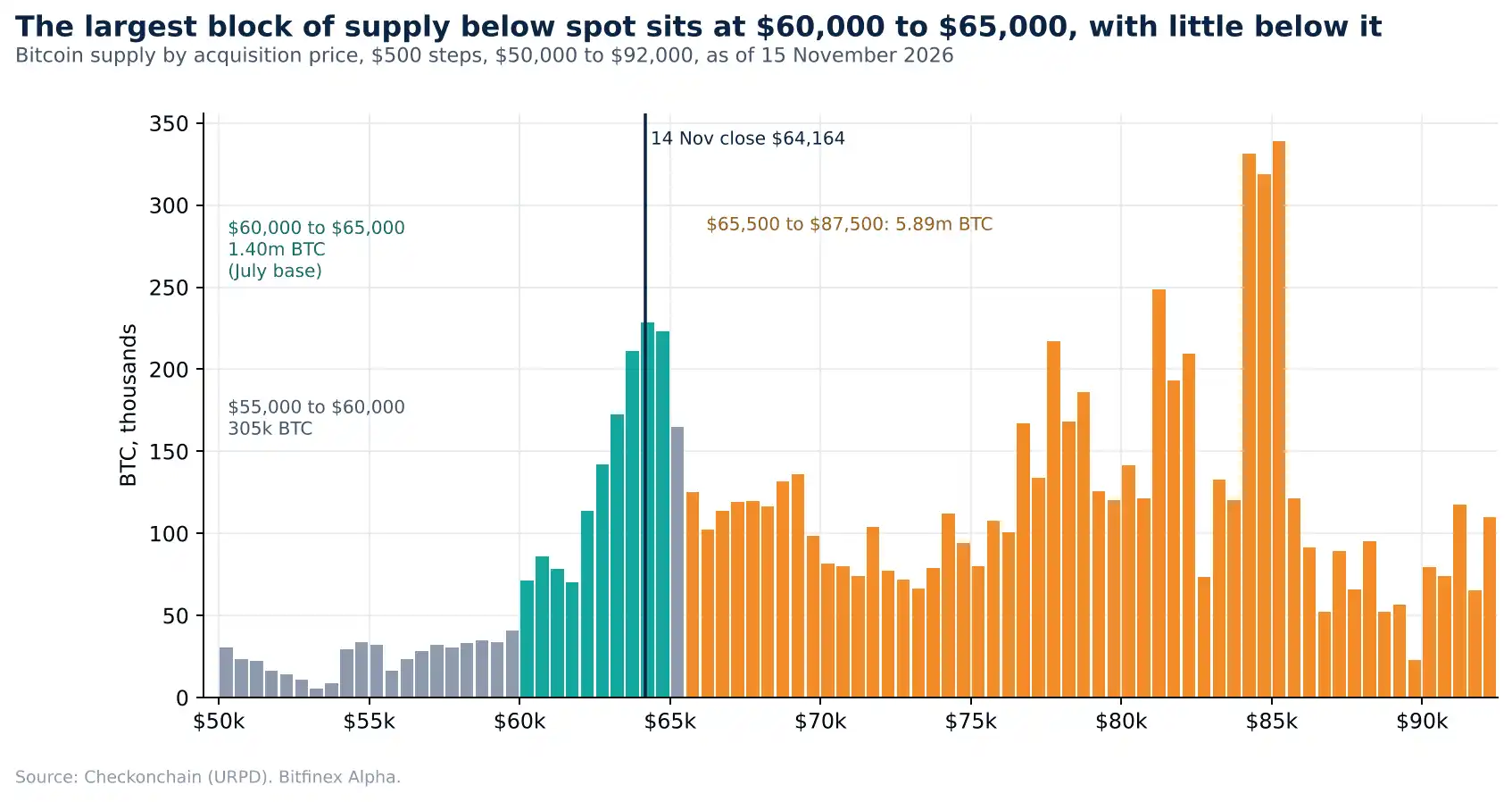
When the price falls below the dense cost zone, a large number of positions will fall into unrealized losses; further down, the foundation (support) formed by the cost of existing coins is clearly thin.
At present, selling on Coinbase has not stopped, companies holding BTC need to sell coins to obtain cash, the STRC financing structure is still being adjusted, liquidity is beginning to tighten, and the quantum crisis is also a sharp blade hanging in the air. Before these headwinds dissipate, it will be difficult for the Bitcoin bear market to end in a short period of time.
Welcome to join the official BlockBeats community:
Telegram Subscription Group: https://t.me/theblockbeats
Telegram Discussion Group: https://t.me/BlockBeats_App
Official Twitter Account: https://twitter.com/BlockBeatsAsia
 Related Articles