Gold has fallen 35% in nine months; why does Citi believe it's "too early to bottom-fish"?
TL;DR
· As of the November 20 research report release, gold had fallen about $2,000/oz from nine months earlier, a decline of roughly 35%, and the value of global gold holdings measured by market capitalization had decreased by more than $10 trillion.
· A tech-stock pullback combined with a hawkish Fed pushed nominal rates higher while market inflation expectations eased, together driving real rates up and increasing the opportunity cost of holding gold.
· Citi views $3,000–3,300/oz as a reasonable medium- to long-term buying range. Over 12 to 24 months, starting from that range, potential downside is about $500, with upside of up to about $2,000.
· Citi estimates that gold's marginal mine cost support is around $2,800–3,000/oz, still about 25% to 30% below the gold price at the time of the report.
· Citi expects the Strait of Hormuz may resume crude and refined-product navigation in early 2027, when the metals market may reach a turning point, but Citi has low confidence in this base-case scenario.
Stocks are falling—why is gold falling too?
In its November 20 "Cross-Commodity Outlook," Citi noted that commodities had seen broad selling over the past few weeks, with the decline accelerating in the days before the report. Gold was down about $2,000/oz from nine months earlier, a drop of roughly 35%. Copper fell nearly $3,000/tonne, about 20%. Diesel, gasoline, and European TTF natural gas prices also retreated 20% to 35% from their year-to-date highs.
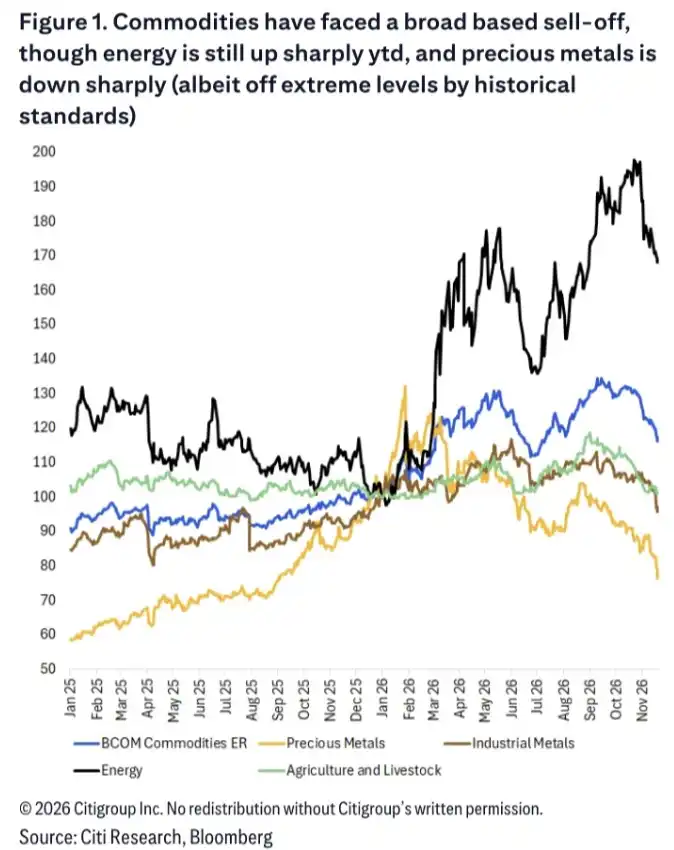
Commodities broadly retreated, energy remained significantly higher year-to-date, and precious metals pulled back sharply from highs. Source: Citi Research, Bloomberg.
Citi frames gold's decline within a broader risk-asset adjustment. As cyclical stocks weakened and tech stocks sold off sharply, the Fed maintained a hawkish policy stance. Nominal rates rose while market-implied inflation expectations fell, together pushing real rates higher. Gold pays no interest, so the higher real rates are, the more interest income investors forgo by holding gold.
Before reallocating into gold, copper, and other metals, Citi wants to first see the tech-stock selloff stabilize and the Fed begin adjusting policy more based on economic and inflation outlooks. In the near term, refined-product supply faces geopolitical disruptions, and the risk of a U.S. government shutdown is also rising. Citi believes these factors may prolong weakness in the metals market.
$3,000 to $3,300 offers allocation value, mine cost support remains below
Citi believes that after gold falls to $3,000 to $3,300 per ounce, the appeal of medium- to long-term buying will rise. Using a 12- to 24-month observation window, Citi estimates that starting from this range, gold prices could still fall by about $500/oz, with potential upside of up to about $2,000/oz.
In the body of its research report, Citi estimates that gold's mine cost support is about $2,800 to $3,000 per ounce. Based on the spot gold price of $3,558/oz marked in Figure 4, that range is about 16% to 21% lower. Figure 4 also lists two mine marginal cost estimate lines, both in the $2,500-plus per ounce range, corresponding to the roughly 25% to 30% distance cited in the chart title.
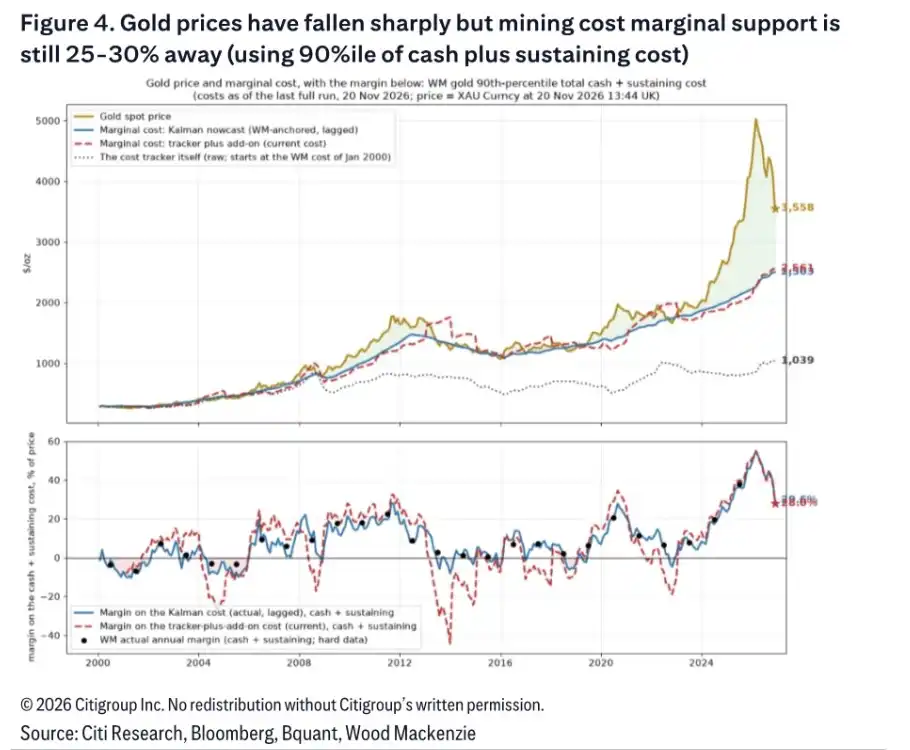
The November 20 chart showed spot gold at $3,558/oz, still about 25% to 30% above the estimated mine marginal cost in the chart. The model uses the 90th percentile of the sum of mine cash costs and sustaining capital expenditure as a reference. Source: Citi Research, Bloomberg, Bquant, Wood Mackenzie.
The pullback in gold prices has already significantly compressed miners' profits. Citi's buying range reflects potential returns over the next 12 to 24 months, while mine costs provide another reference for judging downside room. Even if gold enters the $3,000 to $3,300 range, Citi still retains the possibility of further declines in its scenario analysis.
The Strait of Hormuz may bring a turning point, gold is still waiting for the Fed
Citi's base case is that the Strait of Hormuz restores navigation for crude oil and refined products in early 2027. If this scenario materializes, energy prices may fall significantly, and the metals market may also usher in a turning point. However, Citi has low confidence in the timing of restored navigation and warns that the geopolitical stalemate or refined product supply tightness may persist into the first half of 2027.
By contrast, Citi has already viewed the pullback in some agricultural products as a buying opportunity and believes that rising diesel prices can hedge against another escalation of geopolitical tensions. For gold, the report still regards a shift in Federal Reserve policy as a key condition. Easing in the tech stock selloff would help risk assets stabilize, while whether real interest rates can fall will affect whether gold can emerge from this round of adjustment.
Welcome to join the official BlockBeats community:
Telegram Subscription Group: https://t.me/theblockbeats
Telegram Discussion Group: https://t.me/BlockBeats_App
Official Twitter Account: https://twitter.com/BlockBeatsAsia

 Related Articles