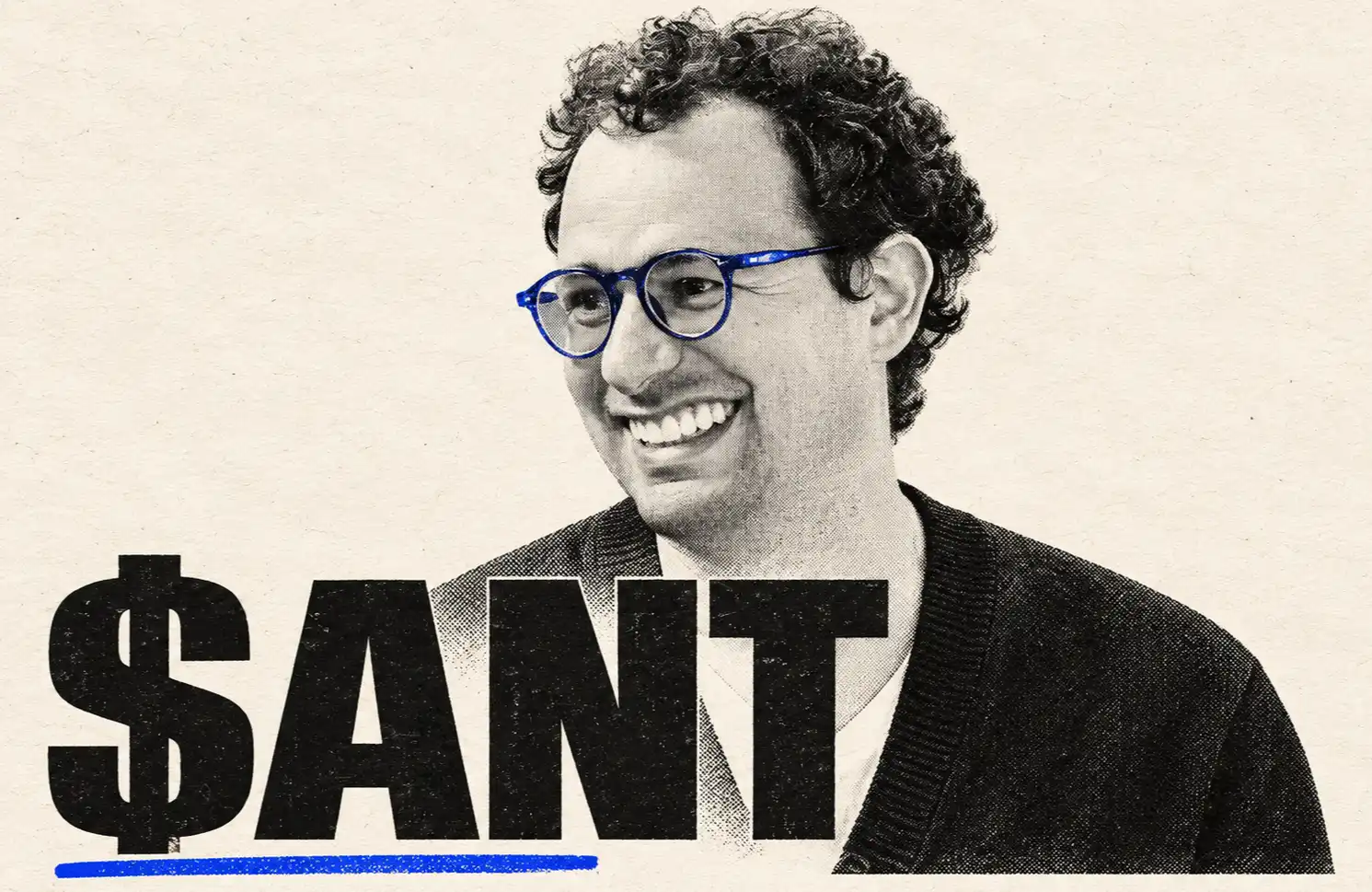
Anthropic Goes Public: A Company Unlike Any the Capital Markets Have Seen, and a 42-Year-Old Employee

It is almost beyond doubt that Anthropic's Claude model is already recognized as the best tool on the market. Even after trying OpenAI's GPT and various domestic open-source models, most people still believe that the Claude model and Claude Code, this harness, are currently the tools on the market best able to understand and solve problems.
This is also why, even though Anthropic is so severe about banning accounts in China, many people still try every possible way to open a Claude account.
Today, Anthropic is on its roadshow and will list next week. After watching their roadshow video and PPT, I still have some thoughts to share.
Near the end of the roadshow, founder Dario Amodei stopped talking about money.
Before that, he and his colleagues had been talking about the market, compute, gross margins, and customer retention, at a steady pace, no different from any listing presentation. At the very end, he paused and said one sentence:
"The cancers, Alzheimer's, heart disease, and mental illness we are looking at today, I believe in less than ten years, they will become things of the past."
A company that sells AI software, in its final remarks before going public, talked about curing diseases.
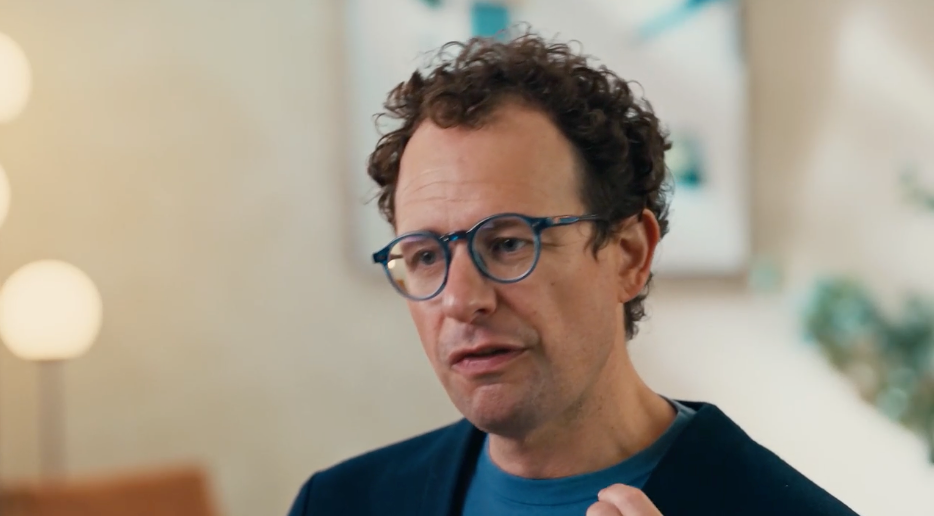
He happens to be 42 this year
An Anthropic employee said to the camera that three years ago, his older brother died of a brain tumor at the age of 42.
"Exactly the age I am now."
He said he came to work here because "someone has to get this right, and I don't want to watch from the sidelines."
Later, the technology head of the pharmaceutical company Bristol Myers Squibb came on and talked about clinical trials. It takes many years for a new drug to go from research and development to market, and AI is expected to shorten the clinical trial cycle by 20 to 30 percent. Bringing a new drug to market two or three years earlier may mean the difference between survival and not living long enough to wait for those patients who today have no available treatment.
Dario himself has also had testicular cancer. He did not mention it once during the roadshow. But when he finally read out that list of diseases that will "disappear within ten years," the first one was cancer.
I recall that when they submitted their prospectus, it began with a letter, "To Investors," in which they said, "We believe AI will profoundly accelerate progress in biology and medicine, with the potential to cure diseases that have plagued humanity for thousands of years: cancer, Alzheimer's disease, heart disease, rare genetic diseases, and major infectious diseases."
An AI company wants to be remembered for the people still waiting for medicine.
It wants to teach AI to be someone you can rely on
What Anthropic makes, plainly put, is a tool.
It sells Claude, an AI similar to ChatGPT. Enterprises pay by usage to call it, or buy enterprise licenses per seat; programmers use it to write code, and companies use it to process documents and analyze data.
But while polishing this tool, it did several things that looked like poor business decisions.
It wrote a "constitution" for Claude, so that when Claude encounters situations it has never seen, it can weigh for itself what to do, without waiting for orders on everything. It wrote "helpful, honest, harmless" into the training objectives. They called this step "teaching it to be someone you can entrust things to."
Anthropic promises that Claude will never run ads. Its most frontier model, Mythos, is first given only to those doing cybersecurity defense. Claude's full biological capabilities are opened only to vetted institutions, because the same set of skills can be used to design drugs and also to design things that harm people.
Each of these means giving up revenue: one less ad revenue stream, one fewer batch of customers, a pile more vetting hassle.
What it gets back is that others are willing to hand it their most critical work. Hospitals won't let an AI prone to making things up touch medical records, and pharma companies won't let a "good enough" AI screen candidate drugs.
Companies that have used it spend more the next year. For the same batch of customers, the money they paid it in the second year was about nine times that of the first year.
A full year's revenue from three years ago now takes only 5 hours
In 2023, Anthropic's revenue for the full year was $41 million.
By the third quarter of 2026, it earned $17 billion in a single quarter, averaging about $7.7 million per hour. The money it made in a full year three years ago, it now earns back in just over five hours.
$17 billion a quarter is already the size of a giant. At this scale, growing 30% to 50% a year would already be very good. It grew 12 times compared with the same period last year.
Its employees are also exceptionally "capable." On average, each employee brings in about $6.6 million in revenue a year. For typical mature software companies, this number is mostly around $300,000.
Customer growth is even more dramatic. At the end of 2023, roughly 200 enterprises paid it over $100,000 a year; by the end of September 2026, that number had risen to 11,900. Spread across each business day, that's sixteen or seventeen new companies added per day, with almost no pause over three years.
Cheaper as It Scales
Most companies find it harder to make money as they grow: they have to offer discounts, subsidies, and hire more salespeople, and gross margins decline.
Anthropic's gross margin is moving upward. In the same period last year, for every $100 it collected, it kept $29 after direct costs; in the first nine months of this year, it keeps $85.
Its biggest cost is compute—the money spent renting chips and data centers. Over the past six quarters, revenue grew 45-fold, while compute costs rose only 10-fold. To use an analogy, a factory's output increased 45-fold, but its electricity bill rose only 10-fold.
The secret lies in what it sells. With each new generation of models, the AI gets smarter, needs to "think" less to do the same work, and consumes less compute. The new Opus 5.5 reduced customer usage costs by 40%, and the smaller Haiku 5.5 by 75%.
For a factory to cut costs, it has to build new plants and replace machines. It only needs to train the next generation of models.
It also uses Claude to do its own work. Over 90% of the code in the company is written by Claude. The time engineers save is reinvested in training Claude to be even better at writing code.
As a result, all expenses other than compute fell from 70% of revenue in Q1 2025 to just over 30% in Q3 2026.
The smarter the product, the lower the cost. Few companies have ever grown this way.
But note, that was about costs other than compute.
The biggest raw material for AI is compute. To make models stronger, you need more chips and bigger data centers for training. Anthropic is betting that compute will only become more scarce, so it locked it in early.
As of September 30, 2026, its signed compute and data center contracts totaled approximately $900.9 billion, extending as far out as 2045.
With contracts that long, the total is inevitably daunting. What truly weighs on it is the money due in the coming years. $70.7 billion comes due within the next 12 months, while its annualized revenue in October this year was $81 billion. Next year's bills are already approaching its current annual revenue.
The contract also states that whether the computing power is used or not, the money must be paid. This is something Anthropic itself cannot resolve.
So, this is a company the entire capital market has never seen before.
The entire Wall Street is waiting for it
According to the plan, Anthropic will issue 825 million shares at $70 to $78 per share, raising approximately $61 billion, roughly twice the IPO fundraising record set by Saudi Aramco in 2019.
It will also be the first company to take the most cutting-edge AI large models as its core asset and sell them on the stock market. Its peers at the same level have not yet gone public.
So analysts have no ready-made yardstick in hand.
Valuing it by software company standards, it is growing too fast; valuing it by chip company cycles, it does not need to build its own factories; comparing it to cloud computing giants like Amazon and Microsoft, the servers they buy are their own assets, while the $900.9 billion it signed is for buying someone else's data centers.
It charges like utility bills—pay as you use; yet customers become more dependent the more they use it, paying nine times more in the second year than in the first. It grows like a startup, yet its size is already that of a giant; it makes money like a software company, yet its costs will only get lower. Its most valuable assets are models, papers, and people, while what it carries on its back is a string of computing power contracts stretching to 2045.
The stock market has never seen a company like this before.
These computing power contracts ultimately need to be filled by a sufficiently large business. In its roadshow, it estimated its market as global knowledge work, over $4 trillion.
This is also why it must talk about treating diseases. Medical treatment and drug development are the places most willing to spend extra on "reliability."
Pharmaceutical company Bristol Myers Squibb rolled out Claude to 30,000 employees. Questions that used to take a team one to two months to investigate can now produce results in four to five minutes. In the summer of 2026, 950 AI programs ran continuously for 21 hours, searching through 1.9 billion protein families and uncovering a sequence that had never been published and closely resembles the gene-editing tool CRISPR. In the Democratic Republic of the Congo, medical teams fighting Ebola used it to cut the daily report processing time for each region to under an hour.
At the end of the roadshow, Dario said: "If we get this right, we can create an era of miracles."
Ten years from now, if cancer truly becomes a thing of the past, this roadshow material will surely be dug out and treated as a historical document.
To commemorate the arrival of the AI era.
Original link
Welcome to join the official BlockBeats community:
Telegram Subscription Group: https://t.me/theblockbeats
Telegram Discussion Group: https://t.me/BlockBeats_App
Official Twitter Account: https://twitter.com/BlockBeatsAsia

 Related Articles