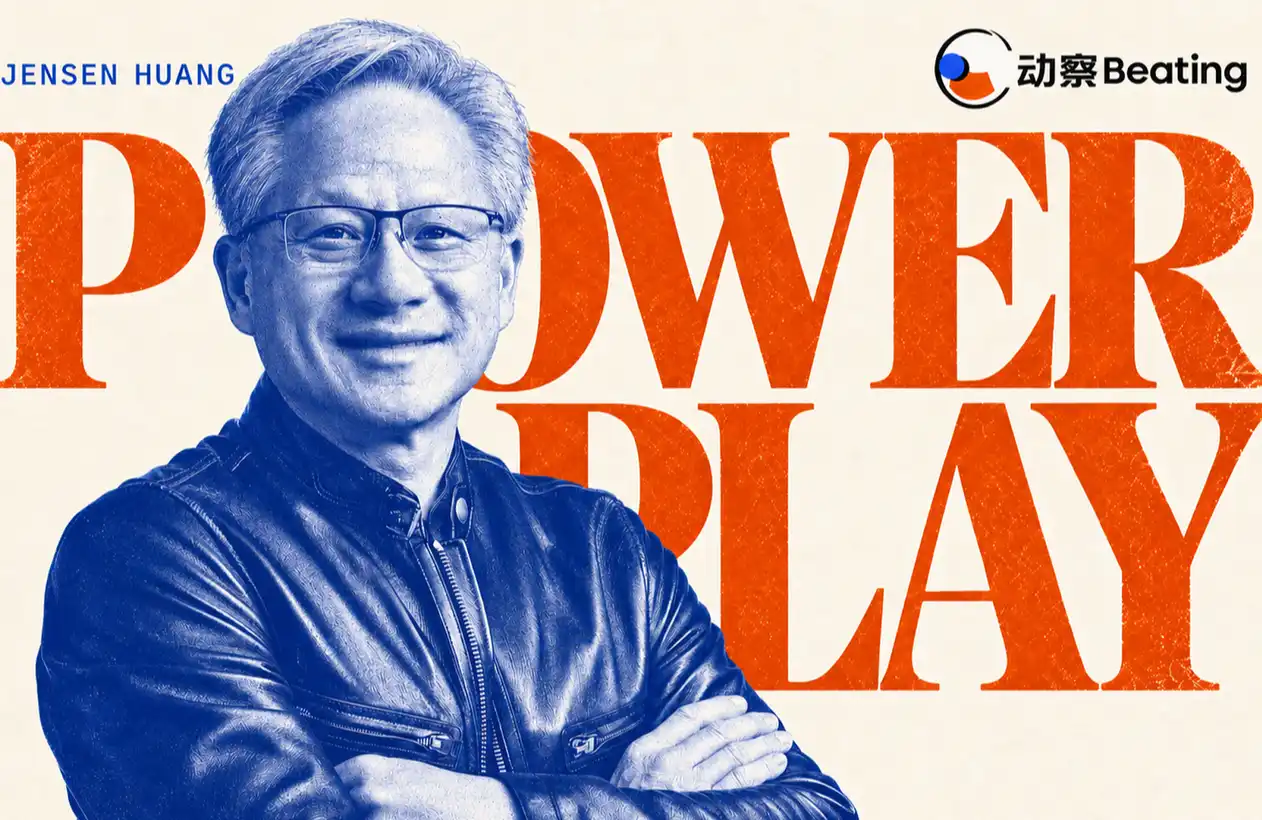
Bernstein interprets Nvidia: Facing independent investigation, maintains $400 price target.
TL;DR
· NVIDIA's board has launched an independent investigation and stated that it currently has no reason to believe the relevant dealings harmed U.S. national security or the company's interests.
· Three U.S. House committee chairmen have requested that Jensen Huang attend a closed-door briefing on November 18 to explain the relevant dealings and the company's internal management measures.
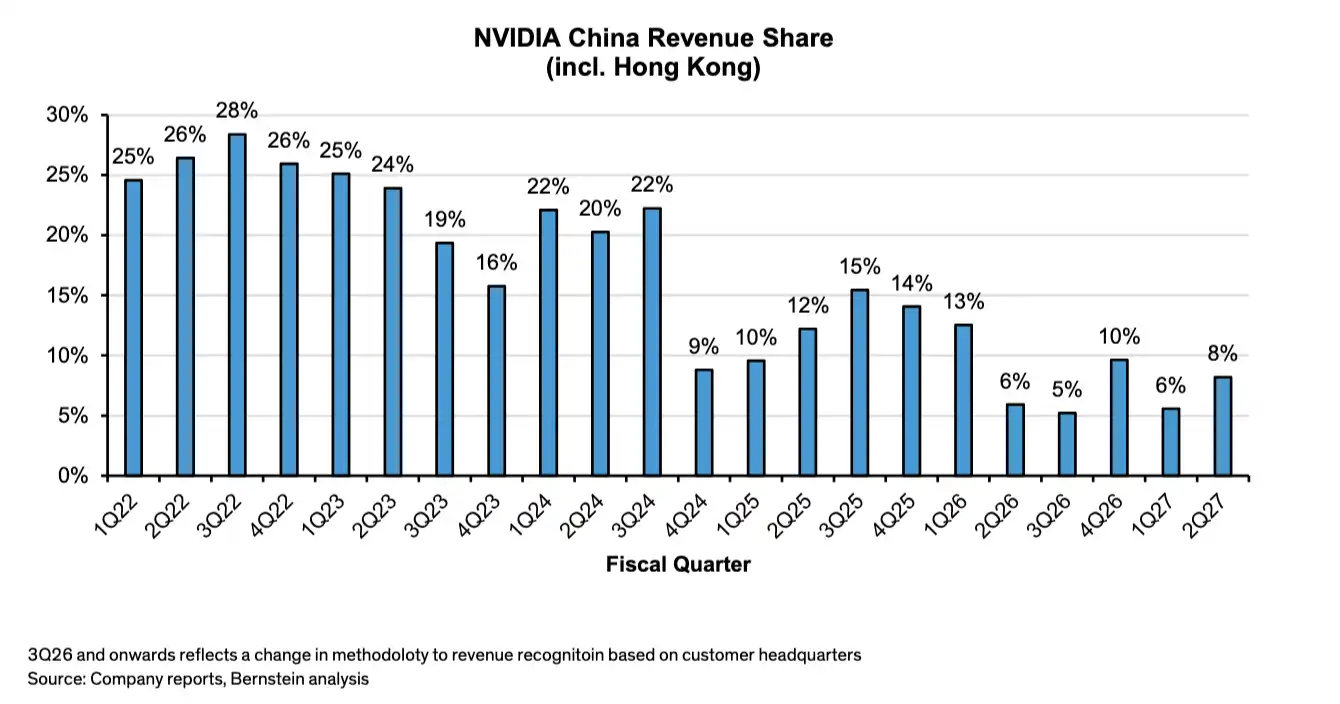
· After export controls were implemented, the share of NVIDIA's China region (including Hong Kong) revenue declined significantly. Starting from the third quarter of fiscal year 2026, the company reports regional revenue based on customer headquarters location, and cross-period comparisons need to consider changes in statistical methodology.
· Bernstein expects that data center customers' procurement demand will still be supported in the short term. The more direct impact on NVIDIA's operations depends on whether congressional inquiries extend to China chip export policy.
· Bernstein maintains an "Outperform" rating and a $400 price target, approximately 114% above the November 6 closing price.
After Jensen Huang's dealings with Megaspeed executives triggered a board investigation, how NVIDIA manages external dealings and enforces internal compliance systems has also entered the scope of lawmakers' inquiries. Bernstein remains bullish on earnings growth driven by the data center business, but this controversy has brought two risks into greater focus. First, whether Congress will further scrutinize China chip export policy; second, how NVIDIA, which relies heavily on Jensen Huang, will arrange management succession.
Board launches independent investigation, lawmakers request closed-door explanation
On November 8, NVIDIA's board announced the launch of an independent investigation and stated that it currently has no reason to believe the relevant dealings harmed U.S. national security or the company's interests.
Since late October, The New York Times, The Wall Street Journal, and the Financial Times have successively reported on Jensen Huang's dealings with Megaspeed technology executive Alice Huang. Some reports, citing anonymous sources, said that relevant U.S. authorities had expressed concerns about Alice Huang's background and the dealings between the two. Singapore's Ministry of Home Affairs subsequently rebutted some claims in The Wall Street Journal, stating that the Singapore government and its officials had not expressed concerns on the matter and had not investigated Alice Huang regarding the matters covered in the relevant reports. Singapore also confirmed that it is investigating Megaspeed.
On November 5, three Republican chairmen of the U.S. House Foreign Affairs Committee and relevant standing committees requested that Jensen Huang attend a closed-door briefing on November 18 to explain his dealings with Alice Huang and how NVIDIA guards against external risks. Democratic Senator Chris Coons also publicly stated that Congress will investigate the matter.
Limited Recovery in China Sales, Chip Export Policy May Face Further Scrutiny
Some reports suggest that Alice Huang may have influenced Jensen Huang's lobbying efforts, prompting him to push for relaxed export restrictions on Nvidia chips to China. Bernstein is skeptical of this claim. Jensen Huang has publicly advocated for expanding Nvidia's sales in the Chinese market for years. After export controls were implemented, the company's revenue share from mainland China and Hong Kong still declined significantly.
Starting from the third quarter of fiscal year 2026, Nvidia changed its regional revenue reporting to be based on customer headquarters location. When comparing data across different periods, it is necessary to distinguish between changes in customer attribution and changes in end demand.
At the time, the products approved for sale to China were mainly the H20 and a limited quantity of H200, which lag behind Nvidia's most advanced chips by a generation. Bernstein believes that as Chinese customers prioritize domestic solutions, even if some products are approved for export, the room for recovery in local sales remains limited.
Bernstein expects that procurement demand from global data center customers will still be supported in the near term. Lawmakers may use this opportunity to re-examine chip export restrictions, and Democratic lawmakers may further question Nvidia's dealings with the Trump administration. If congressional inquiries extend to chip export policy, the impact of the controversy on the company's operations will be more direct.
Earnings Growth Supports Target Price, Succession Arrangements Remain Unclear
On November 6, Nvidia closed at $186.64, underperforming the S&P 500 by 10.5 percentage points over the past 12 months. Bernstein's $400 target price is approximately 114% above that day's closing price.
Bernstein expects Nvidia's adjusted earnings per share to rise from $4.77 in fiscal year 2026 to $9.20 in fiscal year 2027 and $15.80 in fiscal year 2028. Based on the November 6 closing price, the corresponding price-to-earnings ratios are 39.1x, 20.3x, and 11.8x, respectively. The $400 target price uses longer-term earnings forecasts, based on average non-GAAP earnings per share of $19.04 for fiscal years 2028 and 2029, applying a price-to-earnings ratio of approximately 21x.
Bernstein maintains its "Outperform" rating while noting that Nvidia's strategy and business management are highly dependent on Jensen Huang. Jensen Huang leads the company's long-term strategy and is directly involved in multiple core business areas. According to reports, approximately 60 people report directly to him. If he is unable to continue in his role, the successor and how strategy and operations would be handed over remain unclear.
Welcome to join the official BlockBeats community:
Telegram Subscription Group: https://t.me/theblockbeats
Telegram Discussion Group: https://t.me/BlockBeats_App
Official Twitter Account: https://twitter.com/BlockBeatsAsia
 Related Articles