a16z launches a university, Silicon Valley begins to redefine the 'good student'.
Original title: "a16z Opens a University, Silicon Valley Begins to Redefine 'Good Students'"
Original author: Dongcha Beating
Being young once meant that life still held vast uncertainties, but now it increasingly resembles an asset that needs to be cashed in as quickly as possible.
In September 2010, Peter Thiel's foundation announced a program called "20 Under 20."
They would select 20 people under the age of 20, give each of them $100,000 and two years to pursue things that "can't wait until graduation." When the first cohort was announced the following May, 24 people were actually selected. Many media headlines at the time read: "PayPal Co-Founder Offers $100,000 Fellowships So They Won't Go to College."
A fellowship that funds not going to school.
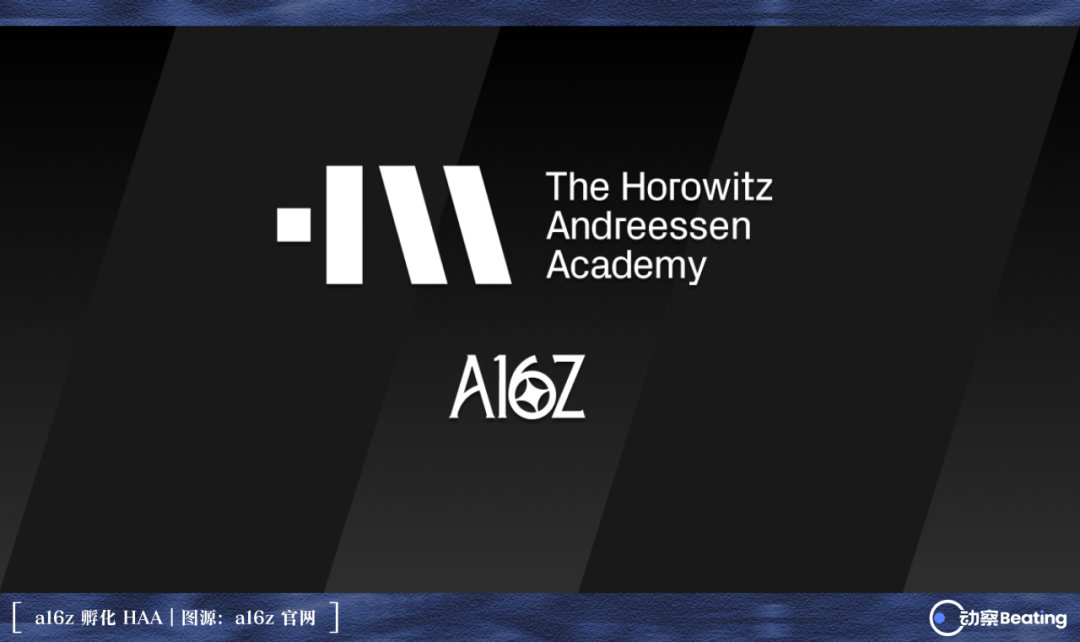
Sixteen years later, Marc Andreessen's a16z is putting up $35 million to open a new school in San Francisco called the Horowitz Andreessen Academy, or HAA for short. The inaugural class will admit 50 students, with plans to open in the fall of 2027.
Paying people to drop out, and paying to start a school yourself — both sums of money are aimed at the same anxiety, and the same age group.
The VCs who can afford to write these checks are growing more and more impatient. They no longer care about what a young person might become in the future; instead, they pressure those who haven't even left campus yet to prove what they've already accomplished today.
A Tape Playing in Reverse
Dropping out has never been anything new.
Bill Gates, Steve Jobs, and Mark Zuckerberg all did drop out back in the day. But what's intriguing is when exactly dropping out began to be repackaged in reverse as a purpose-driven crash course in success.
The stories the people involved tell themselves are actually far removed from what capital later retold.
In his 2005 Stanford speech, Steve Jobs mentioned that after dropping out of Reed College, he hung around and audited classes for about 18 months, and even took a calligraphy class purely because he liked it. At the time, no one knew what personal computers would look like, and it was even less likely that at eighteen he could have predicted that a decade later those fonts would be built into the first-generation Macintosh.
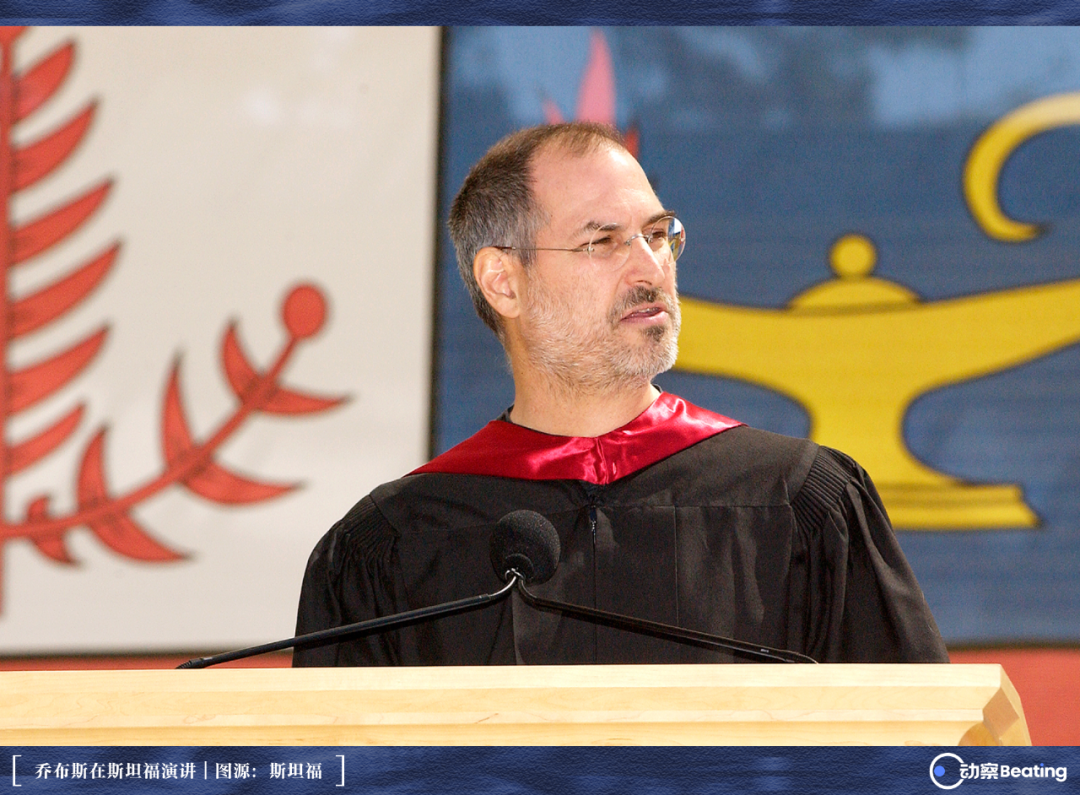
You can't connect the dots looking forward; you can only connect them looking backwards, as Steve Jobs said.
But in the later narrative that was played in reverse, dropping out was trimmed into a precise preemptive sprint.
At the end of 2011, Forbes launched its first "30 Under 30," formally welding youth and commercial returns blatantly into the same table.
But is "the earlier the better" really a sure-win trump card?
MIT economist Pierre Azoulay pulled data from the U.S. Census Bureau and calculated that among the fastest-growing 0.1% of star startups nationwide, the average age of founders at the outset was actually 45. Even in the heart of Silicon Valley, which is most obsessed with youth, the center of success has never landed on the twenties.
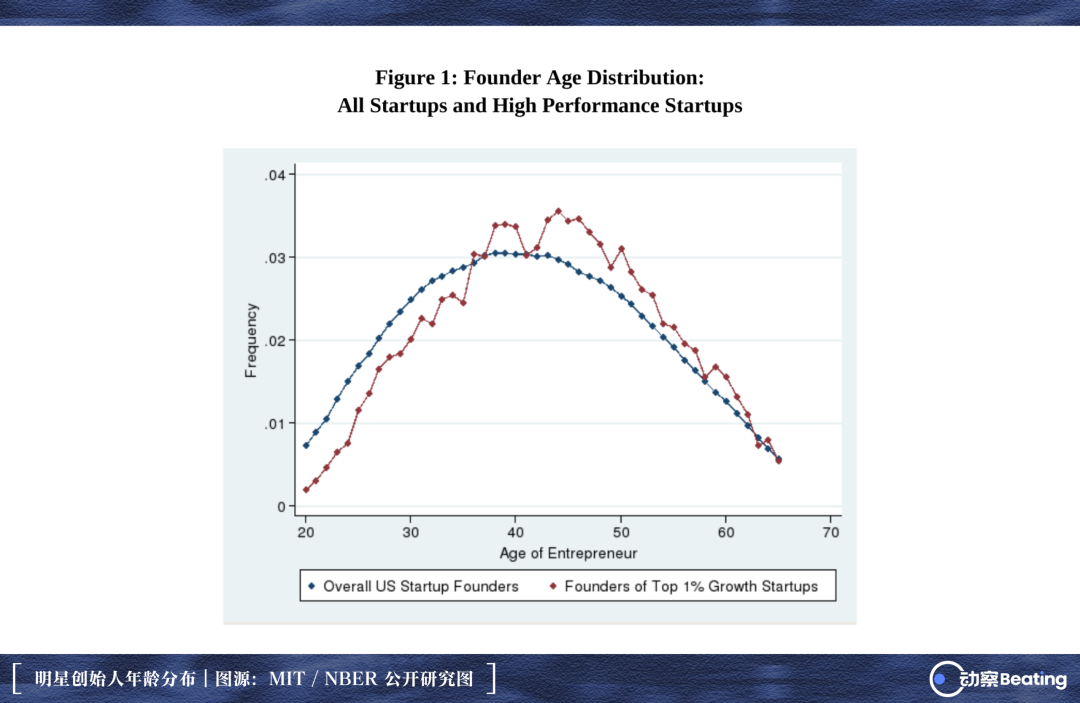
Writing code and building products at any time is beyond reproach. The subtle part is that the direction of things has changed. The question is no longer whether you can make it, but whether you deserve to be prematurely forced to maturity.
It cannot be denied that the Thiel Fellowship has bet on super outliers. By 2022, the total market value of the projects it supported exceeded $220 billion, with Figma, Ethereum, and Luminar in its portfolio.
The giants that broke out are real, and the temptation was accordingly institutionalized.
In the traffic industry, kidfluencers easily earn hundreds of thousands of dollars a year through short videos, prompting states to urgently pass laws to protect minors' trust accounts; in the software world, high school students' commits on GitHub and build in public on Twitter are directly hung with valuation multiples, converted into talking points for angel rounds.
Algorithms and platforms have smashed through the threshold of "being seen," and conveniently turned "being displayed" into a new KPI for minors. Likes, follower counts, and ARR on the books differ in form, but all are metrics that can be quantified, forced to maturity, and early labeled with a price tag.
"The earlier the better," thus, has transformed from geeks' rebellion against the system into a collusion of the venture capital assembly line demanding financial returns from minors.
Collateral
The Thiel Fellowship's hard criteria are being no older than 22 and not holding a diploma.
When you apply, you can be an enrolled student, but once selected, you must go through the withdrawal process. If you don't walk out of the campus gates, don't expect to take this money with you.
It doesn't force you to immediately register a company. The terms contain only one requirement that sounds somewhat abstract: you must have "substantive progress." You may not have written a single line of runnable code yet, but you must have a resolute blueprint in hand.
At the investor's table, this conviction becomes the only collateral you have to exchange for a $100,000 check.
Thiel has repeatedly described higher education as an inflating subprime bubble. Many people in Silicon Valley buy into this narrative. As early as 2013, a16z partner Chris Dixon wrote an article denouncing diplomas as a trap—people chase them merely because others also hold one.
But this time, Marc Andreessen, who personally stepped in to start a school, finds himself in a particularly delicate position.
In 2007, his advice to young people on his blog was as pragmatic as that of an East Asian parent—recommending they get into the best prestigious schools and max out their GPA, research projects, and big-tech internships.
This man, now Silicon Valley's most radical tech pontiff, is himself the purest beneficiary of the university system.
Until 2023, when he published the "Techno-Optimist Manifesto," elevating growth, competition, and accelerationism to absolute righteousness, and relegating the ivory tower to the category of outdated resistance obstructing acceleration.
When this set of talking points—originally meant for VC investment committee presentations—was transplanted verbatim into a university's admissions brochure, the boundaries of education completely dissolved.
The Narrow Gate
Sitting at the admissions table of the new school are three veterans well-versed in the venture capital game: Marc Andreessen, Erik Torenberg, and operator Gagan Biyani.
The resumes of these three almost spell out the school's underlying character. The core asset of Erik Torenberg's On Deck is its venture capital network. In 2025, Torenberg's podcast media company Turpentine was packaged and acquired by a16z, and he himself joined a16z as a GP. CEO Gagan Biyani founded Maven and Udemy, took tumbles in venture cycles, and thoroughly mastered the art of traffic.
People who have been repeatedly kneaded by capital through venture cycles turn around and want to define what a "good student" means for Silicon Valley.
As soon as this school made its debut, it came with an extremely standard Silicon Valley halo.
The school raised a total of $42 million, with a16z leading the $35 million round. Its official website lists a row of top-tier tech giants—OpenAI, Anthropic, Meta, NVIDIA, Palantir, Stripe, and others—collectively called "founding partners."
However, these tech giants are neither co-investors in the legal sense nor do they provide any employment or internship guarantees for students. More often than not, this is a tacit mutual brand rub.
So who exactly can squeeze through this door?
The first line at the top of the admissions page gives the answer: "We're looking for people who are already in motion."
The school interprets agency as having taken concrete action on something one is interested in, and proof of work is the heaviest筹码 in admissions.
Interestingly, the credentials of the old system have not been completely abolished.
The first round of screening cuts out recommendation letters and application essays, requiring a personal portfolio website and video; but at the same time, high school transcripts and standardized test scores are still indispensable.
It wants your outlier talent, yet is unwilling to let go of the institutional sieve.
The conditions the school offers sound like charity: tuition-free for the inaugural class, students retain all project IP, the school takes no equity, no revenue share, and no right of first refusal.
It is not a university in the traditional sense at all, but an extremely early-stage incubator with an extremely high threshold, specifically selecting finished geniuses.
The school's intentions are hidden in the privacy terms. During the application stage, the platform collects your code repositories, papers, business plans, and revenue; during enrollment and after graduation, it continuously tracks your project progress, offers, salary levels, and startup funding amounts.
The first batch of 50 seats, combined with a top-tier mentor and corporate matrix, is forming a new type of prestige certification.
In the end, it is nothing more than replacing the old Ivy League diploma with a new label stamped with top-tier VC certification.
Returning to the Furnace
John Marbach was the first person to receive a Thiel Fellowship check in 2011.
Back then, he dropped out of Wake Forest to build an email collaboration tool called Glider, which successfully got into Y Combinator; later, Google casually launched a free competitor, and his company quickly lost its way.
In 2013, Marbach decided to go back to school to finish his degree, at the cost of giving up $50,000 that he hadn't yet received.
When the startup community reviews this story, they always assume the cost of a failed startup is just the project dying and investors losing their money. But years later, when Marbach brought up this money, he talked about something entirely different from winning or losing.
He said that after leaving school, he realized the hardest hurdle to overcome in dropping out was actually the people around him:
"It's really hard to create your own peer group."
(It's really hard to rebuild a circle of peers on your own.)
You can use code to create a company, but you can't recreate a class in a vacuum.
"Those years in college," he said, "are a once-in-a-lifetime thing."
Zoom out a bit, and you'll see that within the Thiel Fellowship, there have always been two groups of people.
One is absolute outliers like Vitalik Buterin, who built Ethereum from scratch; but more often, it's people like John Marbach and Eden Full, who, even after creating solar devices, ultimately went back to Princeton to finish their mechanical engineering degrees. Tara Seshan from the 2012 cohort insisted on completing her undergraduate studies before accepting the award, reasoning that right after high school she wasn't ready at all, and college gave her time to mature, make friends, and make mistakes.
Dropping out is one path, returning to school is another.
In investors' models, switching majors midway, starting a student publication no one reads, or conducting basic research with no commercial output for five years are all sunk costs that can't be accounted for as returns.
But what about for a twenty-year-old?
The most expensive part of education's value lies precisely in allowing a person to stay a few more years without PMF, with full justification.
For a company, the earlier you find PMF, the better.
Not necessarily.
The Prescription
Traditional universities are indeed seriously ill.
The average sticker price for private universities across the U.S. is as high as $45,000; in 2024, nearly half of all Americans who earned a bachelor's degree graduated with debt, owing an average of $29,560 per person, and total U.S. student loan debt has surpassed $1.66 trillion.
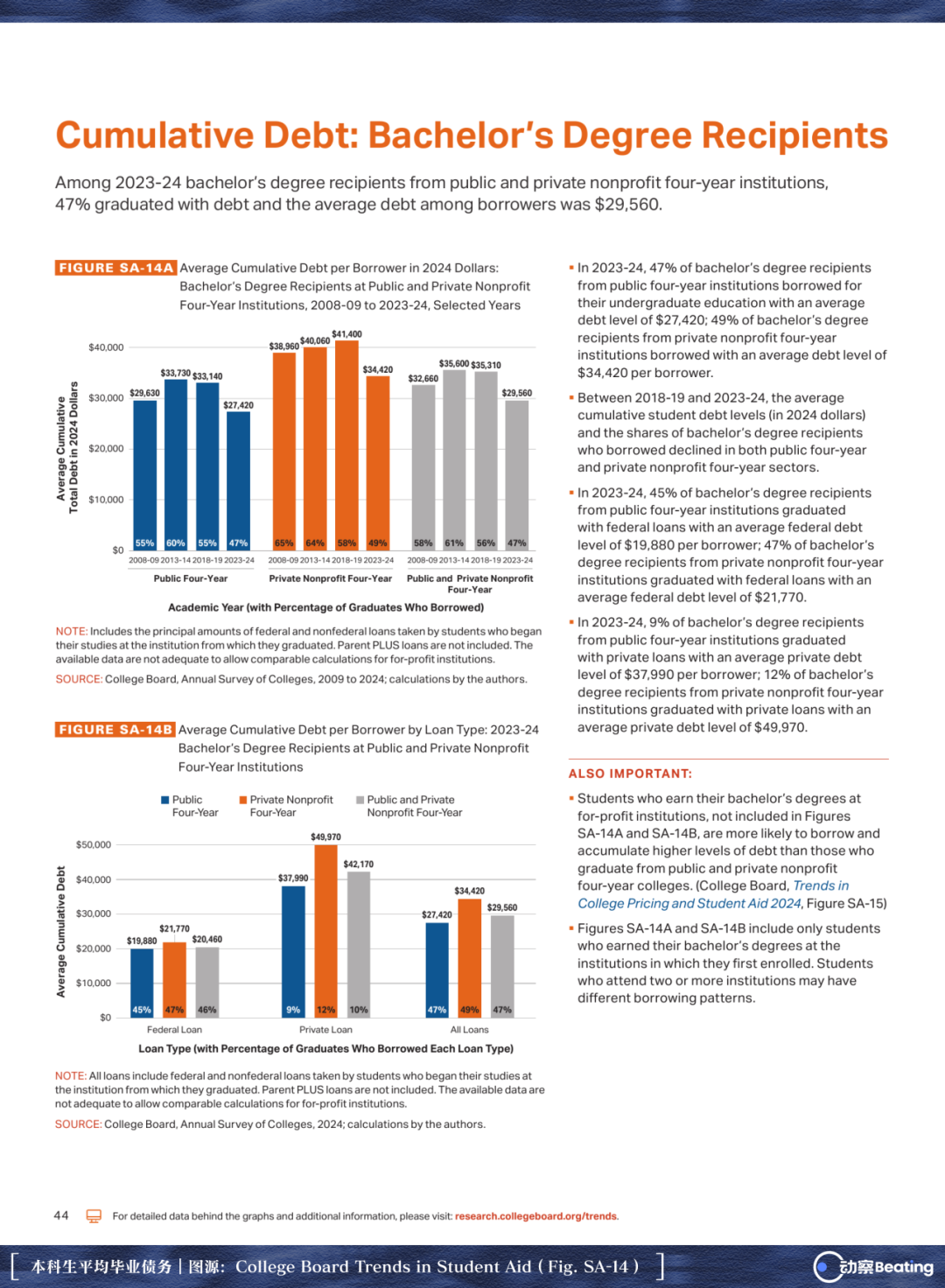
Universities themselves are greasing the wheels. Since everyone is coming for jobs, colleges have simply turned education into an open ROI calculation—in a Gallup survey, six in ten students admitted they enrolled just to land a high-paying job.
Universities themselves turned education into a transaction that calculates returns first, and that is precisely what gave Silicon Valley its opening to kick the door down.
But is the prescription Silicon Valley is writing really that miraculous?
Project-based learning is nothing new—WPI and Olin College have been doing it for decades. What HAA actually does is jam a person's exit into two narrow paths: either start a company or join a high-growth tech giant.
What's more, Silicon Valley has a track record of crashing and burning when it runs its own schools.
The last star project that claimed it would disrupt universities was called Lambda School. It raised tens of millions of dollars on the slogan "pay tuition only after you find a job," and ultimately got hit with heavy regulatory penalties for allegedly exaggerating employment data.
Even earlier, Minerva sold a global study-abroad experience with no campus, and Austin University, co-founded by Palantir, sold anti-political-correctness ideology.

Now HAA is selling tickets to Sand Hill Road.
Same soup, different bowl.
If so-called new education merely swaps GPA for ARR and swaps obedience to professors for pandering to investors, then it is just moving the same group of young people from one assembly line into another.
The Temporarily Useless Years
Old schools cling to exam papers, while Silicon Valley peddles GitHub commit histories and six-figure ARR. On the surface, it is a clash between old rules and new rules, but underneath, the same logic of sorting assets is still running.
They are all impatiently compressing an eighteen-year-old into a few strings of metrics that are easy to compare.
But the most valuable part of this period of life lies precisely in its unfinished nature. There is no pressure to monetize, no need to anxiously watch retention rates and growth curves every day.
When a16z and its peers price "already in motion" as the ticket to entry, the business world is in fact conspiring to strip young people of the right to hesitate and choose before they are ready.
Does an eighteen-year-old who has not yet found a lifelong passion, has not yet built a code repository, has not yet generated even a whisper of presence on social media still deserve a quality education?
HAA's admissions page does not answer. It probably does not need to. In the venture capital funnel, what matters is conversion rate and hit rate; it was never a public good to begin with—just a narrow door reserved exclusively for outliers.
Even if this school eventually produces a few unicorn founders, it would only prove that this screening machine precisely picked out the 1% who had sharpened their blades long ago.
It proves nothing about the common sense of growth.
School should be something else entirely. It should at least accommodate a newly minted adult who can, with peace of mind, spend a few years doing things whose usefulness is "temporarily unknown."
If a society no longer permits even twenty-year-olds to "waste" a few years daydreaming, trial-and-erroring, and wandering aimlessly to see the world, that is what is truly regrettable.




Original link
Welcome to join the official BlockBeats community:
Telegram Subscription Group: https://t.me/theblockbeats
Telegram Discussion Group: https://t.me/BlockBeats_App
Official Twitter Account: https://twitter.com/BlockBeatsAsia