Why is the Federal Reserve still going to raise interest rates in October?

TL;DR
· After the Fed hiked rates to 3.75%-4.00% on September 16, St. Louis Fed President Musalem and Fed Governor Barr successively said the policy rate remains too accommodative, while White House National Economic Council Director Hassett countered by asking why continue hiking when the three-month annualized core inflation rate is about 2%.
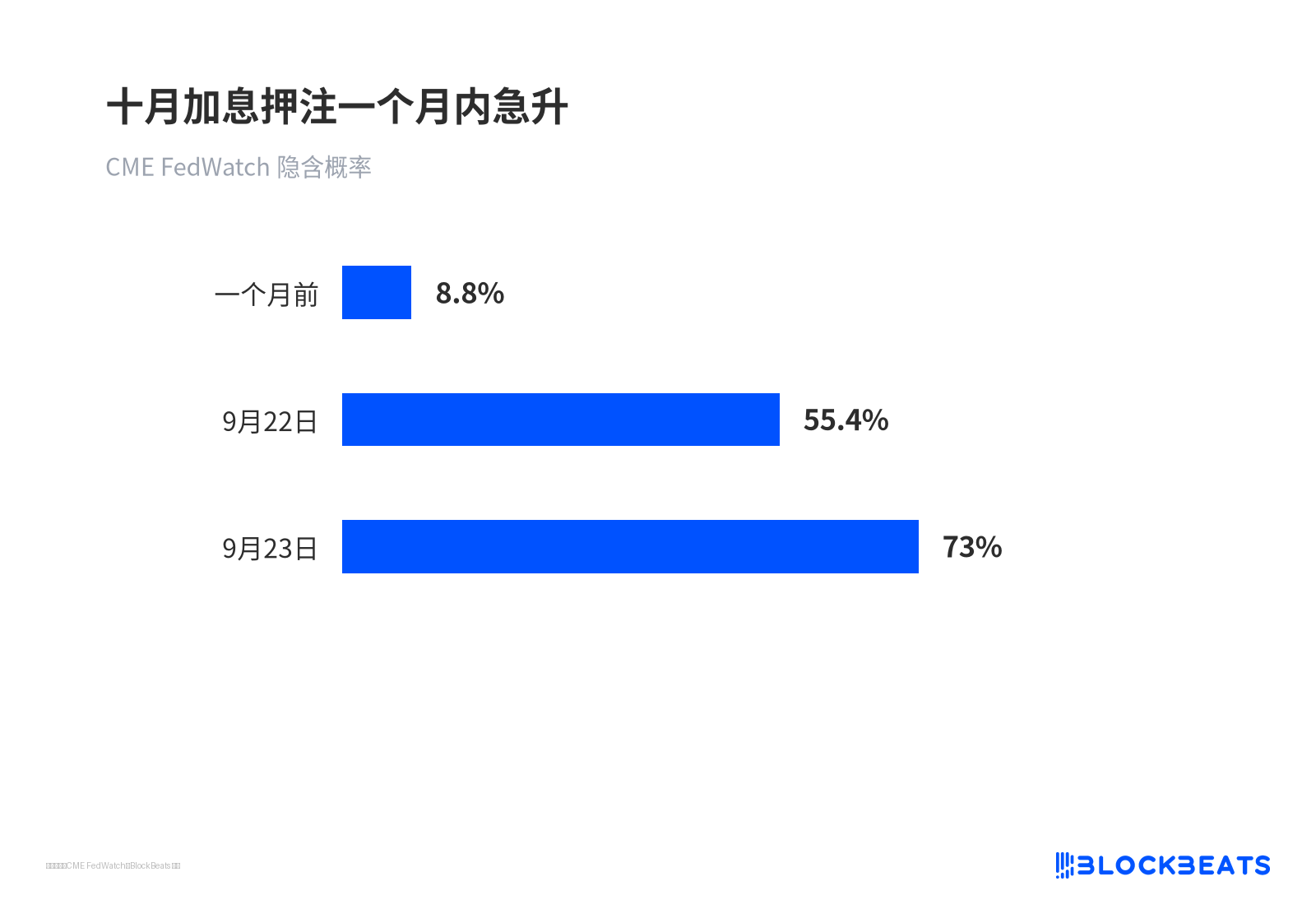
· Markets pushed bets on an end-October hike to about 70%, and the 10-year Treasury yield hit 5.14%, the highest since 2007, with the long end continuing to rise under pressure from fiscal supply and AI capital spending.
· Related assets: U.S. Treasuries, long-duration Treasury ETF (TLT), the dollar, gold, rate-sensitive growth stocks and REITs.
On September 16, the Fed raised the policy rate by 25 basis points to 3.75%-4.00%, its first hike in more than three years. Chair Warsh called the move a removal of some accommodation but did not provide a path for the next step.
Five days later, St. Louis Fed President Musalem said in a Reuters interview that this level is still accommodative and that underlying inflation after stripping out supply shocks is still about 1 percentage point above target.
On September 23, Fed Governor Barr offered more direct forward guidance in remarks prepared for the Chicago Fed housing summit, saying that in the baseline case further policy adjustment may still be needed.
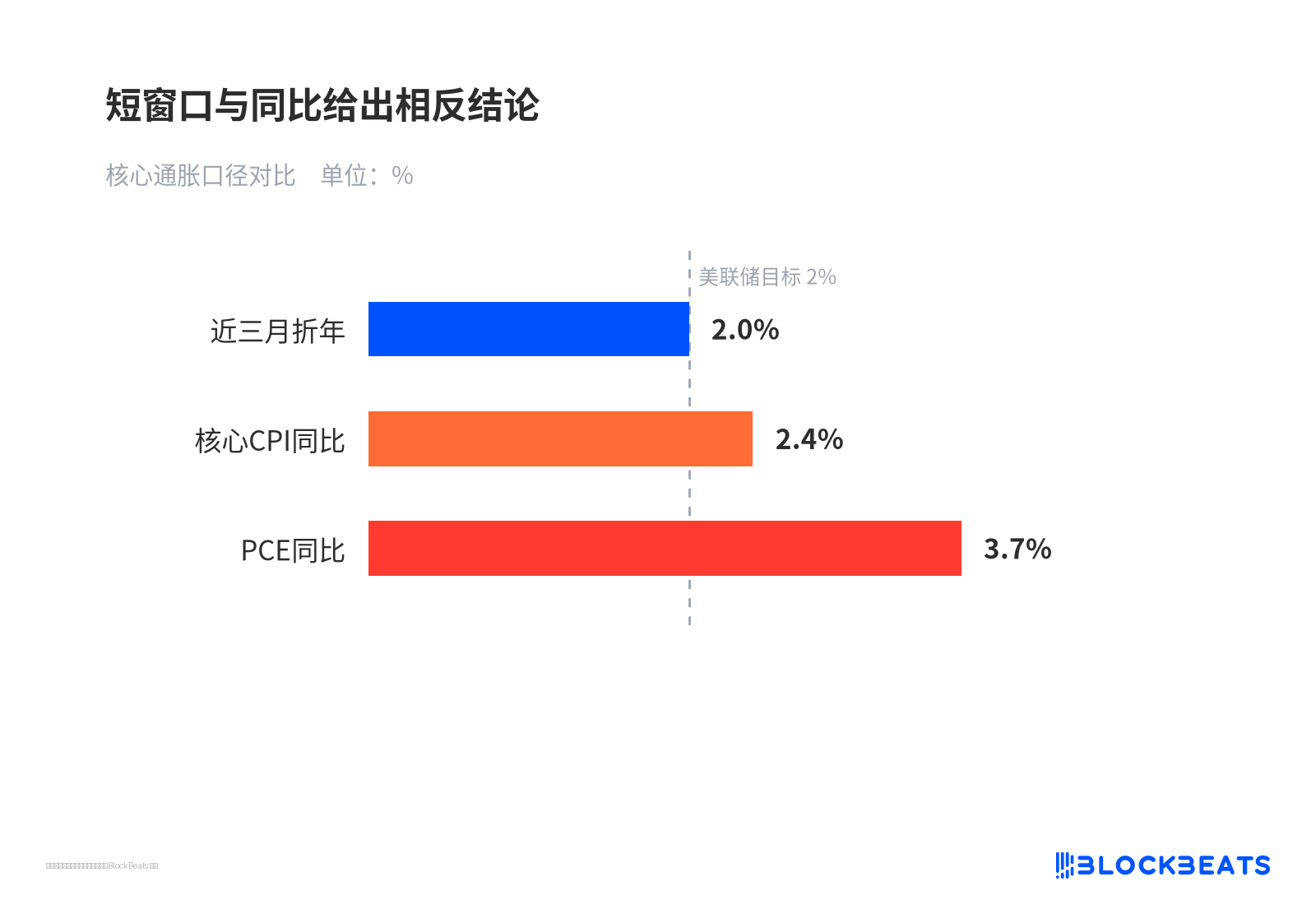
On the same day, White House National Economic Council Director Hassett countered at Georgetown University with a different set of numbers, asking why rates should still be raised when the three-month annualized core inflation rate is about 2%. The two inflation “thermometers” pointed to opposite policy conclusions, and markets quickly pushed bets on an end-October hike to about 66%-73%.
The difference lies in the window. Year-over-year looks at the past year, while the annualized rate treats the most recent three months of gains as a full-year pace. The policy rate is the overnight price set by the Fed, while mortgage rates and the stock market more often follow the 10-year Treasury yield.
Musalem does not have a vote on the Federal Open Market Committee (FOMC) this year, so his remarks are closer to setting the tone and he cannot directly vote at the table.
Why officials believe policy is still not tight enough
Warsh did not give a clear path after the hike, and regional Fed presidents and governors began to fill the vacuum. Musalem’s core argument is that after stripping out supply shocks, underlying inflation is still about 1 percentage point too high and moving in the wrong direction. He believes the labor market is not the source of inflation and that there is no need to deliberately cool employment to meet the target.
Barr laid out the risks more directly: inflation risks are rising, while employment risks are falling. In his prepared remarks, he mentioned that tariffs, Middle East conflict, the aftermath of the Ukraine situation and the AI investment boom are all pushing up prices, and that inflation remains above 2% and has not clearly and promptly moved back toward target.
Corporate-side data gave the hawks more ammunition. A Richmond Fed business survey showed respondents expect larger price increases than in previous quarters, and the share of firms citing monetary policy as their top concern is also rising.
The September composite Purchasing Managers' Index (PMI) preliminary reading continued to strengthen, with the input price sub-index at a multi-year high. The survey was collected from mid-August to early September, before last week's rate hike, making it more of a leading signal of pricing intentions than post-hike feedback.
White House counters with short-window reading
Hassett didn't look at year-over-year figures. He looked at the annualized core inflation rate over the past three months, which is about 2%. That's a stark gap from the official reading. August core CPI was 2.4% year-over-year, while July PCE inflation was about 3.7% year-over-year. Look at the same thing through a different window, and you get a different policy conclusion.
Short window and year-over-year give opposite conclusions
Hassett also criticized recent officials advocating for rate hikes as mostly not Trump appointees, and said the Fed under Warsh is unusually partisan, with restoring independence a priority. He didn't name an October move, but pushed the debate from the level of rates to who has the authority to define inflation.
The core of the conflict: Barr says inflation remains above 2% with no clear decline, Hassett says the annualized core rate is already about 2%. The same data set, two different rate paths.
Bond market has already hiked for the Fed
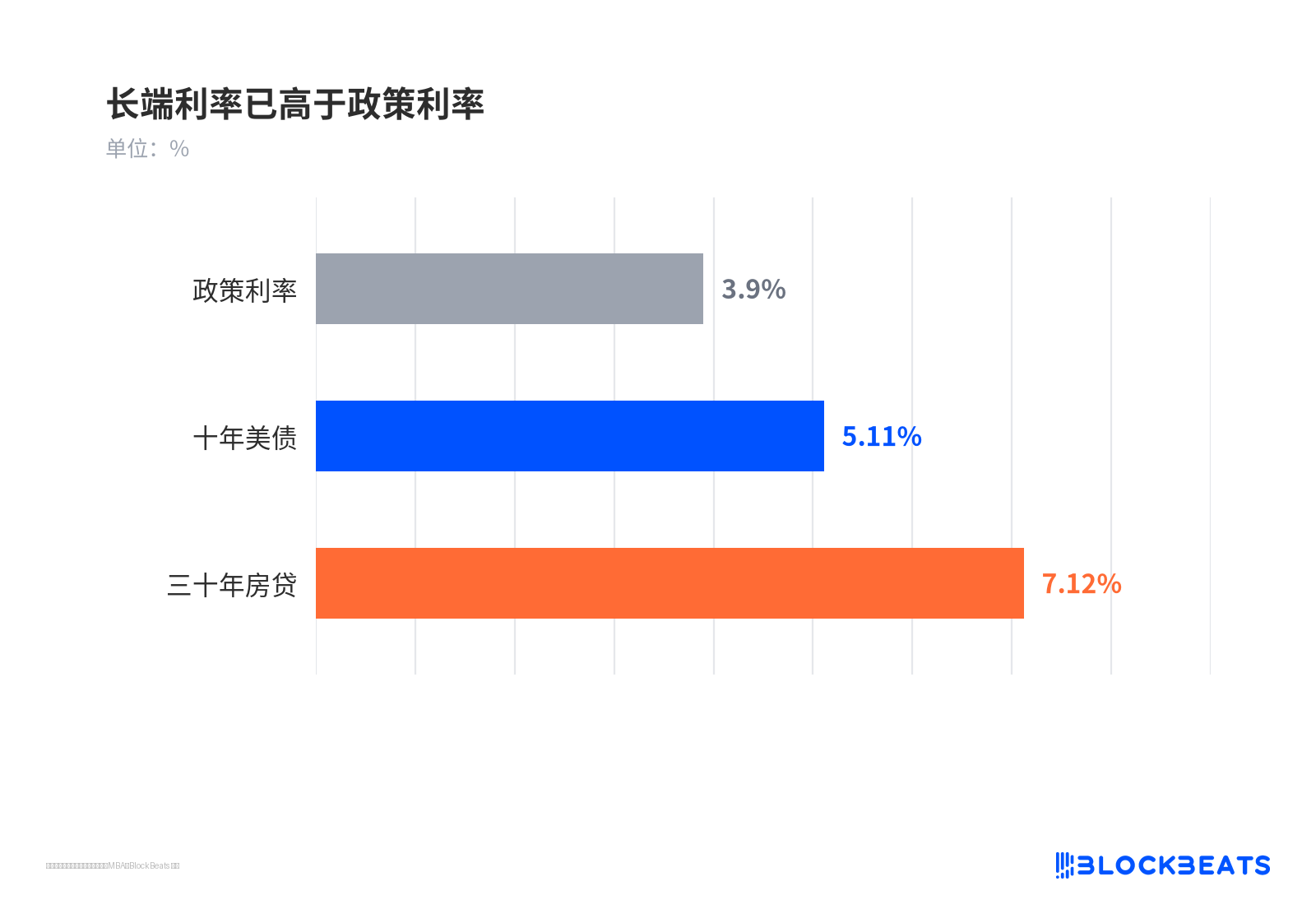
The market didn't wait for the FOMC to give an answer. On September 23, the 10-year Treasury yield touched 5.14% intraday and closed at about 5.11%, the highest since July 2007. The long-term Treasury ETF TLT fell 1.6% to $80.46, a record closing low.
The 30-year fixed mortgage rate was 7.12% last week, at a more than two-year high.
Long-end rates already above the policy rate
This round of long-end selling can't be attributed solely to one rate hike expectation.
Wall Street prefers to explain it through fiscal supply, energy prices, and the crowding-out effect of AI capital spending. Even if the Fed holds steady in October, the long end could stay elevated, and financial conditions are already tightening.
October meeting
The October 27-28 meeting falls just one week before the midterm elections. The market has already moved the window for a second rate hike forward from year-end, but no official has explicitly named an October move.
October rate hike bets surge within a month
Musalem does not have a vote this year, while Barr does, and no specific timetable was given.
What needs to be verified is whether corporate price increase plans will continue to be revised upward in the fourth quarter, and whether the short-window 2% reading can extend from the past three months to a longer period.
If corporate expectations and input prices continue to strengthen, Hassett's annualized-rate argument will be harder to sell to the FOMC. If core inflation stays near 2% for several consecutive months, the White House's skepticism will gain more tacit support from committee members.
Whether the tightening of financial conditions from long-end yields holding above 5% can substitute for a rate hike is another variable. It depends on whether fiscal deficits, energy prices and AI capital spending continue to push up term premiums. The answer from the October meeting hinges on which inflation thermometer the FOMC buys into.
Welcome to join the official BlockBeats community:
Telegram Subscription Group: https://t.me/theblockbeats
Telegram Discussion Group: https://t.me/BlockBeats_App
Official Twitter Account: https://twitter.com/BlockBeatsAsia