Opening with great fanfare, but can Utree Technology support a $400 billion market cap?

Original Title: "After CMiC, Ubtech is on the Rise: The Value and Weight of the First Humanoid Robot Stock"
Original Author: Wenser, Odaily Planet Daily
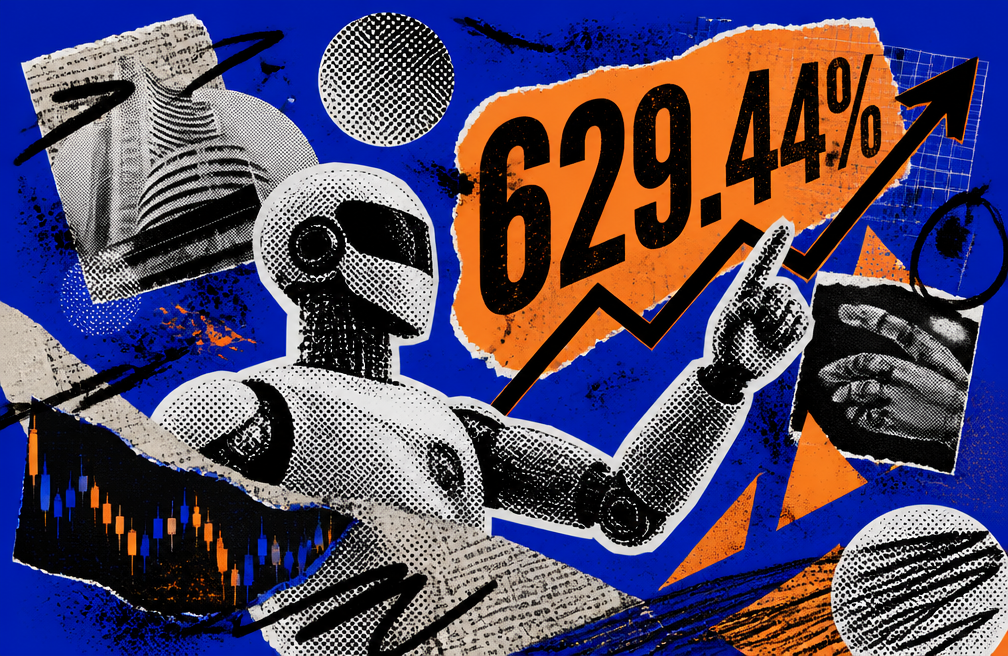
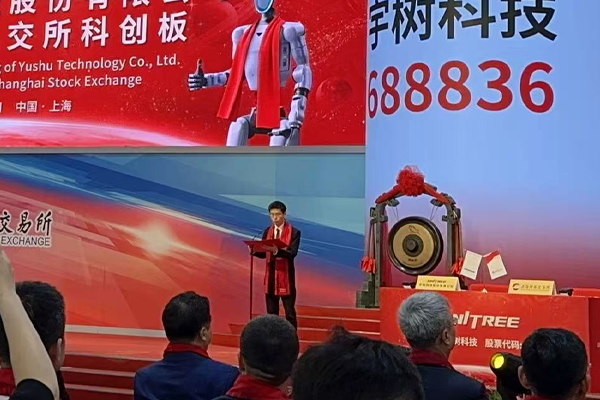
On August 19, Ubtech Robotics Technology (688836.SH) officially landed on the Shanghai Stock Exchange's Sci-Tech Innovation Board. The A-share "first humanoid robot stock" went from a title to reality, with an opening price of 1100 yuan, a 629.44% increase from the 150.80 yuan issue price, far exceeding the average first-day gain of 466.61% for Sci-Tech Innovation Board IPOs this year. Its market value once soared to 445 billion yuan. This year's A-share wealth creation feast, which took only 73 days to pass the review, had nearly 9.8 million subscription accounts, and an online lottery winning rate of only 0.018%, also saw a single 500-share winner's profit far exceeding the previous estimate to reach 475,000 yuan, roughly 6.3 times the initial investment.
After experiencing the overseas SpaceX's "largest IPO in human history" and the domestic storage rising star CMiC Technology's "leading domestic storage stock IPO," Ubtech Robotics Technology took the stage of capital with the title of "the only profitable humanoid robot manufacturer" and was highly sought after from the opening bell.
As of the time of writing, Ubtech Robotics Technology's stock price is around 892 yuan, with a market value of about 361 billion yuan, a turnover rate of 55.25%, and a trading volume exceeding 15.3 billion yuan. In the current rapid development of AI and hard technology, Ubtech Robotics Technology's listing itself is one of the epitomes of the capital market's main storyline.
Ubtech Robotics Technology's Value: Market Consensus is 350-450 Billion Yuan
After Ubtech Robotics Technology's IPO subscription ended, in response to the question of the "reasonable market value range of Ubtech Robotics," we had previously given various representative opinions in the article "How Much is the 'First Humanoid Robot Stock' Ubtech Robotics Really Worth?" Now it seems that the boldest estimate from Ubtech Robotics Technology's early investor and Dunhong Asset Partner Yu Wenchao is closest to the pricing of the capital market. He mentioned: "It is quite reasonable for the post-listing valuation to exceed 200 billion; I think it could exceed 400 billion in the short term. Compared with the valuations of similar overseas companies, this is not an exaggeration." Taking into account the high point of nearly 450 billion yuan after the opening and the current data of over 360 billion yuan, Ubtech Robotics Technology's reasonable range has risen from the previous 200-250 billion yuan to the current 350-450 billion yuan.
High Valuation, Low Float: Ubtech Robotics Technology Once Again Performs the SpaceX, CMiC-Style Surge Miracle
It is worth mentioning that the reason why Ubtech Robotics Technology's market value was able to surge to over 6 times the issue price lies not only in the market's high enthusiasm and optimistic expectations for humanoid robots but also in a situation similar to many projects in the crypto circle and historic IPO projects like SpaceX and CMiC, which belong to the exemplars of "low float, high valuation."
According to the announcement from the Shanghai Stock Exchange, Yushu Technology had previously disclosed that the issuance price for this round was 150.80 yuan per share, with a total post-issuance share capital of 404 million shares, of which 30.0877 million shares are unrestricted shares for the initial listing, accounting for 7.44% of the total share capital. The company's issuance price corresponds to a 2025 diluted static price-to-sales ratio of 35.89 times, higher than the average level of comparable companies.
This can also be glimpsed from previous data such as the retail investor subscription rate and the total number of subscription accounts: It is reported that Yushu Technology issued 40.4464 million shares this time, only accounting for 10% of the total post-issuance share capital. After the clawback mechanism was activated, a total of 9.707 million shares were finally issued online, with the number of effective subscription accounts reaching 978,460, and the final subscription rate was 0.0181%—this number simultaneously set records for the lowest subscription rate and the highest number of participating accounts for a Sci-Tech Innovation Board IPO. There were a total of 19,414 winning numbers, with a requirement of 7.54 million yuan for 500 shares for one winning number. Only 8,734 shares were forfeited online, with zero forfeited offline, indicating a strong willingness to pay.
On the other hand, the strategic placement to institutional investors and founder Wang Xingxing's high ownership stake also ensured a weaker selling pressure, preventing a stampede by retail investors on the first day of trading.
It is understood that a total of 9 investors, including Social Security Funds, DeepSeek, Tencent, CNPC Kunlun Capital, State Grid Corporation of China, and China Telecom Tianyi Capital, were allocated approximately 8.09 million shares, with a subscription amount of about 1.22 billion yuan; among them, DeepSeek was allocated 933,400 shares, amounting to 141 million yuan, with a lock-up period of 36 months, far beyond the usual 12-month lock-up for institutions. Both parties have signed a strategic cooperation memorandum of understanding and will jointly develop projects in the areas of general artificial intelligence, high-performance robots, and AI large models. The Social Security Fund was allocated the same amount across three portfolios, with a 12-month lock-up period. Tencent, CNPC, State Grid, and Tianyi Capital were each allocated around 900,000 shares, with amounts around 136 million yuan.
One of the most criticized or controversial points about Yushu Technology before its IPO was its incredibly high P/E ratio of 219 times.
However, if calculated based on the 2025 non-GAAP net profit, the corresponding P/E ratio would be 92.92 times; the corresponding 2025 diluted static price-to-sales ratio would be 35.89 times. Although still higher than the average level of comparable companies, it is much more reasonable compared to a multiple of "219." Now, considering that many comparable companies at home and abroad have yet to turn a profit, Yushu has already achieved a non-GAAP profit of 600 million yuan by 2025, and its 2025 humanoid robot shipments exceed 5,500 units, ranking first globally; the issuance price of 150.8 yuan has turned out to be a value opportunity.
Founder Wang Xing Tops Rich List: Crowned "Post-90s New Richest Person"
The sharp rise of Yushu Technology directly led to a substantial increase in the wealth of founder Wang Xing.
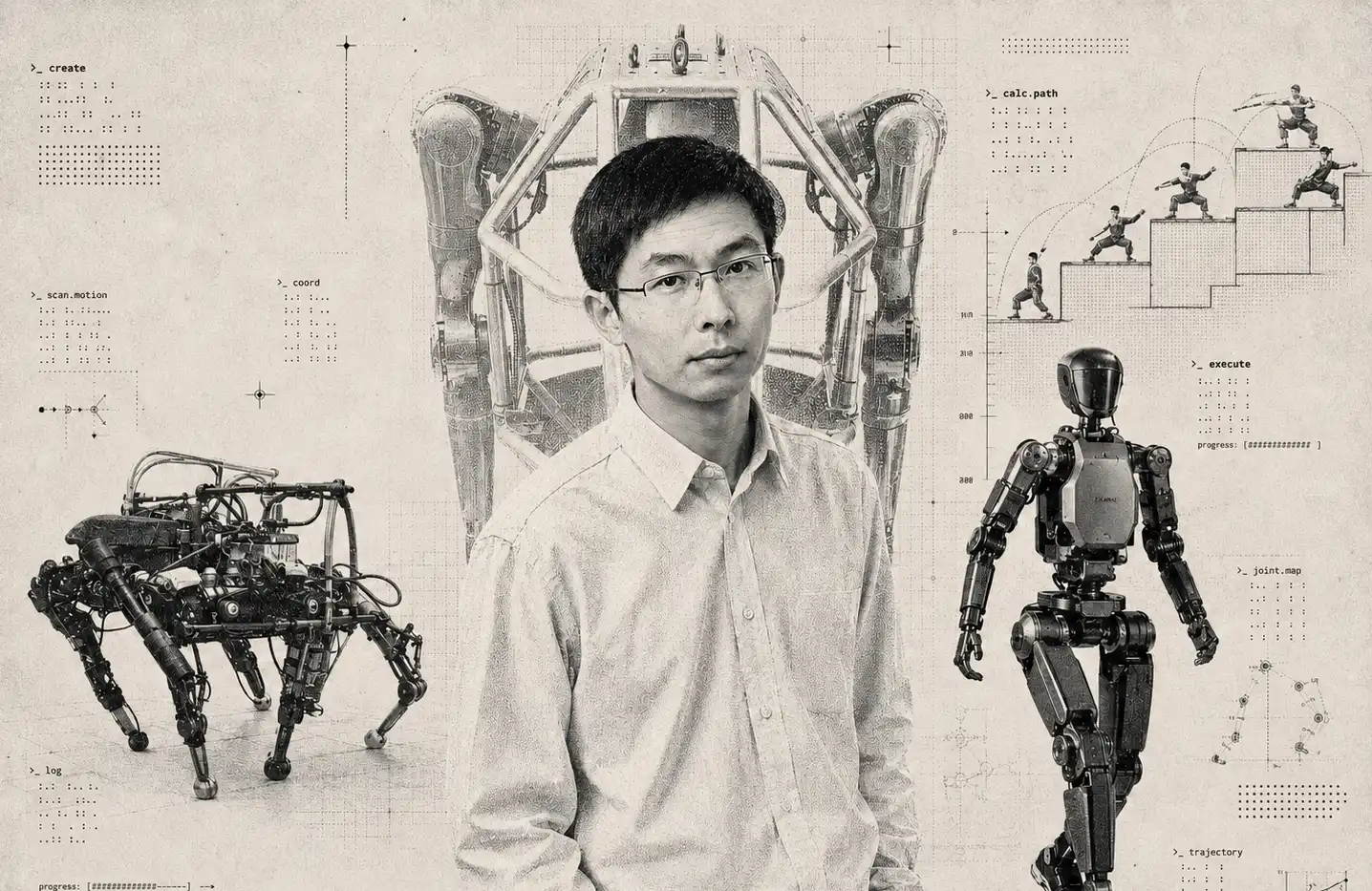
According to the prospectus, Wang Xing, Chairman, CEO, and CTO of Yushu Technology, directly holds 86.714964 million shares of the company, accounting for 21.4395% of the total share capital after the IPO. Additionally, he indirectly holds a 9.5367% stake in the company through the equity incentive platform Shanghai Yuyi before the stock issuance. Calculating it, Wang Xing directly and indirectly holds a total of approximately over 31% of Yushu Technology's shares, with a market value of over 110 billion yuan. With this move, he snatched the prestigious title of "Domestic Post-90s Richest Person."
Previously, the holder of this title was Liu Jingkang, the founder of Shadow Stone Innovation, who once held the title of New Richest Person Post-90s with a wealth of 20.2 billion yuan.
Of course, the successful listing of Yushu Technology and the surge in market value not only benefited Wang Xing alone but also many investment institutions and individuals behind him. At the employee level of Yushu Technology, Yang Zhiyu, responsible for the mechanical structure, Chen Li, responsible for the sales and service system, and Zhang Yangguang, responsible for algorithms and software, indirectly hold stakes in the company of 0.49%, 0.26%, and 0.15% respectively through Shanghai Yuyi. Based on a market value of 350 billion yuan, the value of the company's shares they hold reaches 1.715 billion yuan, 910 million yuan, and 525 million yuan respectively, ushering them into the "Billionaire Club" in sync with Wang Xing.
Yushu Technology's Listing Enrichment Feast: Meituan's Wang Xing, Xiaomi's Lei Jun, DeepSeek's Liang Wenfeng
Meituan: Over 33.3 Billion Floating Profit from New Shares; Holding Approximately 35.1236 Million Shares
As the largest external shareholder of Yushu Technology, the Meituan series of capital through Hanhai Information, Chengdu Longzhu, Galaxy Z, and other companies hold a total of approximately 35.1236 million shares, and the floating profit in this new share offering once exceeded 33.3 billion yuan.
Liang Wenfeng: Earned 1.1 Billion Floating Profit from New Shares of Yushu Technology
DeepSeek's founder Liang Wenfeng, through Deep Search, Matrix Quant, and Nine Chapters Asset, received a total allocation of about 1.1916 million shares through strategic placement and offline allotment. Based on the issuance price of 150.8 yuan and the highest opening price of 1100 yuan, Liang Wenfeng's floating profit from the new shares once exceeded 1.1 billion yuan. Based on the current 360 billion yuan market value, the holding value is about 1.06 billion yuan, still floating a profit of approximately 882 million yuan.
Lei Jun: Shunwei Capital Affiliate's Unrealized Gain Exceeds $15.2 Billion
An overseas investment entity affiliated with Lei Jun, the founder of Shunwei Capital, holds 16.106 million shares of XTree Technology, accounting for approximately 3.98% of the total issued share capital. It is the fifth largest shareholder of the company, and its stake at one point had an unrealized gain of over $15.2 billion.
It is worth mentioning that Shunwei Capital participated in XTree's Series A financing as early as 2021, with financing reaching tens of millions of US dollars. Earlier this year, Lei Jun expressed his gratitude for this investment, saying: "Thank you to Wang Xing for giving us the opportunity to invest in XTree five years ago."
In addition to the above institutions and individuals, XTree Technology's shareholder list also includes a number of prominent institutional and internet technology giants: Sequoia China holds a total of 7.11%, Matrix Partners holds 5.45%, Tencent, Alibaba, and ByteDance are also among the shareholders.
XTree's Ecological Positioning: Can It Become the "World's First Publicly Traded Humanoid Robot"?
For XTree Technology today, IPO listing is by no means the endpoint where they can stop and rest. A new challenge has emerged: how to grow from being the "first publicly traded humanoid robot in China" to the "world's first publicly traded humanoid robot"? With a current market value of about 360 billion yuan, XTree Technology's position in the global humanoid robot race has not yet been firmly established.
Overview of Overseas Competitors: Figure AI, Boston Dynamics, Optimus Closing In
Looking overseas, the company with the highest valuation currently is Figure AI, with a valuation of around $39 to 40 billion, approximately 280 billion yuan. Despite the company's monthly production of only about 150 units and its lack of listing;
Boston Dynamics, a well-known but turbulent company in the industry, has a valuation of only $3.4 billion, approximately 22.9 billion yuan; currently owned by Hyundai, it will begin commercial deliveries in 2026;
1X Technologies about $10 billion, Physical Intelligence about $5.6 billion, Apptronik about $5.5 billion, Agility Robotics about $2.1 to 2.5 billion (already listed through SPAC).
Optimus (Optimus Prime Robot) under Tesla does not have an independent valuation and is part of Tesla's overall market capitalization of about $1.33 trillion, with plans to start production by the end of 2026.
Domestic Comparable Companies: Robosen, Ubtech, RoboSense Temporarily Lag Behind
Among domestic comparable companies, Robosen Robotics, backdoor listed through Weigao New Materials, has a market value of approximately 68.3 billion RMB, Ubtech Robotics has a market value of approximately 42.7 billion HKD (about 36.7 billion RMB), and RoboSense Technology has a market value of approximately 10.9 billion HKD (about 9.36 billion RMB).
On the other hand, numerous AI robotics companies are still in line competing for the next IPO slot: on July 24, Robosen Robotics officially announced the start of its Hong Kong IPO process; market rumors suggest a target valuation of around $20 billion, with cornerstone investors targeting a valuation of $40 billion to $50 billion HKD; Yunshenchu, also one of the "Hangzhou Six Little Dragons," has already received approval for its STAR Market IPO; companies like Galaxbotics, Leyu Intelligence, WiseSquare, Self-Variable Robotics, Horizon Dynamics, All-In Robotics, and Stardust Intelligence are also making efforts in the field of humanoid robotics.
Furthermore, XinghaiTu, Songyan Dynamics, Xingdong Era, Fourier Intelligence, and ForceSpirit Robotics have also completed their shareholding reforms one after another—according to incomplete statistics, there are already over 50 robotics-related companies queuing up at the Hong Kong Stock Exchange alone.
However, behind the intensifying competition and narrowing opportunity window, the "market valuation versus actual delivery volume mismatch" is also another reality facing the robotics track: Figure AI's valuation was previously more than four times that of Yushu, but its annual delivery volume is much lower than Yushu's. After Yushu's IPO, this situation has somewhat improved, but the objective gap in valuations between domestic and international markets still exists. To grow into the world's leading humanoid robotics stock, Yushu Technology's market value must at least aim to exceed 500 billion RMB.
Market Value Estimation and Future Trends: Summary of Multiple Views
Regarding the future stock price trend of Yushu Technology, the market has three different logics.
The optimistic view believes that Yushu is a rare A-share pure-play humanoid robotics asset, already profitable with the highest global shipment volume, the strategic alliance with DeepSeek brings the imagination of AI + robotics, long-term funds such as social security and Tencent's endorsement, the scarcity premium may drive the market value to a short-term high of over 400 billion.
On the other hand, the cautious view points out that the 219x diluted P/E ratio already includes high growth expectations, a profit decline in the first quarter shows earnings fluctuations, over 70% of humanoid robot revenue still comes from research and education, industrial penetration is still shallow, the digestion path of the planned capacity of 190,000 units/year in the investment and construction base needs validation, U.S. FCC regulations pose uncertainties for new products going global, and the high valuation requires continued performance growth to absorb.
The neutral view is that after the initial high surge in the IPO, the stock enters a "performance verification period" of high-level volatility. Referring to the path of hard-tech new stocks such as SMIC, the stock price gradually returns to being driven by fundamentals. The future trend depends on the progress of industrial scene landing and the commercial breakthrough of a large-scale model.
Addressing the above issues and valuation trends, during the previous IPO roadshow, Wang Xingxing also responded to some questions. In addition to the "remote control toy controversy" and "P/E ratio controversy" mentioned earlier, Wang Xingxing also provided explanations on valuation, comparison with overseas competitors, U.S. FCC regulation, and commercialization plan:
Regarding Valuation: Wang Xingxing pointed out that most listed companies and companies preparing for IPO in the industry are not yet profitable. Yushu has already achieved strong profitability. The valuation of this issuance is the result of market-based pricing, which is in line with the company's operating conditions and industry outlook. He also reminded investors that he hopes everyone buys the stock because they believe in the company's value, not for speculation. The company will disclose detailed information in a timely manner through legal channels.
Regarding Comparative Advantages: Wang Xingxing stated that currently, domestic and foreign companies are in the testing and landing stage of large-scale model and scenario applications. Yushu's advantages are concentrated in five dimensions: engineering mass production, product iteration speed, product matrix, motion control, and open-source ecology, ultimately forming a platform effect of "open ecology + product combination + continuous delivery," not relying on a single customer or channel.
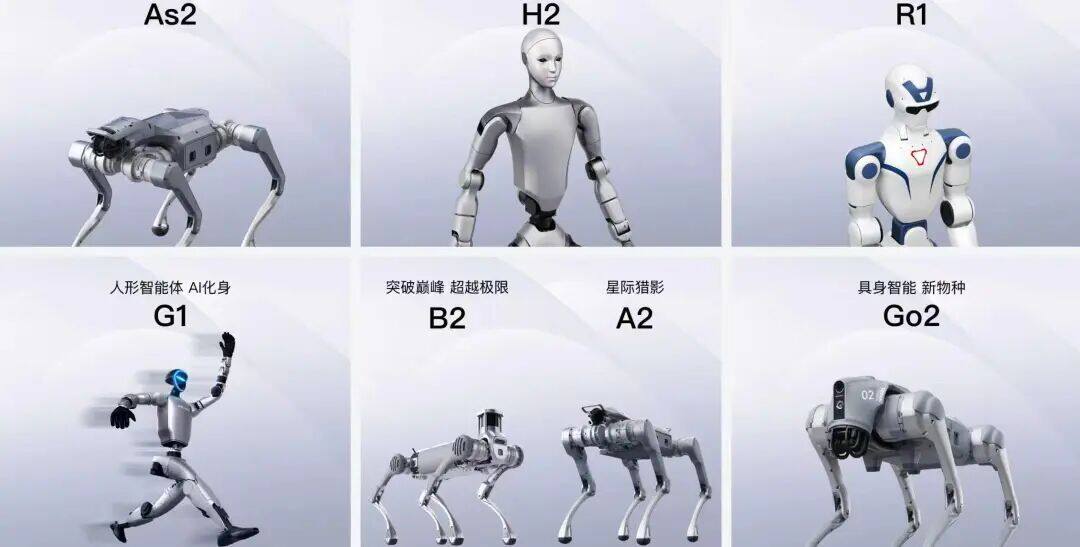
Regarding U.S. FCC Regulation: Wang Xingxing referred to the prospectus, stating that the six main products (humanoid G1, H2, R1, quadruped Go2, B2, A2) being sold by the company have all obtained FCC certification. Policy changes do not affect the continued sales of these models in the U.S., and the new regulations only restrict the certification of new models. In 2025, Yushu's overseas revenue accounts for 43.65%, with the U.S. market share decreasing from 18.39% in 2023 to 13.30%. An internal review by the U.S. Automation Association shows that nearly 90% of the latest robotics research papers from U.S. universities use Yushu's products, indicating high customer stickiness.
Regarding Commercialization Pace: Wang Xingxing believes that humanoid robots will mainly be used for research, application development, education, cultural performances, and intelligent services in the short to medium term, and will only enter factories and homes in the long term. In 2025, the company's humanoid robot shipments exceeded 5,500 units, making it the global leader. However, over 70% of the revenue comes from research and education, industrial applications account for only about 9%, and commercialization is still in its early stages. In the first quarter of 2026, the non-GAAP net profit fell by 52.55% year-on-year, mainly due to increased R&D investment and the promotion of the Spring Festival Gala brand. The company stated that it will balance investment and revenue, but did not provide a timeline for profit recovery.
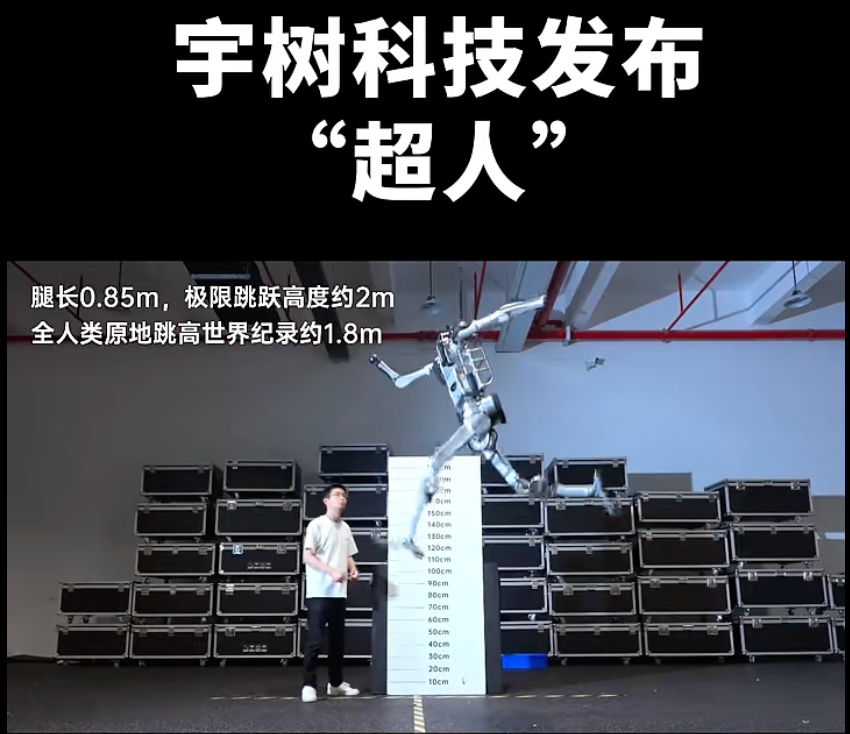
Additionally, it is worth mentioning that on the eve of its IPO, Yushu Technology also launched a humanoid robot named "Superman," with movement capabilities surpassing human limits, which received a good market response.
Exploring A-share Investment Themes: AI, Semiconductor, Embodied Intelligence, and Hard Tech
The market environment in which Yushu Technology is listed is at a stage where the A-share technology themes are advancing profoundly.
In August 2026, funds accelerated their flow from traditional sectors to future tech tracks, with the following core themes:
· AI Computing Power Hardware + Domestic Semiconductor Substitution is the strongest growth theme throughout the year. Funds have shifted from purely thematic AI applications to the hardware side with real orders and profit realization. The specific directions include high-speed optical modules, AI servers, liquid cooling systems, PCBs, and other computing infrastructure, as well as domestic substitution in semiconductor equipment and materials. As August enters the mid-year performance verification period, targets with real performance support are more favored.
· Humanoid Robots / Embodied Intelligence are currently the most event-driven theme. August can be called the "Humanoid Robot Super Catalyst Month" — with Yushu Technology's IPO, the 2026 World Robotics Conference, the second World Humanoid Robot Olympics, and the intensive release of new industry products. Ministry of Industry and Information Technology data shows that the number of domestic whole-machine models has exceeded 400, accounting for over half of the global total. Quadruped robots hold a global market share of nearly 70%, with the domestication rate of core components exceeding 70%. As the "first stock," Yushu's IPO pricing will serve as a valuation anchor for the entire sector.
· "Six-Grid Network" — Computing Power Network + New Grid is a policy-driven strong track for the entire year. The construction of a national integrated computing power network continues to advance, with domestic intelligent computing power reaching 2185 EFLOPS by the end of June. In the past two years, 70 national-level computing power corridors have been established, and the new grid and computing power network are in synergy, with ultra-high voltage, smart grids, and energy storage benefiting in sync.
In addition, low-altitude economy (eVTOL airworthiness certification advancement), commercial spaceflight (reusable rocket breakthroughs, satellite internet networking), quantum technology (SOEs entering to empower), and CPO silicon photonics (AI bandwidth demand driving optical interconnect upgrades) are also actively evolving. The overall investment logic can be summarized as "performance is king, technology is the core." During the mid-year report season, speculative hype is discarded, and funds prioritize hard tech targets with real orders, national team support, and continued holdings by northbound funds.
Compared to overseas capital markets that prefer "hype, storytelling, and vision," domestic capital markets like A-shares are increasingly pragmatic, focusing on tangible revenue, profit, growth rates, and market share.
In this regard, the development path of Yushu Technology still faces considerable challenges. However, fortunately, the IPO has set a good precedent.
Conventional Risk Warning:
1. Valuation Adjustment Risk: The IPO price-earnings ratio is at a high level. If the performance growth is below expectations, there is a valuation correction pressure.
2. Commercialization Below Expectations Risk: There is uncertainty in the progress of commercializing humanoid robots in industrial and household scenarios, and the digestion path of the raised funds' capacity of 190,000 units/year is yet to be validated.
3. Geopolitical Policy Risk: U.S. FCC regulations may affect the overseas certification and sales of subsequent new models.
4. Increased Competition Risk: Overseas manufacturers like Tesla and Figure AI, as well as domestic companies like Zhiyuan and UBTech, continue to increase their investment. Product pricing and market share may come under pressure.
5. Technology Iteration Risk: The embodied large model technology roadmap has not yet converged, with high R&D investment and a long commercialization cycle.
6. Short-term Stock Price Volatility Risk: The first five trading days after listing are not subject to the conventional 20% price limit, and market sentiment may cause significant stock price fluctuations.
Original Article Link
Welcome to join the official BlockBeats community:
Telegram Subscription Group: https://t.me/theblockbeats
Telegram Discussion Group: https://t.me/BlockBeats_App
Official Twitter Account: https://twitter.com/BlockBeatsAsia