The Biggest Bullish Catalyst for the Crypto Market: Is Compliant Token Offering Making a Comeback?

The public token sale financing has received a new legal path in the United States.
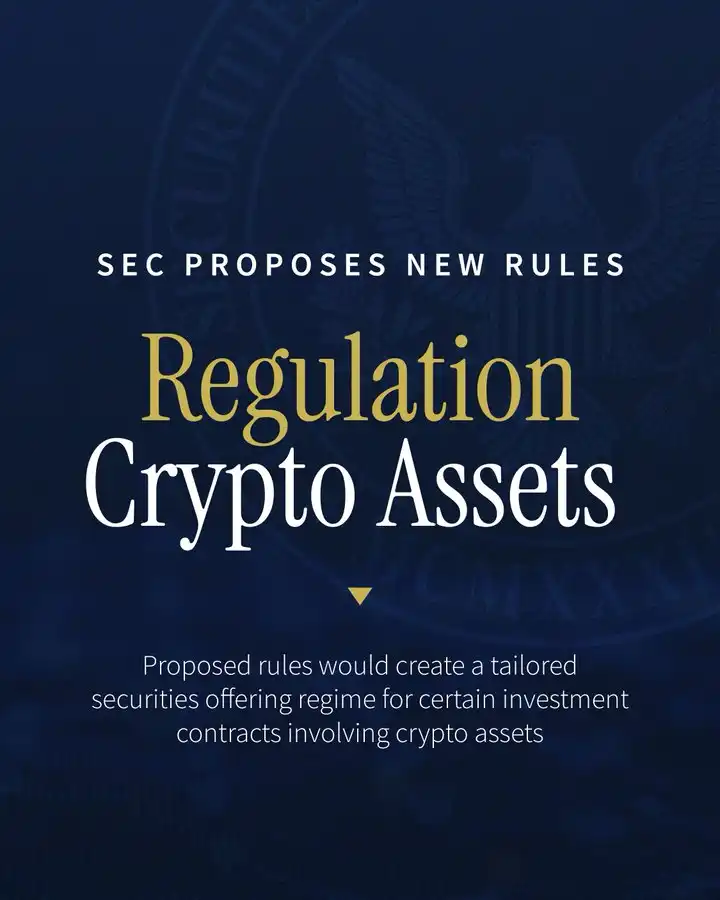
On August 18, the U.S. Securities and Exchange Commission released a draft of "Regulation Crypto Assets." According to this draft, early-stage projects can raise $5 million within a maximum of four years, larger projects can raise $20 million or $75 million within 12 months. Projects can sell tokens to investors without completing a full securities registration and raise funds for network development.
It sounds like ICOs are back.
But the SEC has proposed more than just three funding tiers. It aims to establish a set of rules from token issuance to "graduation": projects can conduct a token sale financing initially but must clearly state how they plan to use the funds; if key promised work by the team is not completed, the token will continue to carry regulatory obligations for investors; once the commitments are fulfilled, the token can then exit this relationship.
"Commitment" is the core of the entire draft proposal, where developers must keep working until the token "graduates" before they can "dev sell."
Rules
The draft proposal provides two options for project teams.
The first option is suitable for early-stage teams. Suppose a project needs $3 million for development. In the past, common options were to seek venture capital, restrict purchasers and launch the token issuance outside the U.S., or incur high costs to register securities. The new draft allows them to use the "Startup Exemption," raising up to $5 million within a maximum of four years and filing with the SEC at the start and end of the fundraising.
The second option is for larger funding needs. The first tier can raise a maximum of $20 million every 12 months, and the second tier up to $75 million. Compared to the $5 million Startup Exemption, this route can be used repeatedly, but the rules are stricter.
Projects cannot start a token sale with just a whitepaper. Both exemptions require the team to disclose how the network will be governed, how the product will be developed, what security risks the code has, the company's financial situation, and who is managing the project. The larger-scale fundraising tiers also require financial statements and ongoing updates, with the $75 million tier requiring an audit.
The SEC has not removed the existing guardrails. Issuers and insiders with a history of serious violations cannot use these exemptions, and anti-fraud and anti-manipulation responsibilities remain in effect. If a project simultaneously uses other securities exemptions, they must also comply with the existing rules on fundraising aggregation.
Defining "Graduation"
The most convoluted and crucial part of the entire proposal is to separate the token from the investment relationship built around it.
A project sells tokens to raise funds for building the network. What purchasers often acquire at this point is not just a functional digital asset. They are also anticipating the team to develop the product, attract users, increase token demand, and profit from these efforts. This relationship, where the purchasers rely on the team's future work, is what the SEC refers to as the "investment terms."
The token itself may be just a digital asset, but how the project sells it and what promises are made to purchasers envelop it in an investment layer. What the SEC truly regulates is this relationship between the issuer and the purchaser.
The proposal outlines an exit path for the token. Only after the issuer completes or permanently ceases all key operational work, refrains from making new related commitments, and submits public certification and analysis to the SEC, can the token enter a "safe harbor."
Thus, the concept of the token "graduating" is introduced.
When a project sells tokens for funding, commits to development in the market, and upon completion of the project and key tasks, purchasers no longer rely on the team to fulfill previous commitments, the token can "graduate," and the project can exit.
The New Rule Does Not Focus on Whether the Token Is a Security
Previously, the market often determined when a token is no longer bound by securities laws by questioning whether the network is "sufficiently decentralized." As long as the foundation, development company, or founding team continues to work, many consider the token to still rely on a central entity.
The SEC's proposal changes the question: What commitments did the project rely on to sell the token initially, and have these commitments now been fulfilled?
For example, Project A told investors when selling tokens that the team would develop the mainnet, launch transfer and staking features, and then hand the network over to decentralized validators to operate. Later, the mainnet launched, the features became functional, but validators are still controlled by the team. Since "making the network decentralized" was also a commitment made during funding, the token cannot "graduate" at this point.
Project B, on the other hand, only committed to creating a functional network that operates normally without including "the team must disappear" or "the network must achieve a certain level of decentralization" in the funding pledge. When the network goes live, the product is usable, and the team continues to patch bugs, update versions, fund developers, and promote the product, this routine maintenance is not part of the "investment terms." The product that investors initially awaited has been delivered, and the token's value now derives more from actual usage, network operation, and market dynamics.
The SEC is concerned with whether the market is still waiting for the team to fulfill the crucial commitments made when selling the tokens. The continued presence of the core team is no longer the universal yardstick for whether a token can graduate.
The core team can stay, but unfinished commitments cannot.
Say Less, Do Less
This way of judging whether a project has "fulfilled its commitments" will greatly impact the project's marketing and development strategy.
Corporate securities lawyer Gabriel Shapiro has suggested that the SEC has linked a token's ability to escape investment contract terms with the project team's public commitments. In the future, teams will have an incentive to say less and commit less. The fewer commitments a project makes, the less work it needs to demonstrate completion of before "graduating."
As a result, the roadmap is no longer just marketing material. If a project commits to mainnet launch, revenue growth, achieving decentralization, or building a certain feature, all future endeavors will need to answer the same question: Are these tasks completed? The more embellished the team's story during fundraising, the harder it will be to exit after the TGE.
This situation also presents a new set of contradictions. Buyers need enough information to judge whether a project is worth investing in, but project teams have an incentive to reduce commitments to enter the "safe harbor" sooner. With too little disclosure, investors cannot assess the risk; with too many commitments, the project will struggle to graduate.
Airdrop New Paradigm
This draft will also impact the design of airdrops and reward programs.
The first scenario is a retrospective airdrop. The project did not promise coin issuance in advance but merely rewarded early users afterward. Recipients did not pay money for this airdrop, provide services, or engage in transactions or tasks after the announcement. Such airdrops of non-securities crypto assets can fall within the SEC's previously outlined scope.
The second scenario is a predictive rewards program. The project informs users in advance that trading, purchasing a specific asset, buying services, or completing tasks will result in future token rewards. Participants pay money, provide services, or take actions, making such distributions more likely to be considered investment contracts and counted toward the $5 million ICO exemption limit.
Therefore, some have linked the draft to Hyperliquid's long-awaited Season 3 airdrop confirmation. If a project only rewards past behavior post facto, the legal relationships are much simpler; if a project announces point rules in advance and then uses future tokens to boost trading volume, the reward program will incur additional regulatory burdens.
Existing information does not prove that Hyperliquid was aware in advance of the SEC's policy direction; this association remains speculative in the market. More importantly, the SEC itself is also seeking opinions: How should the value of airdropped tokens be calculated, is there a need to add specific rules to the startup exemption, and currently, there are no final answers.
The current Regulation of Crypto Assets is still a draft. Three sitting SEC commissioners voted in favor, but the rules are awaiting public comment.
The 'fund my cool project' ICO model is a thing of the past. In the future, how much a project can raise will depend on the exemption limit. Whether a token can 'graduate' depends on what the team has told the market and what they have actually accomplished.
Welcome to join the official BlockBeats community:
Telegram Subscription Group: https://t.me/theblockbeats
Telegram Discussion Group: https://t.me/BlockBeats_App
Official Twitter Account: https://twitter.com/BlockBeatsAsia