Changxin Opening: Country Garden's Blockbuster Sale of $50 Billion, Signaling the End of an Era
Original Title: "Changxin's Opening: Country Garden's Quick Sale of 50 Billion, and a Generational Turnover"
Original Author: Undetermined, Translated by: Rebalance
At 9:30 am on July 27, 2026, Changxin Technology debuted on the Sci-Tech Innovation Board.
The issue price was 8.66 yuan, the opening price was 49.50 yuan, a 471.59% increase. Based on a post-issue of 66.881 billion shares, the total market value was 3.31 trillion yuan, surpassing Industrial and Commercial Bank of China, becoming the A-share company with the highest market value. By noon that day, the stock price reached 54.65 yuan, with a total market value approaching 3.66 trillion yuan; the closing transaction volume was 141.187 billion yuan, setting a new record for the A-share single-stock daily turnover.
Reportedly, there were 9.4288 million households participating in online subscription, with a 0.4714% allotment rate. With an allotment of 500 shares, selling at the opening, one could earn 20,000 yuan. Changxin raised 57.919 billion yuan in the initial public offering, making it the largest IPO on the Sci-Tech Innovation Board to date.
After the opening bell, people quickly calculated the net worth of the old shareholders. How much is the holding value of the Hefei State-owned Assets, Alibaba, and the employee stock ownership platform.
But one name was missing from the list, Country Garden.
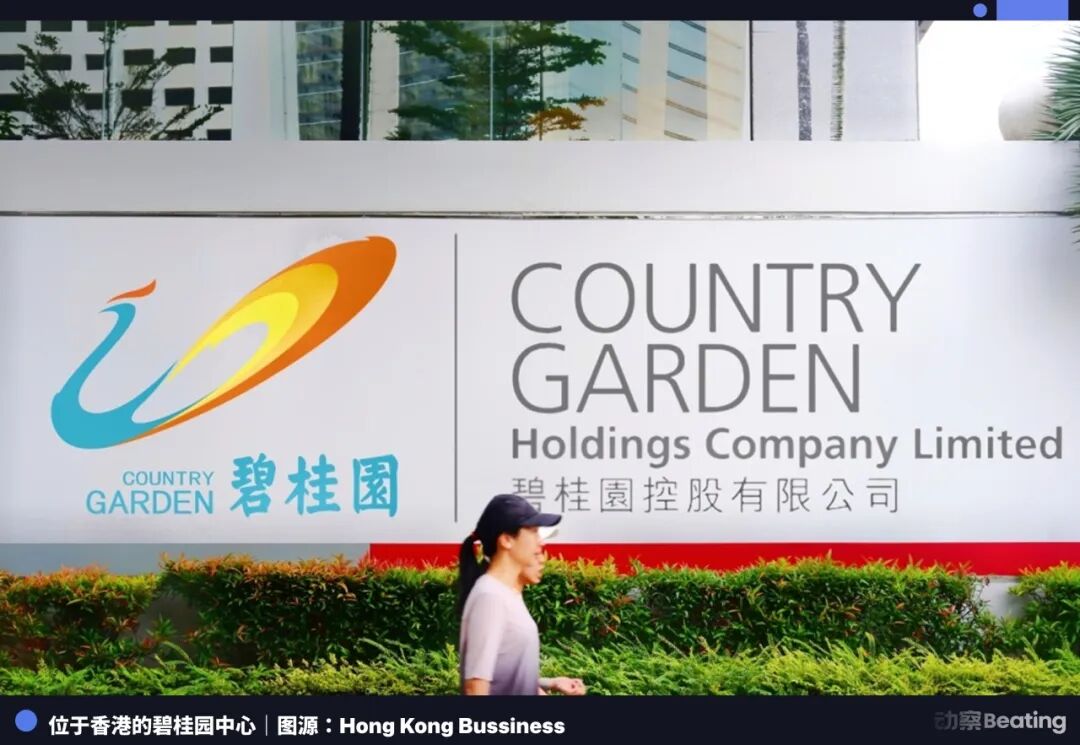
In 2021, it put out 2 billion yuan to buy about 2.24% of Changxin's equity, which was later diluted through several rounds of capital increases, reducing the stake to 1.56%. In December 2024, Country Garden sold all of this equity to Hefei State-owned Assets for 20 billion yuan. On the day of Changxin's debut, the value of Country Garden's previously held shares was approximately 50 billion yuan.
Five years ago, it made a difficult judgment. Nineteen months ago, it had to sell off this judgment.
Country Garden saw the industry correctly but misjudged how long it could wait.
Why Would a Real Estate Developer Delve into Deep Tech Research?
Country Garden Venture Capital was established in 2019.
A year before its establishment, Country Garden proposed to transform into a "comprehensive high-tech enterprise." At that time, it was still one of the most cash-rich private enterprises in China. The real estate business could provide a large amount of internal funds, and the group's brand could help this new investment institution access projects that smaller organizations could not. At that time, it was not short of money, but it lacked a path other than real estate.
The first high-tech investment made by Country Garden Venture Capital that exited was in rocket technology.
In 2019, the team spent nearly six months interviewing domestic commercial aerospace companies to understand the bottlenecks in the industry. Satellite launch demand existed for remote sensing, communication, and navigation, with the bottleneck being in launch capacity. Eventually, they chose to invest in Blue Arrow Aerospace, which was positioning itself as a medium-to-large liquid-fueled rocket company at the time. In December, they exclusively invested $500 million in Series C funding. Subsequently, they led two more rounds, increasing Blue Arrow's valuation from around $3 billion to over $10 billion.
This event exemplifies how Country Garden learned to invest.
It brought the method of building houses into venture capital. Real estate development is inherently a business highly dependent on the supply chain, and Country Garden is most familiar with how to break down a long chain and identify the most critical nodes.
In investments, this method was given two names. The core company on the industrial chain is called the "Chain Master," while the bottleneck is called the "Chain Blocker." Before entering a new industry, the team must conduct a complete industry study. Without industry research, the project cannot proceed to investment decision. The first semiconductor investment was in SMIC, belonging to a "Chain Master" company; moving towards manufacturing, ChangXin is the type of unavoidable "Chain Blocker" company.
Country Garden's fund allocation is also unique. Most RMB funds have a lifespan and must exit after seven or ten years. Country Garden Venture Capital mainly uses the group's own funds, which the managing partner, Niu Ruolei, referred to as "perpetual capital" at the time, theoretically with no time limit. It adopts a dumbbell strategy, investing in very early-stage technology projects on one end and investing in super unicorns close to IPO with over ¥1 billion in a single deal on the other end, rarely participating in the highly crowded growth phase in between.
By early 2022, Country Garden Venture Capital had independently completed investments in over 90 projects, producing 26 unicorns and 10 listed companies; 52% of the investment amount was allocated to advanced manufacturing, semiconductors, and areas such as carbon neutrality in hard technology. The list includes ChangXin, Blue Arrow, SMIC, Wallgate Technology, BYD Semiconductor, Sage Microelectronics, Honeycomb Energy, and Quest Mobile.
Why the ¥20 Billion Investment in ChangXin
The DRAM produced by ChangXin is the memory used in computers, phones, and servers during operation. While the product may seem small, it requires maintaining a huge factory behind the scenes.
A wafer fab continuously needs to purchase equipment, modify processes, maintain engineers, and endure sharp price fluctuations in storage. By the end of 2024, ChangXin had accumulated losses of approximately ¥38.52 billion. Before going public, it already had three 12-inch wafer fabs, nearly 20,000 employees, including over 6,000 R&D personnel.
As of 2025, Samsung, SK Hynix, and Micron collectively still hold over 90% of the global DRAM market. In semiconductors, many race tracks can be started by a smart small team, but not in DRAM. Design capability, manufacturing processes, yield rates, equipment, and funding—all are essential to scale.
ChangXin was established in 2016. On September 20, 2019, it announced the start of its self-manufacturing project, with the debut of 8Gb DDR4, proving that a mainland Chinese company had finally crossed the threshold of DRAM production scale and answered the question of "can it be done".
Therefore, when Country Garden entered the scene in 2021, ChangXin had already reduced its early-stage technical risks, with the most expensive tasks such as production expansion, iteration, and market competition still ahead. This position happened to fall at the end of Country Garden's "dumbbell" investment.
On July 5, 2021, Country Garden Venture Capital in Haikou City and other shareholders signed a Series B funding agreement with ChangXin. The unified price for Series B was 2.219 yuan per yuan of registered capital, with an initial funding cap of 26 billion yuan. Country Garden contributed 2 billion yuan, subscribed approximately 9.013 billion of registered capital, and held a post-investment stake of 2.24%.
In the same round, there were also participants such as the National Large Fund Phase II, Anhui Provincial Investment, National Reform Fund, CMBI, Xiaomi, Midea, and other institutions and enterprises; by December of that year, the funding cap was raised to 36 billion yuan.
From Spreadtrum's chip design, to ChangXin's wafer manufacturing, and then to SMI's packaging, Country Garden Venture Capital completed the semiconductor supply chain piece by piece. Investing in ChangXin was because they recognized that manufacturing is an indispensable "linkage barrier" in China's semiconductor industry.
China is a major global DRAM demand market, and at that time, mainland China's large-scale supply was almost starting from scratch. As long as ChangXin survived, the expansion itself would allow it to grow rapidly.
This judgment was later proven to be quite accurate. By the fourth quarter of 2025, ChangXin's global market share by revenue had risen to 7.67%, making it first in China and fourth globally; in the first quarter of 2026, revenue reached 50.8 billion yuan, with a net profit attributable to the parent of 24.762 billion yuan. It took many years for them to transform "able to produce" into "able to sell," and they caught the wave of AI servers driving memory demand to a new high.
The Sudden Deadline of "Everlasting Capital"
2021 was the year of ChangXin's Series B financing and also the peak of China's real estate sales.
That year, a total of 1.794 billion square meters of commercial housing were sold nationwide, with sales reaching 18.19 trillion yuan. By 2025, the sales area of newly constructed commercial housing had plummeted to only 0.881 billion square meters, almost halved in four years. By the end of 2021, the national population was 1.4126 billion, and the following year marked the beginning of negative growth.
In the ebbing tide, Country Garden took the brunt. In 2021, 68% of its sales came from third and fourth-tier cities. These cities had once provided the broadest market for Country Garden, but they also made it more difficult for the company to pivot during times of shrinking demand.
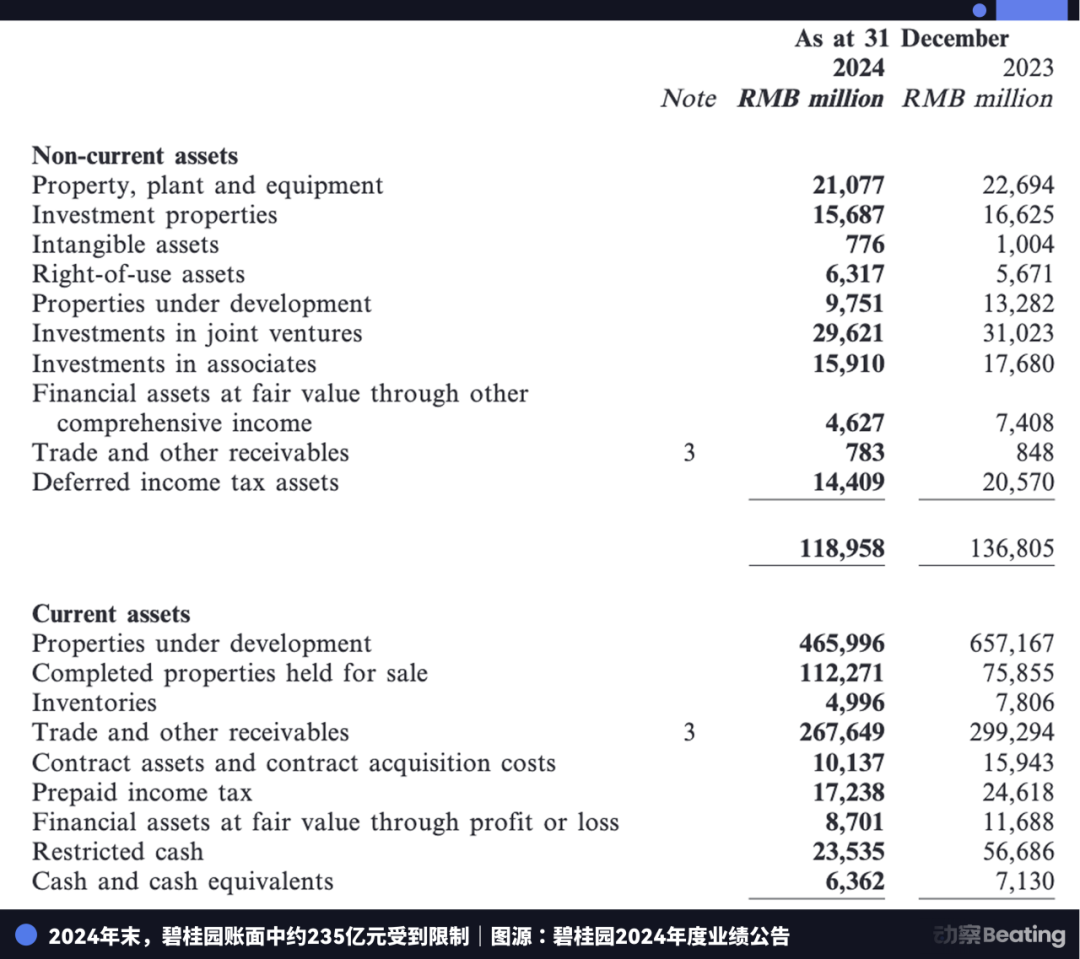
At its peak, Country Garden's equity sales amounted to ¥558 billion, with receipts of ¥502.2 billion and available cash of ¥181.3 billion. Three years later, equity sales dropped to ¥47.2 billion, resulting in a net loss attributable to equity holders of ¥32.8 billion and total borrowings of ¥253.5 billion. Total cash at the end of the year was ¥29.9 billion, with ¥23.5 billion restricted, and only ¥6.362 billion actually classified as cash and cash equivalents.
An amount of ¥2 billion was transferred to Country Garden's books in 2021, earmarked for a long-term investment in the industry that can be held for up to ten years. By 2024, this amount would represent nearly one-third of the year-end free cash flow.
The prepayments received at the sales offices do not actually belong to the developer. Behind each prepayment is a set of unsold houses, with the money eventually being used for steel, concrete, elevators, and keys.
From 2022 to November 2025, Country Garden is scheduled to deliver approximately 1.8 million housing units. To facilitate these deliveries, the company has been selling equity, hotels, large assets, and even company cars since 2022, raising over ¥65 billion. The ¥2 billion from Cheung Hing is part of this effort.
On May 31, 2024, Bloomberg reported that Country Garden's venture capital arm was seeking buyers for its Cheung Hing equity, with an asking price of around ¥2 billion. The deal was still under review at the time and might not necessarily materialize. Country Garden later responded that the group was evaluating its asset portfolio and potential disposal opportunities to optimize its asset-liability structure.
In June, Cheung Hing completed a new round of funding, with 12 investors subscribing for ¥10.8 billion at ¥2.61 per share. At this price, Country Garden's stake is now valued at over ¥2.3 billion.
By December 27, Seller Hui Bi Wu No. 5, Buyer Hefei Jianchang, and Cheung Hing Technology signed a share transfer agreement, with the final price remaining at ¥2 billion, approximately ¥2.22 per share. Hefei Jianchang, managed directly by Hefei Construction Investment Holding Group, holds 87.45%. The ultimate beneficiary is the Hefei State-owned Assets Supervision and Administration Commission. Taking over Country Garden's stake is the state-owned capital of Cheung Hing's hometown.
This is no longer a situation where a calm investment institution is choosing the best exit strategy. Both buyer and seller know that the seller needs cash, and the most dignity Country Garden can uphold is to recover the principal in full.
The payment arrangement of the agreement also reflects this urgency. Cheung Hing must provide the newly stamped shareholder register on the tenth working day, and Hefei Jianchang settles the payment in one lump sum upon receipt of the register and payment notice. Hefei Investment also provides joint guarantees for 99.985% of the price, up to a maximum of ¥1.9997 billion. If the transaction is not completed within 180 days, the complying party can terminate the agreement. Other existing shareholders are relinquishing their preemptive rights either explicitly or implicitly.
The announcement from Country Garden specified that the intended use of this ¥2 billion was for general working capital, mainly for projects such as property completion. Changxin's equity has transformed into on-site construction funds.
Looking at the equity changes during the reporting period disclosed in Changxin's IPO prospectus, Country Garden was the only early external investor who completely sold off their holdings before the company went public, without waiting for the listing. Some individuals conducted small-scale transfers, while others moved their shares to affiliated platforms, but only Country Garden truly exited its position.
Twenty-Four City
At the end of 1958, a large number of cadres, workers, and equipment from Shenyang's Factory 111 moved to the southwest. Some sold their houses and furniture, took trains and ships with their families, and traveled thousands of kilometers to Chengdu. In January 1959, Factory 420 was officially established. It later became a crucial aerospace engine factory in the southwest, with factory buildings, dormitories, schools, and cafeterias connected together, and generations of people's lives revolved around the machinery.
Half a century later, the industrial layout in the eastern suburbs of Chengdu was adjusted. The old site of Factory 420 was handed over for real estate development, and the former factory area turned into the residential complex "Twenty-Four City."
Upon hearing that a state-owned factory with tens of thousands of workers was to be transformed into residential housing within a year, Jia Zhangke felt that "there was too much that could be said about this matter" and subsequently filmed "Twenty-Four City." In the movie, individuals sat in front of the old factory building, discussing the production line, collective dormitories, and the vanished way of life.
Country Garden rang the bell in Hong Kong, China on April 20, 2007. The issue price was HK$5.38, and the closing price on the first day of trading was HK$7.27. The public offering was oversubscribed by 255.7 times, freezing approximately HK$330 billion. Yang Huiyan, who was not yet thirty years old, held 58.19% of the shares, and real estate created a new Chinese richest person that morning.
Factory 420 transformed into Twenty-Four City, and Country Garden emerged as a new star in the capital market, all transpiring in the same era. At that time, there was a strong sense of direction in the city, with the old factory symbolizing the past, and commercial housing representing the future; the land beneath the production line was cleared, built into residential buildings, and its value was rediscovered.
Country Garden grew up in this direction. It connected land, population mobility, and pre-sale funds into a massive machine, expanding from Shunde to over two hundred cities. By 2019, it attempted to channel the privately accumulated capital from real estate into rockets, chips, and new energy.
The money earned from the old industry should have been allocated to nurture the immature new industry. It's just that the old cycle retreated too quickly, and the new cycle arrived too slowly.
On July 27, 2026, the bell rang once again. This time, a wafer manufacturing company stood on the stage.
Original Article Link
Welcome to join the official BlockBeats community:
Telegram Subscription Group: https://t.me/theblockbeats
Telegram Discussion Group: https://t.me/BlockBeats_App
Official Twitter Account: https://twitter.com/BlockBeatsAsia

 Related Articles