ByteDance Employee's $30 Million Riches Path, Can a Crypto Account Solve It All?
Recently, Byte employee Leto Bao's resignation after making $30 million from stock trading caused a sensation on social media. The frenzy around AI-related stocks goes without saying, and many people's initial reaction was that employees at big companies have more initial capital, making it naturally easier for them to make money.
However, the reality is different. According to the blogger's own account, he initially accumulated his first round of capital from tens of thousands of dollars to millions of dollars through options. He then leveraged the stock market rally to achieve a new surge in wealth. Whether or not the details are entirely accurate, this story points to the same reality: in the US stock market, what truly changes the trajectory of funds is often a combination of the industry's main trend, core assets, and high-resilience tools.
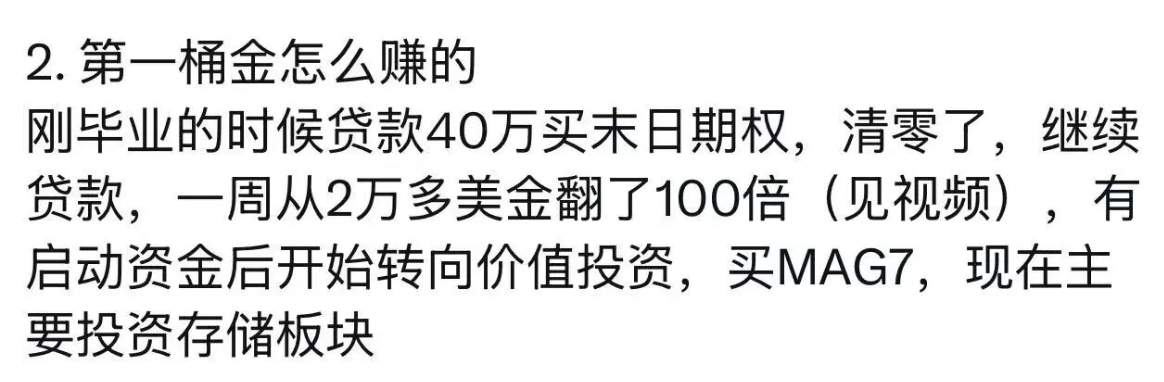
Leto Bao Little Red Book
In the past, this method could only be seen as a game for traditional US stock traders. Users needed a brokerage account, US dollar funds, familiarity with US stock trading rules, and exposure to derivative instruments such as options. However, with Bitget's announcement of launching the first stock options feature in the crypto industry, the above-mentioned full path can now be completed in one go on Bitget.
Why Options Are the Amplifier of US Stock Wealth Effect
If stocks determine the direction, options determine the elasticity, which is the wealth effect.
In the US stock market, options have always been one of the most efficient tools to amplify fund efficiency. If a user is bullish on a stock, they can directly buy the stock or buy a call option. Buying the actual stock requires paying the full stock price, while buying an option only requires paying the premium, providing exposure to price changes of the same underlying asset.
For stocks like Nvidia and Microsoft or high-priced and high-volatility stocks like Micron and SanDisk, the attractiveness of options is very direct. Users do not need to put up a large amount of capital to participate in price fluctuations. If the directional judgment is correct, the timing is right, and the volatility cooperates, the elasticity of returns from options is much higher than that of stocks, and even higher than the contract trading known to the crypto community. This is also why options frequently appear in many US stock wealth explosion stories.
Once the price of the underlying asset exceeds the strike price, the intrinsic value of the option begins to increase, and the price rises rapidly.
Of course, the other side of options is equally apparent, with both returns and risks being extremely compressed. Especially zero-day options (0DTE), which are options bought and expired on the same day, low-priced, highly volatile, and fast-decaying, have become one of the most popular day trading tools for US stock retail investors. It can turn a few hundred dollars into thousands or tens of thousands of dollars within a few hours, or it can reduce the premium to zero within a few hours.
Love it or hate it, options have become one of the most important forms of capital expression in the US stock market. The total annual trading volume of US options has exceeded 15.2 billion contracts, with a daily average volume of over 61 million contracts. In the daily trading volume of S&P 500 index options, over half comes from 0DTE options. This small-bet-big-win, rapid-trading method naturally suits the high-risk, high-volatility-loving crypto industry.
Bitget Brings US Stock Options to Crypto Trading Platform
According to Bitget, Bitget has initially launched over 540 stock options, covering core indices such as the S&P 500, Nasdaq 100, Dow Jones 30, and mainstream ETFs. More stocks and ETF options will be gradually released in the future.
While US stock spot trading addresses the issue of buying assets, options address the issue of expressing elasticity. Users can buy stocks like NVIDIA, Apple, Tesla, and also express their short-term views on these stocks' price movements, earnings volatility, and market sentiment changes through options. For crypto users accustomed to high-volatility assets, options are not unfamiliar. Like perpetual contracts, they compress direction, time, and leverage into one trading tool. The difference is that behind stock options are a group of mature underlying assets in the US stock market.
Moreover, there are many ways to play options. For example, value investing guru Duan Yongping is accustomed to using options for investment, heavily building positions in Meituan through selling put options, and as mentioned earlier, Leto Bao is also a professional user of options.
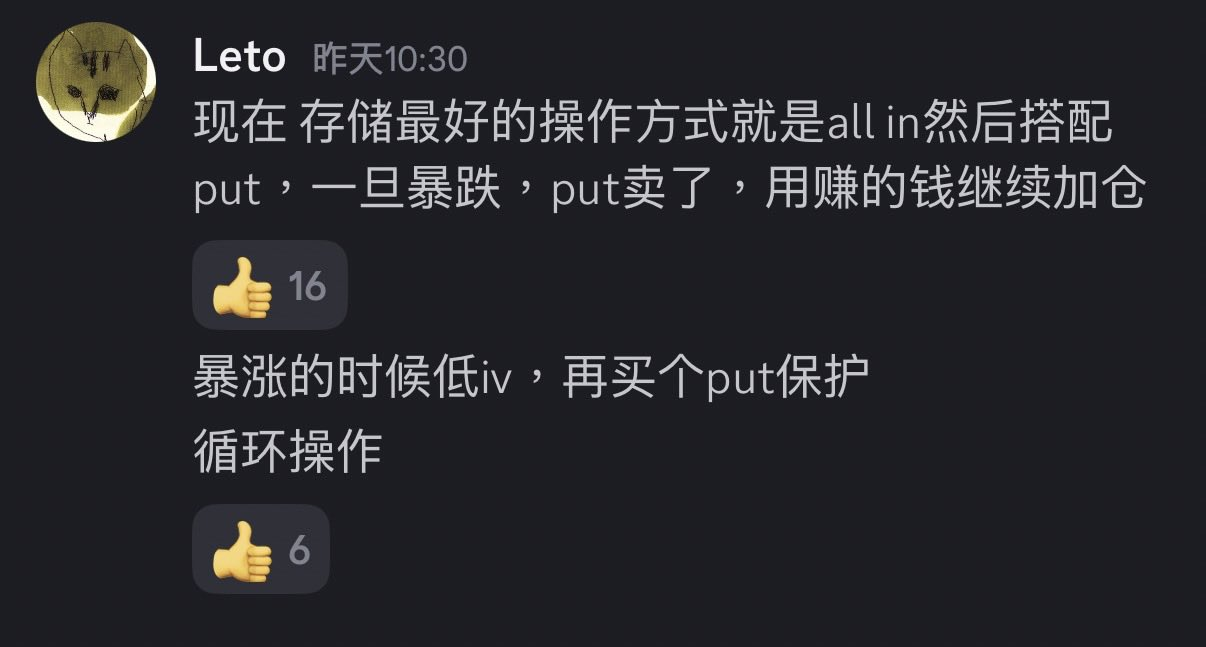
Leto Bao: A Classic Play in Roller-Coaster Markets
However, Bitget's initial options rules did not directly max out complexity.
The trading hours for options trading are from 9:30 to 16:00 Eastern Time, only supporting cash trading and not margin buying of options. The margin rate for Long calls and Long puts is 100%, meaning that buying options requires full use of the premium and does not have additional leverage. The settlement period is T+1, consistent with US stock trading.
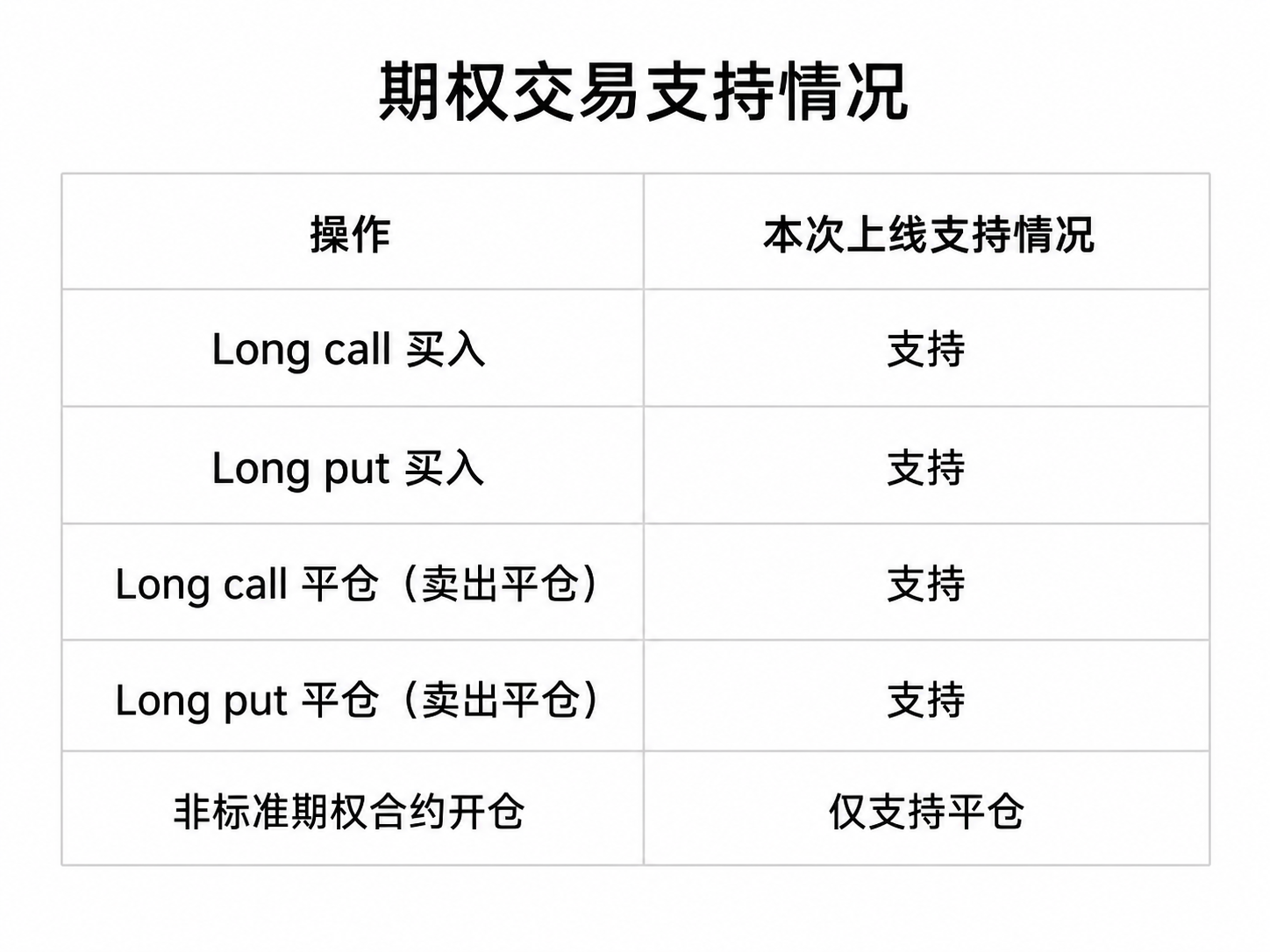
Moreover, the product supports order profit and loss estimation, displaying maximum profit and loss forecasts, as well as supporting order modification, cancellation, and order history queries. For crypto users encountering US stock options for the first time, these functions are crucial. Because for options trading, whether it's bullish or bearish is no different from spot trading, but the specific risk boundaries differ significantly.
This set of rules is essentially aimed at reducing the probability of misuse when users first enter the options market. Bitget first introduced essential capabilities such as buying to open a call and buying to open a put, allowing users to express their directional views with a premium, while limiting the maximum loss to the premium amount.
Bitget's Expansion into US Stocks is Not a One-Time Launch
Over the past period, Bitget has made continuous efforts around US stocks and RWAs: launched the Ondo US stock token → trading volume accounts for about 90% of the entire network → Pre-IPO access → launched US stock rToken, connecting the exchange ecosystem → direct access to US stocks, and now to US stock options—Bitget is building a complete US stock product line.
The reasons can be said to be obvious. What crypto users really need is to more efficiently capture global risk asset opportunities. In the past, funds on trading platforms mainly flowed between BTC, ETH, and altcoins. However, as US tech stocks became the focus of global capital, users naturally also want to trade in the same account system for NVIDIA, Micron, Apple, Microsoft, and the S&P 500 ETF.
US stocks represent the deepest global risk asset pool. AI, semiconductors, cloud computing, software, consumer tech—almost all global funds cannot avoid US stocks. The crypto market has high volatility and high capital efficiency, but the asset quality is not stable. US stocks, on the other hand, have high asset quality and deep liquidity, but the traditional trading process is not very friendly to crypto users.
Bitget aims to bridge this gap.
Starting from tokenized stocks, users can access US stock exposure in their crypto accounts; through Pre-IPOs, users can access pre-listing opportunities; through direct access to US stocks, users can get closer to the real and secure stock market; through US stock options, users gain more flexible trading tools.
Looking back at this series of expansions, Bitget's goal has become very clear, moving the main trading layers of the US stock market into crypto accounts: spot exposure, pre-listing opportunities, real liquidity, and options tools.
rToken is the Foundation of Bitget's US Stock Product Line
Within Bitget's US stock product line, the core product is rToken.
Many people see tokenized stocks and easily interpret them as the synthetic assets most familiar in the crypto world, representing unbacked counterparty trading. However, Bitget's positioning of rToken is entirely different. rToken is backed 1:1 by real US stock shares, regulated by the laws of the State of New York, with the shares held at a licensed US broker-dealer and custody and brokerage infrastructure provided by regulated partner Alpaca Securities. Alpaca is already registered with FINRA and protected by SIPC.
This means that rToken is not merely a synthetic exposure but an RWA product backed by real underlying stocks.
The biggest difference between it and previous stock tokens lies in the source of liquidity. Many RWA stock tokens rely on on-chain liquidity and secondary market trading, and their prices may need additional mechanisms to track the underlying stocks. Once on-chain liquidity is insufficient, the price may deviate from the actual U.S. stock market.
During U.S. stock trading hours, including regular trading, pre-market, after-hours, and overnight sessions, rToken spot orders are directly routed through brokers to the Nasdaq and NYSE order books. After the orders are executed in the U.S. stock market, the trade results are reflected back in Bitget's spot order records.
In simple terms, rToken accesses native U.S. stock market liquidity through partners, allowing its latest price, spread, and order book to be completely consistent with the underlying stock market, while other issuers of U.S. stock tokens still rely on market makers to provide liquidity. In theory, Nasdaq naturally has the best overall market liquidity, but how big is this difference?
Empirical data shows that taking SanDisk (SNDK) as an example, looking at the bid-ask spread in the same time period, the difference between rToken and bStock is not significant, but in terms of order book depth and 24-hour trading volume, rToken has a clear advantage, leading by 260x and 1000x, respectively. This means that for small trades (within a few hundred dollars), the experience and cost difference between the two are small; however, for large trades (thousands or even tens of thousands of dollars), bStock will incur significant slippage costs, while rToken's capacity is significantly better.
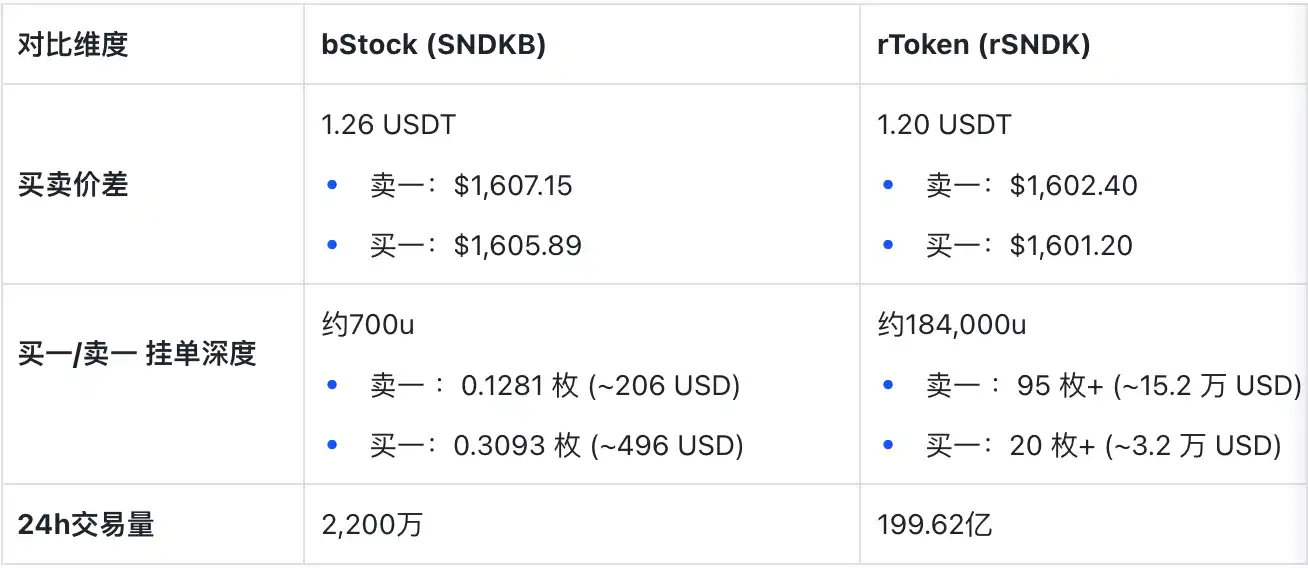
This is also why rToken is the foundation of Bitget's U.S. stock product line. With rToken, Bitget can integrate U.S. stock exposure, trading liquidity, account funding efficiency, and subsequent derivative tools.
Three Key Advantages of rToken
The new paradigm brought by Bitget's rToken can be summarized in three aspects: native U.S. stock liquidity, ultimate funding efficiency, and higher compliance standards.
First is liquidity.
If you choose a large global stock market, how can you truly leverage it without using its liquidity? rToken supports 24/5 access to native U.S. stock market liquidity. During U.S. stock trading hours, rToken's price and liquidity are synchronized with the underlying stock market. Orders are directly routed to U.S. trading platforms, reducing price deviations or anchoring risks.
However, the main disadvantage of tokenized stocks like Ondo lies here. Under the rToken's direct connection to the US stock market, liquidity is on par with traditional brokers. Users' orders face the vast US stock market, while tokenized stocks mainly attract on-chain users and market makers in the crypto industry, leading not only to liquidity shortages and significant slippage but also to potential cascading events such as margin calls due to liquidity issues.
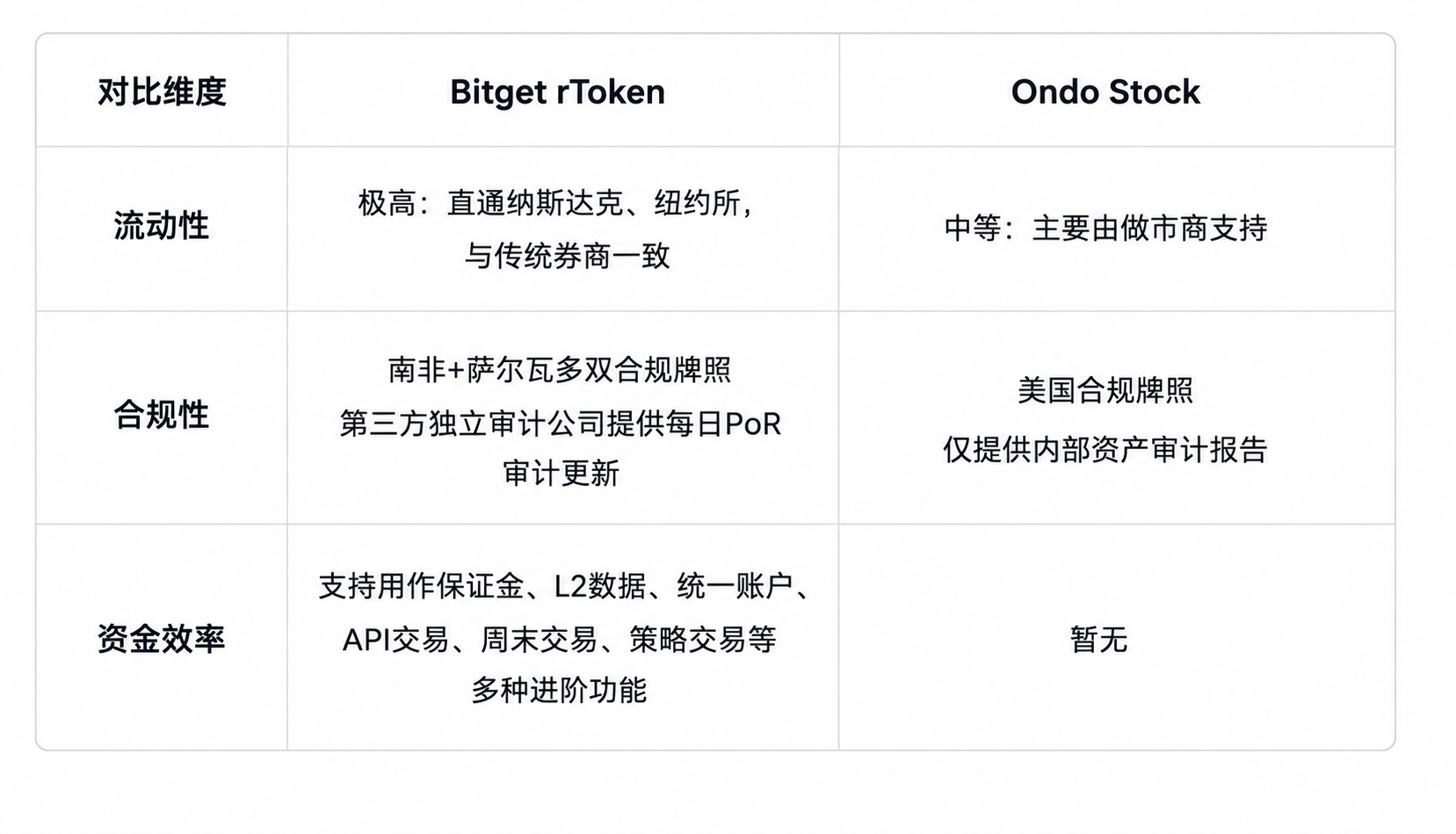
Comparison between Bitget rToken and Ondo Tokenized Stocks
For some popular stocks, rToken also supports 24/7 trading. This means that during the US market's closed hours, including weekends and holidays, users can still trade rTokens related to certain popular stocks. Bitget will provide in-house liquidity during these periods to support continuous price discovery.
This is crucial for crypto users. The crypto market does not have weekends, and news does not wait for the US stock market to open. Updates on Capex, AI orders, chip developments, earnings forecasts, macro data, and social media rumors can all occur outside US trading hours. If users have to wait until the next trading day to react, they may miss out on timely pricing. The 24/7 trading capability of rToken is designed to fill this gap.
Next is capital efficiency.
After rTokens are sold, funds can be immediately reinvested without waiting for T+1 settlement. rTokens can also be transferred, withdrawn, allocated between sub-accounts, or used in different margin models like other crypto assets. Within a unified trading account, the same rToken holdings can be used across spot, derivatives, and lending.
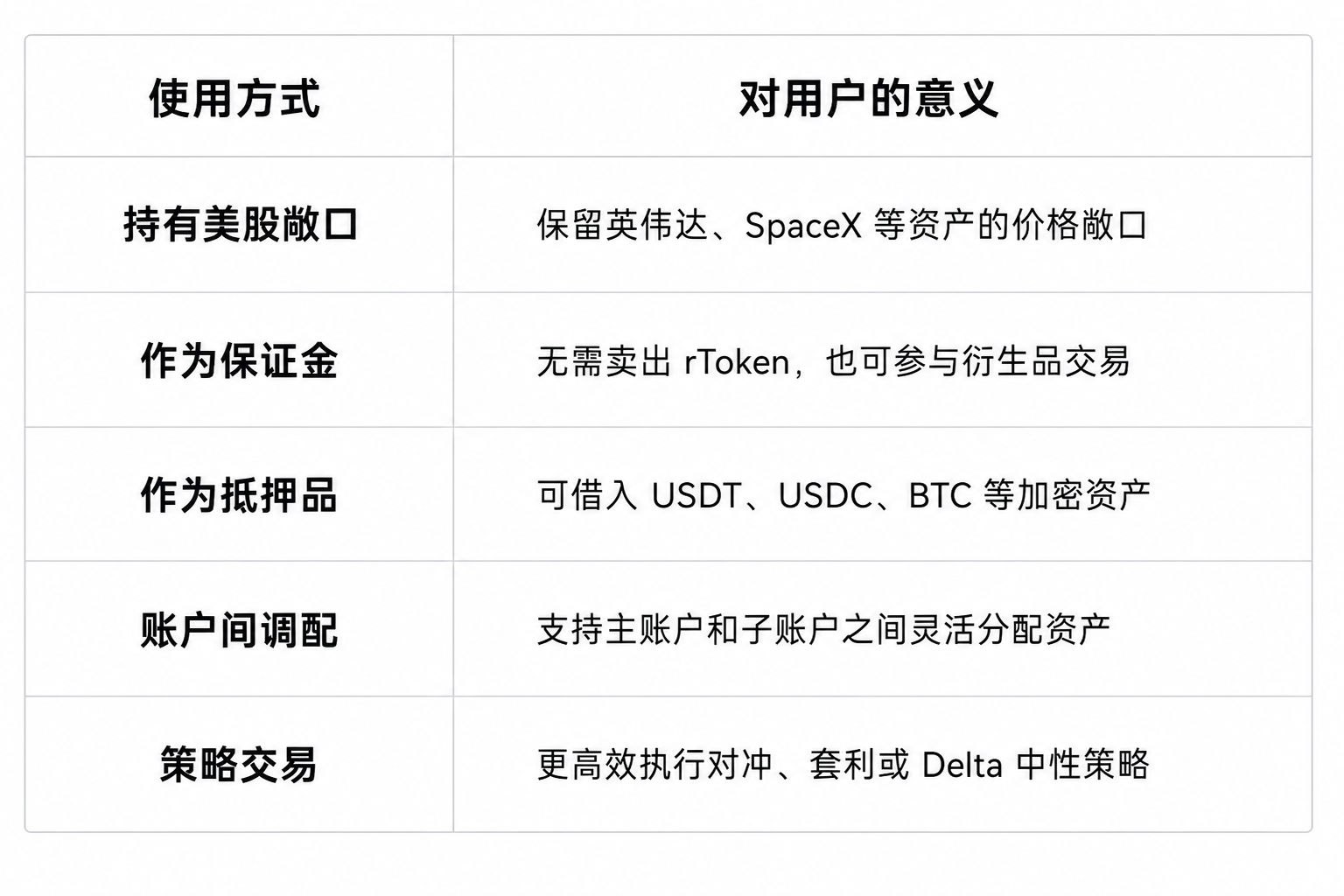
This makes rToken a callable collateral asset. Professional users can use rTokens as collateral for futures trading while maintaining exposure to US stocks or borrow assets like USDT, USDC, BTC, etc., without selling the underlying holdings. Currently, this feature is available for around 20 rTokens, including companies like NVIDIA and SpaceX.
This aspect also sets Bitget apart from most RWA stock products. It doesn't just offer "buyable stock tokens" but integrates rTokens into its trading ecosystem, allowing US stock assets to continue participating in margin trading, borrowing, hedging, and multi-asset strategies. For professional users, US stock exposure is no longer just about portfolio allocation but can also serve as the foundational asset for improving capital efficiency.
Finally, there is compliance and transparency.
Reality, launched by Bitget, is a compliant RWA issuance protocol behind the rToken. The issued rToken is strictly pegged 1:1 to the underlying US stocks, with the assets custodied by Alpaca, a US securities broker-dealer registered with FINRA and protected by SIPC. In collaboration with the US auditing firm The Network Firm, Reality is one of the few RWA products that provides audited Proof of Reserves (PoR) data daily.
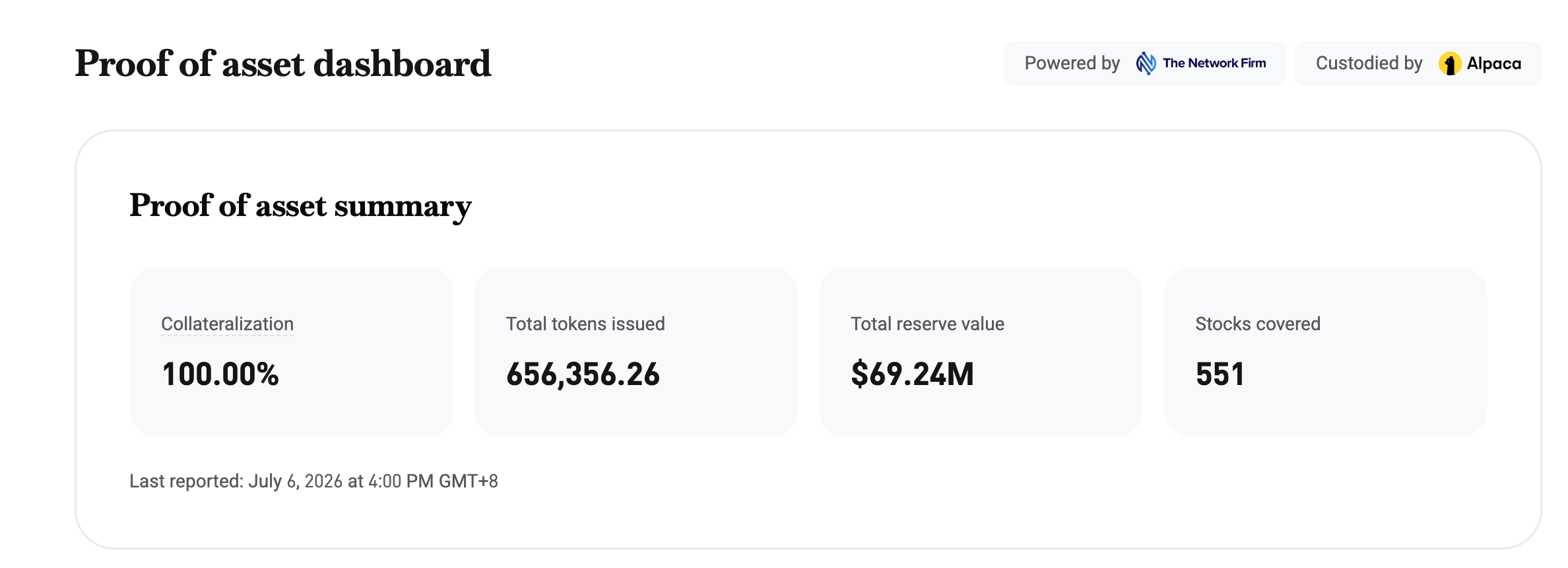
Reality RWA Asset Data
As it involves the tokenization of real stocks, corporate actions such as dividends, stock splits, reverse stock splits, and buybacks will also be handled according to traditional US stock market practices. If the underlying stock pays a dividend, eligible rToken holders will automatically receive the dividend in USDT after applicable US withholding taxes are deducted. In the event of a stock split or reverse stock split, the rToken balance and price will adjust accordingly, maintaining the total holding value. This approach allows rTokens to offer a more complete stock-like experience, rather than just a price symbol.
Overall, the significance of rTokens lies not only in simply buying and selling US stocks but also in attempting to combine the stock-level trading experience with the flexibility and transparency of crypto assets.
When the Path of US Stock Wealth Enters the Crypto Account
The discussion sparked by the departure of a Byte employee with $30 million can be attributed to the exaggerated nature of the digital wealth and has also made more people reconsider the wealth path in the AI-era US stock market: initially using options to gain high elasticity, then using industry mainstays and core stocks to accommodate larger funding scales.
In the past, this path was mainly dominated by traditional US stock traders. Now, Bitget is attempting to integrate it into crypto accounts.
Of course, Bitget's full-chain US stock journey is not without its challenges. First, there is intense competition in the industry. Due to the overall sluggishness of the crypto market, stocks have become a fiercely contested area, with industry giant Binance also launching tokenized stocks (bStocks) shortly after Bitget introduced rToken, opting for the same service provider, Alpaca. Secondly, crypto users are not yet familiar with and do not fully trust the stock services offered by platforms; users require extended periods of education, and even the platforms themselves are navigating uncharted waters, necessitating a gradual adjustment between the platform and users. Additionally, due to the low conversion cost between stablecoins and fiat currency, traditional brokerages hold a stronger appeal for high-net-worth individuals.
However, Bitget's forward-looking strategy and deep involvement in U.S. stock trading have allowed it to maintain a competitive edge. rToken provides exposure to U.S. stocks and a stock-level trading experience, Pre-IPO offers opportunities before companies go public, U.S. stock direct connection brings it close to the real market, and options provide a more flexible risk management tool. When combined, this means that a cryptocurrency trading platform is no longer just a place for cryptocurrency asset trading; it could also become a new gateway connecting global risk assets. This also implies that the platform's next-phase challenge may no longer be just liquidity, technical capabilities, and U.S. stock access channels, but rather how to gain the trust of traditional brokerage users in terms of product experience, asset transparency, and long-term stability, and further reach a broader range of investors.
Welcome to join the official BlockBeats community:
Telegram Subscription Group: https://t.me/theblockbeats
Telegram Discussion Group: https://t.me/BlockBeats_App
Official Twitter Account: https://twitter.com/BlockBeatsAsia