SemiAnalysis Hypes Meta: Third-Largest Model, Only Behind OpenAI and Anthropic
TL;DR
· SemiAnalysis is betting that Meta may surpass Google in the next 6 months, becoming the strongest contender after OpenAI and Anthropic.
· This assessment is based on three factors: the $14.3 billion Scale AI deal, RL data production, and multi-gigawatt compute expansion.
· Muse Spark 1.1 has not yet caught up to cutting-edge models. Whether Meta can overtake Google will depend on the performance of the next-generation models.
In a recent report, SemiAnalysis made a bold claim: Meta's Superintelligence Lab is not currently the winner in cutting-edge models. However, if talent, reinforcement learning data, and compute expansion deliver as expected, there is a chance in the next 6 months that Meta could surpass Google and become the most competitive follower after OpenAI and Anthropic.
This is not to say that Meta has already caught up. Meta released Muse Spark in April, and as of July 9, according to Axios, Muse Spark 1.1 has opened its API to developers at a price of $1.25 per million input tokens and $4.25 per output token. Axios reports that this is not the "leap forward" model Meta was expecting, as a larger model under the codename Watermelon is still in training.
What SemiAnalysis is betting on is something else: after the setback of Llama 4, Zuckerberg is now restructuring the AI organization more aggressively, channeling money, talent, internal engineering resources, and data center capacity into the Superintelligence Lab. The core dispute in the report lies in whether Google can still hold its position as the third pole in AI.
The current model is not yet strong; the report is betting on a 6-month catching-up speed
After the debut of Muse Spark in Meta's Superintelligence Lab, there has not been a replication of the open-source leadership seen during the Llama 3 and Llama 3.1 eras. According to SemiAnalysis's tests and assessments, Muse Spark and its subsequent versions still struggle to be considered cutting-edge in most benchmark tests and general intelligence scenarios.
This is also the key aspect where this report needs the most caveat. Muse Spark 1.1 is roughly equivalent to Opus 4.6 or GLM 5.2, and details such as the temporary non-migration of internal tokens. These are based on the author's testing and model assessment and are not part of Meta's official stance. At least from publicly available information, Meta has not yet presented a model that can directly challenge OpenAI and Anthropic.
However, SemiAnalysis focuses on the slope. Following the failure of Llama 4, the Meta Superintelligence team completed a large-scale adjustment, and the short-term organizational chaos is being digested. The report concludes that if the next round of model training and reinforcement learning data production starts to reflect on products, Meta's position may be higher than what the current rankings show.
$14.3 Billion Scale AI Deal Focuses on the Rarest Minds in Cutting-Edge Models
Meta's most eye-catching move is the $14.3 billion investment in Scale AI. Several media outlets such as Fortune, Forbes, and Reuters previously reported that through this deal, Meta brought in Scale AI founder Alexandr Wang and had him join or lead teams related to superintelligence.
In the competition for cutting-edge models, this deal is not just about acquiring a data annotation company but more like a high-intensity talent poaching. Scale's security, assessment, and alignment team SEAL, seen by SemiAnalysis as a crucial source for Meta to enhance evaluation, alignment, and post-training capabilities.
Reuters also mentioned that Meta offered hundreds of millions in salary packages to some AI engineers. This figure indicates that Meta has elevated superintelligence to a company-wide priority rather than just regular AI product iterations. For a large tech company, the real challenge is not allocating the budget but aligning research, product, infrastructure, and management around a single goal.
SemiAnalysis quoted recent remarks by Alexandr Wang in a podcast, stating that true cutting-edge labs often first believe that superintelligence is near, and then commercial decisions follow that belief. The report interprets Meta's recent actions as moving closer to OpenAI, Anthropic-style AGI priority.
3,000 Engineers Shift to RL, Meta Aims to Turn Internal Work into Training Data
Beyond talent, reinforcement learning tasks and real-world work data are the second frontier.
Today, improving model capabilities relies not only on pre-training corpora. More crucial is whether the model can perform tasks in a setting close to real-world work: understanding context, utilizing tools, conducting tests, fixing errors, and iterating based on results. Tasks like codebase repairs, product analysis, internal tool invocation are closer to the real-world difficulty of white-collar work than ordinary exam questions.
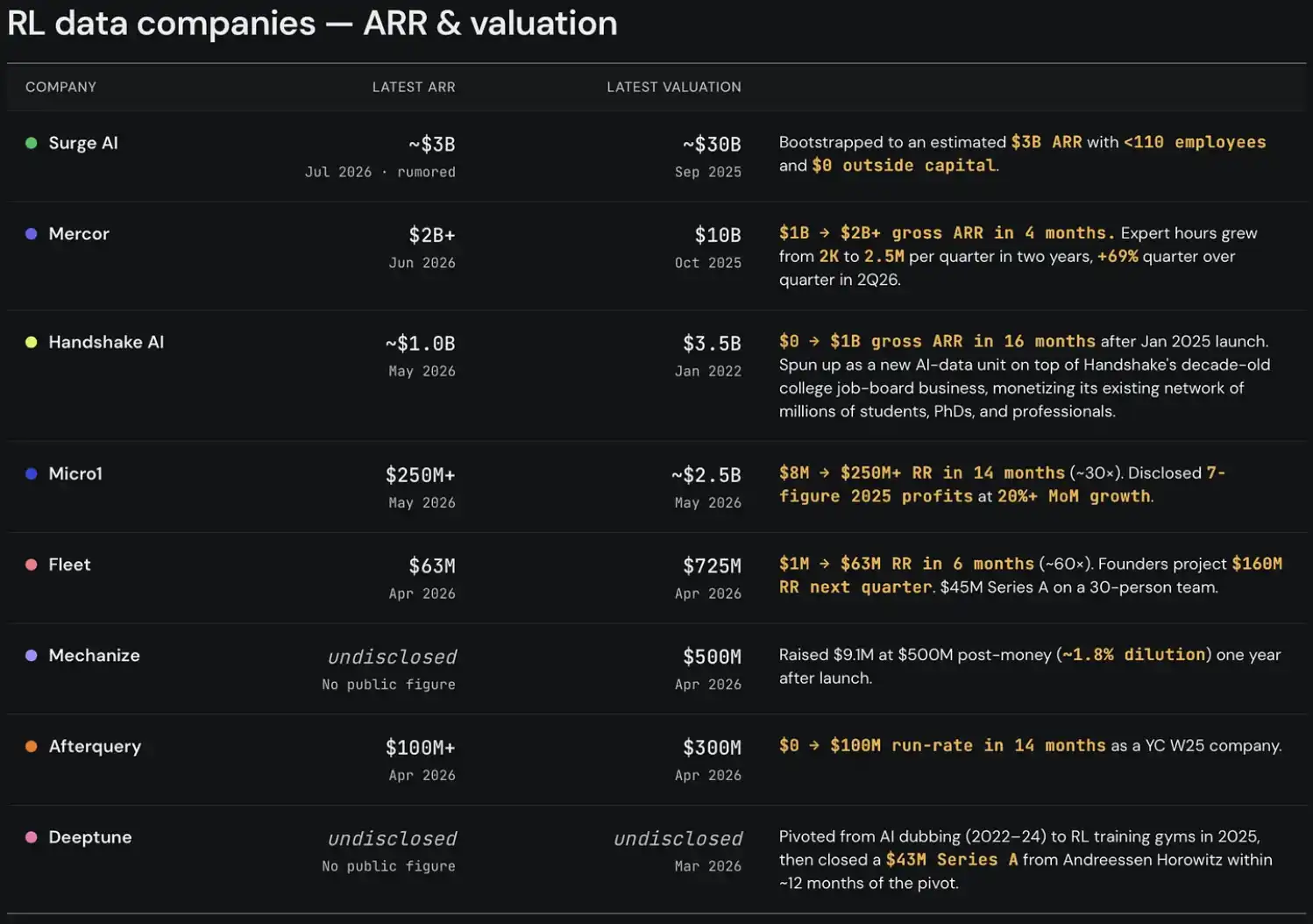
SemiAnalysis has claimed that Meta is reallocating around 3000 engineers to full-time RL task creators. While this number still needs to be understood in the context of the report, if implemented effectively, Meta's advantage will become clear: it is not just outsourcing the purchase of human-made data, but transforming its engineering organization into a training task production line.
This type of data is particularly crucial for AI agents. Many reinforcement learning tasks appear challenging, with step-by-step instructions already detailed and inconsistent with real-world work habits. Screen recordings, daily workflows, tool invocation records, and internal assessment systems may be more suitable for training models that can automate white-collar work.
This is also one of the reasons the report is optimistic about Meta catching up to Google. While Google has DeepMind, Gemini, TPUs, and cloud services, Meta is concentrating its internal organization, data, and engineering capabilities on the same model target.
Multi-GW Hash Rate Expansion Puts Meta at the Forefront
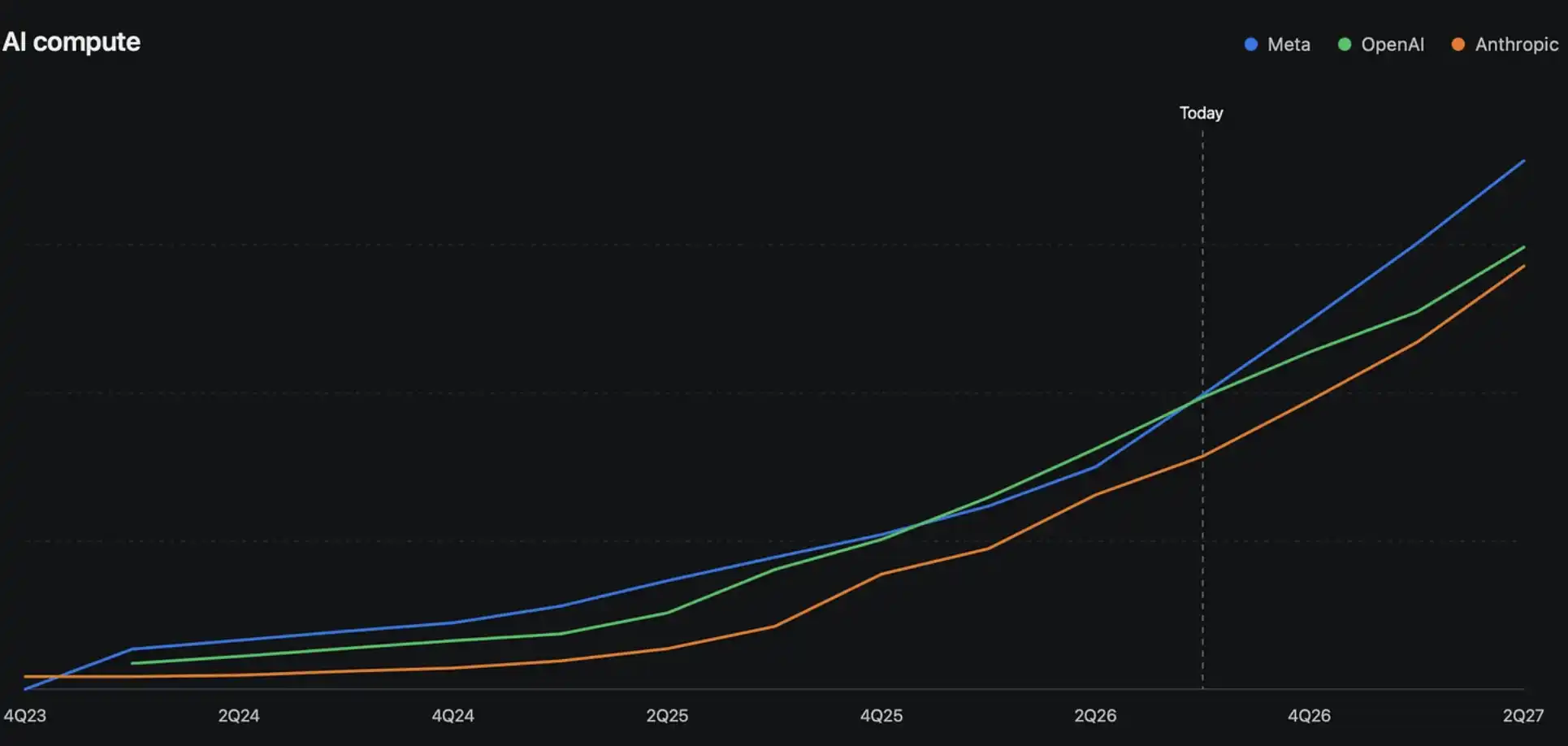
Hash rate is the third front. In an article on July 2nd, SemiAnalysis stated that Meta has signed contracts for over 5GW of capacity in the first half of this year, accumulating close to 10GW since 2024, and predicts that the incremental capacity will still largely flow to Meta's Super Intelligent Lab.
For the average investor, the focus is not on the specific data center design but on the direction of capital expenditure. Meta's expansion of hash rate is not for regular cloud services but to prepare larger-scale clusters for internal model training, post-training, and AI loop. The heavier the training and reinforcement learning, the more the speed of hash rate deployment will impact model iteration.
The report also mentions infrastructure concepts such as interregional interconnection and rapid deployment data centers. These details are still part of SemiAnalysis's model deduction, but the direction is clear: Meta is trading infrastructure for time.
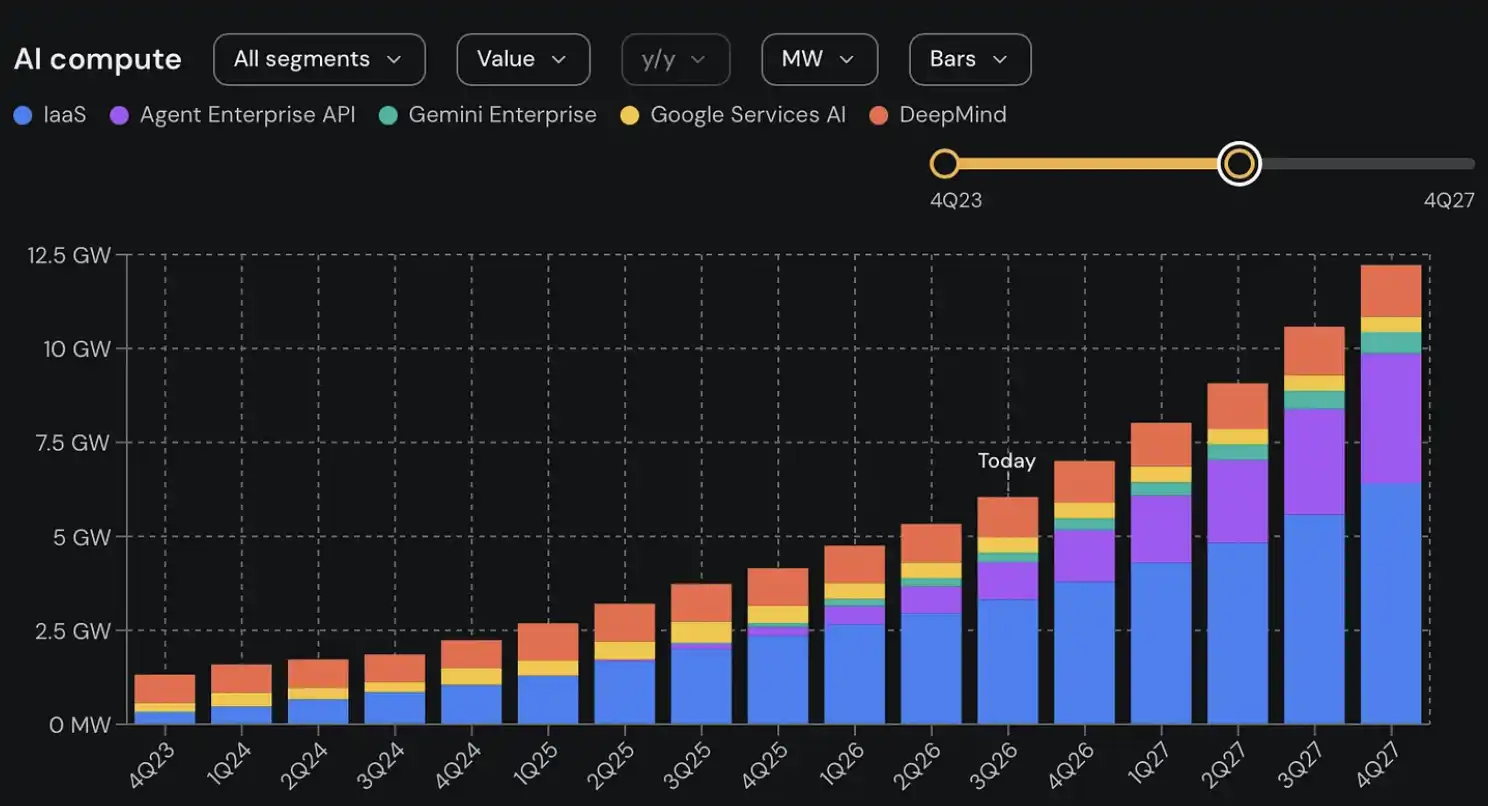
The controversy around Google lies not in whether it has hash rate but in how the hash rate is allocated. SemiAnalysis anticipates that a significant portion of Google's new data center capacity will serve IaaS and third-party API businesses, and the concentration of resources available for cutting-edge training at DeepMind may be lower than external perceptions. Even if Google expands more AI infrastructure through external financing or the capital market, some of the new capacity may be consumed by cloud customers.
Therefore, the report provides a more controversial assessment: the battle for the third position in AI is no longer Google's secure position, but could become a reshuffling between Meta, Google, and other high-hash rate players.
The Biggest Issue is Still That Meta Hasn't Produced a Cutting-Edge Model Yet
The most impactful and risky aspect of this report is that it bets on the next 6 months, not on past results.
Meta has seen a $14.3 billion Scale AI deal, the onboarding of Alexandr Wang, a salary package in the hundreds of millions of dollars, multi-gigawatt-scale compute expansions, and an internal engineering shift towards RL tasks. However, these are still catching-up conditions, not model victories per se.
As of Muse Spark 1.1, Meta has yet to demonstrate a positioning comparable to OpenAI and Anthropic. Larger models like Watermelon are still in training, and their actual capabilities, costs, availability, and developer feedback have not been market-tested.
Google has not exited the game either. DeepMind, TPU, Gemini, and its cloud business remain strong assets. The real divergence lies in Google's resources having to simultaneously serve search, cloud, API clients, and internal models, while Meta is concentrating more resources on the superintelligence lab.
If Meta's next-generation model does not show significant advancement, the $14.3 billion poaching and large-scale compute investment will become a heavier capital expenditure burden. Only if the new models and AGI products deliver will Meta's hold on the AI top spot truly loosen.
Welcome to join the official BlockBeats community:
Telegram Subscription Group: https://t.me/theblockbeats
Telegram Discussion Group: https://t.me/BlockBeats_App
Official Twitter Account: https://twitter.com/BlockBeatsAsia