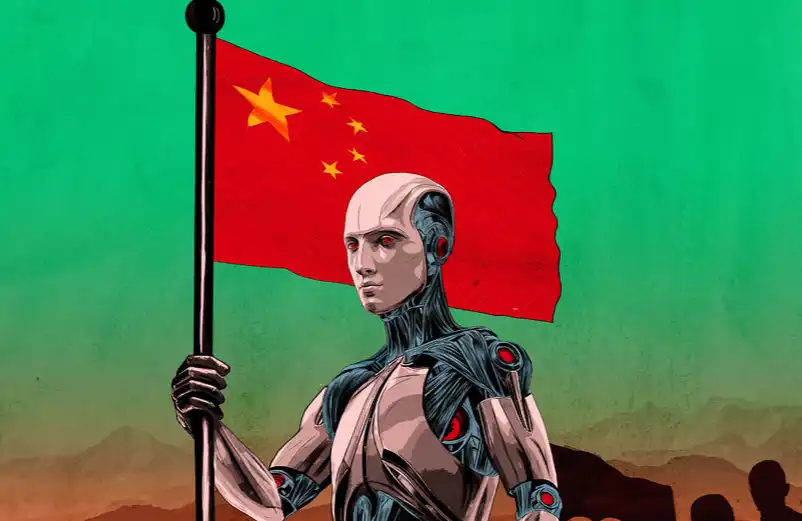
AI Cloned My Voice and Took My Job

Author|Sleepy, Menmen
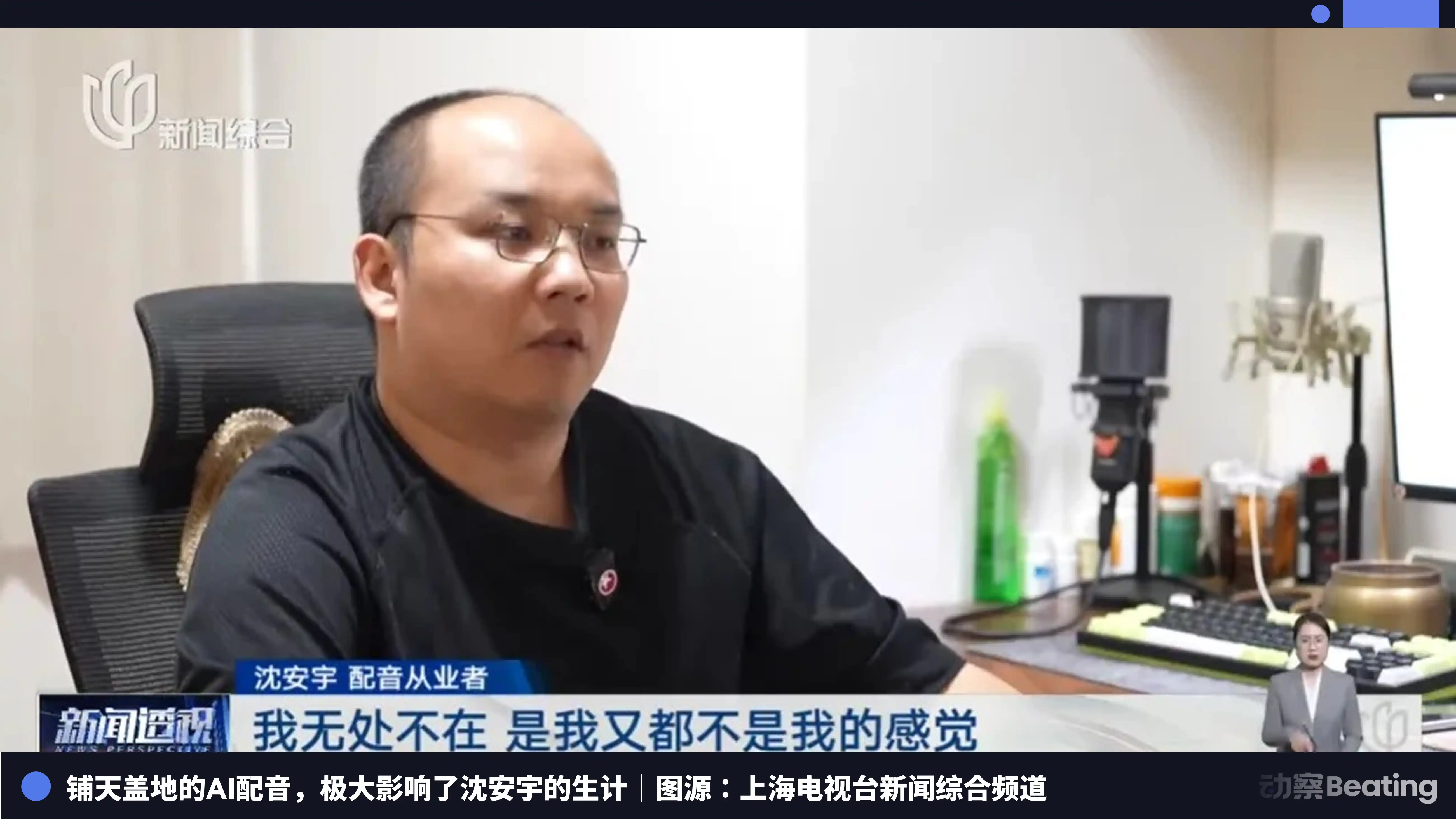
One night, Xiaoyu stumbled upon his own voice on a short video platform.
He had relied on this voice to make a living for six years. The tone, pronunciation, and the subtle position change in his throat when taking a breath were all identical to the voice he produced himself.
The voice in the video said, "This person's life is really meaningless."
He stared at the screen for a moment. He always avoided such pessimistic words when taking on projects. It was not something he would say, nor was it something he wanted to say. But that voice said it so arrogantly.
The Voice Actor
Xiaoyu turned dubbing into a full-time job at the end of 2020. His first gig was from a relative whose company had a popular science short video project that needed dubbing. Knowing his passion for this, they handed the job to him. Later on, he gradually entered the field, mainly providing dubbing for short videos and self-media accounts, earning around $1,000 a month.
He caught the tail end of this business. Dubbing for short videos has grown into a massive assembly line in China, with the global dubbing market reaching over $5 billion in 2022. However, as profits flow down the chain, they are increasingly diminished. The first party offers the platform about $30 per minute, but by the time it reaches the dubbing artist, only about $1.5 is left.
Xiaoyu is at the end of this chain. He doesn't have any breakout works, can't recall many roles remembered by the audience, and can't be considered a proper "voice actor." In his own words, he is a "bricklayer using his voice." His voice is not a talent, nor is it an artistic expression; it's just a means to put food on the table.
He guards this means of living closely. After taking on many projects, he would consciously remind partners not to indiscriminately distribute his contact information. He fears that if his voice is overused or ubiquitous, it may lose its distinctiveness. For an unknown dubbing artist, there isn't much to hold onto; scarcity is considered an asset.
In November 2023, a friend sent him a message. He then learned that someone online had cloned his voice to create AI dubbing and was using it recklessly.
He tried to trace where his voice leaked out but almost came up empty-handed. Over the years, he had taken on too many projects, and any video posted online could have been downloaded and had his voice neatly extracted using software. He didn't know which segment, by whom, or when it was taken.
Parasite and Host
Things were getting worse.
Partners quickly learned to negotiate prices with his AI voice. Hiring a human dubber, even at a steep discount, would cost tens of dollars. Deploying a model themselves almost cost nothing. For those accounts that needed to produce hundreds of pieces of content a month, it could save them a lot of money.
Even the minnow has considered the other party's perspective, prohibiting them from using it is also prohibiting them from making money to a certain extent. But when the other party is making money, they won't consider that their actions are blocking the minnow's path.
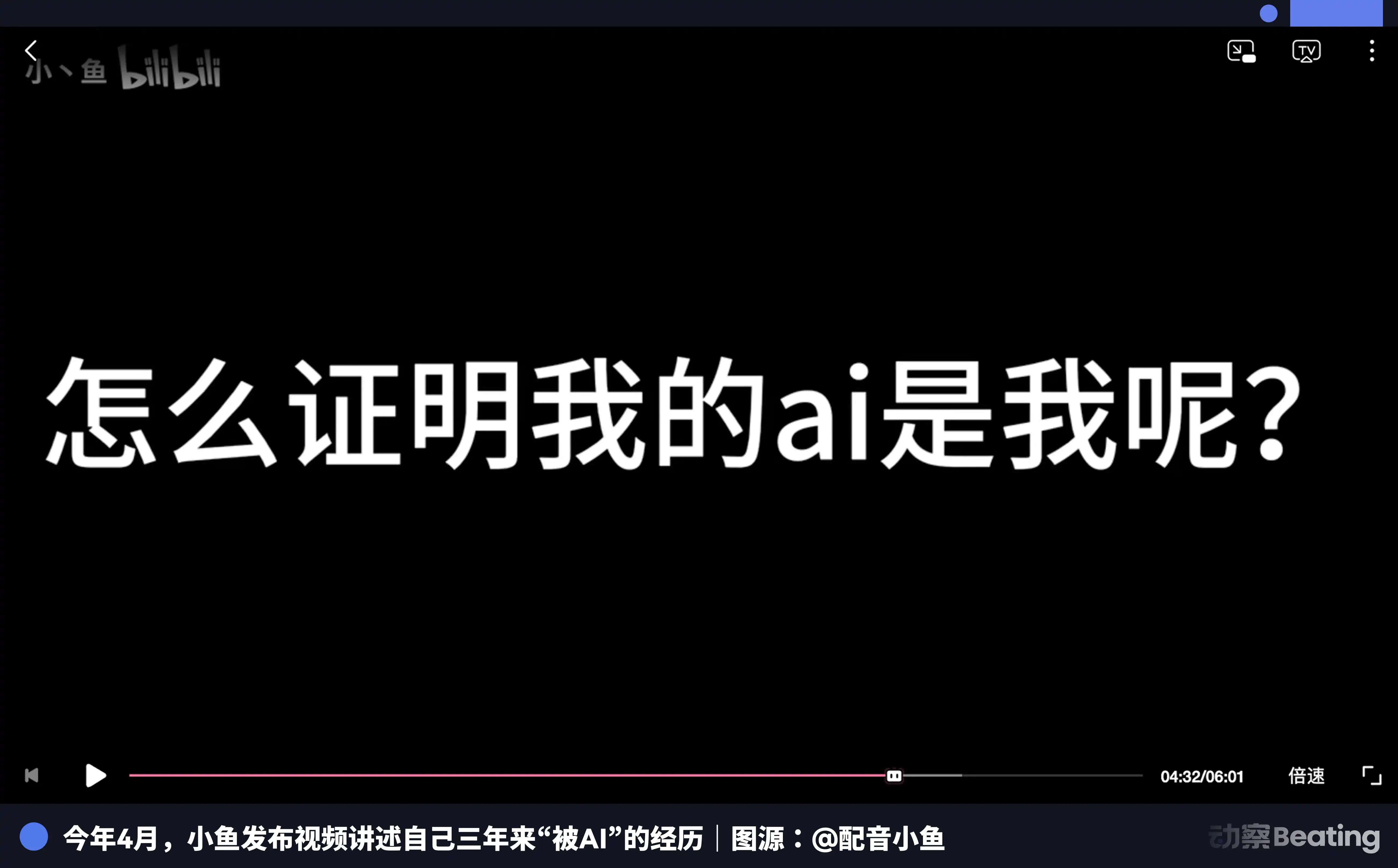
The real trouble comes later. His cloned voice is spreading more and more on the platform, and the review process and algorithm are starting to directly classify this voice as AI. Content classified as AI cannot enter a larger traffic pool. Once his AI voice proliferates to a certain extent, his real voice is also considered AI and likewise cannot enter.
A real person is being dragged down by his own clone. His voice, as a form of labor, has been extracted from him and is now encroaching on his own living space.
Official media have reposted videos using his AI voice, and later they even created some themselves. The more major institutions use it this way, the more the general public believes that this voice was originally AI. When he seeks justice, the larger the target, the more he looks like the liar. Clearly, he is the one being infringed upon, but it seems like he is trying to get a piece of the pie from an "AI voice."
The law is not as almighty as he thought. In April 2024, the Beijing Internet Court ruled on the first national case of AI voice infringement. Voice actor Yin was taken by a company to make money, and the court acknowledged that the voice is part of one's identity. If a cloned AI voice can still be recognized, separate authorization must be obtained before use. Yin won.
However, Yin was able to win because he could trace the source. His voice appeared predominantly on a few specific apps, and the defendant was a specific company. The minnow's voice is scattered across hundreds of self-media accounts, untraceable to the source, the defendant elusive, and each unauthorized use involves small-scale infringements of tens or hundreds of yuan. The law has prepared an answer for "one person suing a company" but has not prepared an answer for "one person being pirated across the entire internet."
The minnow gave a name to this kind of relationship: parasite and host. When a voice cannot enter the traffic pool, the user will seek out the next voice.
"They will move on to the next host," he said. "I wonder if the next host can endure longer than me."
Whip Lashing Another Me
In the comments and DMs of the minnow's personal account, people continually ask how to obtain his voice.
"How can this voice be used?"
"Your voice is indeed good, how can it be cloned?"
They ask boldly, as if inquiring about how to download an app.
This kind of offense made the little fish uncomfortable. He didn't think that a voice could be easily bought off. In his view, if even a face and voice could be completely bought off, then a part of a person would become a slave again.
But when asked whether the cloned voice could be considered "his voice," his answer was a bit twisted. He admitted that in terms of similarity, that was his voice. It was precisely because he felt it was related to himself that he sought to protect his rights and speak out. However, he also said that it was not "him" because it had not gone through his permission or his thoughts.
He gave an analogy. "It's like someone else is holding a whip and lashing another me, forcing me to say some words."
We asked him, if it was truly authorized, whether that AI voice could be considered his own. He remained silent for a moment.
"Compared to unauthorized use," he said, "that would belong more to oneself."
Being taken away, and being bought off. Both are not good, so he could only choose the lesser of two evils.
And someone has already walked to the end of the road of authorization for him to explore. In June of this year, the production company of "Peppa Pig" sent a new contract to the child voice actors in the show, requesting permission to use their voices for AI replication and generation. After the media exposed this matter, youth actor agents in the UK sent an open letter in opposition, with the only reason being that children simply do not have the ability to understand the long-term consequences of such authorization. Over a thousand people signed the letter.
Having a child sign an authorization document that he cannot understand is taking advantage, but even if an adult can understand a contract, what can be done after signing it? A short-term gain of money, but in the long term, the other party could do whatever they want with that voice, and he may not be able to control it.
Furthermore, when AI voices become fully mature, the market will only favor the A-listers. The voices of A-list voice actors will achieve some form of immortality in the industry, and young voices will no longer be able to break in. Research has been conducted in the industry, and after voices were massively misappropriated, over 70% of small and medium voice actors saw their income drop by more than half, and even A-listers generally saw a 30% decrease. The remaining value of small and medium practitioners is to serve as training samples for models.
"By the time that day comes," he said, "perhaps the voice acting industry will be dead."
Boundary
The issue troubling the little fish happens to be solving the troubles of others.
Helen is a documentary director who also works in advertising. She used AI voice-over for the first time last year for a documentary project demo. When showing the film to clients, she needed to first cut a five-minute short version, but she couldn't extract a complete short story from the feature film's sync sound. She could only rewrite a segment of the script and use voice-over to link the story together.
She started by looking for a dubbing company. With a limited budget, she chose a voice sample that cost around $120 per minute. When she listened to it, the stability, rhythm, and emotion were all off. At one point, she even suspected that it wasn't a real person doing the dubbing.
Later, the editor suggested trying AI. After all, it was just an internal demo for communication purposes, not for broadcasting or commercial use.
The result was that the AI voice sounded better than the low-cost human voice from the dubbing company.
This was the first time Helen clearly felt that AI dubbing had matured enough to be effective. However, she was also clear about her limits. The demo was acceptable, but official commercial use was not, let alone for documentaries. The pauses, breaths, hesitations, and the hesitation before speaking a sentence in the original audio of a documentary subject are part of the narrative itself. AI can process the sound to be cleaner and smoother, but documentaries do not aim for smoothness.
Imperfection is the evidence of humanity. What Helen paid for was this imperfection. The algorithm peeled away from Little Fish was also this imperfection. The same thing is a creative material on one side and a negative asset of traffic on the other.
The Hardest People to Reject
AI does not start replacing from the best voices. It first enters those crevices of "not so particular" importance. Helen's demo is one such crevice, reasonably and justifiably opened for internal communication, not for broadcasting or commercial use. Each crevice is opened up reasonably. Yet, all these crevices together form a path.
On this path, the hardest to protect oneself are the hardest to say no people.
Helen's rejection of AI was the cost of reevaluating the trade-offs between budget and timeline. Little Fish's rejection was the cost of continued rights protection, ongoing time and money consumption, and facing the indifference and blacklisting of one account after another. The children dubbing "Peppa Pig" rejected, and the cost might be losing a character directly.
Once a voice is cloned, it won't just be used for dubbing.
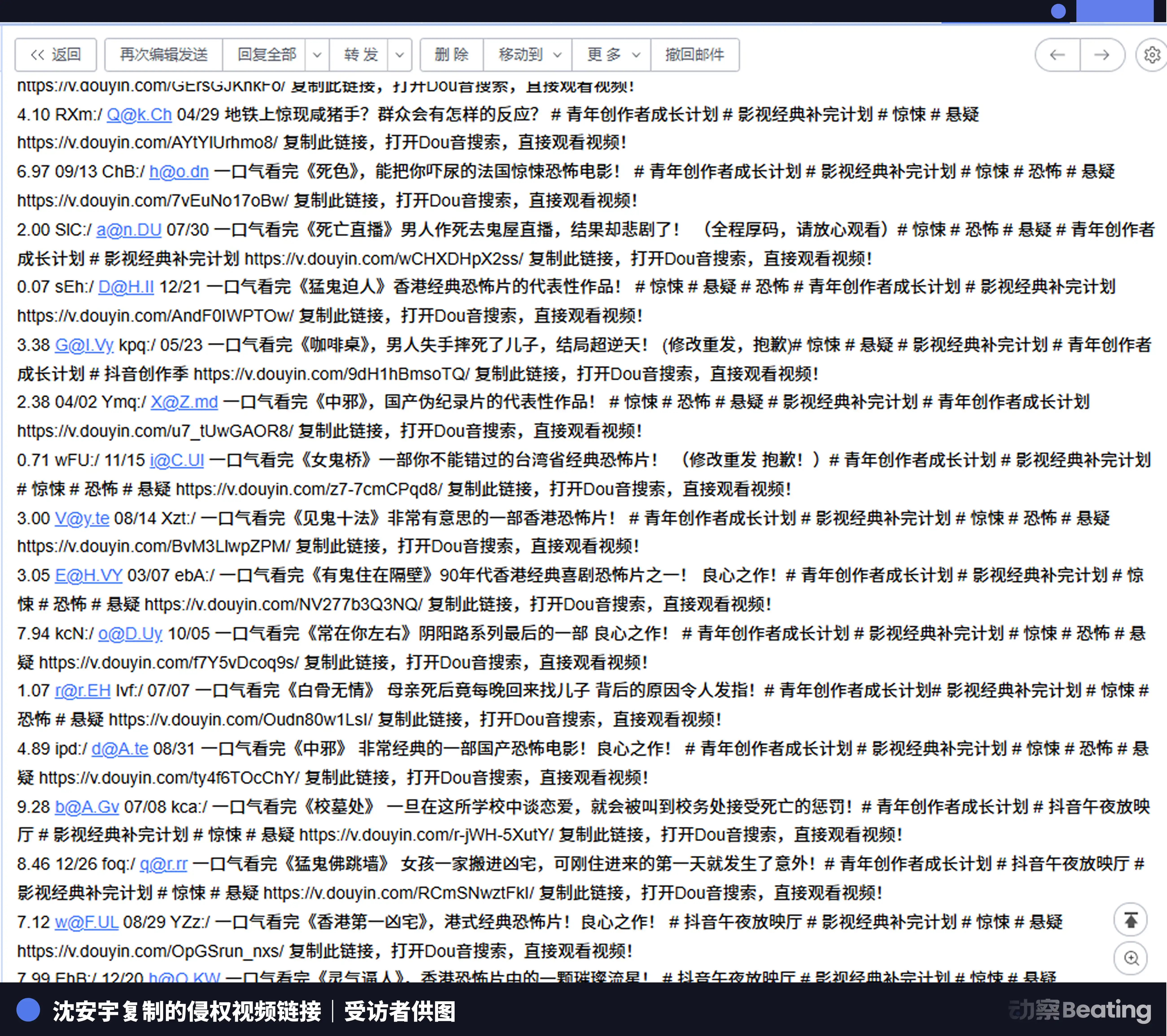
In April 2023, someone in Fuzhou used AI to deepfake and voice synthesis, impersonating a businessman's friend, during a ten-minute video call, deceiving and stealing $4.3 million. In early 2024, an employee of a multinational company in Hong Kong was pulled into a multi-person video conference. On the screen were the CFO and several colleagues from headquarters, and following the meeting instructions, he transferred two billion Hong Kong dollars. Upon investigation, it was found that other than himself, no one else in the entire meeting was real.
If one day, Little Fish's cloned voice is used to make such a call. If his elderly parents receive a call from a 'him,' saying, "This person's life is really boring, lend me some money."
No Buddha
Every time Xiaoyu publishes a new work now, he has to do an additional task that never existed before to prove that the speaker is indeed himself.
A real person, on his own account, posts his own recording, but must first convince the reviewers and audience that this time it is him speaking. This process is clumsy, unnecessary, and should not exist.
This situation was written by Wu Cheng'en over four hundred years ago.
In the 58th chapter of "Journey to the West," the Six-Eared Macaque transformed into the appearance of Sun Wukong. Not "like" Sun Wukong, but every single hair is the same. The Demon-revealing Mirror couldn't reflect the difference, and even Guanyin couldn't tell.
The Earth Store Bodhisattva's mount, Truth Listener, lay on the ground and discerned the truth. But it dared not speak. It was afraid that if the fake was exposed, a scene would break out on the spot, and no one could control it.
This is very similar to platforms. It's not that they can't tell, but distinguishing this matter is not beneficial to them. Identifying a real person incurs review costs and the risk of misjudgment. So, it's better to just let everything be AI, which is the most convenient way.
The most drastic example is Tang Sanzang. The real Wukong protected him all the way but had a bad temper, liked to talk back, and was often defiant. The fake one was obedient, docile, readily available, and never threw a tantrum. Therefore, Tang Sanzang first drove away the real one.
Just like those partners who use AI voices to lower costs. The real Xiaoyu would get tired, raise prices, and refuse certain scripts. The AI Xiaoyu never gets tired, adapts its tone as needed, and keeps prices extremely low. Standing on the side of demand, who wouldn't prefer the more obedient one.
In the end, Wu Cheng'en arranged for a Buddha. Only he could tell the true from the false in the Three Realms; one word could finalize the case, and the fake would reveal its true form, while the real would be reinstated.
Xiaoyu's trouble lies in the fact that there is no Buddha in his world.
Furthermore, among the public who read "Journey to the West," there was a conspiracy theory that the one killed by the Ruyi Jingu Bang was actually the real Wukong. The reason being that the subsequent Wukong never threw another tantrum. This interpretation has been circulating for many years because those who read it understand that when only an authoritative word can distinguish the true from the false, no one can guarantee that blow really didn't make a mistake.
Even if Xiaoyu wins every copyright dispute, a few years later, the voice people remember may not necessarily be his own.
References
[1] China's first "AI Voice Infringement Case" first-instance verdict, Beijing Internet Court / China Court website
[2] China's first AI-generated voice infringement case and the protection of personality rights, China Justice Observer
[3] Hasbro Asks 'Peppa Pig' Child Actors To Sign Over Voices To AI, Sparking Backlash, Deadline
[4] Hasbro reportedly forcing Peppa Pig actors to sign away AI voice rights, TheGamer / MSN
[5] Scammer uses AI to pose as businessman's friend, defrauds him of 4.3 million yuan, TechNode
[6] Finance worker pays out $25 million after video call with deepfake 'chief financial officer', CNN
[7] Hong Kong company loses HK$200 million after worker fooled by deepfake video meeting, South China Morning Post
[8] Dubbing and Voice-over Market Size, Fortune Business Insights / market research summary
Welcome to join the official BlockBeats community:
Telegram Subscription Group: https://t.me/theblockbeats
Telegram Discussion Group: https://t.me/BlockBeats_App
Official Twitter Account: https://twitter.com/BlockBeatsAsia