**Fifty Years of Ingenious Efforts in Hefei: A University, a Screen, a Car, a Memory Chip**

Author|Sleepy, Menmen
In the past, Hefei didn't have many decent railways.
The Beijing-Shanghai line ran along the edge of Anhui, passing through Xuzhou, Bengbu, and Nanjing, but bypassing Hefei. For Hefei residents traveling afar, they had to first rush to Bengbu and then transfer to another train. Late at night at Bengbu Station, people from Hefei crowded on the platform, holding a transfer ticket in their hands. For a long time, when people from Hefei traveled to distant places, they had to borrow someone else's platform.
Trains came from afar, heading towards another distant place. Not a single train stopped for Hefei.
Hefei is not far from anywhere. In other words, young people can easily set off to see the world, and Hefei cannot stop them, nor did it ever think to.
Normally, a city like this probably wouldn't have much to its name. However, unexpectedly, Hefei did have something, and this unexpected asset came from a university.
Out of Reach
In 1969, the University of Science and Technology of China (USTC) was to relocate from Beijing. After inquiring in several places, all found it too troublesome. Thousands of people, needing school buildings, rations, and utilities to keep up. During that special period, a university was a burden.
Finally, Anhui agreed to receive them. In 1970, the first group of faculty and students arrived in Hefei, settling in the old buildings vacated by a teachers' college and a bank. Hefei's winter was damp and cold, without heating. An elderly professor recalled that while writing on the blackboard, his fingers would freeze, forcing him to rub them and breathe warm air on them before continuing. Chalk dust fell sparsely onto the yellowed floor.
At that time, no one anticipated that beneath that floor lay the foundation for the next fifty years of a city.
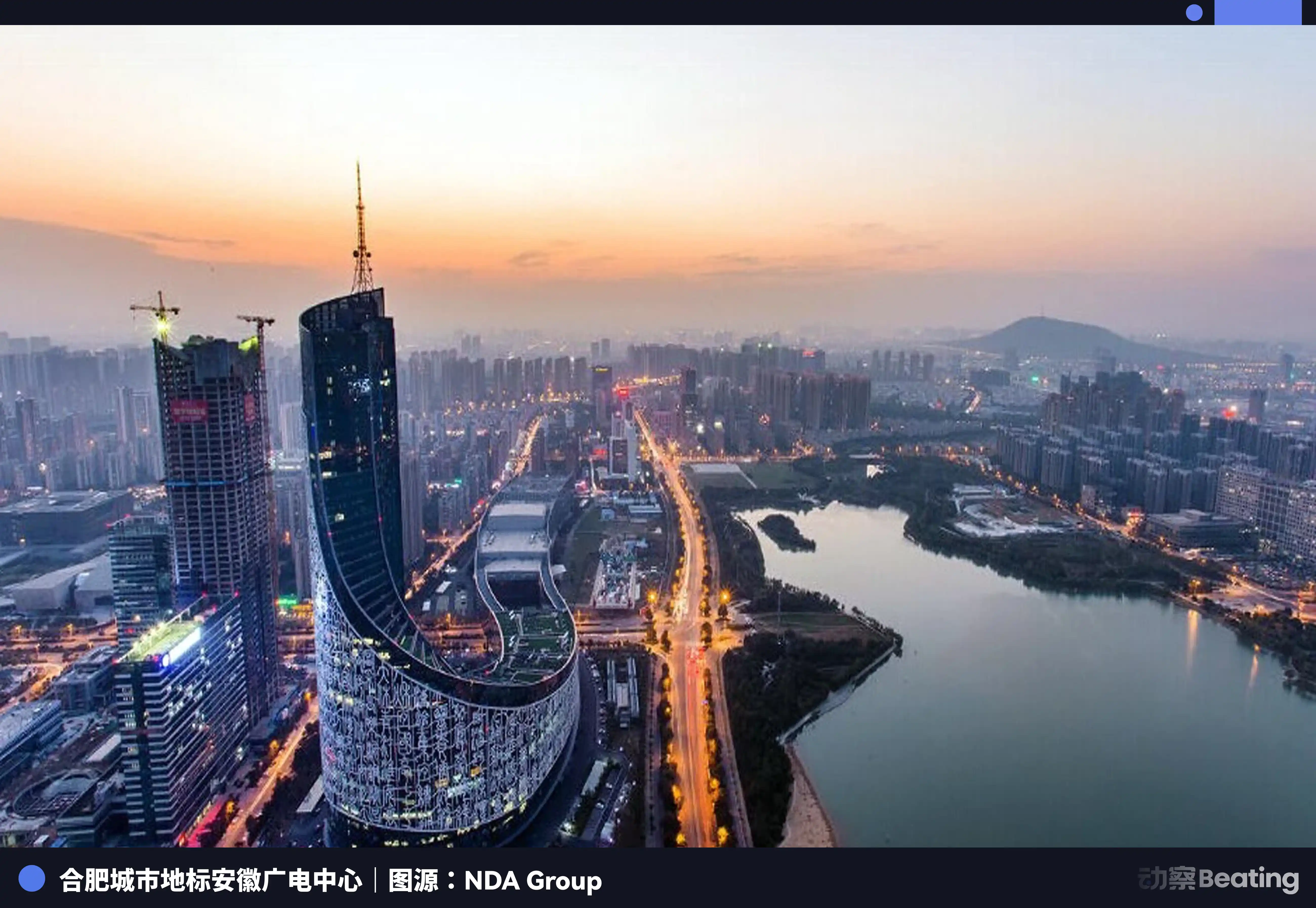
With USTC's arrival, Hefei's underlying tone changed. There was no hustle and bustle of a commercial city, nor the openness of a port city. While other cities were busy attracting investment, selling land, and building commercial areas, conversations over Hefei's dining tables revolved around equipment, academicians, and laboratories.
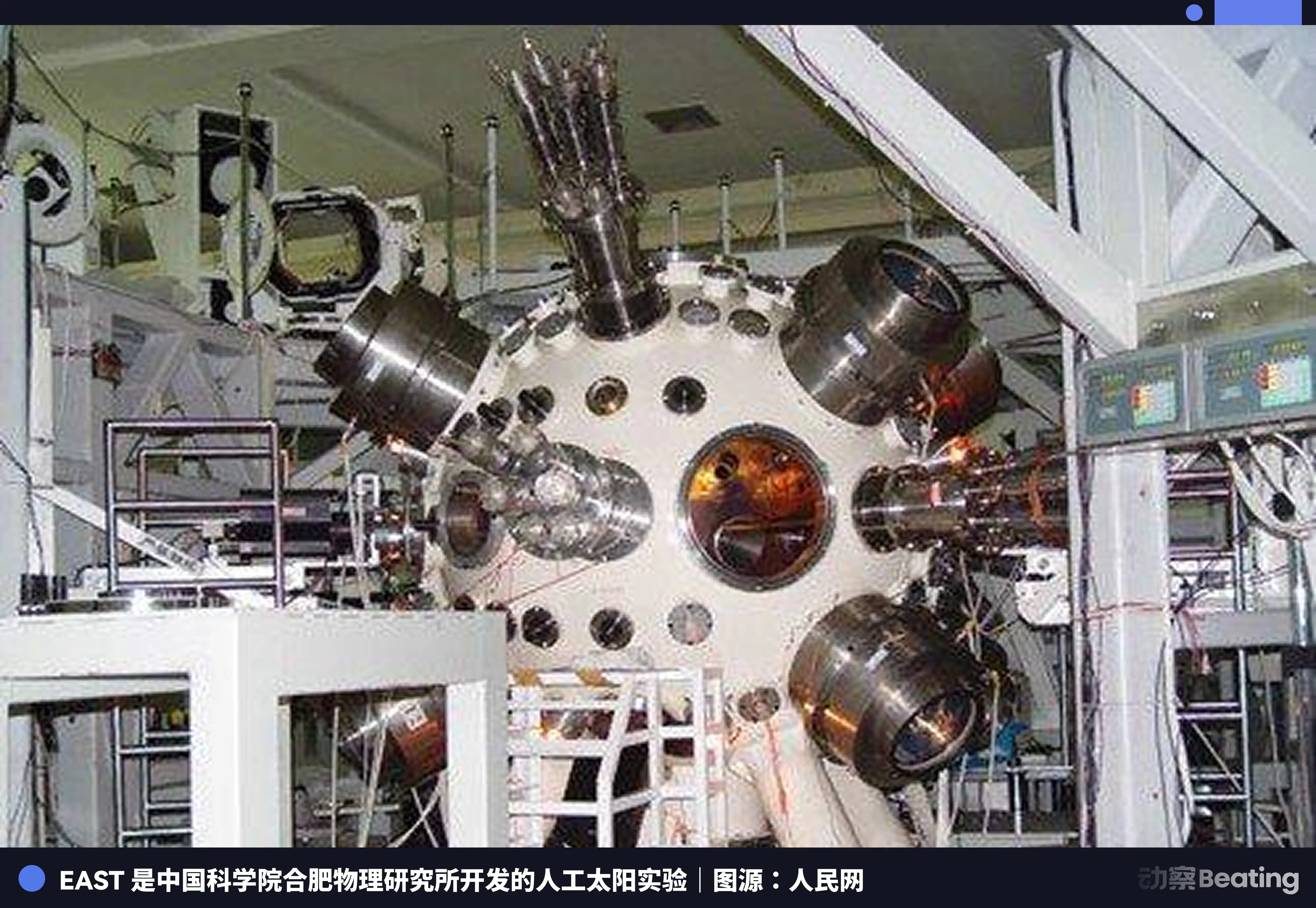
In Dongpu Reservoir in the northwest outskirts of Hefei, there is an island called Science Island. The island is home to a group of Chinese Academy of Sciences research institutes, focusing on national-level challenges such as nuclear fusion, strong magnetic fields, and quantum information. On the island, there is an apparatus nicknamed the "artificial sun," aiming to replicate the interior reactions of a star on Earth, with temperatures reaching over a hundred million degrees. The research foundation that Hefei holds in its hands is considered precious nationwide.
However, being precious does not equate to being able to change a city.
The lights on Science Island shine until midnight, illuminating research papers and awards, but not the street-side breakfast stalls. Locals know those things are impressive, but impressiveness and their own well-being are two different matters. The nation's important instrument is submerged in the reservoir, while the mundane life carries on by the roadside; the two are out of reach of each other.
The research at USTC is more fundamental and cutting-edge, but Hefei has not been able to provide decent industries to bring these research outcomes into reality. The achievements are made in the laboratory, taken out of the laboratory, and put on other production lines in Shenzhen, Suzhou, and Shanghai. Hefei's weak industrial foundation does not match well with USTC's research outcomes, leading to few graduates willing to stay in Hefei.
No matter how well the topic is presented, it is ultimately just a reputation. It makes Hefei look good on TV, but it cannot convince a young person that staying in Hefei can also keep up with the times. USTC students finish their studies and leave, following the same railway line their teachers took when they came in, heading to Beijing, the Yangtze River Delta, and beyond.
Hefei has learned how to bring extraordinary things into its home. But how to make them thrive in this city's days, this step has taken Hefei almost forty years.
A Screen
In 2008, during the financial crisis, the global panel industry hit rock bottom.
BOE's days were tough. LCD panels are a capital-intensive business, burning money, burning equipment, enduring cycles. When the market is good, it earns hard money, but when the market is bad, the production line is still depreciating, and loans still need to be repaid.
At this crucial moment, BOE needed to build a sixth-generation TFT-LCD production line in Hefei. At first glance, it would require 17.5 billion RMB.
What is the concept of 17.5 billion? That year, Hefei's total fiscal revenue was 30.1 billion, of which only 16.1 billion actually stayed in the local pocket. The investment in a production line was more than what Hefei could independently dispose of in a whole year.
However, the money was eventually raised. The structure finally put together by Hefei was 9 billion for the project's capital, with Hefei's state-owned assets platform contributing 6 billion by buying BOE's shares through private placement; the remaining 3 billion was introduced by Hefei from strategic investors; additionally, 8.5 billion came from a syndicated loan. However, the private placement was oversubscribed, and Hefei actually only paid 3 billion.
Hefei entered as a "shareholder," with the money invested exchanged for equity, something that could be exited, monetized, and reinvested in the future.
Subsequent reports all referred to this as the starting point of the "Hefei Model," filled with beautiful words. But looking back to 2008, this matter was not beautiful at all. At an industry's lowest point, with the company losing money, Hefei was facing a mess. It was expensive, heavy, and uncertain if it would succeed.
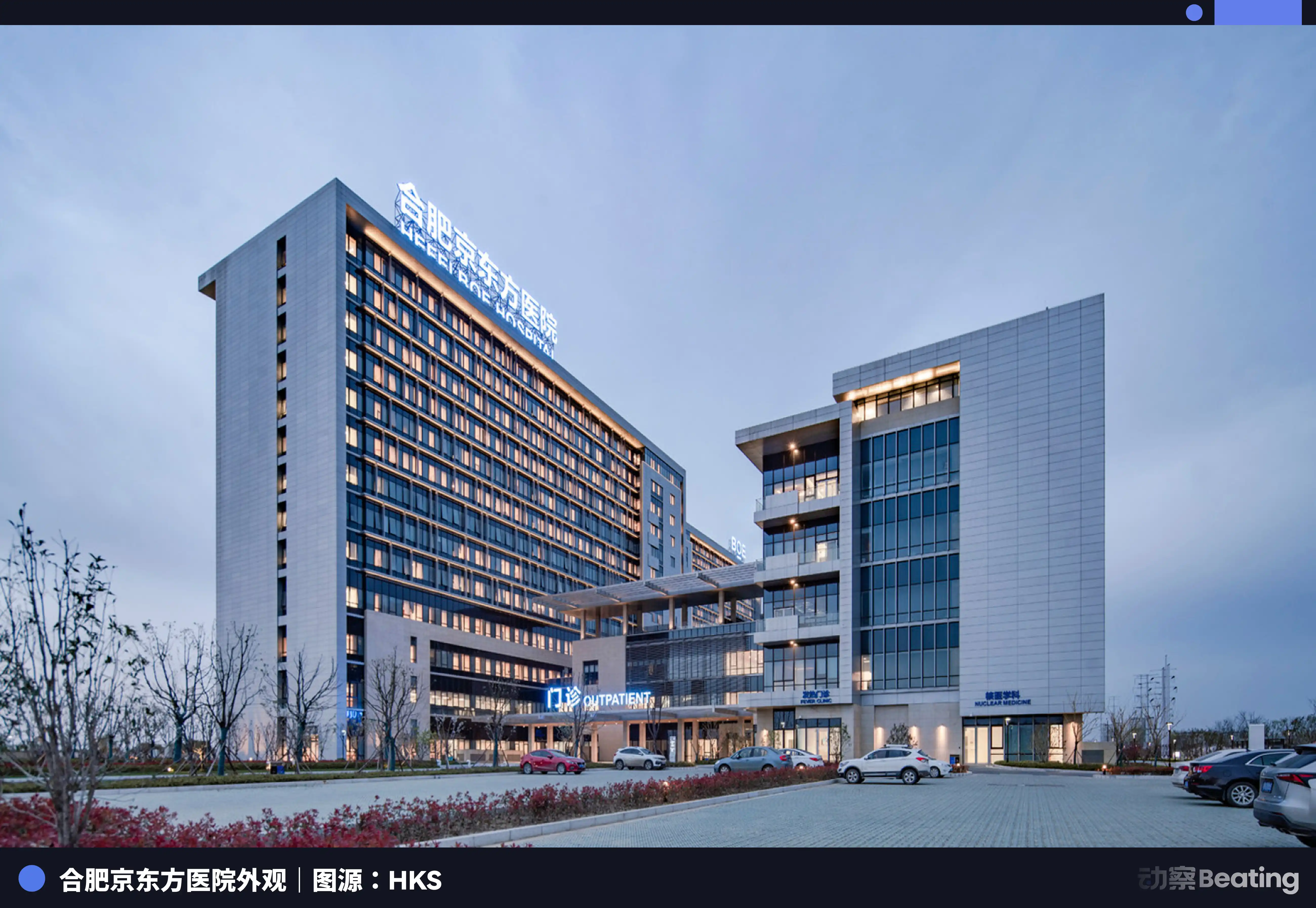
Later on, BOE successively established multiple production lines in Hefei. Starting from a single panel, to glass substrates, polarizers, driver ICs, and then to complete machines and terminals, Hefei slowly accumulated a cluster of the display industry.
In Hefei, fiscal funds were transformed into equity, equity was transformed into production lines, and then the production lines were transformed back into jobs, tax revenue, and rent, eventually becoming the lights of a new district and providing young people with a reason to stay.
Seventy Billion
In 2020, NIO was deeply mired in crisis. The previous year, it had lost over a hundred billion, and its stock price had dropped to just over one dollar. At that time, new energy vehicles had not yet gained a foothold. The question lingered whether the emerging electric vehicle companies were the next generation of the automotive industry or a more sophisticated game of pass-the-parcel, leaving everyone uncertain.
Hefei put forward 70 billion.
However, NIO was different from BOE Technology. NIO, a company that sells half cars and half a vision of the future, offers a different proposition. Battery swapping stations, user communities, NIO Day – all these are part of that vision.
By the end of April 2020, the agreement was reached. The main players were not solely from Hefei, but also included Hefei Construction Investment, Guotou Rongxin, and Anhui Provincial High-Tech Investment, a few strategic investors who put together 70 billion, injected into a newly established joint venture company, NIO (Anhui) Holdings, later known as "NIO China."
NIO itself also had to put out 42.6 billion in cash and transfer its core assets in China, including vehicle R&D, supply chain, manufacturing, sales, and energy, all into this new company. The strategic investors collectively held 24.1% of the shares, while NIO held 75.9%.
Hefei invested substantial funds, only taking a minority stake without seeking controlling interest, entrusting the professional matters to experts. NIO retained the steering wheel, and transferred its wealth, core assets, along with its headquarters, to Hefei.
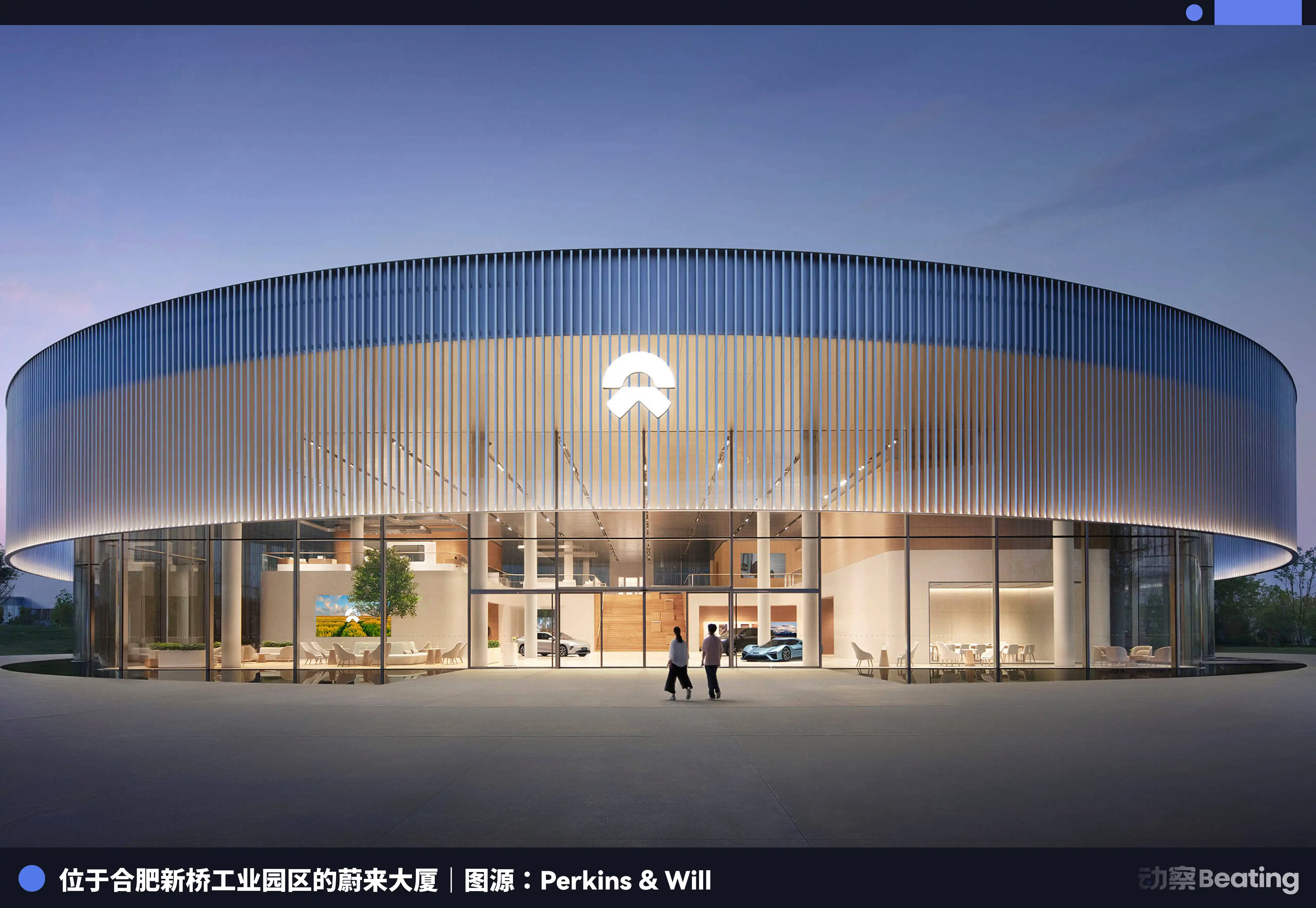
With NIO's headquarters settled in Hefei, nearly eight thousand people arrived. The new bridge industrial park was established, with over a dozen suppliers following suit. It took seventeen months from the start of construction to the launch of the second factory.
More importantly, the mindset of the younger generation has changed.
Previously, if you wanted to keep pace with the times, you had to go out. The farther you went – Nanjing, Hangzhou, Shanghai, Shenzhen – the more promising it was. Now, there is another option. You can stay. Not because your parents are here, nor because you can't make it elsewhere and have to settle. It's because there are real opportunities here, and battles to be fought.
Card Table
In 2016, Hefei decided to venture into storage chips. In the DRAM race, which has lasted for over thirty years, the competition has dwindled from dozens of companies to just a few. Germany's Qimonda went bankrupt in 2009. Japan's Elpida followed suit in 2012, only to be acquired by Micron. Taiwanese companies struggled throughout the cycles. The final victors were Samsung, SK Hynix, and Micron.
Samsung is well-known for its contrarian strategy. While others are losing money and cutting production, it ramps up investment and builds new factories. The lower the prices, the thicker its cash reserves, the more updated its equipment, and the more stable its yield compared to its competitors. When rivals can't hold on anymore and exit the market, Samsung waits for the cycle to turn around. As the number of players at the table decreases, those who have persevered start making money.
This industry rewards those who persevere.
The person who took the lead at this table in Hefei is called Zhu Yiming. A graduate of Tsinghua University's Physics Department, he worked in storage in the United States before returning to China in 2005 to establish ChangXin Memory Technologies, turning NOR Flash into a domestic industry leader.
In 2016, he made a decision to bet everything on Hefei, placing his bets on DRAM. In the year ChangXin started, Hefei's state-owned investment platform took the majority share, with his team taking the minority share, together supporting the company. He stepped down as CEO of ChangXin Memory and moved to Hefei, dedicating himself entirely to ChangXin. It is said that he did not take any salary until the project became profitable.
Behind this never-give-up spirit is the industry's challenges.
In 2016, producing memory chips was perhaps the most challenging task in all of China. The wafer fab is a money-eating beast, consuming funds for equipment, clean rooms, and depreciation. The chip manufacturing process requires repeated refinement, and the yield must be meticulously controlled. If one parameter is off, a whole batch of wafers is discarded. Producing samples in the lab is one thing; producing them in large quantities stably on the production line is another. In between are engineers, equipment, materials, and management, all requiring a set of skills that can only be honed over time.
The technology and patent walls for DRAM are held tightly by a few companies who refuse to sell. Later, ChangXin obtained technology documents and patent licenses left by the long-bankrupt German company, Qimonda, from a Canadian company. In addition to this, even knowledgeable senior engineers had to be individually recruited from overseas. When Qimonda dissolved, ChangXin brought back its veterans as consultants. A new player trying to enter the market mostly holds what others have lost and abandoned.
In 2019, the first batch of DRAM chips rolled off the production line. They subsequently chased after DDR4, LPDDR, moving from consumer electronics to servers, and from the list of domestically produced substitutes into the global storage boom.
ChangXin accumulated losses of over 30 billion yuan in the previous years. By the end of 2025, its annual revenue reached 61.8 billion yuan, turning losses into gains. In the first quarter of this year, its quarterly revenue was 50.8 billion yuan, with a net profit attributable to the parent company of 24.7 billion yuan.
As the big cycle of memory storage arrived, after a decade of hard work and perseverance, one quarter's revenue almost caught up to the entire previous year. With Hefei's state-owned assets holding more than 30% of the shares behind ChangXin, in June this year, ChangXin Memory Technology's Sci-Tech Innovation Board IPO registration was approved, with plans to raise 29.5 billion yuan.
So many people say that Hefei has "won" in gambling again.
I think this word is used incorrectly. A gambler can leave the table at any time and walk away whether they win or lose. At most, they can switch to a different game.
But a city cannot leave the table. When a city makes the wrong investment, what remains are empty factories, overgrown industrial parks, young people who leave in disappointment, and years of accumulated public credit, all thrown in together.
Hefei is not a genius city. It's a bit clumsy, a bit stubborn, and a bit unwilling to admit defeat. Like a child from a non-elite family, it knows it can only solve difficult problems, the ones that others find slow, cumbersome, and not cost-effective.
It knows the road is tough, knows it's slow, knows that once it makes a mistake, there's no turning back. But still, it keeps moving forward step by step. Because if it doesn't move, its fate will always be controlled by others.
The Ones Who Stayed
Whether a city has truly come to life depends on how the young people live.
By the end of last year, Changxin had nearly 20,000 employees who came from all over the country to work, rent homes, and start families in Hefei. This sight was unseen in old Hefei.
In the past, the Science Island brought Hefei reputation, but now Changxin brings Hefei a livelihood. It pays salaries, helps with local residency permits, and allows employees' children to attend school in Hefei. For the first time, people in Hefei feel that those remarkable things are related to their own lives.
Changxin's employees come to Hefei from all over the country, settle down, rent homes, fall in love, take holidays to climb Dashushan Mountain, or ride bikes to sit by Chaohu Lake for an afternoon.
For many years, Hefei's nights were quiet. Now, it's different. The dormitories in the New Bridge Industrial Park are brightly lit until midnight, food delivery riders on Science Avenue work late into the night, and the parking lots in the High-tech Zone are always full. The city has begun to have a bustling youthful vibe.
If a city can attract people to stay, they will settle down and consider this place as their own. Here, they meet each other, get married, have children, and send their children to schools in Hefei. In another generation, the University of Science and Technology of China and Science Island will no longer be just "other people's stories" in the eyes of these children.
This is the foundation that Hefei has built up over fifty years. It's not about any production line or any company; it's about something slower. It's the confidence that has been slowly accumulated bit by bit since that classroom in 1969. Hefei people are beginning to believe that the place they live can also be a part of the times.
Jia Zhangke once made a movie called "Platform," which tells the story of young people in Fenyang, Shanxi in the 1980s.
A group of people from the county arts troupe had never seen the real distant world in their entire lives. One day, they heard the train whistle and went crazy running out, chasing the shadow of the train and shouting. The train didn't stop. The distant world roared past them, like a fate they could never catch up with.
As the movie ends, middle-aged Cui Mingliang takes a nap on the sofa, the kettle on the stove starts boiling and whistling, sounding like a train whistle. The distance condenses into a boiling kettle.
This is Jia Zhangke's portrayal of the dilemma faced by the previous generation of inland youth. Born in the inland areas, many people's lives are spent waiting, chasing a train that never stops for them.
Hefei took a different path. It is not by the sea, has no vent for the wind, and initially didn't even have a decent platform, only an empty lot. So it squatted down, brick by brick, and built itself. This self-construction took more than fifty years.
Today's Hefei South Station sees hundreds of high-speed trains coming and going every day, heading north to Beijing, east to Shanghai, and south to Guangzhou and Shenzhen. Decades ago, the trains leaving Hefei were filled with people eager to leave. Now, the trains coming back are also filled with people.
The whistle is still blowing. The young people of Hefei hear it and no longer need to chase after it. Because this time, the train has stopped for Hefei.
References
[1] BOE's 6th generation line dismantled for 17.5 billion: Hefei government's support, Sina Technology
[2] Decoding the Hefei Model, Securities Times
[3] NIO China settles in Hefei, 7 billion financing is just the first step, Sina Finance
[4] From SMIC to Changxin with a trillion market cap, chip giant Zhu Yiming's 21-year breakthrough, The Paper
[5] Tsinghua Scholar Zhu Yiming's chip marathon will ring the bell for the third time, from SMIC to Changxin, earning 300 million a day, Yangtze Business News
[6] Changxin Technology's IPO approved, preparing to become the main force serving the new quality production on the Sci-Tech Innovation Board, Xinhua News
[7] Hefei State-owned Assets Investing in Changxin Technology, earning 200 million a day, China News Network-Weiyu
[8] Changxin Technology's valuation heading towards the trillion-yuan level, the story behind Hefei State-owned Assets' "explosive earnings," National Business Daily
[9] How Hefei State-owned Assets invested in Changxin Technology, Sina Finance
Welcome to join the official BlockBeats community:
Telegram Subscription Group: https://t.me/theblockbeats
Telegram Discussion Group: https://t.me/BlockBeats_App
Official Twitter Account: https://twitter.com/BlockBeatsAsia