Bitcoin Enters Price Discovery, Is It a Rebound or Reversal?

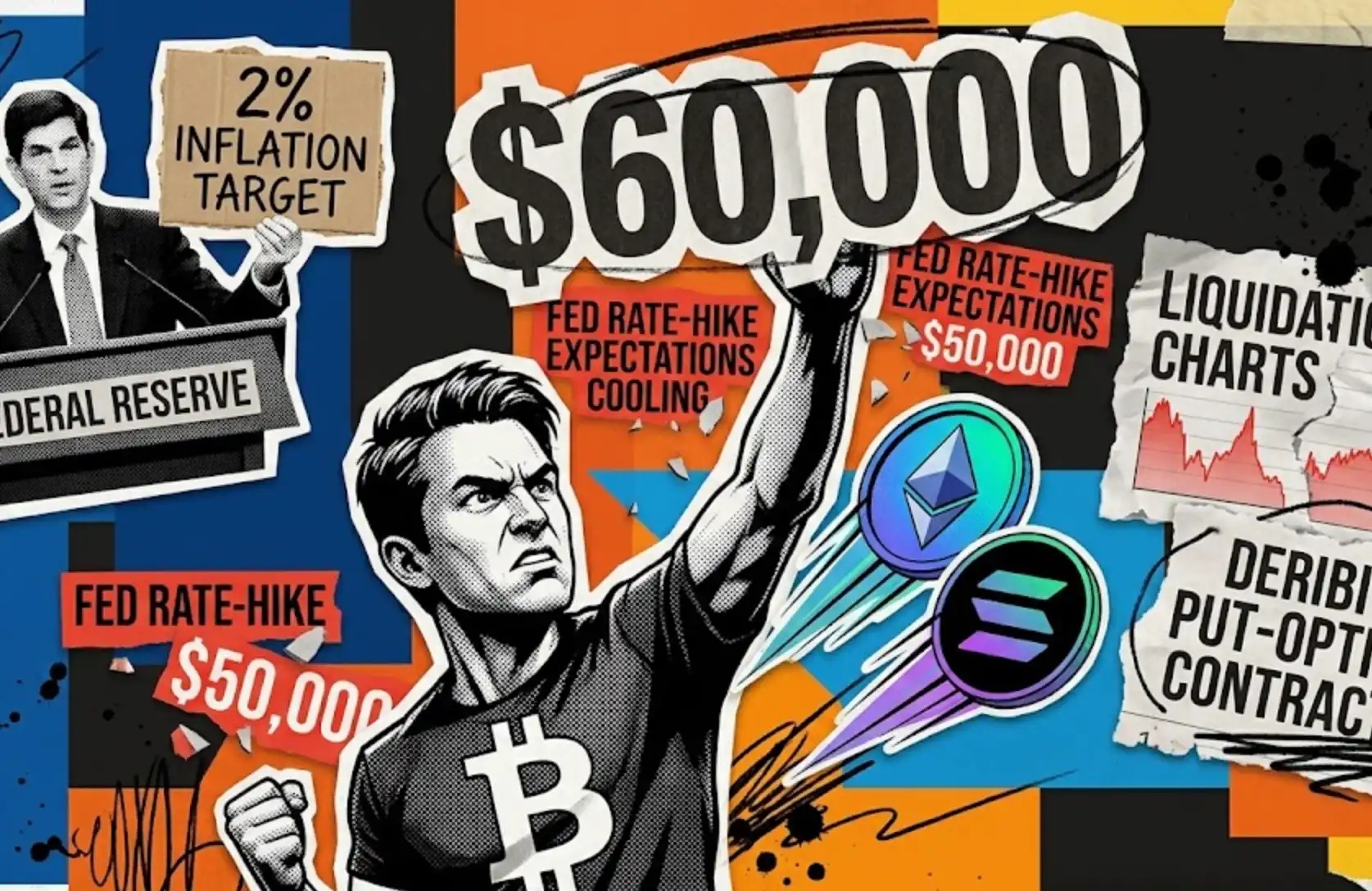
Federal Reserve Chair Kevin Wash did not announce a rate cut and, when discussing inflation, stated that inflation expectations and risks had eased in recent weeks. He reiterated that the Fed would stick to its 2% inflation target.
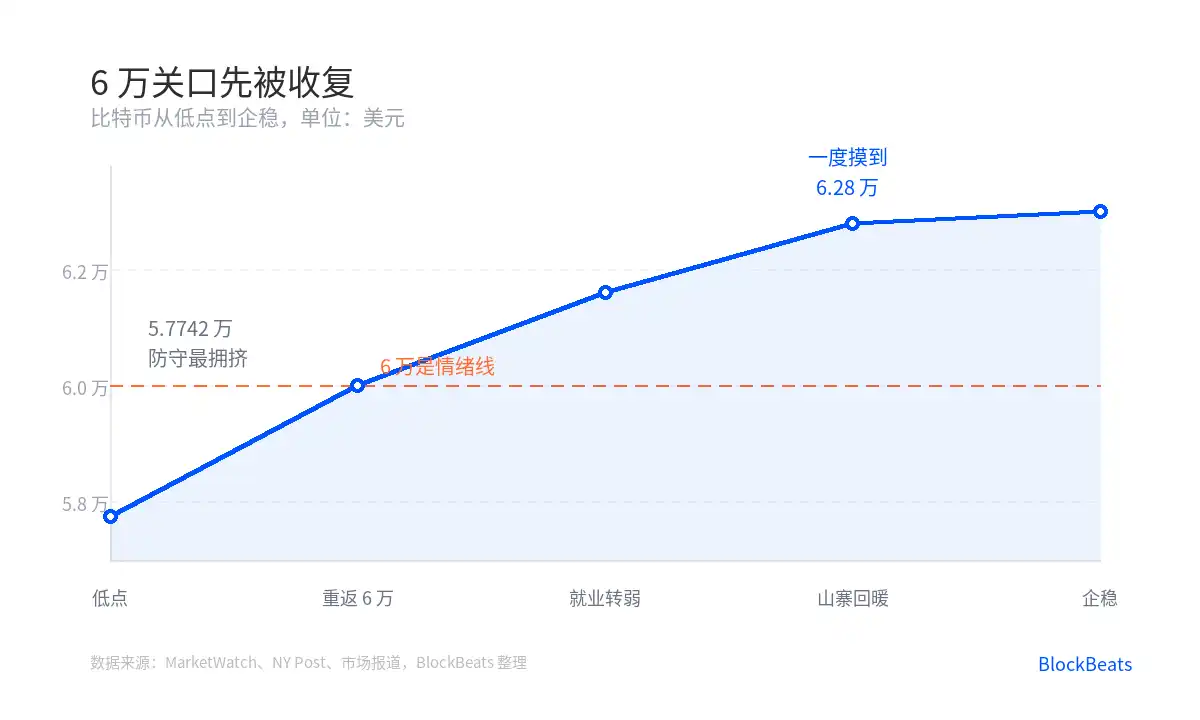
The latter half of the sentence was not dovish, but the market took away the first half. Bitcoin quickly rebounded from its low point, approaching $60,000 again. Subsequently, U.S. employment data weakened, further dampening rate hike expectations, and the market transitioned from "recovery" to "relay."
In recent weeks, the market's biggest fear was that the Fed would continue to keep interest rates high or even raise tightening expectations again. For Bitcoin, the harder the rate hike expectations, the narrower the valuation space for risk assets, and leveraged positions are more likely to be liquidated first.
After Wash played down inflation risks, the market first repriced the "rate hike pressure." Following the weak employment data, this direction was once again pushed back. Bitcoin moved back above $60,000 from around $57,742, and the price action looked rapid, fundamentally retracing the previous panic selling.
On Deribit, traders heavily bought $50,000 put options. Open interest in gold perpetual futures reached a new high. A death cross also appeared on the technical side. Several signals together indicate that the market is buying insurance against a drop.
This is different from a normal pullback. In a normal pullback, sellers just want to exit. In a panic defense, traders will simultaneously buy puts, buy safe-haven assets, and deleverage. When the price hits a key point, liquidation will amplify the volatility.
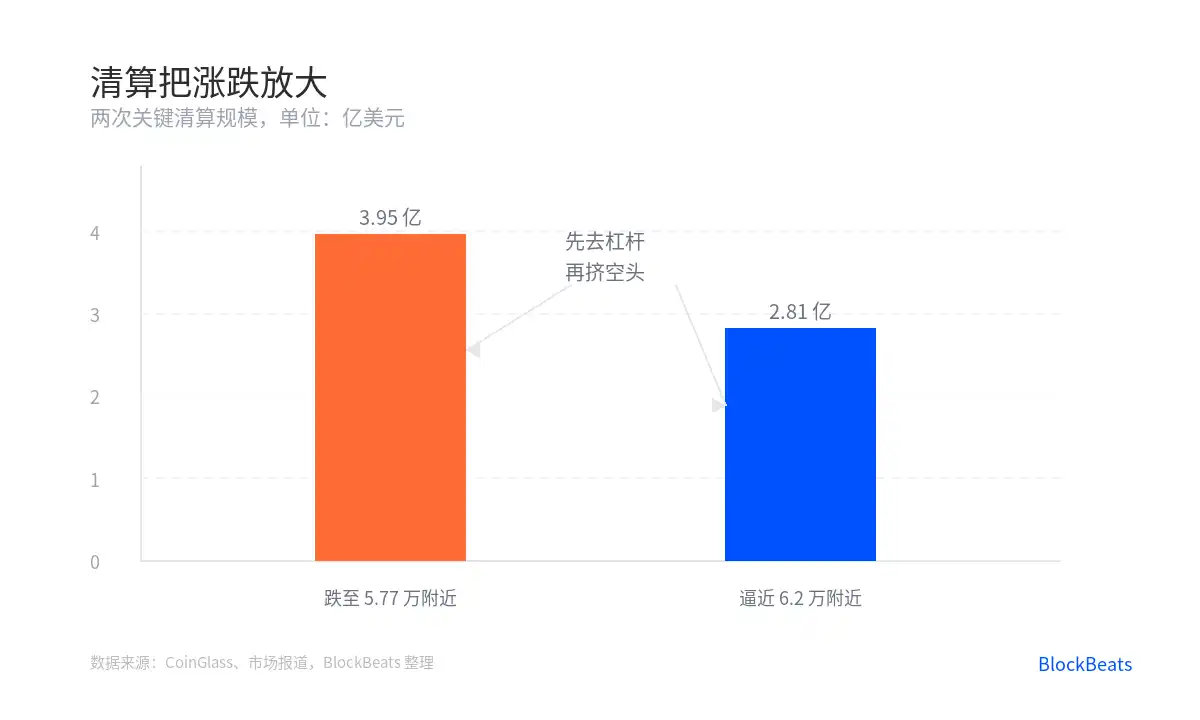
CoinGlass data shows that when Bitcoin dropped to around $57,000, it triggered about $395 million in liquidations. This figure indicates that the price decline was driven not only by selling pressure but also by leveraged positions being forced to exit.
After the forced liquidations, the market is actually more likely to rebound.
The reason is quite straightforward. The previous round of decline cleared out some long leveraged positions and pushed defensive sentiment to a high level. As macro news eases, when the price just needs to return to near a key level, it will make the bears nervous. Short covering is essentially buying. The higher the price goes, the more it forces additional short positions to retreat.
This is the second layer of momentum. When Ethereum and Solana led the gains, Bitcoin temporarily approached $62,000, with about $281 million in short bets liquidated.
Therefore, this rebound cannot be solely attributed to a single sentence from Wash. A more accurate breakdown would comprise three segments.
The first segment: inflation risks were mitigated, easing market concerns about the Fed's path. The second segment: employment data weakened, continuing to pressure rate hike expectations. The third segment: short positions were forced to cover, driving the spot price up faster.
If only the first paragraph is considered, the market conditions might be easily interpreted as a "macro bullish trend." If only the third paragraph is read, one might mistakenly think this is merely a technical rebound. The true structure lies in the fact that both of these events occurred simultaneously. The macro environment provided a reason for the price to move up, while the market positioning determined the speed of the upward movement.
The altcoin's reaction also demonstrates that this is not a rally exclusive to a single cryptocurrency.
After Bitcoin reclaimed the $60,000 level, Ethereum, Solana, and Dogecoin surged concurrently. Subsequently, Ethereum led the major cryptocurrencies in the upward movement, experiencing a roughly 12% increase over the past week. When funds started flowing from Bitcoin to Ethereum and Solana, the market discussion shifted from merely "Can Bitcoin hold its ground?"
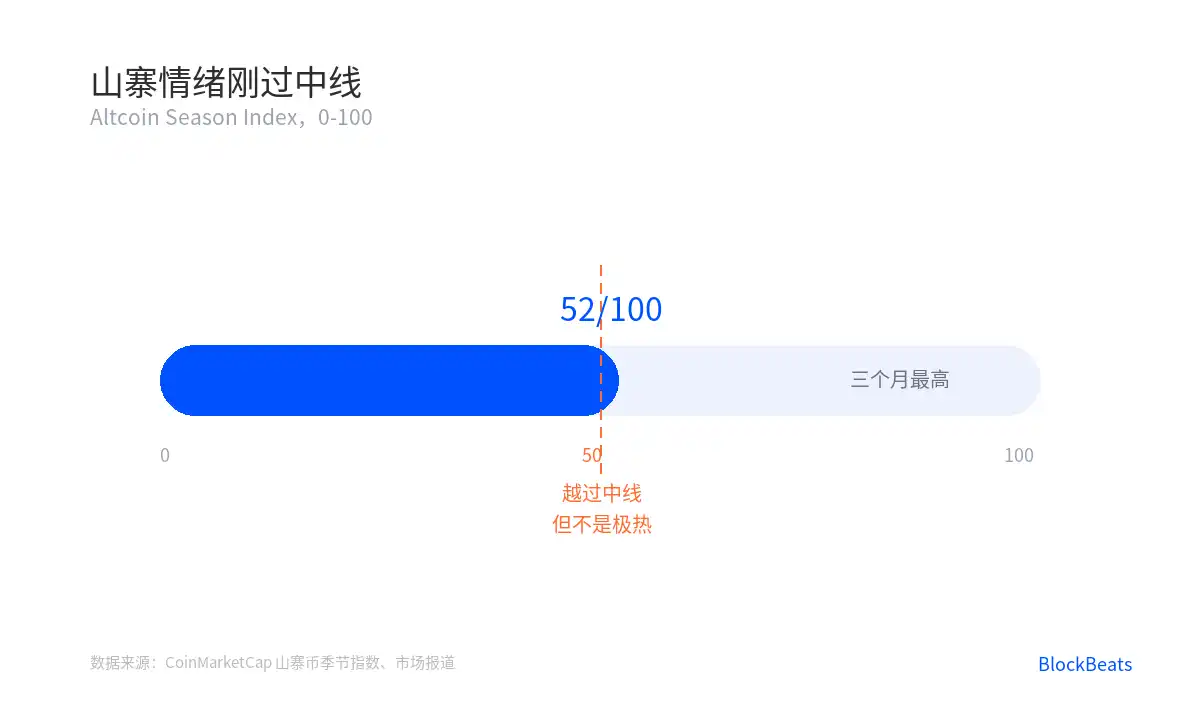
The CoinMarketCap Altcoin Season Index has risen to 52/100, the highest in three months. This position is quite subtle. It has just crossed above the midpoint, indicating that risk appetite has indeed returned, but we have not yet reached the phase of full-blown exuberance in altcoins.
This brings us to the first key point to note. A resurgence in altcoin sentiment does not necessarily confirm the onset of an altcoin season.
A true altcoin season typically requires a broader dispersion of capital. Currently, it appears more like a scenario where, following Bitcoin's stabilization, the market first bought back large-cap tokens with good liquidity. While Ethereum and Solana made significant moves, some small coins remained weak, and this divergence in performance itself is a signal.
The second point to consider is that the options market does not entirely trust the rebound.
The put/call skews for BTC and ETH still show that traders are willing to pay a higher price for downside protection. While prices have rebounded, insurance is not cheap. This detail is more telling than the spot price.
If traders genuinely believed that the trend had reversed, put option premiums would usually decline more rapidly. The current state is more akin to the spot market leading the price recovery, while the derivatives market has not yet retracted its safety net.
The third point is that a short squeeze cannot last indefinitely.
Shorts covering their positions will bring buying pressure, but this buying is one-off. It can propel the price up from oversold levels but cannot sustain an entire trend. Once the liquidation is over, the market will need new spot buyers to step in.
Therefore, what truly matters next is not whether Bitcoin has crossed a certain psychological price level but rather who continues to buy after it does. The strength of spot ETFs, stablecoin liquidity, and Ethereum and Solana's follow-through intensity will carry more information than just a single-day price surge.
The fourth point is that the macro variables are still a double-edged sword.
This rally has benefited from a decrease in inflation risk and a softening labor market. On the flip side, if subsequent data realigns with sticky inflation or if Fed rhetoric shifts once again, the market will reprice using the same logic in reverse. Bitcoin is not a detached macro asset; it simply reacts more quickly to changes in macro expectations.
The price has bounced back from an overly defensive stance, but true confirmation will have to wait until the options market is willing to unwind its insurance.
Welcome to join the official BlockBeats community:
Telegram Subscription Group: https://t.me/theblockbeats
Telegram Discussion Group: https://t.me/BlockBeats_App
Official Twitter Account: https://twitter.com/BlockBeatsAsia