Will the Model Monolith Eat Everything? The Agent Era Could Sprout More Independent Layers

TL;DR
· The "Fat Models" narrative suggests that model companies may vertically integrate APIs, tools, agent frameworks, and application entry points.
· However, for agents to perform tasks across data, tools, identity, payments, and enterprise systems, they cannot just be seen as a chat box upgrade.
· Model behemoths still hold advantages in compute power, capital, models, and distribution, but aspects like orchestration, memory, routing, and identity may leave room for startups.
In the AI Agent era, will model companies like OpenAI, Anthropic, Google, etc., continue to eat up APIs, tools, agent frameworks, enterprise applications, and consumer entry points as the market expects?
This is the core judgment of the "Fat Models" narrative: if closed-edge models continue to advance rapidly and vertically integrate through distribution and toolchains, most of the value in the AI industry may flow to the model layer. However, another view is that as AI transitions from chat applications to the age of agents, value may not necessarily only reside with model companies but could diffuse across multiple new infrastructure layers.
“Fat Models” Betting on Model Company Integration
The path of large model companies is not hard to understand: first, possess the most advanced base models, then package the capabilities into APIs, development tools, and agent frameworks, and finally enter consumer applications and enterprise workflows. As long as the model is powerful enough, the upper-layer experience, data, and developer ecosystem may gravitate towards the model platform.
This is also a key reason why capital is willing to give top AI companies high valuations. A May Reuters report showed that after Anthropic completed a $65 billion Series H financing, its post-money valuation reached $965 billion. OpenAI's latest financing disclosed in March this year gave it a post-money valuation of $852 billion. Alphabet's market value has also surpassed $4 trillion, expanding to over three times its year-end 2022 level. The market is placing high valuations on the model layer to bet on its future onboarding capability and profit margin.
However, there is still debate on whether the model's advantage is sufficient to allow these companies to simultaneously possess value at each layer above. Key elements like leading-edge models, compute power, research teams, cloud infrastructure, and enterprise customer resources are indeed concentrated in a few companies' hands; yet, once agents enter real workflows, the value chain will no longer revolve solely around "which model is the strongest."
Similar changes have occurred in multiple technology cycles. IBM once integrated mainframes into hardware, software, and service systems, later split by the PC ecosystem; Microsoft once controlled the desktop, and the web opened up new application entry points; carriers once owned vertically integrated networks, and the internet unbundled network services; AWS created a cloud platform exceeding a trillion-dollar scale, but beyond the cloud, a large number of independent software companies have still emerged.
These analogies are not meant to imply that "big platforms will always lose," but rather that after a technological cycle completes infrastructure deployment, value often spills over from a single integrated platform to more specialized layers.
The Intelligent Agent is Not a Chat Box, But a Cross-System Task Executor
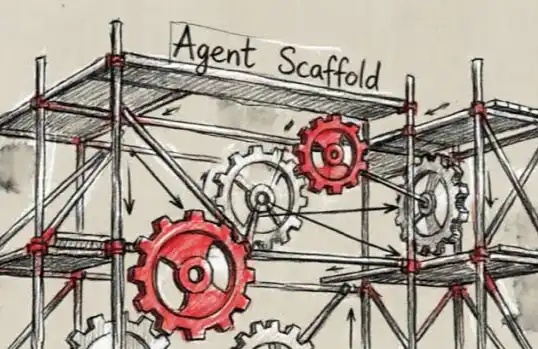
The key evolution of the Agent ecosystem is that AI is no longer just about answering questions, but is beginning to take on tasks. Around the intelligent agent stack, models, orchestration, memory, execution, identity, payments, and other layers may all form independent value. Different companies will combine and compete at their respective levels, rather than all relying on the same model platform.
The first change supporting this assessment is that model supply is becoming more diverse. Cutting-edge models are still leading, but open-source weight models, edge models, and commercial models are also continually emerging. Different models have differences in capabilities, latency, and cost. For many business workloads, enterprises and developers will make trade-offs between cost, speed, stability, and task quality, rather than defaulting all requests to the most expensive, most powerful model.
The second change is that AI use cases are too scattered. A model company can create a general chat application, as well as enter large gateways such as office, code, and search. However, for intelligent agents to truly enter specific processes in industries such as healthcare, finance, manufacturing, law, customer service, procurement, and logistics, each industry has its own data structure, compliance requirements, operational habits, and system interfaces. It is difficult for a single company to create the most suitable product for all scenarios.
Enterprise production environments will also reinforce this fragmentation. In the experimental stage, an enterprise can accept a model demonstration or a closed chat tool. Once entering a critical process, customers will require data residency, permission management, audit records, cost control, vendor replaceability, and compliance verification. At this point, enterprises prefer to assemble the right components rather than be forced to accept the default choice of a single platform.
This is also a key difference between intelligent agents and traditional chat applications. A healthcare intelligent agent may need to read medical records, check for drug interactions, access hospital systems, generate recommendations, and keep audit records. An enterprise procurement intelligent agent may need to access inventory, contracts, approval flows, supplier systems, and payment networks. They are more like "executors" moving between multiple services, rather than question-and-answer tools running in a single window.
Orchestration, Memory, Routing, and Identity, May Sprout Outside the Model
The intelligent agent infrastructure can be divided into multiple directions: orchestration, harness, memory, browser, routing, model marketplace, identity, and payments. Put more plainly, these layers correspond to: how to manage multiple intelligent agents, how to connect models to real-world tools, how to save and share context, how people interact with intelligent agents, which model should handle a request, how to prove the identity of the intelligent agent, and how intelligent agents complete payments.
The Orchestration Layer may become the control center of the AI Agent era. When multiple agents operate within an organization, they need to be deployed, monitored, authorized, collaborate, and have their risks mitigated. A single-model API struggles to address end-to-end process management issues.
A Harness can be understood as the "execution shell" of a model. If the large model is the brain, the harness is responsible for integrating it with files, databases, websites, robots, enterprise software, and physical devices. Different scenarios require different tools for connectivity, giving rise to more specialized products.
The Memory Layer deals with the context transfer problem. When multiple agents need to understand the same user, the same enterprise, or the same task, the context cannot be locked within a single chat window. Whoever can provide a transferrable, authorizable, and auditable digital memory may become the new infrastructure.
The value of Routing and Model Marketplaces comes from multi-model deployment. If a company uses multiple models simultaneously, they need to determine which model is best suited for which task and how to balance cost, latency, and accuracy. Model competition thus becomes not only a ranking competition but also a scheduling problem in a real production environment.
Identity and Payments are more future-oriented but are crucial for whether AI agents can truly execute transactions. As machine traffic and agent behavior increase, the network needs to differentiate who is making a request, whether it is authorized, and if the payment can be completed. If AI agents are to participate in e-commerce, subscriptions, micropayments, or enterprise procurement, existing human-oriented payment and identity systems may also need to be transformed.
Model Giants Still Strong, But Not Necessarily Capturing All Value
The boundaries of this modular narrative are also clear. It is not suggesting that large model companies will lose their dominance. Cutting-edge models remain the foundation of the AI experience, with computing power, data, research teams, and distribution capabilities still concentrated in the hands of a few giants. If model capabilities continue to widen rapidly, the upper-level ecosystem may still revolve around these top platforms.
The real divergence lies in whether the value of the AI Agent era will concentrate like in the chat app stage. As AI enters real workflows, users are concerned not only with "which model is the smartest" but also with the ability to integrate with legacy systems, switch vendors, control costs, auditability, and cross-tool task completion.
This leaves room for independent startups, but not every layer will grow into a large company. In the directions of orchestration, memory, identity, payments, browsing, and routing, each will eventually need to prove they have a strong enough entry point, network effects, or revenue-generating ability; otherwise, they could easily become just a feature of a model platform.
The model giants are consolidating their capabilities upwards, while startups and investors are betting that the AI Agent ecosystem will spawn more specialized layers. The unresolved core question of the AI Agent era is: Will models become a super platform that devours the entire stack, or will they serve as the starting point for a new round of modular infrastructure?
Welcome to join the official BlockBeats community:
Telegram Subscription Group: https://t.me/theblockbeats
Telegram Discussion Group: https://t.me/BlockBeats_App
Official Twitter Account: https://twitter.com/BlockBeatsAsia