Anthropic has launched the Claude Tag, why did they first help boost the registration of their competitor?

TL;DR
· Anthropic launched the @Claude beta within Slack in June, directly entering the AI employee application layer market.
· Viktor claimed to have seized the Claude Tag search term, losing 5 customers that day but gaining 407 registrations.
· The incumbents validated the demand, leading enterprise customers to shift focus to permissioning, compliance, and contextual control.
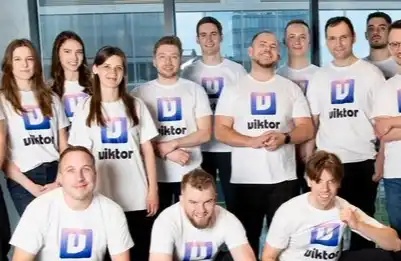
On June 23, after Anthropic launched the Slack-native AI assistant Claude Tag, it directly ran into Viktor, a startup that focuses on "AI employees." However, internal data later revealed by Viktor's founder showed that what seemed like a risky competitive product launch turned out to be one of Viktor's strongest growth moments since its inception.
This conflict gained attention because both sides were competing for the same enterprise entry point: putting AI into collaboration tools like Slack, Microsoft Teams, allowing it not just to answer questions but to read team context, receive tasks, call on tools, and asynchronously perform work, like a "AI colleague" permanently present in the company's workspace. The key question the market wants to see answered is whether startups relying on basic model companies such as Anthropic and OpenAI to grow their product will be squeezed out or validated if these basic model companies start building application layer products themselves.
After Being "Cloned" by an Incumbent, Go Buy Their Search Term First
Viktor's founder, Fryd, was not surprised by Anthropic's entry. In response, he wrote in the article that from the first day the company launched, almost everyone would ask the same question: What if Anthropic releases a competing product?
Viktor's response was not to prevent it but to leverage the buzz it brought for customer acquisition.
On the day of Claude Tag's release, Viktor claimed to have started a Google Ads brand campaign, bidding on "Claude Tag" related keywords, redirecting users searching for terms like Claude Tag, multi-agent, AI employee to Viktor's own landing page. The founder's statement was very direct: Anthropic was responsible for educating the market, and Viktor was responsible for capturing the demand.
This was a typical launch day interception strategy. For a small company, the challenge often lies not only in building a product but in making the market aware that this product category exists. Previously, few would actively search for concepts like "multi-player AI employee." When a large cutting-edge model company releases a similar product, search demand is artificially generated.
Viktor said that the day did not see the customer exodus that outsiders had imagined. The company actively encouraged some customers to try Claude Tag before deciding whether to switch. According to the founder's account, Viktor lost 5 customers on the day of the launch while adding 407 new sign-ups. The company did not disclose the conversion rate of these sign-ups into paying customers.
This is precisely the most interesting paradox of this conflict: while a big player launching a competitor is certainly a threat, the attention it brings could also serve as a free demand generator for a small company.
Viktor Says He's Not Offering a Claude Tag Clone
Viktor emphasized repeatedly that the two products are not identical.
The Anthropic official page indicates that Claude Tag is currently aimed at Claude Enterprise and Team users, enabling them to tag Claude in Slack to have Claude read thread context, perform long tasks or scheduled tasks, and manage permissions via Agent Identity. Both TechCrunch and TechRepublic have reported that the product is still in beta, with a focus on integrating Claude into Slack workflows.
Viktor's comparison document describes Claude Tag as a Slack-only beta with integration with Claude Opus 4.8, around 14 connectors, no free tier, and primarily providing output based on recent conversations in Slack channels. Since this comparison comes from a direct competitor, the feature discrepancies are more suited to be viewed as Viktor's product positioning statement rather than a neutral review.
Viktor positions his product as a more comprehensive "AI coworker" that supports both Slack and Microsoft Teams, can connect to over 3000 tools, and allows users to choose different models. Official communications from the company and Accel have previously stated that Viktor operates within enterprise collaboration tools, with the goal not only to reply within threads but to deliver presentations, dashboards, spreadsheets, or ad campaigns and perform tasks via a browser.
The narrative set out to address a survival question: when a model company builds a similar app, can an app-layer company retain users through a narrower focus, faster iteration, and a more complete workflow?
The founder used the example of Ford and GM to explain his reasoning. A single standardized product may not necessarily capture the entire market, as different customers may require different forms. In the AI coworker scenario, agents within Slack, cross-tool employees, developer-oriented components, and business team-oriented button-based products may correspond to different buyers.
The key message Viktor most wants to convey is that Anthropic's downfall is not the endgame but rather has brought a previously vague category to the market.
The Real Divide Lies in Enterprise Context
Besides product functionality, Viktor has shifted the competitive focus to model selection and enterprise context.
The first layer is the model. Viktor's assessment is that Anthropic's in-house application inherently ties to the Anthropic model. Once OpenAI, Google, or other vendors release stronger models, standalone applications can switch the underlying model, while a model company's own product finds it harder to break free from this binding.
This is not a new issue. AI application companies like Cursor, Perplexity, Granola, face a similar dilemma: they leverage the capabilities of large model companies while competing with them at the application layer. The common defense of application companies is that they are not just a "model shell" but they integrate multiple models, product experiences, workflows, and customer needs into an end-to-end product.
The second layer is the enterprise context. Viktor believes that in the future, what is truly hard to migrate is not the model itself but the operational memory that an enterprise has built within the AI system, including customer commitments, edge cases, historical attempts, team preferences, tool permissions, and cross-project knowledge.
If this context is locked within a single model vendor's agent layer, the enterprise may not be renting intelligence but rather leasing back its operational memory to the supplier. Therefore, Viktor describes himself as "renting the best intelligence but owning their own context."
This statement carries a clear tone of self-defense. Base model companies not only have the model but also possess brand recognition, funding, enterprise client relationships, and distribution channels. Placing Claude Tag within the Claude product ecosystem may divert applications companies in self-serve customer acquisition, but in enterprise sales, the larger Claude brand may bring a trust advantage.
Giant Validation Tracks also Squeeze Enterprise Deals
Viktor did not frame this as a simple victory.
In response, the founder acknowledged that the self-serve market can leverage growth through advertising and traffic tactics, but the enterprise market is more complex, and the enterprise is the primary site of global knowledge work. For enterprise customers, adopting AI staff entails not just trying out a tool but also involves security, permissions, compliance, integration, data retention, and long-term vendor selection. On these issues, large model companies have a natural advantage.
He also bluntly stated that Anthropic is Viktor's biggest competitor and the greatest threat to its mission. The so-called launch day sign-ups are still not enough to change this assessment.
This makes this conflict more like a microcosm of AI application-layer startups: when a foundational model company not only sells the "engine" but also starts building the "whole vehicle," downstream companies are forced to prove that they are not just interchangeable interfaces. They need to acquire customers faster, dive deeper into workflows, be more adept at integrating multiple models, and convince customers that their context and business knowledge will not be locked into a single model ecosystem.
Anthropic's launch of Claude Tag did bring traffic and validation to Viktor. However, the same move also placed this company in a more direct competitive position. When a giant helps educate the market, the cost is that it will also come to compete for the market. For startups like Viktor, the short-term issue is not whether they have been crushed, but whether they can turn the hype of launch day into long-term retention and real enterprise orders.
Welcome to join the official BlockBeats community:
Telegram Subscription Group: https://t.me/theblockbeats
Telegram Discussion Group: https://t.me/BlockBeats_App
Official Twitter Account: https://twitter.com/BlockBeatsAsia