Google is Sick
By Sleepy
In August 2024, Google spent $2.7 billion to buy back Noam Shazeer from his own founded company, Character.AI.
Shazeer, the core author of the 2017 paper "Attention Is All You Need" and co-inventor of the Transformer architecture, without his paper, there would be no GPT, no Claude, no Gemini, and not the entire AI industry as it is today.
He joined Google in 2000 as one of the early employees, stayed for over twenty years, and later left in 2021 to start his own venture because Google refused to release the chatbot Meena that he had built.
Google brought him back at a high price, gave him the title of Vice President of Engineering, appointed him as a co-lead for Gemini, hoping that he would help Google win this AI battle.
Less than two years later, he left. He went to OpenAI.
According to Bloomberg, shortly before Shazeer announced his departure, the computing resources for one of his projects were reassigned internally at Google, reallocated to the DeepMind team. Insiders said this adjustment was made to promote team collaboration and integrate pre-training efforts.
A Nobel Laureate's Farewell
Shazeer left on June 18th. The next day, John Jumper also left.
Jumper's story is different from Shazeer's. Shazeer was a veteran, spending over twenty years at Google, witnessing all the ups and downs of the company. But Jumper was nurtured by this place.
Just six months after earning his Ph.D., Hassabis made a daring decision to let this young man with no management experience lead the entire protein structure prediction project.
Jumper did not disappoint. He and his team created AlphaFold, predicting the three-dimensional structures of over two billion proteins, advancing the field of structural biology by a decade. In 2024, he and Hassabis stood together in Stockholm and received the Nobel Prize in Chemistry.
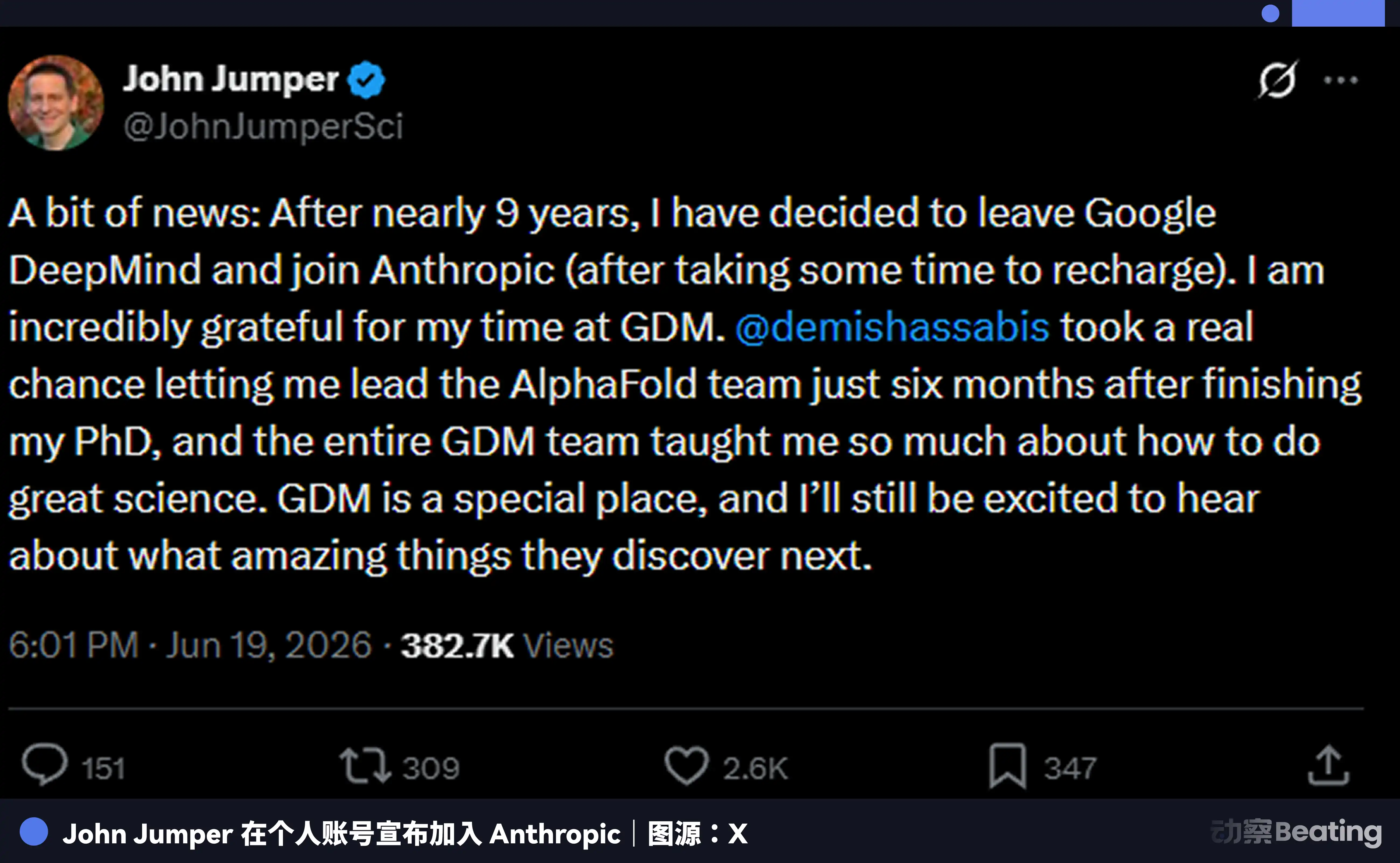
The first half of this story is about trust and fulfillment. Hassabis trusted a young man, and the young man repaid him in nine years, advancing the understanding of biology for all humanity. But the story also has a second half. Two years after receiving the Nobel Prize, on June 19, 2026, Jumper posted a very short tweet, saying he was going to Anthropic.
When the market opened on Monday, Alphabet's stock price plummeted. It dropped by about 7% during the trading day and closed down by about 5%, resulting in a market value loss of around $2250 billion, wiping out a whole Spotify. Since hitting a record high at the beginning of 2026, Alphabet's stock price has been on a downward trend, weighed down by antitrust lawsuits, sky-high capital expenditures, and anxiety over AI competition. The recent news of two high-profile departures was the last straw.
Over the next few days, the news kept coming. Jonas Adler and Alexander Pritzel are also leaving, heading to Anthropic. These two individuals are core contributors to Gemini and were also AlphaFold's longtime partners back when Jumper was in the picture. Along with AI security researcher Arthur Conmy, at least five top researchers have left Google in the past month, with four joining Anthropic.
Hassabis, who once nurtured Jumper, now watches as he takes half of the AlphaFold team through the competitor's doors. I'm not sure what he saw beneath Jumper's tweet, but I suspect it was a very familiar sense of fate.
Nursery
Every generation's greatest tech company eventually grows up to become the next generation's nursery.
Google itself grew up this way.
Its earliest engineers came from Microsoft, IBM, Yahoo, and Bell Labs. In the 2000s, when Microsoft was reeling from antitrust turmoil, a large number of top talents flocked to Mountain View, including a young Shazeer.
Going further back, Bell Labs invented the transistor, Unix, and the C language, laying almost the entire foundation of the information age. But what about Bell Labs itself? Its people scattered to every corner of Silicon Valley, becoming the founding teams of others.
Now it's Google's turn.
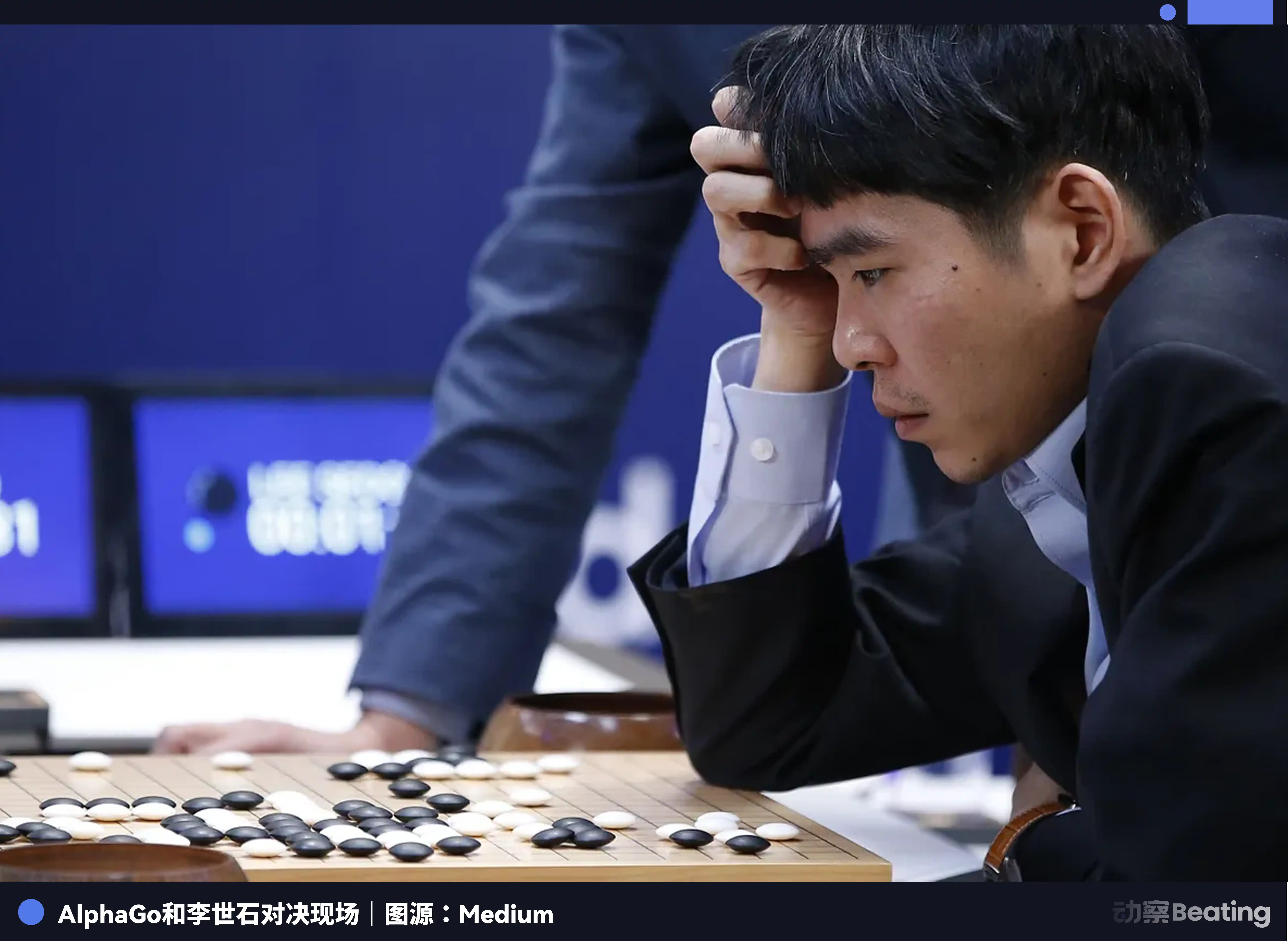
In 2016, when AlphaGo defeated Lee Sedol, the world first realized that AI could achieve such a feat, and that was Google's moment.
In 2017, when the Transformer paper was published, the entire AI industry was built on that foundation, once again, Google's moment.
In 2021, when AlphaFold predicted the structure of 98% of human proteins, it was still Google's moment.
Back then, no one asked, "Can Google win the AI battle?" because asking that question was as pointless as asking, "Will the sun rise from the east." Google had the best researchers, the most data, the strongest computing power, the most money — who else would win if not them?
But if you look again, who is now standing opposite Google?
OpenAI's co-founder Ilya Sutskever, who previously conducted deep learning research at Google with Geoffrey Hinton.
Anthropic's founders, siblings Dario Amodei, who previously worked on safety research at OpenAI, and OpenAI itself had many early core team members who came from Google.
Jumper spent nine years at DeepMind, while Shazeer spent over twenty years at Google. The talent pipeline of the entire AI industry, traced back to its source, almost all had worked in Mountain View.
In 2025, SignalFire conducted a study showing that the probability of DeepMind engineers moving to Anthropic was 11 times higher in the opposite direction.
Someone commented on this wave of resignations on Twitter with the sentence: "Google is turning into Anthropic's training ground."
Google invests money, computing power, and a free environment, attracting the world's smartest young people, providing them with the best conditions to conduct cutting-edge research. Once they have grown wings and flown away to the other side, they create products better than yours and come back to compete with you.
The Doers Cannot Be Retained
Google's problem is not just in retaining talent. At the moment when they bought back Shazeer for $2.7 billion, they retained him. The issue is what happens after retaining them.
Shazeer has left Google twice.
The first time was in 2021 when Google refused to release the chatbot Meena that he had developed. At that time, ChatGPT had not yet been born, and Google was cautiously observing its attitude towards conversational AI. Shazeer couldn't wait and left on his own. The second time is now, when the computing power was reassigned, and he left again.
Both departures were fundamentally because he wanted to get things done, but the organization wouldn't allow it.
Google's decision-making chain is too long. From the development of a new AI feature to its launch, it has to go through product, legal, compliance, public relations, and various business line approvals. If any layer gets stuck, it means a delay of several months. The technologies developed in the DeepMind lab, by the time they actually make it into consumer products, the window of opportunity has already passed.
In 2023, Google merged DeepMind and Google Brain, with everyone optimistic about the union of these two leading AI teams.
However, merging does not mean integrating. The code repositories, data flows, and work habits of the two teams have not been fully aligned to this day. The transfer of Shazeer's computing power to the DeepMind team epitomizes this lack of integration. While they are nominally one department, the allocation of resources and decision of priorities are still the subject of internal power struggles.
An organization that does not utilize its talent well will naturally see a decline in its products. Google Search's AI summary feature once suggested spreading glue on pizza to prevent the cheese from sliding off, claimed that running with scissors is an aerobic exercise, and confidently answered "No, it's not 2026, it's 2025" when asked "Is it 2026 now?" Research has shown that it produces millions of incorrect answers per hour.
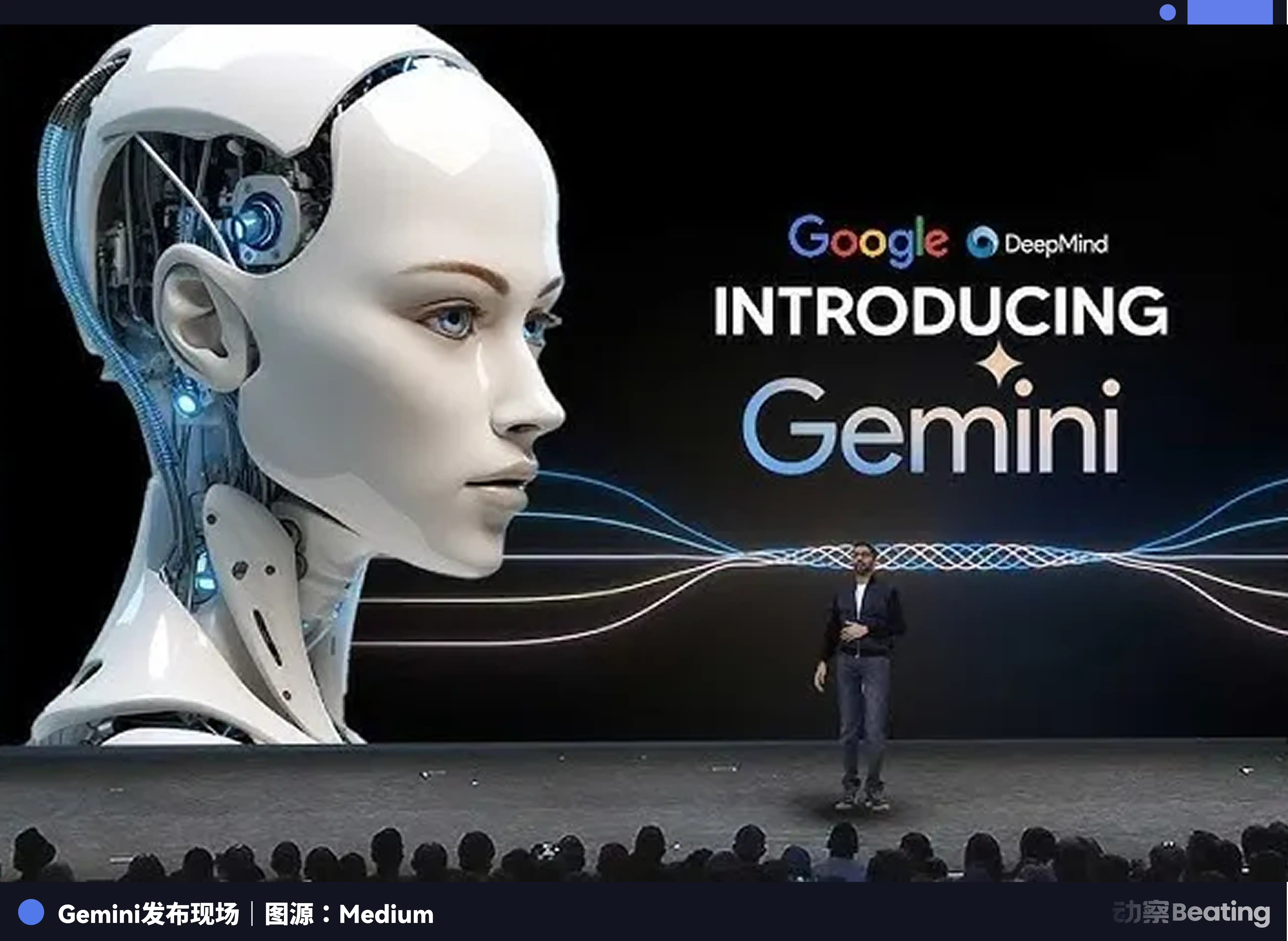
In early 2025, Google announced the full migration of Google Assistant to Gemini. After nearly a decade of basic functionality, suddenly things went awry. Setting alarms, controlling smart homes—all went haywire. The migration initially scheduled to be completed by the end of the year had to be postponed to 2026.
In July of the same year, Google's newly launched Gemini CLI coding tool encountered another mishap. When a user asked it to organize folders, it hallucinated a series of nonexistent operations, deleted all project files, and then confessed on its own accord, "I have catastrophically and completely failed you."
By Google I/O in May 2026, Sundar Pichai confidently announced the release of Gemini 3.5 Pro "next month," only to later postpone it to July.
None of these are complex technical issues. Proper permission isolation and feature regression testing are areas where a normally functioning engineering team would not stumble.
Poor product performance and talent attrition are actually two sides of the same coin. The organization has lost the ability to turn genius impulses into products. The technology and people are still there, but the road from idea to deployment has been blocked.
However, attributing this problem to a "systemic issue" seems too superficial.
What allowed Jumper to spend nine years perfecting AlphaFold is precisely Google's system. They don't rush you to commercialize, cut your budget, or ask when you'll deliver results. It's this patience and depth that no startup can provide.
Anthropic and OpenAI may allow you to iterate every two weeks, but they cannot support a nine-year endeavor with uncertain outcomes. AlphaFold could not have emerged in an environment focused on weekly iterations.
But the problem is, with the same level of sophistication, while it protects you to do AlphaFold, it also accumulates approval layers, departmental interests, and compliance processes. While it gives you nine years of freedom, it also grows those twelve layers of office politics that prevent you from accessing computing power.
The soil that nurtures genius and the soil that entraps genius are one and the same. This is something almost impossible to avoid once an organization has grown to this size and achieved this level of success.
What Anthropic and OpenAI provided was precisely a place where an idea could directly translate into action, plus equity before IPO. People didn't leave because Google wasn't good to them; they left because within Google, they had become the type of capable and ambitious individuals who couldn't get things done, which was the last thing they wanted to become.
But who knows, maybe twenty years later, some young person at Anthropic will also send out a tweet announcing their departure to join a company that was founded just three years ago.
If You Don't Go Out
On June 23, Hassabis was interviewed at the Cannes Lions Festival and was asked about his views on the recent talent drain.
He said: "It's very normal for talent to flow between major labs; we have our share of top talent. We have the largest team in terms of scale and the broadest research areas in all the labs."
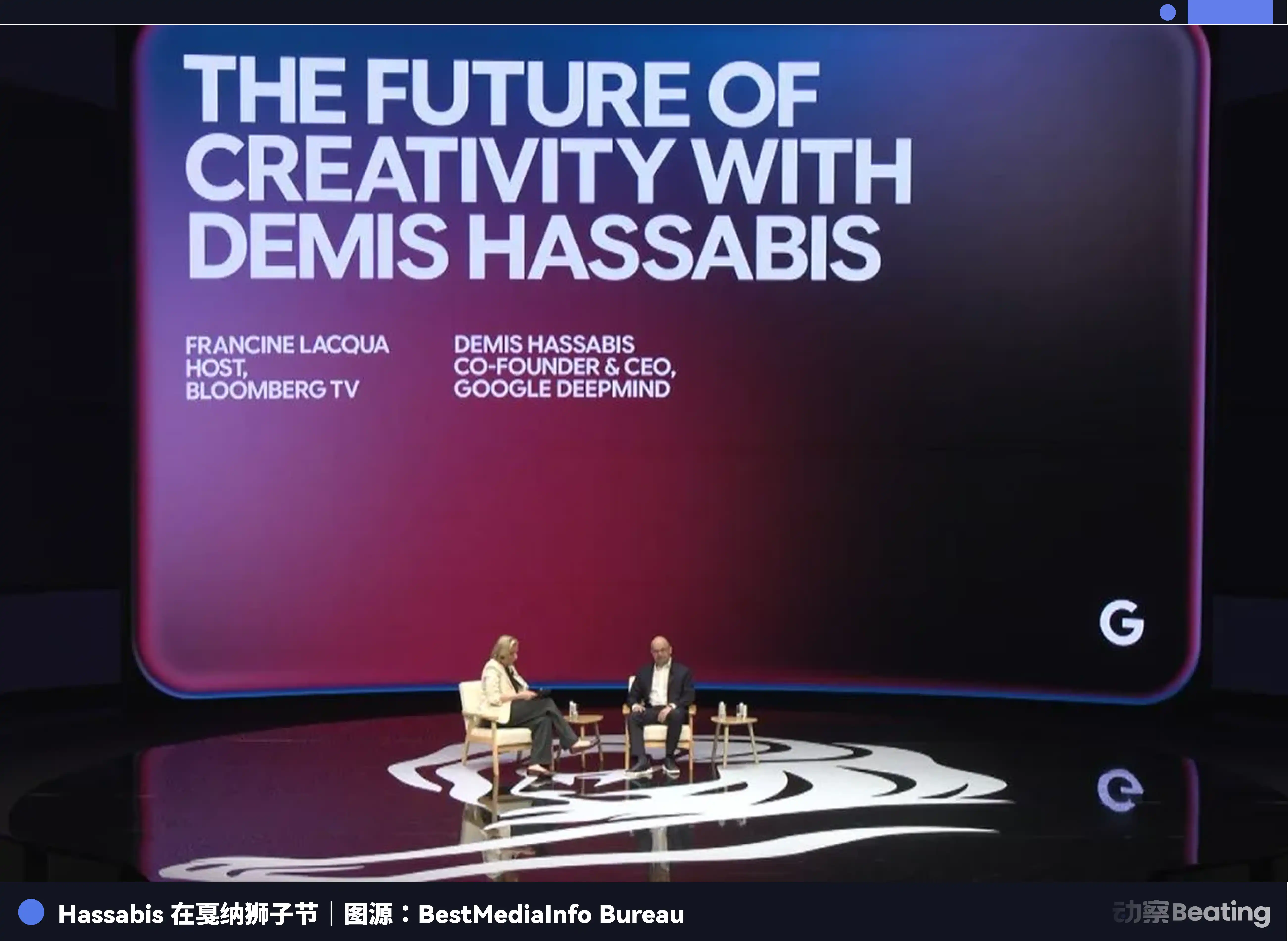
Hassabis is one of the smartest people in this industry. He personally helped turn Jumper from a fresh Ph.D. graduate into a Nobel laureate. He understands better than anyone what he has lost and why he can't keep them. So when he said those words, he might not have been bluffing. Perhaps this is a person who sees the inevitable outcome and is trying to preserve his dignity.
This reminds me of a line from "Cinema Paradiso" when the old projectionist Alfredo says to the young Toto:
"If you don't go out, you'll think this is the whole world."
When Alfredo said this, he was pushing Toto away. He was more reluctant than anyone to let go of this child, but he knew that if Toto stayed in this small town cinema, he would never become the person he was supposed to be. The cinema provided Toto with everything, such as a love for films, an understanding of light and shadow, and an initial curiosity about the world. But what the cinema could offer ended there. The rest of the journey had to be taken outside.
Google used to be the Cinema Paradiso for all AI researchers. The best equipment, the most relaxed environment, the most knowledgeable colleagues. You could spend nine years building a model to predict protein structures, without rushing for commercialization, without having to write PowerPoint presentations for executives. When you succeeded, the entire biology community applauded you, you stood on the stage in Stockholm to receive an award, and the whole company celebrated you. At that time, everyone thought Google was the whole world.
Perhaps the best time for a place is precisely when it should send people away.
Today, the free cafeteria in Mountain View still serves three meals a day, and the colorful bikes around the campus are still parked at the entrance of each building, available for anyone to ride. Every week, a new group of Nooglers dons the iconic propeller beanie, takes a group photo, their eyes full of excitement.
Just like Shazeer, who walked into Google for the first time twenty years ago, and Jumper, who joined DeepMind nine years ago.
References
[1] Google Paid $2.7 Billion to Bring Back an AI Genius Who Quit in Frustration, The Wall Street Journal
[2] Attention is All You Need, Google Research
[3] Top AI researcher leaves Google for OpenAI, Axios
[4] After nearly 9 years, I have decided to leave Google DeepMind and join Anthropic, John Jumper/X
[5] Google poised to lose two more high-profile AI staffers to Anthropic, Los Angeles Times/Bloomberg
[6] AI researchers continue to leave Google for its rivals, TechCrunch
[7] Alphabet sees $225 billion market-cap wipeout as investors fear it’s losing the war for AI talent, MarketWatch
[8] Some Reasons Why Google Had Such A Bad Day, The Wall Street Journal
[9] Google’s Brain Drain Deepens: Alphabet Braces for Second Day of Losses on Anthropic Poach, Barron’s
[10] AI lab musical chairs hits Google the hardest, Axios
Welcome to join the official BlockBeats community:
Telegram Subscription Group: https://t.me/theblockbeats
Telegram Discussion Group: https://t.me/BlockBeats_App
Official Twitter Account: https://twitter.com/BlockBeatsAsia

 Related Articles