How does non-farm payrolls data affect gold prices?
Non-farm payrolls data is one of the important economic indicators released monthly by the U.S. Department of Labor. It reflects the number of new jobs in the non-agricultural sector and is widely regarded as an important indicator of the health of the U.S. economy. For gold investors, the market often has violent fluctuations before and after the release of non-farm payrolls data. 4E platform block trading, with its efficient trading system and diverse commodity derivatives, provides investors with an ideal trading environment. Here, investors can take advantage of high leverage, low fees and low thresholds to flexibly respond to market changes brought about by non-farm payrolls data.
The impact of non-farm payrolls data on gold prices
As a safe-haven asset, the price of gold is affected by many factors, including the global economic situation, geopolitical risks, inflation rates and interest rates. As an important indicator of the health of the US economy, non-farm data has an impact on gold prices in the following aspects:
· Changes in the US dollar index
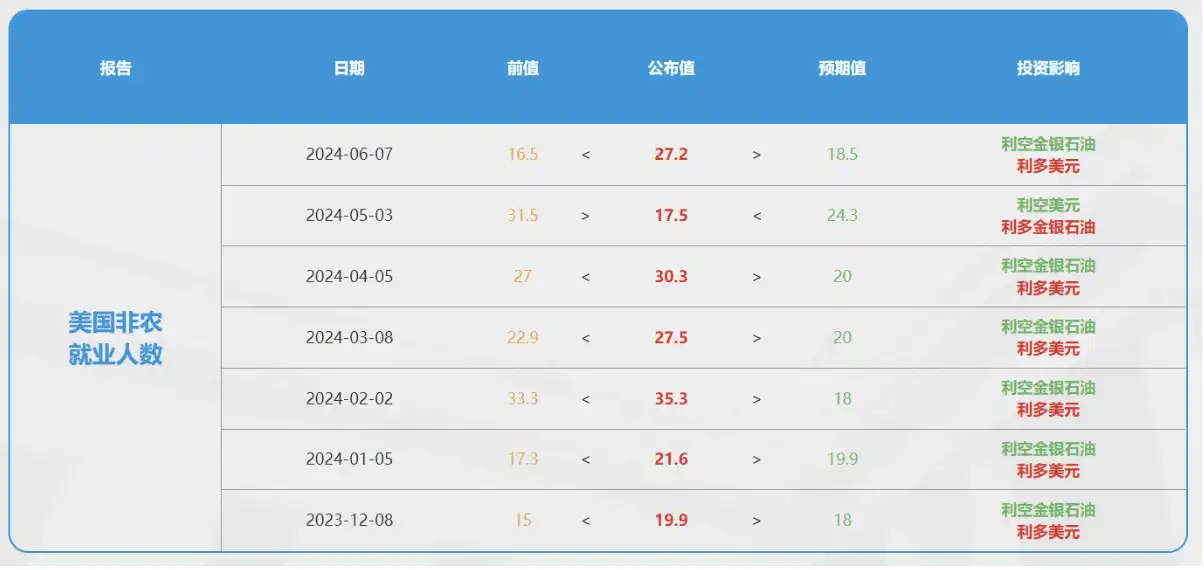
Non-farm data has a direct impact on the US dollar index. When non-farm data is strong, indicating that the US job market is in good condition, it usually pushes up the US dollar index. The US dollar and gold prices are usually negatively correlated: when the US dollar strengthens, gold prices weaken; when the US dollar weakens, gold prices strengthen. Therefore, strong non-farm data tends to lead to a decline in gold prices, and vice versa.
· Adjustment of interest rate expectations
The Federal Reserve's monetary policy has an important impact on gold prices. Non-farm data is one of the important references for the Federal Reserve to formulate monetary policy. When non-farm data is strong, the market expects that the Federal Reserve may accelerate the pace of interest rate hikes, which will increase the opportunity cost of holding gold, thereby causing gold prices to fall. On the contrary, weak non-farm data may trigger market expectations that the Federal Reserve will slow down interest rate hikes, which is good for gold prices.
· Market risk aversion
Although the non-farm data reflects the state of the job market, its performance also indirectly affects the overall risk aversion of the market. When the non-farm data is far below expectations, the market may worry about the economic outlook, and risk aversion will rise, thereby driving up gold prices. On the contrary, when the non-farm data is strong, market confidence will increase, risk aversion demand will decrease, and gold prices may be under pressure.

Changes in gold prices before and after the release of non-farm data
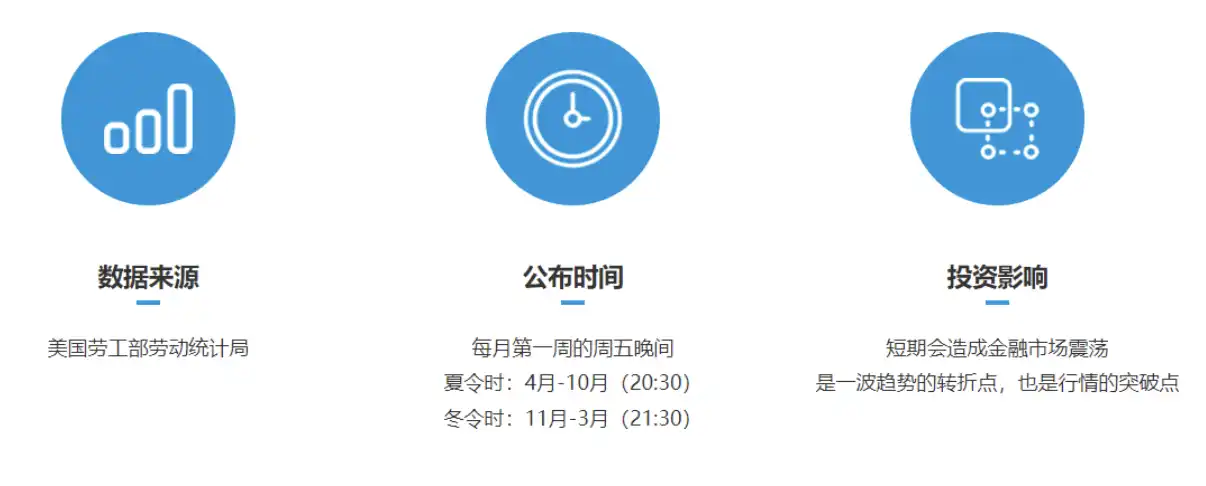
Non-farm data is usually released on the first Friday of each month, at 8:30 a.m. Eastern Time (8:30 or 9:30 p.m. Beijing Time, depending on whether it is daylight saving time). The gold market tends to experience significant volatility around this time point.
· Market expectations before the release
Before the release of non-farm data, there will be a lot of forecasts and analysis in the market, and investors adjust their positions based on these forecasts. During this process, the price of gold may fluctuate to a certain extent. If the market generally expects strong non-farm data, the price of gold may start to fall before the release; if the expected data is weak, the price of gold may rise.
· Instantaneous reaction when data is released
At the moment when non-agricultural data is released, the market often fluctuates violently due to the sudden release of information. Automatic trading algorithms and high-frequency traders react quickly within seconds after the data is released, causing gold prices to fluctuate sharply in an instant. This fluctuation can sometimes be completed in a few minutes, after which the market will enter a short digestion period.
· Market digestion after the release
After the release of non-agricultural data, the market will interpret and analyze the data, and the price of gold will gradually adjust according to the new information. If the data is significantly higher or lower than expected, the fluctuation of gold prices may last longer. During the digestion period, investors will re-evaluate their investment strategies, causing further fluctuations in gold prices.
The impact of non-agricultural data on gold investment strategy
Understanding the impact of non-agricultural data on gold prices is crucial for gold investors to formulate investment strategies. The following are several common investment strategies:
· Short-term trading strategy
For short-term traders, the fluctuations before and after the release of non-agricultural data are a good opportunity to make short-term profits. Such traders usually enter and exit the market quickly before and after the data is released, taking advantage of the sharp price fluctuations to make profits. However, this strategy is high-risk and requires investors to have strong market analysis and quick response capabilities.

· Long-term investment strategy
Long-term investors pay more attention to the long-term trend of gold rather than short-term fluctuations. Although non-agricultural data may cause sharp fluctuations in gold prices in the short term, the impact on the long-term trend is relatively limited. Long-term investors can take advantage of price fluctuations after the release of non-agricultural data to buy on dips or sell at highs to optimize investment costs.
· Hedging strategy
For investors holding a large number of gold positions, hedging strategies can be used to manage risks before and after the release of non-agricultural data. For example, if you hold a long position, you can short before the release of non-agricultural data to hedge the risk of a possible decline in gold prices. If the price of gold falls after the data is released, the gains from shorting can offset the losses of long gold positions.
Advantages of 4E Block Trading Platform
When formulating and implementing the above investment strategies, it is crucial to choose a suitable trading platform. 4E Blockchain Trading Platform provides significant advantages in this regard: · Support multiple commodities · The 4E platform supports multiple commodity derivatives trading such as gold, silver, crude oil, and natural gas. Investors can diversify their investments and spread their risks on the same platform. · High leverage and long and short trading · The 4E platform provides long and short trading with 10-300 times leverage, which allows investors to leverage larger market positions with smaller funds and improve the efficiency of capital utilization. Of course, high leverage also means higher risks, and investors need to operate with caution.
· Stable and smooth platform, transparent quotation
The 4E platform is known for its stable and smooth trading experience and transparent quotation system, ensuring that investors can execute transactions in a fast-changing market in a timely manner. The low transaction cost also saves investors a lot of money.

· Low threshold trading
The minimum transaction amount of the 4E platform is only 0.01 lots, and the amount is less than 10 US dollars, which is especially suitable for novice investors. This greatly reduces the threshold to enter the market, allowing more investors to participate in commodity trading and gradually accumulate experience.
The impact of non-agricultural data on gold prices is significant and complex. Understanding the release mechanism of non-agricultural data and its impact on the market can help gold investors better cope with market fluctuations. Choosing a stable, transparent, low-cost and low-threshold platform such as 4E platform can provide investors with a better trading environment and tools, helping them better seize opportunities in a complex market and achieve investment goals.
This article comes from a contribution and does not represent the views of BlockBeats
Welcome to join the official BlockBeats community:
Telegram Subscription Group: https://t.me/theblockbeats
Telegram Discussion Group: https://t.me/BlockBeats_App
Official Twitter Account: https://twitter.com/BlockBeatsAsia