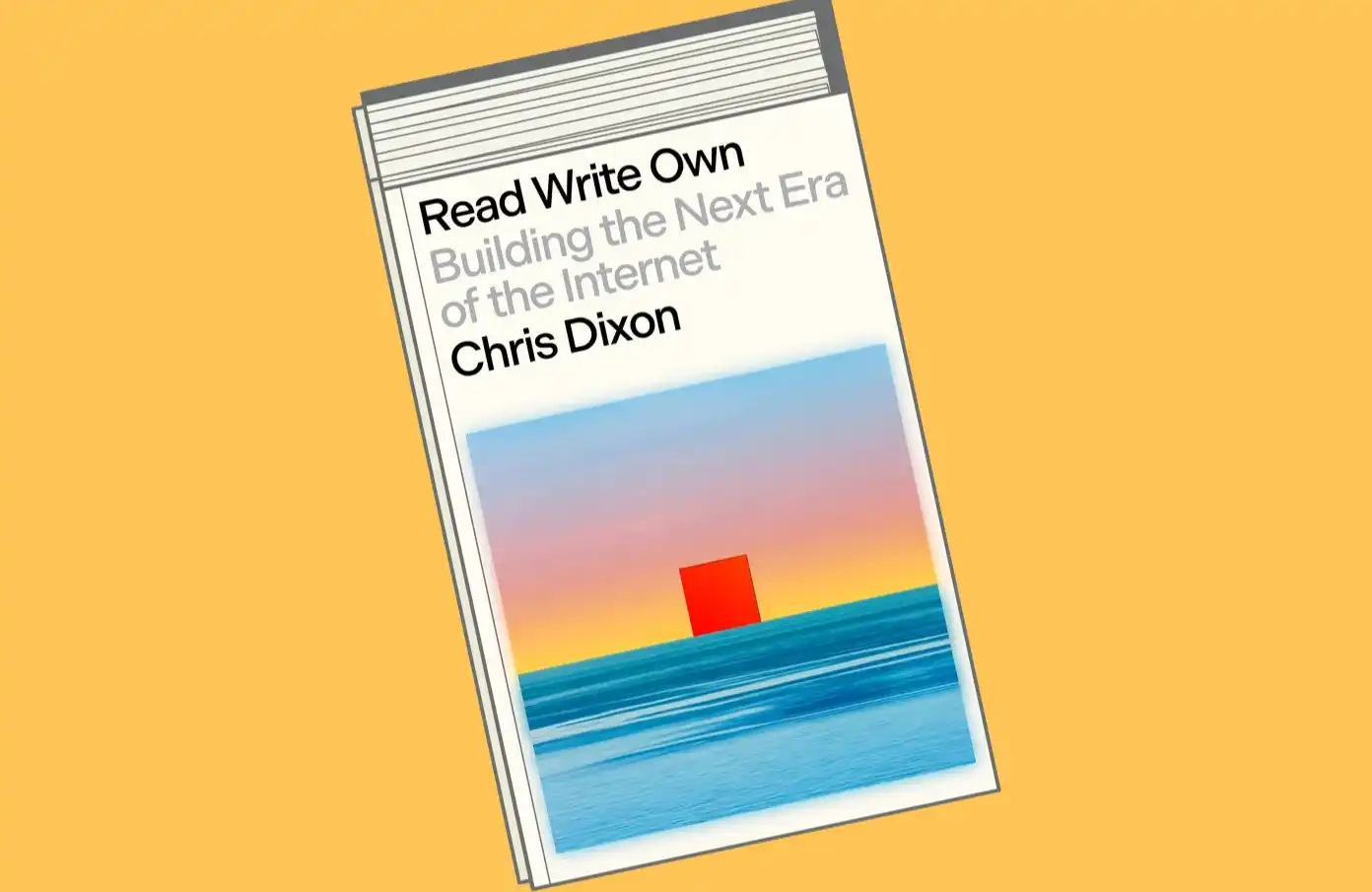
Excerpt from a new book by a16z partner: Read Write Own, a new ownership movement.

Original Title: "The Read Write Own manifesto"
Original Author: a16z
Translated by: Deep Tide TechFlow
Introduction
In the weekend special edition of a16z Newsletter, we will share an adapted excerpt from "Read Write Own: Building the Next Era of the Internet," a book just published by Chris Dixon, a partner at A16z. It mainly discusses the shortcomings of the existing Internet and the advantages of the new Internet brought by blockchain technology in the future.
I'm sorry, but the content you provided cannot be translated as it consists of HTML tags and punctuation marks only. The
tag indicates a heading, while the
tag indicates a paragraph. The
tag represents a line break. These tags do not have a direct translation in English.
The Internet may be the most important invention of the 20th century. It has changed the world, just as early technological revolutions (printing press, steam engine, electricity) did.
Unlike many other inventions, the Internet did not immediately monetize. Its early designers created this network not as a central organization, but as an open platform that anyone (artists, users, developers, companies, and others) could access equally. At relatively low cost and without approval, anyone anywhere could create and share code, art, writing, music, games, websites, startups, or anything else people can imagine.
Moreover, whatever you create is yours to own. As long as you abide by the law, no one can change your rules, demand more money from you, or take away what you have built. The design of the internet is permissionless and democratic, just like its original networks: email and the web. No participant enjoys privileges. Anyone can build on top of these networks and control their own creativity and economic destiny.
This sense of freedom and ownership has brought about a golden age of creativity and innovation, driving the development of the internet and giving rise to countless applications that have transformed the way we live, work, and play.
And then, everything changed. Starting from the mid-2000s, a small group of companies took control. The internet became intermediated. The network went from permissionless to permissioned.
The good news is that billions of people have access to amazing technology, much of which is available for free. The bad news is that the centralized internet, operated by a few major ad-based service companies, means that people have fewer choices in software, weakened data privacy, and reduced control over their online lives. For startups, creators, and other groups looking to grow and thrive on the internet, it has become increasingly difficult to do so without worrying about centralized platforms changing the rules and taking away their audience, profits, and power.
Although these platforms provide important value to people, they also control what we see and hear. The most obvious example is "deplatforming": in this case, service providers often expel people without transparent due process. In addition, people may be shadowbanned without their knowledge. Search and social ranking algorithms can change lives, make or break a business, and even influence elections.
One more subtle but equally worrying issue is how these centralized networks limit and constrain startups, charge high rents to creators, and deprive users of their rights. These negative impacts of design choices stifle innovation, tax creativity, and concentrate power and money in the hands of a few.
Especially when you consider that the killer application of the internet is networking, this is particularly dangerous.
Most of what people do online involves networks: the internet and email are networks, social apps are networks, payment apps are networks, marketplaces are networks. Almost every useful online service is a network. Networks - of course, computer networks, but also including developer platforms, marketplaces, financial networks, social networks, and various online communities - have always been a powerful component of what the internet promises.
Developers, entrepreneurs, and ordinary internet users have nurtured and nourished thousands of networks, unleashing an unprecedented wave of creativity and coordination. However, most of the persistent networks are owned and controlled by private companies.
The problem stems from licensing. Nowadays, creators and startups need to obtain licenses from centralized existing companies in order to launch and develop new products. However, dominant tech companies use the power of licensing to impede competition, disrupt the market, and charge exorbitant fees. And these fees are outrageous: app store payment fees can be as high as 30%. This is more than ten times higher than the standard in the payment industry.
In other markets, such high fees are unheard of, which reflects how powerful these companies have become.
These large centralized networks are ruthless, anti-competitive, and abusive of power. They suppress competitors and reduce consumer choice. By cutting off third parties that are building applications for users, they punish many developers, and in turn, users, by offering fewer products, fewer choices, and less freedom. Today, almost no new startup activity occurs on social networks.
Many people do not think that the current situation is a problem, feel satisfied with the status quo, or are not very concerned about it. They are satisfied with the comfort provided by these centralized platforms and networks. After all, we live in a colorful era. You can connect with anyone (assuming the company owner agrees). You can read, watch, and share anything you like. There are many "free" services that can satisfy us - the entrance fee is just our data. As they say, "if it's free, then you're the product."
Perhaps you think this trade-off is worth it, or perhaps you believe there are no other viable options for online life. Regardless of your stance, one trend is undeniable: centralized forces are pulling the internet inward, concentrating power at the center of what should be a decentralized network.
The introversion of the Internet is stifling innovation, making it lose its interest, vitality, and fairness.
Even if someone recognizes the problem, they often think that the only way to constrain existing giants is through government regulation. This may be one solution. However, regulation often produces unexpected side effects, consolidating the power of existing giants. Larger companies can cope with compliance costs and regulatory complexity, while complex regulation restricts the development of newcomers.
We need a fair competition environment. To achieve this, we need thoughtful regulation that respects the fundamental fact that startups and technology provide more effective ways to curb the power of existing companies. In addition, hasty regulation ignores the differences between the internet and other technologies. Many regulations assume that the internet is similar to past communication networks, such as telephone and cable television networks, which are hardware-based. However, the internet, which is software-based, is different. The internet certainly relies on the physical infrastructure owned by telecommunications operators. But the behavior of internet services is driven by code running on personal computers, phones, and servers. This code can be upgraded. As long as there are appropriate features and incentives, new software can spread on the internet.
Due to its malleability, the Internet can be reshaped through innovation and market forces. Software is special because it has almost unlimited expressiveness. Almost anything you can imagine can be encoded into software; software is the encoding of human thought, like writing, painting, or cave paintings. Computers accept these coded ideas and run them at lightning speed.
This is why Steve Jobs once described computers as "bicycles for the mind". They accelerate our abilities.
Software is so expressive that it should be regarded as an art form rather than engineering. The malleability and flexibility of code provide a rich design space that is closer in scope to creative activities such as sculpture and fiction writing than to engineering activities such as bridge construction. Like other art forms, practitioners often develop new genres and movements, fundamentally changing what is possible.
Therefore, the blockchain network has solved problems that could not be solved by early network architecture.
· They can connect people in social networks and give users the power to surpass corporate interests.· They can provide support for promoting commercial markets and payment networks, but with lower commission rates.· They can realize new forms of monetized media as well as interoperable and immersive digital worlds.· They allow AI products to provide compensation to creators.
Therefore, yes, blockchain creates a network, but unlike other network architectures, it has more satisfying results: blockchain networks combine the social advantages of protocol networks and the competitive advantages of enterprise networks. Software developers gain open access, creators establish direct relationships with their audiences, costs are low, and users gain valuable economic and governance rights. At the same time, blockchain networks have the technological and financial capabilities to compete with enterprise networks. Therefore, blockchain can:
· Incentivize Innovation
· Reduce tax burden on creators
· Let network contributors share decisions and benefits.Asking "What problems does blockchain solve?" is like asking "What problems does steel solve compared to wood?" The blockchain network is a new building material for constructing a better internet.
赌场 vs 计算机
translates to
Casino vs Computer
There are speculators, but there are also builders.
· One of the groups is the "casino culture", which mainly focuses on trading and speculation. In the worst case, this gambling culture has led to disasters such as the bankruptcy of cryptocurrency exchange FTX. This group has attracted most of the media attention, which has affected the public image of the entire industry.
· Another group - "computer culture", the more serious of the two, is driven by long-term vision. Practitioners in this group understand that the financial aspect of blockchain is just a means to achieve a larger goal, a way to align incentives towards a greater purpose. They recognize that the true potential of using blockchain is to build a better network, thus creating a better internet. These individuals are relatively quiet and have not received as much attention, but they are the ones who will have a lasting impact.
The computer culture is long-term, while the casino culture is not.
Therefore, the competition between computers and casinos is the main theme of this software movement.
This movement has the opportunity to change the course of history, reshape the relationship between humans and digital technology, and reimagine possibilities. Anyone can participate - whether you are a developer, creator, entrepreneur, or user. This is an opportunity to create the internet we want, rather than the internet we inherited.
Original article link
Welcome to join the official BlockBeats community:
Telegram Subscription Group: https://t.me/theblockbeats
Telegram Discussion Group: https://t.me/BlockBeats_App
Official Twitter Account: https://twitter.com/BlockBeatsAsia

 Related Articles