Arthur Hayes: After Bitcoin fell below $35,000, prepare to buy the bottom

Original Title: "Yellen or Talkin'?"
Author: Arthur Hayes
Translated by: Mary Liu, BitpushNews
Editor's Note:
The decisions made by US Treasury Secretary Janet Yellen and Federal Reserve Chairman Jerome Powell have caused waves in the financial markets.
Arthur Hayes, Chief Investment Officer of Maelstrom and co-founder/former CEO of BitMEX, delves into the disconnect between their words and actions in his article, exploring the complex relationship between market signals and policy expectations in the short-term Treasury bills, money market funds, Bitcoin, and other factors. Hayes points out that as the burden on the lower middle class in the US economy increases, the financial system may face a small crisis, forcing the Fed to adjust its policies. In addition, he predicts changes in the price of Bitcoin, and pays attention to factors that may affect the global economy, such as inflation and banking crises. He also states that if his predictions are successful, once Bitcoin falls below $35,000, he will start buying and continue to buy Solana and WIF.
The US Treasury Secretary Janet Yellen and the clueless Federal Reserve Chairman Jerome Powell are wavering between decisive action and ambiguity. When they take action, it's best not to confront them, but when they're just shouting slogans, be careful, because many market signals can lead you down a path of inevitable losses.
On November 1, 2023, the US Treasury Department's Quarterly Refunding Announcement (QRA) included a statement that Janet Yellen will transfer most of the borrowing to short-term Treasury bills (T-bills) with a maturity of less than one year. This prompted money market funds (MMFs) to withdraw from the Federal Reserve's reverse repurchase program (RRP) and invest in higher-yielding government bonds. The results were detailed in my article "Bad Gurl," which provided liquidity injections in the past and present, and once completed, the total amount will be close to $1 trillion.
In mid-December 2023, at the FOMC press conference, Powell announced that they were discussing the issue of interest rate cuts in 2024. This was a dramatic turnaround from his comments two weeks ago, when he assured the market that the Fed would maintain its tightening to ensure that inflation did not resurface. The market believes that this means the Fed's first interest rate cut of this cycle will occur in March of this year. Subsequently, earlier this month, Dallas Fed President Logan threw a smoke bomb, stating that the pace of quantitative tightening (QT) will gradually slow down when the RRP balance approaches zero. The reason is that the Fed does not want any problems with dollar liquidity when it stops printing money.
Let's review what is empty talk and what is actual action. Yellen converted departmental borrowing into national debt, thereby adding hundreds of billions of dollars of liquidity that has flowed into the global financial market. Powell and other Fed officials talked about a big game in the distant future of cutting interest rates and reducing quantitative easing. This talk did not add any monetary stimulus. However, the market viewed actions and words as the same thing, and rebounded after November 1st and continued to rise throughout the month.
The market I'm referring to is the S&P 500 Index and the Nasdaq 100 Index, both of which have reached historic highs. However, everything is not going smoothly.
The true warning signal of the direction of US dollar liquidity - Bitcoin - is sounding the alarm. Since the launch of the US spot ETF, Bitcoin has fallen from its high of $48,000 to below $40,000. Consistent with Bitcoin's local high, the 2-year US Treasury yield hit a local low of 4.14% in mid-January and is now rising.
The first argument for the recent sharp drop in Bitcoin is the outflow of funds from the Grayscale Bitcoin Trust Fund (GBTC), but this claim is not valid because when you calculate the net outflow of GBTC with the net inflow of newly listed spot Bitcoin ETF, the result as of January 22 is a net inflow of 82 billion US dollars.
The second argument, which is also my position, is that the Bitcoin market expects the suspension of the Bank Term Funding Plan (BTFP).
This event will not have a positive impact, as the Fed has not yet lowered interest rates to the level that would push the 10-year Treasury yield into the 2% to 3% range. At these levels, the bond portfolios of non-Too Big To Fail (TBTF) banks have returned to profitability, while there are currently huge unrealized losses on their balance sheets. Without the support provided by the government through BTFP, these banks would not survive before interest rates reach these levels. The prosperity of the financial markets has given Yellen and Powell a false confidence that the market will not let some non-TBTF banks fail once BTFP is suspended. Therefore, they believe they can stop the politically toxic BTFP and there will be no negative market reaction. However, I believe the opposite is true: the cessation of BTFP will trigger a small financial crisis and force the Fed to stop talking and make Yellen start cutting interest rates, reducing QT, or restoring loose monetary policy through quantitative easing (QE). The price trend of Bitcoin tells me that I am right and they are wrong.
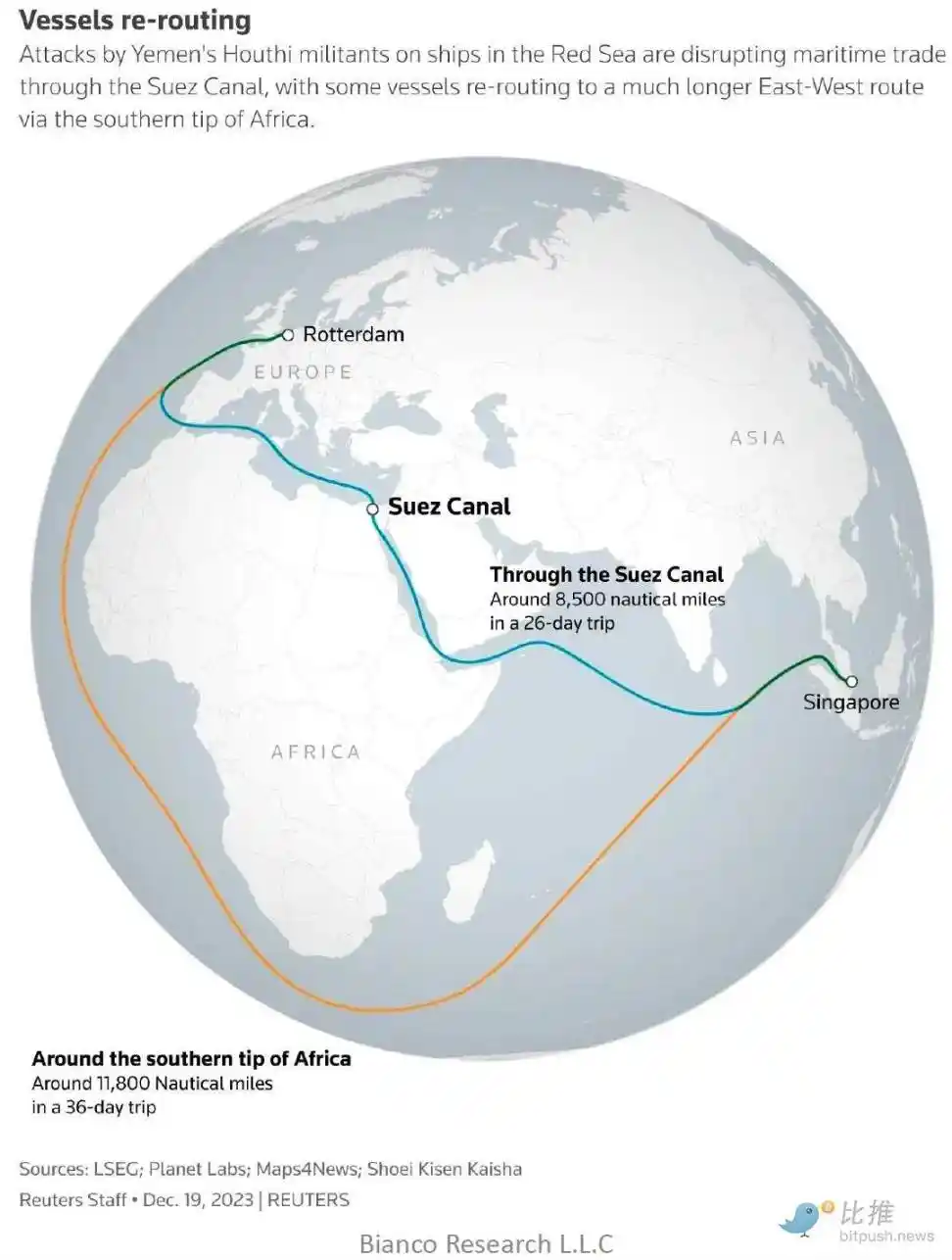
The Federal Reserve would rather stimulate the market through speeches and columns in the Wall Street Journal because they are extremely afraid of inflation. The hawkish puppet in charge of America's peaceful foreign policy is now embroiled in another Middle Eastern war, and the struggle with the Houthi militants in Yemen is endless. In the following article, I will explain in detail why this war is important and may lead to a disturbing surge in commodity inflation before the November US election.
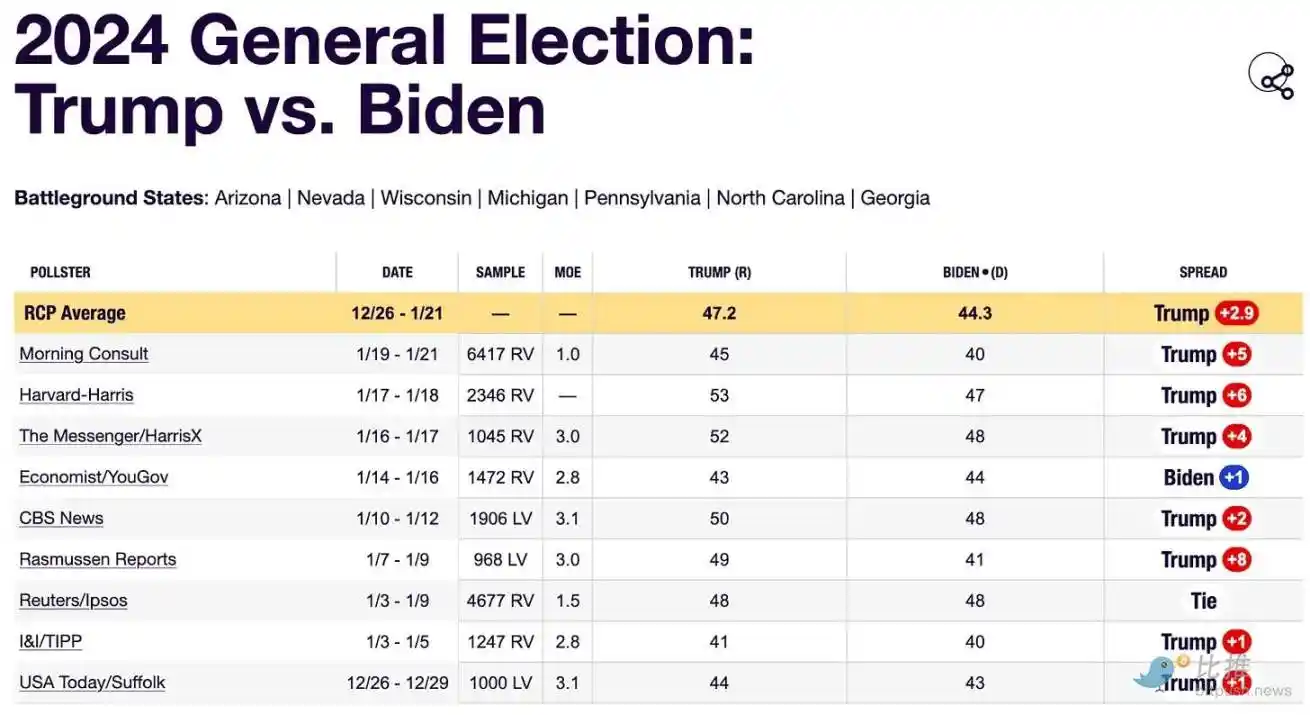
Contrary to what mainstream Western financial media tells you, inflation remains a problem for most bankrupt Americans. Voters decide the president based on the economy, and now, US President Joe Biden and his Democrats are destined to be defeated by redneck representative Trump and Republicans.
As I wrote in my "Signposts" article, I believe that Bitcoin will fall before the BTFP update plan is decided on March 12th. I didn't expect it to happen so quickly, but I think Bitcoin will find a local bottom between $30,000 and $35,000.
As SPX and NDX fall due to the small financial crisis in March, Bitcoin will rise as it represents the Fed's eventual translation of interest rate cuts and money printing rhetoric into action by pressing the "Brrrr" button.
Now, I will use some charts to quickly help readers understand why I believe the Federal Reserve needs a small financial crisis to prevent "empty talk".
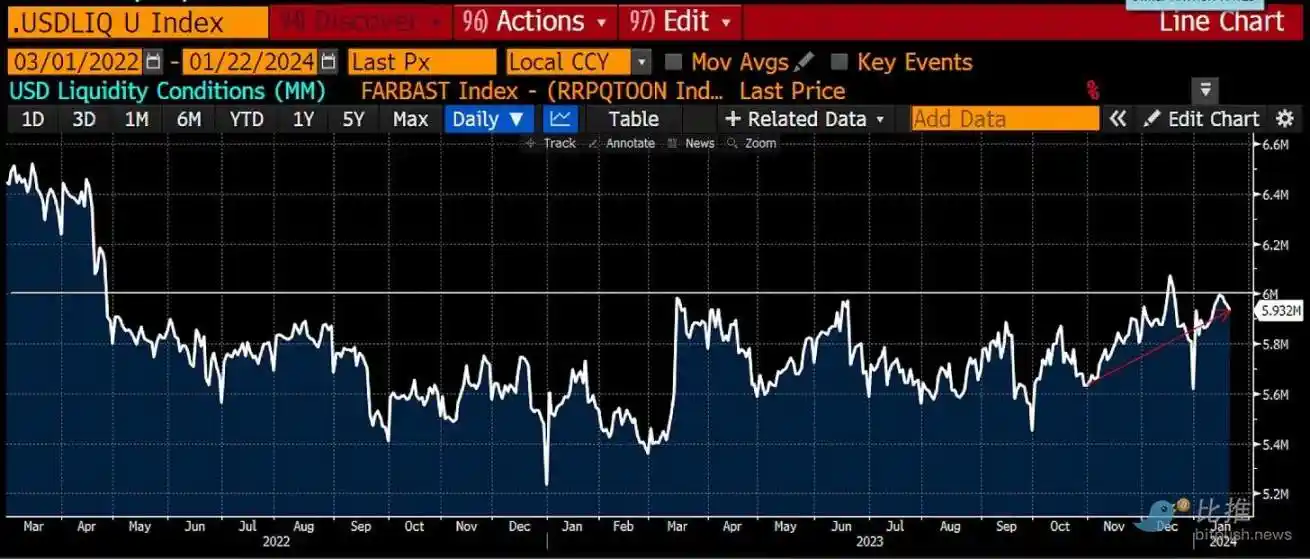
This is a chart of USD liquidity. As the Fed began raising interest rates and implementing quantitative easing measures in March 2022, the index plummeted. However, due to declining suggested retail prices since June 2023, the index has returned to its lowest level since April 2022.
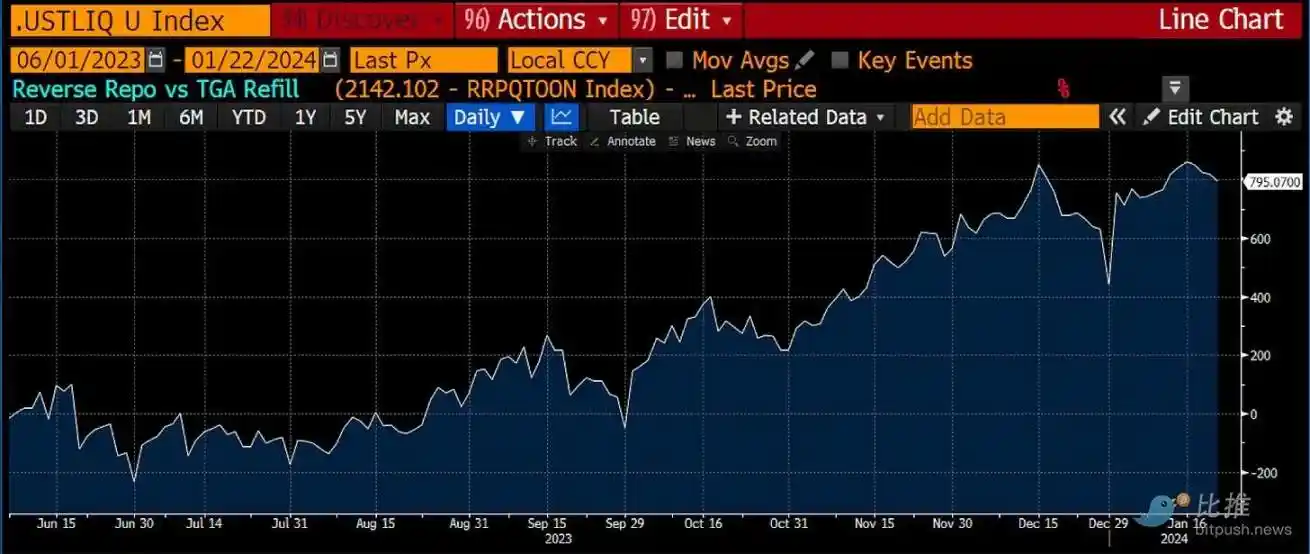
This chart is a sub-component of the index and represents the net value of RRP and TGA balance changes. Since the US government passed the budget in June 2023, nearly $800 billion in liquidity has been added.
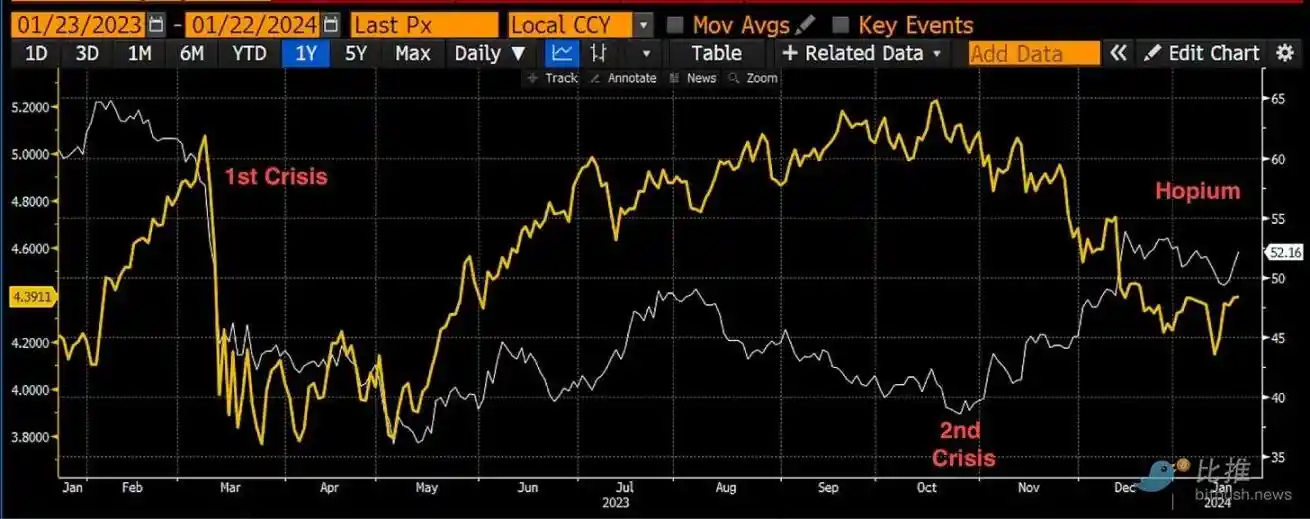
From a macro perspective, although the Federal Reserve's balance sheet has decreased by $1.2 trillion, due to the relatively high level of US dollar liquidity, risk assets are still pouring in at a large scale.
First Crisis
If we delve into the bankruptcy of non-TBTF banks, we will find that Yellen and Powell were forced to take action to rescue the US banking industry. The above chart shows the white SPDR S&P Regional Banking ETF (KRE) and the yellow 2-year Treasury yield. The banks in this index are small and medium-sized banks that do not enjoy government deposit guarantees like the more well-known and profitable TBTF families. The sharp rise in yields in the first quarter of 2023 caused KRE to plummet, and the three major non-TBTF banks (Silvergate, Signature, and Silicon Valley Bank) went bankrupt within two weeks. As the market knew that the Fed would have to rescue the system by printing money through BTFP, yields plummeted.
Second Crisis
Everything was fine for a while, but the market began to focus on the out-of-control US deficit and the massive bonds that had to be issued to finance it. Powell's statement at the September 2023 Federal Open Market Committee (FOMC) press conference made the issue even more complicated, as he stated that the financial market would help the Fed complete its monetary tightening work. The bond market hopes that the Fed will fight inflation and raise government borrowing costs by further raising interest rates, rather than just watching the data on Bloomberg terminals. The interest rates of the entire curve are rising, and the most worrying thing is that long-term interest rates are rising in a bearish and steep manner, which is fatal to the financial system. KRE's reaction was to fall to the level of the worst bank crisis since April. Yellen was forced to take action in November and convert borrowing to government bonds. This saved the bond market and triggered a vicious short-covering rebound in stocks and bonds.
Hopium
The market is now predicting when RRP balances will approach zero and wants to know what will happen next. There is a lot of discussion about this, including speculation about how the Fed will increase liquidity without printing money. But no action has been taken yet. The two-year Treasury yield has risen, but KRE prices continue to rise, and the market is grasping at straws. If Yellen and Powell are right, the 10-year Treasury yield will magically drop from 3% to 2%. This will not happen without new dollar purchases of bonds. This is the disconnect between the 2-year Treasury yield and KRE. I believe the market will face an unpleasant surprise because it is clear that Powell will only "roar" and not make any drastic changes.
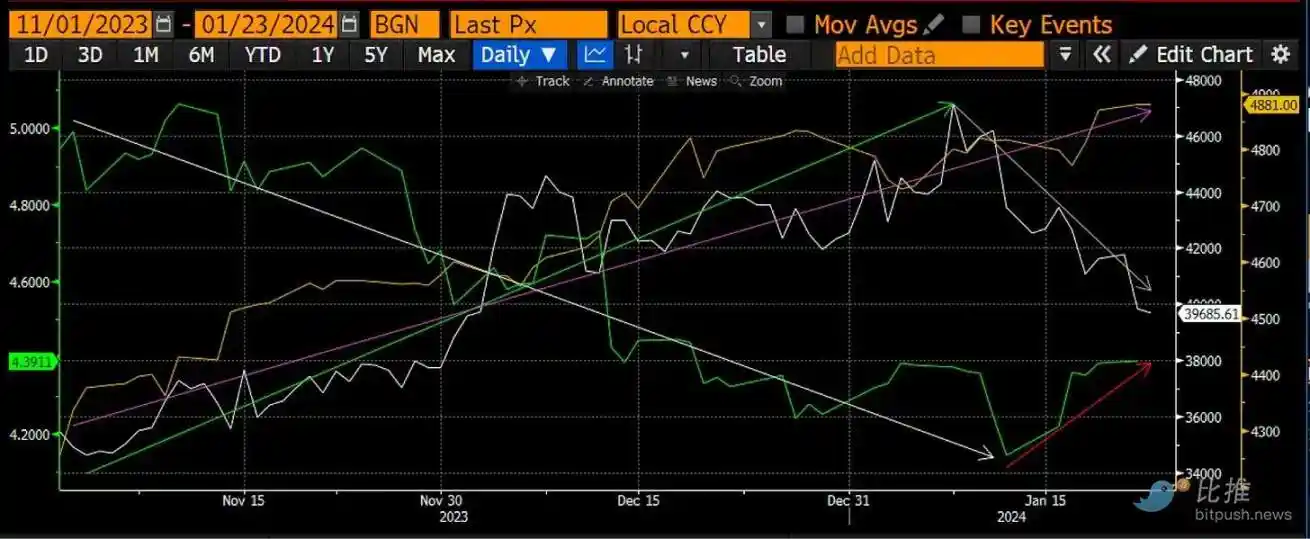
This busy chart shows the difference between Bitcoin (white) and 2-year Treasury yields (green), which tell the same story, while SPX (yellow) tells a different story. Starting November 1, 2023, as 2-year Treasury yields decline, Bitcoin and the SPX index rise. Once the 2-year yield hits bottom and reverses direction, Bitcoin will fall while the SPX continues to rise.
Bitcoin tells the world that the Federal Reserve is caught in a dilemma of inflation and banking crisis. The Fed's solution is to try to convince the market that banks are sound, without providing the necessary funds to make this illusion a reality.
Fragile Foundation
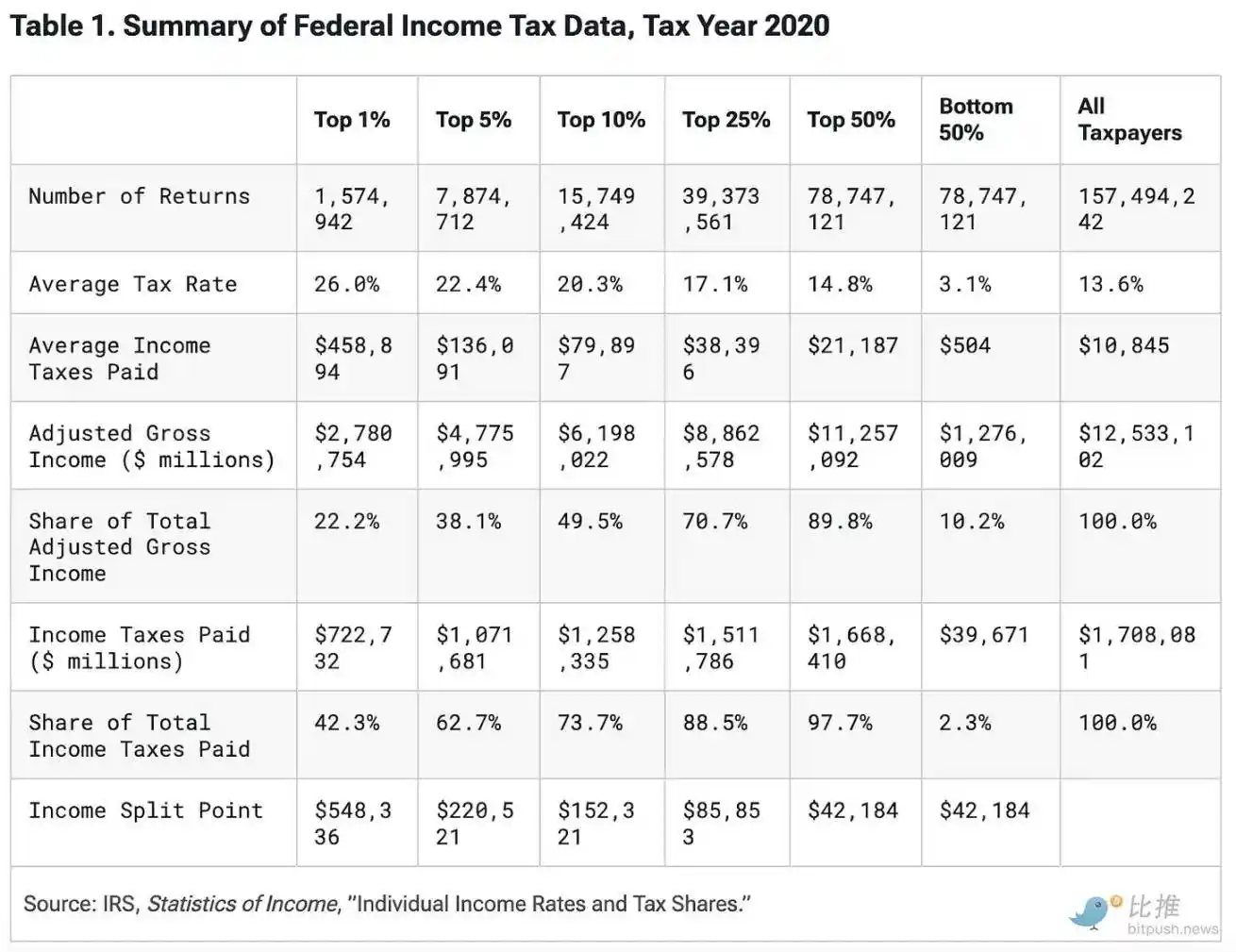
Jim Bianco has created some excellent charts, and the rest of this article will focus on analyzing these charts.
As readers may know, I spent the winter in Hokkaido, Japan, in the northern hemisphere. One notable change during this season was the absolute number of Americans. Even for those living in Asia, visiting this snowy paradise can be a painful experience, and if you live in the United States, vacationing in Japan is even more time-consuming and expensive.
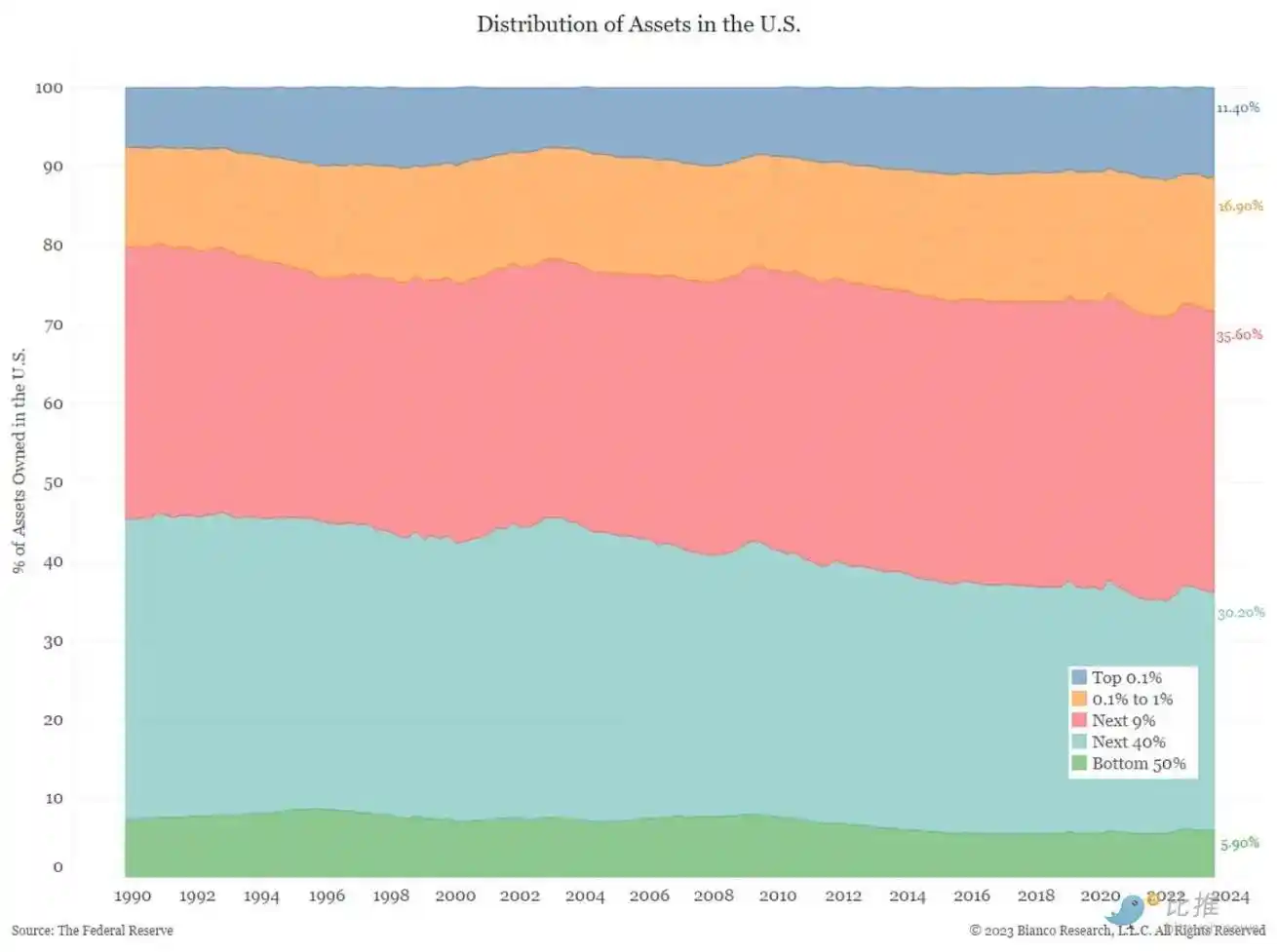
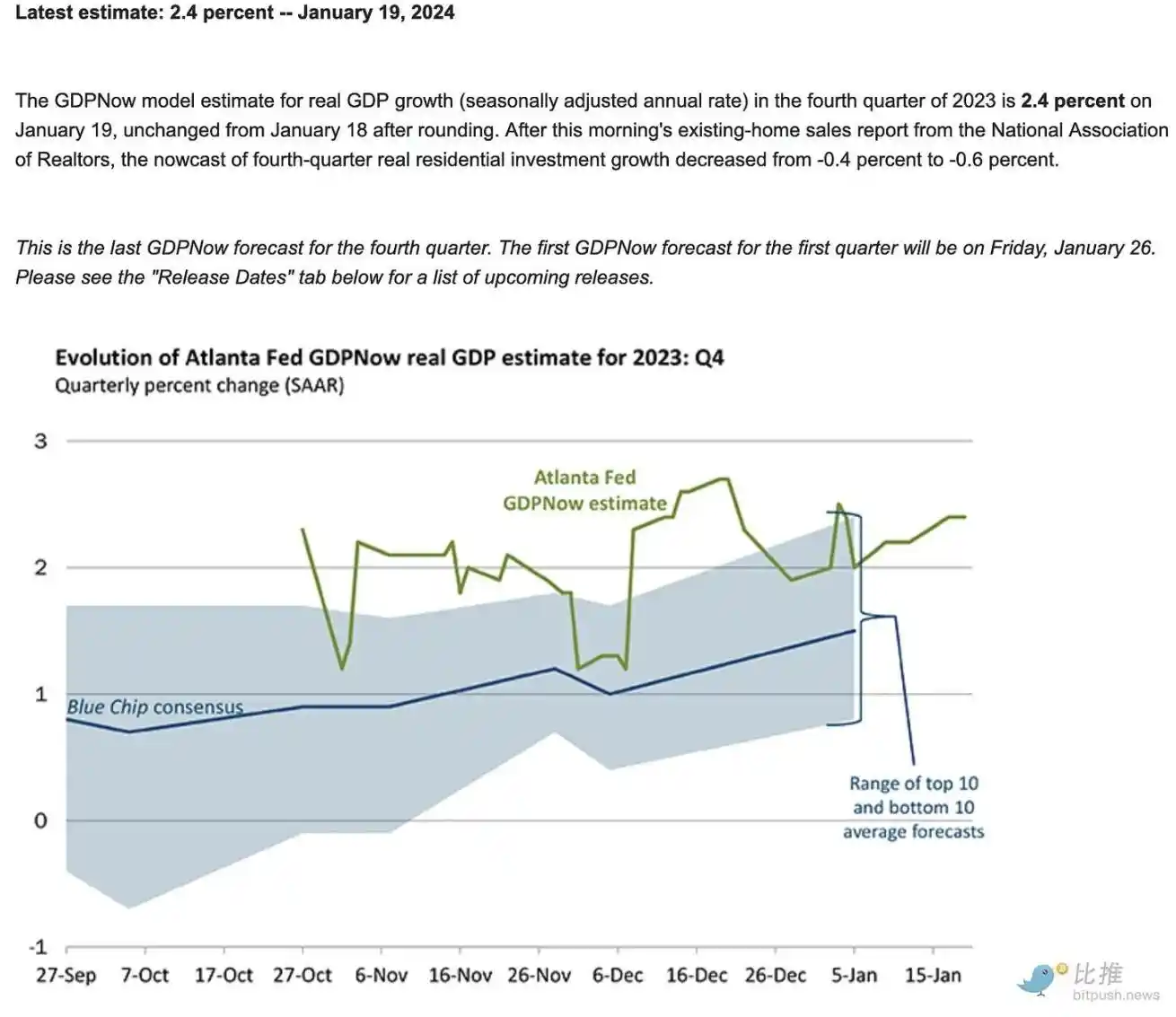
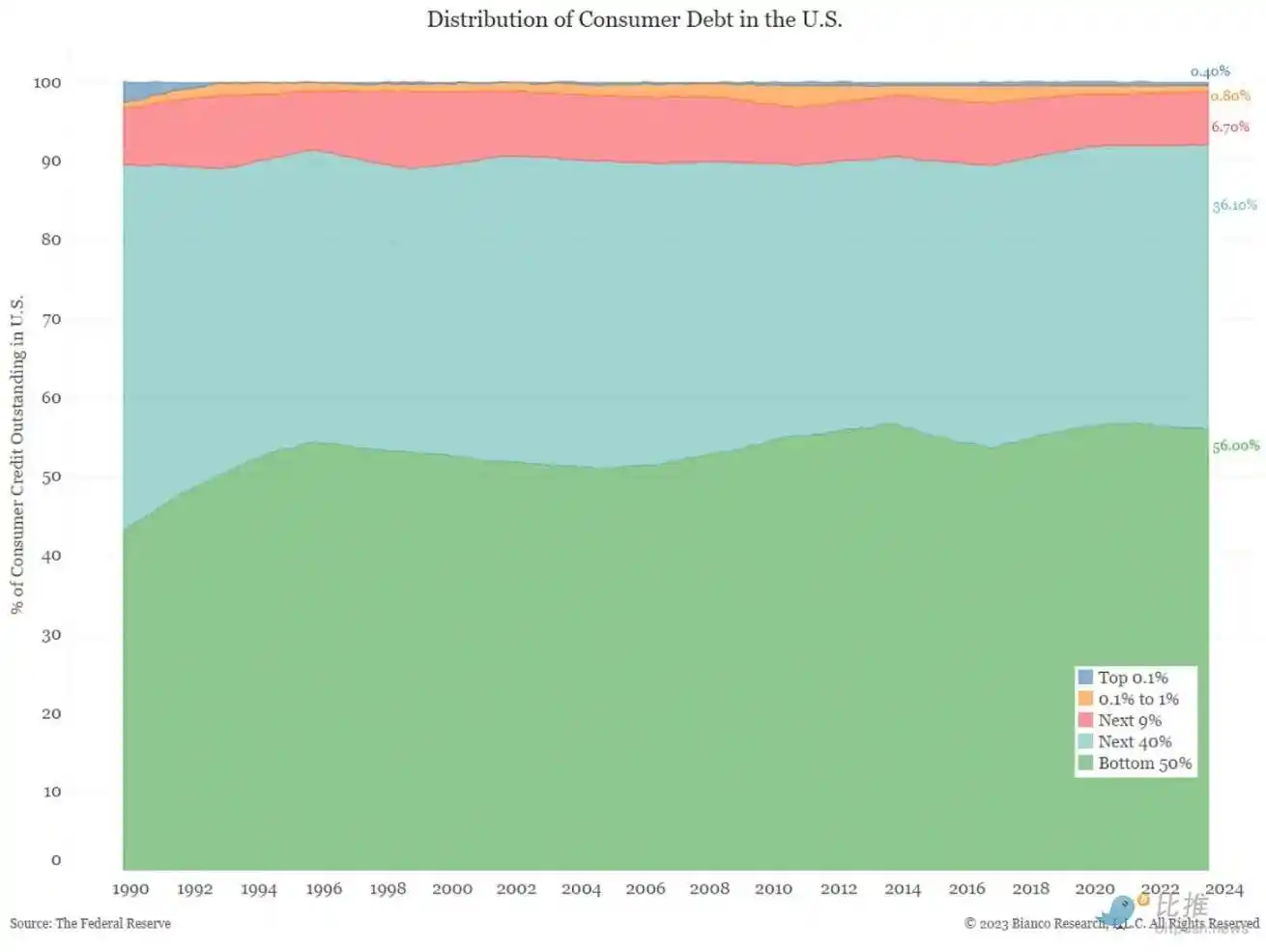
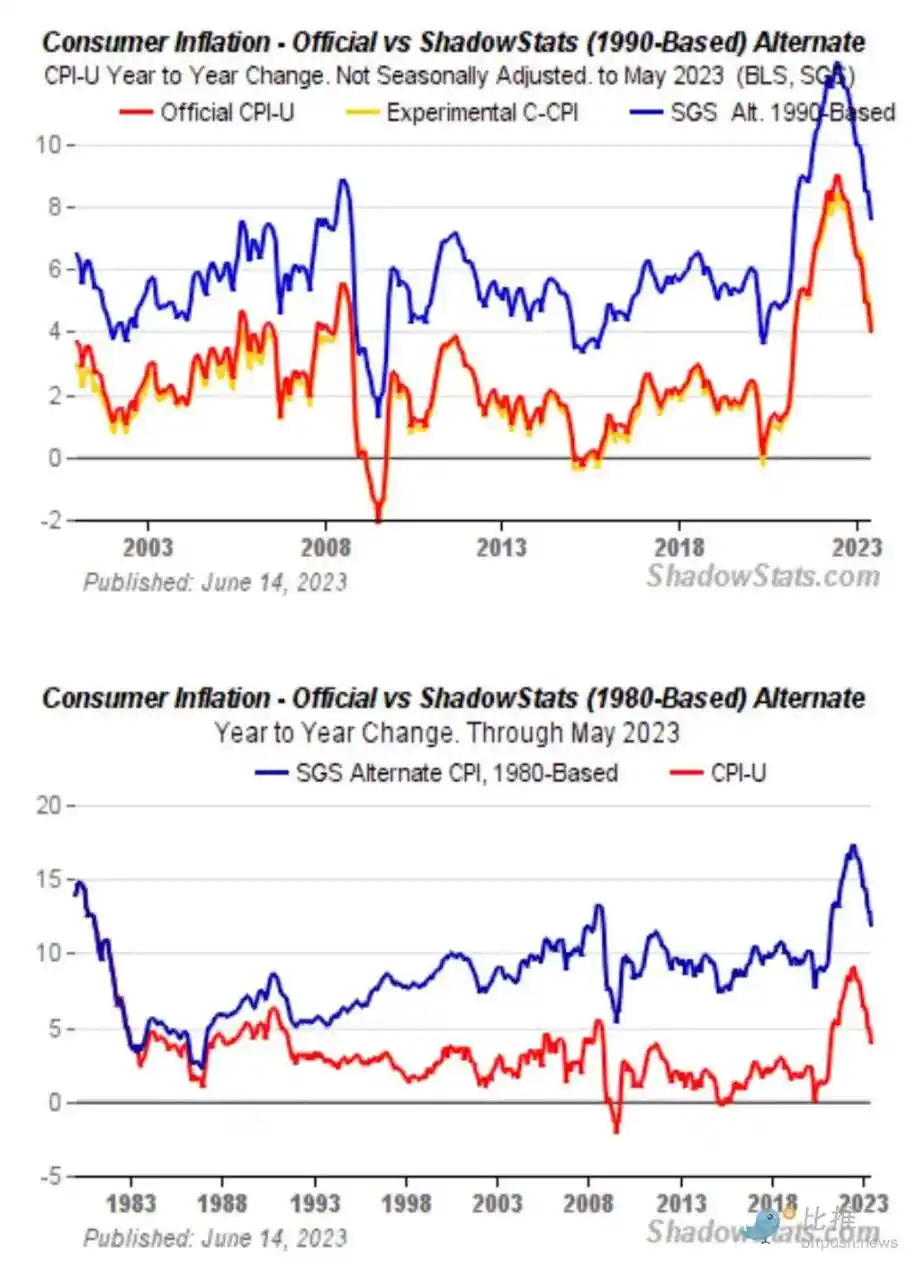
According to three other officials from the Ministry of National Defense, the cost of using expensive naval missiles (each costing up to 2.1 million US dollars) to destroy simple Houthi drones (estimated to cost only thousands of dollars per unit) is becoming increasingly worrisome. - Politico
Even though Biden has loudly called on Bibi to end the war and stop killing so many men, women, and children in Gaza, he will never stop the financial and military blockade on the Israelis for fear of losing face. As a result, the whole world is worried about the outbreak of war.
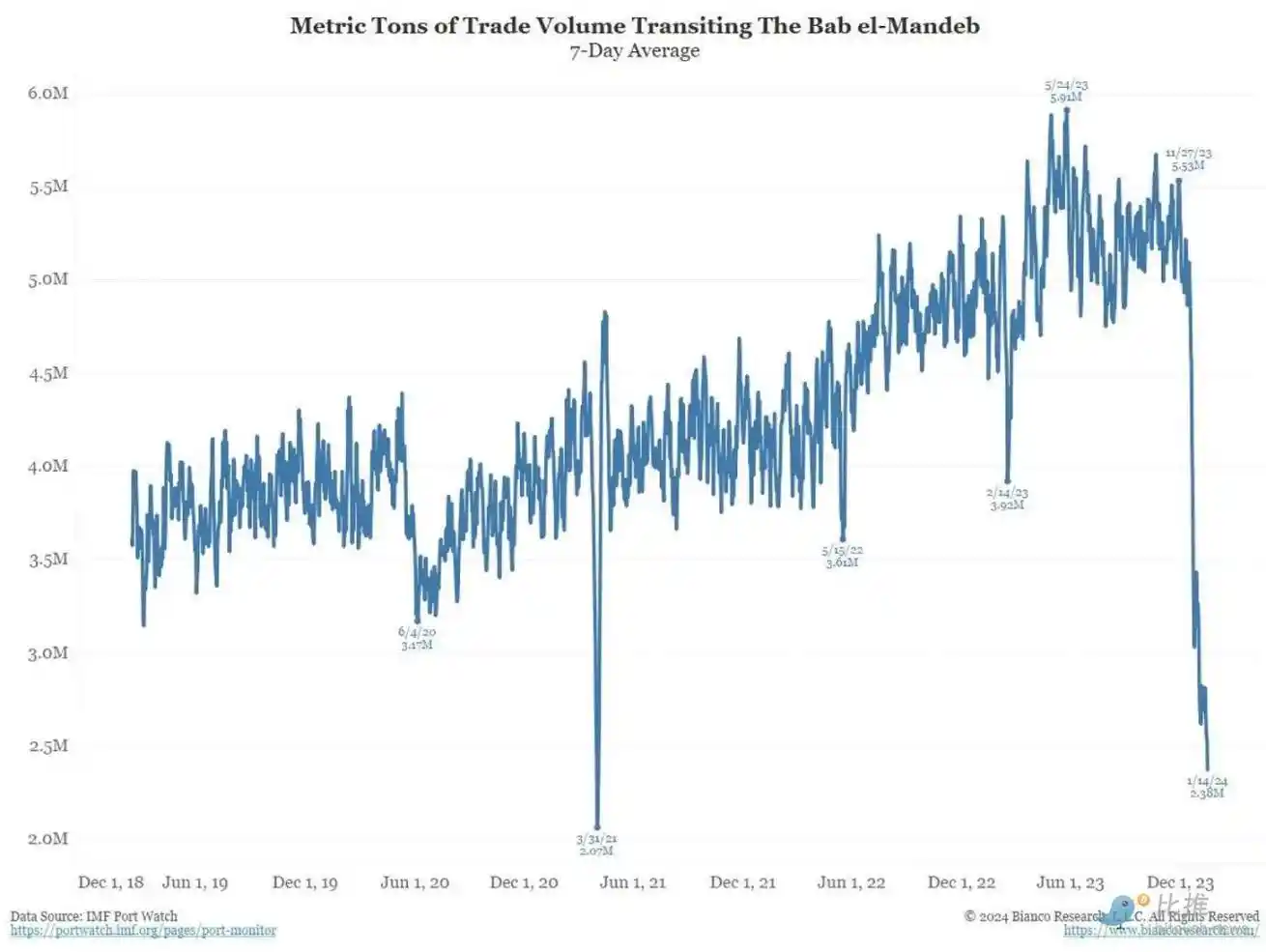
I predict that we will witness firsthand how difficult it is for the powerful red, white, and blue fists to strike down a swarm of drones. In order to give shipping companies the confidence to cross the Red Sea again, the US Navy must perform perfectly in every engagement. Every drone must be eliminated, as even a direct impact from a drone's payload could render a commercial ship inoperable. Additionally, due to the ongoing conflict between the US and the Houthi rebels in Yemen, shipping insurance rates will skyrocket, making travel through the Red Sea even more uneconomical.
Due to weather and geopolitical factors, rising transportation costs may lead to inflation surges in the third and fourth quarters of this year. As Powell is undoubtedly aware of these issues, he will make every effort to talk about the possibility of interest rate cuts without actually implementing them. While inflation rates may moderately increase due to rising transportation costs, interest rate cuts and the restart of quantitative easing may exacerbate the rise in inflation rates. The market has not yet realized this fact, but Bitcoin has.
The only thing that beats fighting inflation is a financial crisis. That's why, in order to achieve cuts, QT reductions, and the market's belief that QE may resume in March, we first need to let some banks fail if BTFP is not updated.
Tactical Trading
After the approval of ETF, the 30% correction of BTC's interval high point of $48,000 was reduced to $33,600. Therefore, I believe that Bitcoin will form support between $30,000 and $35,000. That's why I bought a put option for $35,000 on March 29, 2024, and sold trading positions for Solana and Bonk at a small loss.
Bitcoin and cryptocurrencies are generally the last free trading market in the world. Therefore, they will predict changes in dollar liquidity before the TradFi legal stock and bond markets are manipulated. Bitcoin tells us to look for Yellen, not just talk.
Yellen has the opportunity to inject more vitality into the market in the upcoming QRA to be released on January 31. If she announces that she will cut TGA from $750 billion to zero, then we know that there is another source of liquidity that the market did not anticipate to support the market. So the question becomes: if BTFP is not updated, is it enough to prevent any bank failures?
I believe that BTFP will not be updated because neither Yellen nor Powell has mentioned it once. Therefore, the natural assumption is that it will expire and the bank must repay nearly $200 billion in loans. If the situation changes and they explicitly state that they will extend the deadline, then the game is on. I will close my put options and take advantage of maximum crypto risk exposure by continuing to sell Treasury bonds and buy cryptocurrencies.
If my predicted scenario becomes reality, once Bitcoin falls below $35,000, I will start buying and continue to buy Solana and WIF.
Welcome to join the official BlockBeats community:
Telegram Subscription Group: https://t.me/theblockbeats
Telegram Discussion Group: https://t.me/BlockBeats_App
Official Twitter Account: https://twitter.com/BlockBeatsAsia

 Related Articles