One article to understand the new trends in Ethereum in 2023: ZK and privacy
Original Title: "Understanding Ethereum's New Trends in 2023: ZK and Privacy"
Original Author: LZ
1. Background
Ethereum co-founder Vitalik Buterin has made it clear that without a technological transition towards privacy, Ethereum will fail. This is because all transactions are publicly visible, and for many users, the sacrifice of privacy is too great. Everyone will turn to centralized solutions that at least partially hide data.
In 2023, Vitalik conducted a series of research on privacy protection and zero-knowledge proofs (ZK) technology. In the first half of the year, Vitalik published three articles on his website specifically discussing ZK and privacy protection. In April, he also presented a study on wallet custodian privacy issues on Reddit. In September, he co-authored a paper with other professionals proposing a solution for balancing privacy and compliance.
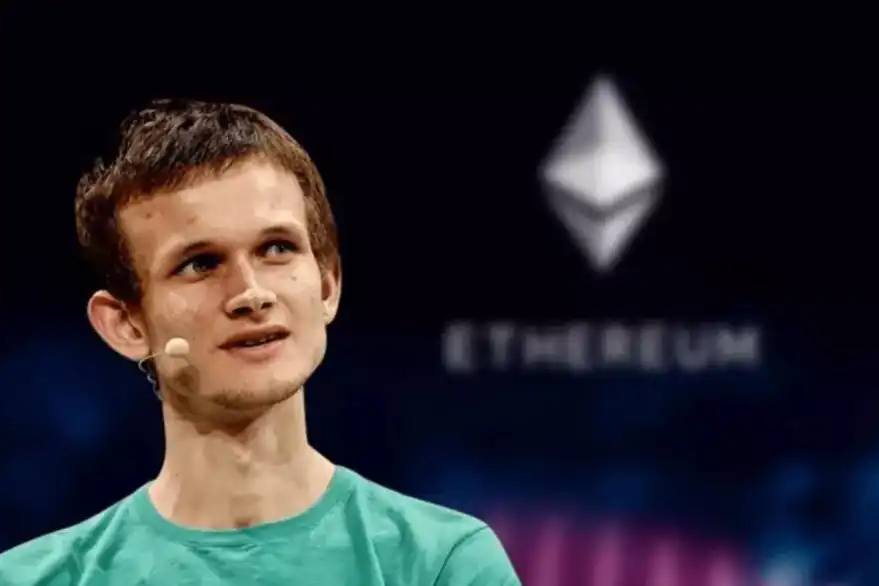
In addition, the Ethereum ecosystem is also actively promoting the discussion and popularization of this topic. A special event focused on privacy was held at the ETHDenver event in March. At the annual Ethereum Community Conference (EDCON) in May, Vitalik emphasized that "in the next 10 years, ZK-SNARK will be as important as blockchain".
This article tracks the latest developments in the use of ZK technology for privacy protection in the Ethereum ecosystem in 2023. If you want to enter the Ethereum ZK track, this article can provide necessary interpretation and guidance.
2. Ethereum ZK Track: Building a Privacy-Protected Future
The transparency of Ethereum may expose users' personal information to the risk of leakage. There are no secrets on blockchains such as Ethereum, and all information is public, including transactions, voting, and other on-chain activities. Such transparency may lead to specific transactions and addresses being traced and associated with the real identities of users. Therefore, it is crucial to implement privacy protection on Ethereum. Encryption technology can be used to hide on-chain information, but the challenge is to ensure the validity of these transactions while protecting privacy. ZK technology provides a solution that can prove the authenticity of transactions without revealing additional information, balancing privacy and verifiability.
Ethereum attaches great importance to ZK-SNARK, especially in certain key privacy protection application scenarios, where its importance is particularly prominent. This is clearly reflected in Vitalik's research and proposals, and Salus has compiled typical scenarios proposed by Vitalik in his research, namely privacy transactions and social recovery.
2.1 Privacy Transactions
Regarding privacy transactions, Vitalik proposed two concepts: Stealth Addresses and Privacy Pools.
·The privacy address scheme allows transactions to be conducted while hiding the identity of the recipient. This scheme provides both privacy protection and ensures transaction transparency and auditability.
·Based on the privacy pool protocol, users can prove that their transaction funds come from known compliant sources without disclosing their transaction history. This solution allows users to conduct private transactions while complying with regulations.
Both of these solutions are inseparable from ZK. In both scenarios, users are allowed to generate zero-knowledge proofs to prove the validity of their transactions.
2.1.1 Privacy Address
Assuming Alice intends to transfer certain assets to Bob, when Bob receives the assets, he does not want the global public to know that he is the recipient. Although it is difficult to conceal the fact of asset transfer, hiding the identity of the recipient is possible. It is in this context that the privacy address scheme emerged, which mainly addresses the issue of how to effectively hide the identity of the transaction recipient.
So, what is the difference between a privacy address and a regular Ethereum address? How to use ZK-based privacy addresses for private transactions? Salus will introduce them to you one by one.
(1) What is the difference between a privacy address and a regular Ethereum address?
Privacy address is an address that allows the sender of a transaction to generate it in a non-interactive way and can only be accessed by its recipient. We explain the difference between privacy addresses and regular Ethereum addresses from two dimensions: who generates the privacy address and who can access it.
Generated by whom?
Ordinary Ethereum addresses are generated by users themselves using encryption and hashing algorithms. However, private addresses can be generated by the user themselves or by the other party to the transaction. For example, when Alice transfers funds to Bob, the address Bob uses to receive the transfer can be generated by Bob or Alice, but can only be controlled by Bob.
Who can access?
The types, amounts, and sources of funds in a regular Ethereum account are publicly visible. However, in transactions using private addresses, only the recipient can access the funds stored in their hidden address. Observers cannot associate the recipient's private address with their identity, thus protecting the recipient's privacy.
(2) How to use ZK-based privacy addresses for private transactions?
If Alice wants to send assets to Bob's private address in order to hide the recipient of the transaction, the following is a detailed description of the transaction process:
1) Generate private addresses.
● Bob generates and saves a spending key, which is a private key that can be used to spend funds sent to Bob's private address.
● Bob uses a spending key to generate a stealth meta-address, which can be used to calculate a privacy address for a given recipient and pass the stealth meta-address to Alice. Alice calculates the privacy address from the stealth meta-address and generates a privacy address belonging to Bob.
Designing a privacy-preserving social recovery scheme that can recover multiple user addresses without revealing the correlation between addresses is crucial.
2.2.2 Protecting User Property Privacy from Guardianship Infringement
(1) Privacy Issues: Guardian Privileges
In blockchain networks such as Ethereum, users can set up multiple guardians when creating a wallet. This is particularly important for multisig wallets and social recovery wallets, where guardians play a crucial role. Typically, guardians are a collection of N addresses held by other individuals, where any M of those addresses can approve an operation.
What privileges do guardians have? For example:
1) For a multi-signature wallet, each transaction must receive signatures from M out of N guardians before it can be executed.
2) For social recovery wallets, if a user loses their private key, then M out of N guardians must sign a message to reset the private key.
Guardians can approve your actions. In multi-signature, this will be any transaction. In social recovery wallets, this will be resetting your account private key. One of the challenges facing the guardianship mechanism today is how to protect users' financial privacy from being violated by guardians?
(2) ZK Solution: Protecting User Property Privacy from Guardian Infringement
In this article, Vitalik looks ahead and explains that guardians are not protecting your account, but rather a "lockbox" contract. The link between your account and this lockbox is hidden. This means that guardians cannot directly access a user's account, but can only operate through a hidden lockbox contract.
ZK's main function is to provide a proof system that allows guardians to prove the truth of a statement without revealing the specific details of the statement. In this case, guardians can use ZK-SNARK to prove that they have the authority to perform a certain operation without revealing any detailed information related to the "link between accounts and lockboxes".
2.3 Exploration: A New Chapter of ZK and Privacy in the Ethereum Ecosystem
Ethereum's ZK track is still in the development stage, and many innovative ideas and concepts are still being conceived and researched. However, the Ethereum ecosystem has already launched a wider range of practical exploration activities.
(1) Funding from the Ethereum Foundation.
In September of this year, the Ethereum Foundation funded two projects related to privacy protection, IoTeX and ZK-Team. IoTex is a zero-knowledge proof-based account abstraction wallet, while ZK-Team is dedicated to enabling organizations to maintain personal privacy while managing team members.
(2) Investment
In October of this year, Vitalik, co-founder of Ethereum, invested in Nocturne Labs with the aim of introducing private accounts to Ethereum. Users will have "internal" accounts in Nocturne, and the way they receive/spend funds from these accounts is anonymous. Through ZK technology, users can prove that they have enough funds to pay, pledge, and other transactions.
(3) Meetings and Events
ETHDenver is considered one of the most important Ethereum and blockchain technology-related events in the world. In March of this year, ETHDenver held a special event focused on privacy. This event not only demonstrated the Ethereum community's concern for privacy issues, but also reflected the global blockchain community's emphasis on privacy protection. In this special event, nine privacy-related theme conferences were held, including Privacy by Design and Privacy vs Security.
EDCON (Ethereum Community Conference) is an annual global conference hosted by the Ethereum community, aimed at promoting the development and innovation of Ethereum, and strengthening the connection and cooperation within the Ethereum community. At this year's EDCON conference in May, Vitalik made an important statement, stating that "in the next 10 years, ZK-SNARKs will be as important as blockchain". This statement emphasizes the important position of ZK-SNARKs in the development trend of blockchain technology.
(4) Project
Currently, some application layer projects have begun using ZK technology to provide privacy protection services for users and transactions. These application layer projects are called ZK Applications. For example, there is a ZK Application called unyfy, which is a privacy asset exchange deployed on Ethereum. The prices of the trading orders here are hidden, and the integrity of these hidden price orders is verified by ZK technology. In addition to unyfy, there are other ZK Applications on L2s, such as ZigZag and Loopring. Although these ZK Applications have implemented privacy protection functions based on ZK, they cannot currently be deployed on Ethereum because the EVM cannot directly run these ZK Applications.
(5) Research
Moreover, researchers have had intense discussions on ZK technology and its applications on the Ethereum Research platform. Among them, a research article by Salus is dedicated to using ZK to promote privacy protection in the Ethereum application layer. This article tested several different ZK languages, including Circom, Noir, and Halo2, and the results showed that Circom has better performance. The article also proposed a general solution to integrate Circom into Solidity, which can realize ZK-based Ethereum application layer projects. This is of great significance for Ethereum to achieve privacy transition. This research received significant attention in 2023 and ranked first.

This research article is the most read research on Ethereum Research in 2023 --- author Salus
3. Challenge
Although many existing Ethereum application layer projects urgently need to introduce ZK-based privacy protection mechanisms, this process faces a series of challenges.
1. ZK Talent Shortage: Learning ZK technology requires a solid theoretical foundation, especially in the fields of cryptography and mathematics. Due to the complexity of the formulas involved in implementing ZK technology, learners also need strong formula interpretation skills. However, the problem is that there are relatively few people focused on learning ZK technology.
2. Limitations of ZK Development Language: Rust, Cairo, Halo2 and other languages are used to develop ZK proof circuits, but they are usually only applicable to specific scenarios and not suitable for application layer projects. Some of these languages (such as Cairo) are still in the experimental stage, and there may be compatibility issues between different versions, which increases the difficulty and complexity of adopting them in practical applications.
3. ZK Technology Implementation Difficulty: Vitalik proposed a solution to apply ZK technology to Ethereum privacy protection. However, in practical execution, it may face various complex issues, such as how to avoid privacy transactions from being subjected to balance-summing attacks, double-spending attacks, etc. Solving these problems requires certain technical difficulty.
Welcome to join the official BlockBeats community:
Telegram Subscription Group: https://t.me/theblockbeats
Telegram Discussion Group: https://t.me/BlockBeats_App
Official Twitter Account: https://twitter.com/BlockBeatsAsia
 Related Articles