Vitalik: Reigniting the cypherpunk spirit of Ethereum.

Original author: Vitalik Buterin
Translated by: Deep Tide TechFlow
On the 29th, Vitalik Buterin, the founder of Ethereum, published a new article titled "Make Ethereum Cypherpunk Again", discussing how the Ethereum community can return to the cypherpunk ideals of Ethereum. The author reviewed the development of the Ethereum ecosystem over the past decade and pointed out that the vision of consumer crypto payments has gradually disappeared due to the rise in transaction fees.
Shenzhen TechFlow has compiled the entire article.
Ten years ago, one of my favorite memories was going on a pilgrimage to a district in Berlin known as the Bitcoin area: it was a neighborhood in Kreuzberg with about a dozen shops that all accepted Bitcoin payments. The center of this community was Room 77, a restaurant and bar run by Joerg Platzer. In addition to accepting Bitcoin payments, it also served as a community center where various open-source developers, political activists, and other characters often came to visit.

Two months ago, a similar memory was PorcFest (meaning "Don't Tread on Me"), a libertarian gathering in the northern forests of New Hampshire. Meals were mainly served at small restaurants such as "Revolution Coffee" and "Provocative Soup, Salad, and Smoothies", which also accepted Bitcoin payments. Here, the deeper political significance of Bitcoin was discussed, as well as its use in daily life, both of which were not contradictory.
The reason why I bring up these memories is because they remind me of the deeper vision behind cryptocurrency: our goal is not just to create isolated tools and games, but to comprehensively build a more free and open society and economy, where different parts, such as technology, society, and economy, are integrated with each other.
The early vision of "web3" is also of this type, with a similar but slightly different direction. Ethereum co-founder Gavin Wood originally created the term "web3", which refers to a different way of thinking about Ethereum: instead of seeing it as "Bitcoin plus smart contracts" like I did initially, Gavin saw it more broadly as part of a set of technologies that can collectively form the foundation of a more open internet stack.
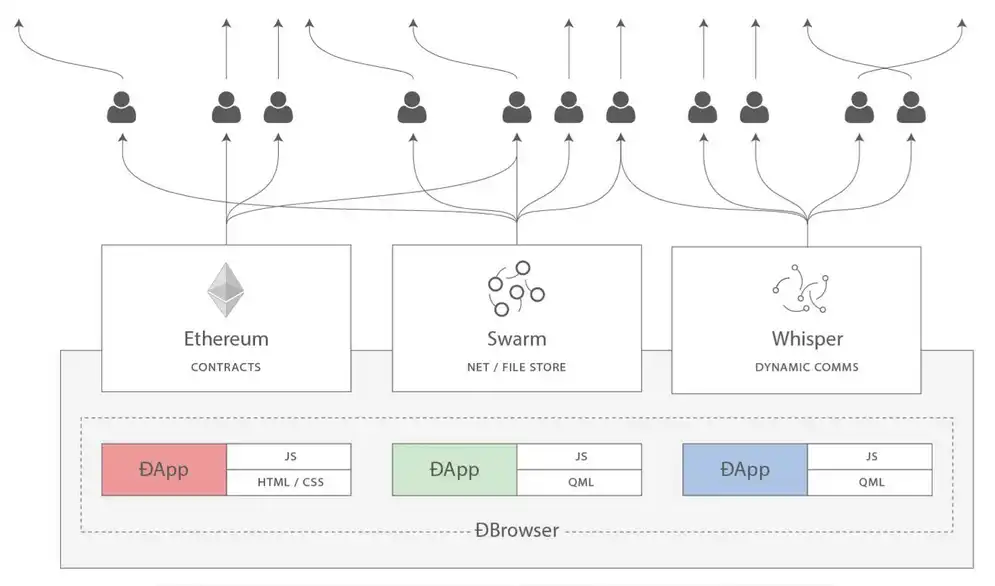
When the free and open-source software movement began in the 1980s and 1990s, the software was simple: it ran on your computer and read and wrote files on your computer. But today, much of our important work is collaborative and often on a large scale. Therefore, even if the underlying code of an application is open and free, your data is routed through a centralized server operated by a company that can read your data, change the rules, or remove you from the platform at any time. So, if we want to extend the spirit of open-source software to the world today, we need programs that can access shared hard drives to store content that multiple people need to modify and access. What is Ethereum, and sister technologies such as peer-to-peer messaging (then Whisper, now Waku) and decentralized file storage (then Swarm, now IPFS)? This is the original vision behind the ubiquitous term "web3" today.
Unfortunately, since around 2017, these visions have somewhat receded into the background. Few people talk about consumer encrypted payments, and the only non-financial application used on a large scale on the chain is ENS. There is a huge ideological gap between the non-blockchain decentralized community and the encrypted world, with most people in the non-blockchain decentralized community seeing the encrypted world as a disruption rather than a like-minded spirit and a powerful ally. In many countries, people do use encrypted currencies to send and save funds, but they usually do so through centralized means: either through internal transfers of centralized exchange accounts or through trading USDT on Tron.

Having experienced that era, I believe the fundamental reason for this transformation is the rise in transaction costs. When the cost of writing to the chain is 0.001 US dollars or even 0.1 US dollars, people are willing to develop various applications and use blockchain in various ways, including non-financial ways. But when transaction costs rise to over 100 US dollars, just like during the peak of a bull market, there is only one audience willing to play: Degen. In fact, because of the rise in coin prices, they have become richer and even more willing to speculate. Moderate speculation is acceptable. I have talked to many people at events who joined the crypto field for monetary reasons but stayed for the ideals. However, when they become the largest group of people using blockchain on a large scale, this changes the public's perception and the internal culture of the crypto space, leading to many other negative effects we have seen in the past few years.
Now, fast forward to 2023. Whether it's the core challenges of expansion or the various "side missions" that are crucial to building a viable cypherpunk future, we actually have a lot of positive news to showcase:
·Rollup began to truly exist.
·After experiencing a temporary setback due to regulatory crackdowns on Tornado Cash, second-generation privacy solutions such as Railway and Nocturne are now seeing the light of day.
·Account abstraction is beginning to rise in the industry.
·The long-forgotten lightweight client begins to truly exist.
Zero-knowledge proof, a technology that we thought would take decades to appear, has now arrived and is becoming more and more developer-friendly. It is soon to be available for consumer applications.
These two things: people are increasingly realizing that uncontrolled centralization and excessive financialization are not the essence of cryptocurrency, and the key technologies mentioned above that are finally maturing provide us with an opportunity to steer things in a different direction. In other words, at least part of the Ethereum ecosystem can truly become the permissionless, decentralized, censorship-resistant, and open-source ecosystem that we originally set out to build.
These values are what?
Many of these values are not only shared by many people in the Ethereum community, but also by other blockchain communities and even non-blockchain decentralized communities, although each community has different combinations and emphasis on these values.
·Open global participation: Anyone in the world should be able to participate as a user, observer, or developer, enjoying the greatest possible equality. Participation should be permissionless.
·Decentralization: Minimize reliance on any single actor in the application. In particular, the application should continue to operate even if the core developer disappears permanently.
·Anti-censorship: Centralized actors should not have the power to intervene in the operation of any specific user or application. Concerns about malicious actors should be addressed at a higher level of the technical stack.
·Auditability: Anyone should be able to verify the logic of the application and its ongoing operations (for example, by running a full node) to ensure that it operates according to the rules claimed by the developers.
·Trustworthiness: The foundational infrastructure of the basic layer should remain neutral and be presented in a way that demonstrates neutrality, even in situations where developers are not trusted.
·Building tools, not empires. Feudal empires attempt to capture users and trap them in walled gardens; tools accomplish their tasks but interoperate with a broader open ecosystem in other ways.
·Collaborative mindset: Even in competition, projects within the ecosystem collaborate in sharing software libraries, research, security, community building, and other areas of common value. The projects strive for win-win cooperation among themselves and with the broader world.
In the encrypted ecosystem, it is entirely possible to build something that does not adhere to these values. For example, a system called L2 can be built, but it is actually a highly centralized system protected by multiple signatures and never intends to turn to something more secure. People can build an account abstraction system that tries to be "simpler" than ERC-4337, but at the cost of introducing trust assumptions, ultimately eliminating the possibility of a public memory pool and making it harder for new builders to join. A NFT ecosystem can be built where the content of NFTs is unnecessarily stored on centralized websites, making it more vulnerable than storing these components on IPFS. People can also build a staking interface that unnecessarily leads users to the largest staking pool.
Resisting these pressures is difficult, but if we don't do so, we may lose the unique value of the encryption ecosystem and reproduce a clone of the existing web2 ecosystem with lower efficiency and more steps.
"有下水道,才有忍者神龟"
translates to
"There are Teenage Mutant Ninja Turtles only because there are sewers"

In many ways, the world of cryptography is a ruthless environment. Dan Robinson and Georgios Konstantopoulos vividly expressed this point in a 2021 article where they discussed how Ethereum is a dark forest in the context of MEV, where on-chain traders constantly face the risk of being front-run by transaction bots that are themselves vulnerable to being exploited by other bots. This is also true in other respects: smart contracts are frequently hacked, users' wallets are frequently hacked, and centralized exchanges have suffered catastrophic failures.


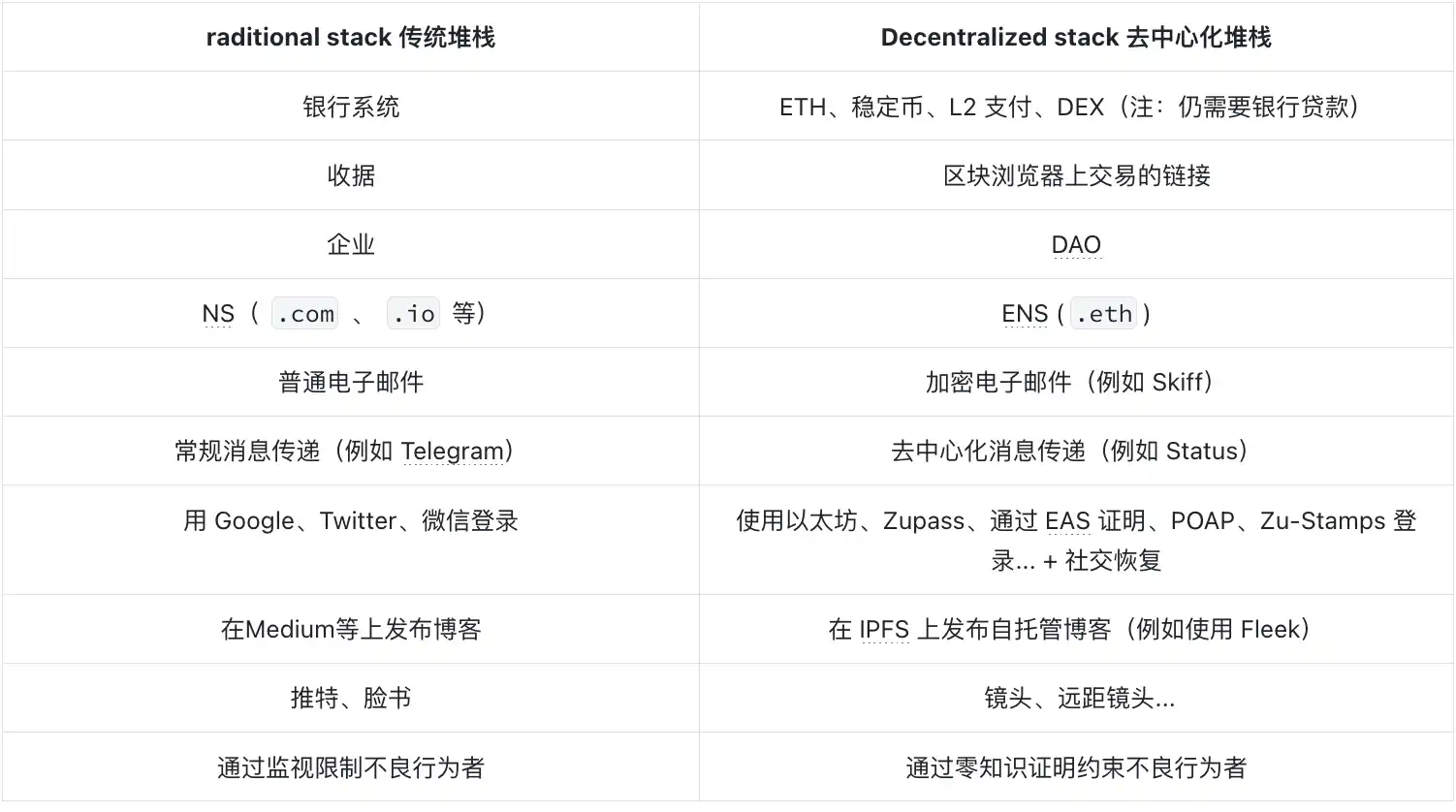
At the same time, incentives alone are not enough. When Defi projects start, they are usually humble, cooperative, and open source to the maximum extent possible. However, as they grow, they may begin to abandon these ideals. While we can incentivize shareholders to join and maintain very high normal operating times, incentivizing shareholders to decentralize is much more difficult. It may not be possible to achieve this solely through internal protocol means. Many key parts of the aforementioned "decentralized stack" do not have viable business models. The governance of the Ethereum protocol itself is obviously non-financialized, which makes it more robust than other governance systems that are more financialized. This is why Ethereum's strong social layer is valuable, as it enforces its values in places where pure incentives cannot. However, it will not create the concept of "Ethereum Alliance" and become a new form of political correctness.

There needs to be a balance between these two aspects, or rather, an integration. Many people first enter the cryptocurrency industry with the desire to get rich, but they soon become familiar with the ecosystem and become enthusiastic followers of building a more open and decentralized world.
How do we actually achieve this fusion? This is a key question, and I suspect the answer lies not in one, but in a combination of technologies obtained through iteration. The Ethereum ecosystem has been more successful than most ecosystems in purely encouraging a cooperative mindset between L2 projects through social means. In particular, the large-scale public product funding of Gitcoin Grants and Optimism's RetroPGF rounds have been extremely helpful, as they create another source of income for developers who have not seen any traditional business models, without sacrificing their values. But even though these tools are still in their infancy, there is still a long way to go to improve these specific tools, identify and develop other tools that may be more suitable for specific problems.
This is where I see the unique value of Ethereum's social layer. There is a unique compromise that values incentives without being consumed by them. There is a unique blend of valuing a warm and tight-knit community, but also remembering that what may be "warm and tight-knit" from the inside can easily become "oppressive and exclusionary" from the outside, and valuing neutral, open-source, and censorship-resistant hard norms as a guard against the risks of over-reliance on community-driven incentives. If this combination can work well, it will in turn be positioned to realize its vision at both the economic and technical levels.
原文链接Translation:
Original Link
Welcome to join the official BlockBeats community:
Telegram Subscription Group: https://t.me/theblockbeats
Telegram Discussion Group: https://t.me/BlockBeats_App
Official Twitter Account: https://twitter.com/BlockBeatsAsia
 Related Articles