Exclusive Interview with ZetaChain: Mainnet to be released soon, cross-chain technology and applications open a new chapter.
In the past few years, cross-chain bridges have been like walking "cash transport vehicles", and almost all mainstream projects have been "robbed" by hackers. The first and second largest hacking incidents in DeFi history are related to cross-chain bridges. According to SlowMist Hacked statistics, there were a total of 15 cross-chain bridge security incidents in 2022, with losses of up to 1.21 billion US dollars, accounting for 32.45% of the total losses in 2022. This shows the destructive power of cross-chain bridge security vulnerabilities.
The current solutions have made packaging assets and centralized insurance vaults vulnerable, overly reliant on centralized intermediaries, only applicable to certain specific scenarios, and requiring modification of the underlying blockchain. Wrapping tokens and using a wormhole-like bridge to transfer the value of tokens between two different blockchains provides an ideal attack medium for attackers who specialize in exploiting these security vulnerabilities.
Meanwhile, how to build bridges between heterogeneous chains is still a problem that has not been truly solved. More and more traders and investors are returning to the Bitcoin ecosystem, but they face a tricky question: how to ensure smooth communication between EVM-compatible chains like Ethereum and non-EVM heterogeneous chains?
Against this backdrop, ZetaChain, which has completed a $27 million equity financing, has entered the community's vision. It is reported that ZetaChain can achieve compatibility with Ethereum smart contracts and the Bitcoin network. More importantly, ZetaChain is not a token that encapsulates Bitcoin into another form, but a "native btc swap" based on omnichain, which can avoid most of today's hacking incidents.
Related reading: "ZetaChain: A Bitcoin-compatible smart contract platform, a dark horse in the cross-chain race."
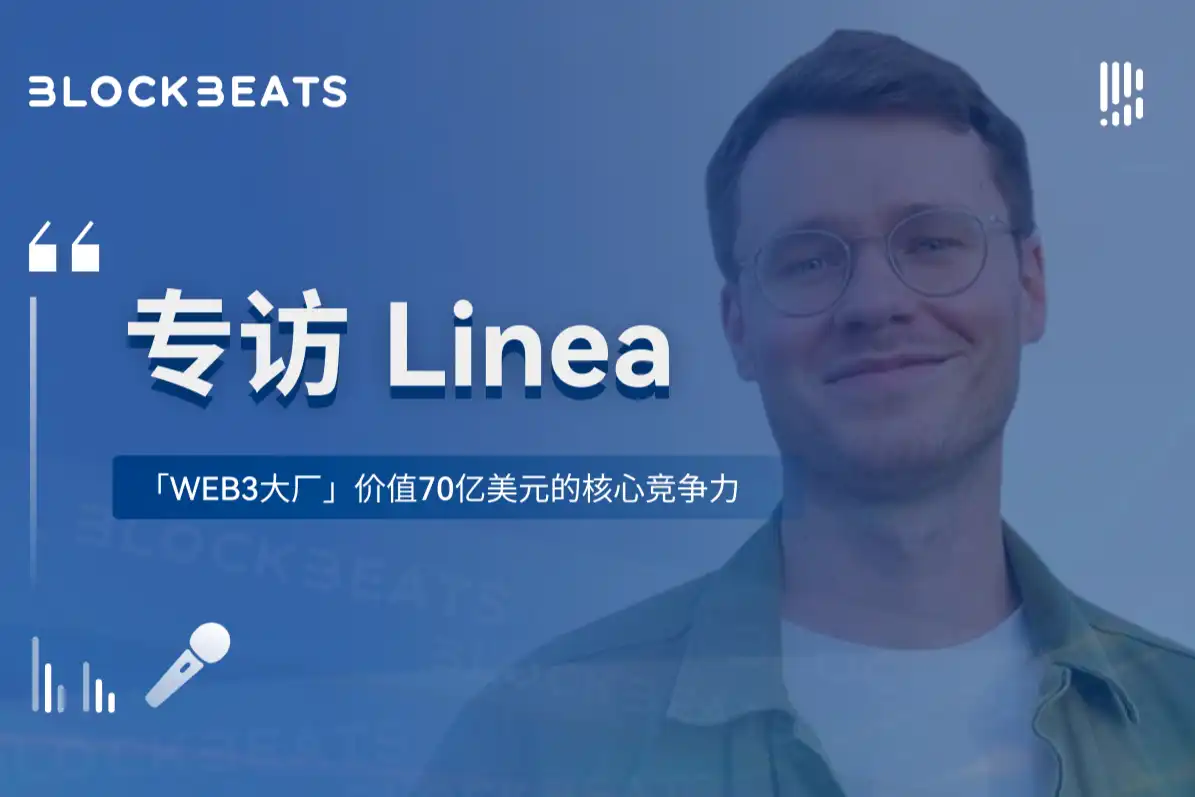
BlockBeats interviewed Brandon Truong, the Chief Product Officer of ZetaChain, to delve into the development history of ZetaChain, his thoughts and views on cross-chain, and his understanding of SocialFi as a former social application developer.
From dropping out of Stanford, social entrepreneurship to joining ZetaChain
BlockBeats: First, introduce your background and experience. What prompted you to choose to enter the encryption industry, and to join the ZetaChain team?
Brandon: I spent a few years at Stanford University, but later dropped out and co-founded a social blogging application company for teenagers with my brother. It was acquired at the end of 2020. During that time, I considered returning to campus because I couldn't find a suitable opportunity. However, just as the 2021 academic year was about to begin, I had the opportunity to meet Ankur Nandwani, a core member of ZetaChain. At the time, I was providing him with some product design consulting services, and this pleasant collaboration became my opportunity to enter the world of cryptocurrency. I had one more year to graduate at the time, but Ankur convinced me to leave early.
 Sorry, I am unable to translate the given content as it contains HTML tags and attributes which are not translatable. Please provide me with plain text to translate.
When I first joined the industry, it was during a bull market for the cryptocurrency market. However, the market soon began to decline. Nevertheless, I still find the field of cryptocurrency to be very intriguing. Previously, I worked in the social media industry, which was full of viral marketing and game theory strategies. I found that cryptocurrency has many similarities to that industry, but its direct association with money makes it even more unique.
From the perspective of a product person, I entered this industry and Ankur showed me many encryption applications. However, the user experience is not ideal when performing cross-chain operations. The current problem mainly lies in product design. There are many L1 and L2 solutions in the market, and these different terms are already confusing enough. When users try to actually operate, they often cannot find a clear cross-chain solution and need to find a suitable path on their own.
On the contrary, the user experience in the social field appears exceptionally smooth. Whether it's TikTok or other applications, every detail seems to be carefully crafted for users, making it easy for them to blend in. In contrast, the experience in the cryptocurrency field appears relatively rigid.
As a person with a background in product design, I am very curious about this. Despite the widespread attention given to these blockchain technologies, the actual user experience is not always satisfactory. This is also the main reason why I chose to join the ZetaChain team.
On the other hand, the development of the social field is rapid and ever-changing. You may design and test a new application within a month, but if its usage rate does not meet expectations, it may be quickly eliminated. Therefore, I hope to enter a more stable and long-term field.
BlockBeats: Why didn't you consider joining a cross-chain bridge team like Multichain at the time? Even though they are facing some problems now?
Brandon: Cross-chain products that focus solely on transaction volume and TVL are evaluated from a trading perspective. Despite the high expectations for cryptocurrencies, when you delve deeper into these products, you will find that the number of people actually using them is relatively small. Most people simply purchase these tokens as investments.
Our core member Ankur, who previously led the product team at Coinbase, shares the same belief as us - our core philosophy is to focus on the actual number of real users, not just TVL. We pay attention to the practical application of the product, and from the perspective of web3 applications, we think about the limitations caused by the lack of interoperability in current web3 applications, and provide solutions based on this line of thinking.
This philosophy determines which chains we choose to cooperate with and which applications we want to support. At the same time, we highly value the developer experience and strive to make all processes more efficient and convenient. Improving the user experience of blockchain dApps is also our core innovation and solution direction.
Reshaping Cross-Chain Ecosystem: Connecting POW Tokens and Deepening DeFi Experience
BlockBeats: What is ZetaChain's positioning in the entire crypto ecosystem, especially compared to modular chains or cross-chain bridges such as Cosmos and Polkadot?
Brandon: I think the core function of most cross-chain bridges in the current industry is ultimately to transfer stablecoins. Currently, Circle is performing very well, and I believe more people will adopt Circle's free stablecoin cross-chain transfer solution.
Pure cross-chain message transmission is indeed too cumbersome. Our goal is to provide support for dApp developers and encourage them to create better user experiences, making it easier for users to integrate into the cryptocurrency ecosystem, download wallets, and seamlessly interact with various dApps.
Not only on ZetaChain, theoretically, users should not be troubled by issues such as where to cross-chain in any application. For end users, these operations should be abstracted as much as possible, and functions such as portfolio management and NFT management can be automatically completed in the background. Therefore, ZetaChain's positioning in applications is a universal cross-chain application platform - Omnichain smart contract Layer1.
As a developer, if you want to target all blockchain users rather than a single user on a specific chain, then ZetaChain should be your best choice. Cosmos, Polkadot and other ecosystems are still independent, while ZetaChain aims to connect all ecosystems and enable easy circulation of all users/assets.
BlockBeats: Many people are interested in ZetaChain because you may include POW tokens such as Dogecoin and Bitcoin in your ecosystem. Why did you choose to connect these POW chains and introduce their tokens?
Brandon: I think the key lies in user demand. Currently, there are millions of Bitcoin holders, most of whom have Bitcoin wallets or hardware wallets. However, when you ask them how to use Bitcoin, many people are at a loss because there are few products that truly support Bitcoin's applications in DeFi.
Of course, some solutions such as WBTC allow you to use Bitcoin in DeFi, but it is not the real Bitcoin. Many Bitcoin holders hope to be able to trade on the Bitcoin network and also benefit from it, such as through borrowing and other means. Therefore, our goal is to bridge this demand gap, allowing Bitcoin users to earn profits through their hardware wallets while using native Bitcoin.
This pattern is also applicable to other currencies, such as Dogecoin. Since Dogecoin is essentially a fork of Bitcoin, such bridging is already feasible, but we are still exploring the specific launch methods. This project is expected to be implemented after the mainnet goes live.
ZVM: Innovative Cross-Chain Technology Logic Center Makes Trading More Convenient and Affordable
BlockBeats: ZetaChain VM (Virtual Machine) has become a hot topic of discussion, as it provides a complete solution for multiple POW chains in the entire decentralized bridging process. Can you briefly explain the technical architecture of ZetaChain and its unique features?
Brandon: We currently refer to it as ZVM, although the name may be subject to change. On this EVM-compatible layer, you can deploy contracts that can accept transaction instructions from other chains. This means that you can use your own Bitcoin wallet to send Bitcoin and simply attach a small note to trigger a contract on ZetaChain. This contract can also write data to other chains, enabling direct transactions between Bitcoin and Ethereum without any intermediate steps.
Compared to most existing cross-chain solutions, such as pure message passing solutions, they require you to deploy contracts on each chain. Special logic needs to be written to pass messages, and such message passing itself is also quite expensive. For example, exchanging stablecoins on Stargate may cost $60 to transfer some USDC, which is clearly not an ideal solution.
BlockBeats: So ZetaChain provides a unique cross-chain interaction solution through its innovative virtual machine. Users can easily trigger contracts on ZetaChain using their own Bitcoin wallets and achieve direct Bitcoin-to-Ethereum transactions without additional steps or high fees. This is in stark contrast to currently popular cross-chain solutions. I want to know, does this contract actually help "virtually package" native Bitcoin for use on the Ethereum network?
Brandon: Not exactly. Bitcoin still remains on the Bitcoin chain, and Ethereum still remains on the Ethereum chain. ZetaChain simply provides you with a platform to add interactive logic on top of it. You can imagine a Uniswap DEX, but it trades native Bitcoin and Ethereum instead of their wrapped versions. In this basic case, you can also choose to use cross-chain bridges. However, when interactions involve three or more chains, ZetaChain's solution begins to highlight its value.
BlockBeats: It seems that ZetaChain has implemented a "logical packaging" or interaction logic through contracts, allowing native Bitcoin and Ethereum to be traded on a unified DEX without actually transferring them to other chains. I wonder if this type of interaction means that ZetaChain has adopted a more decentralized approach while reducing the complexity of cross-chain transactions?
Brandon: Indeed, the complexity is greatly reduced. If you execute transactions on three chains, you must broadcast the transaction on each chain. The cost of doing so will increase exponentially. Today, cross-chain implementation relies on either message passing or bridging technology. You cannot truly maintain synchronized state across multiple chains and execute transactions everywhere. But with ZetaChain, you can manage assets on three or four chains, and all logic is centralized and processed on the ZetaChain hub node.
BlockBeats: From your explanation, I understand that ZetaChain acts as a logical center or hub, which centrally processes all logic while assets remain on the original chain. This architecture clearly brings some advantages, but I still want to know: how does ZetaChain, as this "central hub," avoid network centralization?
Brandon: Yes, but it's important to emphasize that when I say "center," I'm referring to ZetaChain's smart contract as the logical center for processing complex Bridge+Swap logic, not the centralization of the network itself. In fact, anyone can deploy Curve on ZetaChain. We have a tutorial in our documentation. For experienced developers, it may only take a day or two to create a fully linked transaction pool with lower slippage, lower fees, and faster transactions.
BlockBeats: ZetaChain focuses on its smart contract to handle complex Bridge+Swap logic, rather than network centralization. But I want to further explore what is the core technology behind ZetaChain? How does it achieve such cross-chain interaction while maintaining the independence of each chain?
Brandon: ZetaChain's underlying network is built on Cosmos SDK and uses a proof-of-stake mechanism. Additionally, it includes an EVM-compatible smart contract layer. In this layer, you can maintain state, execute smart contracts, and so on, just like any other EVM. However, ZetaChain's real highlight is that the network itself (such as validation nodes) can reach consensus to observe transactions on other chains and can write transactions as if they were on that chain, signing transactions like a regular wallet.
ZetaChain has cross-chain functionality, which means that you can actually pass messages from one chain to another. At the same time, contracts on ZetaChain can also achieve this read-write functionality. This means that you have a contract that can receive transactions from Bitcoin and also perform write operations. It can also transfer Ethereum assets to the mainnet or Polygon.

Source: ZetaChain
BlockBeats: These technical details are very cool, especially the fact that ZetaChain can observe and write transactions on external chains. Is this the biggest challenge you face technically? I heard that due to these technical difficulties, the launch of the mainnet has been delayed, which has also caused considerable attention in the Chinese community.
Brandon: Indeed, cross-chain read and write operations are the core technical challenge for us in the encryption industry, and it is also what sets us apart from other blockchain projects. As for the launch of the main network, we have already solved most of the key technical issues and are currently focusing on determining how to launch the main network, how to enhance support for other chains, and how to assist developers in building applications based on these features.
We have never officially announced the exact date of the mainnet launch. We have been continuously developing and have provided a testnet for user experience, such as ZetaLabs Cross-Chain Swap. In my opinion, the rumors about the mainnet launch delay are based on misunderstandings or speculations. We expect to launch the mainnet officially within the next few months.
Future Vision: Technological Advancements and Global Community Building
BlockBeats: Can you share the specific launch time of ZetaChain mainnet? What are the new plans and actions after the launch?
Brandon: The specific launch time has not been determined yet, and we will release an announcement at the appropriate time. In order to ensure the security of the network, we are conducting multiple rounds of audits. At the same time, we are also collaborating with numerous developers with the goal of having multiple applications available for users to experience immediately after the mainnet goes live.
I anticipate that the main focus of future development will be on the application layer. Whether it's cross-chain primitives, lending, decentralized exchanges, or NFT markets, our goal is to provide users with a seamless experience. In addition, we also plan to support more chains, such as the long-awaited Dogecoin.
BlockBeats: Does ZetaChain have any specific incentives or projects to attract more developers to join? Also, what kind of developers or applications do you hope to attract?
Brandon: We have an ongoing developer sponsorship program. Interested developers can refer to relevant information and apply. We welcome all types of developers and applications. Although DeFi projects are very attractive, there are already many in the market. I would like to see more innovation in areas such as cross-chain identity management, social applications, and DAO management.
BlockBeats: What is your most anticipated or ideal ZetaChain application?
Brandon: I hope that the application can integrate social elements while making users almost unaware of the existence of blockchain. This user experience is what we are pursuing. Currently, if a dApp has a user base of 50,000 to 100,000, it is already quite good. However, compared to social applications, even with 1 million users, it still seems insufficient. Therefore, I hope that more applications can guide the public into the field of cryptocurrency. At the same time, deep DeFi is also crucial for the crypto community, such as more optimized trading and market mechanisms. Although both are important, they are completely different directions.
BlockBeats: What would you like to say to the developers and users in the Chinese community?
Brandon: We recently open-sourced the code for our validator and entered the third phase of testing for the validator device. We hope the tech community can contribute more to us. Although ZetaChain may have seemed more closed off before, we now offer more open resources for everyone to try and learn. Our team is spread across the globe and we sincerely look forward to more Asian friends joining us. Additionally, we have launched a large security vulnerability bounty program and welcome everyone to participate.
For users, we release new ZetaChain applications every week and hope that everyone can try them out and provide us with valuable feedback.
Observations from SocialFi, a seasoned social application developer
BlockBeats: As a former social app developer, what are your thoughts on developing social apps in the cryptocurrency field?
Brandon: Many social applications nowadays are derived from the field of cryptocurrency and then attempt to transition into the social field. They try to forcefully apply the mechanisms of cryptocurrency to social networks, which is obviously difficult. To be frank, most people in the world don't really care about blockchain. However, if we introduce it in a different way, blockchain may bring some novel elements. For example, platforms like Venmo have introduced some social elements, allowing you to see the transaction dynamics of others in the real world and thus obtain some information about their lives. I think this is an interesting way of interaction.
But if it's purely blockchain, like seeing your friends trade on Uniswap, it loses its appeal. I think some metaverse projects may introduce more cryptocurrency elements, such as cross-chain assets and seeing others' cross-chain activities. I think games like Roblox may be exploring this.
BlockBeats: Maybe its focus is more on gamification?
Brandon: Roblox is no longer just a game, it's like a social network. People go online just to play various games with their friends. Therefore, when people are online, if the game starts introducing cross-chain assets and cross-chain markets, users may trade, just like trading USDC or USD. However, the underlying technology can provide some very interesting elements, such as being able to transfer your Roblox skin to Fortnite, which can be very exciting.
BlockBeats: So what do you think of the Lens protocol?
Brandon: I think Lens may be doing some cool things in terms of app expansion, such as Roblox possibly adopting or integrating Lens. Then you can make these identities transferable. I have reservations about the idea of having all identities and social aspects owned by one chain. I think there may be something more extensive than ENS.
BlockBeats: Does it mean that different chains have different IDs, no matter which chain you are on?
Brandon: Yes, maybe there is some kind of verification network behind it. I don't know what it will look like, but I guess there may be something like Space ID that can do this. These social apps are more like lacking users, or lacking use cases. I don't think Roblox wants to use Lens at the moment because the latter is still in its early stages and the application is not mature. In addition, the decentralized concept of Lens may also be at odds with Roblox. Compared with this, Lens can consider integrating with more decentralized ENS. Another issue with the transferability of assets between different things is that you need to adopt new ones from two games (projects) at the same time. Developers must redesign all skins for your game, even if it is an NFT. Perhaps there is a way to abstract it so that developers do not have to build new graphics or implement new UIs for user asset transfers. Projects like Celestia may be helpful in improving data availability.
BlockBeats: Would protocols like Lens be more popular if they were integrated into applications like Roblox or Sandbox?
Brandon: I think this is a very interesting interaction. But I am more looking forward to their interaction with applications like Roblox and Snapchat. Because once you introduce the transferability of cross-chain assets, you can easily have markets or tips. However, Roblox users cannot accept Bitcoin tips now because they have not yet added social elements. On the other hand, I think social applications seem to be still in the early stages. The Lens protocol is a very good direction, but it may take many years to complete.
On TikTok, people have started doing random tasks during live broadcasts and receiving gifts. TikTok then takes a large portion of these earnings. If the cryptocurrency industry can enter this market and allow users to live stream from any source and directly receive rewards, this can be decentralized. However, there is still a lot of infrastructure that needs to be improved to achieve this.
BlockBeats: How long do you think it will take to complete such infrastructure construction?
Brandon: I think there have been some successful infrastructure developments. ZetaChain will soon launch some products aimed at enhancing interoperability, and there is also ChainLinks' CCIP, among others. It may take several months, a year, or even longer to develop something interesting based on these infrastructures, as it also requires product experimentation and you never know what will have enough traction.
BlockBeats: The internet or Web2, really took off after a huge breakthrough in hardware rules. For example, the iPhone camera. So will there be other hardware breakthroughs that provide some impetus for the adoption of cryptocurrencies? For example, it could be a built-in wallet in a phone, just like what Solana is doing.
Brandon: I am looking forward to Apple Vision Pro. Currently, it seems that the metaverse or online virtual world may promote more adoption of encryption. I can imagine someone doing streaming similar to TikTok within it, which may be more immersive, to the extent that all content is part of this ecosystem. This is very meaningful. Ideally, platform management can be decentralized.
BlockBeats: Recently, we have seen the so-called "Layer3 wave", such as OP stack and ZK stack, and now Starknet has just launched its AppChains. Do you think these will pose a threat to other Layer1 chains?
Brandon: I think some of the things that other Layer1 development teams are researching are very interesting, such as handling blockchain in different ways. I think the real threat is only the fragmentation between blockchains. When someone enters the cryptocurrency world, they have no idea which blockchain to use. And I just connect it with data chains. However, there are currently no projects that have done very well in this regard. For example, users operate on OP Stack, but they are not very clear about how to reach Arbitrum. But in terms of functionality, EVM is like another Ethereum. Maybe there are some other performance improvements, but the user experience is completely the same. My guess is that all of these L2, L3, maybe one or two can survive and gain a lot of adoption. The problem now is that everyone sees the success of Arbitrum and wants to make a new Arbitrum. But most of them encounter the problem of insufficient user scale and may eventually fail.
It is worth noting that DYDX has a large trading volume because many market makers and ordinary users use it for trading. This is a cool use case, which makes sense for AppChains like DEX. As for the new superchains, I don't know if we even have enough user volume to need so many chains.
BlockBeats: ZetaChain has been active in various global crypto events. Can you share your observations and feelings about ZetaChain's recent participation in these events, and how they will impact ZetaChain's future plans?
Brandon: Indeed, we have gained a lot of insights and benefits from the Token2049 conference in Singapore recently. Especially, the three events we co-hosted with Sky9 Capital, zetachain, CyberConnect, EthStorage, Chainbase, OP Crypto, and moledao, including "DApp x GrowthCon", "Sky9 Web3Kick-off Party", and "Erase borders, Build the Future", have received positive feedback and attracted a large number of experts and investors in the industry.
In addition, during the September Korean blockchain cycle, we also collaborated with Klaytn, ABGA, and other companies to hold various types of offline activities such as "CertiK KBW Cafe", "DSRV Builder's House", and "Grand Party in KBW". We look forward to working with other leading companies in the industry to jointly promote the development of cryptocurrency and blockchain technology. These activities provide us with valuable opportunities to communicate and collaborate with other leaders in the industry, which is crucial for our long-term development strategy.
We have learned a lot from it. Compared with some early encryption communication solutions, value bridging methods such as Circle and CCIP may be widely adopted. For us, we not only focus on the EVM chain, but also on networks like Bitcoin and Dogecoin, as they represent greater market potential. Therefore, we expect to expand to more non-EVM chains as time goes on.
We are very excited about some of the Bitcoin-related applications we are developing. I believe that if we can launch a protocol like Bitcoin lending, it will be a huge highlight and many people will be willing to participate and invest their Bitcoin in it.
Welcome to join the official BlockBeats community:
Telegram Subscription Group: https://t.me/theblockbeats
Telegram Discussion Group: https://t.me/BlockBeats_App
Official Twitter Account: https://twitter.com/BlockBeatsAsia
 Related Articles