Countdown to the ZetaChain mainnet launch, will the Bitcoin ecosystem enter the era of multi-chain smart contracts?
The Bitcoin community needs native infrastructure, and ZetaChain is one of the most anticipated and highly anticipated ones. It is reported that ZetaChain has just opened up airdrop distribution.
Since the beginning of last year, the heat of the Bitcoin ecosystem has continued to rise, especially with the continuous development of the Ordinals and BRC-20 ecosystems. Inscription technology has been widely tried on various public chains, and the market value has also skyrocketed. However, the liquidity core of the "Inscription Track" is still firmly focused on the Bitcoin ecosystem.
More importantly, the successful approval of Bitcoin ETF in January of this year marked an important milestone in the history of cryptocurrency. The impact of this event is far-reaching and indicates that market liquidity will continue to revolve around Bitcoin in the foreseeable future.
With the increasing popularity of Bitcoin's engraved ecological assets, the Bitcoin ecosystem is moving towards diversified development. The community's demand for more advanced infrastructure is growing, and expectations and consensus are constantly strengthening. Currently, there are more than 30 Bitcoin Layer 2 projects emerging in the market, and 2023 is jokingly referred to as the "Bitcoin Ecological Layer 2 Year". The ecological tracks of Bitcoin Layer 2, DeFi, and cross-chain are collectively referred to as BTCFi, which is expanding the functional scope of Bitcoin, including the implementation of smart contracts and decentralized applications.
As the ZetaChain mainnet enters the countdown phase, it will also add fuel to the already hot BTCFi.
Bitcoin may usher in a multi-chain smart contract era
On January 23rd, ZetaChain announced the details of its genesis airdrop distribution, with a total of 31.5 million ZETA tokens being distributed to over 800,000 ZetaLabs users and contributors. This news has sparked significant interest and attention within the community, including the Bitcoin community.
Initially, ZetaChain was positioned as a Layer1 smart contract blockchain, aiming to establish a seamless framework for handling message passing, state synchronization, and asset exchange between different blockchains. It can not only connect Ethereum, Ethereum L2 rollups, Solana, Terra, Algorand and other EVM chains, but also interact with non-EVM chains such as Bitcoin and Dogecoin, solving the challenge of cross-chain interoperability.
However, considering the current market environment, ZetaChain has the absolute advantage in building the full-chain EVM smart contract of the Bitcoin ecosystem, with favorable timing, location, and people.
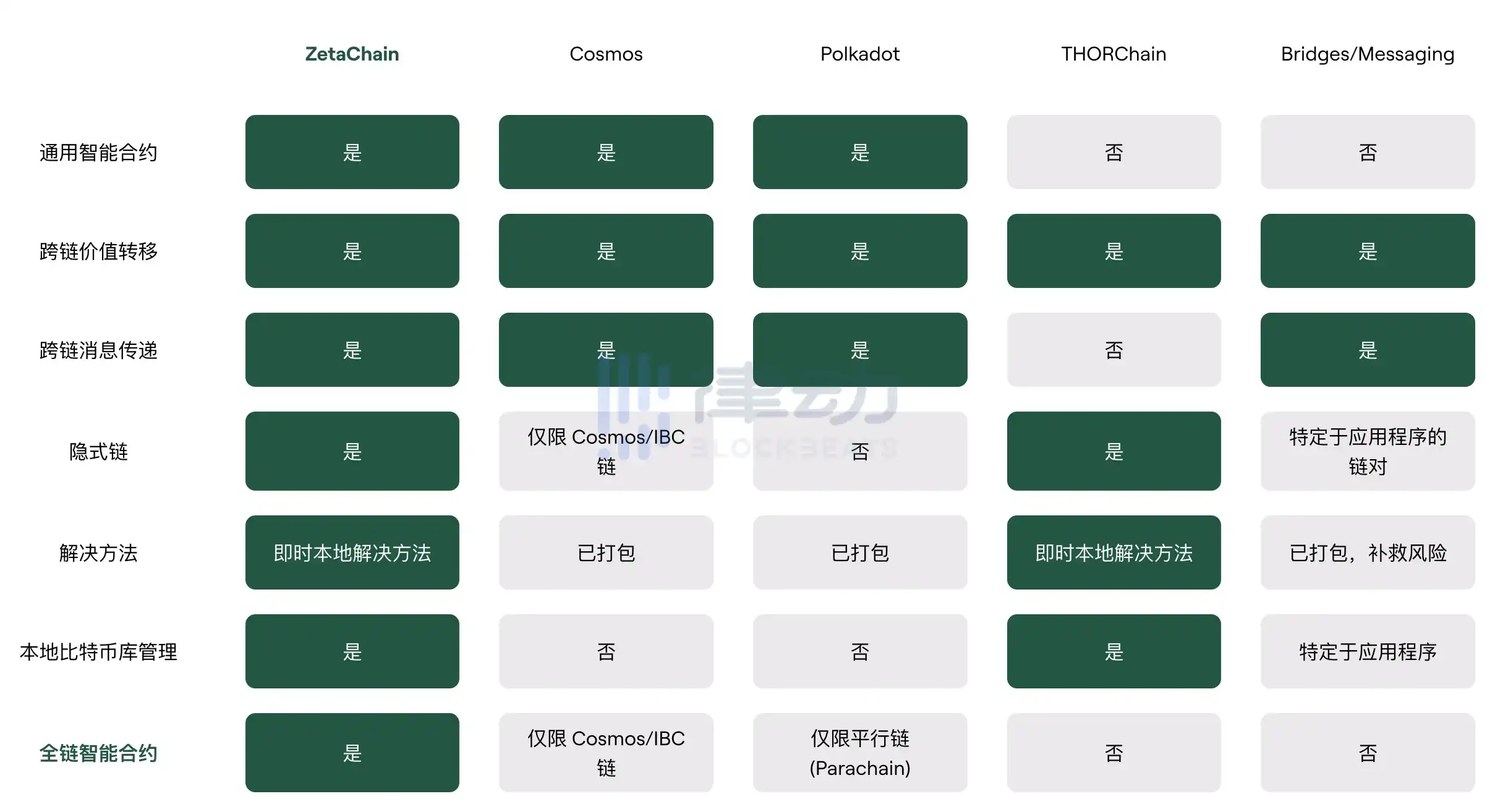
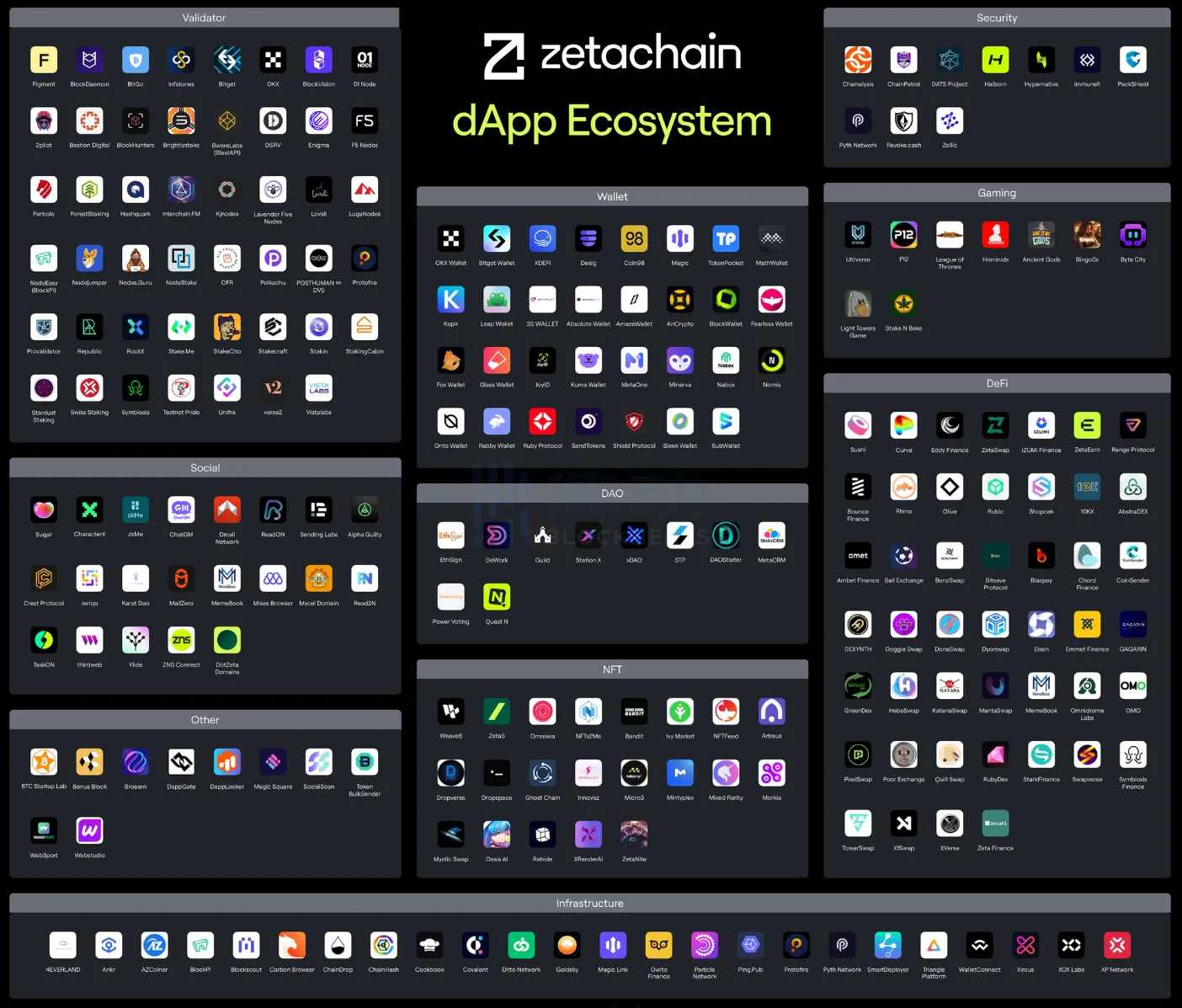
The source of the image is ZetaChain.
If Bitcoin can circulate and participate in complex logic on other chains, it would be a good thing for users and the entire crypto ecosystem. However, Bitcoin's network architecture does not natively support complex smart contract functionality, which makes centralized exchanges the mainstream platform for processing Bitcoin transactions. Currently, some DeFi projects have adopted the "wrap btc" method to package Bitcoin into another token for use.
However, in the Bitcoin community, there is a high pursuit of maintaining the originality, purity, and "halalness" of Bitcoin. For them, wrapped Bitcoin is no different from WBTC. Therefore, more Bitcoin enthusiasts tend to prefer a more native and pure cross-chain solution. Although there are many solutions on the market that attempt to solve this problem, there are few that truly meet this standard, and Zetachain is one of the outstanding ones.
This is also the difference between ZetaChain and other cross-chain projects: when ZetaChain achieves compatibility with Ethereum smart contracts and the Bitcoin network, it does not encapsulate Bitcoin into another token, but implements "native btc swap" based on its innovative omnichain technology. This unique ability makes ZetaChain one of the few smart contract platforms in the market that can be compatible with the Bitcoin network.
On-chain "Power Adapter"
There is a vivid metaphor in the ZetaChain community that helps people better understand the unique mechanism of this platform: ZetaChain is like a universal power adapter in an electronic product.
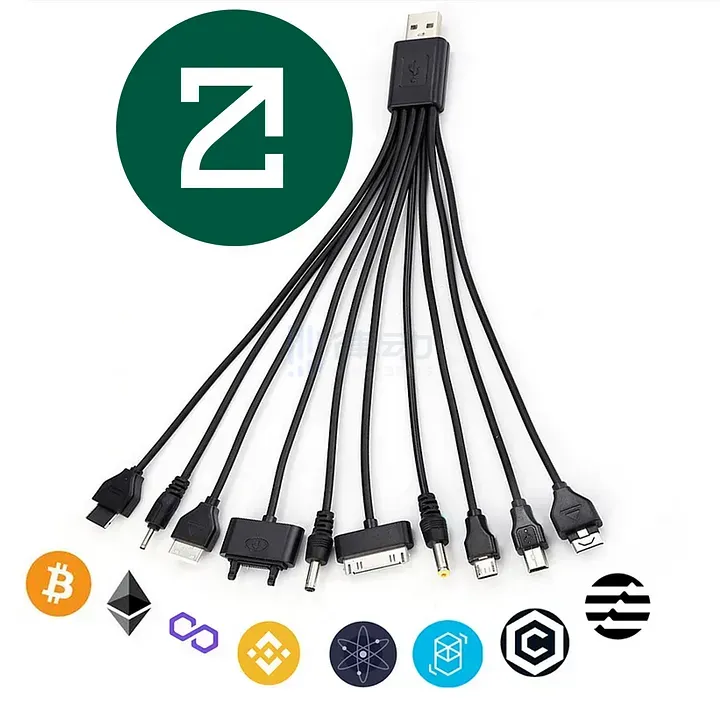
Source: ZetaChain
Just as various electronic devices such as smartphones, laptops, and cameras have different charging ports, in the diversified world of blockchain, each platform also has its unique protocols and standards. These differences often bring challenges to communication between chains. However, ZetaChain is like a universal power adapter, allowing these different blockchain devices to "charge" through a unified interface, that is, to achieve the exchange of data and assets.
More specifically, ZetaChain provides a comprehensive open-source toolkit that allows developers to freely build and customize their own applications (dApps), achieving seamless connections with any blockchain, regardless of their underlying technology. This is not just a cross-chain platform, ZetaChain represents a blockchain technology that is future-oriented and applicable to all chains. Community members have vividly demonstrated ZetaChain's concept and functionality through such metaphors.
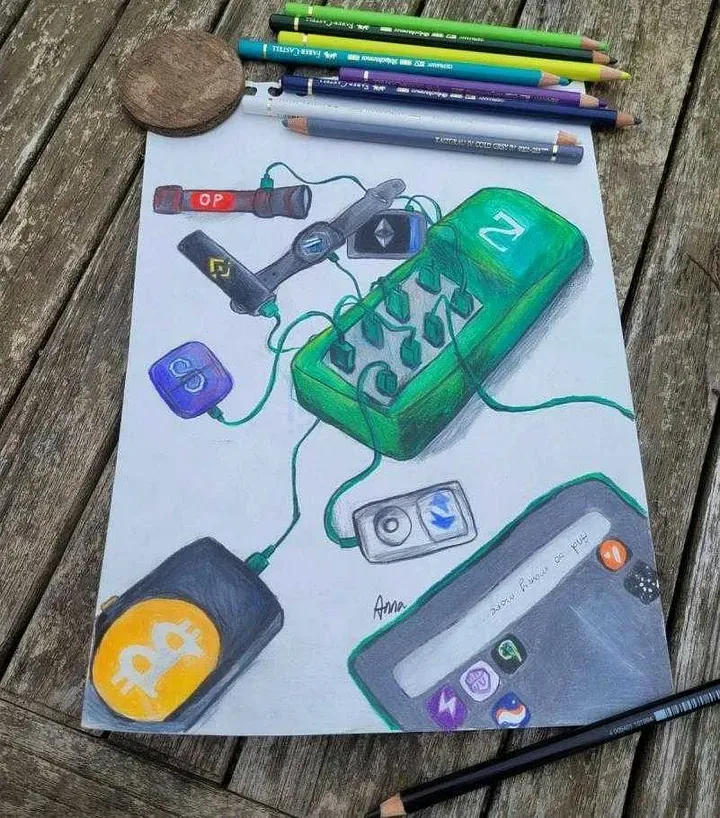
Source: ZetaChain Community
Explanation of Hardcore Technology
As pointed out by the famous encryption researcher haotian on social media, ZetaChain, as a cross-chain interoperable L1 public chain, has attracted widespread attention to the concept of "chain abstraction" with its airdrop activity. He vividly compared this concept to the "horizontal alliance" strategy in the encryption world, as opposed to the modular "vertical alliance" approach. Simply put, ZetaChain can be seen as a "chain within a chain" existence, which adopts a methodology called "blockchain of blockchains" (BOB), allowing specific chains to be embedded into a full-chain environment, providing data transmission, network connectivity, consensus mechanisms, incentive measures, and contract layer frameworks, achieving efficient interoperability between different blockchains.
To be more specific and in-depth, in order to achieve this interoperability, ZetaChain utilizes various advanced technologies, including Cosmos SDK and Tendermint, as well as hyperconnected node technology and so on.
The technology architecture of ZetaChain benefits from its strong foundation based on Cosmos SDK and Tendermint consensus engine. These two technologies give ZetaChain fast block generation speed and real-time finality, providing efficient and flexible modules for basic blockchain operations such as staking, governance, and token distribution. Cosmos SDK, as a comprehensive software development toolkit, greatly reduces developers' repetitive work and allows them to focus on building unique applications for private chains. At the same time, Tendermint's PBFT consensus mechanism has proven its ability to handle networks of up to 300 nodes in practical applications, and has the potential to further expand through BLS threshold signature technology.
ZetaChain's hyperlinked node function is another innovation. Observers on the node can track and monitor all transaction activities on the connected chain, while its TSS (Threshold Signature Scheme) design allows for signature and verification of transactions on any connected chain. These hyperlinked nodes provide developers with a seamless and complete chain environment, enabling them to create cutting-edge and powerful cross-chain applications while ensuring security and decentralization.
On the ZetaChain network, developers can create distributed applications (dApps) that can handle and manage assets and funds on other chains, similar to how smart contracts on a single chain handle assets. This means that dApps running on ZetaChain can coordinate and implement smart contract logic across all chains, including non-smart contract chains such as Bitcoin and Dogecoin.
Meanwhile, ZetaChain's validator system is unique and complex, consisting of three different roles: basic validators, observers, and TSS signers. The cost of transactions and rewards will be allocated to validators in exchange for their services in processing transactions and maintaining network security. Observers scan relevant events, transactions, and statuses of external chains at a certain point in time and reach consensus on observations on ZetaChain's blockchain. The signers collectively hold a threshold signature scheme (TSS) key, which allows them to send verified messages to external chains and hold assets on external chains like regular addresses.
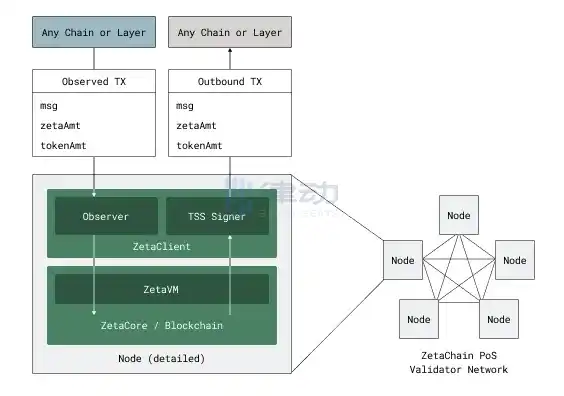
Source: ZetaChain
ZetaChain's Threshold Signature Scheme (TSS) is one of its core technologies. This key generation and signing process protects the private information of each node while avoiding the risk of a single point of failure. With this key, ZetaChain can have its own account on an external chain, allowing its smart contracts to operate native assets on the external chain like managing internal assets. This provides developers with a powerful platform to achieve cross-chain computation and state migration between different networks.
Related reading: "ZetaChain: A cross-chain dark horse smart contract platform compatible with Bitcoin."
In order to store funds and perform privileged operations such as destruction, minting, or transfer of funds on external chains, ZetaChain must hold accounts on these chains. This is not only a basic requirement for universal cross-chain smart contracts, but also the core function of smart contracts to autonomously manage assets. ZetaChain enables asset custody on external blockchains with limited smart contract capabilities, such as Bitcoin and Dogecoin. This feature allows smart contracts on ZetaChain to operate assets such as Bitcoin like any other token on a chain. Its smart contracts can manage assets based on set logic, but unlike Ethereum, ZetaChain's full-chain smart contracts can operate assets across chains, allowing users to have Bitcoin smart contracts or smart contracts that manage multiple different assets on different networks simultaneously.
Welcome to join the official BlockBeats community:
Telegram Subscription Group: https://t.me/theblockbeats
Telegram Discussion Group: https://t.me/BlockBeats_App
Official Twitter Account: https://twitter.com/BlockBeatsAsia

 Related Articles