The future of Bitcoin ecology: a new paradigm from wallet to cross-chain technology
The Bitcoin ecosystem is no longer just about inscriptions.
Although some people are still debating whether the value of the public chain inscription is a "false proposition", in fact, in addition to the inscription, the Bitcoin ecosystem also includes several BTC L2 projects and DeFi projects that are under development, which have attracted the attention of many developers and institutional capital. What many people don't know is that the market value of these projects' tokens is not low compared to some of Bitcoin's inscriptions.
Related reading: "What are the top ten cryptocurrencies in the Bitcoin ecosystem by market capitalization? How many do you hold?."
The current Bitcoin ecosystem is at a critical moment. Although large-scale financial applications have not yet appeared in the Bitcoin ecosystem, we can already see the trend of inscriptions shifting from the primary market to the secondary market. This trend indicates the continuous development and improvement of the financial infrastructure of the Bitcoin ecosystem, waiting for a turning point, and has the potential to become the most prominent focus in the future cryptocurrency field.
How can we seize opportunities and lay out the next wave of ecology and projects? BlockBeats introduces some Bitcoin ecological infrastructure projects worth long-term attention in this article.
Stacks
Stacks was originally called Blockstack and was founded by Muneeb Ali in 2013. Its goal is to enable smart contracts and decentralized applications (DApps) to operate on the Bitcoin network. Stacks can be seen as a second layer (L2) solution for Bitcoin.
Stacks has introduced a unique consensus mechanism called Proof of Transfer (PoX), which allows Stacks to maintain the security of Bitcoin while also bringing new features such as smart contracts, without changing Bitcoin itself. Through PoX, Stacks settles transactions on the Bitcoin blockchain while running its own autonomous state machine and consensus mechanism, expanding the functionality of Bitcoin.
While anchored on the Bitcoin blockchain, Stacks is also an independent protocol that introduces the smart contract language Clarity and the Stacks Virtual Machine (SVM) to execute these contracts on the Bitcoin blockchain, opening up new possibilities for Bitcoin DeFi and NFT applications.
STX is its native token, which has staking, governance, voting smart contracts, and value transfer purposes. In 2019, Stacks' native token STX became the first token issuance recognized by the US Securities and Exchange Commission (SEC). In addition, Stacks also launched sBTC, which is pegged to Bitcoin, enabling Stacks to communicate with the Bitcoin network and enhance decentralized communication and security. Unlike wBTC, sBTC is completely community-operated without a central custodial entity. This is also an important innovation that Stacks brings to Bitcoin.
Alex
ALEX was founded in 2021, with the full name Automated Liquidity Exchange. It is a Bitcoin DeFi platform based on the Stacks blockchain. ALEX's main goal is to integrate the functionalities of Bitcoin Layer 1 and Layer 2, providing a seamless DeFi experience. ALEX's native token is used for various functions, including incentives, staking, and voting.
ALEX offers a variety of services, including IDO (Initial Decentralized Exchange Offering) launchpad, DEX (Decentralized Exchange), staking, and lending services, with all transactions settled on the finality of the Bitcoin network. ALEX stands out by not only providing liquidity support for emerging projects, but also introducing a decentralized trading platform for traders to access liquidity.
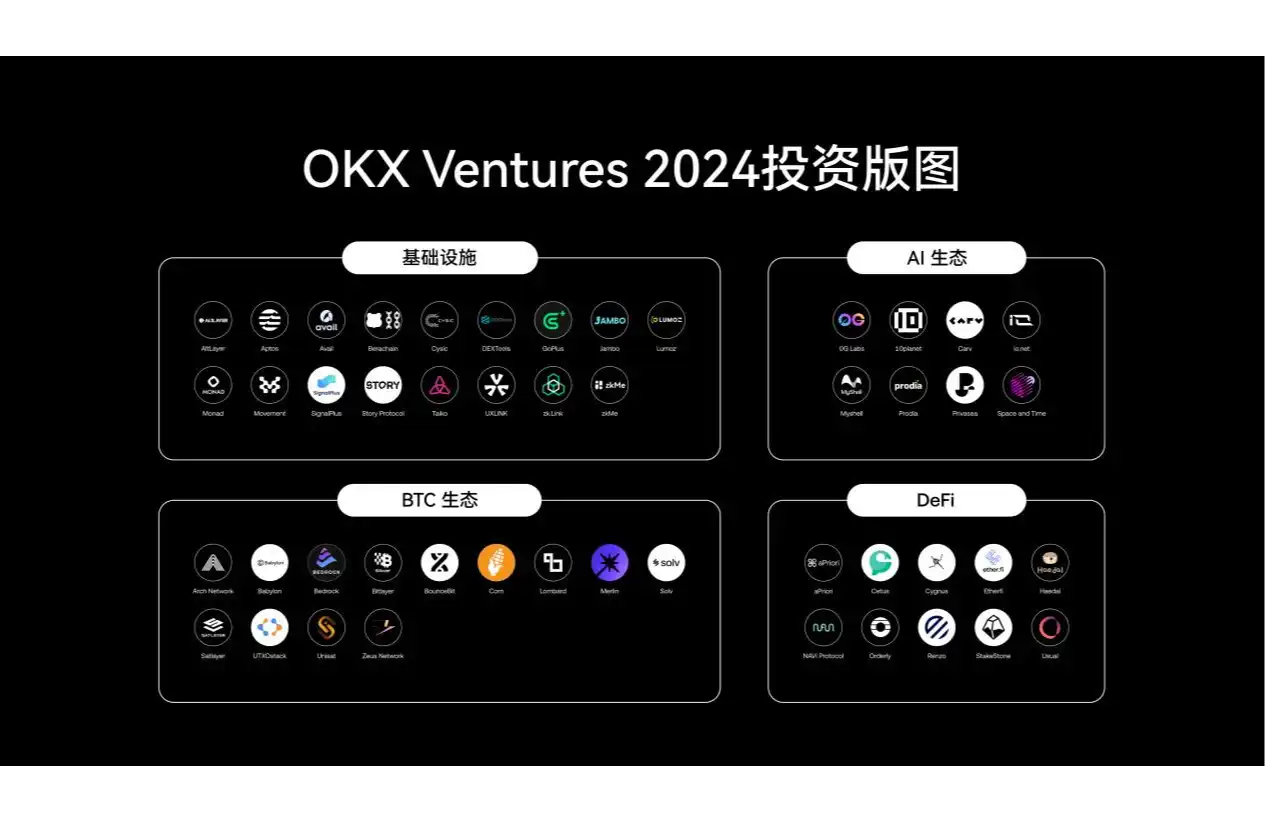
Currently, ALEX is the largest project on Stacks, with twice the number of active users compared to Sovryn. The platform's next focus is to improve the scalability and user experience of the Bitcoin economy. It is reported that the ALEX team is composed of experienced Wall Street quantitative trading experts from Credit Suisse, Goldman Sachs, and Morgan Stanley. ALEX Labs has previously received investments from institutions such as OKX Ventures, Stacks Foundation, and Trust Machines.
As of now, ALEX has completed audits with CoinFabrik and Lease Authority and launched its mainnet in January 2022. Additionally, ALEX recently secured a new funding of $5.8 million led by White Star Capital, with participation from investors such as Cultur3, GBIC, and OK Blockchain Capital. On December 20, 2023, LK Venture, a crypto investment and research firm under Hong Kong-listed company Blue Harbour Interactive, also announced a strategic investment in ALEX Labs (proposed by Wang Feng) with the aim of jointly building a wider Bitcoin financial ecosystem.
UniSat
As the main wallet for BRC20, UniSat now plays an important role in the Bitcoin ecosystem. In the early days, when the Bitcoin ecosystem was still a small community, UniSat began developing BRC-20 wallets, which were seen as "outliers" in the ecosystem at the time. Over time, BRC-20 has attracted great attention on the Bitcoin network, and UniSat has become one of the earliest projects to seize this opportunity.
It can be said that UniSat is the first open-source browser extension wallet for Ordinals on Bitcoin. It not only stores and transfers Ordinals, but also allows users to view unconfirmed inscriptions, and it is completely open-source. This greatly enhances its potential in the Bitcoin DeFi ecosystem. UniSat also supports instant minting, making it easier for users to store and transfer BRC-20 tokens.
Another highlight is that UniSat has introduced an innovative on-chain BRC20-Swap function, which allows users to exchange BRC-20 tokens within the Bitcoin blockchain, opening up a new chapter in decentralized Bitcoin trading. UniSat also offers API interfaces that are developer-friendly and provide rich functionality calls. It is worth mentioning that in the BRC20-Swap function, UniSat has chosen SATS as the transaction fee, empowering SATS.
Recently, UniSat also announced a series of major updates, including the launch of UniSat Ordinals Marketplace, integration of Atomicals, etc. These updates further enhance the platform's functionality and user experience. With the advancement of these technologies, UniSat's position in the Bitcoin DeFi and NFT ecosystems is becoming increasingly important, making it a project worth long-term attention.
Zetachain
Zetachain was founded in 2021 and is a Layer1 smart contract blockchain that focuses on solving the challenges of cross-chain interoperability. Its goal is to establish a seamless framework for handling message passing, state synchronization, and asset exchange between heterogeneous chains. It can connect not only EVM chains such as Ethereum, Ethereum L2 rollups, Solana, Terra, and Algorand, but also non-EVM chains such as Bitcoin and Dogecoin.
Currently, some DeFi projects use the "wrap btc" method to wrap Bitcoin into another token for use. However, ZetaChain is different. When transferring value on ZetaChain, there is no need to wrap assets. Instead, ZetaChain has completed "native btc swap" based on omnichain technology. Since wrapping/locking is not interdependent, all of the user's static funds are not at risk. All transactions and activities, including cross-chain transactions, are completely transparent, verifiable, and run with minimal trust.
The team is led by Ankur Nandwani, co-founder of 0x and BAT, and includes former Coinbase and Brave employees, with extensive experience. Zetachain has received support and endorsement from numerous top investment institutions, including VY Capital and Lingfeng Capital.
On November 17th, ZetaChain announced a partnership with Sushi, which will expand to ZetaChain and add native support for BTC. This new feature introduces the first native Bitcoin transaction to DeFi. As a major public blockchain that supports universal smart contracts and communication between all blockchains, ZetaChain cleverly solves the problems of "cross-chain" and "multi-chain" with omnichain technology. This unleashes greater potential for the use of Bitcoin.
Recently, ZetaChain announced the details of its genesis airdrop distribution, with a total of 31.5 million ZETA tokens distributed to over 800,000 ZetaLabs users and contributors. The token economics were also revealed, with 10% of the total supply reserved for community rewards. ZetaChain will also launch various wallet partnership activities and social tasks on the mainnet as part of its promotion. With the booming development of the Bitcoin ecosystem, there is a growing demand for cross-chain transactions. As the Zetachain platform matures and is widely adopted, if Bitcoin can circulate and participate in complex logic on other chains, it will be a great benefit to users and the entire crypto ecosystem, making it a project worth long-term attention.
Bounce Finance
Bounce Finance, founded in September 2020, is a decentralized auction protocol. Created by Jack Lu, a partner at NGC Ventures, Bounce Finance offers a range of diverse auction products, including token, NFT, and physical collectible auctions, as well as SDK and plugin tools.
In the past, Bounce Finance was not outstanding and gradually faded out of the sight of cryptocurrency users as the market turned bearish. However, with the rise of the Bitcoin ecosystem, Bounce Finance is now able to support multi-chain functionality, allowing users to create and participate in various types of auctions on different blockchain networks.
In November, Bounce Finance successfully completed the IDO auction of MUBI token on the Ethereum blockchain and achieved over 80 times return in a short period of time. In addition, Bounce also completed the public sale of Bitstable, a cross-chain DeFi protocol based on Bitcoin. On December 1st, Bounce Finance launched BounceBit, a DeFi solution designed for the Bitcoin ecosystem, which will be based on Binance Bitcoin (BTCB) and powered by AUCTION. BTCB is a BEP2/BEP20 asset pegged 1:1 to Bitcoin and locked on the Bitcoin blockchain, allowing Bitcoin holders to participate in the DeFi ecosystem while maintaining their Bitcoin investment.
With the development of the cryptocurrency market, Bounce Finance has become an important IDO platform within the Bitcoin ecosystem. Through the successful issuance of multiple tokens for Bitcoin ecosystem projects, Bounce Finance has not only demonstrated its ability as an asset issuance platform, but also brought significant wealth effects to its users. These successful IDO projects have made Bounce Finance a noteworthy presence in the cryptocurrency market.
RGB
BitStable
TurtSat
Multibit
Welcome to join the official BlockBeats community:
Telegram Subscription Group: https://t.me/theblockbeats
Telegram Discussion Group: https://t.me/BlockBeats_App
Official Twitter Account: https://twitter.com/BlockBeatsAsia

 Related Articles