Unveiling the Cryptocurrency Market: The Ultimate Guide to Trading Platform Activities in the First Half of 2023.
Source: CoinMarketCap
Main concept: By conducting health checks on trading platform activities, we gain a deeper understanding of the true state of the cryptocurrency market. This analysis considers both centralized and decentralized trading platforms, examining the overall health, size, and activity level of the current crypto market. The analysis includes factors such as trading volume, market size, and regional/currency coverage.
Top 20 trading platform daily trading volume trend (+BTC price): Examining market activity
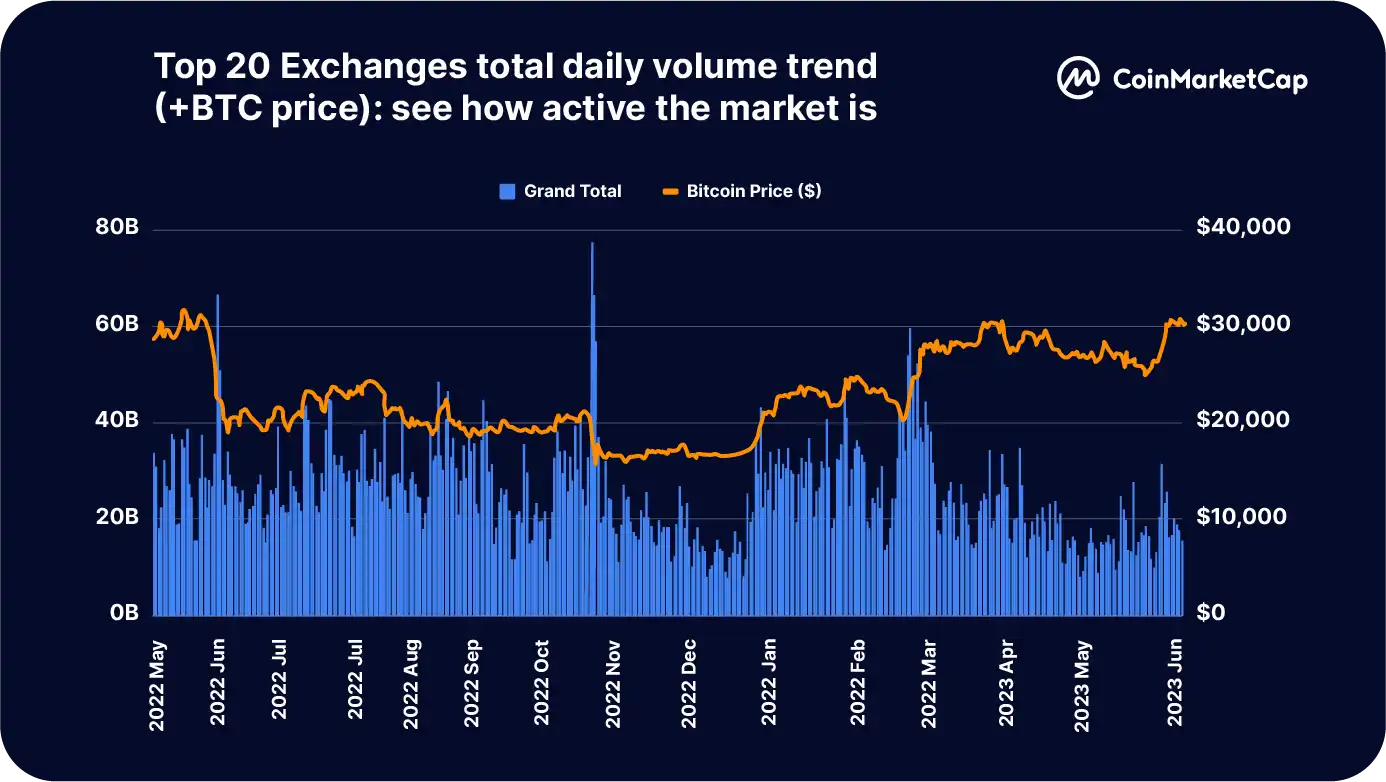
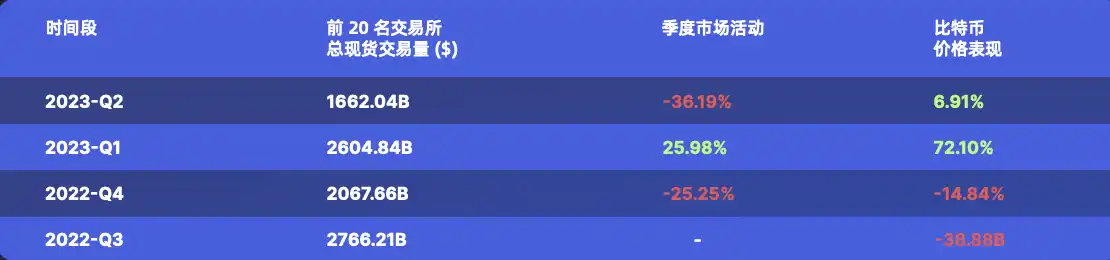
In the second quarter of 2023, the top 20 trading platforms contributed $1.67 trillion in total spot trading volume, a 36% decrease from the previous quarter. This decline indicates a significant slowdown in market activity. In contrast, the first quarter of 2023 saw a retaliatory surge in trading activity driven by a doubling of the Bitcoin price to $2.6 trillion in total market activity at the time.
The current trading volume in the market is similar to the market conditions during the recovery phase after the FTX crash.
Top 20 cryptocurrency exchange platforms by trading volume, market share, trading pairs, and number of tokens

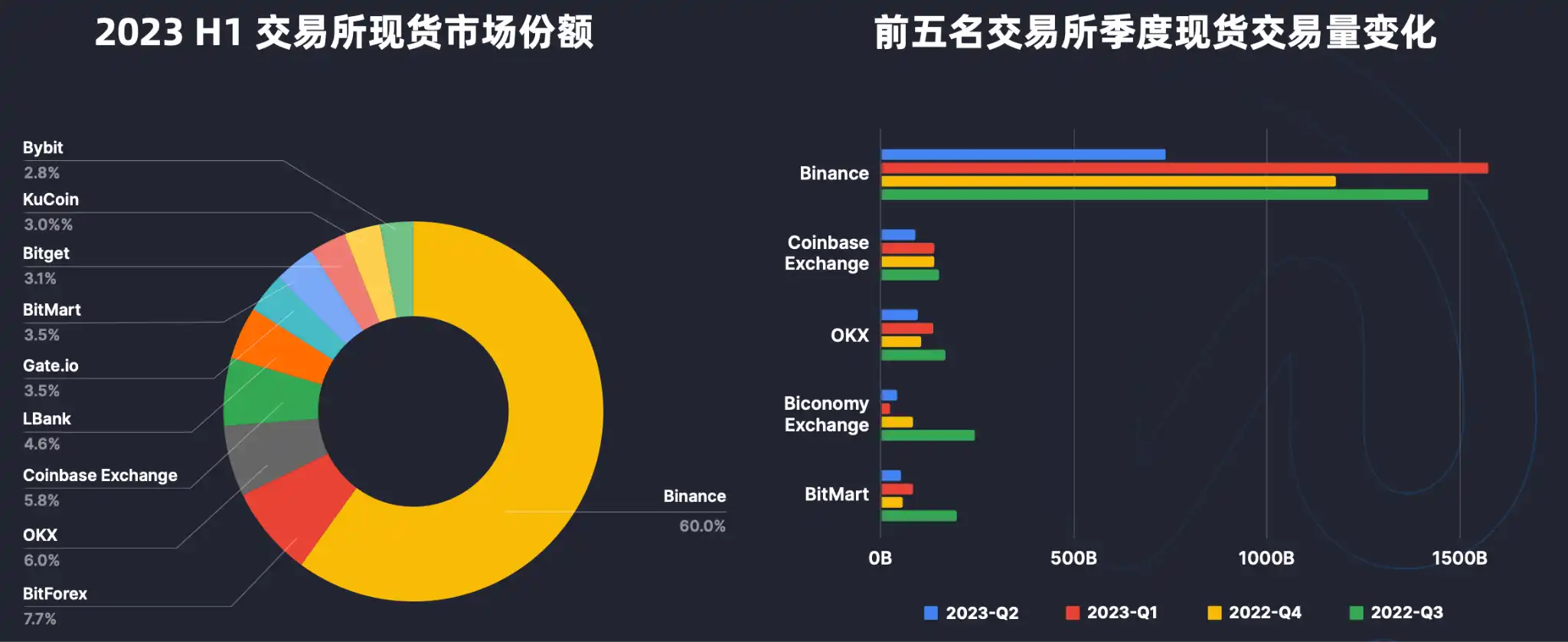
Binance maintained its dominant position in the market in the first half of 2023, with a total spot trading volume share of 59.99%, which remained relatively stable compared to the same period last year. The top 5 exchanges accounted for about 85% of the total spot market trading volume, showing a more obvious head concentration effect in terms of liquidity and 24-hour trading volume. Among them, Binance, Coinbase, and Kraken have recently maintained the highest average liquidity scores of >700.
Major trading platforms, trading pairs, and token quantities - July 2023
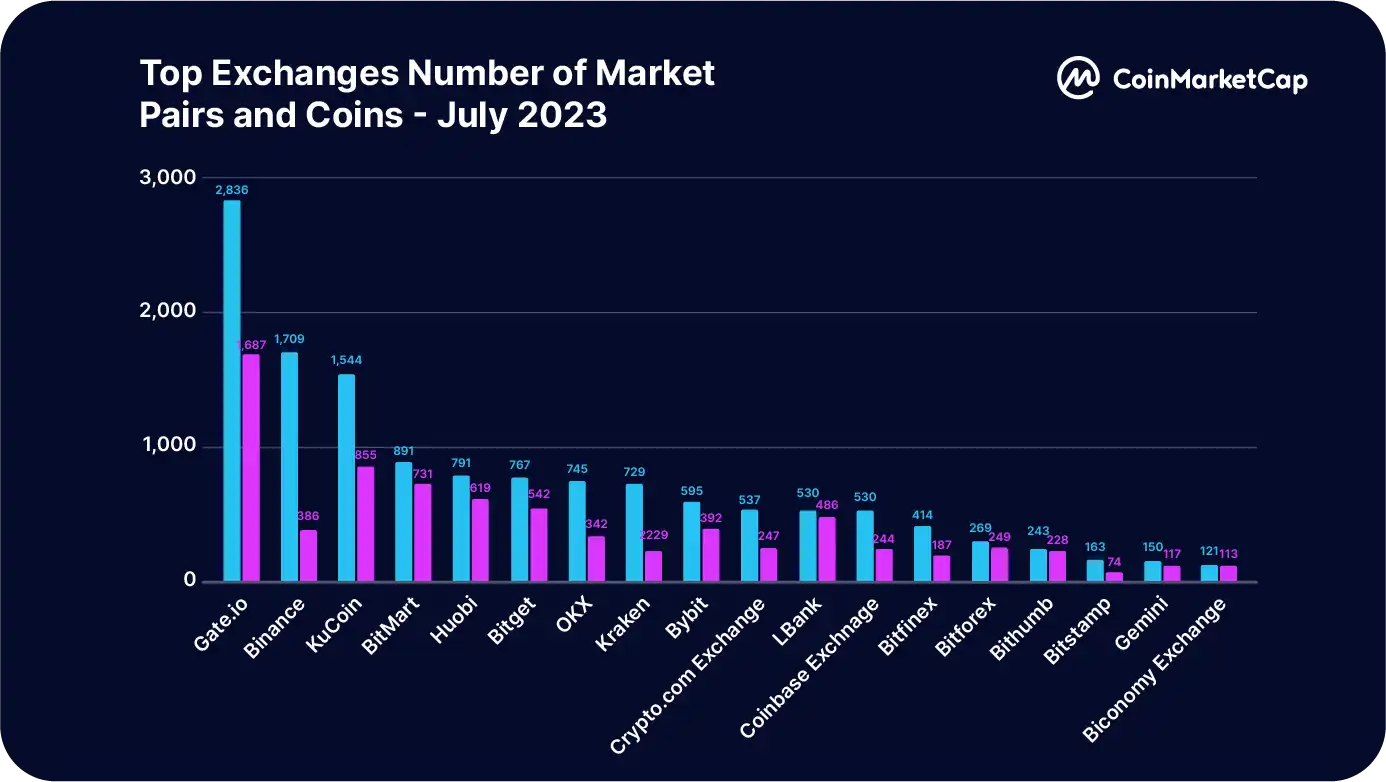
As far as market products are concerned, the current market overall provides a rich variety of trading pairs and tokens, and the number of newly listed projects has continued to increase this year.
Binance continues to dominate liquidity in the high market value field and lists high-quality mainstream currencies. In terms of the number of listed currencies, BitForex and Bitget were among the most active new listing trading platforms during the meme coin season from April to June 2023, compared to the ratio of newly listed currencies to the number of existing currencies at the beginning of the year on various exchanges.
Reserve Amounts of Major Trading Platforms
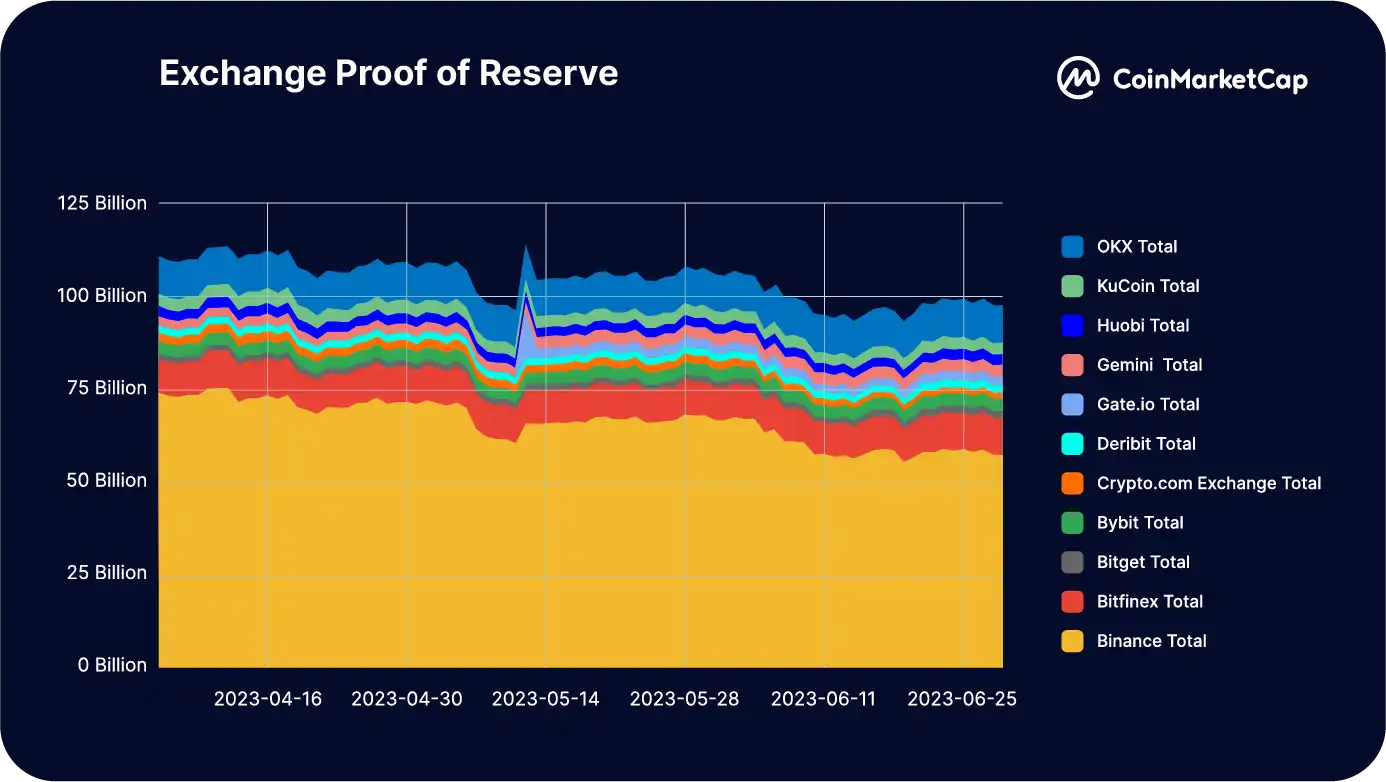
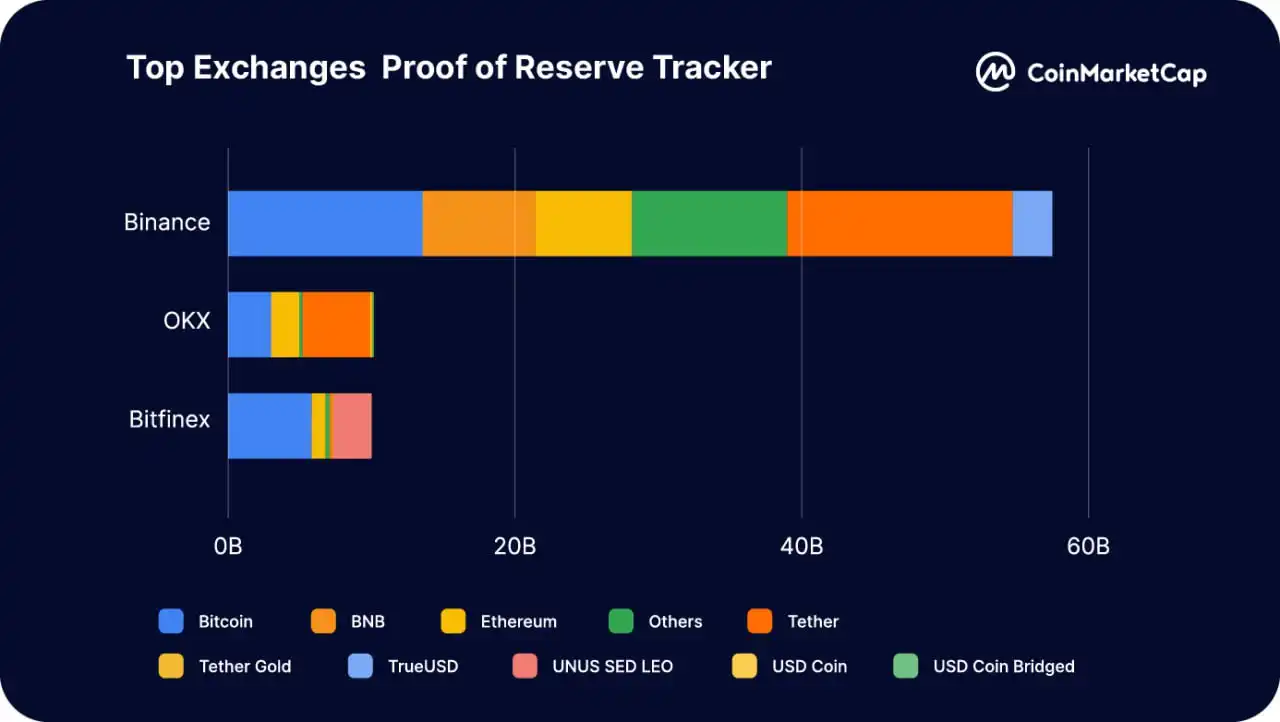
Among the reserve amounts publicly disclosed by various trading platforms, Binance ($57 billion), OKX ($10 billion), and Bitfinex ($10 billion) showed the highest amounts of reserve proof assets. For most trading platforms, Bitcoin and stablecoins make up the majority of their reserve assets.
In the past quarter, the total amount of reserve proof assets of major trading platforms remained relatively stable. However, the market's fear, uncertainty, and doubt (FUD) in the past three months has caused funds to flow out of Binance, resulting in a corresponding decrease of 20 billion US dollars in its reserve proof assets.
A noteworthy positive sign in the industry is that despite a significant outflow of funds from Binance in the second quarter of 2023, the trading platform still retains a healthy amount of reserve proof-of-assets, and the composition of these assets is comprised of secure and diversified currencies.
Trading platform token price performance (compared to BTC and ETH)
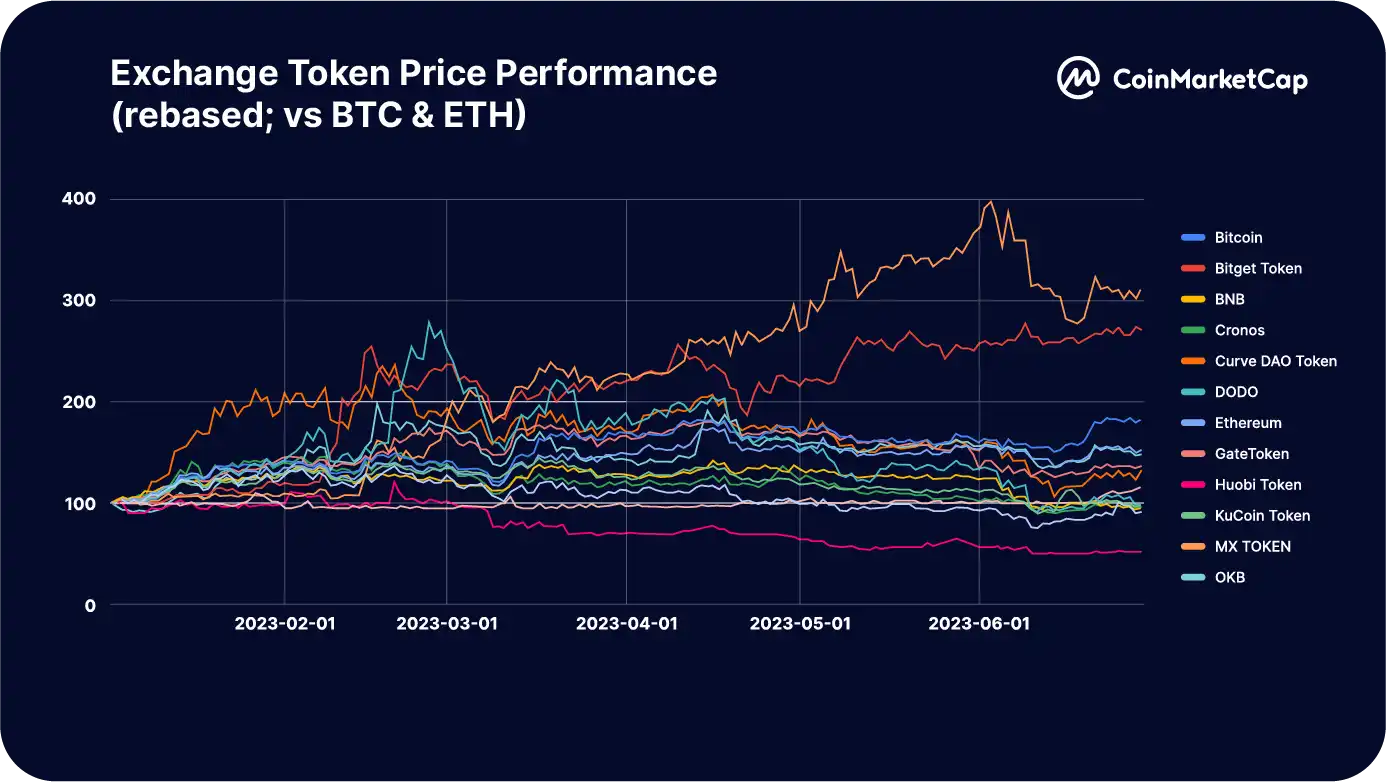
In the first half of 2023, most of the tokens on trading platforms achieved a net positive return. However, due to the strong rise of Bitcoin (+182% from the beginning of the year), most tokens were unable to outperform Bitcoin's performance.
DEX Trading Volume and Market Share
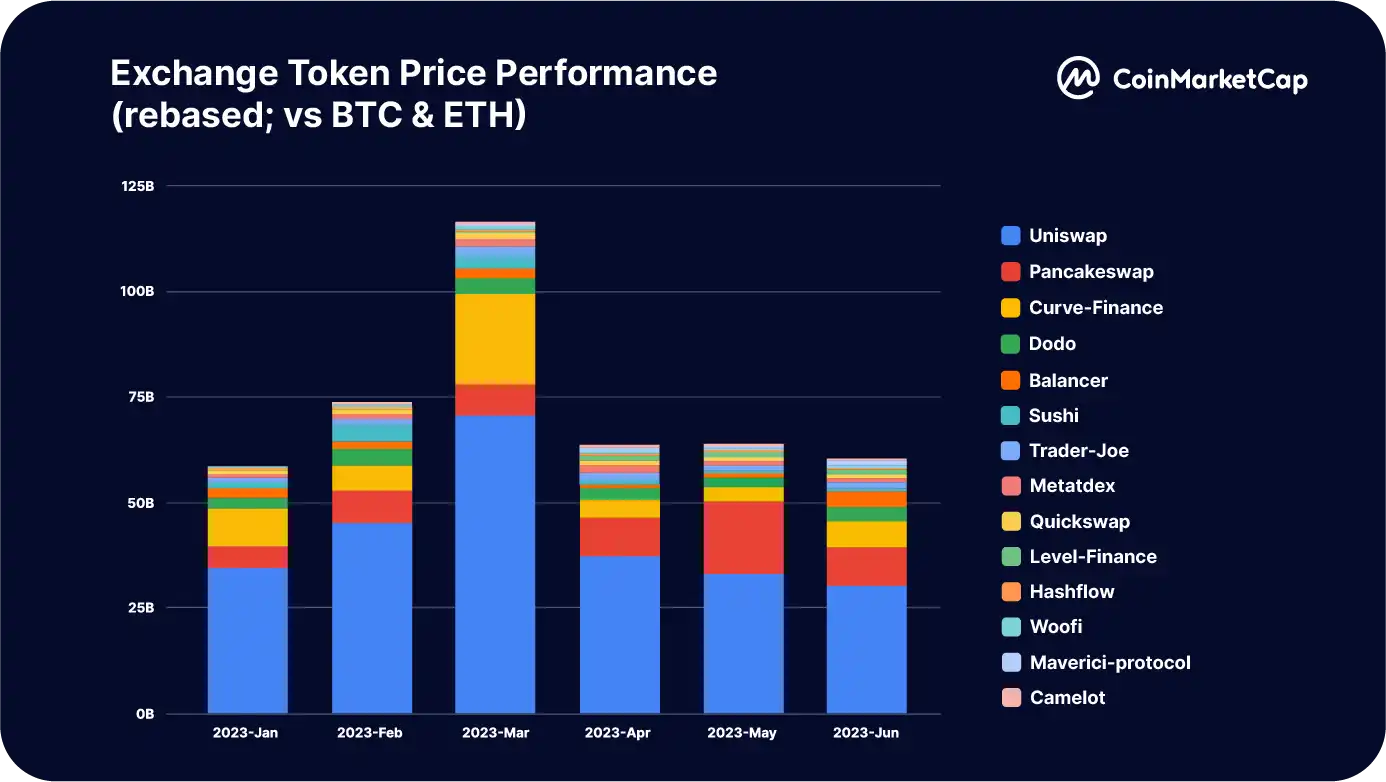
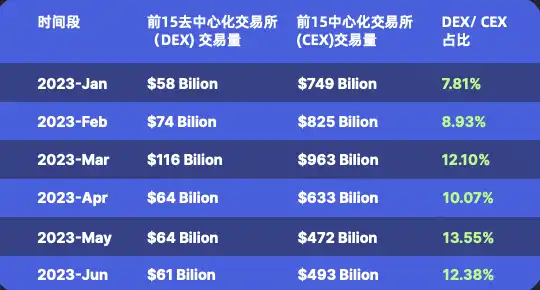
The trading volume of 15 major decentralized exchanges (DEX) reached its peak in March this year and remained stable in the second quarter. In Q2, the total trading volume of DEX reached 189 billion US dollars, a 24% decrease from the first quarter's 249 billion US dollars.
Uniswap, Binance, and Coinbase Trading Volume and Price Performance
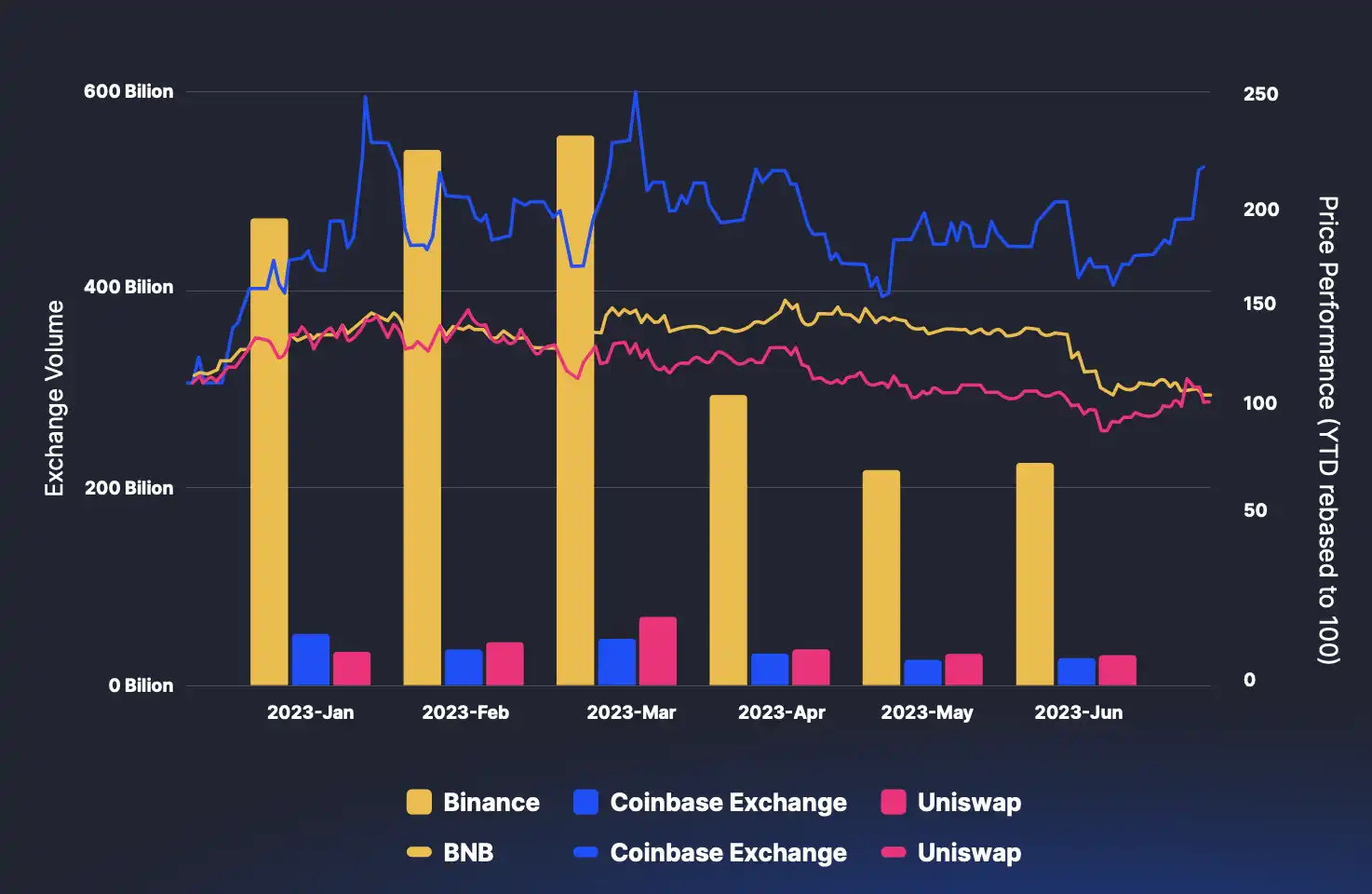
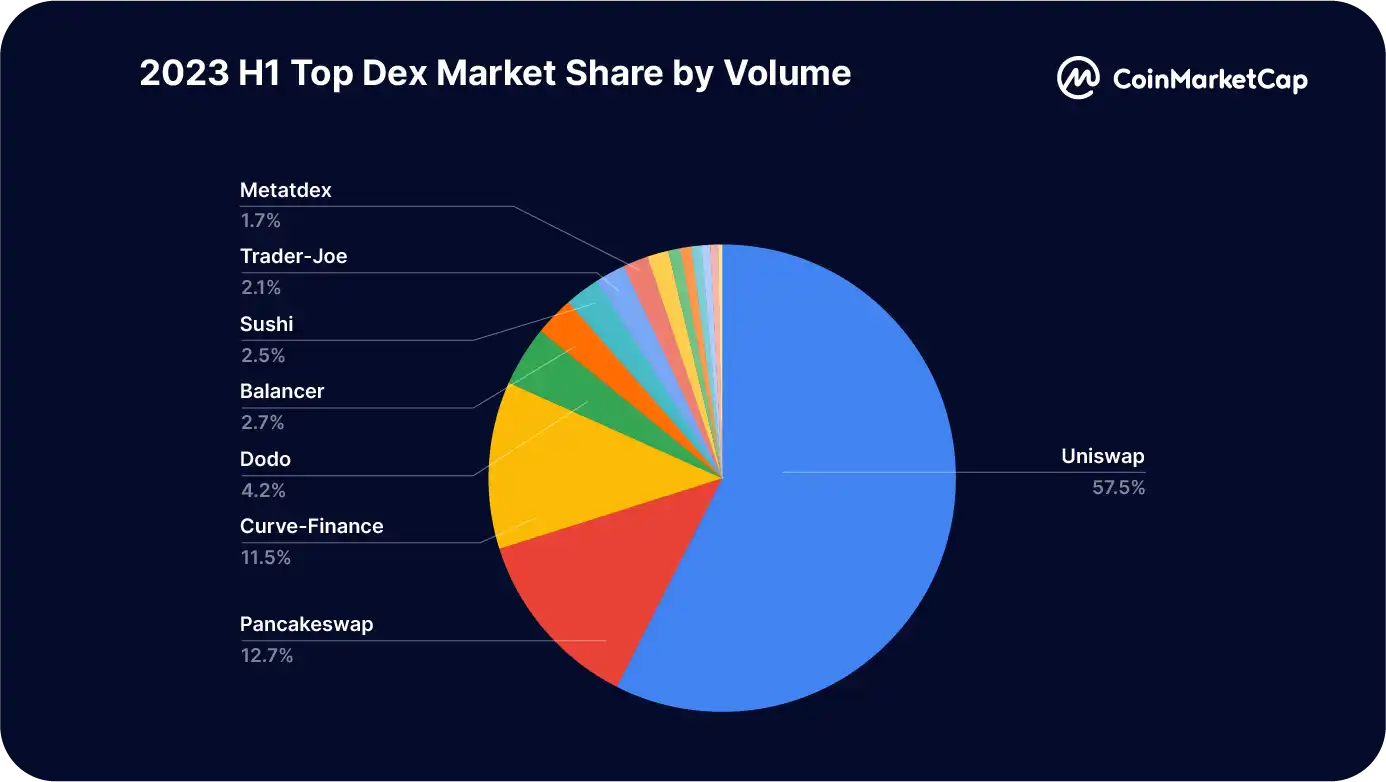
Uniswap maintains a dominant position in the DEX market, occupying 57.5% of the market share. Its monthly trading volume is on par with Coinbase's spot trading volume. In the first half of the year, the top three DEXs, Uniswap, Pancake, and Curve, collectively accounted for approximately 82% of the total DEX market share.
Although centralized exchanges (CEX) are still a more popular choice than DEX, the ratio of DEX to CEX has increased to about 1:8.
This can be attributed to various factors, including the innovation of DEX products, the regulatory development driving market concerns about CEX, the lower gas fees environment, and a higher proportion of native cryptocurrency participants in the current market conditions.
按链划分的 DEX 交易量
Decentralized Exchange (DEX) Trading Volume by Chain

By the first half of 2023, approximately 80% of decentralized exchange (DEX) trading volume occurs on Ethereum and its Layer2 chains. However, in the second quarter, BNB quickly caught up and gained a larger share of the DEX trading market.
This article is from a submission and does not represent the views of BlockBeats.
Welcome to join the official BlockBeats community:
Telegram Subscription Group: https://t.me/theblockbeats
Telegram Discussion Group: https://t.me/BlockBeats_App
Official Twitter Account: https://twitter.com/BlockBeatsAsia

 Related Articles