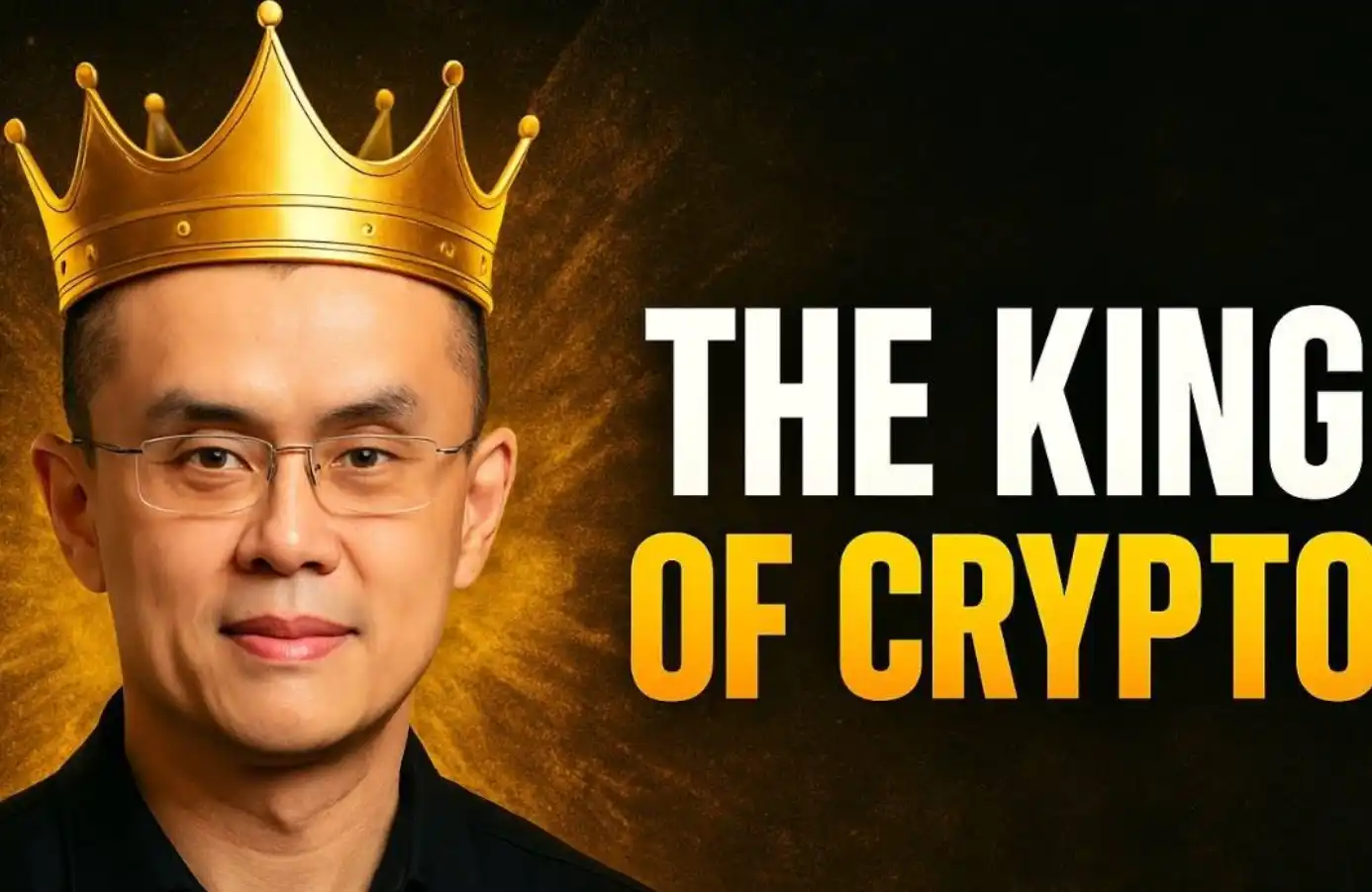
Thirteen years of the rise and fall of cryptocurrency trading platforms: emergence, perseverance, and extinction.
Original Title: "The Rise and Fall of Cryptocurrency Exchanges in 13 Years: Dominance, Scandals, and Crashes"
Original Authors: Ryanu, Thomas, @歪姆 YM Crypto
Translated by: ForesightNews
In 2014, the world's largest cryptocurrency exchange, MT.Gox, was hacked and went bankrupt, losing 850,000 bitcoins.
On the day of the crisis outbreak, the price of Bitcoin plummeted by 25%, dropping from $535 to $400.
Bitcoin China (BTC China), Coinbase, Bitstamp and other 6 large institutions urgently issued a joint statement to clarify their boundaries with Mentougou.

While striving to salvage the industry's reputation, all exchanges are doing their utmost to divide up the lost territory in Mentougou.
This unprecedented crisis is also seen by many as an opportunity to buy low.
Among the bottom-fishers, there is CZ (Changpeng Zhao), the founder of the future largest cryptocurrency exchange in the world.
This year, CZ sold his house in Shanghai and gambled on Bitcoin for $600. Within less than a year, Shanghai's housing prices doubled while the price of Bitcoin dropped to one-third of its original value.

When CZ was busy playing Bitcoin in China, on the other side of the ocean in the United States, Brian Armstrong founded the two-year-old exchange Coinbase, which finally welcomed its one millionth user, a young man named SBF who had just graduated from MIT and was applying for jobs on Wall Street.
Years later, they will gather as the founders of the three major cryptocurrency exchanges, and dominate the top three spots on the 2022 Forbes Cryptocurrency Billionaires List.
Of course, this has not become the end of the cryptocurrency exchange industry.
Just one year later, Brian's net worth shrank by 75%, SBF was imprisoned, and CZ faced the siege of US regulatory agencies, resulting in a flood of true and false news about CZ. "CZ was killed by the FBI" once topped the hot search list.

Exchanges are undoubtedly one of the most profitable businesses in the cryptocurrency industry, and also one of the most fiercely contested.
From the birth of the first cryptocurrency exchange to the present day, the exchange industry has undergone many changes, with both prosperity and decline happening in the blink of an eye.
Platform coins, trading mining, exchange alliances... innovative gameplay, futures, options, stocks... a variety of underlying assets, coin theft, black market, self-theft... security and compliance issues are persistent.
Almost every day, we can see negative news about exchanges. Unfortunately, many of these negative news have become true. The world of cryptocurrency exchanges is full of failures, including well-known ones like Gatecoin, short-lived ones like FCoin, rapidly rising and falling ones like FTX, and countless small exchanges that are gradually being forgotten.
Until today, although Binance and Coinbase occupy the leading position and hold the majority of the market share in the cryptocurrency industry, the exchange market is still in an uncertain state.
This article will provide a detailed review of the development history of cryptocurrency exchanges, with a focus on gameplay, targets, security compliance, and form. While reviewing this history, we will consider how these factors have determined the changes in the landscape of the cryptocurrency exchange industry.
One 2010-2013: Mentougou Era
After the birth of Bitcoin, for a long time there were no exchanges, and people mainly traded Bitcoin on the Bitcoin Talk forum.
In October 2009, New Liberty Standard began publishing the price of Bitcoin calculated based on electricity consumption. On October 5, 2009, the price was 1 US dollar for 1309.03 Bitcoins, equivalent to a price of 0.00076 US dollars per Bitcoin.

Since then, some centralized exchanges have been established.
On January 5, 2010, the one-year anniversary of the birth of Bitcoin, a user named dwdollar on the Bitcoin Talk forum posted: "I am working on an exchange, which will be a real trading market."

In March 2010, Bitcoin Market was born.

However, during this period, the Bitcoin trading market was clearly still in a very primitive stage, and the Bitcoin Market often needed to be patched up based on feedback from forum members.
In July 2010, Jed McCaleb, the founder of the famous eDonkey, created the Mt. Gox exchange that would later dominate the cryptocurrency industry.

One day, by chance, Jed met Mark Karpeles on the Bitcoin Talk forum.

At that time, Fa Pang's startup was struggling and looking for new opportunities. He vaguely felt that Bitcoin trading might be a profitable business.
And Jede also had little interest in continuing to operate a Bitcoin exchange, so in March 2011, Fatfa bought out Mt. Gox, with Jede retaining a 12% stake, and then joined Ripple.
Until then, they probably never imagined that Mentougou could reach the scale it did.
In February 2011, the trading volume in Mentougou was only 360,000 bitcoins, which was worth only $329,000 at the time based on the price.
After taking over, Fa Pang immediately carried out a transformation of Mentougou, including changing the supported currency from only USD to supporting more than ten currencies such as USD, EUR, AUD, and redesigning a new website page. These updates took about 4 months to complete.
During this period, the launch of the dark web black market Silk Road provided a use case for Bitcoin, causing its price to rapidly increase. On February 9th, the price of Bitcoin reached 1 USD, and by June 8th, the price of Bitcoin in Mentougou had reached 32 USD.
4 months and 32 times increase in price have attracted more new entrants. Mentougou has received the largest traffic dividend. In April 2011, Mentougou accounted for more than 90% of Bitcoin transactions.

With the skyrocketing price of Bitcoin, hackers have targeted Bitcoin exchanges including Mentougou.
In June 2011, the price of Bitcoin in Mentougou dropped from $17 to $0.01 in just a few minutes due to hackers obtaining a large amount of user data and selling Bitcoin from other accounts at a price of $0.01, while buying it with their own accounts.
After discovering the issue, Fa Pang hastily suspended the transaction.
Luckily, in the end, Mentougou only lost 2000 bitcoins. In comparison, other exchanges were not as fortunate. For example, in August 2011, MyBitcoin lost over 78,000 bitcoins and went bankrupt. In September 2012, Bitfloor was closed after losing 24,000 bitcoins to theft. Bitcoinica also went bankrupt after being attacked twice in March and May of 2012.

https://en.bitcoin.it/wiki/File:MyBitCoin08042011.png

https://bitcointalk.org/index.php?topic=81045.0
After the incident, Fa Pang urgently upgraded the security system. There were no more large-scale hacker attacks until 2013.
During the period when Mt. Gox was hacked, several new exchanges quietly emerged. In June 2011, the first Chinese exchange, Bitcoin China, was established. In July, Kraken was established, and in August, Bitstamp was established.
These newly established small exchanges are not enough to threaten the dominant position of Mentougou. In the upcoming bull market, the price of Bitcoin will skyrocket. Mentougou, as an "old-fashioned" exchange with several years of history and a "decent" reputation, has become the biggest beneficiary of the bull market.
In July 2013, the registered users in Mentougou had reached 500,000. By charging a transaction fee ranging from 0.6% to 0.25%, Fapang had also become a wealthy man.

By the end of 2013, Fatty Law had reportedly earned 8 million US dollars and 345,000 bitcoins. He greatly enjoyed the new nickname that people gave him.
The king of Bitcoin.
Facing the media, Fa Pang talked extensively about the reasons for the success of Mentougou: Mentougou is one of the earliest Bitcoin trading platforms; the upgraded security measures after being attacked by hackers seem to be good; it has been seeking the legitimacy of transactions; and has expanded the payment scope of Bitcoin.
In such a scenario, it is easy for people to associate with the "savior of the cryptocurrency industry" in 2022 - SBF.

Ironically, they are adorned with numerous halos and pretend to represent the industry, yet they themselves are the biggest liability to the industry.
It was from 2013 that the business in Mentougou began to decline.
In May 2013, CoinLab, the American partner of Mentougou, accused Mentougou of breach of contract and claimed $75 million in compensation.
The two parties had originally reached an agreement for CoinLab to be responsible for operations in North America and Canada. However, for reasons unknown, Mentougou has yet to fulfill their obligations.
And from May to July, the US Department of Homeland Security seized 5 million US dollars from Mentougou on the grounds that it did not obtain an operating license, causing Mentougou to temporarily suspend USD withdrawals.
On June 28th, Mentougou finally obtained the license from the US Financial Crimes Enforcement Network, and announced the full resumption of withdrawals on July 4th. However, successful USD withdrawals were few and far between until September.

https://www.wsj.com/articles/BL-MBB-4101
These two incidents have tarnished the reputation of Mentougou. Due to difficulties in withdrawing US dollars, users began to panic and flee.
Because the US dollar cannot be withdrawn, some people choose to buy Bitcoin with the US dollars in their Mentougou account and then transfer it out of the platform, as Bitcoin can circulate freely.
This kind of escape behavior has led to a premium of up to 12% for Bitcoin prices in Mentougou compared to other platforms. The price of Bitcoin on Bitstamp is $129, while it reaches $145 in Mentougou.

Just as the industry in Beijing's Mentougou district was busy with compliance, lawsuits, and improving service quality, competitors Bitstamp, BTC-E, and BTC China took advantage and nibbled away at its market share.
Until October 2013, Bitcoin China held a market share of nearly 33%, while Bitstamp held 25%, and Mentougou only had 23%.
In February 2014, 850,000 bitcoins were stolen, dealing a fatal blow to Mt. Gox.
It wasn't until 2023 that this 9-year-long incident in Mentougou finally came to an end.
Only because of inflating assets, Fa Pang was sentenced to 30 months in prison and a 4-year probation, and escaped the disaster of imprisonment.
The victim of the Mentougou coin theft incident has been "passively locked up" for 9 years and can also receive an "unexpected income" compared to the coin price at that time.
Meanwhile, the market has been concerned about the impact of the 140,000 bitcoins in Mentougou.
In retrospect, the coin theft incident in Mentougou was not without warning. As early as March 2011, when Fatfa bought Mentougou, there was a shortage of 80,000 bitcoins. Mentougou was also massively attacked by hackers as early as September 2011, but it was not until mid-2013, under internal and external pressures, that the incident finally erupted.

Looking back at this period, the cryptocurrency trading industry was still in its early stages, with a focus on Bitcoin and limited gameplay. Security and compliance were the key factors determining the survival of exchanges.
The compliance issue has dealt a heavy blow to Mentougou. Incidents of exchanges going bankrupt due to hacker theft and loss of coins are rampant. Even with such a large-scale crisis, similar events will continue to occur, constantly threatening cryptocurrency exchanges and the entire industry.
二 2014-2016: Chinese Market
As Mentougou gradually falls into the abyss in Japan, the landscape of China's Bitcoin exchanges is quietly changing.
The earliest dominant player in the Bitcoin industry in China, but with the booming Bitcoin market in 2013, more and more gold diggers came after hearing the news.
In June 2013, Xu Mingxing founded OKCoin, and in September, Li Lin founded Huobi.
Xu Mingxing and Li Lin, both belong to the "other people's children" in the eyes of parents, and their experiences have many similarities.

Li Lin graduated from Tsinghua University. After Xu Mingxing was admitted to graduate school at Renmin University, he listened to a passionate speech by Mr. Jack Ma and decided to drop out of school to start a business. In 2010, both of them participated in the "Hundred Regiments Campaign", and reunited in the blockchain world in 2013.
Huobi and OKCoin were both born with a golden key.
Huobi received angel investments from ZhenFund and Dai Zhikang two months after its establishment. In April 2014, it also received investment from Sequoia Capital. On the other hand, OKCoin received a Series A funding of $10 million just three months after its launch.
Huobi launched with the slogan "no trading fees" and attracted a large number of users, causing many uncompetitive exchanges to close down. Meanwhile, in September 2013, OKCoin became the first exchange to offer Litecoin trading, regaining some ground.
Although Bitmain co-founders Jihan Wu and Micree Zhan are brothers, Bitmain did not add support for Litecoin until March 2014.

Another reason for the rapid expansion of OKCoin was that the team at the time brought together many big names who would later dominate the cryptocurrency industry.
In 2014, CZ joined OKCoin as CTO and formed the "Iron Triangle" with CEO Xu Mingxing and "Sister of the Coin Circle" He Yi, which shook the coin circle.

It turns out that this iron triangle is not very strong. Just one year later, CZ left and became a rival of OKCoin. Similar things will happen many times in the future, and OKCoin has become known as the "West Point Military Academy of the cryptocurrency industry" among people.
Just as CZ became the CTO of OKCoin, Huobi acquired qukuai.com, a blockchain data query website created by Zhang Jian, and Zhang Jian joined Huobi as CTO.

At this time, the two CTOs did not expect that their experience was laying the foundation for the style of the next generation of exchanges. The exchange they created will become the protagonist of the next cycle.
In 2014, another key term in the encryption industry was derivatives.
Bitcoin futures appeared as early as 2012, but did not attract much attention.
In June 2013, the 796 Exchange was established, positioning itself as a leveraged trading and futures platform. At that time, Bitcoin was experiencing a unilateral upward trend, and spot trading was in high demand while futures trading had not yet gained widespread attention. It wasn't until 2014 when Bitcoin began to decline that futures trading started to gain attention from players, and the 796 Exchange began to emerge.
As for the three giants in the Chinese mainland market, Huobi and OKCoin both support "financing with coins", while only BTC China has not ventured into it.
796, which was one of the earliest players in the derivatives market, along with Huobi and OKCoin, became the three major Bitcoin derivatives exchanges. In order to compete for a limited number of customers, they engaged in the first bloody battle in the derivatives field.
Huobi, with its unique platform lending model, rose to the dominant position in March 2014.
On March 4th, 2014, Huobi's daily Bitcoin trading volume exceeded 350,000, with a transaction amount of 1.5 billion RMB, setting the highest record for global Bitcoin trading platforms and accounting for 50% of the global Bitcoin trading market.
However, the good times did not last long. On March 21st, the shocking "Huobi.net 3.21 crash of 1 yuan" incident occurred, which rocked the industry.

Latercomers who want to climb to the top position may have to rely on their peers making fatal mistakes, in addition to their own efforts.
In this incident, Litecoin, which was priced at nearly 100 yuan on Huobi, plummeted to an unbelievable 1 yuan in an instant.
On March 10, 2023, 9 years later, a similar scene reappeared. What's even more devastating is that this time it happened to Huobi's platform token HT. In just half an hour, the price of HT plummeted from $4.7 to $0.3.
During the "1 yuan incident" on Huobi, there were no major issues with Litecoin on OKCoin, but the price of Bitcoin dropped from nearly 3600 yuan to around 2680 yuan in an instant.
The free fall of cryptocurrency prices on two platforms has caused huge losses to countless players. In contrast, the price performance on the 796 platform is relatively stable, which has won the trust of many customers.
However, with the outbreak of risk events and the sluggish market, investors have raised doubts about the short-selling mechanism and financing of exchanges.
Under pressure, on May 6th, the five major Bitcoin trading platforms in China, including BTC China, Huobi, OKCoin, CHBTC, and BtcTrade, jointly released a self-discipline statement, announcing that in order to avoid excessive speculation, they will no longer conduct leveraged trading and will unify trading fees.

http://tech.sina.com.cn/i/2014-05-06/15169361845.shtml
However, the 796 exchange has gone its own way and has not joined this joint statement.
When other exchanges successively closed their financing and coin financing businesses, the 796 exchange became the dominant player amidst curses and controversies, while other platforms gave up lending and borrowing, resulting in a significant reduction in market share.
It has been proven that the shelf life of a self-discipline statement in the face of business competition and interests is only one month.
Just one month later, Huobi and OKCoin successively resumed their financing and coin trading businesses, and launched futures trading with 10 times leverage, marking the beginning of a new round of derivative battles.
Three exchanges have started a price war on transaction fees. The contract transaction fee of 796 has been reduced from 0.3% to 0.03%, and the futures opening fee of OKCoin is 0.03%, with no closing fee. The futures transaction fee of BitVC, a subsidiary of Huobi, is 0.025%, and they have also launched the V-point privilege function, which can further reduce transaction fees.
The glory of 796 was very short-lived. The 796 exchange rose to the top due to risk events on other platforms, but soon fell due to its own risk events. On November 3rd, 796 experienced login issues and gradually lost customer trust. Huobi took advantage of this and surpassed 796, but was unable to hold on until the end. OKCoin became the biggest winner in this round of futures wars.
From 2014 to 2016, the rise of the Chinese mainland market brought about earth-shattering changes to the exchange landscape. Huobi, OKCoin, and BTC China stood tall, occupying the top three spots, while the volume of other exchanges paled in comparison to these giants.

The former industry leader, Bitmain, lost its first-mover advantage and suffered a significant loss of customers due to its refusal to engage in derivative businesses. As a result, it began to focus on mining pool operations.
During the bear market, BitMEX, which was established in Hong Kong in 2014, also emerged as a player in the derivatives market.
Although BitMEX will become an undeniable player in the derivatives industry in the future, at that time, it was just an unknown small exchange.

Until October 2015, BitMEX increased its trading leverage from 3x to 100x. As a result, users flocked to the platform. In 2016, BitMEX introduced perpetual contracts and gradually established a foothold in the market.
During this period, cryptocurrency exchanges still frequently experience security issues.
In January 2015, Bitstamp was hacked and 19,000 bitcoins were stolen, resulting in a significant loss of users.

In May 2015, Bitfinex was robbed of 1200 bitcoins.
However, a bigger disaster was yet to come. In August 2016, Bitfinex was hacked and 120,000 bitcoins (valued at $72 million) were stolen.

Following the theft case in Mentougou, this became the second largest Bitcoin theft case. Bitcoin plummeted 20% on the same day.
However, compared to Mentougou, which has already been loaded into history, Bitfinex, which has been severely damaged, is still active.
After the theft incident, Bitfinex announced that the stolen losses would be shared among all users, resulting in a 36% reduction in user account funds. However, they will receive a corresponding amount of BFX tokens, with each BFX token representing a loss of $1.
By April 2017, Bitfinex had successfully redeemed all BFX tokens.
Moreover, 94,000 out of the stolen 120,000 bitcoins were recovered in February 2022, but they are currently still held in an address belonging to the US Department of Justice.
If you continue reading, this is not the only time Bitfinex has turned bad luck into good. In 2019, Bitfinex had $850 million frozen by the US Department of Justice, and Bitfinex repeated its trick by raising $1 billion through the issuance of LEO.

Looking back at this stage, the gameplay and targets of the cryptocurrency exchange are significantly different from before.
In terms of gameplay, Huobi entered the game and immediately launched a price war, quickly rising. In the subsequent derivatives war, the price war continued to play out.
On the subject, OKCoin was the first to benefit from the launch of Litecoin, and during the bull market of 2017, with the arrival of the altcoin season, the competition around listing will become even more intense.
At that time, as the market entered a bear market, derivatives began to rise. Bitmain China missed this wave and lost its dominant position. The 796 exchange was short-lived, while BitMEX stood firm with perpetual contracts and OKCoin became the big winner in the derivatives war. During the derivatives war, various exchanges also exposed different levels of technical problems, and product quality became the key to determining victory or defeat.
Regarding security and compliance, after the theft in Mentougou, Bitfinex experienced the second largest cryptocurrency theft in history. However, Bitfinex cleverly resolved the crisis by issuing new tokens.
With the expansion of Bitcoin's influence and the outbreak of cases such as the theft in Mt. Gox, Japan has begun to study the issue of cryptocurrency regulation. Banks in mainland China have been banned from engaging in cryptocurrency business, while countries such as Thailand and Russia have completely banned Bitcoin.
During this period, the exchanges in mainland China and Hong Kong dominated the world of cryptocurrency, giving birth to a large number of heavyweight players including OKCoin, Huobi, BitMEX, Bitfinex, and others.
In early 2023, when Hong Kong's new cryptocurrency policies shook the cryptocurrency industry, BitMEX founder Hayes commented:
Deribit is the only non-Asian exchange that has made significant innovations in the cryptocurrency market. Based in the United States, centralized exchanges have not brought any innovation to the cryptocurrency market.
III. 2017: The Rise of Binance
In early 2017, the price of Bitcoin broke through the previous cycle's high point, reigniting market enthusiasm, and ICO fundraising continued to set new records.
It has been two years since CZ left OKCoin.

In 2015, CZ and Xu Mingxing parted ways on bad terms, and their mutual attacks became a big show in the cryptocurrency industry. Shortly thereafter, He Yi also left OKCoin.
It was precisely this experience that laid the foundation for CZ and He Yi's future endeavors.
After leaving OKCoin, CZ founded Bijie Tech, which provided exchange-as-a-service platforms for other exchanges. According to CZ himself, Bijie had over 30 clients at the time and business was good. However, in early 2017, all of CZ's clients went bankrupt due to regulatory reasons.
On June 14, 2017, CZ first heard about ICO at a banquet. Within three days, he wrote a white paper in both Chinese and English.
After the ICO, 1 billion BNB were sold and $15 million was raised within a week.
Next, in just 6 months, Binance has become the world's largest exchange.

In January 2018, CZ stated in an interview with Bloomberg that "several million" users are added every week.
Behind this incredible speed, on the one hand, CZ and his team have been engaged in cryptocurrency trading-related businesses for many years and have accumulated considerable experience. On the other hand, it is thanks to the frenzy during the bull market period and the ban in mainland China.
In 2017, there was a huge boom in ICOs, with the funds raised through ICOs being almost 40 times that of 2016.
The frenzy has given rise to chaos, and ICO has become a tool for many people's scams. Half of the projects die within 4 months after the ICO.

In the wave of ICOs, there is also a competition among cryptocurrency exchanges to list the hottest coins as quickly as possible. The exchange that can list the most popular coins first will gain more traffic, and in turn become the most attractive place to list coins.
In this case, it is easy for exchanges, project parties, and evaluation ranking websites to collude with each other to harvest retail investors, which can lead to risk events. As a result, ICOs and cryptocurrency trading have quickly come under the scrutiny of regulatory authorities around the world.
On September 4, 2017, the People's Bank of China and other departments issued a notice on preventing the risks of token issuance and financing, requiring the cessation of all ICO activities. Regulatory authorities across the country issued notices to clear out cryptocurrency exchanges.

At one point, the cryptocurrency market experienced a comprehensive decline, causing panic among the Chinese cryptocurrency community. As a result, many exchanges began to expand their operations overseas.
During the industry's downturn caused by the ban, Binance, which only provides coin-to-coin trading, took advantage of the situation and grew by acquiring customers lost by other platforms.
After this regulatory storm, Bitcoin China fell, and Huobi and OKCoin moved their servers overseas and transformed into Huobi PRO and OKEX respectively. However, they still allow registration and trading for users in mainland China. Binance, OKEX, and Huobi have become the new "three giants".
Since its establishment, Binance has demonstrated excellent "regulatory arbitrage" capabilities. After reaping the benefits of regulatory policies in mainland China, Binance attempted to enter Japan but quickly withdrew after Japan's regulatory policies tightened. In 2019, Binance established Binance.US specifically for US users to avoid regulatory risks. However, even after many years, Binance was unable to avoid being pursued and blocked by US regulatory agencies.
除了监管「红利」, Binance 's development also benefits from the innovation of its platform coin BNB.
When Huobi rose rapidly through the elimination of transaction fees, Binance issued BNB and continued to empower it through a series of measures such as reducing transaction fees, repurchasing and destroying, and IEO, sharing development dividends with BNB holders.
The rapid development of Binance has led to a skyrocketing net worth for CZ.
In 2018, Forbes released the first cryptocurrency rich list, with CZ ranking third on the list.

During this period, Sequoia Capital, which had previously invested in Huobi, took notice of Binance. However, Sequoia Capital's collaboration with Binance fell through and turned into a legal dispute, ultimately preventing Sequoia Capital from hopping on the Binance bandwagon.
Two years later, Sequoia Capital hitched a ride on another popular cryptocurrency exchange's black car, but ended up with a devastating loss of over 200 million US dollars.
This regulatory storm in mainland China has also created another exchange, Bitfinex, which was hacked in 2016.
Starting from 2017, due to the regulations in mainland China, the Chinese yuan has withdrawn from the stage of cryptocurrency trading. Instead, it has been replaced by USDT, which has a close relationship with Bitfinex.

In 2017, the market frenzy also created a large number of Korean exchanges.
In 2017, the funds of South Korean cryptocurrency exchanges increased 64 times compared to 2016. By early 2018, the South Korean won had become the second most traded fiat currency in cryptocurrency trading, after the US dollar. The bitcoin trading volume of South Korean exchange Upbit also entered the top ten globally.
The frenzy over Korean chives, coupled with heavy restrictions on cryptocurrency trading, has led to a premium on kimchi - the coin prices on Korean exchanges are often more than 20% higher than in other countries.

As a result, South Korea has become the most popular place for brick-and-mortar operations, and arbitrageurs buy coins from international exchanges and sell them on South Korean exchanges, making a lot of profit.
In 2017, this process has been industrialized and even some websites that help bricklayers arbitrage have emerged. On these websites, you can see where to profit from moving from which exchange to which Korean exchange, and you can also see which coins are the most profitable to move.
Among these arbitrageurs is SBF.
In October 2017, SBF left Wall Street and founded Alameda, a cryptocurrency quantitative trading company, to conduct arbitrage in the Japanese and Korean markets.
After accumulating experience over this period of time, in 2 years, SBF will establish FTX, which will become the world's third largest cryptocurrency exchange, and compete with Binance.
In 2017, the frenzy in the cryptocurrency market also attracted the attention of traditional financial giants. The two major players in the futures industry, CME and CBOE, competed around Bitcoin futures.
In early December 2017, CME announced that it would launch Bitcoin futures, but CBOE beat them to it and launched Bitcoin futures first. This caused the cryptocurrency market to enter its most frenzied phase, with the price of Bitcoin soaring from $12,000 to nearly $20,000 in just one week. However, it then entered a bear market that lasted for a year and a half.
CBOE was the first to launch Bitcoin futures, but unfortunately, the trading volume declined continuously after the peak and eventually closed Bitcoin futures trading one year later.

Looking back at this stage, Binance is undoubtedly the biggest winner. Binance's success is inseparable from the regulatory dividend in mainland China. Although Bitfinex suffered a blow from bankruptcy, it achieved a competitive advantage with the disappearance of the renminbi and the rise of USDT. Another exchange, BTC-e, which we did not introduce, closed down due to its founder's imprisonment for money laundering.
Since the birth of cryptocurrency exchanges until today, regulation has been a key factor influencing changes in the cryptocurrency trading landscape. The rise of Coinbase in the United States and the four major exchanges in South Korea have repeatedly proven this point.
Regarding the gameplay, Binance pioneered the concept of platform coins, which links the development of the exchange with its holders.
On top of the target, the arrival of the counterfeit season has led to a competition among various exchanges to list new coins. However, the crazy harvesting is not without cost, as users will ultimately vote with their feet and force exchanges to take their users seriously.
As the market enters a bear market and the traffic dividend disappears, the exchange industry has also entered a cold winter, and the fierce battle between exchanges has become even more intense.
In this long winter, cryptocurrency exchanges have launched a new round of derivatives wars to compete for traffic. At the same time, they are competing around platform coins, trading mining, IEO, etc. With the entry of traditional exchanges into the cryptocurrency field and the explosive growth of decentralized exchanges, centralized exchanges are facing new crises, while security and compliance issues continue to plague the entire industry.
These contents will be reviewed with you in the next issue. Looking back on the rise and fall of the encrypted trading platform over the past 13 years: emergence, persistence, and extinction.
Original Link
Welcome to join the official BlockBeats community:
Telegram Subscription Group: https://t.me/theblockbeats
Telegram Discussion Group: https://t.me/BlockBeats_App
Official Twitter Account: https://twitter.com/BlockBeatsAsia

 Related Articles