Hashed: Top 10 crypto trends for 2023
原文标题:《 Top 10 Trends in 2023: An Overview by Hashed 》
Original article by Simon Seojoon Kim
Qian Wen, ChainCatcher
As the cryptocurrency industry continues to gain mainstream adoption and improve its infrastructure, user experience and security are becoming increasingly important to end users. In this regard, wallet providers play a vital role in facilitating access to decentralized applications and will bridge the gap for thousands of new users. Of course, challenges remain, especially for the average user, as private key management and signing protocols remain complex.
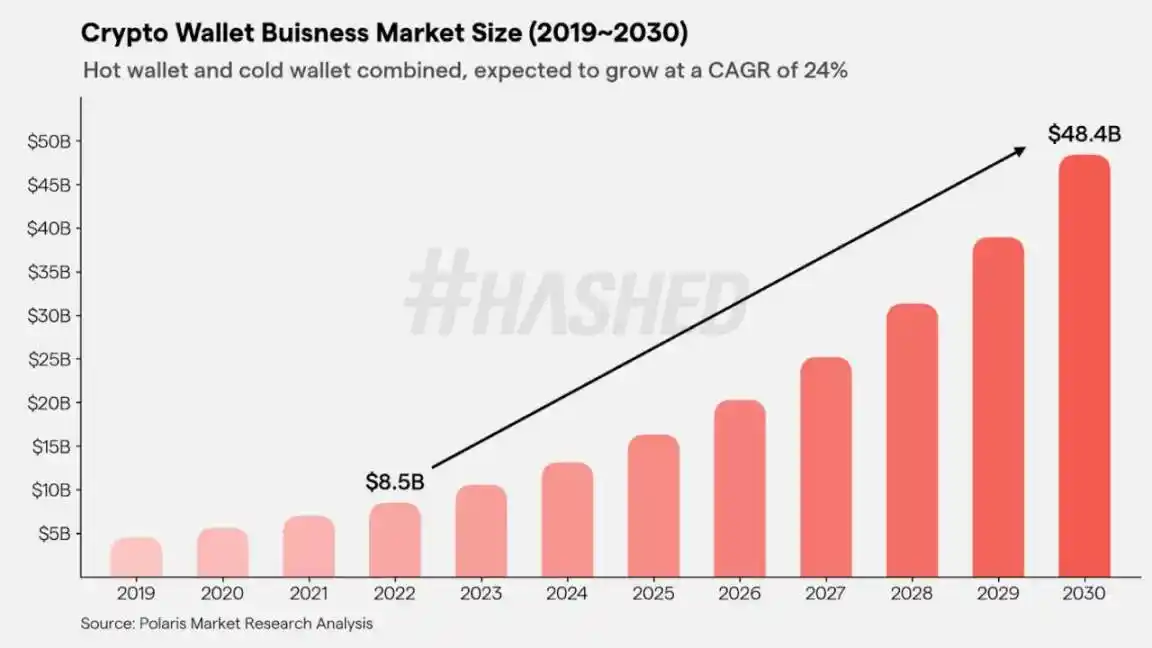
The solutions of wallet key management and signature authentication for ordinary users are getting more and more attention. One such solution is Web3 Auth, which utilizes multi-party computing (MPC) technology to provide an unmanaged login experience, eliminating the need for mnemonics. Platform Magic Wallet and SDK options for developers, allowing login to Dapps via email and SMS, without the need for mnemonics at all. In addition, Ramper Through its mobile SDK, it focuses on providing seamless social login and single sign-on (SSO) to users unfamiliar with cryptocurrencies to access blockchain applications.
With the exponential growth in mobile device usage, wallet companies should prioritize mobile services to reach a larger audience. Coin 98 Is a fast-growing platform with 6 million users that aims to become the leading mobile super app by emphasizing enhanced security for mobile transactions and user experience enhancements. Meanwhile, Robinhood is rolling out a standalone wallet app that lets users effortlessly manage their assets while seamlessly integrating with a variety of Dapps to solve the long-standing problems of heavy design and high fees.
Smart contract wallets are another solution. They can be programmed with features such as spending limits, automatic transactions, and enhanced security with multiple signatures. These wallets cater to users with different needs and understanding levels, such as Argent Offers social recovery and price limit list features, Safe Is an unmanaged wallet that allows users to securely store and manage their digital assets through multi-signature capabilities.
There is also room for smart contract wallets in the Ethereum ecosystem. For example, Account Abstraction (AA) aims to unify the two types of Ethereum accounts: externally owned accounts (EOAs) and contract accounts (cas). AA will eliminate EOAs' need for private keys and enable accounts to operate like smart contracts, freeing up potential use cases for improved key management and multi-signature capabilities. Visa recently demonstrated the potential of AA by building an automated payment solution on StarkNet. As attention to AA increases, we anticipate that the NEAR protocol will gain attention from builders whose account models have implemented the use of multiple key pairs as keys.
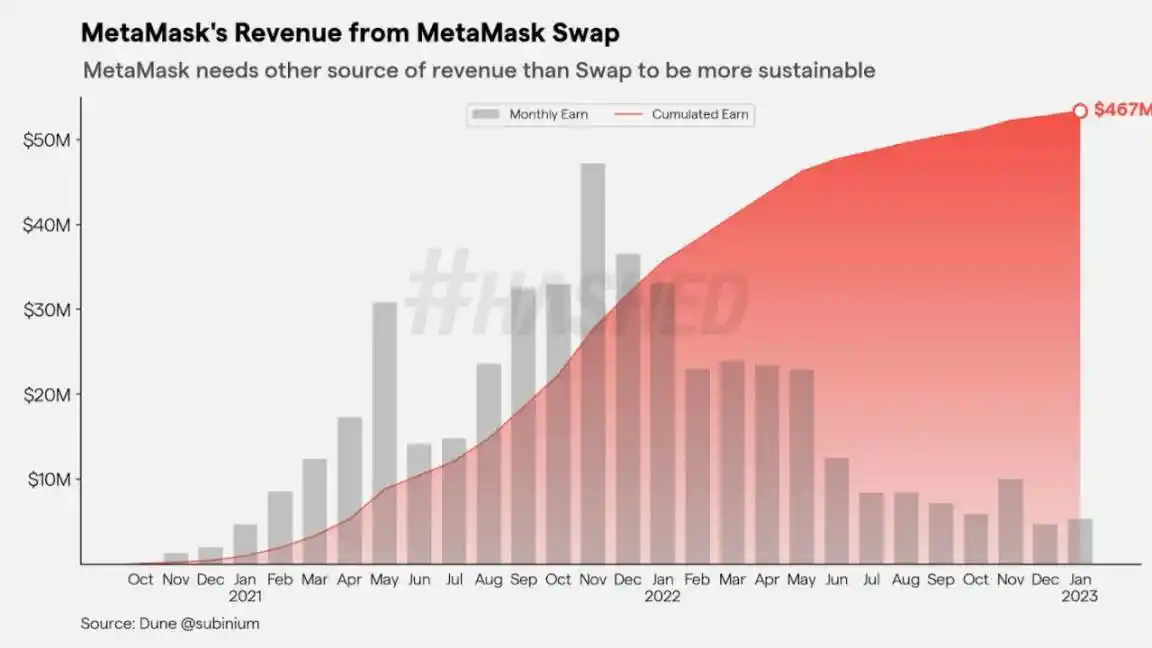
MetaMask is a recognized leader in cryptocurrency wallet space and competes using MetaMask Flask. Flask enables developers to customize their own version of the MetaMask wallet. MetaMaskSnaps are Flask's first feature, allowing anyone to extend MetaMask's functionality and exploit it with different blockchain protocols. Most of their sales now come from spot trading and their revenue streams are monotonous. This revenue model has generated more than $450m in the two plus years since its launch, but it is highly vulnerable to market volatility. But if they succeed in building a dApp ecosystem on top of their products, they will easily stand out as a profitable ecological platform.
Two: Add Web3 elements to digital identity and take a step towards a decentralized society
There are several aspects of the current digital identity system that need improvement. A major problem is fragmentation, where individuals have multiple identities across different platforms, leading to a lack of accuracy and continuity in personal identification. Privacy and security are also concerns, as individuals are often required to provide sensitive information to establish digital identities on different platforms, which can lead to identity fraud and financial crime if this information is used or shared without consent. There are also concerns about the centralized control of digital identities by platform service providers, which are often controlled by a small number of companies or organizations, which may lead to a lack of control over users' identities.
区块链技术可以通过使用私人钱包为这些问题提供差异化的解决方案,允许个人通过证明对特定Token或 NFT 的所有权来验证其数字身份。在区块链上存储资产和信息可以提高数字身份的准确性和可靠性。基于区块链的身份使个人能够将多个在线身份整合为一个统一的、具有自我主权的实体,使他们对自己的数字身份拥有控制权和自主权。CyberConnect 是一家建立去中心化社交图协议的公司,该协议使用 Web3 状态 Token (W 3 ST)和网络连接配置文件(ccProfiles)为用户提供可组合的、自我主权的身份。
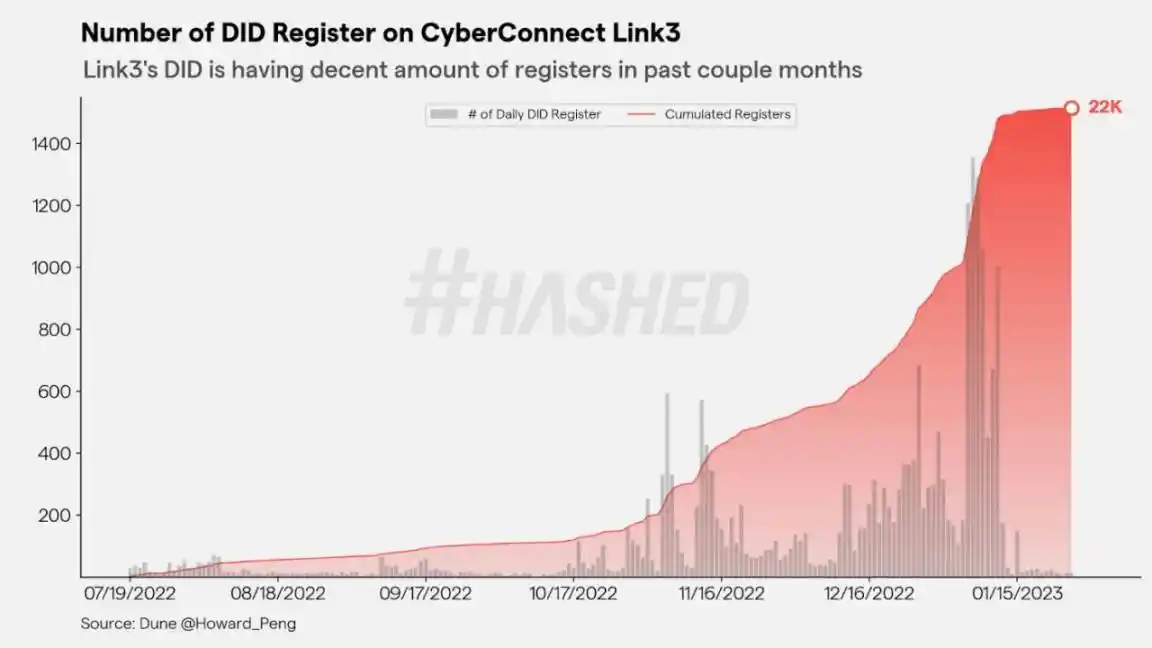
数字身份也可以在不使用 Token 或 NFT 的情况下创建和管理。比如 Disco 和 Orange Protocol 等几个基于以太坊的项目使用 DID(去中心化标识符)和 VC(验证凭证)作为对灵魂绑定 Token (SBT)的补充。当然,单一的解决方案可能不足以满足所有的隐私需求,要想获得最佳的安全和隐私,可能需要结合 SBT 等链上解决方案和 VC 等链下解决方案。此外,也应在开发更好的数据存储解决方案方面取得进展,该方案需要提供隐私和部分去中心性,并在不同身份层之间进行无缝整合。
With a Web3 identity, users will be able to easily find, connect, and even establish threshold communities with others with similar interests, such as utilizing the same DeFi protocol, owning NFT, or playing blockchain games. This new form of identity can also be integrated with existing identity systems to create a seamless and interoperable digital identity, opening up a range of business opportunities.
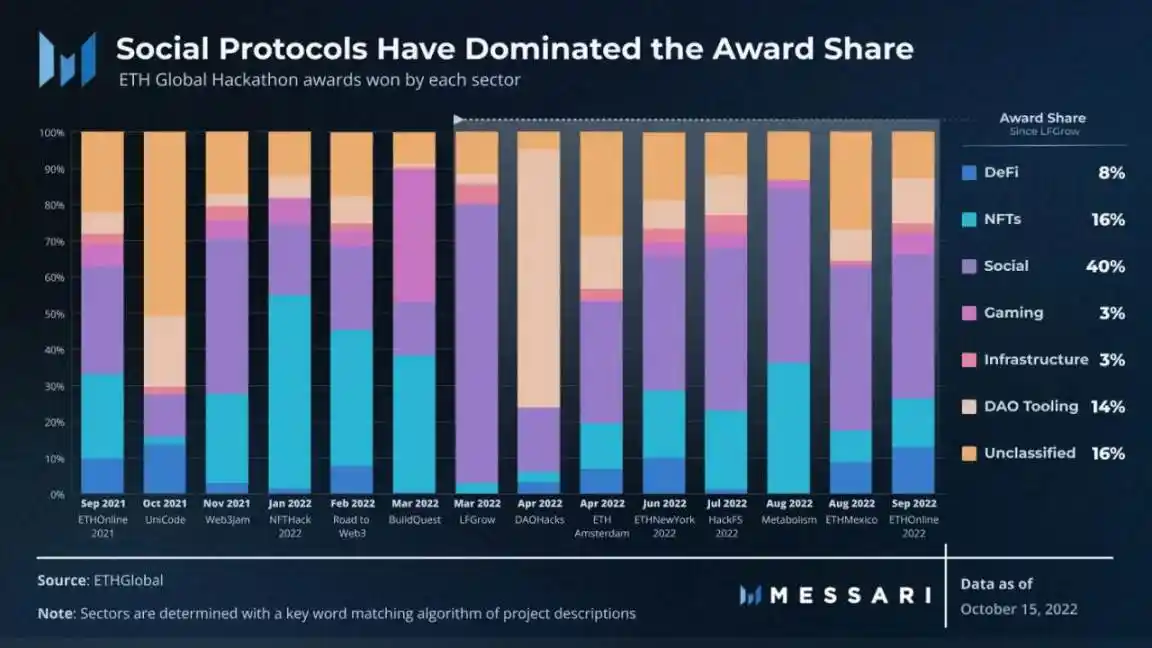
Decentralized social networking has been a growing trend throughout the year at hackathons. Forty percent of the winning projects fell into this category. Lens Protocol More than 60 projects are entirely spin-offs from hackathons, experimenting with the social graph. Farcaster DeSo They raised a lot of money in this huge interest. This year, we can expect to see the first developments in blockchain-based social applications that exploit network effects by using a shared social graph.
3. Optimize the use of ZKP to achieve the privacy of the smart contract platform based on accounts
Currently, the application of zero-knowledge proof (ZKP) in the field of encryption focuses on improving scalability through verifiable off-chain computation. With the advancement of scalable solutions, privacy is becoming more of a concern because common user experiences such as voting, governance, payments, and so on can greatly benefit from the implementation of privacy.
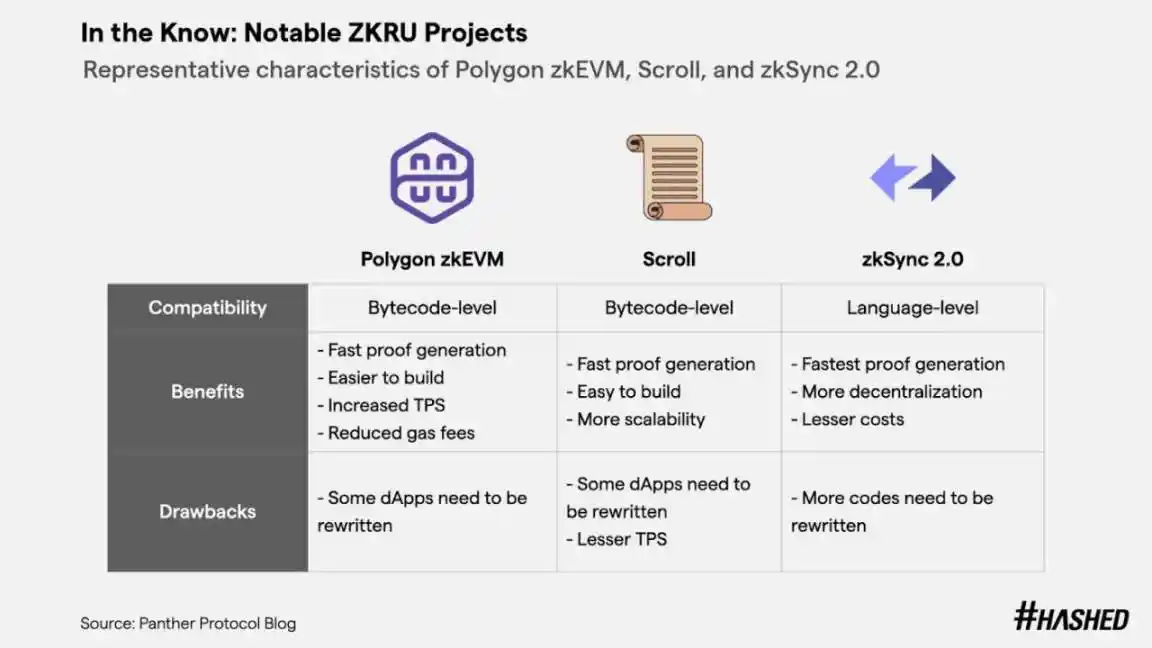
Implementing privacy in account-based smart contract platforms, such as Ethereum, is challenging because of the complications associated with both encrypting ledger state and maintaining its verification. Some prominent groups are working on this problem. A common approach among these protocols is to incorporate "notes" from the UTXO model into the account-based system, making ownership and its transfer more explicit.
The Aztec Connect SDK allows the Ethereum protocol to integrate with Aztec's private rollup, which utilizes an encrypted UTXO architecture for privacy. Based on Aztec Connect, ZK.Money offers a private DeFi yield aggregator integrated with major projects such as AAVE, Uniswap, etc. In addition, Polygon Miden "Hybrid UTXOs and account-based state models" are being introduced for EVM-compatible ZK rollup to support private transactions, which consist of local execution of off-chain data.
To facilitate experimentation and innovation in privacy-enhancing technologies, developers need to reduce friction on these infrastructures. Web3 development has brought a host of unfamiliar challenges, such as fragmented indexing, additional security issues, and so on, so the complexity of increasing privacy should be abstracted as much as possible. This effort will no doubt mature further in 2023, fostering more mature testing grounds for exciting applications.
Four: Dynamic NFT represented by programmable NFT technology will continue to develop
Over the past few years, the landscape of NFTS has changed dramatically, especially those in the form of profile pictures (PFPS). However, in the second half of 2022, the volume of image-based NFT transactions decreased significantly as users began to crave more features. As a result, the NFT ecosystem is undergoing a transformation to respond to this changing demand. Ethereum improvement proposals have become a yardstick for the direction of the Ethereum community, and most recent proposals have focused on the NFT standard, indicating that the community wants to have NFT with added utility. We believe that... 2023 will be a critical year when various NFTS, including dynamic ones, will address these issues by offering new capabilities.
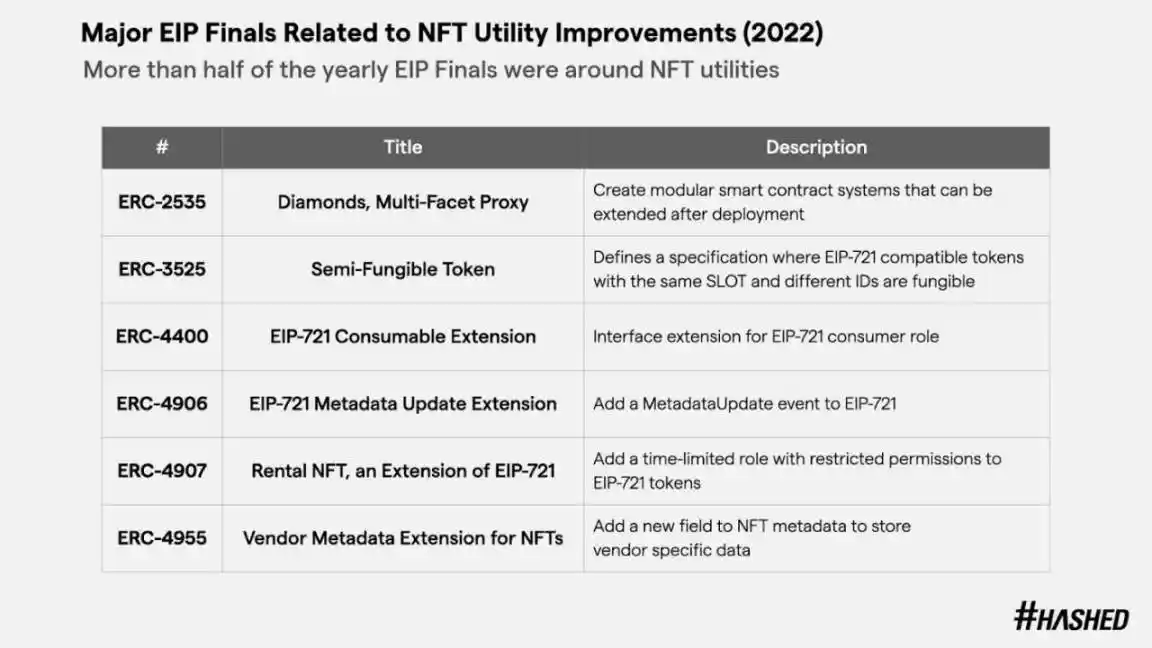
Dynamic NFT is a unique type of NFT that can adapt and evolve according to certain triggers in its smart contract. These trigger events can be the result of on-chain or off-chain events, or even events occurring in the real world. Changes in dynamic NFT characteristics are usually achieved by modifying its metadata.
In addition to dynamic NFTS, there is growing discussion in the community about other programmable NFTS with advanced features such as executable NFTS, NFTS with split permissions, and shared ownership. This opens up many possibilities for the interaction and participation of creators, collectors and players. Programmable NFTS are expected to gain huge popularity in the blockchain ecosystem as they create advanced use cases that go beyond the traditional representation of digital ownership through images or records. These FTTS offer a wealth of possibilities, such as creating interactive experiences, representing unique and complex digital assets, and developing new financial instruments.
At the same time, to adopt dynamic NFT widely, it is necessary to solve the reliability of the trigger events that cause the change of NFT. To achieve this, it is necessary to implement more reliable prognoses and establish clear standards for NFT to verify the authenticity of trigger events, while also promoting transparency and fairness of smart contract rules governing dynamic NFT.
As the blockchain ecosystem continues to attract more game developers, artists, and entrepreneurs, their level of creation continues to rise. The emergence of dynamic NFT is expected to add a new excitement point to the NFT ecosystem in 2023. The abundance of talented creators in the field will open up endless possibilities for new imaginative use cases.
Five: Explore the diversity of NFT utility, small and medium brands and creators will drive a new round of adoption
Despite the ongoing bear market and consequent drop in sales, NFT is becoming an increasingly popular way for companies to connect with customers. Big companies such as Coca-Cola, Twitter and Visa have begun using NFT as a way to boost their brand image. Disney has teamed up with one of its subsidiaries, Marvel Launched a digital collection based on the NFT. To support this effort, they are actively seeking to hire experts with knowledge and experience in this field.
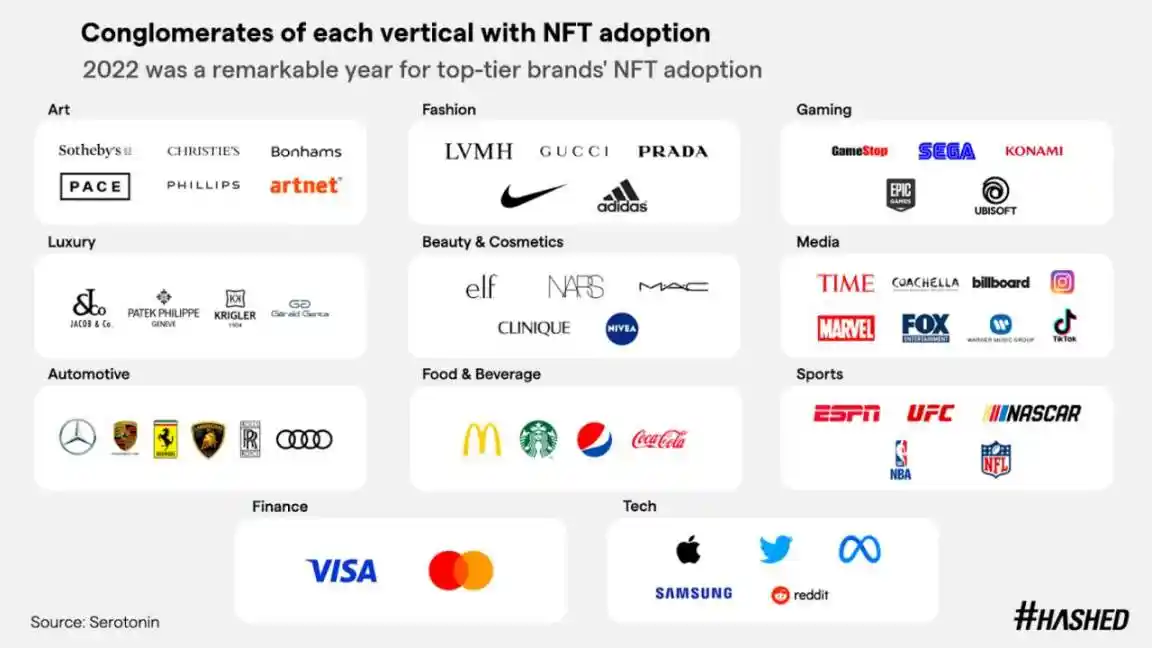
Despite their predictable mainstream success, NFTS often lack sentimental value to their owners and are not sustainable. Colloquially, after acquiring an NFT, the holder may not feel a strong connection to it over time and may not know what to expect from owning it. While many NFT projects or studios provide the phased benefits outlined in their roadmap, they often fail to provide a sense of belonging and true ownership of the underlying IP and content, such as the sense of community and exclusivity provided by Yuga LABS Boring Ape Yacht Club.
To address these barriers, several teams are working to demonstrate how NFT can provide real, ongoing utility and a sense of belonging/ownership to the holder community. For example, Modhaus Is revolutionizing the K-pop entertainment industry by allowing active fan participation at a higher level, providing ownership through NFT-based governance and voting. TripleS Is a unique K-Pop group that uses blockchain technology to give fans more influence in important decisions, such as being able to select TripleS from the very beginning and determine the individual members of each sub-group.
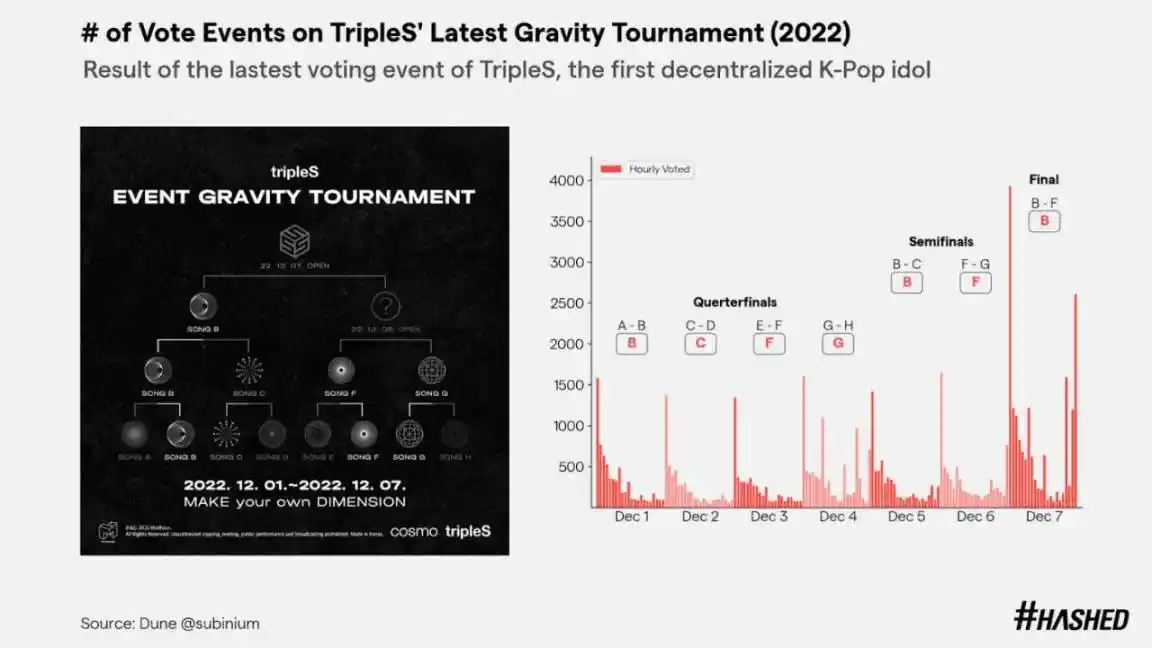
In 2023, small and medium-sized brands and individual creators will embrace NFT as a means to increase and retain customer loyalty, echoing the leading use of NFT by larger enterprises in the previous year. This includes incorporating NFT into membership and loyalty programs in real-world communities, such as local restaurants and social events. Practical benefits from NFT, such as exclusive offers at offline events, will promote widespread adoption of NFT.
Wider adoption of NFT requires reducing barriers to entry through easy-to-use wallet services. Reddit Vault, for example, makes it easy for users to claim collectable profile pictures. It is also important that users who do not understand cryptocurrencies take advantage of Web3 stack tools. The growing demand from long-tail brands and businesses for enhanced user experiences in the NFT community will drive demand for services such as RareCircles or CIETY that are able to jump-start the community without the need for coding or technical expertise.
Leading NFT marketplace OpenSea also recently launched "Drops," a tool for creators to launch their NFT projects. It also rolled out customizable landing pages on the EVM chain, designed to enhance the experience for small and medium-sized brands and creators.
Six: chain tour will use powerful IP, more friendly to ordinary users
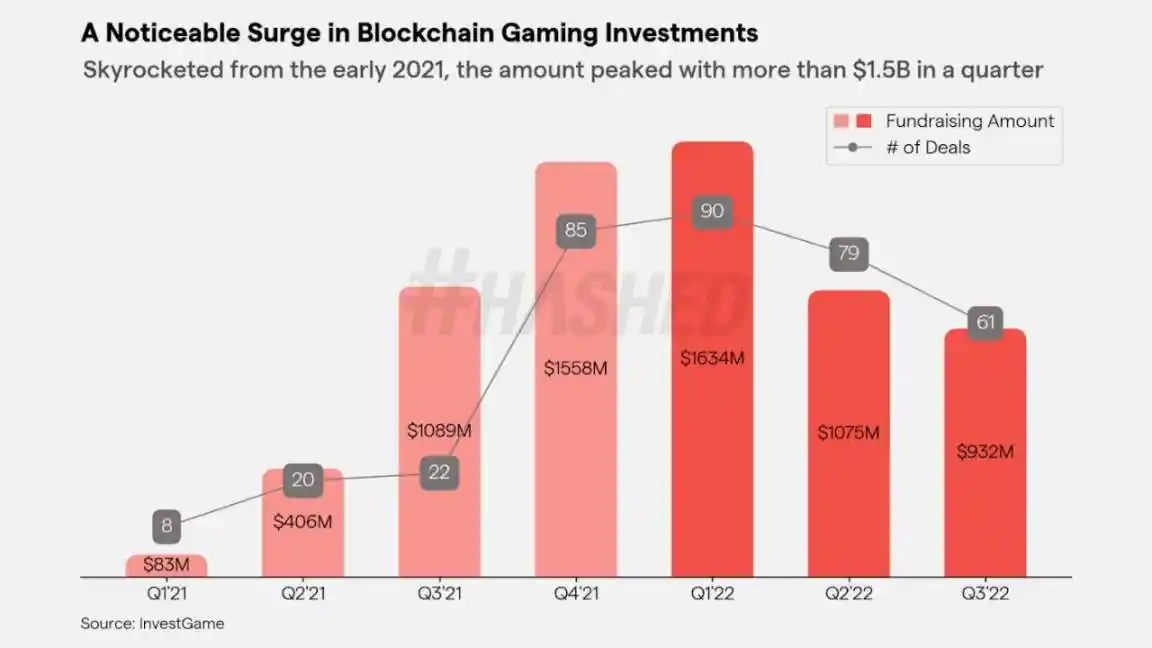
Despite only being launched within the last two years, blockchain gaming is already seeing unprecedented growth in late 2021. In addition, the growing gaming ecosystem in Southeast Asia, with novel ideas such as gaming guilds, has made GameFi a highly focused area for cryptocurrency builders and traditional gaming groups.
Due to macroeconomic conditions and market turbulence, In 2021-22, the growth of chain games did not reach the heights assumed. Nevertheless, the blockchain gaming sector, including GameFi, has raised over $5 billion annually since Q4 2021, and we expect more AAA games to be launched in 2023.
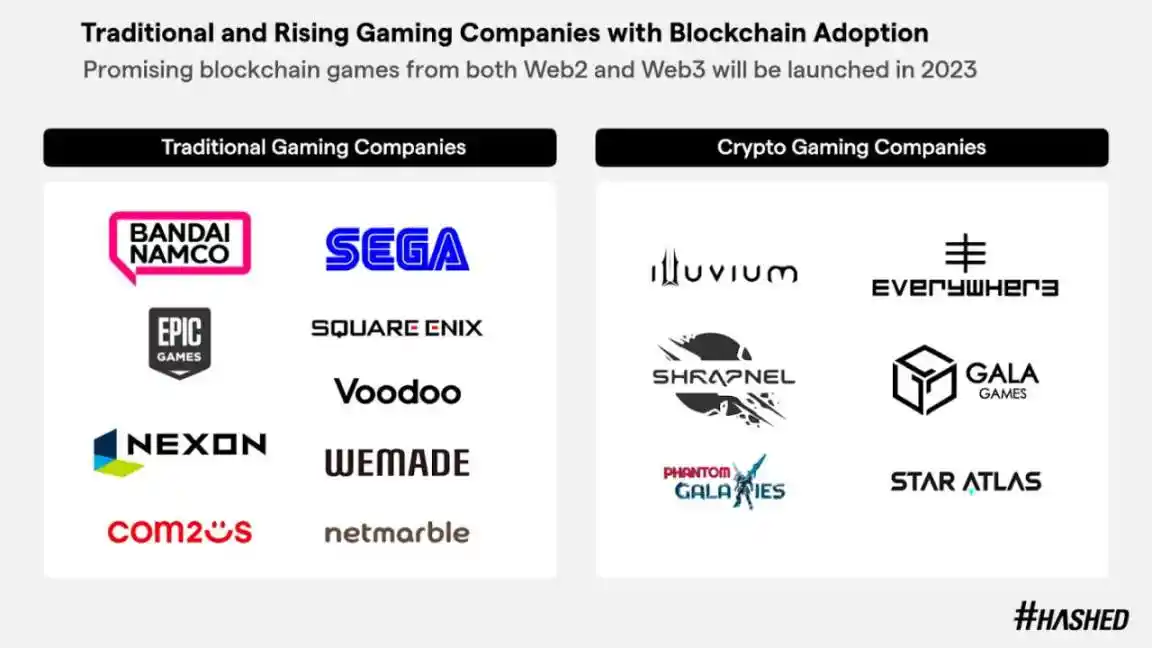
In order to provide innovative experiences for gamers, we often see the adoption of well-known IP, such as popular webcomics and movies, or even mature blockbuster game IP integrated with blockchain technology. South Korean conglomerates such as Nexon and Netmarble, as well as global companies such as SEGA, BandaiNamco and SquareEnix, are also working to incorporate their IP into games.
For example, user-generated content (UGC) platforms that use popular characters and plots, such as Gundam Metaverse, are gaining traction. Nexon has also unveiled a blueprint for a creator-driven ecosystem that will rely on the primary IP MapleStory Universe to access the blockchain. In the future, more content companies will expand the IP of their games by utilizing blockchain.
But the urgent problem of high barriers to entry for ordinary users remains unsolved. Axie Infinity is one of the highly successful blockchain games, with over 2 million MAUs in 2021, but it has faced challenges in attracting more users before due to the difficulty of creating wallets and buying assets. In the future, it is expected that barriers to entry will be lowered, players will be able to play blockchain games without the need for a wallet, or wallet creation will be smoother.
In 2023, it is expected that simplified upstart tools will be progressively advanced to attract more players, while blockchain infrastructure provides convenient mobile SDKS to facilitate the launch of top games. Multi-chain wallet services dedicated to the gaming space, such as Sequence and FaceWallet, will work with numerous blockchain gaming companies to improve accessibility, in addition to similar efforts by infrastructure companies such as ImmutableX, which recently announced the launch of Immutable Passport. These collaborations will help create a more seamless and user-friendly experience for all gamers.
Seven: Build a resilient infrastructure for the next generation of DefIs, NFT-based virtual goods will rise
In the real world economy, production and finance are closely linked. Productive activities are based on natural resources and infrastructure, and the financial sector enhances the growth of these activities by providing loans and other financial instruments. For example, a farmer may set up a ranch and raise cats (production), and banks and securities firms can take advantage of this by providing financing or listing on a trading platform (finance), and help farmers expand their business.
Until 2022, however, this balance is lacking in the crypto economy. Infrastructure-level projects, such as the collapse of cryptocurrency trading platforms and money markets (finance), lead to instability in financial markets, and projects affecting utilities and communities cannot flourish (production). The foundation of the crypto economy, namely blockchain technology (infrastructure), is already in place, but the development of more production-focused projects is needed to support its growth.
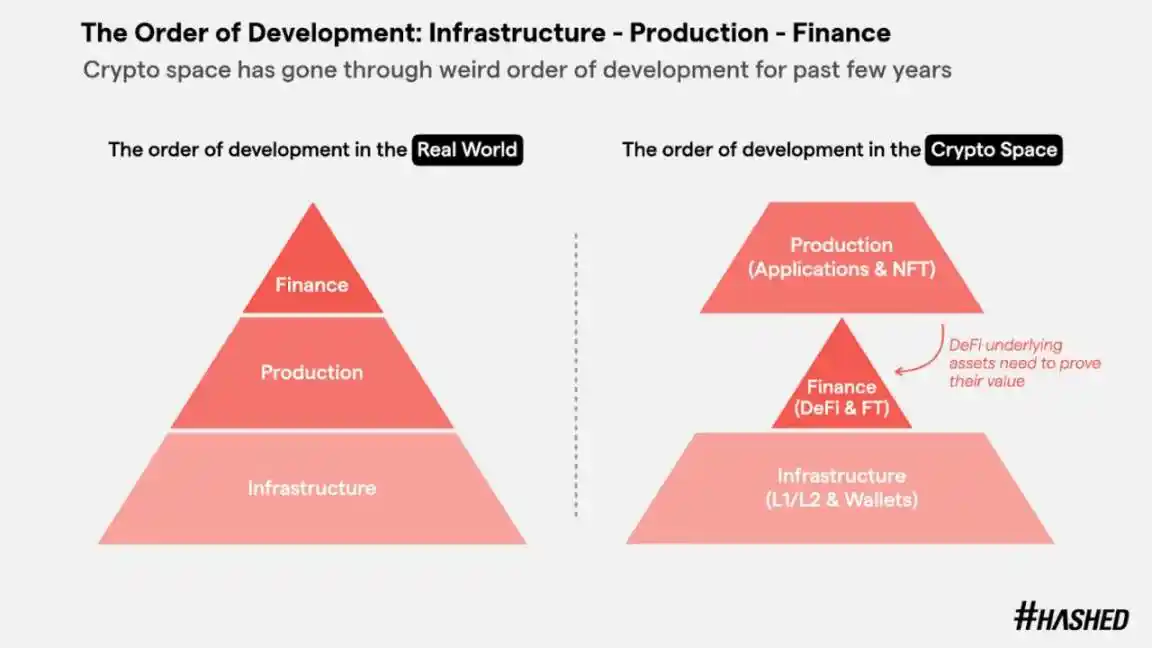
主要的 DeFi Token 具有相互依赖的价值, Token 的价值依赖于 DeFi 生态系统中其他 Token 的使用和价值。这创造了一种脆弱的结构,一个 Token 的价值下降会影响整个 DeFi 市场,这种结构导致 DeFi 市场在监管不确定或对整个行业持怀疑态度时,价值急剧下降。
The number one challenge for the blockchain industry is to build a solid infrastructure that will make it easier for the masses to use and enable real added value in the commodity production market. The good news is that blockchain transactions have been growing steadily. At present, Five leading L1 projects, with over 1 million transactions, offer scalable and proprietary modular solutions that are user friendly and easy to use, as well as digital identity solutions.
In addition, digital products are slowly emerging, including non-homogeneous assets generated through the L1 block space. Ethereum, the largest existing smart contract platform, is still generating a significant number of NFT transactions after the last NFT summer, totaling more than $35 billion. Despite the decrease in activity in the NFT community and the decline in OpenSea transactions, secondary NFT transactions remain strong at more than $780 million per month.
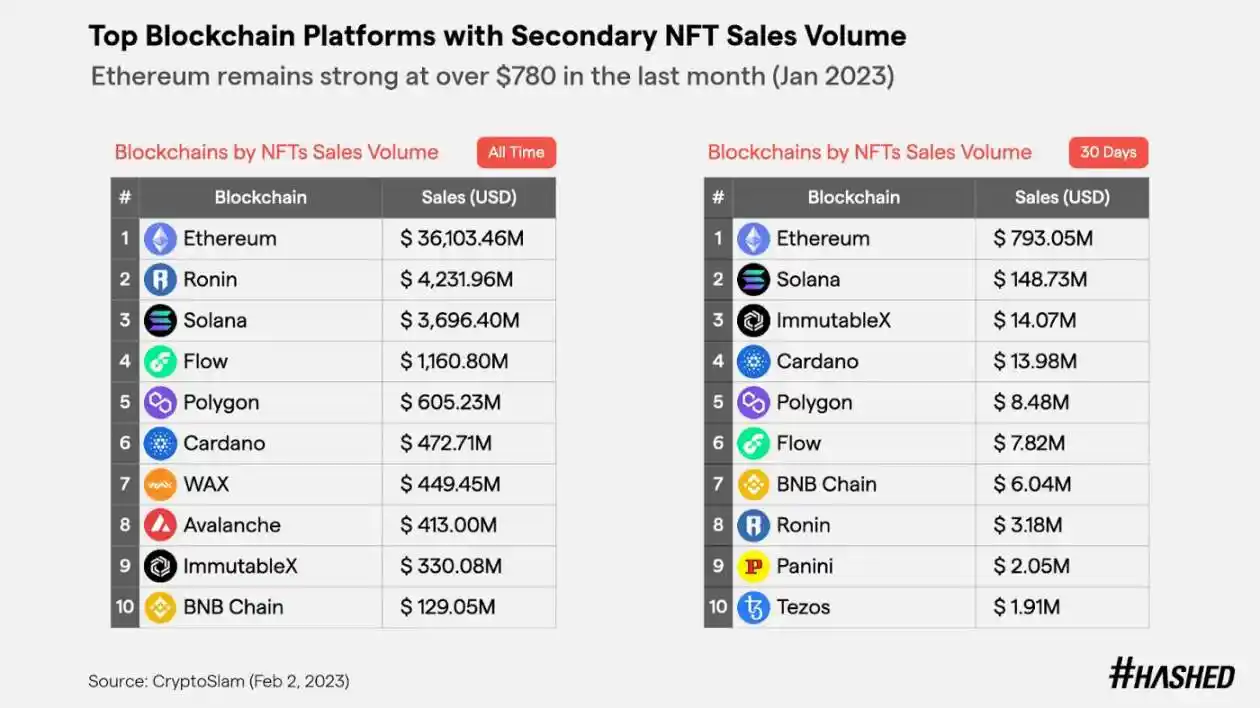
Ethereum is no longer the only ecosystem; other communities thrive on the scarcity of non-homogeneous goods. Polygon's adoption of large corporate NFT programs such as Starbucks' Odyssey and Reddit Collectible Avatars have helped it attract millions of Web2 users. Despite TVL falling more than 80 percent and DeFi subscriber losses accelerating, Solana maintained a secondary volume of nearly $150 million per month. In mid-2022, Solana NFT and Y 00 Like ts, it has successfully created a unique community that is different from the Ethereum NFT community. The number of Uaws at Solana NFT grew nearly fourfold during the bear market from August to October 2022.
New types of virtual goods will emerge, perhaps starting with blockchain games and metadata. These sectors accounted for the largest amount raised in the first quarter of 2022. In addition, the use of programmable NFT to represent real assets in a virtual world will be discussed in more depth.
As infrastructure players accumulate valuable virtual goods and infrastructure stabilizes, developed financial models will operate within a given infrastructure. Trading platform primitives like OpenSea and Blur, lending platforms like NFTFi and BendDAO, and various experimental models including derivatives platforms are all evolving, although there is no clear winner yet.
DeFi smart contracts can be quickly applied to other blockchains, however, products such as NFT and the communities built around them can never be copied and pasted. In 2023, the development of the blockchain ecosystem will focus on creating the minimum production scale to support these financial primions, rather than being limited to DeFi's infrastructure. Mainstream blockchains will focus on building a robust ecosystem around NFT-based products that are difficult to replicate, such as the NFT community and blockchain games.
Eight: AI will play an important role in blockchain game development and beyond
The field of artificial intelligence has made significant progress since its inception. It has evolved from early research in natural language processing (NLP) and problem solving in the 1950s to more recent developments in data synthesis and machine learning (ML). This has led to widespread adoption of AI in various industries, including healthcare, finance, media and transportation.
With the success of large language models (LLMS), there is a growing expectation that AI will be widely used by 2023, with ChatGPT being a prime example. The blockchain gaming industry stands to benefit greatly from advances in AI, especially in terms of simplifying traditional game development processes and increasing gaming experiences -- all made possible by generative AI.
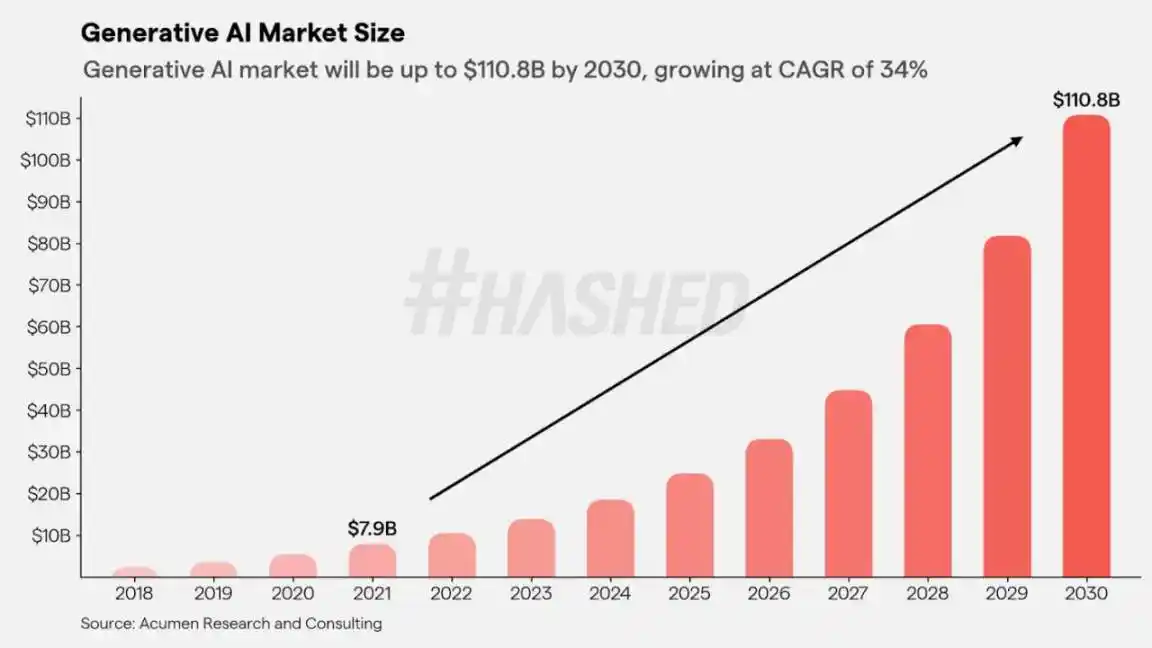
Generative artificial intelligence is a field that has been developing for more than a decade, but only recently has it advanced enough to mimic or even surpass human abilities in image, speech and speech recognition. The market was valued at $8 billion in 2021 and is expected to reach more than $63 billion by 2028.
Currently, AAA game developers spend a significant portion of their budgets on content creation, which is a major bottleneck in the game industry today. Top game studios take at least three years to complete production, so it's important for developers to anticipate consumer trends years before a product is released. In the cryptocurrency game, the development cycle becomes even more challenging because crypto players' preferences can change quickly and unpredictably.
Generative AI can be a powerful solution to this problem. By collecting user behavior data from a core group of community testers over the course of multiple game iterations, developers can train models to create unique, generated content, such as levels, characters, and objects, tailored to specific people. This content is procedurally generated, evolving in response to real-time changes in user behavior. This not only provides players with a diverse, dynamic game experience, but also helps developers reduce the need to manually create content.
Beyond gaming, we're also excited to see the potential of AI in other cryptocurrency verticals. Predictive risk management is becoming increasingly popular among trading teams, who train generative AI models to generate synthetic financial data to simulate different market conditions - price, CEX/DEX volume, order book depth, AMM liquidity, etc. This helps traders understand how to identify and respond to potential risks in a variety of market conditions.
Smart contract auditing powered by AI solutions is another area we are looking at. The current audit process is cumbersome, inefficient and expensive. We want future audit AI models to be trained with large data sets of existing smart contract code, as well as information about vulnerabilities, errors, and attack patterns. After adequate data processing and cleaning, the model should be able to automatically analyze and audit new smart contract code inputs.
最有效的人工智能解决方案是那些完善数据收集过程的解决方案——无论是信息数量还是质量。我们设想的未来是受激励的数据市场。去中心化的计算协议,如 Filecoin 和 dFinity,以及分布式 GPU 渲染协议,如 RenderNetwork,是领先案例。随着分布式人工智能协议的出现,生态系统的一部分可以被 Token 化,同时利用激励措施来换取用户的参与和数据共享,以进一步加强基于人工智能的模式。用户、人工智能和 Token 之间的这种共生关系拥有巨大的潜力,将彻底改变这个行业。
Nine: Institutional finance will enter the crypto market through blockchain infrastructure
据预测,在 2023 年,机构融资的规模将大幅增长,部分原因是对 Token 化真实世界资产的越来越多采用(RWA:代表对基础资产的债权),以及在企业级押注和无担保贷款方面取得的进展。
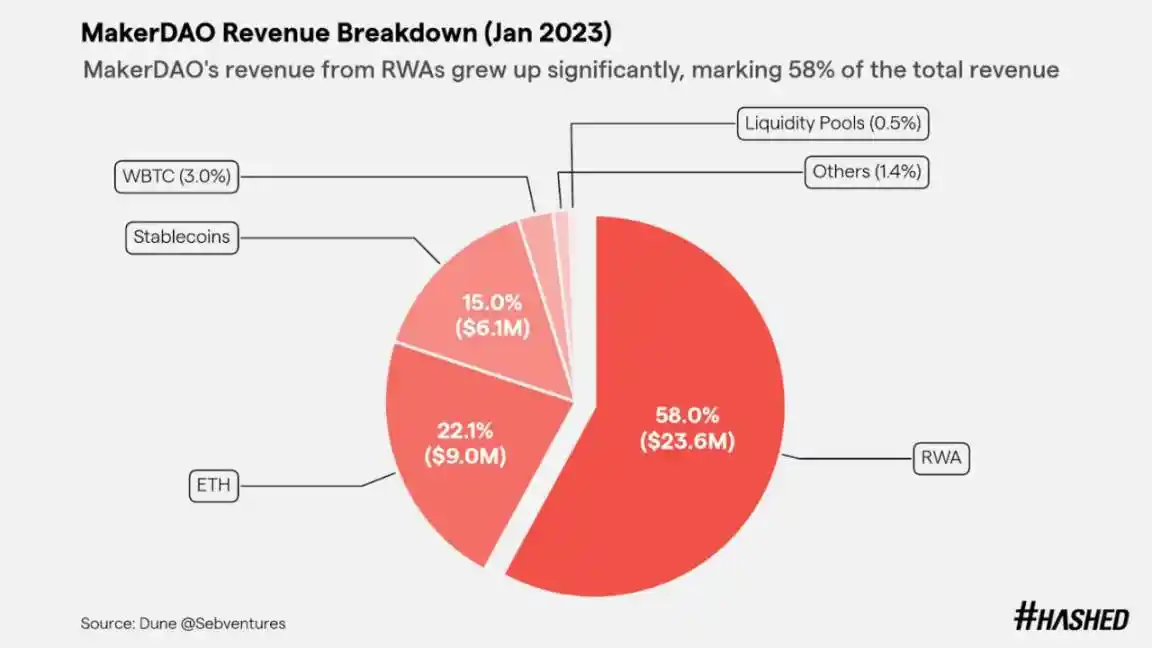
目前,真实世界资产(RWA)最成功的应用是稳定币,市场领导者包括 USDT、USDC 和 BUSD 等市值最高的七个 Token 。加密原生组织在 RWA 方面表现出明显的主动性,比如 MakerDAO 投资了 5 亿美元的美国国债和公司债券,并分散投资于其他类型的 RWA,如房地产、发票和商业贷款。RWA 现在占 Maker 总协议收入的近 60% ,显示了这一领域的潜力。
机构金融的另一个重大发展是企业级流动性质押的增长,受 LSD(流动性质押衍生品)部门扩张的推动。像 Alluvial 这样的公司正在建立企业级的流动性质押标准,将机构资本和 PoS 区块链进行连接。这使 Token 持有者可以将 Token 进行抵押,获得可以作为抵押品的 Token ,从而提高资本效率。对流动性质押需求的有效性已经被这一市场的扩张所证明,在一年内,总 Token 抵押率从 21% 进步到近 40% 。
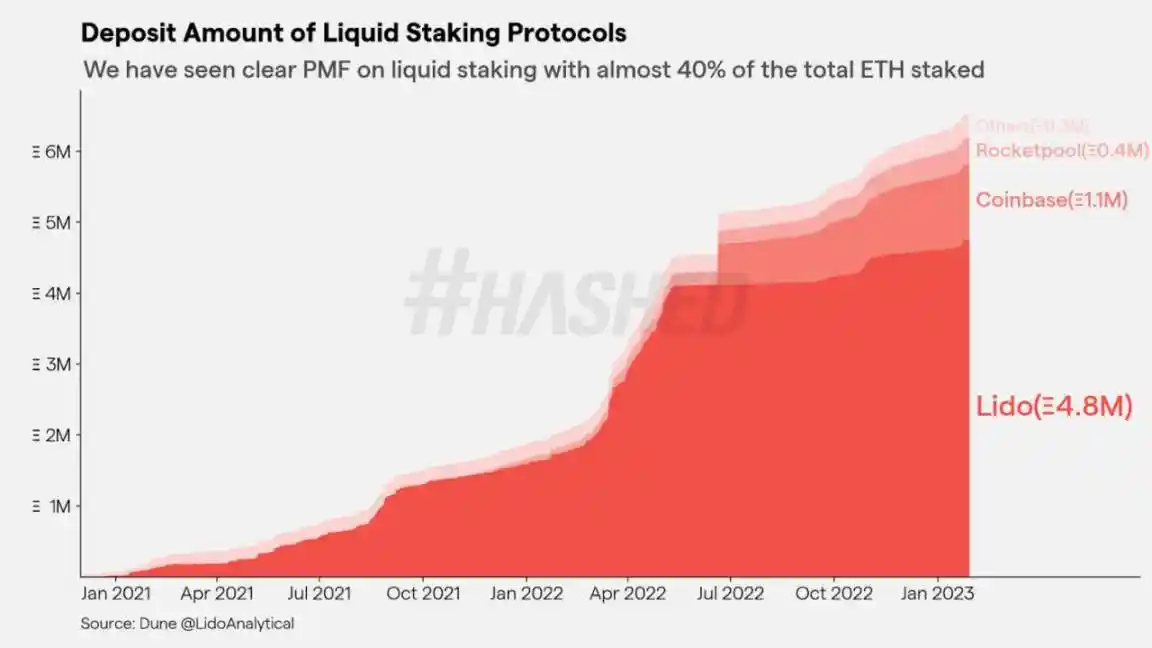
Decentralised lending has grown rapidly in the past two years, but most current models require over-collateralised debt positions and lack access to universal credit for on-chain borrowers. The DeFi space has become complex, with a high learning curve and spread across multiple DApps and infrastructures, making it difficult to manage positions and generate sustainable returns. The bear market revealed that yield farming could not last, and the rise of unsecured peer-to-peer lending was seen as a more sustainable source of income. Unsecured on-chain lending provides transparency and enables the guarantor to borrow voluntarily. Projects such as Maple Finance and Goldfinch are actively working to provide capital to real-world institutional enterprises ina decentralized manner.
然而,DeFi 领域并非没有挑战。加密货币缺乏明确的法规是该行业的一个主要不确定性。如果行业能够推动链上 Token 化和证券化的迭代进展,拥有明确的指导方针,这将大大有利于该行业,并为真正的、能产生现金流的活动开辟广泛的可能性。
Overall, we see institutional development as an inevitable progression for DeFi, while CeFi will continue to consolidate its position. Traditional financial institutions are expected to experiment more with mature DeFi agreements, such as MakerDAO, AAVE and Centrifuge. In addition, a large number of start-ups are expected to focus on bringing traditional financial institutions into the cryptocurrency market in a manner that meets regulatory requirements. This feature is likely to create a bigger financial layer, especially in emerging markets where millions of entrepreneurs are locked out of the financial system.
Ten: The rise of emerging markets, led by India, to challenge US dominance in innovation and open source
The cryptocurrency space is witnessing a continued influx of new players, especially in emerging markets like India. According to the 2022 Global Cryptocurrency Adoption Index released by Chainalysis in September last year, India leads in terms of both centralised and decentralised transfers of dollars, demonstrating significant cryptocurrency adoption among emerging economies. Meanwhile, from a vendor perspective, the US has long been the global hub of blockchain innovation, but is now being challenged by the rapid technological advances taking place in emerging countries, notably India.

Over the past decade, India has developed into a hub of science and technology innovation and is considered one of the world's leading sources of science and technology talent. More than 3,500 engineering colleges producing more than 1.5 million engineering graduates each year will propel India to become the world's largest software developer base, surpassing the US by 2024. In addition, this talent base is no longer just the executive level of multinational companies, but has become innovative, high-value roles.
In addition, India is witnessing the fastest growth in the world in terms of open source contributions, with a developer community of 9.7 million people on GitHub in India, second only to the US. In 2022 alone, 2.5 million new users from India joined GitHub.
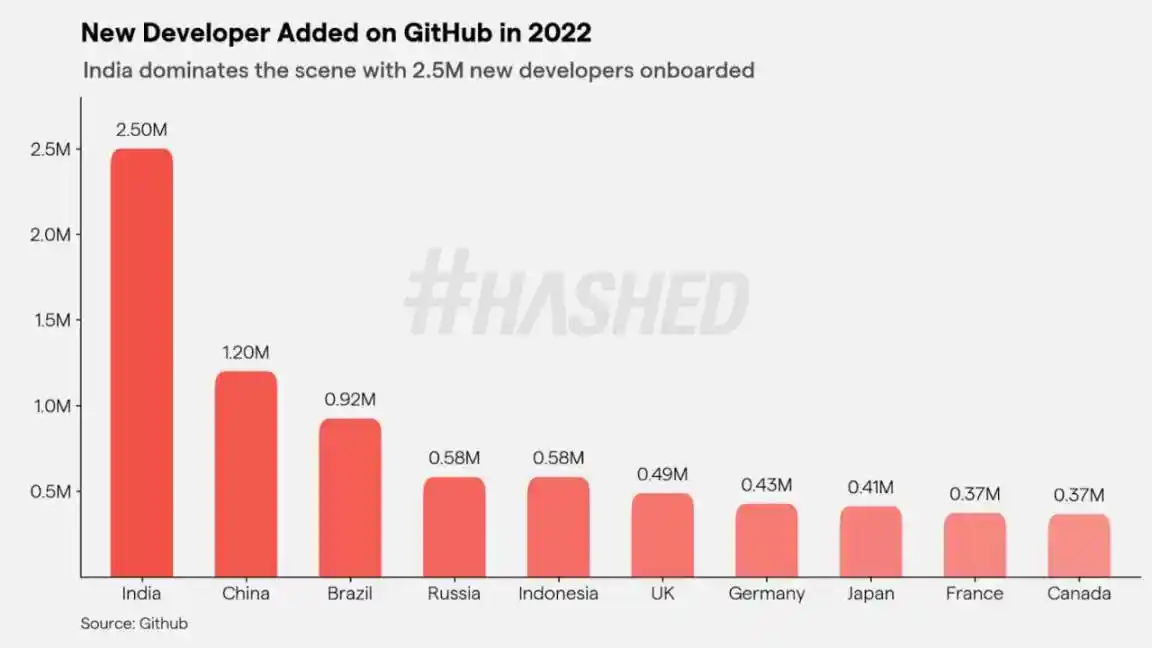
The biggest beneficiary of this technical talent pool is the software-as-a-service industry. The SaaS industry in India is forecast to grow 25-fold to $50-70 billion over the next decade. India's founders have delivered several globally recognized SaaS products and developer tools, including Freshworks, Zoho, Hasura, Postman, and others. Supported by the right ecosystem, India can also lead the next wave of innovation in the emerging world of blockchain. According to the Power Capital 2022 Developer Report, while the US continues to see its market share of Web3 developers decline, India has steadily increased its market share to more than 5% in a relatively short period of time and is already in the top 4 globally in terms of the number of Web3 developers. .
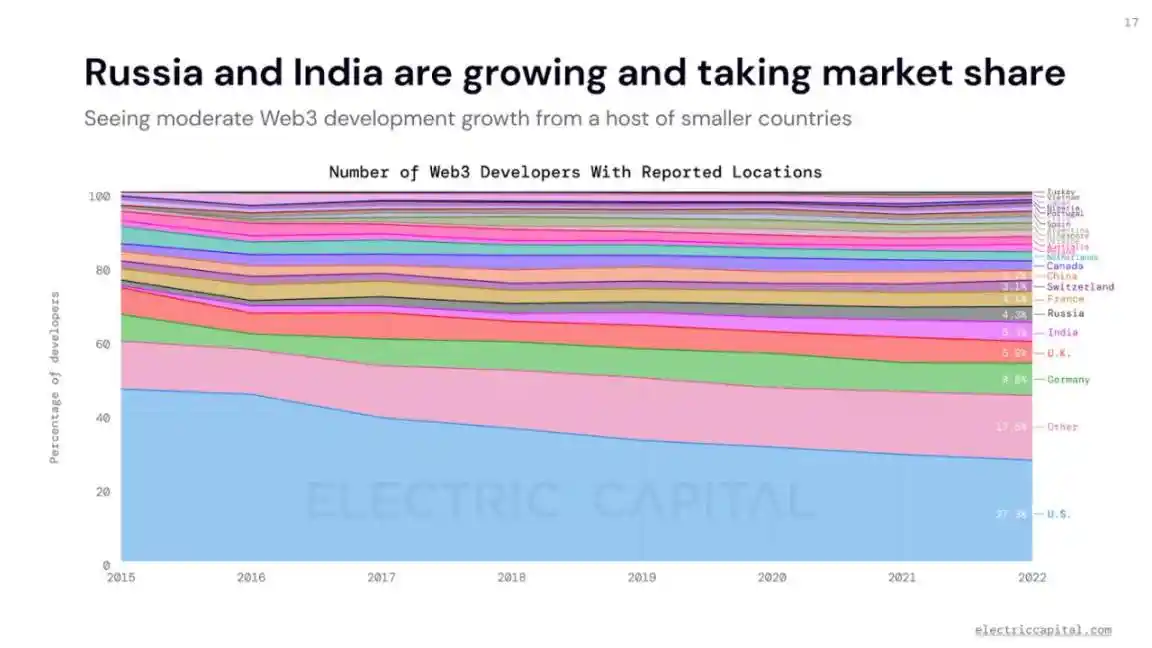
SaaS in India has seen exponential growth and activity, with over 500 ex-employees from Indian SaaS companies becoming entrepreneurs. This trend has continued with blockchain infrastructure, as some founders have broken away from Web3 companies to start their own businesses. Early employees of leading Web3 projects from India, such as Polygon, have already started building blockchain infrastructure projects.
The evolution of SaaS and infrastructure in the blockchain space is likely to mirror the course of the SaaS revolution in India, albeit at a much faster pace due to low costs, skilled, large English-speaking talent base, improved technology infrastructure, software first and the modular nature of cryptocurrencies, as well as the digital GTM trend accelerated by COVID-19.
These factors could put India at the center of the blockchain infrastructure movement, with founders building products in both horizontal and vertical domains. It will be interesting to see how these innovative Web3 projects in India can fluctuate in the short term and still show long-term growth.
Original link
Welcome to join the official BlockBeats community:
Telegram Subscription Group: https://t.me/theblockbeats
Telegram Discussion Group: https://t.me/BlockBeats_App
Official Twitter Account: https://twitter.com/BlockBeatsAsia

 Related Articles