Vela Exchange: The rising star in the decentralized perpetual contract market.
Consistent with traditional financial markets, the market size of derivative trading in the cryptocurrency market is always larger than spot trading in the long term. However, the traditional financial futures market has always had an inherent limitation, which is that it has a settlement date and limited leverage trading capabilities, which cannot adapt to the 24/7 trading of the cryptocurrency market. Therefore, BitMEX launched perpetual contracts on May 13, 2016, which adopted innovative funding rates to regulate the price of spot and contract as closely as possible, unlocking the opportunity to go long/short with leverage of up to 100x. Its emergence has forever changed the cryptocurrency and the entire financial industry.
With the rapid development of the encryption market, derivative trading such as perpetual contracts has attempted to move from off-chain to on-chain, gradually moving from centralization to decentralization. Early attempts to introduce derivatives into DeFi mainly focused on re-creating the order book model popularized by CEX, but issues such as high gas costs, delays, and high complexity have caused certain obstacles. Later, the emergence of Layer2 promoted the development of more DeFi innovations, due to the advantages of low gas fees and transaction speed brought by the second layer, and the ability to inherit the security of Ethereum to a certain extent. This created conditions for DeFi innovation, and thus, in the decentralized perpetual contract track, popular star projects such as GMX and Gains Network emerged.
Meanwhile, there is a project called Vela Exchange rising, which integrates the advantages and characteristics of GMX and Gains Network in its mechanism. It successfully ended a two-month beta test in April this year and made adjustments based on the test data and results. The latest version will be released after iteration. Let's take a look at this rising star together.
Vela Exchange Introduction
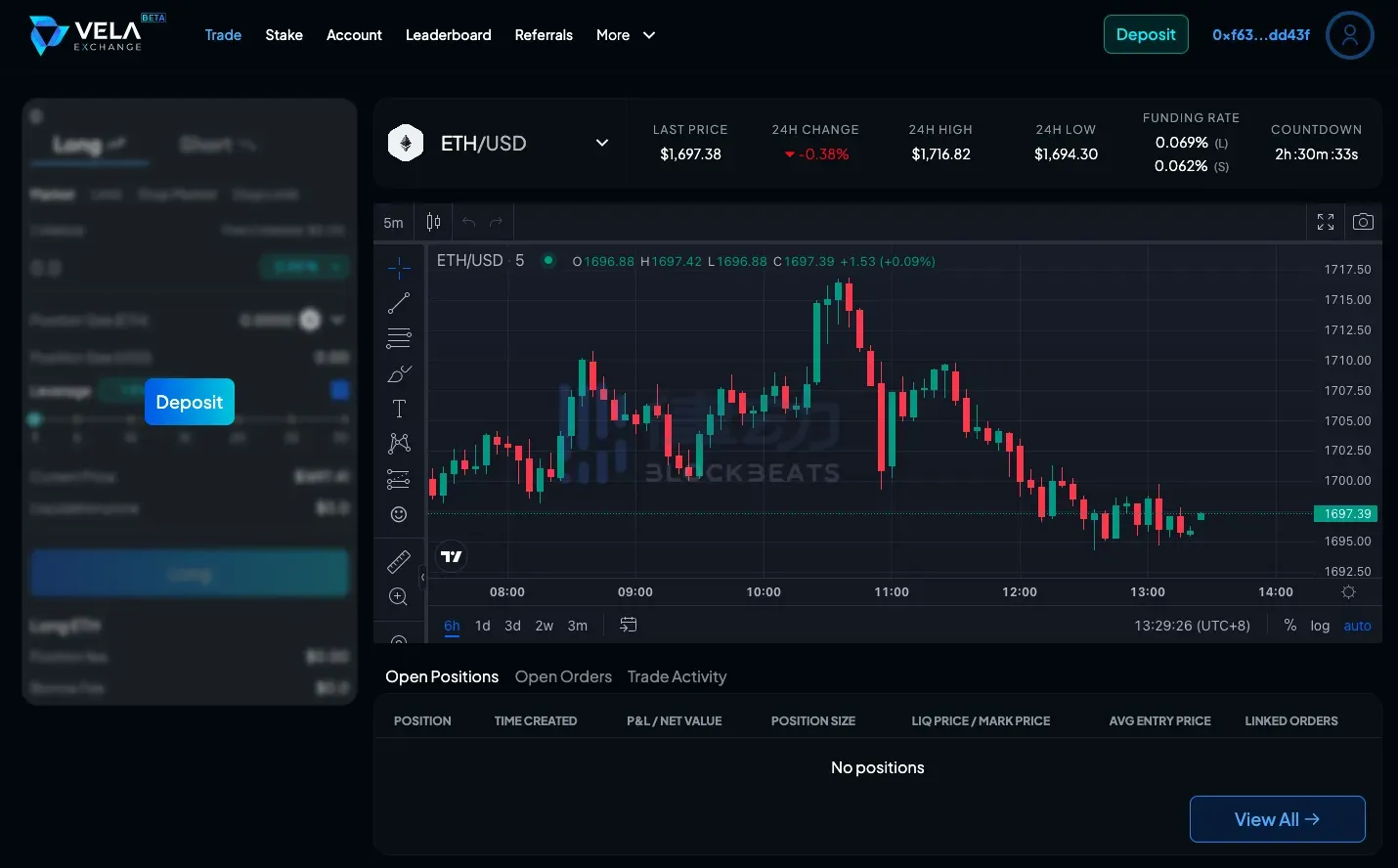
Vela Exchange's trading interface
Vela Exchange is a decentralized perpetual contract platform on Arbitrum, aiming to improve the trading speed and security of DeFi derivatives by utilizing a hybrid model of off-chain order book and on-chain settlement. According to the official documentation, Vela users can open positions based on the performance of synthetic assets, and depositors can earn platform revenue distribution and profit from traders' losses by depositing funds to generate VLP (similar to the GMX model). Traders can leverage up to 100 times by borrowing funds from the VLP pool. After careful balance of the reward structure, Vela Exchange manages token and reward supply while maintaining high incentives for liquidity supply and trading.
Infrastructure
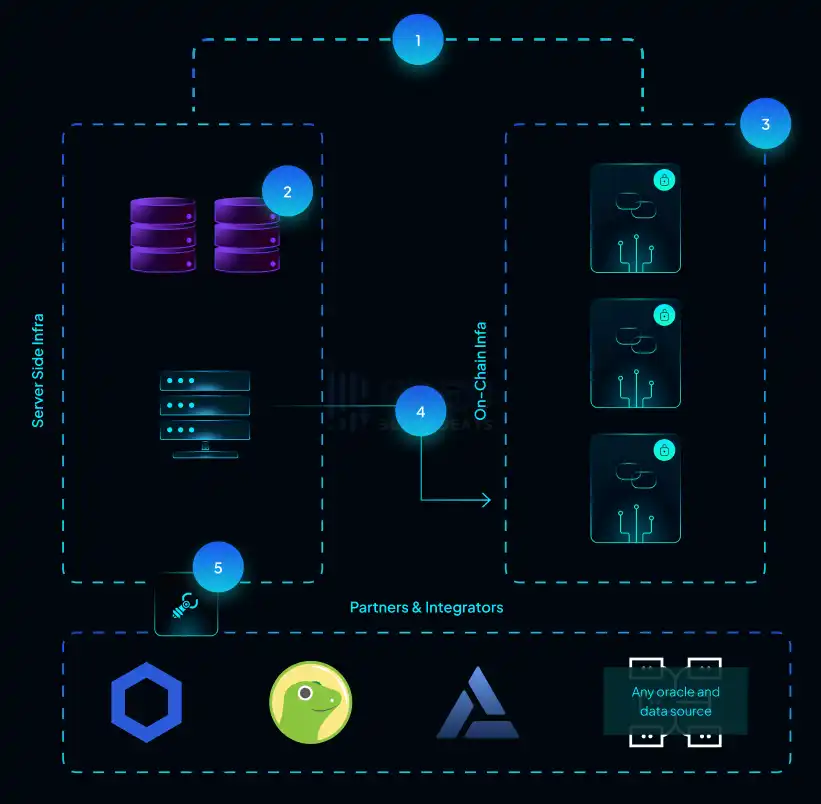
Vela Exchange Infrastructure Overview (Source: Official Documentation)
The infrastructure of Vela Exchange mainly includes the following four parts:
Off-chain server: Cache specific on-chain data to improve performance, such as historical transaction data, notifications, configuration file data, language settings, etc.;
On-chain protocol: has all the open positions, collateral, VLP/Vela pledging functions;
Position Management Trigger: Hosted on the server to improve performance, pushed to the chain when conditions are met;
Data Portal: Publicly expose APIs to third parties and extract data from oracles and data providers.
All asset prices are fully operated and maintained by the Vela team through a proprietary price feed service called Vela Stream, which is designed to ensure performance, security, and flexibility. Currently, Vela Exchange directly extracts data from multiple CEXs and on-chain resources and aggregates them into a proprietary price source. The price source of Vela Stream is published on-chain and is transparent for each tradable asset, reflecting the true single aggregated price of top CEXs in the ecosystem.
In order to execute trigger funds, fund management, clearing, and delayed trading (to reduce Front-Running), Vela Exchange has role-based access control, which allows for the destruction or minting of USD stablecoins in the protocol, but such stablecoins are non-transferable and non-tradable. In case of emergency situations such as protocol updates or contract changes, Vela administrators have the right to suspend critical contract functions on the protocol except for withdrawals.
Trading Mechanism and Fees
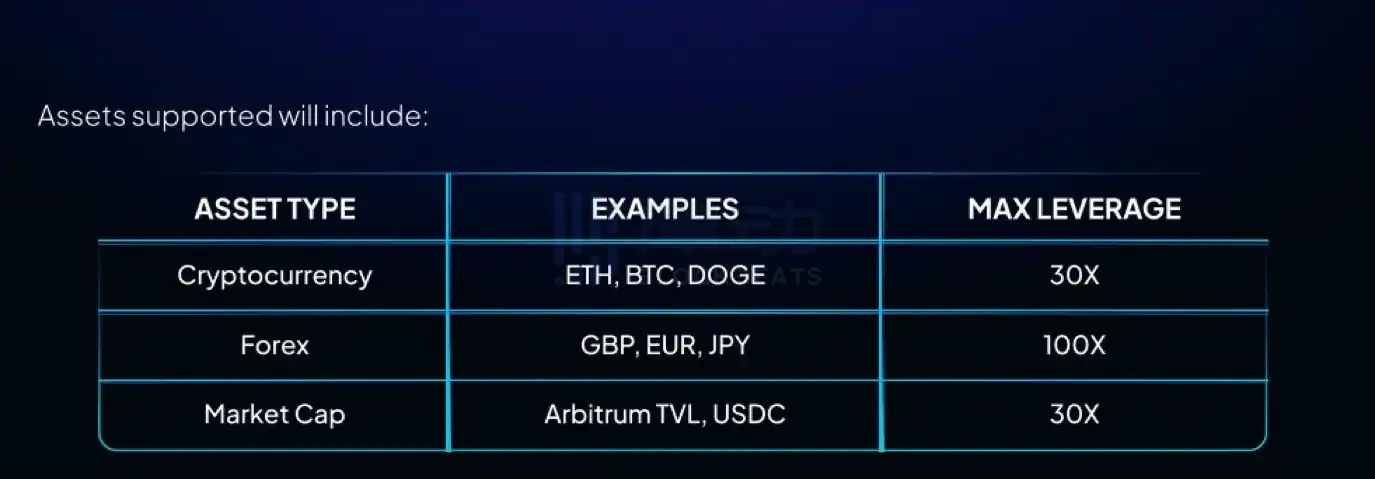
Supported Asset Types on Vela Exchange (Source: Official Documentation)
Vela Exchange incorporates some features of GMX and Gains Network in its mechanism. Depositors can mint VLP by depositing funds into the platform, and can earn profits from platform revenue distribution and trader losses. VLP can be further collateralized to obtain eVELA (similar to gDAI in Gains Network).
What sets GMX's GLP fund pool apart is that approximately 50% of it is stablecoins, while the other half is made up of cryptocurrencies such as BTC and ETH. This means that GLP is a composite index token composed of assets in different proportions. On the other hand, Vela Exchange's VLP fund pool is entirely composed of USDC, which allows it to offer a wide range of trading targets. In theory, as long as the oracle supports and has a certain depth of variety, it can be traded on Vela Exchange. Since there are no volatile assets, VLP holders will only lose money when traders make a profit. Additionally, Vela Exchange's asset pricing is slightly more decentralized than GMX, with only a few contract addresses having administrator status, which reduces the risk of internal wrongdoing.
Vela Exchange currently supports trading of three different types of assets:
-Cryptocurrencies: TC, ETH, DOGE, SOL, MATIC, AVAX.
-Foreign exchange: EUR/USD, GBP/USD, USD/JPY, 1-100 times.
-Market Cap: Launching USDC Total Market Cap Contract and Arbitrum TVL Contract.
When trading on Vela Exchange, two types of trading fees need to be paid: position fees and funding fees. Position fees include the maximum fee that users need to pay for non-foreign exchange assets when opening and closing positions, which is 0.1% of the opening funds, and the highest fee for foreign exchange assets is 0.01% of the position funds. Funding fees are calculated based on how much money is borrowed from the insurance pool and the current funding rate when opening a position. The longer the funding remains open, the higher the funding fee, which is paid when closing the position.
Vela's clearing mechanism design is quite innovative. The price at which price clearing occurs is a function of asset quantity, average entry price, collateral, liquidation and financing costs, and a slippage risk factor (1% for non-foreign exchange assets and 0.3% for foreign exchange assets). This factor accounts for a built-in safety net to protect the protocol from losses exceeding collateral. If a liquidation occurs, the trader will recover a portion of the collateral based on the slippage, which represents the difference between the actual liquidation price and the price at which it was initiated.
Except for the liquidation wallet of the Vela team, anyone can trigger liquidation, but currently 100% of the liquidation fees go to VLP's LP as a reward for providing liquidity. In addition, Vela has established open interest (OI) limits for long and short positions to protect the protocol from being affected by total OI exceeding TVL (in this case, the liquidity supported by VLP). For each tradable asset, these limits are based on the TVL percentage at the user and asset level. As the risk situation varies by asset, these rates may change in the future.
Fee Mechanism and Token Economics
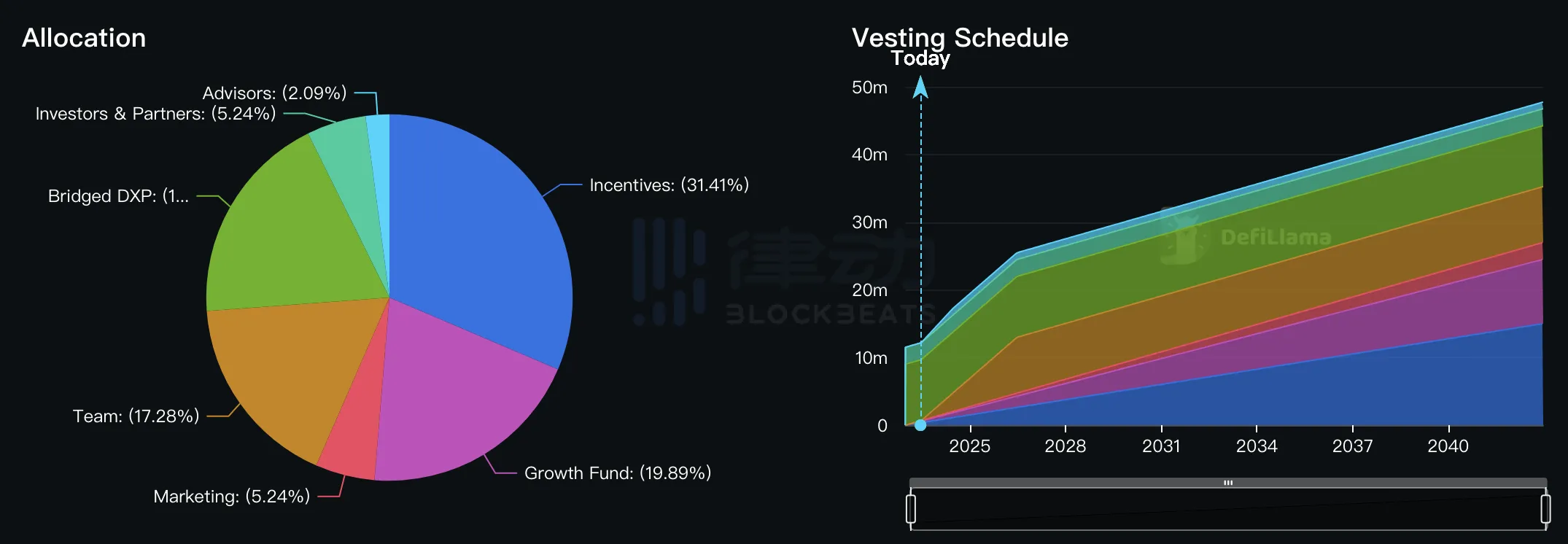
VELA Token initial distribution and unlocking period (source: DeFiLlama)
VELA & esVELA Token: VELA is the native governance token of Vela Exchange, and staking it can earn you staking certificates of esVELA. During the 6-month linear vesting period, the same amount of VELA will continue to be unlocked for esVELA used for staking. However, staking rewards will be reset if you claim any amount of VELA or add new esVELA to the staking contract. All staking rewards for esVELA are provided by VELA's buyback model.
VLP Token: VLP Token is the LP Token of the Vela protocol, which provides incentives for token holders and stakers. VLP is based on USDC collateral and can be redeemed for USDC at any time. Anyone can stake USDC to mint VLP and earn fees based on the trading volume generated on the platform.
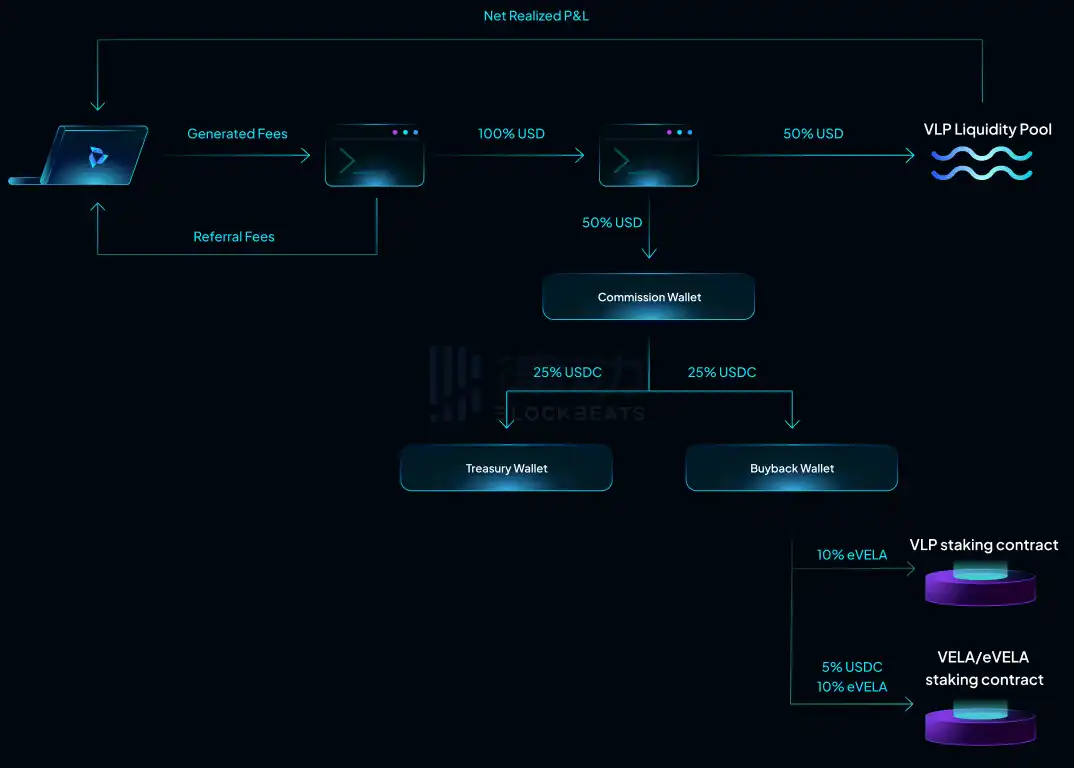
Vela Exchange Fee Income Distribution Chart (Source: Official Documentation)
VLP also provides liquidity for traders, allowing them to leverage their positions. If traders incur losses, VLP holders will profit, and if traders make profits, VLP holders will incur losses. Although the value of VLP is market-neutral and not directly affected by fluctuations in the cryptocurrency market, holding VLP still carries risks. To bear these risks, VLP stakers can receive up to 60% of the platform fees generated by trading activities.
Vela Exchange protocol fee revenue distribution ratios are as follows:
-50% is allocated to the VLP pool (in USDC form).
-10% is allocated to VLP stakers (in the form of eVELA).
-15% is allocated to VELA stakers (5% in USDC and 10% in eVELA).
-25% enters the national treasury (may be decided for use by VELA stakers' vote in the future).
Through this token economic model, Vela has achieved balance in value distribution.:
- For VLP Token holders, it is necessary to earn fees to provide liquidity.-For VELA Token holders, it is necessary to earn some fees from the platform.-eVELA is a reward method similar to options, which pays corresponding rewards and fees to different stakers, but does not increase the selling pressure of VELA tokens themselves.
Vela Exchange's Beta test results?
Vela Exchange's Beta testing began on January 31st and was only available to early participants. It was opened to all users on February 9th. Testers were able to trade, stake, and receive specific testing incentives.
During the entire Beta testing period, users participating in the test will receive a VELA Token airdrop, while also activating the Hyper VLP incentive. Early VLP minters will receive an additional APR of 10%-60%, and the program will reward a total of up to 2.5 million VELA Tokens. As for the buyback model, it is used to stabilize the supply of VELA, repurchasing VELA every two weeks as reserves, with each repurchase lasting for 7 days.
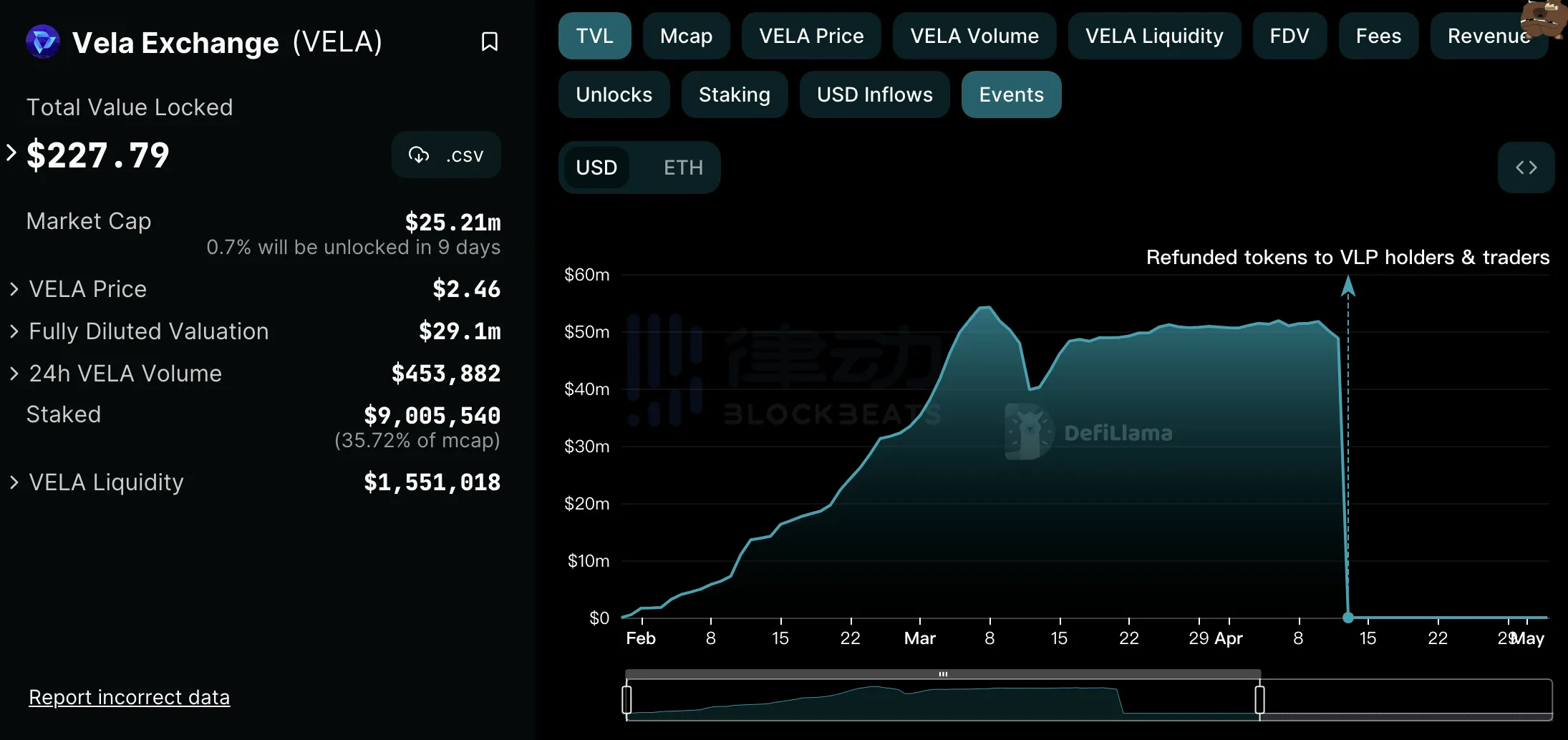
Vela Exchange's historical highest TVL exceeded $54.2 million (source: DeFiLlama)
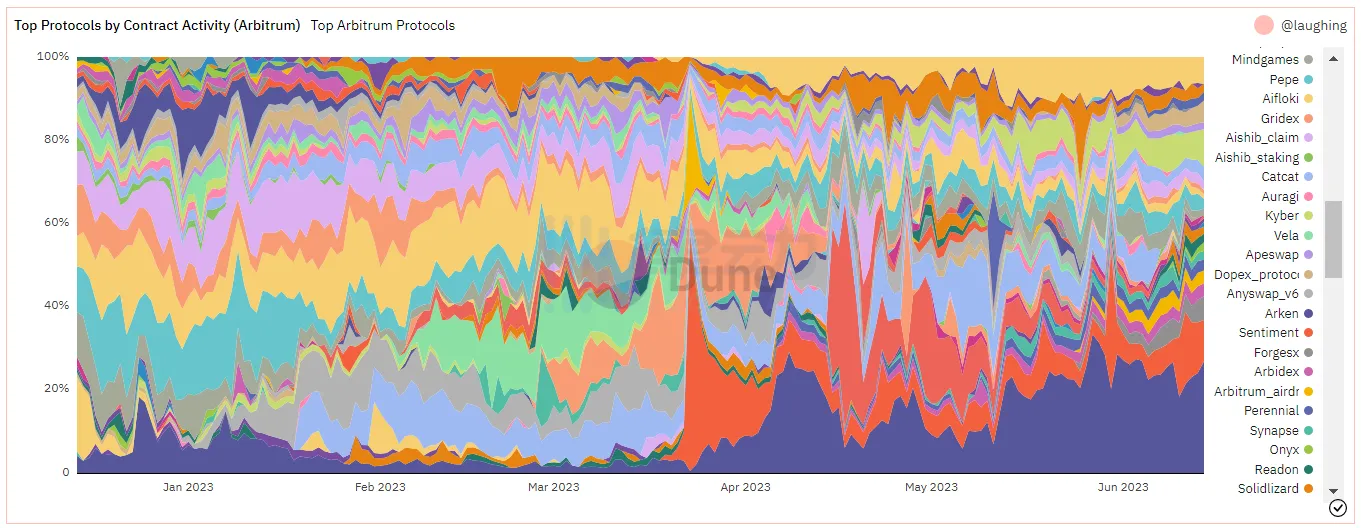
The public beta phase of Vela Exchange is very active on Arbitrum (source: Dune, Vela is the light green part above "Mar 2023").
During the public beta period, Vela Exchange achieved good results with its ingenious architecture and trading mechanism, coupled with the hype brought by the Arbitrum airdrop and the incentive of Hyper VLP.
- The TVL of the platform continues to soar, with the highest TVL once exceeding 54.2 million US dollars, ranking third in the derivative DEX, second only to GMX and DYDX.
- User participation is high, and the platform's share of activities on all Arbitrum chains has exceeded 20% at one point.
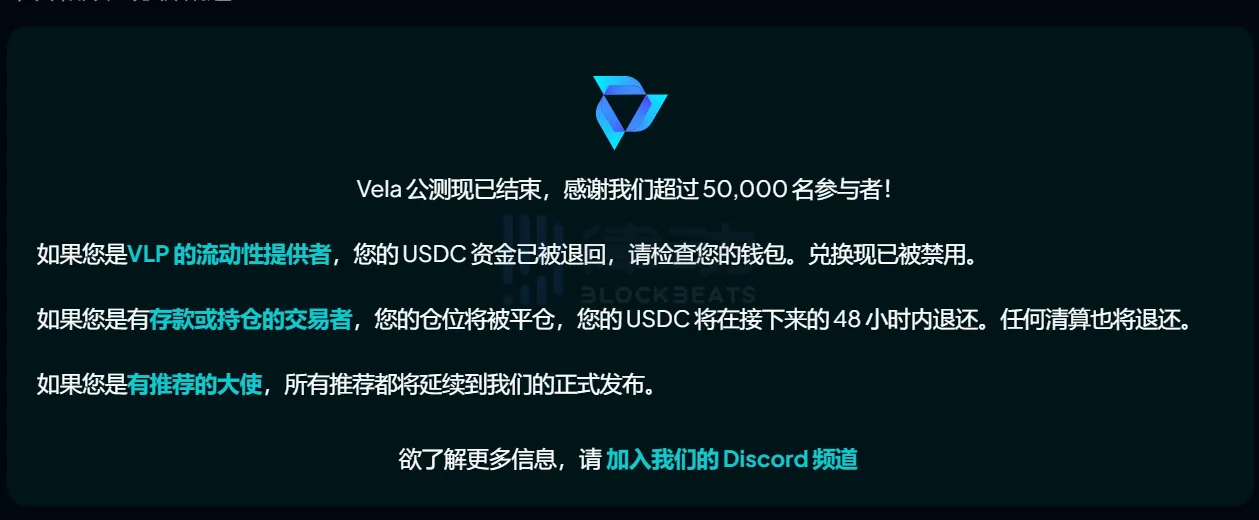
Vela Exchange's Beta testing has ended.
However, in March, USDC experienced a detachment event, and then Vela Exchange found that there was a significant deviation between the calculation results and the predicted values of VLP. In order to prevent panic redemption of VLP at higher erroneous prices, the team chose to take quick action and ended the public beta, which was originally scheduled to end in early May. However, despite this flaw, it can be said that Vela Exchange performed very well during the beta testing phase.
Vela Exchange's next step?
对 Beta 公测阶段出现的问题进行查漏补缺
Translation:
Check and fill the gaps for the issues that occurred during the Beta testing phase
After the Beta testing is over, Vela Exchange released a statement stating that they will address the issues that arose during the testing phase and continue to provide transparent data to the community. It is reported that all known vulnerabilities and errors in the official release of the smart contract have been resolved, and they plan to publicly release the smart contract for community review in the coming weeks. They have also hired a new auditor and several quantitative teams to review the mechanism of the DEX.
Announce New Roadmap
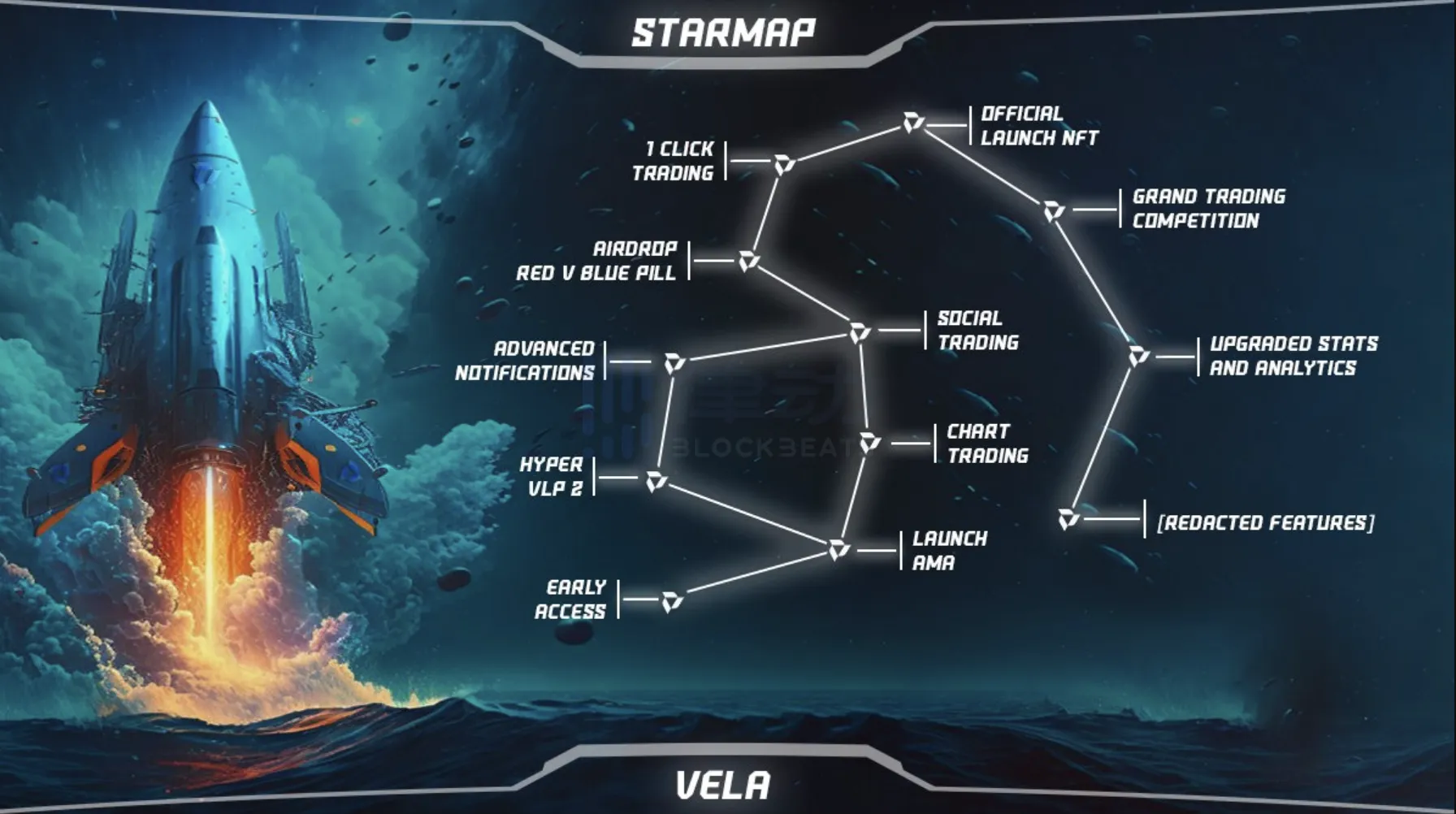
Vela Exchange's New Roadmap
-Hyper VLP 2.0 will allow previous Hyper VLP participants during the beta testing period to return at the same level they were at before, and the amount they forged and held will also be preserved.- Only the creators who still have remaining Hyper VLP amounts at the end of the Beta can regain their previously assigned levels.
- New participants who did not participate in the previous round of the Hyper VLP program will be able to ensure entry into an expanded level system.
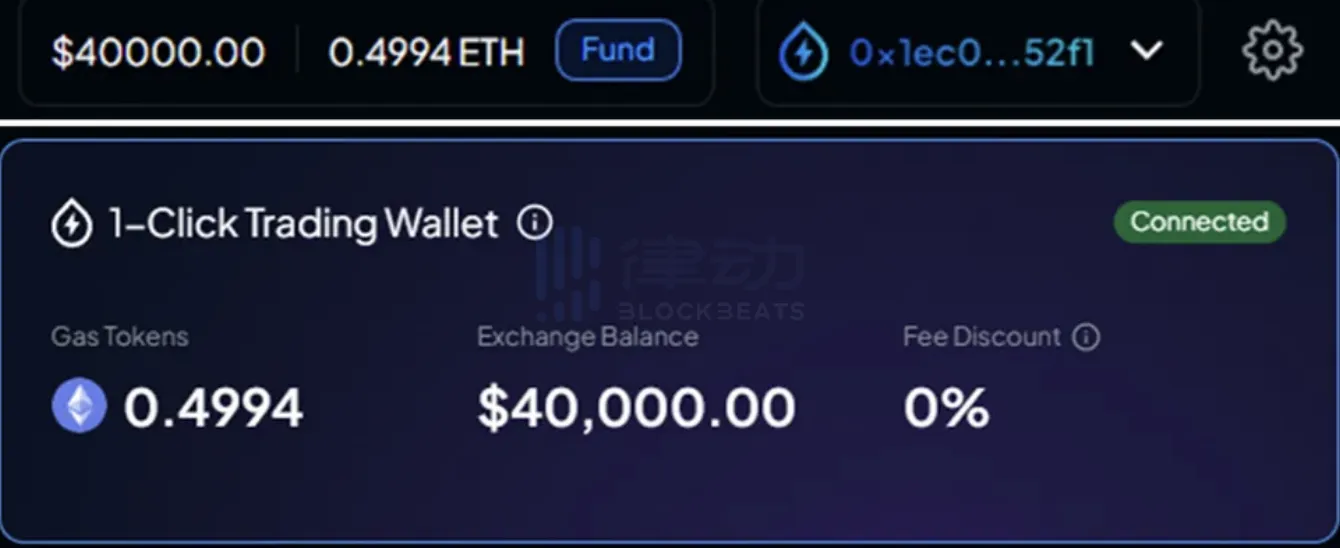
推进更多的合作伙伴关系的建立
Advancing the establishment of more partnership relationships
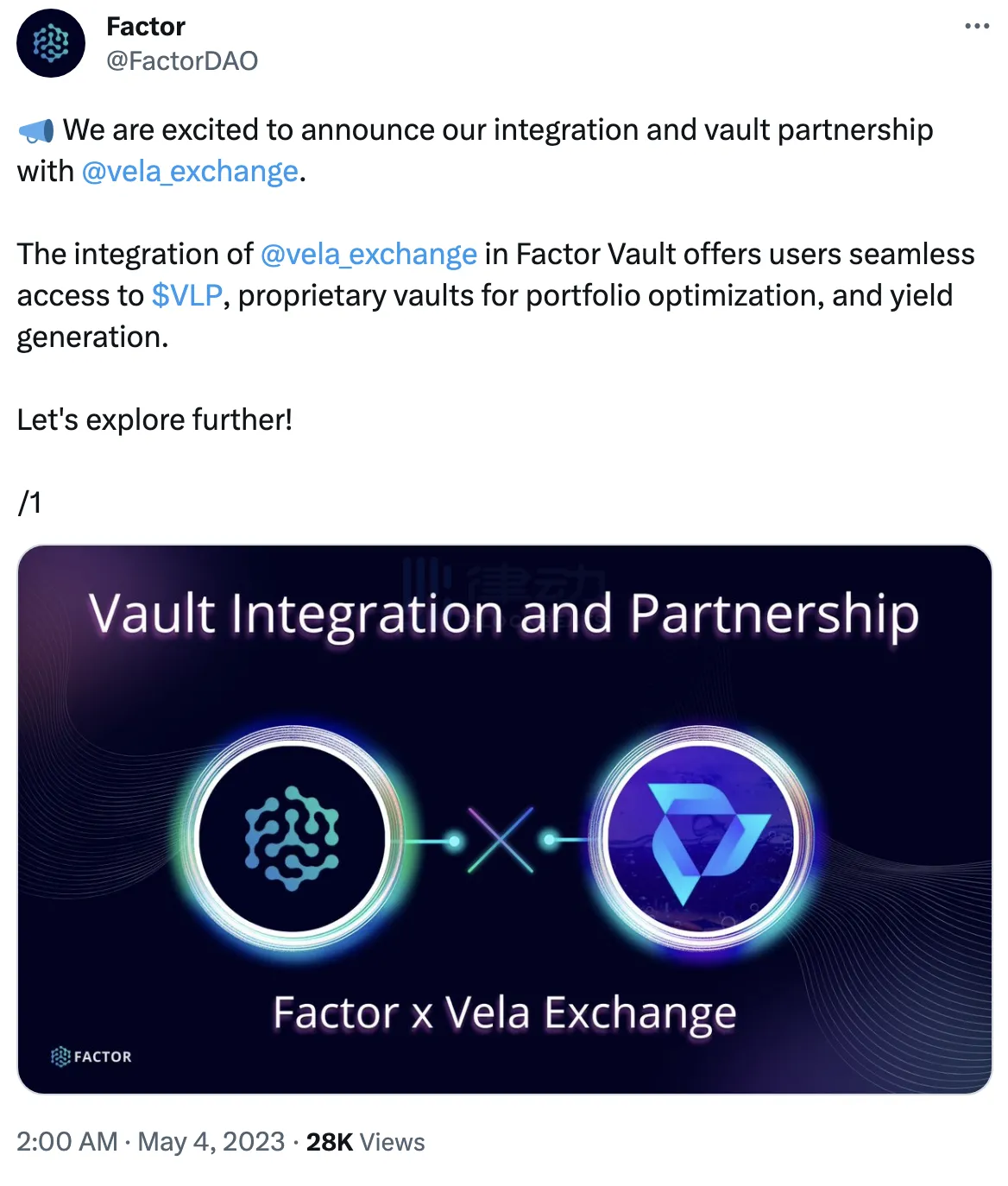
Vela Exchange has been actively building strategic alliances and partnerships, and has announced partnerships with a series of projects such as FactorDAO, Ramses, and Bitkeep. According to official information, more partnership information is expected to be disclosed in June.
Conclusion
Whether it's centralized exchanges in traditional financial markets or in the crypto market, or decentralized exchanges, the scale of the derivatives trading market is larger than that of spot trading. As the first and unique derivative market in the crypto market, perpetual contracts have great trading flexibility compared to other financial products and are highly favored by the market.
Meanwhile, along with issues such as FTX's collapse half a year ago and the recent tightening of regulatory oversight over centralized exchanges such as Binance by the SEC, the trust crisis of CEX seems to have never been resolved. The narrative of DEX and DEX Perp is likely to gradually lead the development of the crypto world. Although the crypto market is still in a bear market, Uniswap's innovation and the emergence of Vela Exchange, a rising star, have recently made strides. Whether they will have the opportunity to become the cornerstone of DeFi in the future remains to be seen.
Reference
https://www.theblockbeats.info/news/34909
https://mp.weixin.qq.com/s/hY83Re4E9mZG4ejfAWO2dA
https://mp.weixin.qq.com/s/zkfjfqiEdSQw7gAp6yx7sA
https://techflowpost.mirror.xyz/qzPU4l3m1ZAZfxzynbsEnRp3rB7CjE8KdAK3PuZEPxw
Welcome to join the official BlockBeats community:
Telegram Subscription Group: https://t.me/theblockbeats
Telegram Discussion Group: https://t.me/BlockBeats_App
Official Twitter Account: https://twitter.com/BlockBeatsAsia

 Related Articles